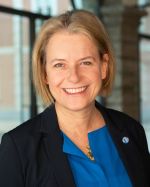
 | Nicola Hüsing |
Sol-Gel Chemistry with a Twist: Porous Materials from Unconventional Precursors
The design of porous materials with well-defined architectures is a central challenge in materials chemistry, since pore size, connectivity, tortuosity, and shape strongly determine their potential applications in catalysis, separation, energy storage, and sensing.
Conventional sol-gel approaches often lack the versatility to achieve such deliberate structural control, motivating the development of new synthetic strategies. In this contribution, we present sol-gel processing routes towards highly porous monoliths based on unconventional, glycolated precursors such as tetrakis(2-hydroxyethyl)orthosilicate, organically substituted and related metal derivatives.
The replacement of classical alkoxy groups by diols/ polyols alters the reactivity of the precursors, enabling new pathways to tailor porosity, surface chemistry, and material composition, while also introducing specific synthetic challenges. In combination with co-monomers, these systems provide access to functional and structurally complex networks that extend the scope of sol-gel chemistry. By highlighting both opportunities and limitations of these non-traditional precursors, this work outlines new perspectives for the rational design of porous materials with controllable architectures and advanced functionalities.
About Nicola Hüsing
Nicola Hüsing studied Chemistry at the University of Würzburg and received her PhD in 1997 on highly porous materials, with research stays in Vienna and Los Angeles. She was awarded the Harry-Klöpfer-Aerosil Award (1997) and the Donald-Ulrich Award of the International Sol-Gel Society (2005). After a Schrödinger Fellowship at Sandia National Laboratories (USA), she habilitated in Materials Chemistry at TU Wien in 2003. In 2004 she was appointed to the Chair of Inorganic Chemistry at Ulm University, where she also led a research group at the Helmholtz Institute Ulm. Since 2010 she has been Professor of Materials Chemistry at the University of Salzburg, founding the Salzburg Center for Smart Materials (2018) and serving as Vice Rector for Research and Sustainability (2019–2024). She is a full member of the Austrian Academy of Sciences, member of EURASC, Chemistry Europe Fellow, and serves on numerous national and international scientific boards including the International Sol-Gel Society.