Choose timezone
Your profile timezone:
 |  |
 |  |
 |  |
Topics and applications
|
|
X-ray imaging can provide detailed structural information in 3D non destructively across scales ranging from tens of centimetre samples to tens of nanometres spatial resolution over timescales ranging from milliseconds to many months. This, and the fact that 3D image sequences can be collected non destructively, mean that it can uniquely shine a light on a range of porous materials behaviours from transport phenomena and permeability to fuel cells, from granular flow to cementitious materials, and from our perception of foods to the collapse of energy absorbing structures.
I will start with a primer on 3D and timelapse (4D) imaging for those new to the technique looking at the basic principles, the attributes and limitations of the method and its complementarity to other characterisation methods such as mercury intrusion porosimetry.
I will then examine a number of applications covering a very wide range of length and timescales and applications. In particular I will consider transport behaviour through homogeneous and inhomogeneous media, particle transport through filter cakes, the infiltration of fibrous preforms in polymer and ceramic matrix composite manufacturing, the behaviour of granular solids, the microstructure of 3D printed concrete and the long term carbonation behaviour of low carbon cements. Through these examples I will look at the practical limitations of the method, image quantification and segmentation aspects and also cover image-based modelling and digital volume correlation. I will then conclude by looking at future developments.
Adsorption–desorption reactions at fluid–solid interfaces underpin a wide spectrum of natural and engineered processes taking place in porous media, including contaminant remediation, solute retention in soils, and sequestration of geogenic and anthropogenic heavy metals. However, accurately predicting these reactive processes remains an open challenge. Current continuum-scale models are typically parametrized using average reaction rate values derived from batch experiments. In contrast, the inherent heterogeneity in pore-scale fluid velocities produces nonuniform solute distributions, i.e., incomplete mixing, which drives the transport of reactants to reactive surfaces. To date, the impact of this velocity heterogeneity and incomplete solute mixing on adsorption-desorption reactions at fluid-solid interfaces remains largely unclear. Here, we present a novel quasi-two-dimensional optically transparent micromodel featuring impermeable solid grains with reactive surfaces. Direct visualization of the spatiotemporal evolution of reaction products using high-resolution fluorescence microscopy enables the quantification of pore-scale adsorption–desorption rates across a range of Péclet numbers. This micromodel-based platform provides a versatile experimental framework for the quantitative assessment of the intricate coupling between local fluid dynamics and interfacial reactions in porous media.
Effective thermal conductivity (ETC) is a key parameter governing heat transfer in multiphase porous materials. This study presents a computational framework based on the space renormalisation technique to estimate ETC from segmented X-ray micro-CT images of porous media. By explicitly accounting for pore-scale heterogeneity, the method enables detailed spatiotemporal evaluation of ETC across different porous structures. The approach is demonstrated through the prediction and analysis of ETC in three porous rock systems undergoing multiphase flow: (i) steady-state two-phase flow in Estaillades carbonate, (ii) sequential flooding in Bentheimer sandstone, and (iii) immiscible three-phase flow in Ketton limestone. The results reveal pronounced directional variations in ETC as phase saturations evolve and redistribute, highlighting the strong influence of pore-scale structure on thermal transport. Compared with conventional finite-difference approaches, the space renormalisation method provides accurate ETC estimates with substantially lower computational cost, making it suitable for large datasets and near-real-time analyses. These findings improve the understanding of dynamic heat transfer processes in heterogeneous porous media and are relevant to applications such as enhanced oil recovery, geothermal energy systems, and thermal management in porous engineering materials.
This study presents a novel strategy to enhance CO₂ uptake in cement systems by incorporating 1,6-hexamethylenediamine (HMDA) as a water-soluble additive. Conventional CO₂ curing approaches are constrained by the low solubility of CO₂ in cement pore solutions and the associated reduction in alkalinity, which can hinder cement hydration. To overcome these limitations, HMDA was introduced into CO₂-saturated water to chemically bind dissolved CO₂ via carbamate formation while maintaining a pH favorable for hydration.
Cement pastes were prepared using four mixing solutions: tap water (W1), carbonated water (W2), and carbonated water containing 0.1% and 0.6% HMDA (W3 and W4). A comprehensive characterization program was employed, including total inorganic carbon (TIC) measurements, pH analysis, X-ray diffraction (XRD), micro-computed tomography (μCT), Fourier-transform infrared spectroscopy (FTIR), mechanical testing, and pore structure analysis.
The results demonstrate that HMDA markedly increased CO₂ uptake, rising from 0.74 g/L in carbonated water (W2) to 8.2 g/L in the HMDA-rich system (W4) at a water-to-cement ratio of 0.5. While HMDA-modified samples exhibited reduced early-age strength, they achieved superior long-term mechanical performance. At 28 days, W3 showed the highest compressive strength of 113.8 MPa at a water-to-cement ratio of 0.3, along with increased stiffness and elastic modulus.
XRD and FTIR analyses confirmed enhanced calcite formation and reduced portlandite content, indicating deeper and more controlled carbonation. μCT and pore size distribution analyses revealed decreased total porosity and refined pore structures, particularly in W3 and W4. These microstructural improvements underpin the observed gains in long-term mechanical properties.
Overall, the HMDA-based approach provides a dual benefit of significantly enhanced CO₂ sequestration and improved cement performance. This method offers a scalable and cost-effective pathway for carbon utilization in cement production, contributing to the development of high-performance, low-carbon construction materials.
Recently a novel method has been developed to determine relative permeability for gas-liquid systems e.g. for the underground storage of hydrogen from a hybrid experimental/modelling workflow. It follows the philosophy of measuring time sequences of pore scale fluid distributions by in-situ micro-CT imaging for gas-liquid systems which due to their rich physics (immiscible displacement combined with dissolution, diffusion and ripening effects) are inaccessible to numerical modelling. Relative permeability is then computed by numerical Stokes flow simulations on the imaged 3D pore scale fluid distributions for the gas and liquid phases. This method has the advantage of a much larger accessible mobile saturation range than traditional relative permeability measurements.
One of the complications in this methodology is that for instance in imbibition, where the wetting (aqueous) phase displaces the non-wetting (gas) phase, at already relatively low water saturation the gas phase is not permanently connected anymore at individual micro-CT snapshots but is transported by processes such as ganglion dynamics, which is not captured by the Stokes flow simulations which provide relative permeability only for a connected pathway. This has been overcome by restricting the Stokes flow simulations to sub-domains of the sample in which gas clusters percolate between inlet and outlet over most of the imaged time sequence. The respective workflow involves to a significant degree manual steps which limits the practical applicability but also restricts uncertainty analysis. The Stokes flow simulations which thanks to the highly optimized LIR solver in GeoDict solver run in 10 minutes or less are not a limiting factor. The key limiting factor is actually the selection of the sub-domains involves visual inspection in 3D combined with connected objects analysis followed by the Stokes flow simulations.
Here we present the development of a workflow where the selection of sub-domains is performed by an algorithmic process which then allows automation. The aim of the workflow is to integrate the whole post-processing which includes sub-domain selection and Stokes flow simulation in a fully automated workflow where all computational steps are stored in a data base with respective report and export functionality.
High-resolution X-ray micro-computed tomography (micro-CT) enables pore-scale characterization of rocks, but extracting representative volumes at high resolution is often computationally prohibitive for routine digital rock workflows. In contrast, lower-resolution scans cover larger domains but systematically miss sub-voxel throats and fine-scale connectivity, leading to biased pore-network graphs and large errors in predicted absolute permeability and multiphase flow responses. This work presents a graph-calibration framework that repairs pore networks extracted from low-resolution micro-CT by explicitly introducing and tuning sub-resolution throats using derivative-free optimization, with the goal of matching laboratory-measured absolute permeability.
Starting from a pore network constructed from a low-resolution scan, we generate a set of candidate throats by geometric proximity (k-nearest neighbors in pore coordinate space). Each candidate throat is initialized with sub-voxel hydraulic diameter and a minimum physically consistent length, enabling a controllable “sub-resolution” edge set without altering the pore set. We then formulate a constrained optimization problem where candidate throats are softly activated and their effective diameters adjusted under geometric feasibility limits (e.g., capped by adjacent pore sizes). The objective minimizes the discrepancy between OpenPNM-simulated absolute permeability and the laboratory absolute permeability (Kabs) of the same rock sample, using a log-space misfit and optional sparsity regularization to avoid over-connecting the network.
Optimization is performed with evolutionary optimizers, which are well suited to non-differentiable objectives involving full pore-network. OpenPNM provides the permeability evaluation (single-phase flow) and serves as the basis for subsequent relative-permeability (Krel) analysis. We use paired high- and low-resolution real micro-CT images: the high-resolution scan supports a reference network for geometric/feature comparisons, while the laboratory Kabs provides the calibration target that the optimized low-resolution graph must reproduce under OpenPNM.
Beyond matching a scalar Kabs, we quantify structural fidelity by comparing empirical CCDFs of throat properties (diameter, length, and conductance proxies) between (i) the original low-resolution network, (ii) the optimized low-resolution network, and (iii) the high-resolution reference network. To test whether calibration against laboratory Kabs also improves multiphase predictions, we compare drainage-based Krel curves across these networks and evaluate whether aligning Kabs reduces the discrepancy in Krel trends.
Finally, we investigate a learning-based path to scalability: given the calibrated low-resolution graph, we evaluate graph neural networks (GNNs) as surrogates for predicting permeability-related properties from graph topology and geometric features. The central hypothesis is that calibrating low-resolution graphs to match laboratory Kabs reduces the resolution-induced domain gap, improving downstream GNN generalization and enabling faster screening across rock ensembles.
Water reinjection is a widely employed practice in hydrocarbon reservoirs to maintain pressure and enhance recovery efficiency. However, one of the major operational challenges is the loss of injectivity caused by particle accumulation in the near-wellbore region. At the pore scale, this phenomenon has been attributed to mechanisms such as particle bridging, successive deposition, and mechanical entanglement, which collectively lead to pore blockage and jamming (Tongtong et al., 2025). These processes not only reduce injection efficiency but also contribute to increased energy consumption and operational costs. Numerical simulations provide valuable insights into the complex interactions between suspended particles and reservoir rock surfaces during reinjection. Such modeling approaches are instrumental in designing optimized injection strategies aimed at mitigating particle-induced formation damage and preserving long-term injectivity.
In reservoir simulators, grid sizes are typically defined on the order of meters, since reservoir models often span several kilometers laterally and hundreds of meters vertically. As a result, the effect of particle accumulation around injection wells, commonly referred to as filter cake formation, is usually incorporated by modifying the skin factor in the well model. These modifications are based on assumptions regarding factors such as the geometry of flow (for example, linear or radial) and the porosity of the filter cake. While parameter calibration during history-matching exercises can improve agreement with observed data, forecasts derived from such simplified models may be unreliable. This limitation arises because the coarse grid resolution fails to capture pore-scale and near-wellbore effects, which leads to an oversimplification of the complex mechanisms governing injectivity impairment.
The objective of this work is to develop a framework for field-scale simulations that incorporate particle accumulation effects derived from near-wellbore processes. In this approach, the fluid is represented as a single-phase liquid system with two components, water and particles. Trapped particles are treated as a solid phase attached to the rock matrix, which grows as additional particles are deposited and can be rearranged under the influence of flow. The mathematical formulation is implemented in the industry-standard reservoir simulator Open Porous Media (OPM) Flow (Rasmussen et al., 2019).
We apply the proposed model to evaluate injectivity loss under varying injection strategies and particle concentrations. The results are compared with the analytical filter cake models available in OPM Flow (Goodfield et al., 2025), highlighting both the advantages and limitations of these simplified approaches. For the simulations, we employ the pyopmnearwell tool (Landa-Marbán and von Schultzendorff, 2023), an open-source framework that generates the necessary input files for OPM, including corner-point grids, saturation function tables, and injection schedules, through configuration files. This workflow ensures reproducibility of the results and facilitates further studies such as history matching and optimization. The methodology is designed to align with the FAIR (Findable, Accessible, Interoperable, Reusable) principles (Wilkinson, 2016), which have not been consistently adopted in recent years (Liu et al., 2025), yet remain essential for advancing reservoir simulation technology.
Wheat straw is more and more used as insulation and semi-structural material for construction. One classical building method consists in filling a wooden structural frame with compressed straw bales. The crucial issue in such bio-based frames is water. Indeed water condensation in the liquid state would result in rapid rotting and degradation of the insulation. Thus controlling heat and moisture transport through the straw is a priority.
Existing coupled models such as the Kunzel model enable prediction of temperature and water content fields through the wall [Kunzel 95, Claude et al. 23]. They require characterization of hydro-thermal properties of the constituents [Reuge et al. 21].
Nonetheless, due to manual compression of straw bales inside the frames, especially in the case of self-construction, a wide variation in the compression state is observed in the final wall. This highly influences heat and moisture transport properties [Lebed & Augaitis 2017].
In this work a characterization of the thermal conductivity and hydric diffusivity of a local straw bale is conducted. First we focused on thermal and compaction properties. A steady-state hot plate apparatus is used under compression in a mechanical testing machine (100 kN Zwick Roell tensile machine). Because of the large representative volume element of the straw bale structure (several centimeters), the platens are 270x270 mm2.
The obtained compaction behavior is analyzed in the three directions and compared to existing models [Toll and Manson 1995]. Finally the effect of compaction on the anisotropic conductivity is analyzed and compared to existing phenomenological or homogenization theories [Futschik and Witte 1994, Batty et al. 1981, Gaunand et al 25].
references
- Batty, W. J., O'Callaghan, P. W., & Probert, S. D. (1981). Apparent thermal conductivity of glass-fibre insulant: effects of compression and moisture content. Applied Energy, 9(1), 55–76.
- Claude, V., Nguyen, E., Delhaye, A., Mayeux, A., & Charron, S. (2023). Hygroscopic and Thermal Inertia Impact of Biobased Insulation in a Wood Frame Wall. In ICBBM 2023 (Vol. 45, pp. 355–372).
- Futschik, M. W., & Witte, L. C. (1994). Effective thermal conductivity of fibrous materials. American Society of Mechanical Engineers, Heat Transfer Division, (Publication) HTD (Vol. 271).
- Künzel, H. M. (1995). Simultaneous Heat and Moisture Transport in Building Components One- and two-dimensional calculation using simple parameters . Physics (Vol. 1995).
- Lebed, A., & Augaitis, N. (2017). Research of Physical Properties of Straw for Building Panels. International Journal of Engineering Science Invention, 6(5), 9–14.
- Reuge, N., Collet, F., Pretot, S., Moissette, S., Bart, M., & Lanos, C. (2021). Kinetics of sorption in bio-based materials: Theory and simulation of a demonstrator wall. Proceedings of Institution of Civil Engineers: Construction Materials, 174(3), 129–139.
- Toll, S., & Manson, J.-A. E. (1995). Elastic Compression of a Fiber Network. Journal of Applied Mechanics, 62(1), 223–226.
- Clémence GAUNAND, Yannick DE WILDE, Valentina KRACHMALNICOFF, Adrien FRANCOIS, Veneta GRIGOROVA-MOUTIERS, and Karl JOULAIN. Quantification de l’impact de la résistance thermique de contact entre fibres sur la conduction dans les matériaux d’isolation fibreux. Congrès de la société française de thermique, 2025
Carbonate reservoir performance depends not only on total porosity, but on how pore-space connectivity controls transport. In backscatter SEM (BSE–SEM) images, connected pathways and isolated intragranular pores can have similar greyscale appearance, yet they imply very different behaviour: connected pores support flow, whereas isolated pores mainly contribute to storage and trapping. Standard “pore vs. matrix” segmentations, therefore, risk biasing permeability proxies and connectivity descriptors when all pores are treated equivalently.
This ongoing work produces connectivity-aware pore maps from 2D carbonate BSE–SEM by distinguishing three phases: isolated intragranular pores, connected pore pathways, and mineral matrix. The workflow is demonstrated on four large SEM mosaics (29,056 × 22,952 px; 0.195 µm/px) partitioned into 2048 × 2048 px tiles (100 labelled tiles), with evaluation on a strict held-out test set of 20 tiles. Connectivity labels are derived from rapid grain-boundary (yellow ring) annotations that separate pores inside grains from pores outside grains while preserving thin (1–2 px) throats and filamentary links.
On the held-out test set, the approach reproduces the mineral matrix with high overlap (IoU ≈ 0.92) and delineates the connected pore network with moderate-to-strong overlap (IoU ≈ 0.48). Isolated pores are extremely rare (≈0.039% of test pixels) and remain the most challenging class, but their detection improves after a light refinement step (IoU 0.035 → 0.069; recall 0.18 → 0.30) while the connected-pore and matrix classes change only marginally.
These connectivity-aware masks enable direct quantification of connected versus isolated porosity fractions and provide inputs compatible with downstream digital-rock connectivity analyses (such as topology- and percolation-inspired descriptors). This is particularly relevant to subsurface applications where the balance between mobile and trapped porosity controls long-term performance, including CO2 storage and radioactive-waste disposal.
Previous studies on convective dissolution have investigated the rate at which free CO2 saturates an underlying brine layer through convective mixing. Recently, Mingotti and Woods (2025) conducted a laboratory experiment using saturated brine with dispersed salt powder overlying a freshwater layer. The latter configuration is analogous to the dissolution of residually-trapped CO2 in water. To our knowledge, numerical simulation studies of this specific phenomenon with physical parameters relevant to CO2-water systems are absent. In this work, we adopt the same configuration as in Ref. [1]; see Fig. (a) which shows a representative simulation case. Unlike the classical case of free CO2 convection in water, we observe that the dissolution rate does not exhibit a quasi-linear regime with an approximately constant value. Our simplified numerical models indicate that a significant amount of residually trapped CO2 can be dissolved. The mechanism of dissolution is straightforward: partially saturated water becomes fully saturated through contact dissolution as it advances through the upper layer and then descends. A related research question concerns how Ostwald ripening might affect the results. To explore the latter phenomenon, we simulate Ostwald ripening at the continuum scale, see Fig. (b), using macroscopic properties as in Ref. [2]. Across models spanning different lengths, the Ostwald ripening equilibrium time scales with the square of the characteristic length as previously reported in a number of studies. The key point we conceptualize is that if Ostwald ripening initially homogenizes a macroscopically homogeneous region in a certain time, this characteristic timescale is likely shorter than, or comparable to, the onset time of convection. However, the potential for localized mobilization and upward migration during this stage still needs investigation. Nevertheless, for larger simulation domains (> 1 m), once initial homogenization occurs, convective processes are expected to dominate over macroscopic ripening (or non-convective processes); Fig. (b) illustrates a representative case (10 m × 10 m). Finally, two dissolution regimes can be observed in the long term as depicted in Fig. (c). The ultimate dissolvable residually-trapped layer thickness relative to the total thickness can be expressed using simplified relationships, and the correct forms of those appearing in Mingotti and Woods’ (2025) study are reported.
A fundamental understanding of particle transport through porous media is essential for biomedical, environmental, and technological applications. Although the detailed shapes of transported particles and the surrounding pore space strongly influence transport properties, they are often neglected in theoretical and numerical studies. Here, we investigate the transport of rod-like charged particles subject to diffusion and electric drift in three-dimensional channels with spatially varying cross sections, explicitly accounting for geometrical confinement. By applying the Fick–Jacobs approximation to the particle probability transport equation, we derive an effective one-dimensional model. We demonstrate how channel geometry and particle properties govern key transport characteristics, including the mean first passage time and permeability.
Underground hydrogen storage (UHS) and geological CO2 sequestration are two important technologies supporting the global energy transition. While each has been widely studied independently, their integration—specifically, the use of stored CO2 as a cushion gas for hydrogen storage—offers both economic and environmental advantages. Using CO2 as the cushion gas can reduce operating costs, make use of already sequestered CO2, and potentially improve storage efficiency. However, implementing such a strategy requires accurate reservoir-scale modelling of hydrogen injection and withdrawal over a pre-existing CO2 layer. A major source of uncertainty in these models is mixing between hydrogen and CO2, which can significantly impact hydrogen purity during withdrawal. Reliable reservoir simulations therefore require experimentally-derived dispersion coefficients (KL) for the H2–CO2 system under reservoir-relevant conditions of pressure, temperature, and flow velocity. Despite its importance, such data has been notably lacking in the literature.
We address this critical data gap by presenting the first systematic measurements of dispersion between hydrogen and CO2 in a sandstone core under both gaseous and supercritical CO2 conditions. Using a newly developed continuous-flow core-flooding method combined with benchtop 1H NMR detection, we quantify dispersion behavior during both hydrogen injection and withdrawal, and demonstrate the influence of viscous fingering. These findings fill a key knowledge gap for UHS reservoir modelling and demonstrate that H2–CO2 dispersion in sandstones can be reliably predicted using standard porous-media parameters when coupled with accurate mutual-diffusion models.
Forced evaporation of water from porous substrates is one of the oldest techniques humans have actively used for their own purposes with historical records reaching back more than 14000 years [1]. By now drying is ubiquitous in our daily lives for which we spend significant amount of our energy budget, be it for food preservation, inkjet printing, carbon capture and storage or polymer synthesis. Although it seems to be a simple process, we have only begun to understand the complexity of the underlying physical phenomena and their intricate coupling.
Especially within the porous substrates, we have to account for the formation of interfaces and their induced capillary suction, liquid and gas flows, localized evaporation cooling and heat transfer as well as stress on the solid matrix with potential fracturing. Depending on our application, transport of dissolved components and its influence on the fluid properties becomes significant, eventually leading to precipitation and inducing an in-situ change to the solid matrix geometry.
To better understand those multiscale phenomena we have developed model based on Darcy-type of flow, taking into account the relevant heat and mass transfer mechanisms. Additionally, we introduced a simple capillary model that enables the computation of the hydrodynamic properties of the porous media from arbitrary pore size distributions. With this model we have investigated, how the pore space geometry and fluid properties influence the redistribution of dissolved components throughout the drying process [2].
We also have obtained insights into the pore scale dynamics of water evaporation and film dynamics from micro-CT and AFM experiments which shed light on the fascinating mechanisms that control the local evaporation [3], precipitation and their coupling. We will present our models, as well as our results and discuss the potential for future research directions.
References:
[1] S. Bhattacharjee et. al. A critical review on drying of food materials: Recent progress and key challenges 2024 Int. Comm. Heat and Mass T. 107863
[2] D.R. Rieder et. al. Modeling the Drying Process of Porous Catalysts: Impact of the Pore Size Distribution 2023 I&ECR 62/46
[3] G. Wensink et. al. Spontaneous Imbibition and Evaporation in Rocks at the Nanometer Scale 2023 Energy & Fuels 37/23
Coal fine intrusion into hydraulic propped fractures of coal seam easily leads to the blockage of the fracture, resulting in the decrease of the conductivity and the reduction of coal reservoir permeability. It causes the well shutdown and well repair work in serious situations, which seriously affects the stable discharge and production of coalbed methane well. Previous studies have uniformly integrated the propped fractures and investigated the variation of overall permeability of the fractures from a static and macroscopic perspective. Limited research have focused on the dynamic migration process of coal fine invading the interior of the propped fractures, as well as its deposition and migration characteristics. Especially, they have not divided the porous media from a spatial perspective to investigate the permeability spatio-temporal evolution laws of the pore structure within the propped fractures due to the coal fine invasion. In this study, the permeability dynamic evolution models of coal fine intrusion into propped fractures were established before the shutdown and after the restart of coalbed methane well, and experiments of coal fine intrusion into propped fracture under continuous and intermittent flow conditions were carried out by using the coal-rock conductivity test system, which verified the correctness of the models and studied the influence of coalbed methane well stoppage and drainage velocity on the permeability spatial and temporal evolution laws. The results indicate that with the continuous coal fine intrusion into propped fracture, propped fracture pore loss rate after the shut-in and restart of coalbed methane wells is larger than that before the shutdown, and the permeability cannot be restored to that before the shutdown. With the increase of coal fine migration time, the permeability of propped fracture decreases slowly after a sudden drop, and along the direction of coal fine migration, the spatial pore loss rate of propped fracture decreases gradually, resulting in the permeability of fracture decreases along the direction of coal fine migration. The slower the flow rate of drainage, the slower the permeability attenuation rate of coal fine intrusion into propped fracture, and the higher the permeability. During the coal fine invasion into propped fracture at the low drainage flow rate, the permeability of the fracture is more sensitive to the flow rate change, and the less damage to the propped fracture permeability caused by the well shutdown. In the process of coal fine intrusion, the larger the deposition coefficient of coal fine is, the smaller the proximal fracture permeability and the larger the distal fracture permeability. The larger the diffusion coefficient is, the smaller the distal fracture permeability of the propped fracture is. The permeability of the proximal fracture is very little affected by the diffusion coefficient, the damage to the proximal fracture permeability is more serious. In the process of coal fine intrusion, the proximal fracture permeability declines faster, while the distal fracture permeability declines slowly. The deposition coefficient changes have a significant influence on the proximal fracture permeability, while the diffusion coefficient changes have a more significant influence on the distal fracture permeability.
Cellulose is a typical hygroscopic material of major importance in nature and industry. As vapor is absorbed in the amorphous matrix of cellulose, the material swells which gives rise to unusual coupled behaviors between the fluid and the porous solid. In this work, we investigate by NMR/MRI how the drying and wetting behavior of cellulose fiber stacks depends on its degree of compression, and we propose a tentative interpretation of the observed response based on poromechanics.
Cellulose samples, either dry or wet (i.e., equilibrated close to 0% or 100% RH, respectively), are compressed to various level of pressure (from 1 atm to a few MPa). While the wet samples are dried and the dry samples are wetted, their bound water content is followed by NMR/MRI. The kinetics of drying can be very well reproduced by a simple diffusion equation, and how the diffusion coefficient depends on the degree of compression can be well explained by the combined effect of vapor and bound water diffusion, the relative contribution of which evolve as the pore volume available for vapor diffusion decreases with compression. The kinetics of wetting however, appears incompatible with this diffusion model: for highly compressed samples, wetting appears much slower than expected and the material never reach the water content expected at saturation, reaching less that 70% of the expected content after waiting several weeks (whereas the drying usually reaches equilibration after a few days at most). Interestingly, for small compression, the wetting kinetics appears consistent with the drying kinetics, suggesting that the observed anomaly originates from the pressure applied on the material. A possible explanation is that compression affects the adsorption isotherm, in the same way adsorption makes the material swell when it is free of stress. To explore this idea, we set up a non-linear poromechanical model of the cellulose fiber stacks, that satisfies i) the free swelling response, ii) the simple compression response, and iii) the Maxwell relations of the grand potential (to guarantee thermodynamic validity). The factor capturing the effect of compression is inspired from the theoretical derivation of a Langmuir model extended to adsorption, assuming, as is the case in amorphous cellulose, that when adsorption takes place, an adsorbed water molecule increases the volume of its adsorption site of about the size of the water molecule. This model is able to capture quantitatively the decrease in amount adsorbed observed during the wetting tests of compressed cellulose fibers stacks. This work highlights the critical importance of internal stresses on the hygroscopic behavior of bio-based materials, and proposes a fundamental explanation for it.
Elucidating the dynamic displacement behavior and enhanced oil recovery mechanisms of CO₂ miscible flooding in low-permeability reservoirs is crucial for optimizing sweep efficiency and maximizing ultimate oil recovery. In this study, online nuclear magnetic resonance was integrated with core-flooding experiments on a low-permeability core sample from Jilin, China. In addition to conventional T₂ spectrum and MRI analyses, spatially resolved NMR techniques were employed, including spatial T₂ spectroscopy and one-dimensional spatial distribution mapping. These methods enable real-time, position-resolved monitoring of oil mobilization across micro-, meso-, and macropores throughout the core.The results reveal that: (1) CO₂ miscible flooding simultaneously mobilizes oil from micro-, meso-, and macropores, significantly improving displacement efficiency; (2) The recovery process unfolds in two stages: the initial CO₂ miscible flooding stage before gas breakthrough and the subsequent CO₂ miscible transport stage after gas breakthrough; (3) Both stages critically expand the macroscopic swept volume of CO₂, thereby enhancing overall recovery; and (4) The synergistic effect of miscible flooding and transport underpins the high displacement efficiency of CO₂ miscible flooding. Emphasizing these critical aspects could enhance oil recovery from CO₂ miscible flooding in field production.
Keywords: CO₂ miscible flooding; gas flooding front; online NMR; dynamic characterization; enhanced oil recovery mechanism
Active-distributed temperature sensing (DTS) thermal test uses resistive heat as a thermal tracer source to measure Darcy fluxes in the subsurface, with high spatiotemporal resolution. However, most applications neglect the influence of thermal dispersion and small-scale hydraulic heterogeneity, which can influence heat transport in a porous medium surrounding the fiber optic cable, potentially biasing parameter estimates for high flow velocities. Particularly, thermal dispersivity is one of the key parameters governing heat transport in the shallow subsurface, yet remains highly challenging to quantify in situ. To assess their impact and investigate how dispersivity may be estimated from active-DTS tests, we performed two-dimensional numerical simulations under various Darcy fluxes (q, 1 – 10 m/d) and hydraulic heterogeneity conditions (σ2lnK, 0.1 – 2). We further adapted the moving infinite line source model to incorporate thermal dispersion. According to our simulation, the temperature initially increased log-linearly under conduction dominance, and then stabilized as advection and dispersion became more influential. Both thermal dispersion and hydraulic heterogeneity were found to lower the stabilized temperatures and delay the time to temperature stabilization. Based on these results, we discuss how these experiments may be used to estimate thermal dispersion and improve the accuracy of Darcy flux estimates. We expect that these findings will contribute to deepen our understanding of active-DTS thermal tests for improved applications and open new possibilities for estimating in-situ thermal dispersivity in the field.
Keywords: Thermal dispersion; Small-scale heterogeneity; Active-DTS; Aquifer characterization
The rising demand for sustainable energy storage has positioned Underground Hydrogen Storage (UHS) as a potential solution for the large-scale management of highly variable renewable energy production. This technology offers the vast storage capacities required to transition toward a carbon-neutral energy infrastructure and to fulfill the European Union’s ambitious net-zero greenhouse gas emission targets.
The presented work focuses on complex reactive transport phenomena, specifically diffusive and dispersive effects, that govern the safety and efficiency of hydrogen storage within porous geological formations, such as depleted natural gas reservoirs. The experimental study investigates the interactions between the initially equilibrated subsurface system and the injected gases such as hydrogen or carbon dioxide, in the context of carbon capture and utilization/storage CC(U)S applications. These processes are analyzed on a macroscopic scale using a state-of-the-art, computed tomography (CT)-supported core flooding apparatus. Furthermore, this work addresses the intricate coupling of transport mechanisms with physical and chemical reactions, in particular, the metabolic reactions of methanogenic microorganisms. These biochemical processes convert hydrogen and carbon dioxide into methane and water as a consequence of microbial activity.
With the aim of characterising reactive and mass transport mechanisms within the confined porous media under authentic reservoir conditions, a high-precision core flooding apparatus was designed and assembled. Key phenomena, including molecular diffusion, mechanical dispersion, solubility in the residual aqueous phase, and biochemical reactions, are analyzed regarding their impact on the spatiotemporal distribution of the injected components. These concentration gradients within the pore structure highly affect microbial metabolism and, thus, the growth of the biomass, which occupies the available pore space. Various experiments of increasing complexity will be conducted on representative geological rock samples to gain a holistic understanding of the different phenomena and their impact on the entire reactive system. With the combined data from in-line chemical analysis of the effluent, in-situ saturation measurements via computer tomography, density, and differential pressure measurements, the ultimate goal is to extract a robust reactive transport model that can also be extended to the field scale. The findings from this research should facilitate the optimization of UHS systems by expanding the knowledge about controlling parameters and design criteria to be applied to future field cases.
Timber has been widely adopted since humans started constructing buildings and sees increasing interest as effective carbon sink compared to conventional building materials like steel and concrete. An organic material, wood is prone to moisture-induced biodegradation over sustained wet periods while swelling/shrinkage deformation can occur in a matter of minutes. Water loads on buildings are majorly affected by climate change, with varying wind-driven rain loads and increased risks of flooding, be it fluvial or pluvial. Understanding moisture transport in wood remains as crucial as ever for optimal application of timber and advanced imaging is offering new paths to document wood-water interactions.
Wood has a particular structure as a sparse network of long tube-like pores (lumen cells) connected by small throats (pits). Spontaneous imbibition in wood eludes common continuum models, shows irregular flow dynamics and, to this day, is only poorly understood at cellular scale.
We study spontaneous water imbibition in a sample of spruce wood by fast X-ray tomographic microscopy at the TOMCAT beamline of the SLS, Paul Scherrer Institut, and at the ID19 microtomography beamline at ESRF. We recorded 120 tomographic scans at 2Hz for the first 60s capturing the fast initial water uptake with 2.75 um voxel size and 70 scans every 34s with 1um voxel size to observe the subsequent slow network filling and hygroscopic absorption resulting in lumen deformation.
We combine the analysis of capillary filling with digital volume correlation to trace the coupled nature of heterogeneous pore filling and hygroscopic swelling. We find an initial fast phase of capillary filling of open pores, followed by staggering network filling with delayed throat transitions and a diffusion dominated hygroscopic moisture uptake in the solid nanoporous phase.
In an ongoing laboratory study, we systematically investigate the influence of two-fluid properties and pore-network characteristics—such as geometry and wettability—on two-phase flow in porous media. The primary objective is to assess and quantify end effects arising from the finite length and geometry of model pore networks under varying flow conditions. To this end, steady-state co-injection experiments have been conducted in planar, transparent microfluidic pore networks, including periodic and non-periodic designs fabricated in PDMS, as well as periodic networks fabricated in glass microfluidic chips.
To broaden the scope of the investigation, we further examine flow behavior in high-resolution microfluidic pore networks with realistic geometrical features representative of sandstone-type and vuggy porous media. This approach enables systematic isolation and comparison of the effects of network geometry and wettability across a wide range of flow conditions, spanning more than three orders of magnitude in capillary number and flow-rate ratio. Using ex-core pressure-drop measurements, we extract relative permeability and intrinsic dynamic capillary pressure as functions of flow rate for each system studied.
In parallel, we have developed a dedicated imaging and analysis framework to track the spatiotemporal evolution of interstitial flow statistics under both steady-state conditions and transient perturbations induced by flow-rate increments. The development of fully established interstitial flow is evaluated and correlated with observed flow structures and the magnitude of end effects.
This work provides mechanistic insights that can improve the physical description of two-phase flow in porous media. Ultimately, the goal is to generate flow-dependent relative permeability maps grounded in pore-scale physics, thereby enhancing the specificity, reliability, and predictive capability of reservoir simulation models.
Tight sandstone reservoirs, representing a substantial fraction of global unconventional hydrocarbon resources, are characterized by complex pore structures and high heterogeneity, which pose significant challenges to resource evaluation and efficient development. Water saturation (Sw) serves as a critical physical parameter for revealing the evolution laws of multiphase fluids in porous media, characterizing fluid migration efficiency, and evaluating fluid mobility. However, due to the high heterogeneity of pore structures in tight formations, analyses based solely on single reservoir parameters fail to accurately depict fluid distribution and migration mechanisms.
Consequently, this study adopts a synergistic research methodology combining multi-scale characterization, multi-gradient fluid injection, and multi-method experimental integration to systematically explore reservoir internal fluid distribution and transport mechanisms. First, utilizing multi-scale characterization techniques—including Scanning Electron Microscopy (SEM), High-Pressure Mercury Injection (HPMI), Nuclear Magnetic Resonance (NMR), Micro-CT imaging, and Digital Core Simulation—we systematically characterized the pore structure features from micro to meso scales, clarifying the spatial morphology and pore-throat configurations of the porous media. Second, by integrating Gas-Driven Dynamic Injection Experiments (GDDIE) with NMR technology, fluid injection was conducted under varying charging pressures and confining pressures to precisely characterize the distribution features of different fluids. Assisted by large-field SEM stitching and Micro-CT imaging, the fluid distribution in samples post-displacement was visually characterized across scales, revealing fluid occurrence states in tight reservoirs. Finally, synthesizing results from dynamic injection, HPMI, NMR, and digital core simulations, the internal fluid migration mechanisms were deeply dissected. . A novel method was developed to quantify movable fluid within specific pore‑size intervals by constraining NMR‑derived pore‑size distributions with gravimetrically measured movable‑fluid mass, thereby experimentally determining the actual pore‑size cutoff between movable and bound fluid and validating theoretical NMR T₂ cutoffs.
Key findings reveal that Sw distribution is governed by the coupling of pore geometry (size, connectivity) and surface properties (mineralogy, wettability). Specifically, low‑water‑saturation reservoirs, dominated by primary pores with "large‑pore/coarse‑throat/strong‑connectivity" (pore‑throat ratio <5, coordination number >3), can effectively displace 15% of total movable fluid in nanopores under low pressure (<2 MPa), achieving a maximum relative movable fluid saturation of 81.2%. Medium‑water‑saturation reservoirs, primarily composed of dissolution pores with "large‑pore/fine‑throat/weak‑connectivity", require higher pressure (~4 MPa) to mobilize nanopore fluid and exhibit a maximum relative movable fluid saturation of 47.03%. In contrast, high‑water‑saturation reservoirs are nanopore‑dominated with poor connectivity; only under high pressure (>10 MPa) can a small amount of fluid be mobilized, yielding a maximum relative movable fluid saturation of merely 28.12%. Displacement threshold pressure is lowest in large‑pore‑coarse‑throat systems, with movable water in sub‑micron pores displaced first, and flow from 10–100 nm pores initiating above 4 MPa before stabilizing.
This study provides a critical quantitative basis for the precise assessment of reservoir fluid content from a micro-mechanism perspective.
Karst aquifers are characterized by highly heterogeneous conduit networks that control groundwater flow. Explicit simulation of flow in large karst networks, often composed of tens of thousands of conduits, remains computationally challenging due to their size and topological complexity.
In this work, we propose a graph-based framework for the upscaling of karst conduit networks, where conduits are represented as weighted edges and junctions as nodes. The objective is to construct reduced (coarse) graph models that preserve the hydraulic behavior of the original network while significantly decreasing its computational cost. We investigate coarsening strategies based on spectral clustering of the graph Laplacian and effective resistance metrics, which are well suited to capture long-range flow interactions in networks exhibiting strong heterogeneity and cycles.
The proposed approach is assessed on synthetic and realistic karst networks by comparing fine and coarse models in terms of hydraulic potentials, flow rates, and effective resistances. The results demonstrate that the coarse graphs can reproduce key global flow properties of the original networks, while offering substantial reductions in model size. This framework provides a scalable and physically meaningful tool for large-scale karst flow simulations.
Hydrogen is increasingly considered a key energy carrier for the transition to sustainable energy systems. However, large-scale transport and storage remain major technical challenges. For seasonal energy storage, underground solutions such as salt caverns or saline aquifers are viable, while for daily intermittency, above-ground cryogenic tanks are required. The storage volumes needed for these tanks far exceed the size of the largest liquid hydrogen tanks ever built, such as those developed by NASA for space applications.
In these tanks, hydrogen is stored as a cryogenic liquid at extremely low temperatures (20 Kelvin), which demands advanced thermal insulation systems to minimize heat ingress and prevent excessive boil-off. Conventional designs rely on high vacuum insulation, but this approach becomes impractical for very large tanks due to structural and mechanical constraints.
To overcome these structural constraints and reduce the cost of LH2 storage, Shell and CB&I have developed a non-vacuum insulation concept. A key challenge in the design of the non-vacuum insulation material is the proof of its mechanical integrity under the thermally induced stress for various geometries.
The mechanical performance of the insulation material will be assessed in ANSYS Mechanical and the predicted stress states and points of failure will be compared with lab-scale insulation material testing results down to 20K. These simulations will identify critical design features and provide insights into the combined thermal and mechanical behaviour of the insulation system under cryogenic conditions.
The simultaneous increase in electronic device integration density and thermal design power (TDP) in recent years has created significant challenges for thermal management. This has made flat and even ultra-thin passive phase-change heat transfer devices suitable for confined spaces a major research focus in this field. Representative ultra-thin vapor chambers and flat heat pipes now have thicknesses reduced to 300 micrometers or less. Conventional porous media wicking structures, such as those made from sintered powder, screen mesh, or metallic foam, struggle to meet the size and performance requirements of next-generation communication devices. The limitations of these materials primarily include inherent difficulties in reducing raw material thickness, an inability to balance the conflicting demands of capillary pressure and flow resistance, and limited enhancement of phase-change heat transfer. To address these issues, this study proposes and successfully fabricates a novel porous media featuring a well-defined microstructure. Microscopically, this structure functions as a hybrid system combining microchannels and micropore arrays. Smooth, straight microchannels minimize flow resistance, while the micropore structures enhance thin-film evaporation and provide high capillary pressure. The capillary performance and phase-change heat transfer enhancement of this novel wick were experimentally validated through independent capillary rise tests and capillary-driven evaporation tests under adverse gravity conditions. Furthermore, a multiscale model coupling unit cell-level heat transfer and percolation characteristics with chip-scale macroscopic heat transfer was developed to predict its performance in ultra-thin passive heat transfer devices. Ultimately, this novel porous media was integrated into an ultra-thin flat heat pipe with a thickness of only 220 micrometers, achieving highly effective heat transfer with an equivalent thermal conductivity of up to 17,000 W/m·K.
The exploration of the North Alpine Foreland Basin (NAFB) for geothermal heat and power production is a cornerstone of the energy transition in Bavaria. So far more than 25 facilities are exploring the Upper Jurassic reservoir in a doublet or multilateral setting. To increase productivity the operators are interested in a higher thermal spread by reducing temperature of the injected water.
The hydrochemical conditions in the Upper Jurassic carbonates in the NAFB are characterized by low salinity and a sodium-calcium-bicarbonate and calcium-magnesium-bicarbonate type depending on the extent of ion-exchange. Geothermal waters west of Munich are known to contain higher concentrations of methane. While these waters are in equilibrium with the host matrix under reservoir conditions the waters are undersaturated at injection temperatures.
From a fluid mechanics point of view, injecting at lower temperatures should lead to an increase of the injection pressure due to increased viscosity. However, it has been shown that the dissolution of the rock matrix in the vicinity of the injection well overcompensates this effect by opening up the flow paths [1]. On the other hand a dissolution of the rock matrix along preferred flow paths can lead to a heterogeneous heat extraction and early thermal break-through, thus incomplete exploitation of the heat-in-place.
The reactions can be predicted quantitatively with hydrogeochemical models [2] While the models have been proven to be robust, the analysis data itself has to be questioned, especially for deep geothermal operations. During production the pressure is decreasing sharply and temperatures are decreasing slightly. Degassing can significantly change the hydrochemical composition. As a result the hydrogeochemical predictions can be off by an order of magnitude. Another unknown in the prediction is the change of the reactive surface during dissolution which affects the reaction rates and possibly the fluid dynamics and the mechanical stability.
In this contribution we present autoclave experiments to visualize and quantify the dissolution effects and a standardized workflow for backcalculation of hydrochemical analyses to reservoir conditions. The workflow was tested at geothermal facilities in the North Alpine Foreland Basin which are characterized by a limestone setting. The autoclave experiments [3] indicate that dissolution along the fractures is increasing the surface roughness and thus the reactive surface. Together the results enable a more accurate assessement of potential adverse effects of decreased injection temperatures on the long-term performance of geothermal reservoirs.
In recent years, the pre-salt reservoirs have gained visibility due to their large hydrocarbon reserves, currently representing the main source of Brazil’s oil production. These reservoirs are predominantly composed of carbonate rocks, which are highly heterogeneous and exhibit a wide range of pore types and pore sizes. Such complexity makes the estimation of petrophysical properties challenging when relying on a single scale of analysis, thereby requiring a multiscale approach. With advances in X-ray micro-computed tomography and computational capacity, petrophysical properties can be obtained through numerical simulations on 3D images, for example. However, this technique is limited by the relationship between sample size and resolution: higher resolutions provide better detail of the sample but require a smaller physical sample size. Additionally, high-resolution images typically generate heavy datasets, resulting in long processing times. Therefore, it is often necessary to select a representative elementary volume (REV), taking porosity and permeability values into account. In this context, this work analyses the impact of choosing different REVs on global porosity and permeability values, integrating macro and micro-scale data. To achieve this, one micro-scale and one macro-scale image from the Digital Rocks Portal were selected. These images were processed and segmented into three phases at the macro scale (pores, unresolved phase and matrix) and two phases at the micro scale (pores and matrix). Subsequently, several subvolumes were extracted from the micro scale, and porosity and permeability values were estimated and used for REV determination statistically. Two distributions were fitted for the subvolume identified as the REV, and the corresponding micro-scale porosity and permeability values were used in the unresolved phase of the macro scale in the Brinkman equation to obtain the permeability of the full image. For the micro-scale, connected porosity and permeability estimates were obtained using the PNM method available in the open source software GeoSlicer (developed by Ltrace, Equinor, and Petrobras). For permeability estimation at the macro scale, the Brinkman model was used after adapting the SimpleFOAM solver available in OpenFOAM. Preliminary results showed that fluctuations in micro-scale permeability have more influence than the porosity on the permeability estimates, suggesting that a rigorous REV selection is crucial for obtaining properties with a better agreement against experimental data when using resolved information from higher-resolution images in the Brinkmann model.
Carbon Capture, Utilization, and Storage (CCUS) in tight conglomerate reservoirs is a pivotal strategy for carbon neutrality. However, geochemical interactions under high-temperature and high-pressure (HTHP) conditions remain poorly understood. This study investigates the petrophysical and geo-mechanical evolution of Mahu Sag tight conglomerates through static soaking experiments (30 MPa, 80 °C) and multi-scale characterization. Results indicate that both CO₂-saturated brine and pure formation water significantly enhance reservoir quality. Notably, pure water caused a more dramatic porosity surge due to the rapid leaching of highly soluble halide and sulfate cements. Conversely, CO₂-saturated brine primarily promoted aluminosilicate hydrolysis, expanding flow channels while triggering secondary clay precipitation-a "double-edged sword" for permeability. Geo-mechanical analysis revealed that water-soaked samples suffered severe structural softening, while CO₂-treated samples remained stiffer. By elucidating the differential mechanisms of fluid-rock interactions, this work provides essential theoretical guidance for optimizing CO₂ injection and geological sequestration in heterogeneous tight conglomerate oilfields.
Multiphase frictional flows, involving the transport of solid grains by fluids in confined environments, are common in both natural and industrial contexts such as mudflows, volcanic intrusions, and soil remediation. Despite their prevalence and significant environmental and economic impact, these systems are still not well understood.
These flows typically involve three phases: two mobile fluids and a porous solid matrix. When the solid phase is soft or fragile, as in granular packings, fluid motion can mobilize the grains, leading to a three-phase system where granular friction and jamming play a key mechanical role. Such systems are referred to as multiphase frictional flows.
A key focus of this work is the influence of gravity on flow patterns in these systems. This effect is commonly described using the Bond number, which represents the ratio of gravitational to capillary forces. Positive Bond numbers correspond to gravitationally unstable configurations, while negative values indicate stabilization of the fluid–fluid interface. Here, we study the unstable case, in which a lighter fluid is injected from below into a denser liquid saturating a granular medium.
The experiments are conducted in a Hele–Shaw cell composed of two circular glass plates separated by a narrow gap. The cell is filled with a water–glycerol mixture and partially packed with glass beads, creating a mobile porous medium. Air is injected at a constant, low flow rate through a central inlet. Under these conditions, viscous effects are negligible, allowing capillary and gravitational forces to dominate the dynamics.
Tilting the cell changes the relative importance of gravity and capillarity, thereby modifying the Bond number. This has a strong impact on the invasion patterns: as the tilt increases, the resulting frictional fingers become more directional and less branched. Gravity therefore introduces a clear bias in the growth of the flow structures, which we propose to quantify using the Bond number.
Understanding how molecular interactions govern fluid transport in mesoporous materials is essential for applications ranging from catalysis to energy harvesting and oil recovery. In nanoscale pores, interactions between fluid molecules and between fluid and pore walls can strongly influence imbibition dynamics, yet remain challenging to quantify experimentally.
We address this question by monitoring capillary-driven imbibition in mesoporous silicon using thin-film interference. Electrochemically etched membranes act as optical thin films, where shifts in near-infrared interference fringes provide time-resolved information on filling dynamics under confinement.
The experiments employ systematically varied alcohol–water mixtures, including a series of diols with increasing chain length. By varying the fluid composition, we investigate how molecular polarity and the balance between hydrophilic and hydrophobic interactions, in addition to classical fluid parameters such as viscosity and surface tension, relate to transport behavior. Measurements under different humidity conditions provide a comparative dataset across the series, highlighting fluid–fluid and fluid–wall interactions.
These measurements are complemented by experiments at large-scale facilities, providing additional spatial and temporal resolution and enabling observations across different scales. Together, these approaches establish a versatile framework for probing how molecular interactions govern fluid transport in mesoporous systems.
Nitrate contamination currently represents one of the most persistent and challenging forms of groundwater pollution in world. This insidious problem affects virtually all aquifers in the state of São Paulo (Brazil), which are responsible for the total or partial water supply of approximately 80% of the municipalities. In this context, the Bauru Aquifer System (BAS) stands out as the main and most accessible source of water for the cities of the central-western region of the state and has likewise been affected by nitrate contamination for many years, as documented in several studies (Cagnon & Hirata, 2004; Varnier et al., 2010; Montanheiro & Chang, 2016; Hirata et al., 2020; Pileggi et al., 2021; Barreto et al., 2023). Despite more than two decades of research, a clear and consolidated scientific consensus has yet to be established regarding the predominant mechanisms controlling the dynamics of nitrogen species in groundwater systems, particularly at the pore scale.
To advance the understanding of these processes and support the development of more effective mitigation strategies, this study focuses on the analysis and characterization of the porous medium within BAS rocks, using samples collected from boreholes drilled in a contaminated urban area in the city of Bauru, São Paulo, Brazil. A suite of complementary methods was applied, ranging from traditional techniques such as grain-size analysis and petrographic thin sections, to advanced X-ray computed microtomography (µCT) techniques using a synchrotron source.
The µCT measurements were conducted at the Brazilian Synchrotron Light Laboratory (Campinas, Brazil), where 3D images of 26 samples were acquired, and 17 injection experiments were performed, as illustrated, for example, in Figure 1. These flow experiments configure 4D analyses, as they allow the 3D evaluation of fluid behavior in the porous medium over time, with high spatial and temporal resolution. Data processing included image reconstruction and segmentation pipelines. The latter were adapted according to the sample features, such as image contrast due to mineralogy and porosity type.
The integration of these datasets allowed the discrimination of three lithological formations within the SAB, and their characterization regarding mineralogical composition, textural features, and pore structure, revealing two more permeable units and a basal unit expected to behave as an aquitard. A high degree of pore-structure variability was also observed within the stratigraphic units themselves. The 4D experiments enabled a preliminary the visualization of flow through the different porous media, including the identification of preferential pathways. These images are still under analysis.
The results of this study are expected to significantly advance scientific knowledge regarding the identification of microenvironments that might control the nitrogen behavior in contaminated groundwater systems, promoting an unprecedented integration of physical, geochemical, and microbiological data. Furthermore, this applied knowledge may support the development of more effective, evidence-based public policies aimed at the sustainable management and mitigation of nitrate contamination in urban aquifers in the state of São Paulo, with potential applicability to other regions in Brazil and worldwide.
Deep, unminable coal seams are promising targets for carbon capture, utilization, and storage (CCUS). When supercritical CO2 (ScCO2) is injected in the presence of water, coupled physicochemical interactions and thermal effects can simultaneously modify coal microstructure and subsequently alter CO2 transport. Although ScCO2-induced structural changes and pressure effects have been widely studied, reported trends are not always consistent. In particular, how treatment pressure and desorption thermal effect jointly regulate post-treatment CO2 diffusivity remains insufficiently understood.
In this study, we investigate the impacts of ScCO2-H2O treatment on the microstructure and CO2 diffusion behavior of bituminous coal by integrating experiments with numerical simulation. Coal samples were exposed to ScCO2-H2O at 308 K for 20 days in high-pressure reactors under two representative pressures (8 MPa and 12 MPa). Pore structure evolution was quantified using low-temperature gas adsorption (CO2 and N2), surface functional groups were semi-quantified by Fourier-transform infrared spectroscopy (FTIR), and CO2 diffusion experiments were conducted to obtain diffusion kinetics. To represent the non-isothermal diffusion process, we developed a coupled diffusion-temperature model that incorporates the desorption thermal effect and a convective thermal boundary condition. The model was used to simulate transient desorption-diffusion and to back-calculate diffusion coefficients, enabling quantitative evaluation of pressure-dependent diffusion behavior after ScCO2-H2O treatment.
ScCO2–H2O treatment primarily promotes the development of micropores and mesopores, while leaving the macropore distribution largely unchanged. As a result, micropore specific surface area (SSA) and pore volume (PV) increase substantially and become the dominant contributors to total SSA and PV. The treatment also induces pore-size-dependent changes in surface roughness and structural complexity across micro-, meso-, and macropores, with these responses intensifying as ScCO2 pressure increases. Chemically, the overall abundance of functional groups decreases, with oxygen-containing groups showing the most pronounced depletion. Structural parameters indicate longer aliphatic chains, higher structural complexity and coal maturity, and reduced aromatic ordering, consistent with a looser structure and enhanced aromatic-ring vibrational intensities. With increasing ScCO2 pressure, aliphatic chain length continues to increase, whereas other chemical changes become less pronounced. Simulations indicate that the convective boundary condition more accurately captures the initial decreases in temperature and diffusion content driven by desorption thermal effect, compared to isothermal condition. Combined with diffusion experiments, the results demonstrate that ScCO2-H2O treatment effectively enhances CO2 diffusion performance in bituminous coal, as evidenced by increases in cumulative diffusion content, the diffusion rate at 5 min, the reference diffusion coefficient, and the effective diffusion coefficient, these improvements strengthen with ScCO2 pressure.
Mixing describe the process of homogenisation of solute concentration fields by the coupled action of fluid advection and diffusive processes. In flows through porous media, it is of key importance in a range of fluid-fluid and fluid-solid reactive transport processes, notably in the subsurface. At the pore scale, laminar flow through the porosity produces exponentially growing fluid deformations which strongly impact solute mixing dynamics [1].
In contrast, at larger scale, continuous and isotropic permeability fields produce helicity-free velocity fields, which impede the occurrence of exponential fluid deformations [2]. However, permeability fields with local discontinuities may still have a significant impact on mixing, which has been overlooked so far. In this communication, we investigate the impact of the presence of impermeable inclusions in a porous matrix on the transport and mixing of solutes at the Darcy scale.
We use an innovative experimental setup to image and quantify conservative mixing in bi-dispersed porous mixtures consisting of large spherical inclusions (3-20mm) surrounded by fine sand (0.1-1mm). We image with a laser sheet the spatio-temporal echo of a fluorescent dye, sequentially pushed and pulled by reverting the flow inside the porous mixture. This technique allows to quantify transverse mixing processes in opaque materials [1]. We measure the spatio-temporal distribution of concentration echo and the decay of scalar variance with time, or equivalently advection distance (Fig. 1) for multiple ratios of inclusions size versus sand size. We also measure the transverse spreading of the solute echo, thus quantifying macro-dispersive processes.
We observe that the presence of inclusions greatly enhances transverse mixing compared to homogeneous porous materials. We find that the temporal scaling of the variance decay do not obey Fickian macro-dispersive transport process, suggesting that the discontinuous Darcy flow resulting from the presence of the inclusions leads to non-negligible fluid deformation.
Our results thus demonstrate that macro-scale fluid-deformation should be taken into account in transport models.
Fractured rock masses consist of both matrix and fractures, with the latter often serving as the primary pathways for unsaturated fluid flow. Fracture apertures are highly sensitive to mechanical loading, while unsaturated flow modifies effective stress through matric suction and saturation-dependent capillary forces, resulting in strongly coupled hydro-mechanical behavior. Variations in saturation can therefore significantly influence deformation, strength, and permeability, which remains insufficiently understood. This study presents a three-dimensional numerical modelling framework for simulating coupled hydro-mechanical processes in unsaturated fractured rock. Unsaturated flow is modelled by solving Richards’ equation with Brooks–Corey relations, while mechanical behavior is described using linear poroelasticity with stress-dependent fracture aperture accounting for compression-induced closure and shear-induced dilation. Three-dimensional discrete fracture networks (DFNs) with varying fracture densities and power law length exponents are considered, with fractures represented as lower-dimensional interfaces embedded within an otherwise isotropic rock. We perform direct numerical simulations to compute saturation-dependent upscaled mechanical properties, including bulk Young’s modulus and Poisson’s ratio. The results illustrate the evolution of bulk mechanical properties as a function of suction pressure, revealing systematic changes associated with fracture closure. Overall, our research provides new insights into hydro-mechanical coupling mechanisms in unsaturated fractured rocks with important implications for many geoscience and geoengineering problems.
The performance and operation of vanadium redox flow batteries (VRFBs) strongly depend on two key aspects: electrochemical reactions, and fluid dynamics within the cell. This research focuses on the latter, which is governed by the coupled hydrodynamics of the flow-field channels and the porous electrodes. Accurately capturing this coupling represents a long-standing challenge in fluid mechanics simulations involving interacting free-flow and porous-media domains. This coupling becomes even more complicated to predict when assembly-induced compression results in spatially heterogeneous electrode properties. We present a custom multi-region solver implemented in OpenFOAM to resolve electrolyte flow in distinct channel and electrode domains. The channel region is governed by the incompressible Navier–Stokes equations, and the electrode is governed by Darcy flow. The domains are coupled through explicit interface conditions enforcing normal flux continuity, pressure compatibility, and Beavers–Joseph tangential slip. The framework's feature is a three-zone compression model that assigns compression-dependent permeability to under-rib, under-channel, and intrusion regions, reflecting the non-uniform deformation observed in assembled cells. Validation against literature experimental data and simulations (using ANSYS Fluent, COMSOL) shows that this heterogeneous representation is essential: uniform-electrode assumptions can lead to substantial deviations, whereas the three-zone model achieves agreement within 10% over experimentally characterised compression conditions (CR approximately 40–55%). Beyond pressure-drop prediction, the solver supports rapid hydrodynamic screening of candidate designs shows the non-Gaussian distribution of velocity in the electrode which leads to non-homogeneous reactions inside the electrode which is not favourable for optimal performance. This capability enables a comparative evaluation of serpentine versus interdigitated architectures and compression strategies, while maintaining a clear link to pressure drop and pumping power efficiency, providing a hydrodynamic basis for subsequent transport/reaction modelling and channel design iteration.
We present an original numerical method to simulate multiscale fluid flows. The approach is oriented on simulation flows in CT-scans-based models with resolved and unresolved porosity. Fluid flow is simulated using the Navier-Stokes-Brinkmann equation. The Cahn-Hilliard equation describes the phase transport at in resolved pores, whereas filtration transport with capillary pressure is simulated in unresolved pores. The two models are coupled ensuring the continuity of the saturation and the fluxes. We illustrate applicability of the approach for either simple geometries, such as droplet interaction with a flat porous material, or complex pores spaces geometries such as flows in carbonate rock samples.
The accurate prediction of multiphase flow in porous media underlies key subsurface energy applications such as geological carbon sequestration (GCS) and underground hydrogen storage (UHS). Ostwald ripening — the diffusion-driven dissolution of small gas ganglia and redeposition onto larger ones - strongly modifies phase connectivity, yet classical models are limited to unconfined, equilibrium systems. Recently, Adebimpe et al. (2024) recast equilibrium two-phase displacement as percolation without trapping, demonstrating that conventional measurements overestimate capillary trapping by 20–25 \% when ripening is ignored. Here, we extend this framework by developing a time-dependent pore-network model that couples transient mass transfer, capillary pressure heterogeneity, and realistic pore-throat geometries to capture the dynamic evolution of gas clusters during Ostwald ripening. The model is applied to Bentheimer sandstone to study Ostwald ripening after imbibition to residual gas saturation. In addition to including time dependence, unlike the equilibrium model, both imbibition (shrinkage) and drainage (growth) events are allowed. The model tracks event statistics, capillary pressure equilibration, cluster volume distributions, and spatial saturation profiles over 30 days. While the volume-weighted average capillary pressure is constant, there is a rapid initial decline in average number-weighted cluster pressure (from ~4200 Pa to ~2200 Pa) and a shift in cluster size distributions toward fewer, larger ganglia, consistent with pore-scale imaging studies. Pore and throat occupancy analysis reveal persistent gas trapping in larger pore spaces. Since growth is by drainage, the pore-scale configuration of fluid is different from that predicted by a percolation-without-trapping model that only allows imbibition displacements. The implications of this for the interpretation of experimental results are discussed.
We present a Volume-of-Solid (VoS) framework as an alternative methodology for modelling elastic deformation at the pore scale in complex porous geometries. The approach is designed for voxel-based simulations and enables elastic stress computation on simple, non-conforming meshes while accounting for fluid–solid interfaces in a consistent manner. Such a framework is particularly relevant for image-based domains and large-scale simulations, where traditional Direct numerical simulation (DNS) methods face significant practical limitations.
DNS of elastic stress typically relies on body-fitted, conforming meshes to accurately represent fluid–solid interfaces and mechanical boundary conditions. While effective for small simulations restricted to the solid phase, mesh generation is often complex, memory intensive, and difficult to parallelise, especially for high-resolution, image-based geometries. These challenges are further amplified when elastic deformation is coupled with fluid flow, which may require different discretisations and non-trivial coupling strategies.
Single-domain penalisation approaches, such as Darcy–Brinkman–Biot (DBB) formulations, offer an attractive alternative by discretising the entire computational domain using Cartesian grids. In these methods, the solid phase is penalised through vanishing permeability, while the pore space is assigned negligible elasticity, enabling scalable and memory-efficient implementations. However, standard penalisation techniques do not recover the correct mechanical boundary conditions at fluid–solid interfaces, resulting in non-negligible errors in predicted stress fields.
The VoS framework addresses this limitation through a volume-averaged formulation in which the local solid volume fraction is used to immerse interfaces while consistently enforcing mechanical boundary conditions. This approach retains the robustness and scalability of single-domain methods while enabling accurate elastic stress evaluation in complex porous media. The framework provides a basis for large-scale coupled fluid–solid modelling and can, in future work, be integrated with DBB models for multiscale poromechanical simulations.
Unsaturated gas flowing in brine-filled formations often triggers salt precipitation and permeability impairment due to brine evaporation, a phenomenon first observed in natural gas production wells [1] and recently increasingly relevant for CO2 storage in saline aquifers [2-4]. Laboratory and modeling studies have substantially advanced the understanding of salt precipitation dynamics, revealing that capillary-driven backflow promotes salt aggregation, blocking pores and leading to severe permeability decline [5, 6]. Through core-flooding experiments combined with µCT and microfluidic experiments, the micro-processes of salt precipitation influenced by CO2 phase and flow conditions (e.g., flow rate, brine salinity, and wettability) have been widely studied [7]. However, the role of temperature under isothermal gas-phase injection still remains poorly understood.
This study investigates pore-scale salt precipitation dynamics during gaseous CO2 injection at 20, 40, and 60 °C using a temperature-controlled microfluidic platform with real-time imaging. Brine evolution and salt growth were monitored throughout the experiments. Results indicate that the total salt precipitation remains nearly constant across temperatures at fixed flow rates. In contrast, elevated temperatures markedly alter salt patterns and spatial distribution, promoting polycrystalline growth at pore throats and occasional large mono-crystals within residual brine. Both mono-crystal salt and polycrystalline aggregates exist in all experimental conditions, with the enlarged areas for polycrystalline aggregates amplified by capillary-driven backflow at the elevated temperatures. These changes result in permeability impairment by more than an order of magnitude, even with a similar amount of precipitated salt.
Our findings reveal that salt-precipitation-induced permeability damage is driven not primarily by the absolute porosity reduction but by flow-path blockage, and the total precipitated salt does not directly determine impairment severity. This underscores that the localized wettability and flow velocity in the porous media govern local evaporation dynamics and the preferential locations of salt growth, which hints at why heterogeneous materials lead to more drastic and severe permeability damage and are much more vulnerable during CO2 injection [3]. These insights have direct implications for CO2 storage operation as aquifers at slightly elevated temperatures may experience greater injectivity reduction than previously anticipated, even under comparable salt precipitation volumes. Our further endeavors with single-channel microfluidic experiments and phase-field modeling simplify and constraint the boundary conditions to shed light on the interplay of micro-physical processes, including local flow velocity, wettability, and backflow dynamics.
Cavitation is the formation of a vapor bubble in a metastable liquid. It occurs in numerous situations, ranging from engineering (ultrasonic cleaning, cavitation erosion) to the natural sciences (embolism in trees). Bulk cavitation is qualitatively well described by the Classical Nucleation Theory (CNT), provided that the dependence of surface tension on curvature is taken into account [1,2]. In contrast, in porous materials, cavitation should deviate from the bulk behavior if it occurs in pores of a size comparable to that of the critical bubble. This phenomenon is likely to occur in porous materials with nanometer-sized pores connected to the external gas reservoir through smaller apertures, such as in porous silicas with cage-like pores. Recent experimental studies suggest that confinement is at play when cavitation occurs in pores below 10 nm [3,4].
In the CNT picture, the energy barrier, entering the nucleation rate equation, corresponds to a saddle point, i.e. to the lowest energy conformation of the growing bubble. It is therefore generally assumed that the bubble is spherical, and located at the center of the pore [5,6]. However, the range of possible localizations of a confined gas bubble is governed by a free-energy landscape, resulting from the balance between energetic contributions, associated with interfacial free energy, and entropic-like contributions, due to the degrees of freedom related to position and shape of the bubble. There is therefore a non-negligible probability that the bubble nucleates away from the center [7]. Here, using molecular simulations in the canonical ensemble, we investigate the case of a nitrogen gas bubble confined within a filled spherical silica mesopore (mimicking SBA-16 cages). Further investigations in the grand canonical ensemble will also enable us to study the case of the spontaneous transient bubbles appearing in a metastable liquid [8]. This work is expected to provide an improved phenomenological model of nucleation barriers to interpret recent experimental data on cavitation under confinement and to probe nucleation beyond the predictions of the CNT [4].
Successful exploitation of tight sandstone gas is one of the important means to ensure the “increasing reserves and production” of
the oil and gas initiative and also one of the important ways to ensure national energy security. To further improve the accuracy of
historical matching of field data such as gas production and bottom-hole pressure during the production process of this type of gas
reservoir, in this study, a new expression of wellbore pressure for the uniform flow of vertical fractured wells in Laplace space based
on the point sink function model of vertical fractures in tight sandstone gas reservoirs is constructed. This innovation is based on a
typical production data analysis plot of the Blasingame type that uses the numerical inversion decoupling mathematical equation.
After analyzing the pressure and pressure derivative characteristics of each flow stage in the typical curves, a new technique of type
curve matching was proposed. In order to verify the correctness of the model and the application value of the field, based on the
previous production data of Sulige Gas Field in China, a new set of production data diagnostic chart of tight sandstone gas
reservoir was formed. A case analysis showed that the application of the production data analysis method and data diagnosis
plot in the field accurately evaluated the development effect of the tight sandstone gas reservoirs, clarified the scale of effective
sand bodies, and provided technical support for optimizing and improving the well pattern and realizing the efficient
development of gas fields.
Spectral induced polarization (SIP) exhibits unique sensitivity to pore-scale reactive processes. Calcium carbonate (CaCO3) precipitation, a critical reaction in carbon sequestration, soil stabilization, and environmental remediation, generates distinct SIP signals. In this study, a pore-realistic SIP simulation approach coupled with microfluidic experiments was employed to unravel the relationship between CaCO3 precipitation morphology and SIP responses. The electrical double layer polarization at the CaCO3-pore fluid interface was identified as the major polarization mechanism. Particle size of calcite governs the characteristic frequency of imaginary conductivity, while CaCO3 content and specific surface area jointly control its magnitude. During 0-6 pore volumes (PV) of calcite precipitation and aggregation, real conductivity declined from 3800 to 2700 μS/cm due to pore occlusion from CaCO3 precipitation walls. Between 0-4 PV, increasing particle size shifted the imaginary conductivity peak frequency from 500 to 300 Hz, while rising CaCO3 content elevated the peak magnitude from 30 to 40 μS/cm. At 4-6 PV, despite continued CaCO3 growth, reduced surface area drived a decline in imaginary conductivity from 40 to 20 μS/cm. above results provide mechanistic insights into pore-scale precipitation dynamics and demonstrate SIP’s quantitative, noninvasive advantage in monitoring pore-scale reactive processes.
Urban stormwater management has become a major issue for local authorities facing the risk of flooding and pollution of receiving environments. Indeed, expansive urbanization leads to surface sealing and, consequently, water flows concentration and contaminants loads deposited on impervious surfaces. Rainwater management drainage systems play a dual role in reducing the volume of water discharged into receiving environments during rainfall events and purifying the water by settling contaminated particles while the water remains in the system (Monachese et al., 2025). The sediment deposit is a complex organo-mineral material where a significant proportion of the pollutants carried by runoff water accumulate. However, while the characterization of sediment as a pollutant stock is well documented – at least with regard to metal pollution – the issue of pollutant transfer to underlying porous media has received little attention (Tedoldi et al., 2016), even though there is growing encouragement for rainwater infiltration, particularly in the context of the development of the ‘sponge city’ concept (Nguyen et al., 2020). Among SUDS, infiltration basins in urban areas collect and infiltrate large volumes of water contaminated with dissolved and particulate metal and organic pollutants. In addition, since recent years it is possible to study the abundance of tyre and road wear particles (TRWPs) in environmental matrices, with the development of Pyr-GC-MS analysis techniques (ISO, 2017).
In this context, the presentation will review the knowledge gathered on the transfer of pollutants within an infiltration basin in the Nantes region that collects water from Chevire bridge carrying 100,000 vehicles per day (ONEVU-SNO Observil). The sediment, accumulating the pollution from runoff water, has been characterized in detail for trace metals, PAHs and recently for TRWPs (El Mufleh et al., 2014). Concentrations of copper and TRWP of around 180 mg/kg and up to 65 mg/g of sediment, respectively, have been recorded (Dang et al., 2022; de Oliveira et al., 2024). Trace metal mobility capacity from the sediment was evaluated by chemical extractions, showing the role of metallic oxides and organic matter as carrier phases (Clozel et al., 2006). Additional leaching experiments involving sediment in laboratory columns have highlighted the coupled transfer of copper with dissolved organic carbon from the solid matrix, along with various other trace metals and major elements, claiming for colloidal-assisted transfer of metals from the sediment to the underlying alluvial material (Durin et al., 2005). Finally, to assess in the field the pollutant transfer in porous material under the sediment, a grid of mini-piezometers was installed in the basin to collect and analyse pore water, revealing a mobile fraction of dissolved and colloidal copper with concentrations reaching 50 µg/L (Dang, 2023), confirming earlier preliminary results (Durin et al., 2007).
The current focus is on understanding the mechanisms of metal pollutant mobilization by modelling sediment reactivity (Banc et al., 2023; Doyon et al., 2026 (submitted)), the first step before representing pollutant transfer in this two-layer system (sediment and alluvial material) for configurations with variable water saturation in vadose zone.
Acknowledgements : funding from CNRS (OSUNA, IRSTV) and Pays-de-La-Loire Region
ABSTRACT: Terrestrial heat flow is a critical parameter that reveals the present-day thermal regime of sedimentary basins and plays a vital role in evaluating geothermal and petroleum resource potential. In this study, we present the most comprehensive update of heat flow measurements based on borehole measurements and thermophysical properties in the Sichuan Basin to date. The geothermal gradient and terrestrial heat flow of 177 typical boreholes in the Sichuan Basin were calculated using the system steady-state temperature data from 65 boreholes, drilling stem test temperature data from 112 boreholes, 1116 rock thermal conductivities and 629 heat production rates. The results show that the Sichuan Basin is characterized by a medium-temperature field between those of stable and active tectonic areas; the geothermal gradient and terrestrial heat flow ranges from 12.2–30.5 °C/km and 38.0–98.9 mW/m2, with average values of 21.9 ± 3.85 °C/km and 64.5 ± 12.8 mW/m2. The terrestrial heat flow and geothermal gradient distribution characteristics in the Sichuan Basin are consistent and mainly controlled by factors such as the regional geological structure, rock thermal conductivity and deep heat sources of the Sichuan Basin. High terrestrial heat flow values lie within the basement uplift region of the southwestern Sichuan Basin and the central Sichuan Basin; the terrestrial heat flow decreases from the southwestern Sichuan Basin to the surrounding depression areas. In the southwestern Sichuan Basin, central Sichuan Basin Uplift and southern Sichuan Basin, the terrestrial heat flow ranges from 52.6–98.9 mW/m2, with an average value of 72.5 ± 9.7 mW/m2. In the eastern Sichuan Basin and northern Sichuan Basin, it varies from 38.0–70.7 mW/m2, with an average value of 53.2±6.6 mW/m2. These results offer a robust fundamental insight for thermal regime of the Sichuan Basin and its geothermal and petroleum resource assessment.
KEYWORDS: Sichuan Basin; Geothermal gradient; Terrestrial heat flow; Thermophysical Properties; Geothermal resources.
The efficacy of Carbon Capture and Storage (CCS) within deep saline aquifers depends on the physicochemical interplay between supercritical CO2 (scCO2), formation brine, and the host rock. As scCO2 dissolves, the consequent acidification induces mineral dissolution, which fundamentally modifies pore architecture and hydraulic pathways. Although the impact of dissolution on absolute permeability is well-characterized, its influence on multiphase flow properties, specifically relative permeability (kr), remains poorly understood in current literature.
To address the inherent uncertainty in heterogeneous carbonates, this study applies the Screening for Pore-scale Imaging and Modeling (SPIM) Method. By integrating geometric and topological metrics, sample pairs exhibiting similar flow heterogeneity were identified. This pre-characterization step effectively isolates reaction-induced alterations from intrinsic sample variability, establishing a controlled baseline for comparative analysis. Then a core-flooding strategy coupled with time-lapse X-ray micro-tomography was designed to monitor the 4D evolution of dissolution patterns at reservoir conditions (50◦C, 8 MPa). The experimental design contrasted transport behavior and relative permeability under non-reactive (equilibrated) conditions against reactive (non-equilibrated) drainage processes.
A key analytical advancement of this work involves coupling relative permeability curves against the absolute permeability at multiphase reaction transport conditions. A quantitative comparison of drainage relative permeability curves between fresh and reacted states was presented, demonstrating how reaction-driven heterogeneity generates preferential flow paths that diverge from conventional Darcy approximations. These findings provide essential constitutive relationships for upscaling pore-scale mechanisms to reservoir-scale predictive models
The effect of stratigraphic temperature on the fracture damage process of shale using the digital core technology
Shale gas is an unconventional natural gas resource that has received sustained interest due to its substantial reserves and broad value for integrated utilization. With the continued advancement of horizontal drilling and multi-stage hydraulic fracturing in horizontal wells, shale gas development in China has reached depths beyond 5,000 m, such that deep shale gas exploitation is now increasingly routine. The high-temperature and high-pressure environment of deep formations substantially complicates shale’s elastic mechanical response, fracture initiation/propagation. Consequently, a thorough characterization of the progressive failure behavior of shale under deep reservoir conditions is essential for robust evaluation of reservoir fracability and wellbore stability, and ultimately for guiding development decisions in unconventional gas reservoirs.
In this study, a temperature gradient ranging from 40 to 160 °C was established. Longmaxi Formation shale specimens with bedding oriented in the horizontal direction were selected for micron-scale X-ray CT–assisted in situ uniaxial compression tests. The temperature-dependent variations in key mechanical parameters, including peak strength, Young’s modulus, and peak strain, were quantified. Furthermore, the crack-propagation characteristics of shale at different failure stages under elevated temperatures were investigated in detail, thereby enabling an in-depth analysis of the underlying microscopic fracture mechanisms.
Five specimens were selected for heated in situ micro-CT uniaxial compression testing. The stress–strain curves from uniaxial compression tests conducted on specimens with bedding parallel to the loading direction at different temperatures are illustrated. The corresponding crack-propagation characteristics of individual specimens at different applied stress levels are listed in Table 1.
Figure 1 demonstrates that the fracture surface area increases with temperature, indicating a more complex failure morphology at higher temperatures. This may result from thermally induced stress heterogeneity arising from differential thermal expansion among constituent minerals, which promotes the generation of additional microcracks and, consequently, a larger fracture surface area upon failure.
Figure 2 shows that during the compaction stage, with increasing temperature, the ratio of the strain at the end of compaction to the peak strain decreases markedly. This indicates that temperature-induced expansion of mineral grains promotes partial closure of pre-existing cracks, thereby accelerating the compaction process. During the elastic stage, the ratio of the strain at the end of the elastic regime to the peak strain also shows a noticeable decrease with increasing temperature, especially when the temperature exceeds 120 °C. Similar to the compaction stage, this suggests that temperature exerts a limited influence on the elastic regime. During the stable cracking stage, the ratio of the strain at the end of stable cracking to the peak strain increases with temperature. This implies that elevated temperature enhances the apparent homogeneity of the specimens, bringing the dilatancy point closer to the peak point; accordingly, the stable cracking process is prolonged as temperature increases. During the unstable cracking stage, increasing temperature accelerates the unstable fracture process, as evidenced by the reduced separation between the dilatancy point and the peak point, leading to more rapid failure of the specimens.
We will build upon two recently developed methods of non-Newtonian porosimetry: Based on the capillary-bundle idealization of porous medium (an oversimplification, which can hopefully be relaxed later), the yield-stress method (YSM) and the so-called ANA method determine the functional pore size distribution (fPSD) of porous medium using a set of saturated flow experiments with non-Newtonian fluids, namely the yield-stress or shear-thinning fluids. While these methods have been established in the natural setting of uniform unidirectional flows, we will discuss implications of considering steady radial flow instead, similarly to the flow generated by borehole injection.
After providing a unified formulation for both methods, reviewing their principles and differences, we will discuss the corresponding inverse problems for steady radial flows. While the ANA method (for power-law fluids) can be generalized directly to this case, the same is not possible for fluids of more complex rheology. Nevertheless, a simplified numerical strategy can still be attempted. For Herschel–Bulkley fluids, while the full analogy of the approach used in the YSM is not possible, we have proposed and implemented a simplified radial-flow yield-stress method and demonstrated a successful fPSD inversion using simulated observation data. This encourages a further research in various directions...
Up scaling of Darcean flows in heterogeneous porous media is a well mastered issue that led to numerous theoretical and numerical developments using homogenization or volume averaging theory, and stochastic averaging using statistical physics methods.
On the other hand, up-scaling of flows in discrete networks are well mastered mainly in the percolation theory framework, and within the context of flow in PNM or fracture network modelling.
Deeper connexions between these two approaches can be investigated using spectral methods, by studying the spectrum of the associated Laplace operators and the associated eigenvalue distribution.
The general idea is to be able to estimate the number of relevant degrees of freedom sufficient to get a meaningful description of overall preoperties of the flow, discarding non relevant degrees of freedom the role of which may be diluted in the intrinsic randomness of most natural porous media.
The contribution will present some simulation results and some conjectures will be presented.
The flow within porous microtubes is a key issue in many industrial contexts, particularly for hollow fiber membranes often made of organic materials (such as cellulose) with amphiphilic properties. While flow in microtubes with impermeable walls has been extensively studied, little attention has been given to the case of porous walls. Our recent work focused on wettability effects by investigating microtubes coated with a thin film in the inertialess regime [1, 2]. We identified specific flow regimes related to partial wetting, including traveling waves of droplet trains where droplets cluster without coalescing.
This article aims to model and simulate the dynamics of liquid film flow both inside and outside a narrow porous-walled tube, driven by a longitudinal force such as gravity. Due to the amphiphilic nature of the hollow fiber, Darcy’s model is no longer applicable, and a free energy-based model must be considered for the wall [3, 4]. Furthermore, as shown in [5], flows are not only hydrodynamically but also thermodynamically coupled. We propose to combine the hydrodynamic model from [1] for free-surface flows over the fiber with the approach developed in [5] for water exchange between thin films and the porous wall. Each medium (thin liquid films and porous medium) is associated with a free energy functional depending on an order parameter. The evolution equations are formulated as gradient dynamics for non-conserved order fields [6].
Simulations of axisymmetric thin film flows reveal complex interactions between internal and external flows, primarily due to the amphiphilic properties of the porous wall (see Figure). For instance, spontaneous spatial variations in water content within the fiber may lead to intermittent flow. This rich behavior is analyzed using time integration, path-following methods, and numerical bifurcation analysis.
[1] P. Beltrame, Partial and complete wetting in a microtube, EPL 121:64002 (2018).
[2] P. Beltrame, Drop train flow in a microtube, Eur. Phys. J. Spec. Top., 232(4), 435–442 (2023).
[3] P Beltrame and F. Cajot, Model of hydrophobic porous media applied to stratified media: Water trapping, intermittent flow and fingering instability, EPL 138:53004 (2022).
[4] F. Cajot, C. Doussan, P. Beltrame, A free energy based model for water transfer in amphiphilic soils, Advances in Water Resources 198 (2025).
[5] F. Cajot, C. Doussan, S. Hartmann and P. Beltrame, Model of drop infiltration into a thin amphiphilic porous medium, J. Colloid Interface Sci. 684, 35–46 (2025).
[6] O. Kap et al., Nonequilibrium configurations of swelling polymer brush layers induced by spreading drops of weakly volatile oil, The Journal of Chemical Physics 158: 174903 (2023).
To address long-term imbalances between the supply and demand of sustainable energy, excess energy can be converted into hydrogen and stored in subterranean porous formations. Alberta, Canada’s largest energy-producing province, aims to make a large-scale transition to clean hydrogen deployment e.g. by combining steam methane reforming with carbon capture, utilization, and storage. Supporting this transition requires identifying the geological formations within the province that are most suitable for underground hydrogen storage (UHS). This study applies a two-step screening algorithm to reduce Alberta’s large inventory of natural gas reservoirs to a shortlist of those with the highest UHS potential. Following guidelines established in the literature, the first step filters out reservoirs with low porosity, high pressure, or insufficient storage capacity. Reservoirs that pass this initial screening are then evaluated using a secondary scoring process. This second step includes five criteria—storage capacity, propensity for geochemical reactions, lithology, degree of depletion, and presence of existing natural gas storage infrastructure. Using a weighted scoring system in which capacity carries the greatest weight, each site was assigned a score from 0 to 5, with sites scoring above 3 considered suitable for UHS. Thus, we identify 40 target reservoirs, representing an overall hydrogen storage potential of approximately 624 PJ. To further assess storage security, the top-scoring reservoirs were evaluated based on salinity, pH, and formation depth to identify sites with minimal risk of biotic reactions and gas migration. Applying these additional constraints results in a list of 12 candidate formations that will undergo reservoir engineering evaluations to identify the top reservoir for pilot-scale design and study. The findings of this study highlight Alberta’s strong potential for becoming a hydrogen storage hub.
The purity of recovered hydrogen from geological storage is controlled by persistent interactions between the injected hydrogen and the cushion gas. Here, we present the first thermodynamic analysis of hydrogen-cushion gas interactions under reservoir conditions. By quantifying changes in Helmholtz free energy associated with mixing, we show that hydrogen recovery purity depends on the combined effects of the thermodynamic driving force for mixing and the molar density contrast between hydrogen and cushion gas. This thermodynamic framework consistently explains numerical predictions based on experimentally measured diffusion coefficients. Among the representative cushion gasses examined, nitrogen and methane exhibit similar behavior and yield higher hydrogen purity than carbon dioxide, although the differences diminish with increasing depth. This indicates that field-scale storage performance is fundamentally governed by intrinsic thermodynamic tendencies.
Large-scale energy storage achieved by underground hydrogen storage (UHS), e.g. in caverns or porous media, will likely play an important role in the low-carbon future. Especially for hydrogen storage in porous media, geological heterogeneities, such as in fluvial depositional environments, can influence UHS operations. In reservoirs with large-scale heterogeneities, hydrogen flow paths, plume shape and gas-saturation distribution can be impacted – all key factors, which affect UHS performance. In this UHS study, we examine the flow behaviour of hydrogen in fluvial depositional environments. Realistic fluvial reservoir systems are generated with a process-based tool FLUMY [1], where different characteristics such as the channel depth, width, and net-to-gross ratio, are varied to create an ensemble of geological realisations.
The numerical simulations of cyclical injection and production of hydrogen in these geological models is carried out using the multiphase flow simulator TOUGH3 [2]. We evaluate the impact of fluvial heterogeneities on UHS in terms of operational efficiency, hydrogen losses due to trapping with and without hysteresis and unwanted brine production. Results are presented for various geological configurations to highlight their implications for UHS design and optimization.
Underground hydrogen storage (UHS) is a cornerstone technology for net-zero energy systems, offering terawatt-hour capacity to buffer renewable intermittency. Although many experiments have been reported on hydrogen flow in porous rocks, robust evidence for long-duration reactions and impact on transport under combined high temperature and high pressure remains limited, leaving a critical uncertainty around reservoir stability during seasonal storage.
Here we provide firm, multi-scale pre/post experimental constraints on two major onshore UK candidate aquifers—the Triassic Sherwood Sandstone Group and the Cretaceous Lower Greensand Group—after ~3 months exposure to H₂ at simulated in-situ conditions deep underground, 50 °C and 150 bar. We integrate X-ray computed tomography (3D pore–grain architecture and bulk phase fractions), optical petrography (fabric/facies), SEM imaging (micro-textures and fines), and XRD (mineralogy) to resolve hydrogen impacts across scales. We also performed dynamic synchrotron images of hydrogen flows in the porous rocks to investigate the reaction impact on the transport. We performed systematically investigations on the pore networks, grain framework, or mineralogy, porosity and permeability. The results show the pore network changes varied by <5%, consistent with measurement uncertainty. Only a single localised fines-migration feature (likely pyrite grain displacement) was detected, without associated dissolution/precipitation signatures. Quartz-dominated frameworks (>~65 wt%) appear inert under these conditions, while facies-scale heterogeneity governs pore connectivity and is expected to dominate injectivity and withdrawal behaviour. These results reduce a key uncertainty for UHS in silicate-rich sandstones, support prioritising connected macro-porous facies in site screening and well placement, and provide a transferable workflow for rapid hydrogen–rock interaction assessment and monitoring. Future work should extend to potentially more reactive lithologies, cyclic operation, longer exposure, and bio-active systems, in order to complete risk evaluation for large-scale seasonal storage.
Hydrogen energy is expected to play a significant role in the energy transition, with geological storage poised to be one of the few economically viable options for enabling a large-scale hydrogen economy. However, there is a critical lack of research in H2 storage in carbonate rocks, particularly regarding the role of microporosity (<10 μm) and pore connectivity in residual trapping during imbibition.
The limitations in studying the role of microporosity arise from the low spatiotemporal resolution of lab-based micro-CT scanners in addition to the heterogenous nature of carbonate pore systems. Analogous research considering proxy fluids indicate that microporous phases can significantly stratify flow paths into complex geometries due to their hydrophilicity and high capillary entry pressure. These regions – when water-wet – can lower non-wetting phase residual saturations and boost wetting-phase relative permeabilities to aid recovery during waterflooding (Reynolds et al., 2017; Gao et al., 2019). Furthermore, the complexity of micro-porous carbonates is further exacerbated when wettability is considered. This is coupled with contact angle hysteresis which is typically accentuated in smaller pore sizes and heterogenous systems (e.g., van Rooijen et al., 2022).
To bridge the gap, pre-characterization work was conducted prior to high-resolution synchrotron X-ray imaging using lab-based X-ray micro-CT scanner to develop a null hypothesis and highlight regions of interest. An Estaillades carbonate mini-plug was imaged during two cycles of drainage and imbibition at reservoir conditions (10 MPa and 50 °C). During drainage, H2 pore occupancy pre-dominantly lies in the largest pores (macropores) with microporous phases acting as barriers that increase flow tortuosity unless their capillary entry pressure can be exceeded. However, during imbibition, we find that microporous phases may affect the phase connectivity, enhance brine flow and affect the residual saturation distribution. This is evidenced by the increase in residual saturation around a microporous-rich band where micro-macro links are greater and macroporous connectivity is reduced. Subsequent experiments conducted under synchrotron radiation will enable the visualization of H2-brine phase flow paths during drainage and imbibition to understand the dynamics of flow through heterogeneous carbonate pore systems.
Traditional colloid filtration theory predicts exponential colloid retention profiles (RPs) based on a constant fractional removal per grain passed. However, under unfavorable conditions, where repulsive barriers inhibit colloid attachment, observed transport exhibits non-exponential RPs. These anomalies are observed across diverse colloid types, including pathogens, engineered nanomaterials, and micro- and nanoplastics, and arise even without variations in colloid size, surface properties, or density, or the presence of straining and detachment.
A new theoretical model and experimental observations motivate a paradigm shift: instead of fractional removal per grain passed, it occurs with each interception, defined as when a colloid trajectory enters the near-surface zone where interaction forces are significant. With this perspective we can upscale transport from the grain to the Darcy scale, accounting for a fraction of colloids being removed at each encountered interception. If the fraction remains constant, RPs are exponential but shallower than under favorable conditions. If it varies with interceptions, multi-exponential and non-monotonic RPs emerge.
Experimental evidence supports this new perspective, demonstrating that under favorable conditions, attachment primarily occurs after a single interception, leading to exponential RPs. Conversely, under unfavorable conditions, a significant or dominant fraction of colloids attaches after multiple interceptions, resulting in non-exponential RPs. Specifically, RPs for multiple-interception attachers follow gamma distributions, resulting from the convolution of exponentials, with maxima that shift further down-gradient with increasing interception order. The superposition of RPs for single and multiple-interception attachers can explain the observed multi-exponential and non-monotonic RPs. This "interception history" paradigm offers a simpler, more predictive framework for colloid transport.
Microplastic (MP, < 5 mm) pollution is widespread in soils, where particles can persist, migrate with groundwater, and carry harmful chemicals and microorganisms 1-2. Understanding how MPs are transported and retained in porous media is therefore essential for assessing their environmental impacts 3. However, standardized methods to investigate MP transport in soils are still limited 4-5. Most existing studies rely on indirect column experiments, where total retention is estimated from outlet concentrations 6-7. The MP localization is often determined using destructive sampling and chemical extraction, which disturb soil structure and remove important pore-scale information 8-9. Recent studies have shown that X-ray computed tomography (µCT) can be used to visualize MPs in porous media 8-11. However, these studies mainly focused on static systems, where millimeter-sized MP fragments were manually placed in the soil. As a result, the dynamic transport behavior of fine MPs, with sizes of only a few micrometers, remains largely unexplored.
In this study, we introduce a non-destructive pore-scale workflow that combines micro-scale flow-through column experiments with high-resolution X-ray micro-computed tomography (µCT; 0.7–2 µm voxel size) and digital rock physics (DRP) analysis. This integrated approach allows direct three-dimensional visualization and quantitative analysis of the transport and retention of fine MPs (2 µm polystyrene spheres) in soil-relevant porous media. MP suspensions were injected at different flow rates (0.5 to 2 mL min⁻¹) and injection volumes (15 and 30 mL). After injection, the columns were flushed to remove mobile MP particles, dried to stabilize the pore structure, and scanned using µCT. Machine-learning-based segmentation was used to create digital models of the pore space for image-based DRP analysis and interpretation of retention mechanisms.
The results reveal a non-monotonic relationship between flow rate and MP retention, which contradicts predictions from classical colloid filtration theory (Figure 1). Retention decreases as flow rate increases from low to intermediate values. At the highest flow rate, however, retention increases strongly, leading to permeability reductions of up to about 5%. The analyses indicate that at low flow rates, retention is mainly controlled by surface deposition. At intermediate flow rates, advective transport dominates, resulting in lower but more evenly distributed retention. This occurs because increasing the flow rate reduces the time available for particles to approach grain surfaces by Brownian motion, facilitating their transport. At high flow rates, elevated pore-scale velocities force more particles through constricted throats per unit time, increasing particle-particle collisions and interactions with surface roughness. These interactions promote particle clustering and hydrodynamic bridging, as well as trapping of detached MPs from upstream. This interpretation is supported by strong permeability reductions and larger MP clusters observed at high flow rates. This indicates that high-flow events, such as heavy rainfall or irrigation, can cause MPs to accumulate locally in soils rather than continue downward transport. Overall, this study provides clear pore-scale evidence that MP retention depends on flow conditions and improves predictions of their environmental fate.
Figure 1. Effect of flow rate and injected volume on microplastic retention: a) patterns and b) total retention along sand-packed columns.
Groundwater contamination remains a significant environmental challenge, necessitating the development of advanced remediation strategies. One promising approach involves the injection of nanomaterials, such as nano-sized zero-valent iron (nZVI) or colloidal activated carbon, to degrade or immobilize contaminants in situ. The success of nanoremediation hinges on quantitative understanding of nanoparticle transport under geochemical conditions which may promote coagulation by accident or design. Within porous media, nanoparticles tend to undergo complex interactions, including coagulation after particle–particle collisions, leading to aggregation and deposition onto the solid–fluid interface. These interactions directly influence their mobility and retention, with potential implications for permeability alterations caused by pore clogging. A comprehensive understanding of these coupled mechanisms is essential for improving the design and implementation of nanoremediation strategies.
This study aims to develop a pore network modeling (PNM) framework to simulate the transport and aggregation of unstable nanoparticles within a computer-generated porous medium. By incorporating the Smoluchowski coagulation model, the framework captures particle–particle interactions governing aggregation, while also considering particle–collector interactions that govern attachment and deposition on solid surfaces. The effects of ionic strength on both aggregation and deposition processes are explicitly examined. To capture the influence of aggregation on deposition, the collector contact efficiency is determined as a function of aggregate size and local pore-scale hydrodynamic conditions, using a neural-network model trained on pore-scale numerical simulations (Lin et al., 2022). Ionic strength regulates particle–particle collision efficiency, such that higher ionic strength enhances aggregation and promotes deposition. Furthermore, differences in the transport and retardation of dissolved salts and nanoparticles cause their concentration fronts to propagate at different velocities within the porous medium, leading to spatially heterogeneous aggregation and deposition zones.
The insights gained from this research will contribute to the advancement of pore-scale modeling techniques for nanoparticle transport and retention. By refining predictive capabilities, this study will support the optimization of nanoremediation strategies, ensuring the effective delivery and dispersion of reactive nanoparticles in contaminated groundwater systems. The results will provide valuable guidance for environmental engineers and researchers working to develop more efficient and sustainable remediation technologies.
Clogging from particle-laden flows in confined porous environments spans multiple scales and is ubiquitous across biological, environmental, and engineered systems. It results from the obstruction of narrow pathways, causing permeability loss, reduced injectivity, and, in severe cases, complete blockage. Mitigation is therefore essential to sustain performance and extend the lifetime of porous media and filtration/injection operations. Conventional strategies rely on upstream filtration (sand/cartridge, microfiltration/ultrafiltration) or chemical dosing (chlorination, acidification), but they add infrastructure and/or require continuous treatment with ongoing costs and safety constraints. This motivates a passive hydrodynamic mitigation strategy based on pulsatile (oscillatory) flow, as an alternative to continuous injection. Prior studies suggest that pulsatile (oscillatory) operation can delay clogging relative to continuous flow, but most evidence comes from simplified channel arrays and often targets saline, adhesion-dominated regimes. Here, we examine externally imposed sinusoidal forcing at the pore scale in tortuous, rock-analog microfluidic porous networks across saline and non-saline conditions, enabling direct observation of particle transport, deposition, and clogging dynamics under oscillatory flow. Experiments are conducted under a pressure-driven protocol, and clogging is quantified from the normalized flow-rate decline. We apply a sinusoidally modulated pressure drop with a 100 mbar mean and a ±50 mbar amplitude at f = 0 Hz (continuous), 0.01 Hz, and 0.1 Hz, across three salinities (0, 1, and 100 mM). Under continuous injection, higher salinity accelerates the flow-rate decline as expected, indicating faster clogging in the heterogeneous porous medium. Replicates at each salinity are highly reproducible, providing a robust baseline to assess sinusoidal forcing. Particle image velocimetry (PIV) measures pore-scale velocities and confirms that the oscillatory forcing is transmitted throughout the pore space over the tested frequencies with no significant attenuation. At 1 and 100 mM, oscillatory forcing delays clogging and extends the time to complete blockage relative to the continuous baseline, with consistent trends across replicates. In non-saline conditions, the response is more frequency sensitive, with distinct clogging dynamics compared to continuous injection. This contrast may reflect a shift in the dominant pore-scale clogging mechanism, from interaction-controlled deposition at finite salinity to more hydrodynamic and geometry-controlled events under non-saline conditions. This mechanistic interpretation needs to be tested with additional pore-scale analysis. These findings highlight how oscillatory forcing can modulate clogging dynamics and extend pore-network lifetime before complete blockage, with practical implications for improving the performance and efficiency of porous systems.
Evaporation of soil is a key hydrological process which returns $20 \%$ of terrestrial precipitation directly to the atmosphere. This large-scale phenomenon is governed at the microscale by capillary flows along water films. Indeed, continuity of these films between the top of the soil and the evaporative front deep inside the soil is essential for efficient drying. Since the fate of these water films depends on the physico-chemical properties of the soil (surface tension of the water phase, contact angle of water phase with grains), evaporation is sensitive to processes which impact interfacial properties between air and water.
The many bacteria in soil – with typical number $\sim 10^{10}$ bacteria per gram of top soil – release into their environment molecules with affinity to air-water interfaces, in particular biosurfactants which can modify surface tension at these interfaces. This raises the question of whether bacterial growth in soil can significantly modify drying dynamics, and thereby opens the door to new strategies for water preservation by modification of the soil microbiome.
As a first approach to this question, we focus on a model soil pore, built as a capillary microfluidic system. This novel device presents an open air-water interface under evaporative forcing at one end, pinned to a sharp ridge, while at the other end pressure is set to emulate a controlled water table depth. The geometry is designed to promote a sudden jump of the interface following depinning, similarly to interfacial dynamics in soil pores. We investigate how the deformation and potential depinning of the air-water interface in this device are modified in presence of bacterial surfactants. We demonstrate that growing Bacillus subtilis, a model soil bacterium, can significantly alter interfacial properties that are key to the pinning of the evaporative interface, by releasing into the water phase the biosurfactant surfactin. From this characterization, we build a mathematical model to provide insight into the expected dynamics of the air-water interface in our experimental device as flow proceeds. These dynamics are controlled by the accumulation of surfactants at the interface due to a coupling between evaporation-driven flow towards the interface and on-going surfactant production by bacteria. Our model allows us to qualitatively predict if and when a jump of the interface will be triggered, that is when a critical surfactant concentration – which itself depends on the geometry and the imposed pressure – is reached at the interface. These experimental and theoretical developments pave the way to further investigation of the impact of bacterial biosurfactants on drying soils.
Partially miscible bubbles trapped within porous media occur in numerous applications, including geologic CO₂ sequestration, groundwater remediation, fuel cells, and most notably underground hydrogen storage (UHS). In UHS, hydrogen is cyclically injected and withdrawn – pre-charged by a cushion gas (e.g., CO₂) – generating trapped bubbles with distributions of sizes and compositions. Differences in curvature and composition between bubbles drive mass exchange by molecular diffusion, a process called Ostwald ripening. This causes gradual evolution toward thermodynamic equilibrium that affects the spatial distribution of bubbles, and thus the hydraulic properties of the rock. Ostwald ripening is well-studied in bulk fluids but only beginning to be understood in porous media, where confinement enables multiple bubbles to coexist at equilibrium. This talk will discuss how to describe evolving bubble populations theoretically using a novel statistical formulation that tracks the number-density of bubble states through time. We will review prior theoretical work for single-component ripening building on the famed Lifshitz-Slyozov-Wagner theory of bulk fluids, then offer an extension to multicomponent bubble populations subject to confinement of a porous medium. Bubble deformation, pore-size heterogeneity, and spatial correlations are captured. The theory provides a path forward to upscaling and predicting macroscopic properties like hydraulic conductivity, storage capacity, purity loss, and leakage, while revealing outstanding challenges.
It is central to developing a statistical mechanics for immiscible two-phase flow in porous media to define a configurational entropy [1]. Imagine making a cut through a core sample orthogonally to the average flow direction. We may attach two pieces of information to each point in the cut: 1. is the point in the solid matrix, is it in the more wetting fluid or is it in the less wetting fluid? 2. what is the velocity of the fluid at that point? We take the matrix to be the frame of reference, so its velocity is zero. These two fields, the material field and the velocity field, are spatially correlated. By using wavelets, we decorrelate the fields, making it possible to calculate the configurational entropy based on the one-point correlation functions alone [2]. A prediction from the statistical mechanics approach to immiscible two-phase flow in porous media is that the configurational entropy is proportional to the differential mobility of the fluids [3]. We test this prediction using a dynamic pore network model [4].
To face the climate change, underground reservoirs are promising candidates to sequester greenhouse gas such as CO2 or balance the intermittency of renewable energy sources by storing H2. The estimation of the hydraulic properties of the host rock appears as pivotal, to predict the migration of injected fluids and associated multiphysical solicitations at the reservoir scale. Thanks to the advancement of imaging techniques, the estimation of hydraulic properties based on microscale simulations has become common practice. However, the correlation of hydraulic properties with geometric measures of the microstructure remains mostly elusive.
A widely used set of morphometers are the Minkowski functionals, which are able to predict permeability to some degree [1], but struggle on complex microstructures containing microporosity and surface roughness [2]. In particular, Minkowski functionals fail to capture transport-relevant topology and connectivity. Interestingly, these morphometers appear sufficient to predict the mechanical performances of common porous materials [3, 4].
In this work, we investigate the interplay of additional descriptors, namely pore tortuosity and solid tortuosity, and their impact on hydraulic and mechanical properties. Various studies have highlighted the significance of pore tortuosity for more precise permeability estimation [5], conventionally inferred from electrical resistivity measurements. Similarly, the connectivity of the solid matrix can be interpreted by the thermal conductivity of the dry material. Doing so, these specific parameters are estimated without the use of advanced imaging techniques.
This interplay is first investigated through numerical analysis of digital synthetic rocks. To do so, various microstructures are generated controlling the porosity and exploring different generation algorithms. Subsequently, the pore and the solid tortuosities are determined with geometrical and physical analysis. In particular, a Fast Fourier Method is employed to estimate the thermal, hydraulic and mechanical properties of the synthetic microstructures [6]. This numerical approach is then complemented by an experimental campaign conducted on synthetic rocks. These samples are obtained by thermal sintering of glass beads, allowing a relative control on the microstructure. Once the samples are produced, electrical resistivity and thermal conductivity are measured with low-cost experiments to estimate the pore and solid tortuosities. In particular, the estimation of the electrical resistivity (a proxy to pore tortuosity) is conducted with a 4-points system, allowing the measure of the voltage difference and the electric current [7]. Subsequently, this operation is repeated at multiple saturation levels to determine the coefficients of the Archie’s law for unsaturated soils. Moreover, the thermal conduction (a proxy to solid tortuosity) is measured with an insulated box including a face at a constant temperature. This operation is applied to determine the coefficient of a law, which is equivalent to the Archie’s relation for saturated soils.
It is generally believed that whether a multicomponent system is miscible depends on the mixing energy. However, when droplets or bubbles are confined in nanoporous media with characteristic length scale R_0, its interfacial energy starts to reshape phase behavior because interfacial energy $(\propto R_0^2)$ may become comparable to or even dominant over mixing energy $(\propto R_0^3)$. Whether interfacial energy may change the miscibility of such mixtures confined in porous media as discrete fluid is still unexplored.
Here we investigate a simple scenario: mixture of two miscible or partially miscible components (A and B) are confined as blobs in a two identical and water-saturated pores. (Fig. (a)) The solubility of A and B in water is negligible so we only consider the phase behaviors of A-B system. The interfacial tensions between component A and water, component B and water are denoted as $\gamma_A$ and $\gamma_B$, respectively. For a mixed droplet with a mole fraction x of component A, we assume the interfacial tension between the droplet and water to be $\gamma=x\gamma_A+(1-x) \gamma_B$. For each single droplet, the interfacial energy F_interface is described by Xu’s model 1, and the mixing energy F_mix is described by the Flory-Huggins model [2-4]. For the two-pore system, the problem of determining the optimal phase equilibrium state is transformed into minimizing the function $F_{system}=F_{interface,1}+F_{interface,2}+ F_{mix,1}+ F_{mix,2}$. We define the dimensionless parameter $\epsilon=(M\gamma_A)/(\rho R_0 RT) $to characterize the ratio of interfacial energy to mixing energy.
We compute the minimum energy state of such two-pore systems. For systems dominated by mixing energy $(\epsilon≪1)$, the energy-optimal state may consist of two identical droplets or two droplets with different component ratios, depending on the Flory-Huggins coefficient $\beta$. However, further increasing ϵ results in very different physical picture. For a typical two-pore system with total dispersed phase saturation 0.7 and overall mole fraction of component A 0.4, we plot the absolute difference in mole fraction of component A between the two droplets $|x_{A1}-x_{A2} |$ as a function of $\beta$ and $\epsilon$ (Fig. (b)). Our new findings are as follows:
When $\beta$ is small and $\epsilon$ is small, the lowest-energy
state of the system consists of two identical droplets.
As $\beta$ and $\epsilon$ increase beyond a certain threshold, the
droplets corresponding to the lowest-energy state exhibit partial
phase separation.
With further increase in $\beta$ and $\epsilon$, the droplets in the
lowest-energy state can undergo complete phase separation, forming
two pure-component droplets. Strikingly, absolute phase separation
emerges in porous media for two components that can be miscible in
open space.
In summary, we reveal a new mechanism for phase separation of miscible components: in porous media with high specific surface area, mixing can be replaced by interfacial energy dominated phase separation. This offers a fresh perspective for understanding phenomena such as protocell organelle formation in submarine hydrothermal vents and component distribution in petroleum reservoirs over geological scales.
The novelty of this research lies in its original approach to controlling and suppressing viscous fingering in radial Hele–Shaw cells through time-dependent injection strategies tailored to the rheology of the fluid. Viscous fingering (also known as Saffman Taylor instability) is a hydrodynamic instability where a less viscous fluid displaces a more viscous one—leads to complex interfacial patterns that significantly reduce displacement efficiency in porous media applications. The research introduces a rheology-dependent injection flow rate, $Q(t)∼t^{-\frac{(2-n)}{(2+n)}}$, where $n$ is the power-law index of the non-Newtonian fluid, stabilizing the interface and suppressing fingering. For a Newtonian fluid, it translates to a simple relationship as $Q\sim t^{-1/3}$. The theoretical predictions are corroborated by experimental evidence showing that at specific conditions fingering can be entirely avoided even at constant injection—an unexpected and highly non-intuitive result.
This mechanism is quantified through a single dimensionless control parameter $(J)$, derived from a linear stability analysis that incorporates fluid rheology, interfacial tension, and system geometry. The connection of this parameter to the dominant instability mode is quadratic in nature (for higher modes) and also dependent on the power law rheology, $J = 3m^2 - 2m(1-n) - 1$. The Fourier Transform of the experimentally observed fingering pattern reveals the dominant mode of the instability with corroborates with the modelling outcome. The core innovation is the integration of a classical porous media flow with perturbation based methods to modal analysis, which is validated and used with real-time experimental control, establishing the prediction and dynamic suppression of interfacial instabilities. The math model plays a key role in identifying the critical thresholds of pattern growth, determining the dominant modes of instability, and guiding the design of temporally controlled displacement profiles and ensure long-term stabilization accounting for large displacements. This is especially relevant to multiphase flow engineering, where interface dynamics dictate performance outcomes.
The relevance to enhanced oil recovery (EOR) is profound: suppressing viscous fingering can significantly reduce bypassed oil and improve sweep efficiency in non-Newtonian fluid-assisted processes such as polymer flooding. In the domain of enhanced oil recovery (EOR), the findings provide a pathway to significantly improve recovery efficiency during polymer or surfactant flooding in porous reservoirs. By eliminating or controlling the onset of fingering in shear-thinning or thickening media, operators can enhance sweep uniformity, reduce chemical loss, and lower operational costs, directly translating to increased yield and economic benefit. In carbon capture and storage (CCS), particularly during the injection of liquefied CO₂ into geological formations, the ability to predict and suppress fingering in complex fluids mitigates the risk of caprock breach, improvement in storage capacity utilization, as well as CO2 based EOR.
We develop a mathematical framework for analyzing coupled fluid flow, species transport, and heat transfer in pore-scale network models, where nonlinear interactions arise from pressure-driven flow, temperature-dependent chemical reactions along pore walls, and thermal exchange between pore fluid and solid matrix. Along each network edge, species transport undergoes diffusion and advection and is coupled to temperature through reaction kinetics, while reaction-induced mass transfer feeds back into the pressure field even under static pore geometry. Pressure gradients, in turn, drive advection of species and convection of heat (alongside conduction), yielding a fully coupled multi-physics system on the network. To enable analytical insight and reduced-order modeling, we linearize the governing equations via a small-amplitude perturbation about chemical equilibrium and show that the coupled thermal-species subsystem admits a vector-valued generalized eigenvalue problem arising from linear stability analysis. The resulting eigenstructure provides a natural spectral basis for representing interacting transport modes on the network. Projecting the linearized equations onto this basis yields a reduced-order dynamical system for modal amplitudes, coupled through vertex-based pressure, temperature, and concentration variables subject to Neumann-Kirchhoff-type continuity and flux balance conditions. We validate the spectral reduction against full PDE simulations on pore networks and analyze convergence with respect to modal resolution and key nondimensional parameters, including Biot and Damköhler numbers. The framework provides a mathematically tractable approach for reduced-order modeling of nonlinear, multi-physics transport in porous and fractured media, with applications ranging from subsurface energy storage to reactive flow in geological formations.
Evaporation from porous media partially saturated with saline water can cause density instabilities to form. As water evaporates, the dissolved salt stays behind, which causes the salinity to increase near the top of the porous medium. This creates a gravitationally unstable setting, where density instabilities in the form of fingers can develop. Whether these density instabilities form, depends on several parameters like the permeability and evaporation rate, but also the (initial) water saturation has a strong influence. As water saturation decreases, the storage, convection and diffusion of the dissolved salt also decrease, which all influence the onset of the density instabilities. In this talk, we analyze the formation and development of these instabilities for different initial water saturations, via linear stability analysis and numerical simulations. We find that decreased storage and diffusion make onset of instabilities occur earlier, while decreased convection give later onset. The combined influence is however that lower saturation overall gives earlier onset times. We also find that lower saturation overall gives more fingers, but they are smaller in size. This talk is based on the published paper [1].
[1] C. Bringedal, S. Kiemle, C. J. van Duijn, R. Helmig: Impact of Saturation on Evaporation-Driven Density Instabilities in Porous Media: Mathematical and Numerical Analysis. Transport in Porous Media (2025) https://doi.org/10.1007/s11242-025-02207-y
In this paper, we derive a new effective interface condition governing the transition between porous and free flow regions of a fluid domain via asymptotic analysis. The proposed non-standard condition represents a Darcy-type law acting across the imaginary interface, asserting that the trace of the free-flow velocity is proportional to the difference in stresses on both sides of the interface. Higher- order asymptotics reveals that the leading-order approximation corresponds to a no-slip condition, the first-order to a non-penetration condition with tangential slip, whereas the second-order approximation acknowledges the leaking across the interface. This hierarchical behaviour is particularly relevant in modelling blood flow in the arteries, where the arterial wall behaves as a porous medium, allowing slow blood seepage relative to the main flow. Our result generalises and improves the usual Beavers-Joseph condition as well as some other conditions used in practice. For instance the continuity of the normal velocities and stresses.
Coupled weak formulation of the obtained problem is given in appropriate setting and it is shown that it is very natural from mathematical and physical point of view. The well-posedness for the obtained problem is proved. The model is justified by rigorous asymptotic analysis confirmed via an error estimate. Corresponding interior-layer problems are studied in more details and the analysis of the effective coefficients in the effective law is given.
We propose a mathematical model of a high-performance liquid chromatography column across three length scales. We assume a column packed with porous particles, which adsorb the solute on their internal surfaces. We consider three scales: inside the porous particles, the packed particles and interstitial fluid scale, and the column scale (see figure). Chemical interactions are taken into account through adsorption isotherms on the internal surfaces of the porous particles.
Using asymptotic expansions we derive effective equations across the three scales. The effective equations on the column scale agree with standard models in the field, but now cell problems at the smaller scales provide values for parameters at the column scale. In particular, the apparent diffusion coefficient at the column scale depends not only on dispersion effects related to fluid velocity, but also on the concentration of the solute, through the adsorption isotherm. These effects are to the best of our knowledge poorly understood and often neglected.
Our asymptotic expansions give an explicit non-linear dependence of the apparent diffusion constant on the fluid velocity and solute concentration as well as pore geometry and particle packing. The resulting equations are exemplified and validated using lattice Boltzmann simulations in real [1] and simulated 3D geometries, and the effects on macroscopic parameters are investigated. The model can be generalized to multiple solutes, considering multi-component isotherms, and inhomogeneous particles.
Proton exchange membranes (PEMs) has a crucial role in determining the fuel cell efficiency, durability, and performance of PEM fuel cells and water electrolysers. It governs proton transport while simultaneously acts as electronic insulators and gas separators. The current state of the art system employs composite membranes to enhance its efficiency manifold. Conventional macroscopic continuum models treat the membrane as a homogeneous medium with effective transport properties, enabling efficient computation but failing to capture localized variations arising from complex microstructures. At the other extreme, molecular- and atomistic-scale simulations provide detailed insight into proton transport mechanisms but are computationally prohibitive for device-scale analysis. In the detailed literature reported so far, there is lack of understanding in transport process through composite membranes which is simultaneously fast and effective to optimise the charge transfers. To bridge this gap, this work presents a multiscale homogenised transport model for porous composite PEM membranes, capable of capturing microstructural effects while remaining computationally tractable.
The proposed framework utilises a mesoscale, homogenisation-based approach, accounting the heterogeneous morphology of composite PEMs which is composed of hydrophilic ion-conducting water channels-hydrophobic polymer backbones. This is added with embedded inorganic or carbon-based additives. The membrane microstructure is embodied using a two-dimensional zonal arrangement where ion-impermeable hydrophobic regions co-occur with interconnected aqueous pathways which serve as proton transport channels. Additives are considered as charged obstacles within the proton conduction pathways, with their size, surface charge, spatial distribution, and orientation systematically incorporated into the model. Proton transport is described using a homogenised Nernst–Planck–Poisson formulation, in which diffusive and electromigrative fluxes dominate, while convective contributions are ignored under typical membrane operating conditions. Volume averaging is employed to upscale the governing equations from the microscale to the mesoscale, yielding effective transport equations that retain sensitivity to local geometry, interfacial area density, and surface charge effects. The homogenised Poisson equation captures electrostatic interactions arising from charged additives, while the homogenised Nernst–Planck equation resolves proton flux through the composite membrane structure. The model is used to predict effective proton conductivity under a range of structural and physicochemical conditions. Results for membranes without additives demonstrate that proton conductivity decreases with increasing segregation between hydrophilic and hydrophobic phases, highlighting the importance of percolated water channels. For composite membranes, the influence of additive arrangement (square, hexagonal, and cubic pitch), surface charge, and relative size with respect to hydrophobic domains is systematically analysed. Negatively charged additives are shown to significantly enhance proton conductivity by strengthening electromigration-driven flux, which constitutes the dominant contribution to overall transport. Furthermore, increasing additive size relative to the hydrophobic region leads to a pronounced increase in total proton flux, accompanied by only a marginal reduction in electric field strength, resulting in an overall enhancement of membrane conductivity.
Overall, the proposed multiscale homogenised model provides a robust and physically consistent framework for linking membrane microstructure to macroscopic proton transport performance. By balancing accuracy and computational efficiency, it offers a powerful tool for the rational design and optimisation of advanced composite proton exchange membranes for fuel cell and electrolyser applications.
The percolation of acidic fluids through natural rocks (e.g. CO2 storage, Karst formation, geothermal formation) induces chemical reactions of dissolution and/or precipitation, which consequently alter the structural and hydrodynamic properties of the rock. These reactions are not uniformly distributed but instead become localized based on various local parameters, such as fluid velocity heterogeneities, chemical or mineralogical composition, and petrophysical properties. Understanding the influence of these local heterogeneities is crucial for predicting the evolution of rock properties in natural and engineered systems.
This study presents laboratory experiments involving the percolation of reactive fluids through rock samples. The primary objective is to elucidate the role of local heterogeneities in governing reaction rates, the type of reactions occurring, their spatial localization, and the resultant impacts on structural and hydrodynamic properties. The experiments are designed to simulate natural conditions, allowing for controlled variations in fluid flow rates, chemical composition, and rock mineralogy.
Key findings from these experiments reveal that local variations in fluid velocity significantly influence the distribution and intensity of dissolution and precipitation reactions. Zones of higher fluid velocity tend to exhibit more pronounced dissolution due to increased fluid-rock interaction time and reactant supply. Conversely, areas with slower fluid movement often show precipitation as a result of reactant saturation and limited transport away from the reaction sites. Chemical composition and mineralogical heterogeneity further modulate the reactions. Petrophysical properties, such as porosity and permeability, also play a critical role. High-porosity regions facilitate fluid flow and enhance reaction rates, whereas low-porosity areas impede fluid movement, reducing reaction rates. These variations result in differential alterations in rock properties, creating a heterogeneous structure that affects overall permeability and fluid flow patterns.
The results underscore the complexity of fluid-rock interactions in heterogeneous systems. They highlight the importance of considering local heterogeneities when predicting the behavior of natural and engineered systems subjected to reactive fluid percolation. The insights gained from these laboratory experiments contribute to a better understanding of geological processes such as diagenesis, reservoir stimulation, and carbon sequestration, where fluid-rock interactions are crucial.
Access to clean water is one of today’s major global challenges. Human health, food production and biodiversity all rely on groundwater, yet this vital resource is increasingly exposed to soil pollution. Substances such as pesticides, fertilizers, plastics and industrial chemicals seep into the ground and travel downwards with rainwater. Before reaching groundwater, pollutants must pass through soil layers that act as natural filters. These layers can slow down or transform contaminants, but their effectiveness is uncertain. Predicting whether pollutants stay trapped in the soil or reach aquifers remains a central unresolved problem in environmental science.
A key difficulty is that soils are highly heterogeneous. They contain pores and grains of different sizes, shapes and chemical properties, producing complex flow pathways where some regions transmit water rapidly while others remain stagnant. Most soils are also only partly saturated, with water coexisting alongside pockets of air. These air–water–solid interfaces strongly influence motion and mixing, often causing pollutants to spread in irregular, non-predictive ways. How all these processes combine under partially saturated conditions remains poorly understood.
This work aims at addressing this gap through controlled experiments and advanced simulations. The experimental work, uses a transparent soil analogue known as a Hele-Shaw cell: two glass plates separated by a thin gap and patterned with microstructures that reproduce aspects of natural soil heterogeneity. By injecting water, air, and chemical solutes into the cell and filming their movement with high-sensitivity cameras, I will observe pollutant pathways and reactions directly under realistic but fully controlled conditions. Unlike standard column tests, this approach provides real-time visualization over large areas while still resolving fine spatial details.
In this talk, I will present my preliminary work for the study chemical reactions in partially saturated soils, examining how structure and water content affect reaction rates when reactions are fast compared to molecular mixing. These experiments will be complemented by detailed simulations using OpenFOAM, more specifically a solver developed by Krishna et al. By reproducing flow patterns in the Hele-Shaw cell and modeling chemical transport within them, the simulations will help identify which microscopic processes most strongly control large-scale behavior.
Depleted carbonate reservoirs are promising sites for geological CO2 storage, yet the presence of residual hydrocarbon introduces complex pore-scale interactions that influence the dynamics of solid dissolution. We combined time-resolved X-ray microtomography (micro-CT), core-flooding experiments, and pore-scale modeling to investigate how residual hydrocarbon affects dissolution patterns and effective reaction rates during CO2-acidified brine injection into Ketton limestone under reservoir conditions. We find that the pore structure and fluid distribution control flow heterogeneity, reactive surface accessibility, dissolution patterns and the reaction rates. At low injection rate, two distinct dissolution patterns were observed: 1) a positive feedback loop of channel widening that efficiently enhanced transport properties; and 2) a suppressed regime in which heterogeneity and hydrocarbon blockage resulted in only a modest increase in permeability. At high injection rates, a more uniform dissolution occurred caused by re-mobilization of hydrocarbon that initially blocked the flow of brine. Effective reaction rates in two-phase flow were lower than in the equivalent single-phase case and up to two orders of magnitude lower than the batch rates due to persistent transport limitations. These findings provide mechanistic insights into multiphase reactive transport in carbonates and highlight the importance of accurately understanding the impact of the residual phase on reactions to improve predictions of CO2 storage efficiency.
Basaltic formations represent promising geological reservoirs for permanent CO2 storage through mineralization, yet their unique pore architecture and reactive transport dynamics differ fundamentally from conventional sandstone systems. This study integrates experimental flow-through investigations with multiscale characterization and pore-network analysis to elucidate the coupled mechanisms controlling carbonate precipitation and permeability evolution in vesicular basalts under CO2-acidified seawater injection conditions. Our findings reveal that carbonate mineralization under flow conditions is nucleation-controlled and stochastic rather than growth-controlled and deterministic, challenging conventional reactive transport paradigms that rely on thermodynamic supersaturation predictions. Despite continuous supersaturation throughout experimental columns, isolated carbonate precipitate pockets formed randomly along flow paths, demonstrating that bulk thermodynamic calculations cannot forecast actual nucleation locations or timing. Residence time emerged as a major control mechanism, with an order-of-magnitude reduction in flow rate (from 0.05 to 0.005 mL/min) required to achieve visible carbonate formation. This flow rate dependence creates spatial partitioning between high-flux, low-mineralization flow highways and low-flux, high-mineralization matrix blocks. Multiscale characterization using micro-CT imaging and pore-network extraction reveals that vesicular basalts exhibit coordination numbers with a modal value of 2, approximately threefold lower than typical sandstones with a modal coordination of 5. This low-coordination topology creates a serial rather than parallel flow architecture, where individual pore throats act as critical bottlenecks rather than redundant pathways. Connected porosity fractions ranging from 1.3% to 32.2% differ notably from total porosity values of 18-42%, demonstrating that network topology rather than porosity magnitude controls permeability. Percolation theory analysis indicates that basalts are exceptionally vulnerable to catastrophic permeability loss from modest mineral precipitation. Pore-scale reactive transport simulations reveal a counterintuitive finding: numerous small, distributed precipitates cause more severe permeability degradation than fewer large, isolated accumulations, as distributed precipitation systematically eliminates the limited redundancy in low-coordination networks. Secondary mineral assemblages comprise calcite-dominated carbonates and smectite clays, with magnesium carbonates notably absent despite thermodynamic favorability, reflecting kinetic limitations below 100°C characteristic of seawater systems. Mg/Ca ratio and sulfate concentration introduce competing reactions that reduce carbon mineralization efficiency compared to freshwater systems. Smectite clay formation can sequester divalent cations, passivates reactive basalt surfaces, and occludes pore throats, simultaneously reducing mineralization rates. These findings indicate that successful basaltic CO2 storage requires probabilistic rather than deterministic reactive transport models, the explicit incorporation of realistic pore network topologies for reservoir layers, and the incorporation of competing reactions. The low-coordination topology of vesicular basalts creates both opportunities through high initial permeability and vulnerabilities through catastrophic permeability loss from modest precipitation, necessitating fundamentally different reservoir management approaches than those employed in conventional sandstone CO2 storage operations.
Reactive transport in fracture networks plays a critical role in controlling permeability evolution and solute migration in subsurface systems, yet its efficient simulation in complex discrete fracture networks (DFNs) remains challenging. We develop an improved particle-tracking reactive transport model that extends a Lagrangian DFN framework to incorporate geochemical reactions and reaction-driven fracture aperture evolution. In this approach, particles carry evolving chemical inventories, while fracture segments are assigned mineralogical and geometric attributes. Local mineral volume changes computed from batch configurations are translated into aperture updates, enabling dynamic feedbacks among solute transport, geochemical reactions, and fracture geometry evolution. The proposed method remains the computational efficiency of particle tracking while avoiding the high cost associated with fully meshed reactive transport models. Numerical experiments on simplified gypsum fracture systems demonstrate the ability of the model to capture localized reaction effects and their consequences for both fracture-scale and network-scale transport behavior. The framework provides a flexible and computationally efficient numerical tool for investigating coupled hydro-geochemical processes in fractured media.
In porous media, fluid transport typically occurs through an interconnected network of pore bodies and throats, referred to here as the primary network. During drainage, when a non-wetting phase displaces a wetting phase (e.g., air displacing water in a porous rock), thin films of the wetting phase often remain adhered to grain surfaces. Under certain conditions, these residual films can merge to form a secondary network composed of interconnected films and capillary bridges. This network can significantly enhance the medium's connectivity and create additional pathways for fluid transport, beyond those of the primary network [1-3].
We present experiments performed in transparent, micromodel-like porous networks that allow for direct visualization of these secondary pathways. Our observations show that fluid domains disconnected in the primary network can become effectively connected via thin films. This alternative transport mechanism has important implications for environmental and geophysical processes, including pollutant dispersion in soils and nutrient delivery to plant roots in dry conditions. Additionally, we will present preliminary results indicating that transport through thin films can play a significant role in mixing processes within porous media, further underlining their functional importance.
Moving contact lines in microchannels play a central role in many porous-media and microfluidic processes, yet they remain challenging to simulate accurately due to the stringent requirements on curvature and surface-tension evaluation near solid boundaries. We investigate contact-line dynamics in microchannels using direct numerical simulations within a volume-of-fluid (VOF) framework. To this end, we develop a height-function-based contact-angle enforcement method applicable to both flat and curved solid surfaces. The key idea is to incorporate the contact-line position into the curvature estimation in those cells containing the contact line, where the interface normal is constrained to the prescribed contact angle to ensure smooth contact-line motion.
On flat solid walls, the proposed model achieves higher accuracy than the conventional vertical height-function method for enforcing very small and very large contact angles [1]. The method also extends naturally to curved solid surfaces represented by the embedded boundary method, enabling the imposition of arbitrary contact angles while maintaining low levels of spurious currents in the vicinity of the contact line. A series of benchmark tests is used to demonstrate the accuracy and robustness of the method across a wide range of wettability conditions.
Building on this implementation, we study moving contact lines in microchannels with a range of geometries, including straight, sinusoidal, and multi-branch microchannels (Fig. 1, attachment). The relevant flows are characterized by small capillary number (Ca) and large Laplace number (La), which amplify the sensitivity of the solution to the curvature error near the contact line. We systematically analyze spurious currents—manifested as pressure and velocity oscillations within the channel (Fig. 2, attachment)—over wide ranges of capillary and Laplace numbers, with Ca down to $10^{-6}$ and La up to $10^{6}$. The results help clarify the mechanisms underlying the numerical contact-line pinning and other limitations of many existing contact-angle enforcement strategies [2-4]. Overall, these microchannel configurations provide a demanding set of benchmarks for assessing contact-angle models on embedded solid surfaces.
We investigate the flow of yield-stress fluid using a pore-network model, a simplified representation of porous media. Dynamic two-phase flows are considered, where a Newtonian fluid is injected into a medium initially saturated with a yield-stress fluid. In this system, yield stress competes with both capillarity and viscous forces, leading to the appearance of multiple new flow regimes.
A breakthrough criterion is derived and three novel flow regimes are studied: a stable-front regime, and two invasion patterns that arise from the presence of the yield stress. When the invading Newtonian fluid is highly viscous, preferential flow paths develop for high yield stress values and lead to the formation of a column-like invasion pattern. In contrast, for lower viscosities, a directed tree structure emerges from the branching of the advancing paths.
To distinguish these different flow regimes, we introduce a set of dimensionless parameters and construct a phase diagram using qualitative observables.
Wetting of a single pore by a liquid phase is a fundamental process in multiphase flow through porous media, and is relevant for many natural and industrial processes. While static wetting is well understood, the dynamic wetting behavior in pores still poses challenges for both experiments and numerical simulations. One major difficulty arises at the contact line, where the fluid interface meets the solid boundary and the contact angle $\theta$ is imposed. Despite its microscopic scale, the contact angle critically influences macroscopic interface shape, overall wetting behavior, and capillary response in a pore. Moreover, contact line pinning can occur due to contact angle hysteresis or complex pore geometries. For Volume-of-Fluid (VoF)-based multiphase-flow Direct Numerical Simulations (DNS), accurate curvature computation is crucial, as surface tension forces, which dictate capillary effects, are directly derived from it. Standard methods such as the Continuous Surface Force (CSF) exhibit limitations, including divergence with mesh refinement (Patel, Kuipers, and Peters 2018).
We present a novel numerical method for VoF-based multiphase-flow DNS, which accurately captures moving and pinned contact lines. Our method enhances a height-function approach for curvature calculation (Afkhami and Bussmann 2007) by incorporating wall-adjacent height functions (Figure 1). This innovation enables precise curvature computation even at dynamic or pinned contact lines, significantly improving the robustness of surface tension modeling.
To demonstrate the capabilities of the new method, we present DNS results for wetting in a single two-dimensional pore geometry, considering both forced wetting and spontaneous imbibition. The simulations capture the dynamics of the contact line, including pinning and depinning events at the sharp corner of the pore geometry. Figure 2 illustrates a forced wetting case from the left boundary, showing snapshots of the fluid interface at different saturations. For low capillary number, $Ca=1\times10^{-5}$ (black lines), the interface has an approximately constant curvature, as expected from static theory. In contrast, for $Ca=4\times10{-3}$ (red lines), significant interface deformation and deviations from static pressure predictions (see Fig. 3) are observed, quantifying the increasing influence of viscous and inertial forces. Figure 3 presents the measured inlet pressure as a function of saturation for different capillary numbers. For low $Ca$, excellent agreement with static theory is obtained, whereas for higher $Ca$ the pressure deviates significantly from the static prediction due to increasing viscous and inertial contributions. These findings underscore the critical importance of robust curvature evaluation at wall-bounded interfaces and provide crucial insights into how dynamic wetting in pores departs from quasi-static behavior with increasing $Ca$.
Liquid nitrogen (LN₂) cryogenic fracturing has emerged as a promising technique for waterless stimulation in coalbed methane (CBM) reservoirs, primarily by increasing the pore space through freeze-thaw induced effects, thus improving methane recovery from deep coal seams. However, the underlying mechanisms of in-situ gas and water-bearing coal reservoir modification, particularly the dynamic behavior of adsorbed methane and its geomechanical effects during freeze-thaw cycles, remain inadequately understood. This study investigates the in-situ freeze-thaw behavior of gas-bearing coal under pressurized and sealed conditions. Methane-saturated, methane-water co-saturated, and a helium control group of coal samples were subjected to liquid nitrogen-induced freeze-thaw cycles. Multi-scale structural characterization was conducted using Nuclear Magnetic Resonance (NMR) and Micro-Computed Tomography (μ-CT) imaging techniques. The results revealed that: (1) Following the freeze-thaw treatment, NMR spectra exhibited substantial changes, with notable increases in the relaxation times of both small and large pores, and the greatest increase in movable fluid porosity was observed in the methane-water co-saturated samples; (2) The combined analysis of NMR T2 relaxation spectra and μ-CT imaging demonstrated that in the methane-saturated group, damage primarily resulted from the "forced desorption" of adsorbed methane, which triggered matrix contraction and microcracking. In contrast, the methane-water co-saturated samples exhibited both microcracking and macrofractures, with the latter induced by the ice-wedge effect; (3) During the rapid cooling process induced by LN₂, thermal stresses were generated, which, in conjunction with matrix contraction due to methane desorption and the volumetric expansion of water from phase transition, created a synergistic coupling effect. This interaction intensified the damage in fluid-bearing coal, significantly increasing the permeability of the reservoir and weakening the coal's mechanical strength.
Fibrous bio-based insulation materials are highly porous media in which thermal transport arises from coupled contributions of the solid network, the interstitial gas phase, and moisture stored as bound water within the fibers. In such systems, heat transfer is governed both by the microstructural organization imposed during material processing and by the hygrometric state of the solid phase. Assessing the relative importance of these two contributions remains experimentally challenging, yet is essential for developing predictive descriptions of thermal transport in fibrous porous media. Here, we present a systematic experimental investigation of steady-state thermal conductivity in model cellulose fiber stacks, focusing on the interplay and relative contributions of structure-controlled effects (porosity and compression-induced fiber orientation) and humidity-controlled effects associated with bound water.
The microstructure is imposed during sample preparation by uniaxial compression, which simultaneously sets the porosity and induces a preferred fiber orientation. Thermal conductivity is measured using a heat flow meter in two configurations, defined by the relative orientation between the heat flux and the compression axis. In the dried state, thermal conductivity is governed by this compression–controlled microstructure. As porosity is reduced, two distinct conductivity–porosity trends emerge: in the axial configuration, conductivity increases moderately with decreasing porosity, whereas in the transverse configuration, it exhibits a much steeper dependence. This reflects the progressive reorientation of fibers and the associated evolution of solid-phase connectivity, starting from a common loose reference state. These trends are rationalized using a physically motivated structural framework anchored to the as-poured reference state.
The effect of relative humidity is then investigated. In the axial configuration, thermal conductivity follows distinct linear dependencies on porosity in the two limiting states (RH ≈ 0% and RH ≈ 100%), with higher values in the saturated state due to the contribution of bound water. During drying from saturation, an apparent increase in porosity is observed; this effect is shown to arise from the moisture dependence of the solid-phase density and does not reflect any microstructural rearrangement. The drying trajectory of thermal conductivity can therefore be predicted from porosity alone by interpolation between the two limiting states. In contrast, in the transverse configuration, thermal conductivity exhibits only weak sensitivity to humidity at a given porosity, confirming the dominant role of geometry and packing in this direction.
Overall, these results clarify the respective contributions of structure and moisture to thermal transport in fibrous porous media and provide experimentally grounded insight into fluid–solid–thermal coupling relevant for bio-based insulating materials.
Injecting CO2 into coal reservoirs has the dual benefits of not only enhancing coalbed methane recovery but also achieving geological storage of CO2 to reduce greenhouse gas emissions. Deep coal reservoirs are usually saturated with water, and CO2 is usually in a supercritical state under high pressure and temperature at deep burial depths. Understanding the structural changes in deep coal reservoirs after CO2 injection is important for the effectiveness, safety, and economy of carbon geological sequestration (CGS).
This study aims to: (1) analyze the influence of coal surface roughness on flow efficiency during CO2 injection. The fractal characteristics of pore-fracture structure are accurately presented by the box-counting method, and the relationship between surface roughness and effective porosity is clarified. (2) Evaluate the control of coal pore-fracture structure parameters on CO2 flow. Morphological algorithms are used to characterize the topological characteristics of pore-fracture structure, and the effect of pore/throat diameter, coordination number, tortuosity, and sphericity on CO2 permeability is discussed. (3) Reveal the response mechanism of pore-fracture structure changes due to mineral dissolution in CO2-H2O-coal interaction. The response mode of pore-fracture structure caused by mineral dissolution during CO2 injection in coal is established by comparing the change in coordination number of pore-fracture structure before and after CO2-H2O interaction. This study provides insights into the flow characteristics of CO2 sequestration in deep coal reservoirs and contributes to optimizing the storage strategies for CGS.
Keywords: Coal, 3D reconstruction, Pore network model, CO2 flow simulation, Carbon geological sequestration
In the context of climate emergency, bio-based building materials offer strong potential to reduce the carbon footprint of the construction industry while regulating temperature and humidity fluctuations. Their hygrothermal behavior results from coupled fluid–solid–thermal processes: moisture is transported in the pore space as a mixture of dry air and water vapor, and within the solid matrix as bound water, both driving energy transport by advection. Sorption and desorption phenomena occurring between phases further couple mass transfer to heat through latent effects. Accurately capturing these mechanisms is essential for predictive modeling, experimental characterization of properties and, consequently, for the integration of these materials into the building sector. However, despite extensive research, the literature reports persistent discrepancies between simulations and experiments, especially for the spatio-temporal evolution of moisture fields [1]. At the same time, most classical models remain largely phenomenological and rely on effective transport coefficients with limited physical meaning [2,3]. In particular, bound water transport is often poorly understood and therefore entirely neglected without clear justification in current models.
In the present work, we address this gap with a physically based macroscopic hygrothermal model that explicitly distinguishes vapor transport in the pores from bound water diffusion in the solid matrix [4]. The formulation leads to two coupled partial differential equations driven by relative humidity~$\phi$ and temperature~$T$, with constitutive parameters that are independently measurable rather than calibrated. A scaling analysis identifies key dimensionless numbers that delineate coupling regimes and indicates that, under comparable gradients, heat transfer is typically faster than moisture migration and that temperature variations exert a stronger influence on moisture evolution than the reverse.
Finally, we perform a material-scale experimental validation on a cellulose-based sample of the previously established hygrothermal model. A dedicated drying experiment is designed to measure temperature and moisture fields simultaneously under tightly controlled boundary conditions. The experiment is supported by an independent characterization of the material's thermophysical and hygroscopic properties. The model shows very good agreement with measurements in both timing and magnitude, particularly for spatially averaged temperature and humidity, while remaining discrepancies in local profiles are discussed in terms of experimental uncertainties (e.g., sensor positioning and local measurement disturbance).
An instability may arise when a hot viscous fluid enters a thin gap and cools through heat transfer to a colder surrounding environment. Fluids whose viscosity increases strongly upon cooling create a positive feedback in which warmer regions flow faster and cool more slowly, leading to the formation of thermo-viscous "fingers". Here we investigate this mechanism in the long time, small Biot number regime, where cooling through the plates is weak but acts over sufficiently long times that the temperature becomes nearly uniform across the gap heat. This asymptotic limit enables a depth-averaged description that incorporates both thermal diffusion and hydrodynamic (Taylor) dispersion, allowing us to analyze the dependence of the instability on the Péclet number, viscosity contrast, and wall cooling rate. Using numerical simulations of temperature-dependent viscous flow in a Hele-Shaw geometry, we show that fingering instabilities emerge in response to small inlet perturbations within a range of Péclet numbers and viscosity contrasts. From linear stability analysis we find the dispersion relation and quantify how the fastest growth rate $\gamma_{\max}$ and corresponding wavenumber $k_{\max}$ depend on the global parameters. We further derive analytical expressions for $\gamma_{\max}$ and $k_{\max}$ in the limit of high Péclet number and large viscosity contrast, revealing the scaling behavior that controls pattern selection. These results clarify the physical mechanisms driving thermo-viscous fingering in the small Biot number regime and have implications for systems in which temperature-dependent viscous fluids are confined within narrow gaps, such as lubrication flows in mechanical components and magma invasion in small scale fissures.
Abstract
For over 150 years, the quantification of fluid dynamics in porous media has been constrained by simplified homogeneous and single-phase flow assumptions originating from Darcy’s empirical work (1856). Despite significant advancements in digital rock technology, conventional subsurface assessment frameworks still rely on oversimplified porosity-permeability correlations that fail to capture the inherent complexity of natural subsurface environments. These environments are characterized by high heterogeneity and complex multiphase interactions between water, oil, and gas. Persistent reliance on Darcy-flow based equations in these contexts introduces significant uncertainty, leading to inefficiencies in hydrocarbon recovery, geothermal production, and increased risk for CO₂ and hydrogen storage initiatives.
To overcome these limitations, we present a novel approach—Digital Smart Key (DSK), leveraging advanced physics and mathematical enhanced computational methods to quantify spatial heterogeneity across scales from the pore to the field. DSK transforms opaque sparse subsurface data into transparent, and detailed digital pore architectures. These capabilities provide critical insights into heterogeneous pore structures of subsurface and fluid displacement thermodynamics, enable efficient multiscale multiphase flow simulation in porous media, and effectively reduced uncertainty. The efficacy of the DSK platform is demonstrated through a North Sea field case study, where it successfully reduced permeability uncertainty from six orders of magnitude to less than two. DSK serves as a generic, cross-sector platform that provides solutions for complex fluid flow challenges in complex porous media, offering a transformative approach for the global energy transition and environmental sectors.
Understanding snap-off dynamics in pore–throat channels with non-circular cross-sections is crucial for subsurface applications, as most natural porous rocks exhibit complex geometrical features. The fundamental mechanism governing snap-off in non-circular pore–throat systems is identified as a curvature-gradient-driven instability, which is further modulated by geometric constraints and fluid properties.
In this study, microfluidic experiments combined with numerical simulations were conducted to investigate snap-off dynamics in constricted channels with non-circular cross-sections during drainage displacement. Three types of constricted channels with square, equilateral triangular, and four-pointed star cross-sections were fabricated using 3D printing techniques, all with a pore-to-throat size ratio of 3. Two pairs of immiscible fluids—surfactant solution with n-decane and surfactant solution with paraffin—were employed. The wetting phase (surfactant solution) initially saturated the microfluidic models, after which the non-wetting phase was injected at a constant flow rate.
As the non-wetting phase traversed the throat and entered the pore space, snap-off events occurred due to capillary-driven flows. The snap-off time and the volume of the disconnected non-wetting phase were quantified over a wide range of capillary numbers (Ca). Classical theoretical and experimental studies (Gauglitz, St. Laurent et al. 1987, Ransohoff, Gauglitz et al. 1987) suggest that above a critical capillary number, the snap-off time is independent of Ca, whereas below this threshold it is inversely proportional to Ca.
Systematic investigations in this study reveal that the transition Ca lies between 10-6~10-4. For Ca<10-6, the snap-off volume remains constant and the snap-off time decreases linearly with Ca, indicating that the static snap-off theory (Roof 1970) is applicable. For Ca>10-4, the snap-off time becomes insensitive to Ca, consistent with previous findings (Ransohoff, Gauglitz et al. 1987). Within the transition regime, the snap-off time follows a new power-law relationship with Ca. The viscosity ratio is found to have a negligible influence on snap-off dynamics.
Furthermore, numerical simulations provide detailed velocity and pressure fields within the channels, offering mechanistic support for the experimental observations. This work advances the understanding of snap-off behavior in complex porous geometries and provides valuable insights for engineering applications such as hydrocarbon recovery and CO2 sequestration.
Gauglitz, P. A., C. M. St. Laurent and C. J. Radke (1987). An Experimental Investigation of Gas-Bubble Breakup in Constricted Square Capillaries. SPE California Regional Meeting.
Ransohoff, T. C., P. A. Gauglitz and C. J. Radke (1987). "Snap-off of gas bubbles in smoothly constricted noncircular capillaries." AIChE Journal 33(5): 753-765.
Roof, J. (1970). "Snap-off of oil droplets in water-wet pores." Society of Petroleum Engineers Journal 10(01): 85-90.
The vadose zone plays a pivotal role in modulating subsurface ecological processes, biogeochemical cycles, contaminant transport, critical element retention, and agricultural productivity. However, elucidating solute transport through its inherently complex and heterogeneous architecture remains a fundamental challenge in hydrogeology and soil science. This study presents soil-embedded microfluidics—a new experimental platform that allows direct visualization and quantitative analysis of solute transport within natural soil matrices under precisely controlled flow and initial saturation conditions. By incorporating authentic soil structures into microfluidic designs, this approach uniquely captures the interplay between saturation-dependent flow regimes and intrinsic soil heterogeneity, including fracture networks, in driving preferential pathways and non-equilibrium transport dynamics. Our findings reveal that reduced water saturation exacerbates preferential flow, while structural heterogeneities significantly redirect solute trajectories and accelerate transport velocities. Time-scale analysis further indicates enhanced dispersive transport under increased saturation conditions. High-resolution imaging unveils localized solute entrapment at fracture interfaces, highlighting the control of micro-scale features on macro-scale transport patterns. This newly developed methodology offers new insights into soil solute dynamics, with profound implications for predicting contaminant fate, enhancing remediation strategies, advancing precision agriculture, and managing critical element cycles in the vadose zone.
The pervasive production and consumption of plastics in daily life have resulted in the accumulation of vast quantities of fragmented and primary microplastics (MPs) in the natural environment. These contaminants pose a severe challenge in the 21st century, infiltration soil and water resources and bioaccumulating across the food web, thereby threatening human and ecosystem health. Soil porous media act as a critical reservoir and transport pathway, facilitating migration of MPs into groundwater systems and marine environments. Consequently, elucidating the mechanisms of MP transport and retention in soil is urgent for predicting contaminant distribution and developing remediation strategies.
However, the transport of MPs in porous media is a complex process governed by coupled factors, including MP-MP aggregation, MP-skeleton interactions, particle irregularity, and local hydrodynamics. These complexities present significant challenges for quantitative analysis based solely on experimental observation. To address this, a coupled Computational Fluid Dynamics and Discrete Element Method (CFD-DEM) is employed to investigate MP behaviors in inhomogeneous soil matrices. The multi-sphere method is utilized to simulate allistic irregular shapes, while the Derjaguin-Landau-Verwey-Overbeek (DLVO) theory is integrated to resolve intermolecular forces, specifically Van der Waals attraction and electrical double layer repulsion.
This study quantitatively investigates the synergistic effects of inter-particle interactions, shape, and size. Results indicate that increased attraction promotes the formation of larger agglomerates. These aggregates possess sufficient cohesive strength to resist hydrodynamic shear, leading to enhanced retention via mechanical straining in narrow pore throats. Conversely, system dominated by high electrostatic repulsion exhibit the longest transport distances due to favorable dispersion and inhibition of agglomeration. Furthermore, larger MPs are prone to deposition via inertial impaction and straining. The irregularity of MPs significantly increases the probability of straining compared to spherical particles. These numerical findings provide a mechanistic understanding of MP dynamics in heterogeneous soils, essential for assessing environmental risk and soil contamination profiles.
Broadly, half of Africa’s market is female, yet 50.8% is still excluded. Inclusion builds nations, for example, Rwanda & Mozambique, while exclusion shrinks markets and community development. Dr. Naomi Lumutenga is the Executive Director and Co-founder of Higher Education Resource Services -East Africa (HERS-EA), an educational NGO registered in Uganda, whose goal is to increase women leaders in Higher Education Institutions (HEIs) to at least 50%. The presentation by Dr. Naomi Lumutenga will highlight the work done by HERS-EA targeting HEIs – the institutions that shape mindsets and produce most of the national and private sector leaders. HERS-EA’s innovative multi-tier model has been practiced for 10 years and delivered over 250 women leaders across East Africa, who lead differently. HERS-EA prepares women for leadership at all levels of community; women researchers receive training to conduct and publish research, and capacity development for personal development, resource mobilisation and institutional leadership. In return, they are tasked to identify neglected women-oriented issues, such as menstrual hygiene management, and to collaboratively mobilise resources, conduct and publish multi-disciplinary research to inform policy change. Increased research outputs accelerate leadership and promotion prospects for the women in higher education, while simultaneously supporting women elsewhere, by using data to highlight their issues. This low input-high output ecosystem of women empowering women has received global recognition, and it offers lessons for men and women who are ready to move from policy to practices that will finally move the gender equity dial.
Reactive transport and multiphase flow in porous media are encountered in several important environmental applications such as carbon storage, hydrogen storage and use, and contaminant transport in hydrocarbon spills. Understanding of flow, transport and reaction processes in the subsurface has been transformed by the advances in X-ray imaging, image analysis and pore-scale modelling. It is an accurate experimental description of solid and fluid(s) distributions in the pore space along with the ability to study dynamics of multi-phase flow and reactive transport that has helped better grasp fundamental physics of these processes.
Traditional framework for prediction of dissolution patterns and reaction rates by Pe-Da diagrams (e.g. Golfier et al.(2003), Battiato and Tartakovsky (2011)) has been expanded by recognising the impact of (i) flow (hence transport) heterogeneity quantified by velocity and probability displacement distributions (Bijeljic et al, 2013) and (ii) injection rate in single-mineral media (Menke et al., 2016; Al-Khulaifi et al., 2018); (iii) mineral content and (iv) mineral distribution in multi-mineral media (Al-Khulaifi et al., 2019, Adedipe et al., 2025); and (v) hydrocarbon phase distribution and (vi) hydrocarbon phase remobilization in multiphase media (Ma et al., 2025). These determinants for dissolution patterns will be discussed in mass transfer limited and reaction limited regimes for which the impact of heterogeneity is the most profound, and illustrated by reservoir conditions experiments of supercritical CO2 acidic brine injection into carbonate rock.
Novel concepts including: (i) Screening for Pore-scale Imaging and Modelling developed to determine and classify heterogeneity signatures (Al-Khulaifi et al. 2018), and (ii) Mineral Proximity Distributions (Al-Khulaifi et al. 2019) to fast flow channels developed to characterize coupled flow and reaction dynamics will be highlighted.
Furthermore, the significance of this work lies in expanding the knowledge on the scale dependence of mineral reaction rates (e.g. White and Brantley, 2003); Maher 2010). The effective reaction rates are found to be orders of magnitude lower than the corresponding intrinsic batch rates due to mass transfer limitations. Moreover, the changes in porosity, permeability, velocity field and transport behaviour as characterised by distributions, explain the impact of transport heterogeneity, mineral spatial distribution and presence of hydrocarbon phase on the effective dissolution rates in carbon-dioxide storage in aquifers and hydrocarbon reservoirs.
A further example that focuses on reactive flow coupling will show the measurements of steady-state relative permeability in presence of chemical reaction with the host rock (Chai et al. (2025). Both dissolution and precipitation can alter pore space thus altering the absolute and relative permeability characteristics of the medium.
Overall, the novel experimental and image analysis methodologies allowed us to study the next level of complexity including multimineral media and coupling of reactive transport and multiphase flow processes, which have now been the subjects for future work..
We investigate the combined influence of scCO2-brine and mineral interfaces on local pH gradients and carbonate precipitation under diffusive conditions using microfluidic flow cells in a pressure reactor. The controlled studies will yield relationships for reactive transport modeling of scCO2-driven precipitation in vesicular basalts and other reactive media. We hypothesize dissolution and diffusion of CO2 in pore water will generate local pH gradients as a function of pore morphology and water saturation, especially in poorly-connected vesicles where snap-off phenomena trap bubbles and advective transport is minimal. Hence, in these dual-porosity systems there are pore-scale regions at a certain distance from scCO2-brine interfaces and metal ion-sourcing mineral interfaces where pH is ideal for carbonate formation. In those regions, the concentration of dissolved CO2 ions is high enough to form carbonate, but, critically, low enough to not over-acidify the fluid, rendering carbonates soluble. This hypothesis, termed “Goldilocks Zone”, was introduced by Shen et al. (ES&T, 2025) in pore-scale modeling of scCO2 injection in sidewall cores from the Wallula Basalt CO2 Injection Project conducted by PNNL.
To test this hypothesis, we isolate the impacts of scCO2 diffusion and metal ion sourcing on spatial pH and mineralization behavior with diagnostic single-outlet microfluidic devices with embedded MgO crystal inclusions. The devices feature a simple Archimedean spiral channel or isolated reaction chambers bonded to a polished crystal substrate and are filled with buffered “formation fluid” and pressurized to 90 bars in a Parr vessel. The chamber headspace is filled with scCO2, creating a scCO2/brine interface at the channel’s entrance. Across the interface, CO2 dissolves and diffuses down the channel, reacting with MgO and forming magnesium carbonates in hours to days.
We investigate precipitation behavior under different pH regimes by varying the initial buffering capacity of the fluid and determine pH computationally with 1D diffusion-reaction models in PHREEQC using reaction coefficients from literature. Post-reaction, the volume, morphology, and mineralogy of carbonate precipitants is analyzed with µCT and microscopy as well as XRD, SEM, and Raman. Our results show a spatial preference of carbonate growth midway into the channel achieved through local pH-driven precipitation and re-dissolution of Mg-carbonates in different reaction stages, which supports our Goldilocks Zone hypothesis. The findings from this work will enhance the understanding of how flow regimes can be used to optimize precipitation behaviors in reactive reservoirs to enhance in situ mineralization or separations or to maintain accessibility.
Biomethane is an environmentally friendly alternative to natural gas and is regarded as a key energy source for aiding the decarbonization of the energy system. The urgent need to transition to clean energy has driven the demand for large-scale storage of alternative energy carriers, such as biomethane, in subsurface porous reservoirs. Biomethane typically contains oxygen as an impurity (up to 1%), yet the potential impact of oxygen on reservoir rock integrity and subsurface fluid composition during storage remains poorly understood. This study presents a comprehensive geochemical investigation, combining experimental and modelling approaches, to evaluate oxygen’s impact on rock mineralogy and fluid composition at two potential subsurface storage sites with distinct rock properties and mineralogy.
Batch-reaction experiments were conducted under worst-case scenarios, including a high fluid-to-rock ratio and elevated oxygen partial pressures (~3%). Three different experiments were performed for each site: (1) oxygen-brine-rock, to directly evaluate oxygen-brine-rock reactions; (2) nitrogen-brine-rock, to isolate the influence of oxygen; and (3) oxygen-brine, to assess oxygen’s impact on fluid composition alone. Fluid samples were collected regularly during the experiments and analysed alongside pre- and post-experimental fluids to assess changes in ion concentrations. Mineralogical analyses of pre- and post experimental rock samples were also performed to identify any changes in rock composition.
Fluid analysis shows relatively higher increases in potassium and iron concentrations in the oxygen-brine-rock experiments compared to the nitrogen-brine-rock experiments, suggesting slight dissolution of $K^{+}$-bearing minerals. However, the changes were marginal considering the amount of these minerals present in the rock. Other ions, including Ca$^{2+}$, Mg$^{2+}$, Na$^{+}$, and SO$_4^{2-}$, exhibit minimal changes, primarily attributed to brine-rock interactions rather than reactions involving oxygen.
Mineralogical analysis shows negligible changes in bulk rock composition, with major minerals such as quartz, calcite, and K-feldspar remaining stable. Minor changes in clay minerals, such as slightly increased kaolinite and decreased illite/smectite, were consistent across both gas-brine-rock experiments, indicating that oxygen does not cause significant mineralogical alterations. Geochemical modelling corroborated the experimental findings, showing that oxygen has no long-term negative impact on rock mineralogy.
These results demonstrate that the presence of oxygen in biomethane has a minimal effect on reservoir rock and fluid stability, supporting the geochemical feasibility of subsurface biomethane storage. Moreover, the findings suggest that existing regulatory oxygen limits could be slightly relaxed for subsurface biomethane storage, facilitating a smoother transition to this alternative energy source.
Understanding the mineralogical and structural responses of reservoir rocks to acidic fluids is essential for predicting the long-term stability of geological CO$_2$ storage sites. In this study, the dissolution mechanisms within Rio Bonito Formation sandstones were systematically investigated under acidic conditions using a multi-technique, time-resolved synchrotron approach. X-ray microtomography (4D $\mu$-CT), time-resolved X-ray diffraction (TR-XRD), and time-resolved X-ray fluorescence (TR-XRF) were employed to characterize porosity evolution and mineral reactivity across a range of pH conditions relevant to CO$_2$ sequestration scenarios. Experiments were conducted at the Brazilian Synchrotron Light Laboratory (LNLS) utilizing custom-designed sample environments to enable real-time fluid injection during imaging and spectroscopy. Acid solutions of varying pH were injected through the samples while continuously acquiring datasets. 4D $\mu$-CT revealed a front-like dissolution pattern, primarily affecting cement-rich regions. These regions dissolved preferentially before the acid infiltrated the intrinsic pore structure, leading to early-stage heterogeneity in porosity evolution. Under higher pH conditions, designed to simulate CO$_2$-rich brines at reservoir conditions, complete dissolution of cement phases was observed, destabilizing the rock matrix. This behavior is attributed to the acid volume exceeding the buffering capacity of the cement minerals, preventing early saturation and promoting continued dissolution. TR-XRD and TR-XRF analyses confirmed the progressive dissolution of key mineral phases such as calcite and microcline, with concurrent release of Ca$^{2+}$, Al$^{3+}$, and K$^+$ ions. The quartz framework remained largely inert, maintaining the mechanical stability of the porous matrix as reactive phases dissolved. The dissolution rate demonstrated an approximately exponential decrease with increasing pH, consistent with theoretical predictions and previous flow-through experiments in carbonate-bearing rocks. The findings reinforce that mineral reactivity is strongly governed by pH, spatial distribution of reactive phases, and fluid accessibility. Comparative analysis with prior studies supports that such exponential behavior is expected during acid-rock interactions in real-world scenarios. While direct HCl injection used here differs from the gradual acidification expected in CO$_2$-brine systems, it effectively simulates a wide range of pH conditions, providing critical insights into reactive transport phenomena. Overall, this work highlights the effectiveness of time-resolved synchrotron techniques in capturing the dynamic processes of mineral dissolution and offers a framework for future studies under reservoir-relevant pressure and temperature conditions. The results contribute to a better understanding of CO₂ mineralization pathways and underscore the importance of mineralogical buffering in the mechanical and chemical stability of geological storage sites.
We present a way to design porous materials using pore-network modelling that predicts the effects of pore structure and wettability on coupled heat and mass transport with reaction. As an example we investigate the performance of electrochemical devices where the wettability of the porous electrodes governs the reaction rate and overall performance. We present a predictive pore-scale network modelling framework that explicitly correlates wettability, fluid connectivity, and reactivity in catalyst layers for CO2 electroreduction in flow cells. Simulations reveal that introducing a hydrophobic pore fraction of ~35% establishes a mixed-wet state that maximizes the reactive area, which is quantified through the length of spatially distributed three-phase contact regions where electrolyte, CO2 and catalyst coexist. This configuration preserves CO2 accessibility while mitigating electrolyte flooding. We introduce polytetrafluoroethylene (PTFE) as a wettability-tuning additive and experimentally demonstrate that a tailored PTFE loading of 38 vol% in the catalyst yields enhanced C2+ production, with improvements of 24% in C2+/C1 selectivity and 14% in C2+ partial current density: this optimal fraction of hydrophobic material corresponds to the predictions of the pore-scale model. This work establishes wettability as an active, quantitative design parameter rather than a passive material property. Beyond CO2 reduction, this framework provides a generalizable principle for designing electrolyzers, fuel cells, flow batteries, and packed bed reactors containing porous materials. By coupling mechanistic modelling with experimental validation, this study provides both fundamental insight and a practical pathway toward scalable, high-performance electrochemical devices and reactors that are essential to sustainable energy and carbon-neutral technologies.
Green hydrogen, produced through water electrolysis powered by renewable energy sources, has emerged as promising route for industrial decarbonization and energy storage. Electrolyzers are essential units for this process, as they split water into hydrogen and oxygen using clean electricity. Among different types of electrolysis technologies, Proton Exchange Membrane (PEM) electrolyzers are particularly attractive due to their ability to operate at high current densities, generate hydrogen with high purity and efficiency, and their fast dynamic response. Despite significant technological progress, their commercialization and durability are still limited, and overall performance is strongly influenced by two-phase flow transport phenomena. On the anode side, oxygen gas evolves within the catalyst layer and flows concurrently with liquid water through porous transport layer (PTL) and flow channels. Inefficient gas removal leads to pore blockage, restricting water access to catalyst layer, increasing mass transport losses, and reducing conversion. Additionally, gas in the flow channels may form slugs, which obstruct the channel cross section and induce pressure drop, decreasing performance. For these reasons, detailed pore-scale and channel-scale understanding of these coupled gas-liquid transport mechanisms is essential for improving efficiency, durability, and scalability.
To investigate pore-scale gas-liquid transport, a two-dimensional numerical model was developed using a randomly distributed array of circular fibers to represent the cross-section of a realistic PTL microporous structure. This approach lowers computational cost and enables examination of the underlying transport physics before extending the analysis to more complex domains. Computational geometry consists of a porous layer connected to an adjacent flow channel, allowing the study of bubble emergence in the PTL and its interaction with the channel region. Gas-liquid interface evolution, bubble growth, and breakthrough were resolved using the Volume of Fluid method in OpenFOAM. Parametric cases were evaluated by varying inlet flow rates and surface wettability. The 2D simulations are complemented by preliminary simplified 3D studies to examine the influence of the third spatial dimension on bubble distribution, transport pathways, and surface coverage patterns.
Across all conditions, the simulations reveal that oxygen moves through the PTL by forming irregular, finger-like paths that gradually connect and create one or two main channels as the gas approaches the flow channel. When breakthrough occurs, larger bubbles appear in the channel, can briefly form slug-type patterns, and induce a sudden local pressure drop. The pressure inside the PTL changes together with the gas paths: it increases in narrow throats during fingering and decreases as the bubble approaches detachment. Parametric studies indicate that gas transport in the PTL is governed by capillary forces. Wettability has a strong influence on the flow pattern: hydrophilic surfaces produce clearer and more confined gas pathways, whereas increasing hydrophobicity leads to wider throats, less distinct fingering, and gas advancing as broader connected regions. In contrast, changes in inlet water velocity influence the local flow around active fingers but do not significantly alter the overall gas pathway. Overall, this work discusses pore-scale gas transport and breakthrough mechanisms in PTLs, using a combined 2D-3D modeling framework to assess how dimensionality influences capillary-driven pathway formation.
Liquid foams are widely used in porous and granular media in applications such as enhanced oil recovery, soil remediation, and tunneling. In these contexts, foams are injected or generated within a solid matrix, where their structure and dynamics are strongly affected by confinement and by interactions with the grain surfaces.
In a series of recent works [1–4], we have investigated how the presence of a granular skeleton modifies the physical behavior of liquid foams. When a foam is introduced into a granular packing, the liquid phase no longer remains uniformly distributed within the foam structure (Fig. 1a). Instead, a significant fraction of the liquid is extracted from the foam confined within the pore space and redistributed to the surface of the grains. This liquid accumulates preferentially at grain–grain contacts, where capillary bridges are formed (Fig. 1b), and within a liquid-rich surface network associated with the contacts between the foam and the grain surfaces. This redistribution is driven by capillary pressure differences between the gas–liquid interfaces in the foam and the highly curved liquid interfaces at the grain scale. As a consequence, the foam core confined within the pore space becomes effectively drier than the same foam in bulk, due to the presence of substantial amounts of liquid stored in capillary bridges and surface-associated liquid networks at the solid boundaries.
We show that this liquid transfer provides a unifying framework to interpret several key properties of foams in granular media. First, we examine the flow of foam through porous packings and focus on the apparent yield stress. Compared to bulk foams, confined foams exhibit an enhanced resistance to flow, which can be quantitatively interpreted as the response of a bulk foam with a reduced effective liquid fraction (Fig. 1c). Second, we investigate the coarsening dynamics of bubbles within granular packings. Bubble growth by gas diffusion is found to be significantly enhanced under confinement. This increase in coarsening rate is consistent with the effective drying of the foam core, which leads to an increase in the total area of thin liquid films available for gas exchange (Fig. 1d).
Overall, our results suggest that many aspects of foam behavior in granular and porous media can be rationalized by mapping the confined foam onto an equivalent bulk foam characterized by an effective liquid fraction.
Figure 1 – (a) Liquid repartition between the foam filling the pore (ϕ_l^eff), the wall Plateau border of bubbles in contact with grains (ϕ_l^wall) and liquid bridges at the interface (ϕ_l^bridge). (b) The effective liquid fraction of the core foam decreases as the bubble/grain sizes (R_b/R_g) ratio increases [3]. This effective liquid fraction rationalizes the effect of the liquid fraction on (c) the apparent yield stress σ_y (normalized by a capillary pressure) and (d) the coarsening rate Ω of the confined foam. Full lines correspond to the relationship found for bulk foam.
Anion exchange membrane water electrolysis is a promising technology for cost-effective green hydrogen production. However, its performance is strictly constrained by the coupled multiphase mass transport and reaction kinetics within the porous transport electrode. Specifically, the rapid accumulation of bubbles within the porous network often impedes electrolyte replenishment, leading to severe mass transport overpotentials. To resolve the structure-performance trade-offs, this study presents a multiscale framework combining pore-scale Lattice Boltzmann Method (LBM) simulations with experimental characterization.
We systematically investigated the impacts of pore size (5–80 µm) and electrode thickness (0.5–2.0 mm) on cell performance. Micro-scale LBM simulations, utilizing Gaussian Random Field reconstruction to capture stochastic geometries, revealed a critical trade-off. The simulation results, validated by electrochemical measurements, indicate that while large pores facilitate mass transport by exponentially enhancing permeability and reducing tortuosity, they lead to a significant reduction in specific surface area and a two-fold increase in contact resistance. Conversely, increasing electrode thickness theoretically enhances electrochemical active surface area but is limited by mass transport. The effective reaction zone analysis indicates that the utilization rate of electrochemical active surface area in thick electrodes (2.0 mm) is strictly limited to less than 40% by deep-pore bubble accumulation and high pressure drop. To quantify these competing mechanisms, a performance loss index was proposed. This model decouples the overpotential contributions and identifies the optimal geometric architecture that balances active area and transport resistance. In summary, these findings provide quantitative guidelines for the rational design of porous electrodes to minimize ohmic and transport losses, enabling high-efficiency anion exchange membrane water electrolysis operation.
An “imperfect” Hele-Shaw cell (IHSC) with random variations of the aperture provides a useful analogue for a rough fracture. For flow of two immiscible fluids with a single interface between the phases in an IHSC tilted with respect to the horizontal plane, with pressure control at the inlet, there are, in general, multiple equilibrium interface profiles. This leads to hysteresis (history dependence) of the interface evolution and finite energy dissipation even in the limit of infinitely slow (quasistatic) driving, due to Haines jumps between the equilibria.
We use a recently developed spectral method that predicts the interface evolution and energy dissipation in such a system with high accuracy and computational efficiency. We show that, given the inlet pressure, the set of equilibrium interface configurations forms a band with rough boundaries. This constitutes a “sticky region”: an interface starting within it only undergoes minor deformations (maintaining its overall position without moving as a whole), whereas an interface starting outside it advances to the nearest region’s boundary. Drawing analogy between this behaviour and that of an object in a well with dry (Coulomb) friction, we hypothesise — and confirm numerically — that if the motion of the interface is reduced to a single variable, the mean height, then the evolution of this variable follows a simple law akin to a combination of viscous and dry friction. We then proceed to study systematically how the “dry friction” coefficient depends on the properties of the cell’s roughness, such as the aperture variance and the correlation length. Our results may serve as an input to an upscaled model of flow in fractures, replacing the full aperture field (typically unknown) with continuum roughness parameters.
Chemical and biological processes across natural and engineered porous media are often controlled by the mixing of solutes by fluid flow. Theoretical descriptions of mixing dynamics are currently largely limited to steady flows in fully or partially water-saturated environments. In contrast, in dynamic multiphase flows, fluid interfaces move in time, leading to persistent rearrangement of flow paths in time. The consequences of the resulting unsteady flow fields on solute mixing dynamics is generally unknown.
Here, we use experiments and numerical simulations to tackle this question. We find that dynamic two-phase flows lead to chaotic mixing, characterized by exponential stretching of fluid elements, which results in strongly enhanced mixing compared to steady single phase flows. In statstically steady flows, we show numerically that the time-asymptotic stretching rate is a non-monotonic function of the flow rate with a single maximum. We explain this behaviour by a mechanistic model based on basic multiphase flow characteristics, opening new perspectives to describing and modeling mixing and chemical reactions in a wide range systems.
We study the effect of connectivity of two-dimensional heterogeneous porous media on
flow and transport by looking at line stretching and dispersion. A fluid is stirred by the
porous medium structure that leads to spatial flow variability and the deformation of fluid
elements. These mechanisms have been thoroughly analyzed in previous articles [Comolli
et al. (2019), Dentz et al. (2016b) and Feroukas et al (submitted)] where a single upscaled theoretical framework is proposed. Dispersion measures the extension of a solute distribution and stretching quantifies the fluid deformation of the flow leading to solute mixing, chemical reactions and biological activity. Despite this, much less is known about how connectivity impacts both theses mechanisms. To close to this gap, we analyze the effect of connectivity on dispersion and stretching in two-dimensional connected hydraulic conductivty fields, which are generated using the method of Zinn & Harvey (2003). We perform detailed numerical simulations of Darcy flow, particle transport and stretching. The Lagrangian flow properties are analyzed in terms of the copulas of particle speeds and correlation functions. Dispersion is measured in terms of first-passage time distributions of fluid elements and the temporal evolution of their displacement mean and variance. Deformation is studied in terms of the probability density function and average of the elongation of fluid elements. The stochastic dynamics of dispersion and stretching are quantified using a continuous time random walk (CTRW) approach based on an analytical model for the speed copulas. As for the unconnected fields, we find that dispersion is non-Fickian in the sense that breakthrough curves have strong long time tails, which increase for increasing heterogeneity, and dispersion grows superlinearly with time. Also, the mean elongation of fluid element grows algebraically in time and its distribution is skewed towards large values. Differences between connected an unconnected fields manifest in the copula densities and correlation functions. Suprisingly, the correlation lengths are
shorter for the connected than the unconnected fields. The upscaled CTRW model, which is based on these metrics, manages to predict both dispersion and stretching in the connected fields. These findings shed some new light on the link between geological heterogeneity and dispersion and fluid stretching.
The unsaturated zone of soils, spanning from the surface to deeper aquifers, mediates exchanges of water, heat, and solutes, and plays a critical role in nutrient transfer and resource availability. Yet, the physical mechanisms governing mixing between infiltrating solutions and resident fluids under unsaturated conditions remain poorly understood. We address this gap through pore-scale numerical simulations informed by synchrotron X-ray microtomography images of a synthetic porous medium (equivalent to sandy soil) at varying liquid-phase saturations. Our 3D flow and transport analyses reveal chaotic dynamics in solute plume deformation and mixing rates, quantified via Lyapunov exponents and mixing volume growth. Both metrics exhibit stronger exponential growth as saturation decreases, under diffusionless and diffusion-relevant conditions, uncovering a previously unknown dependence of chaos on saturation. This behavior is linked to enhanced helical flow motions and shear- and vorticity-dominated regions at lower saturations, as shown by fully resolved flow fields. These findings underscore the dominant role of pore-scale heterogeneity and immiscible phases in mixing efficiency and provide a foundation for predicting reactions in unsaturated porous media, with implications for environmental and industrial applications.
At all scales, porous materials stir interstitial fluids as they are advected, leading to complex distributions of matter and energy. Of particular interest is whether porous media naturally induce chaotic advection in Darcy flows at the macroscale, as these stirring kinematics profoundly impact basic processes such as solute transport and mixing, colloid transport and deposition, chemical reactions, geochemical and biological reactivity.
While the prevalence of pore-scale chaotic advection has been established, and many studies report complex transport phenomena characteristic of chaotic advection in heterogeneous Darcy flow, it has also been shown that chaotic dynamics are prohibited in an important class of heterogeneous Darcy flows.
In this study we rigorously establish that chaotic advection is inherent to steady three-dimensional (3-D) Darcy flow with anisotropic and heterogeneous hydraulic conductivity fields. These conductivity fields generate non-trivial braiding of streamlines (as shown in Figure 1(d)), leading to both chaotic advection and purely advective transverse macro-dispersion. We establish that steady 3-D Darcy flow has the same topology as unsteady 2-D flow and use topological braid theory to establish a quantitative link between transverse macro-dispersivity $D_{T,\infty}$ and Lyapunov exponent $\lambda_\infty$ in heterogeneous Darcy flow.
We show that chaotic advection and transverse macro-dispersion occur in both anisotropic weakly heterogeneous and in heterogeneous weakly anisotropic conductivity fields, and that the quantitative link between chaotic advection and transverse dispersion persists across a broad range of conductivity fields.
Conversely, isotropic heterogeneous Darcy flows are not chaotic and exhibit zero transverse macro-dispersion (as shown in Figure 1(c)). As field experiments report non-zero transverse dispersion in the limit of large Peclet number, we conclude that the corresponding hydraulic conductivity fields must be anisotropic and hence the stirring kinematics are chaotic.
We demonstrate that such chaotic advection profoundly augments mixing, transport and reactions in heterogeneous porous media. Specifically, the concentration variance of a solute plume decays exponentially as $\langle c^2\rangle\sim\exp(-\lambda_\infty t/3)$ rather than algebraically, and dilution index of a Gaussian plume grows exponentially as $E(t)\sim\exp(\lambda_\infty t)$ rather than algebraically. Similarly, transverse dispersivity $D_T$ of diffusive solutes is exponentially amplified by chaotic advection. Mixing-limited reactions are impacted in the same manner as solute dilution, whereas more complex reaction systems that involve autocatalysis, oscillatory reactions, bistable and competitive reactions are qualitatively altered by chaotic advection.
The recognition that chaotic dynamics are inherent to porous media flow across all scales opens the door to the development of a broad class of upscaling methods that explicitly honour these kinematics and new class of tuneable engineered porous materials that exploit these phenomena. The ubiquity of macroscopic chaotic advection has profound implications for the myriad processes hosted in heterogeneous porous media and calls for a fundamental re-evaluation of transport and reaction methods in macroscopic porous systems.
Figure 1. (a) Iso-surfaces of typical heterogeneous log-conductivity field used to model isotropic and anisotropic conductivity tensors, (b) iso-surfaces of associated potential field for heterogeneous Darcy flow driven by a uniform mean potential gradient. Associated streamlines of heterogeneous Darcy flow with (c) isotropic conductivity field and (d) anisotropic conductivity field. Adapted from (1).
Porous media, whether found in natural aquifers or engineered in industrial columns, encompass a vast range of interwoven length scales. These nested scales span more than twelve orders of magnitude—from nanometers to kilometers—making porous media one of the most striking examples of multiscale systems in nature. The central challenge in understanding fluid flow and transport in such media lies in bridging these disparate scales: how do processes initiated at the smallest scales (such as chemical reactions or microbial activity) propagate and manifest at the pore, Darcy, or reservoir scales? Conversely, how do large-scale flow patterns influence mixing, reactions, and structural organization at the microscopic level?
In this communication, we review recent advances in the study of solute mixing in porous media, with particular emphasis on how these insights illuminate the emergence of characteristic time and length scales at which concentration gradients persist, and on the implications of these scales for reactive transport processes.
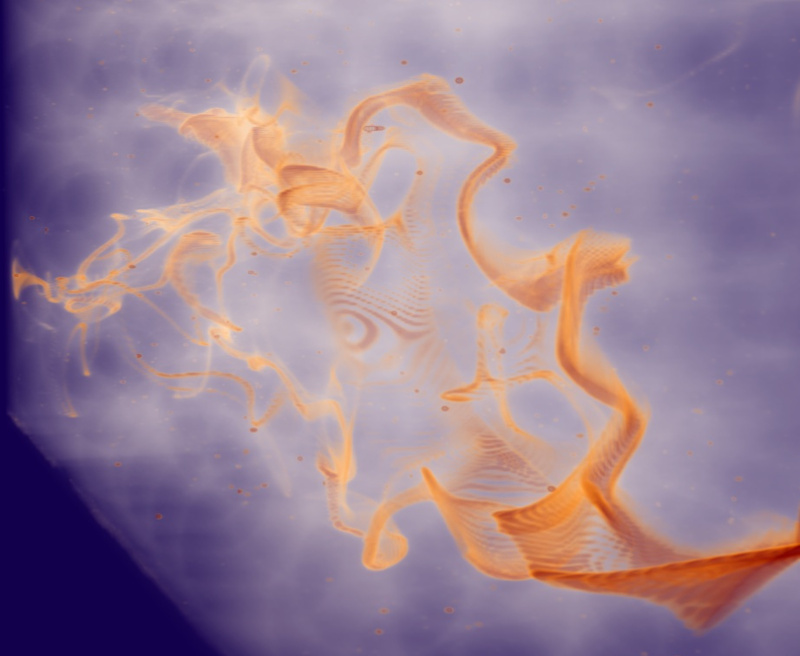
The deformation of fluid elements plays a central role in solute by steepening concentration gradients, increasing interfacial area for diffusive mass transfer, and enhancing encounter rates between solutes and reactive surfaces (e.g. Borgman et al. 2023, Izumoto et al. 2023, Aquino et al. 2023, Le Borgne and Heyman 2025). In three-dimensional porous media, fluid deformation at the pore scale arises from repeated stretching and folding of fluid elements, leading to chaotic mixing (Heyman et al., 2020; Souzy et al., 2020; Lester et al., 2025). While this induces an exponential elongation of fluid elements, confinement in the pore space and interaction with diffusion after the mixing time may limit the impact of pore scale chaotic stretching on Darcy-scale mixing and reaction.
Here we present experiments of mixing and reaction in bead packs (Fig. 1), linking 3D pore scale imaging of conservative and reactive solute concentrations (Sanquer et al. 2024) to Darcy scale measurement of reaction rates in mixing fronts (Izumoto et al. 2025). We show that the effect of pore scale chaotic mixing persists beyond the mixing time and leads to a distinct scaling of the Darcy scale reaction kinetics with time and Peclet number, diverging from the macrodispersion prediction. We propose a mechanism that captures these observations and links pore-scale chaotic mixing to Darcy scale reaction kinetics. Based on this theoretical framework, we discuss the range of temporal and spatial scales, as well as Peclet and Damkohler numbers, over which pore scale chaotic mixing should influence Darcy scale reaction kinetics.
Natural convection in porous materials governs heat transport across scales ranging from planetary subsurface convective systems to engineered cooling systems in micro-electronics.
While the onset of buoyancy-driven flow in such systems is well captured by linear stability analysis within a porous-continuum framework, the subsequent transition toward inertia-dominated and ultimately free Rayleigh–Bénard convection remains neither systematically quantified nor synthesized into a coherent phase map.
Here we combine high-resolution lattice Boltzmann simulations with experimental and numerical results from the literature to formulate a confinement-based scaling description of porous convection across regimes. The dimensionless confinement parameter $Λ=δ/b$, relates the dynamically emerging plume neck width, equivalent to the thermal boundary-layer thickness $δ$, to the characteristic pore spacing $b$.
In the strongly confined limit, a Churchill–Usagi-type interpolation captures both Darcy and Forchheimer asymptotic behaviour and accurately identifies the onset of inertia-dominated convection. As confinement weakens, a critical threshold $Λ_c$ marks the progressive breakdown of porous-continuum scaling: once thermal and velocity length scales fall below the representative pore size, the system transitions toward Rayleigh–Bénard-type dynamics. The resulting regime map links heat-transfer scaling to geometric confinement and porous Prandtl number, clarifying when Darcy–Forchheimer models remain valid and when unconfined plume-driven convection emerges.
This study investigates a velocity PDF-based stochastic model for predicting particle dispersion in flow through porous media. Modeling dispersion involves an inherent trade-off: Pore-resolved simulations provide high resolution and accuracy but require substantial computational effort, whereas reduced-order models improve efficiency at the cost of physical detail. The model investigated here occupies a niche between these approaches, where a reduced-order description is enhanced through statistical upscaling from pore-resolved flow fields.
The model, initially developed by Meyer and Tchelepi [1] and further modified by Khooshapur [2], predicts particle dispersion by upscaling velocity statistics extracted from pore-resolved Eulerian flow fields. The underlying flow simulations and reference particle tracking data are time-dependent and three-dimensional, and obtained from direct numerical simulations (DNS) in explicitly resolved sphere-pack geometries [3,4]. The stochastic transport model itself is formulated in one dimension and targets longitudinal dispersion; transverse dispersion is therefore not addressed and is deferred to future work. The model is based on a generalized random walk framework, in which the Langevin equation for a massless point particle is augmented by stochastic dynamics in velocity space. The drift and diffusion coefficients governing the velocity-space evolution are determined directly from pore-scale velocity statistics.
The model is evaluated across a range of Peclet numbers, pore geometries, and flow regimes. Validation is performed against high-resolution Lagrangian particle tracking simulations using pore-resolved DNS data generated with the in-house, open-source flow solver MGLET [5,6,7], which serves as ground truth for assessing the upscaled dispersion predictions. The model’s ability to predict both the effective longitudinal diffusivity in the Gaussian asymptotic limit and the pre-asymptotic, time-dependent dispersion behavior is assessed within the scope of this study.
Across the explored parameter space, the model consistently reproduces the qualitative evolution of dispersion, including the transition from early-time non-Fickian behavior to late-time Fickian transport, as well as the transition between dispersion-dominated and diffusion-dominated transport along the Peclet number range. Quantitatively, the relative error in effective longitudinal diffusivity spans approximately 5% to 90% over the considered Peclet number range, with a mean error of about 50%, reflecting the strong sensitivity of dispersion to flow regime and Peclet number. One source of discrepancy is identified at low Peclet numbers, where transport approaches the pure diffusion limit and pore-scale geometric constraints induce hindered effective diffusivity, which is an effect not incorporated in the present model formulation. Similarly, while pre-asymptotic dispersion trends are captured qualitatively, exact quantitative agreement is not yet achieved at the time of writing.
Despite these limitations, the model offers substantial computational savings compared to fully resolved particle tracking in three-dimensional DNS, particularly in highly non-linear and turbulent flow regimes. As a stochastic upscaling approach grounded in pore-scale physics, the model provides a framework for estimating macroscopic dispersion while retaining sensitivity to flow heterogeneity. These results highlight both the potential and current limitations of velocity PDF–based models for pore-scale transport, with relevance to applications such as contaminant migration in groundwater, subsurface energy systems, and reactive mixing in porous materials.
Fluid flow and solute transport in microvascular networks plays a central role in oxygen delivery and metabolic waste clearance in the brain [1]. The distribution of blood travel times, the times needed for blood to flow from one arteriolar end to a venular end, has been identified as a key property for the extraction of oxygen by brain tissue [2]. Broad travel time distributions can potentially lead to diseases by disturbing oxygen delivery and waste clearance. This mechanism has been formalized through a Continuous Time Random Walk framework linking the blood travel time distribution to the microvascular networks topology [3]. This stochastic model demonstrates the emergence of critical hypoxic areas induced by anomalous transport, characterizing the emergence of power law distributed travel times. However, current models of blood travel time distributions and oxygen transport have neglected oxygen confinement in red blood cells (RBC) and the oxygen-hemoglobin reaction.
Here we investigate the role of the bi-phasic nature of blood (plasma and RBCs) in anomalous transport through brain microvascular network. We use a highly-resolved network simulation to compute pressures, blood flow rates, and the ratio of RBC flow to blood flow (discharge hematocrit HD ) in a microvascular networks of a mm3 of mouse cortex. We thus simulate the non-proportional distribution of RBCs at diverging bifurcations, phase separation, induced by interactions of RBC with flow in capillaries [4] we show that RBCs exigit a lower probability of low blood flow values than passive particles in blood (Fig. 1A), which tend to reduce the effect of anomalous transport on oxygen delivery. However, the heterogeneity of hematocrit resulting from phase separation (Fig. 1B), induces a variability of oxygen concentration that is independent of travel times and increases the number of critical vessels (Fig. 1C). We further discuss the role of the non-linear binding of oxygen to hemoglobin in oxygen delivery.
Figure 1: A) Probability density functions (PDF) of blood flow (Blue: blood particles; Red: RBC; Dark lines: analytical solutions, dashed for blood, full for RBC). B) Map of HD in a microvascular network of mouse cortex, inlets at HD = 0.4. C) PDF of oxygen normalized by the inlet values (Dark: for blood in monophasic fluid. Red: total oxygen in biphasic blood; Blue: oxygen in plasma).
[1] Timothy W Secomb. Blood flow in the microcirculation. Annual Review of Fluid Mechanics, 49(1):443–461, 2017.
[2] Sune N. Jespersen and Leif Ostergaard. The roles of cerebral blood flow, capillary transit time heterogeneity, and oxygen tension in brain oxygenation and metabolism. Journal of Cerebral Blood Flow & Metabolism, 32(2):264–277, 2012. URL http://www.nature.com/jcbfm/journal/v32/n2/abs/jcbfm2011153a.html.
[3] Florian Goirand, Tanguy Le Borgne, and Sylvie Lorthois. Network-driven anomalous transport is a fundamental component of brain microvascular dysfunction. Nature Communications, 12(1):7295, December 2021. ISSN 2041- 1723. doi: 10.1038/s41467-021-27534-8. URL https://www.nature.com/articles/s41467-021-27534-8.
[4] A. R. Pries, Timothy W. Secomb, P. Gaehtgens, and J. F. Gross. Blood flow in microvascular networks. Experiments and simulation. Circulation research, 67(4):826–834, 1990. URL http://circres.ahajournals.org/content/67/4/826.short.
This work, carried out within the GeoSafe consortium, combines laboratory measurements, imaging, and numerical modelling to demonstrate how pore-scale simulations can constrain upscaling parameters - particularly dispersivity - for continuum-scale reactive transport models. The Digital Rock Physics (DRP)-informed workflow, implemented in our open-source code GeoChemFoam (https://github.com/GeoChemFoam), is applicable to any rock with a suitable CT-image, but is illustrated here for clay-rich rocks.
Clay-rich subsurface rocks are prime host rock candidates for the safe isolation of radioactive waste, due to their low permeability, high sorption capacity, and heterogeneous pore structure. Predicting reactive transport in such materials, however, remains challenging since pore-scale heterogeneities and coupled physicochemical processes strongly influence contaminant migration. Accurate large-scale transport prediction requires numerical models that correctly upscale the pore-scale physics into effective medium properties that characterise the system.
By comparing experimental data with model predictions, we illustrate where simplistic 1D models fall short and demonstrate how a DRP-informed workflow enhances our ability to predict what we measure. We begin with advective flow-through experiments in a reaggregated rock sample to measure fluorescein breakthrough, followed by batch sorption experiments to determine the distribution coefficient, $K_D$. One-dimensional PHREEQC reactive transport simulations employing a linear sorption model and the experimentally determined $K_D$ reproduce the overall effluent concentrations reasonably well, yet a persistent mismatch suggests the influence of dispersion - a key parameter in modelling contaminant and radionuclide migration. The challenge here is that dispersivity is a geometry-specific property and generally unknown a priori.
We utilise GeoChemFoam to compute the dispersivity of the sample, by solving a closure problem within a micro-CT image dataset. Incorporating this DRP-informed dispersivity into the PHREEQC model yields excellent agreement with the experimental breakthrough curve. Under these conditions, we show that DRP-informed upscaling enables us to reproduce experimental breakthrough without the need for parameter tuning. We also illustrate how GeoChemFoam can be leveraged to complement the experimental dataset by simulating different conditions such as varying flowrates. In conclusion, DRP effectively links experiments and models, determining upscaling parameters for input to field-scale models relevant to safety assessments.
State-of-the-art imaging is transforming how we study porous media, yet access to advanced facilities and expertise can remain a major barrier. In this talk, I will introduce the EXCITE Network, a European initiative that provides free-of-charge transnational access to leading imaging infrastructures and specialist support for Earth and Environmental sciences.
EXCITE brings together cutting-edge techniques, including X-ray and electron imaging and other advanced modalities, enabling researchers to tackle complex questions in porous media characterization and dynamic processes. The presentation will outline how the network works, what types of facilities and expertise are available, and how researchers can apply for access and engage in collaborative projects. The EXCITE Network offers a unique opportunity to accelerate high-impact research by lowering barriers to world-class imaging resources.
Mixing and clogging phenomena in porous media are of major interest in both industry and agronomy. While numerous studies have investigated the macroscopic influence of porous microstructure on flow, the exact flow paths have long remained inaccessible due to the opacity of most natural media. In this work, we use X-ray 3D tomographic data to fabricate transparent resin replicas of porous structures through 3D printing, thus allowing for direct visualization techniques within real porous media microstructures. By flowing an index-matched, tracer-seeded liquid through these transparent models, we directly visualize streamlines, to characterize the flow kinematic and quantify how subtle microstructural changes affect flow behavior. Such characterization will then allow to investigate the transport properties of the medium, namely the mixing & the dispersion process, and to decipher the effect of microstructural heterogeneities.
Understanding the multiscale pore structure of high-porosity sandstone is essential for accurately modeling subsurface fluid transport. In this study, two sandstone cores (YS1 and YS2) were imaged using X-ray computed tomography (CT) at three voxel resolutions (50.8 μm, 21.6 μm, and 12 μm) to quantify scale-dependent pore morphology and its impact on permeability estimation. Across resolutions, we evaluated porosity, pore size distribution, pore-shape roughness, and fractal dimensions to characterize pore complexity and spatial heterogeneity. CT resolution strongly controls apparent pore visibility and connectivity. When the voxel size increases from 21.6 μm to 50.8 μm, total porosity drops markedly from 0.077/0.078 to 0.014/0.017 for YS1/YS2, respectively, indicating substantial loss of microporosity at coarse resolution. At 12 μm, connected pore volume fractions reach 10.37% (YS1-S) and 9.40% (YS2-S), close to total porosities of 12.64% and 12.23%, suggesting near-percolating pore networks at the finest scale. Consistently, pore-network modeling (PNM) is feasible only at 12 μm and yields absolute permeabilities of 1.94×10⁻¹² m2 (YS1-S) and 3.65×10⁻¹² m2 (YS2-S). To enable permeability quantification in under-resolved volumes where global percolation is absent (21.6 μm and 50.8 μm), we propose a local connectivity, sliding-layer approach. The CT volume is decomposed into overlapping three-slice unit layers; locally continuous pore segments within each unit are used to estimate layer permeability via simplified Hagen–Poiseuille assumptions, and bulk permeability is obtained through harmonic aggregation. The proposed method produces permeability estimates of 2.93×10⁻¹² m2 (YS1-L), 2.76×10⁻¹² m2 (YS1-M), 4.88×10⁻¹² m2 (YS2-L), and 2.75×10⁻¹² m2 (YS2-M), thereby bridging the resolution gap where conventional PNM fails. Although simulated permeabilities remain higher than laboratory gas permeability measurements, the framework provides a scalable pathway linking multiscale structure descriptors to flow estimation under realistic connectivity constraints, with implications for digital rock physics and upscaling.
The study of dynamic processes in porous and confined media, such as phase transitions, interfacial transport, and crystal growt, under extreme environmental conditions (e.g., high pressure, low temperature, corrosive fluids) remains a formidable experimental challenge. While advanced imaging techniques including X-ray computed tomography and laser scanning microscopy have greatly enhanced our spatial and chemical mapping capabilities, they often lack the temporal resolution, optical access, or environmental compatibility required for in situ, real-time monitoring of rapid phenomena. To bridge this gap, we present a novel imaging platform that integrates a high-pressure optical cell (HPOC) with a quantitative phase camera (Q-camera) based on orthogonal polarization multiplexing shearing interferometry (OPSI). This system enables label-free, non-invasive, and real-time 3D quantitative phase imaging under precisely controlled extreme conditions, offering continuous spatial and temporal resolution of transparent and weakly scattering samples.
The core innovation lies in the Q-camera and HPOC, which can be directly coupled to a conventional optical microscope without altering its native imaging functions. By capturing full-field optical phase shifts induced by the sample, the system reconstructs quantitative maps of refractive index distribution and physical thickness with sub-micrometer spatial and millisecond-scale temporal resolution. Unlike fluorescence-based methods or electron microscopy, no staining, labeling, or vacuum conditions are required, making it uniquely suitable for studying dynamic fluid-solid interactions in situ. The integrated HPOC allows operation across a wide range of temperatures (e.g., −20°C to 150°C) and pressures (up to ~500 MPa), thereby replicating conditions relevant to geological, energy, and chemical engineering applications.
We demonstrate the capability of this platform by investigating crystal growth dynamics from solution under high-pressure, low-temperature environments—conditions typical of gas hydrate formation but equally applicable to mineral precipitation, ice crystallization, or pharmaceutical polymorph growth. The system simultaneously tracks evolving crystal morphology, interfacial propagation, and surrounding solute concentration fields in 4D (3D + time). Quantitative phase data are converted into metrics such as growth rate, local supersaturation, and diffusional flux, providing insights into kinetics and transport limitations without physical intrusion.
Beyond crystallization studies, this imaging approach holds broad applicability in porous media research. It can visualize multiphase flow, solute dispersion, biofilm development, and precipitation/dissolution cycles in micromodels, beads, or natural rock analogs under reservoir-relevant conditions. The method’s high phase sensitivity also enables detection of minute refractive index variations associated with chemical reactions or thermal gradients, offering a complementary tool to spectroscopic or tomographic techniques.
In summary, the OPSI-based Q-camera+HPOC platform represents a significant advance in real-time, non-destructive imaging for extreme-condition science. By delivering continuous 3D quantitative phase data under high-pressure and low-temperature regimes, it overcomes key limitations of existing imaging modalities and opens new avenues for investigating dynamic processes in porous materials, geo-energy systems, and chemical engineering applications. We invite discussion on its integration with other analytical methods and potential for standardization in operando imaging workflows.
Tomographic techniques play an important role in the parametrization and validation of reactive transport models by enabling spatially and temporally resolved observations of transport processes. Imaging-based approaches, in particular, enable direct observation of flow paths that are impossible to infer from bulk measurements alone. These approaches also allow for the detection of localized alterations in transport pathways that would otherwise be difficult to identify. In recent years, positron emission tomography (PET) has emerged as a powerful tool for investigating transport phenomena at the laboratory scale [1, 2].
A novel advancement is the application of PET to the tomographic investigation of surface reactivity, with a particular focus on sorption reactions. By directly quantifying ionic radiotracers that undergo reversible or irreversible sorption, PET can be used to spatially resolve interface reactivity [3]. In this contribution, we present recent results from sorption and desorption tomography experiments. These results demonstrate that it is possible to make quantitative assessments of contrasts in surface reactivity without relying on a priori assumptions about specific surface area or surface normalization. Instead, reactivity contrasts are inferred directly from the observed tracer dynamics, providing an integrated measure of surface–solute interaction under flow conditions [4].
These advances open up a wide range of potential applications. In the context of nuclear waste disposal, PET-based surface reactivity tomography offers new possibilities for investigating radionuclide retention on barrier materials. In radioecology and environmental geochemistry, the method enables mechanistic trace-level studies of contaminant uptake, remobilization, and competitive sorption processes in heterogeneous systems.
References:
Underground hydrogen storage in porous formations (UHSP) is emerging as a critical technology for large-scale energy buffering, enabling TWh-scale capacity, geographic flexibility, and cost advantages over surface storage. However, unlike conventional hydrocarbon reservoirs, UHSP involves cyclic injection and withdrawal of hydrogen, imposing repeated stress variations on reservoir rocks over decades. These cycles can significantly influence porosity, permeability, and long-term storage integrity.
This work first outlines the geomechanical context of UHSP. Suitable reservoirs typically lie at depths of 500–2500 m, where porosity and permeability are strongly lithology-dependent. At these depths, stress conditions are governed by overburden and regional tectonics. Seasonal pressure fluctuations during injection and withdrawal generate complex stress paths that may induce dilation, compaction, and shear mobilisation. Such processes can degrade reservoir properties, trigger fault reactivation, cause surface deformation, and compromise caprock integrity.
We then present laboratory experiments on carbonate rocks subjected to cyclic loading designed to replicate UHSP operations. Stress paths include both pure compaction and shear-enhanced compaction. Our results show that moderate depletion leads to minor creep, while significant depletion causes irreversible, time-dependent compaction. Under high-depletion scenarios, cyclic stress variations amplify compaction and consistently reduce permeability. Notably, regardless of loading type (time-dependent or cyclic), porosity change emerged as a robust descriptor linking mechanical behaviour to permeability evolution.
To interpret and predict these behaviours, an advanced constitutive framework was developed. The model combines an elastoplastic formulation with time-dependent elements to capture creep and progressive compaction. Furthermore, an additional rheological component was introduced to represent time-independent ratcheting, enabling accurate simulation of irreversible strain accumulation during repeated loading. This modelling framework was calibrated and validated by the experimental data.
When CO₂ is injected to induce fractures in rock, the resulting fractures tend to be more complex, and the breakdown pressure is generally lower than when water is injected. This study presents numerical experiments that reveal lower breakdown pressures under supercritical CO₂ injection and demonstrate that fracture paths are more strongly influenced by pre-existing weak interfaces due to CO₂’s low viscosity.
A fracture-propagation model for CO₂–water two-phase flow is developed based on a thermo-hydro-mechanical phase-field approach. The mass-balance equation is derived for each constituent (water and CO₂), accounting for capillary effects and the corresponding equations of state. In addition, the equivalent pressure from the two fluids modifies the potential-energy description in thermo-poro-elastic media compared with our previous micromechanics-based single-phase fluid model. The proposed model is verified against analytical solutions for one-dimensional incompressible, immiscible two-phase flow and for plane-strain hydraulic-fracture propagation, known as the KGD fracture.
Ground surface settlement is a common phenomenon in urban tunneling through layered soil–rock systems, particularly where bedrock faults intersect the tunnel and connect to overlying soils. This study employs a fully coupled hydro‑mechanical finite element model to quantify how stratigraphy and fault properties jointly govern the magnitude, spatial distribution, and temporal evolution of settlement in a composite profile comprising an overconsolidated clay layer, a thin permeable frictional layer, and faulted crystalline bedrock. The simulations explore two configurations (with and without a frictional layer), a wide range of fault permeabilities and dip angles, and time scales from 1 day to 10 years. Results indicate that the presence of a thin, highly conductive frictional layer amplifies long‑term surface settlement by approximately threefold and produces wider, flatter settlement troughs compared with a simple clay–bedrock system. For highly permeable faults (with fault permeability kf ~10-6 to 10-12 m2), the settlement profile is strongly affected by the fault's position, with the maximum settlement shifting from above the tunnel axis toward the projection of the fault intersection at the soil–rock interface, whereas low-permeability faults (with kf < 10-12 m2) have limited influence and keep the maximum settlement above the tunnel. The thickness of the frictional layer also plays an important role in ground settlement, contributing to increased settlement magnitudes. These findings provide useful insights for developing tunneling strategies, especially in urban areas encountering composite soil-rock ground conditions, and for improving the safety assessment and the planning of future tunneling projects.
Geological Carbon Storage (GCS) involves long-term, megaton-scale CO2 injection that induces coupled fluid flow and mechanical deformation over spatial scales of tens of square kilometers. In contrast, most experimental investigations of poromechanical behavior are confined to centimeter-scale samples, limiting their ability to capture representative hydro-mechanical interactions relevant to field conditions. This scale gap motivated the development of our intermediate-scale experimental platform capable of resolving coupled flow–deformation processes under controlled yet realistic conditions.
The experimental setup enables controlled multiphase flow, pressure buildup, and stress–strain evolution in a heterogeneous porous medium, providing a physically meaningful bridge between small-scale laboratory tests and field-scale observations. Particular attention is given to capturing key hydro-mechanical interactions governing deformation and fluid migration during injection and post-injection phases.
The experimental design is supported by an extensive numerical poromechanical modeling campaign. While geological storage systems may involve fully coupled thermo-hydro-mechanical-chemical processes, this study focuses on nonlinear, isothermal hydro-mechanical coupling with explicit representation of multiphase flow and dissolved CO2 transport. Numerical simulations are used to: interpret the evolution of pressure, deformation, and dissolved-phase CO2 during injection; optimize injection protocols to ensure experimental efficiency and representativity of in situ conditions; and explore limiting scenarios and assess sensitivity to key flow parameters.
This approach supports more robust upscaling strategies and advances the development of standardized methodologies for assessing the long-term performance and integrity of GCS systems.
The retention of suspended particles in porous media plays a critical role in a wide range of subsurface processes, including filtration, contaminant transport in environmental applications, and formation damage in subsurface energy applications. As flow with suspended particles flow through porous media, they may deposit or clog flow pathways, changing local porosity, and ultimately impacting large-scale hydraulic behavior (permeability). Although pore-scale computational fluid dynamics (CFD) coupled with discrete element models (DEMs) can resolve these mechanisms, their high computational cost prevents extensive sensitivity analyses. Moreover, the absence of large pore-scale datasets suitable for surrogate modeling represents a major research gap.
To address this, we systematically extended the pore-scale model of Sadeghnejad et al. (2022) to generate a large-scale dataset for machine-learning surrogate development. Key physical and geometric parameters, including particle size, concentration, injection velocity, and pore-space morphology, were varied across wide ranges. For each realization, the Eulerian-Lagrangian workflow (including Navier-Stokes flow simulation, individual particle tracking modeling, dynamic voxel-based deposition, and porosity/permeability updating) was executed until steady post-retention conditions were achieved. Approximately 130,000 simulation points were run, consuming ~49,000 CPU-hour, which is one of the largest particle-retention datasets reported to date. Moreover, outliers of the dataset were removed by the Isolation Forest algorithm. Seven machine learning models (i.e., Adaptive Gradient Boost (AGB), Decision Tree (DT), Extremely Randomized Trees (XRT), Extreme Gradient Boost (XGB), Gradient Boost Machine (GBM), Multi-layer Perceptron (MLP), and Random Forest (RF)) were trained on 80% of the dataset with standard hyperparameter values to predict the final porosity and permeability of the domain after particle deposition.
Initial evaluations identified XGB and XRT as the most promising surrogate candidates. Both models were subsequently refined through Bayesian hyperparameter optimization to enhance predictive robustness and generalization. Model performance was assessed using five-fold cross-validation and the metrics Mean Squared Error (MSE), Mean Absolute Error (MAE), and the coefficient of determination (R²). The optimized models achieved excellent predictive accuracy, with R² values exceeding 0.98 for porosity and 0.90 for permeability, respectively. In addition to their accuracy, these surrogates provide orders-of-magnitude faster inference than pore-scale simulations, underscoring their suitability for rapid assessment of particle-retention behavior. Comparative performance metrics and predictive outcomes are illustrated in the following figure.
Capturing dynamic processes like pore-filling and snap-off using fast synchrotron X-ray micro-tomography enables time-resolved quantitative and qualitative analysis. However, time-resolved imaging often generates noisy, low-contrast images, and the resulting datasets are often large. These factors present challenges for effective and accurate 4D image segmentation. Frame-by-frame segmentation methods treat each time step as an independent 3D image without considering temporal consistency, which often results in flickering and physically implausible interface evolution.
To address this, we present Spatio-Temporal SwinUNETR (ST-SwinUNETR), a deep-learning technique that segments 4D images by modelling space and time jointly. We validate the method on dynamic synchrotron micro-CT datasets and evaluate performance using both image-based and physics-based criteria, including porosity and phase saturation over time. ST-SwinUNETR improves spatial accuracy while enhancing temporal consistency of the predicted segmentations over time.
Deep geothermal energy exploitation relies heavily on predicting heat transport within highly heterogeneous porous formations. The multi-scale nature of subsurface geology (ranging from pore-scale variances to reservoir-scale fracture networks) coupled with the non-linear interaction between Darcy flow and advective-diffusive heat transfer, renders traditional numerical solvers computationally prohibitive for real-time optimization and many-query uncertainty quantification. Scientific Machine Learning, specifically Operator Learning, offers a promising path to overcome this bottleneck by learning mesh-independent solution operators.
In this work, we present a rigorous analysis of two leading operator learning paradigms: Fourier Neural Operators (FNO) and Deep Operator Networks (DeepONet). We utilize a high-fidelity benchmark of dipole flow and heat transport simulations in stochastically generated heterogeneous media to evaluate the capacity of these architectures to act as reliable surrogates for the management of geothermal reservoirs. We present an exhaustive comparative analysis of both architectures, focusing not just on global error metrics, but on the spatial and spectral distribution of residuals. Furthermore, we investigate the internal mechanisms of both models to understand their respective failure modes. By explicitly mapping how each architecture encodes physical heterogeneity, we propose novel strategies to mitigate spectral bias, enabling hybrid architectures that reconcile global spectral efficiency with the local resolution necessary for robust geothermal digital twins.
Our primary contribution is the demonstration and quantification of ``spectral bias'' in standard FNO architectures. While FNOs exhibit exceptional performance in diffusion-dominated regimes, our results reveal a structural inability to resolve high-frequency spatial features in advection-dominated scenarios. Specifically, the intrinsic frequency truncation in FNO layers acts as a low-pass filter, leading to significant localized errors around singularities (injection/production wells) and sharp thermal fronts. This smoothing effect compromises the physical fidelity required for operational decision-making in geothermal doublets.
Comparatively, Deep Operator Networks (DeepONet) utilize a dual Branch and Trunk structure that learns an adaptive basis, theoretically offering superior resolution for local singularities compared to the fixed Fourier basis of FNOs (Lu et al., 2021). However, recent analyses indicate that while DeepONets offer geometric flexibility, standard MLP-based trunks suffer from their own spectral bias, leading to slower convergence when resolving multimodal global fields compared to spectral methods (Wang et al., 2021; Rahaman et al., 2019). To reconcile these trade-offs, we propose a novel hybrid strategy inspired by recent `global-local' operator learning paradigms (Wen et al., 2022; Jiang et al., 2024). Our approach integrates FNOs to efficiently resolve the dominant global transport dynamics with a localized DeepONet correction module, specifically targeted to capture the high-frequency residuals at injection wells. This architecture aims to bridge the computational speed of spectral methods with the physical fidelity required for high-Péclet geothermal reservoir management.
Machine learning is increasingly being explored as a surrogate for pore-scale multiphase flow modelling in porous media, yet a clear understanding of how different model classes perform under realistic flow conditions remains limited. In particular, it is still unclear which modelling choices are most suitable for capturing interfacial dynamics, geometry–flow coupling, and temporal evolution at the pore scale.
In this presentation, we investigate representative machine learning models for pore-scale multiphase flow prediction using datasets generated from lattice Boltzmann method (LBM) simulations on micro-CT-based pore geometries, together with experimental observations from pore-scale flow imaging. The study focuses on physically meaningful cases that retain access to velocity fields, phase distributions, and geometric information, enabling controlled evaluation of model behaviour under well-defined physical settings.
We compare several classes of machine learning models, including convolutional neural networks operating on voxelised domains, graph-based approaches, and autoregressive temporal models. Performance is assessed in terms of prediction accuracy, stability under multi-step rollout, sensitivity to pore geometry, and generalisation across different settings. Beyond aggregate error metrics, we also examine qualitative failure modes, such as loss of interfacial sharpness, accumulation of long-term drift, and reduced robustness during rapid interface rearrangements.
By combining controlled simulation data with experimentally motivated examples, this work aims to provide a more practically grounded view of machine learning for pore-scale multiphase flow. The results highlight both the promise and the current limitations of these approaches, and help clarify how data-driven models can be used alongside conventional pore-scale simulation and experimental analysis.
Coastal protection structures face increasing challenges from sea level rise, extreme weather events, and material degradation [1]. Innovative approaches such as cathodic protection, which induces the precipitation of calco-magnesian deposits (e.g., brucite and aragonite), provide promising strategies for reinforcing marine infrastructures in a sustainable manner [2-3]. However, the long-term durability of these deposits depends strongly on their evolving porosity, mineral balance, and transport–reaction processes [4]. Accurate prediction of this evolution is therefore crucial for assessing future stability of coastal protection measures.
Simulating these processes requires solving coupled nonlinear partial differential equations describing multispecies diffusion-reaction kinetics in heterogeneous media. Traditional direct numerical approaches, such as finite-difference, finite-volume, finite-element, or spectral methods, deliver accurate results but are computationally expensive, particularly when applied to long-time evolution, parameter studies (with significant number of species) [5].
To address these limitations, recent advances in operator-learning neural networks offer surrogate modeling approaches that learn mappings between function spaces and enable generalization across heterogeneous porous media [6–9]. In this work, operator learning is investigated as a surrogate modeling strategy for multispecies reactive transport in heterogeneous media. The governing dynamics are described by coupled diffusion–reaction equations with spatially varying transport properties derived from heterogeneous porosity fields. Numerical simulations are used to generate reference datasets capturing nonlinear spatiotemporal concentration dynamics under reaction-dominated regimes. A class of neural operator models is evaluated, with integral-transform-based formulations operating in latent spaces, where the learned integral operators may be linear or nonlinear [9]. These models are trained to advance the system in time and subsequently rolled out for temporal prediction.
Using this framework, model performance is assessed through quantitative error metrics and qualitative comparisons of spatial concentration patterns over extended time horizons. The results indicate that integral-transform-based operator models can achieve performance comparable to Fourier-based neural operators for multispecies reactive transport problems. In particular, learned integral kernels provide additional flexibility for representing high-frequency spatial features, which are not efficiently represented by Fourier-based neural operator models. Similar performance is observed with a reduced number of model parameters, motivating continued efforts toward improving accuracy and stability through architectural and training refinements.
Taken together, these results indicate that integral-transform-based operator learning may complement existing neural operator models in reactive transport applications.
Water transport in wood plays a central role in many industrial processes, yet the mechanisms governing imbibition still remain difficult to characterise (and thus to understand) due to the anisotropic and multiscale structure of wood and to the intricate coexistence of bound and free water during imbimtion. In this work, water imbibition in European beech (Fagus sylvatica) is investigated along the longitudinal, radial, and tangential directions using in situ 4D X-ray microtomography combined with digital volume correlation (DVC). The time-resolved tomographic images are analysed to quantify both the wood swelling induced by bound water uptake and the presence of free liquid water:
• The swelling strain field, derived from Hencky strain tensor field, is used as an indicator of bound water content in the cell walls, assuming a proportional relationship between swelling and bound water concentration: the time evolution of the swelling strain is used to analyze the cell wall diffusion of bound water. Effective apparent diffusion coefficients of the order of 10⁻⁹ m² s⁻¹ are obtained, with a marked anisotropy: diffusion is faster along the longitudinal direction than in the radial and tangential ones. These values are consistent with recently reported diffusion coefficients for bound water in hardwoods.
• In addition, the residuals of the DVC analysis reveal the presence of free liquid water in the vessels. For longitudinal imbibition, a discrete water front is observed, characterised by localised and abrupt jumps separated by periods of stagnation. The average kinetics of this front is significantly slower than that predicted by classical capillary models, indicating that capillary rise alone cannot control liquid water transport at the sample scale. A comparison between the evolution of the free water front and the swelling kinetics shows that the advance of free water is governed by the diffusion of bound water in the cell walls, while capillary effects operate locally once sufficient wetting and connectivity conditions are met.
• In contrast, no distinct liquid front is observed during radial and tangential imbibition, where pore filling appears progressive and spatially diffuse, as a possible recondensation process of bound water after full saturation of cell walls.
Inline with some recent literature works, these results tends to prove that bound water diffusion acts as a major water transport mechanism controlling water imbibition in beech wood and provide a unified experimental framework to analyse coupled diffusion–capillarity processes in biosrouced materials using 4D imaging.
As a viable solution to climate change, carbon capture and storage (CCS) plays a crucial role in achieving net-zero emissions. Injecting CO2 into deep geological formations leads to fluid pressure buildup and CO2 plume migration, which may induce seismic events or contaminate groundwater resources. These hazards necessitate risk assessment and storage prospect evaluations, which rely heavily on forecasts of subsurface flow processes.
However, traditional numerical approaches could be computationally prohibitive, especially when performing uncertainty analysis for complex, heterogeneous subsurface environments. While Fourier Neural Operator (FNO) has emerged as a high-speed surrogate model, its reliance on Fast Fourier Transform restricts its applications to structured grids. This poses a significant limitation for geological models where unstructured grids are necessary to characterize complex fault and fracture structures. Such limitations are particularly relevant for tectonically active storage site.
Taoyuan, Taiwan has been considered as a potential site for underground geological storage due to its thick sedimentary rock formations overlain by a shale caprock. Nevertheless, owing to locate at the convergent boundary between the Eurasian plate and the Philippine Sea plate makes it one of the most seismically active regions in the world. Seismic profiles from the area also indicate the presence of several possible faults, which may pose challenges for long-term storage security.
In this work, we propose Geometric-aware Fourier Neural Operator to efficiently evaluate the storage potential and relevant risk at the Taoyuan site. The basic geological model is supported by core data and seismic profiles. To build a robust training and validation dataset, we deploy well-known multiphase flow simulator TOUGH2 with ECO2N module, simulating CO2 injection across varying depth in 50 years. Also, the dataset encompasses a wide range of stochastic geophysical properties distributions and diverse fault architecture to account for subsurface uncertainty. The expected results provide a high-accuracy surrogate for multiphase fluid simulation in complex fault systems, enabling sensitivity studies to be several orders of magnitude faster than the traditional solvers.
The intricate nature of subsurface carbon mineralization reactive transport processes has driven researchers to employ artificial intelligence (AI) and machine learning (ML) for analyzing extensive experimental and monitoring and simulation-based data collections. The research assesses present AI-based investigation methods which use data-driven approaches to study carbon mineralization and reactive transport in porous and fractured systems for better physical modeling.
The review presents an overview of ML applications which analyze geochemical data and calculate reaction parameters and simulate complex reactive transport processes. The research evaluates ML-based surrogate models which replace reaction solvers and perform sensitivity analysis and uncertainty exploration through their reported boundaries and their identified constraints. The research employs data-driven methods to detect mineral dissolution and precipitation patterns which emerge from simulated and experimental data.
The review examines the application of physics-informed ML methods which merge mass conservation and reaction kinetics equations into learning models for reactive transport modeling. Existing studies are discussed in terms of their reported ability to improve physical consistency and stability relative to purely data-driven models. The literature shows three main challenges which include stiff reaction kinetics and scale dependency and the limited availability of sparse data.
The paper examines AI applications for monitoring systems and data integration through its evaluation of pattern recognition methods for chemical concentration time series and mineralization process spatial data. The review explains how AI systems handle different types of data while helping users understand complicated reactive systems yet it identifies multiple issues which affect system interpretation and data transferability and uncertainty measurement.
The review unites previous studies to demonstrate how AI functions as an analytical instrument which improves physics-based porous media modeling systems for carbon mineralization research.
This study investigates the complex phenomenon of buoyancy-driven leakage through a high-permeability channel (HPC) in a porous medium. In nature, such buoyancy-driven flows may be observed in several contexts, including underground hydrogen storage, CO$_2$ sequestration, and water infiltration in soil. For our study, we used a transparent acrylic rectangular tank for performing the experiments. The tank was filled with glass beads of different diameters to create the HPC and a low-permeability porous medium (LPPM) around it. In this setup, we performed experiments to examine the flow behavior of a low-density fluid, i.e. injected at the bottom, through the HPC embedded within the LPPM, and saturated with ambient fluid of higher-density. We obsered two distinct flow scenarios: (a) the low-density fluid leakages remains confined within the HPC while leaking through it upward with no-gravity current (NGC) formation, and (b) the fluid leaks through the HPC into the LPPM and subsequently forms a gravity current (GC) underneath the impermeable layer (caprock). The objective of this study is to determine the critical injection rate of the low-density fluid for which we can separate out these two distinct behaviors. This critical discharge depends on various parameters, including the permeability ratio between the HPC and LPPM, the width of the HPC, the discharge rate, and the density difference between the injected and ambient fluids. For a permeability ratio of 9, experiments were conducted with injection rates ( q ) between 0.09 to 1.76~cm$^{3}$/s and density differences ranging from 0.5\% to 10\%. Figure~1 illustrates the two flow scenarios: Exp-1, figures~1(a) and~1(b) correspond to the NGC case, while Exp-2, figures~1(c) and~1(d) show the GC case. Figure~2 shows the delineating line separating the two scenarios for setup with various discharge and density difference values. The curve exhibits a negative slope of 0.172. Future work will include additional experiments with higher permeability ratios and the validation of these experimental findings using both numerical and analytical models.
Gas compressibility induces a nonlinear relationship between the boundary forcing — imposed pressure, volumetric flux and mass flux — and pressure evolution in porous media, producing qualitatively distinct relaxation paths of the pressure field toward its steady state under the different forcings. This behavior is increasingly relevant in gas reservoir operations, particularly with the advent of underground hydrogen storage. Here we analyze it systematically for isothermal ideal gases using the porous medium equation (PME) written in pressure-squared form. By non-dimensionalizing the PME, we identify a compressibility number, $\Pi$, which controls the degree of nonlinearity in the pressure-squared diffusion process and organizes steady and transient flow across injection conditions. The steady pressure profile features a boundary layer of width $\propto \Pi^{-1}$ toward the outlet boundary at fixed pressure, where the flow velocity overshoots and the gas expands at a rate $\propto \Pi^2$. For transients, we calculate numerical solutions of the PME across six decades in $\Pi$. First, we estimate effective pressure-squared diffusion coefficients, which provide a coarse-grained measure of nonlinear relaxation and are defined as the inverse of the time required to reach steady state; they plateau and scale $\propto \Pi^{1/2}$ in the limits $\Pi \ll1$ and $\Pi \gg1$, respectively, with the plateau values and onset of the scaling depending on the injection mode. For imposed pressure, the effective diffusion is accurately captured by a linear diffusion model evaluated at the arithmetic mean pressure, indicating a valid upscaled description of gas flow. To analyze how flow compression distributes over space and time within the domain, we consider the second spatial derivative of pressure or, equivalently, its curvature. Using time-series of positive and negative curvature mass we show how the flow transitions from compression- to expansion-dominated regime, with a $\Pi$-dependent transition time. Such regimes appear mixed and not directly observable in the pressure and flow fields. Finally, we note that the curvature obeys an advection–diffusion–reaction (ADR) evolution equation, which helps interpret the behavior of the observed curvature front. Future research avenues include extending the framework to real gases and heterogeneous porous media, as well as analyzing pressure-curvature dynamics away from the influence of boundaries.
Clay is a challenging material in dredging due to its complex soil properties, high plasticity, and stickiness. It sticks to the equipment (Winkelman, 2025b) and forms clay balls in the pipeline (Boor,2004). Which leads to unpredictable production rates and increased downtime (PIANC,2016). With the growing demand for construction materials in infrastructure, clay can be an alternative for liners, fillers, and base layers in civil engineering (Koster,2009). However, to make beneficial use of clay, the operational challenges in handling must be mitigated (Hoff,2012).
. Additionally, predicting the required forces and power for cutting clay is difficult, making equipment selection a high-risk decision (CEDA/IADC,2018). The aim of this research is to improve equipment performance in clay and enable contractors to work efficiently with clay. (Winkelman, 2024). Our experiments validated existing clay cutting models, showing that the cutting process can transition between continuous and discontinuous modes depending on dimensionless parameter combinations for soil conditions (e.g. adhesion and cohesion) and operational settings (e.g. blade length and cutting depth). This transition significantly influences the magnitude of power required. Furthermore, changes in the direction of cutting forces perpendicular to the movement can cause cuttings to become trapped between the blades, resulting in cutter head clogging.
To investigate the transition in cutting behaviour as a result of blade angle, blade length, cutting velocity, and cutting depth, a soil bin test was conducted using a series of linear experiments with a single blade (Winkelman,2025a). The blade dimensions match those of a real cutter tooth, eliminating the need for scaling. The soil bin was designed with the same width as the blade to ensure a two-dimensional flow pattern (Hatamura,1975). For our experiments, a homogeneous, well-defined artisan clay was used, characterized by a cohesion between 34 and 73.5kPa and a plasticity-index of 17.33%. Adhesion and external friction were modified using different tool materials. Reaction forces were recorded in horizontal, vertical, and rotational directions and transformed into cutting forces at the blade tip. Cameras captured both top and side views. A grid pattern was printed on the specimen’s side to visualize deformations and deformation rates, which were analysed using PIVlab®. These observations were compared to CFD simulations employing a Herschel–Bulkley model.
Our research demonstrates that internal and external friction play a significant role in cutting behaviour and cannot be neglected, as current cutting models do (Miedema,2014). Incorporating these forces into predictive models will significantly improve production estimations. While the Herschel–Bulkley CFD model shows promising predictive capability, discrepancies remain between required input conditions for the simulation and actual test conditions. Adhesion, in particular, is challenging to model but can be accounted for through improved approaches. Once these refinements are integrated into production estimation models and used to improve the design of the cutter. Reduction of cutter head clogging, dredging projects involving clay can become a viable and cost-effective alternative to traditional sand-based constructions.
The understanding and, in fine, control of the transport properties of charged polymers, i.e. polyelectrolytes (PEs), inside nanoporous media is important to design new devices for nanofluidic or for biological applications such as sequencing of DNA strands or designing pores for biosensors, filtration or chemical separation. In particular, the geometrical constraints imposed by the nanoporous medium and the existence of charges inside may modify interfacial phenomena such as the diffusion and adsorption of PE chains.
Here we propose to address such phenomena through the use of anodic aluminum oxide (AAO) membranes (synthesized in the lab) as model nanoporous medium. First, extensive characterization has shown that AAOs are made of non-connected, parallel cylindrical and monodisperse nanochannels with perfectly tunable diameters, Dp (10-100 nm), interpore distance, Dint (50-150 nm), and length, Lp (10 to 60 μm, see SEM section view in fig. 1) [1,2]. When immersed in solution, the AAO wall charge depends on pH and the isoelectric point of the walls is around pH=9 [3,4]. At low pH (< 6) the AAO walls are then positively charged, while at high pH (> 10) they are negatively charged. Then, multiple transverse streaming potential measurements have been carried out to monitor, through the ζ-potential determination of the wall surface, the penetration of a well-known PE, sodium polystyrene sulfonate (NaPSS) in AAO [3]. A typical ζ-potential evolution with time can be described as follows. At t=0, the AAO is positively charged and, in contact with PE, a charge reversal from positive to negative can be observed until the ζ-potential stabilizes at a constant value, suggesting a gradual adsorption of PE chains at the surface until equilibrium is reached. Our analysis of the ζ-potential curves for different AAO geometries (Dp, Lp) and PE characteristics (concentration or molecular weight) reveals that PE penetration is driven by diffusion and that adsorption is irreversible. Additional X-ray fluorescence imaging experiments, an analytical technique with high spatial resolution, have been performed to map the amount of PE as a function of PE penetration time. It confirms the gradual penetration and adsorption along the nanochannel correlating well with the ζ-potential variation. All combined, it leads us to propose a model to explain all the results: the first PE chains adsorb onto the first accessible sites on the AAO and the following chains must gradually diffuse along the channel to find the next available free sites, and so on until the surface is fully saturated (see Scheme in Fig. 1).
So far, the kinetic of penetration has not been addressed quantitatively because the estimated quantity of PE inside AAO is low (hundreds of ppm), preventing the use of classical analytical techniques. Our results shows that the diffusion and adsorption mechanism of PE inside nanoporous medium can be quantitatively assessed by combining streaming potential experiments and X-ray fluorescence imaging.
When conditioning radioactive waste, enhancing the sorption properties of binders is essential. This can be accomplished through the use of various additives, such as artificial silicates. However, these additives can significantly affect the mineral composition of the cement and, consequently, alter its pore structure, including the size and distribution of the pores.
The aim of this work was to comprehensively describe the effects of two pozzolanic materials - metakaolin and fly ash - on the early hydration, structural development, and hardened pore structure of Portland cement. A novel combination of NMR methods, scanning electron microscopy (SEM), and N₂ porosimetry was applied. The early hydration processes in the pozzolan-containing cement composites were monitored using low-field NMR relaxometry, which showed that metakaolin exhibited pozzolanic activity after 8 hours, while filler effect was observed for fly ash. Fast field cycling NMR relaxometry and T₁-T₂ correlation relaxation measurements revealed a stronger interaction between water and the solid for the composites compared to pure cement. NMR relaxometry and N₂ adsorption demonstrated that the dominance of the small pores in the CSH gel increased with the additives. Water diffusion in the capillary pores, followed by H₂O- D₂O exchange diffusion, was slower in metakaolin composites than in fly ash containing samples.
Overall, replacing cement with fly ash resulted in the formation of a porous structure where the contribution of the micropores and the bound water types is significant, beside the presence of macropores. In contrast, the addition of metakaolin enhanced the micro- and mesoporous nature of the cement, which led to a less permeable, more homogenous and contiguous solid matrix, being advantageous for the long-term safe disposal of radioactive waste.
As a significant component of unconventional oil and gas resources, fractured-vuggy reservoirs are characterized by the complex connectivity between fractures and cavities, as well as strong heterogeneity. These factors lead to elusive flow patterns and intricate mechanisms of residual oil formation during reservoir development. Using custom-designed artificial fractured-vuggy cores, this study revealed the influences of fracture occurrence, drainage pressure, and cavity filling on flow patterns during water and gas injection. Moreover, fluid distributions within fractures and cavities were systematically analyzed through visualization experiments, and variations of displacement efficiency were quantitatively described. Experimental results demonstrate that vertical fractures connected to cavities tend to form more residual oil, and gravitational differentiation decreases sweep range in fractures during water and gas injections, while horizontal fractures significantly enhance displacement efficiency. Although drainage pressure has no effect on displacement efficiency, and single-phase flow is observed during low-pressure displacement, oil-gas two-phase flow occurs during gas injection under high pressure. Furthermore, the efficiency of water displacement is notably higher than that of gas injection. The presence of a cavity filled with particles decreases water displacement efficiency due to the formation of complex flow paths and two-phase flow. Visualization experiments further demonstrate that wider fracture apertures, larger cavity diameters, and higher injection velocities hinder the accumulation of the displacement front in the vertical direction. However, the displacement efficiencies in fractures and cavities increase significantly with higher oil viscosity.
Soil contamination by refined petroleum hydrocarbons remains a significant environmental problem due to these compounds' toxicity, persistence, and mobility. Bioremediation has emerged as an environmentally friendly and cost-effective approach that uses microorganisms to degrade hydrocarbons into less harmful substances [1]. However, its overall performance is often limited by nonuniform distribution of biological amendments distribution, preferential flow in highly permeable zones, and insufficient contact between reactive agents and contaminants. In addition, limited oxygen availability in conventional liquid-based systems constrains aerobic biotreatment and reduces microbial degradation efficiency.
Foam-assisted (bio)remediation technologies have shown promise in overcoming these limitations by acting as transport and flow-control media, enabling remediation amendments delivery, contaminant displacement, preferential-pathway blocking, and enhanced oxygen vectorization for aerobic biodegradation through interfacial and multiphase flow processes in porous media [2]. The effectiveness of this approach is governed by the foaming properties, interfacial behavior, and sorption/desorption characteristics of the surfactant formulations injected into porous media.
This work aims to evaluate environmentally friendly and cost-effective surfactant formulations to produce stable foams suitable for biological amendment transport [3]. Surfactant selection is critical: biosurfactants such as rhamnolipid and saponin offer low toxicity and high biodegradability but are more expensive, while synthetic surfactants (Sodium dodecyl sulfate (SDS), Tween 80, Triton X-100, and Cocamidopropyl Betaine (CAPB)) are cheaper but potentially less sustainable. In this study, single (control), binary, and ternary surfactant formulations were investigated through bulk characterization and batch experiments.
Surface activity of surfactants was investigated using dynamic surface tension measurements performed with a Drop Shape Analyzer (DSA 100, Krüss) over a broad concentration range to establish surface tension-concentration relationships and determine critical micelle concentrations (CMC) [4]. These measurements were used to assess synergistic effects in mixed surfactant systems, which directly influence foam generation and foam stability under environmental conditions.
Foam behaviour was evaluated using bulk foam analysis using the Dynamic Foam Analyzer (DFA 100, Krüss) to characterize foamability, foam stability, and foam structure, which is critical for foam transport in porous media [5]. Foamability was quantified based on initial foam height and generation efficiency, while foam stability was assessed through foam half-life measurements. The foam structure was further analysed by monitoring the bubble size distribution and its temporal evolution, providing insight into bubble coalescence, coarsening, and liquid drainage mechanisms.
To evaluate contaminant bioavailability, the desorption characteristics of surfactant formulations were planned to be investigated through batch experiments [6]. These experiments aim to quantify surfactant-enhanced desorption of contaminants from soil.
Overall, this study demonstrates how surfactant formulation controls foam properties, interfacial behavior, and contaminant desorption mechanisms. By investigating surface activity, foam generation, foam stability, and desorption processes, the results provide a mechanistic foundation for understanding foam-assisted bioremediation processes.
Accurate characterization of subsurface properties such as porosity and permeability is a central challenge in modeling flow and transport in porous media. These parameters play a decisive role in predicting plume migration and long-term storage security in applications such as CO$_2$ sequestration, groundwater hydrology, and subsurface energy systems. However, direct measurement of these properties at relevant spatial scales is often infeasible, and conventional inverse modeling approaches typically rely on computationally expensive history-matching or optimization procedures governed by partial differential equations.
While recent works have demonstrated estimation of efficient parameters from high resolution imaging on lab scale, these methods are highly sensitive to priors and initial conditions and comes with a huge computational cost [1].
In this work, we explore an alternative framework for parameter estimation in porous media that is inspired by tracer-based perfusion modeling techniques originally developed in medical imaging. In medical applications, dynamic contrast-enhanced imaging infer tissue properties from time-resolved concentration data using simplified transport models and conservation principles [2]. Despite differences in scale and application, fluid transport in biological tissue and geological formations is governed by similar physical laws, including Darcy flow and mass conservation, motivating a transfer of modeling concepts between these fields. The models comes with known, but well understood, errors and bias, but has the benefit of being highly efficient and scalable.
As a base case, we consider a single-phase flow model governed by Darcy’s law, coupled with an advection-dominated tracer transport equation. Rather than formulating a full inverse problem, we derive a direct estimates of effective parameters. We show that porosity estimates based on time-integrated tracer concentrations, under suitable assumptions are fairly acuate.
We validate the approach through numerical experiments where we generate synthetic flow images using finite element discretizations of Darcy flow and discontinuous Galerkin methods for tracer transport. For advection-dominated flow regimes, representative of tracer or CO$_2$ migration in porous formations, the proposed estimator accurately recovers porosity from synthetic concentration data. The method is computationally efficient and robust with respect to discretization effects, provided that the inflow signal is correctly accounted for.
Current and ongoing work extends this framework to simulation of more complex scenarios, including advection-diffusion transport, spatially varying and heterogeneous porosity fields, and partial tracer coverage of the domain. In addition, we are investigating the estimation of further subsurface parameters, such as permeability, concentration and effective transport coefficients, using related concepts from medical imaging and perfusion analysis [3]. By bridging methodologies from biomedical imaging and geoscience modeling, this work aims to provide fast approximations of efficient parameters. This may serve as direct input to reservoir models of various scales, or as a high quality prior for more complex history-matching methodology, with direct relevance to CO$_2$ storage, environmental monitoring, and subsurface flow applications.
Foams stabilised by additives are increasingly employed in subsurface applications, including geological carbon sequestration and enhanced oil recovery, to improve gas flow control in porous media. The stability of foam is governed by multiple coupled processes, including liquid drainage, bubble coarsening and coalescence, which are strongly influenced by fluid rheology. Non-Newtonian fluids introduce complexity by changing lamellae stability, gas transport, and foam topology. Despite extensive studies on foam stability, the mechanisms controlling foam coarsening in non-Newtonian fluids remain insufficiently understood.
In this work, a microscale study was conducted to investigate gas-diffusion-dominated foam coarsening in non-Newtonian fluids under confinement. A Hele–Shaw cell with a controlled gap height was designed to mimic fracture-like geometries. Cellulose nanofibrils (CNF) were used to formulate non-Newtonian fluids with tuneable rheological properties for foam generation. Rheological measurements were combined with optical imaging to quantify the evolution of bubble size distributions and lamellae curvature, as well as their relationship with bulk rheology. The results demonstrate a nonlinear enhancement of foam stability with increasing CNF concentration, accompanied by suppressed bubble coarsening and reduced lamellae mobility. Quantitative analysis based on reconstructed bubble geometries reveals that CNF-stabilised lamellae significantly hinder gas diffusion and bubble rearrangement, promoting the emergence of quasi-equilibrium foam structures. These findings provide mechanistic insight into the interplay between non-Newtonian rheology and gas transport in confined space, with implications for the design of foam systems for subsurface applications.
Updated abstract: Fracture intersections are critical links that enable flow and transport in subsurface fracture networks, and their behavior strongly influences fluid mixing in a network. Although all subsurface fractures are subjected to geological stress, we lack a fundamental understanding of how fracture intersection geometry evolves under stress and how these changes influence fluid mixing. Here, we combine 3D printing, 3D X-ray tomographic imaging, and 3D pore-scale numerical simulations to reveal stress-induced changes in intersection geometry and their impact on mixing. Mixing is found to be strongly affected by partial closure of an intersection under stress. As an intersection closes, the void area for fluid flow and diffusion decreases leading to substantial deviations between conventional mixing models and full pore-scale modeling. To address this, we propose a modified mixing model that accounts for intersection deformation, which is essential for accurate modeling of solute transport and mixing through fracture networks.
〖Gideon Osei Faaho〗^1,〖Alex Reinhart〗^2,〖Mehrdad Razahvi〗^1,〖Nicole Hurtig〗^2,〖Jason Simmons〗^3,
〖Laura Waters〗^2,〖Sai Wang〗^3
(1) Mineral Engineering Department, New Mexico Tech, USA.
(2) Earth and Environmental Science Department, New Mexico Tech, USA.
(3) Petroleum Recovery Research Center, New Mexico Tech, USA.
Email: gideonoseifaaho@gmail.com
Abstract
Mineral carbonation is a promising method for permanent CO₂ removal, with carbon mineralization of mafic rocks being one candidate method. In this study, we examine the potential of basaltic mine waste, a material often ignored in mining settings, as a low-cost, geochemically suitable resource for sustainable carbon storage. The issue addressed here is the limited understanding of how basaltic waste heaps mechanically and hydraulically behave when exposed to CO₂-rich fluids during mineral carbonation operations. The basaltic mine waste investigated in this study originates from mining operations associated with copper porphyry mines in western New Mexico and eastern Arizona.
Basalt mine-waste is reactive because it is rich in mafic (“calcium-, magnesium-, and iron-bearing”) silicate minerals. This reactive and presence of divalent cations that react with carbonate ions makes it a favorable medium for both in situ and ex situ mineral carbonation. However, its use would require more information on its aggregate geotechnical stability, hydraulic behavior, and hydromechanical feedback from chemical alteration occurring carbonation.
Despite global interest in carbon mineralization, few studies offer an integrated assessment of the hydro-chemo-mechanical processes governing these reactive heaps, creating a gap in design, safety, and long-term performance considerations. This research aims to determine whether basaltic mine waste heaps can safely and effectively sequester CO₂ while maintaining geotechnical stability and adequate hydraulic conductivity for reactive flow. Specifically, the work assesses (1) baseline material properties, (2) strength and deformation before and after carbonation, (3) hydraulic and leaching efficiency under CO₂-enriched conditions, and (4) numerical modeling of coupled processes that influence slope stability. The methodology combines laboratory characterization, mechanical and hydraulic testing, carbonation column experiments, and finite-element modeling.
The experimental plan includes measurements of density, porosity, particle-size distribution, shear strength, and permeability of reacted and non-reacted basaltic mine-waste aggregate. Reacted aggregate samples were obtained from batch reactor and flow-through carbonation experiments conducted as part of the reactive geochemical testing framework. Strength parameters, including effective cohesion and effective friction angle, together with the bulk Young’s modulus (E), representing the aggregate-scale stiffness of the waste material rather than intrinsic mineral grain stiffness, were measured under varying densities, particle-size distributions, and degrees of saturation to represent realistic heap conditions. Coupling with chemical reactivity was evaluated by integrating results from prior geochemical experiments. Additionally, the viability of these reactive mine-waste aggregates for mine-scale applications was assessed.
Overall, this study aims to better understand how basaltic mine waste can be engineered as a safe, effective, and economical solution for carbon sequestration. In future work, we plan to recommend slope design limits, optimal hydraulic conditions, and carbonation strategies to support large-scale implementation of this emerging CCUS approach.
Fluids confined in nanoporous media exhibit dynamical and thermodynamic properties that can differ markedly from their bulk counterparts due to restricted geometry, interfacial effects, and modified intermolecular interactions. Aqueous electrolyte solutions represent a particularly rich class of confined fluids, where ion hydration and ion–water coupling introduce additional complexity. In this contribution, we investigate the molecular dynamics of glass-forming LiCl aqueous solutions (LiCl·6H2O) in bulk and under nanoconfinement in mesoporous silica matrices (SBA-15 and MCM-41, pore sizes 4 - 8 nm).
The study combines differential scanning calorimetry (DSC), Raman spectroscopy, broadband dielectric spectroscopy, nuclear magnetic resonance (NMR), and quasi-elastic neutron scattering (QENS) to probe confinement effects across complementary time and length scales. DSC reveals an increase in the glass transition temperature under confinement, while Raman spectroscopy evidences a strong perturbation of the hydrogen-bond network induced by LiCl that persists in nanopores. Dielectric spectroscopy shows a systematic reduction of ionic dc-conductivity in confined systems. NMR measurements also indicate that nanoconfinement does not alter the temperature at which the T₁ relaxation minimum occurs.
To directly access microscopic dynamics, QENS experiments were performed on the IN13 backscattering spectrometer (ΔE ≈ 8 µeV) at ILL, using elastic fixed window scans (EFWS) to extract mean square displacements and inelastic fixed window scans (IFWS) to characterize translational dynamics via Arrhenius and jump-diffusion models. QENS results show that bulk LiCl solutions exhibit diffusion coefficients significantly lower than bulk water, reflecting strong ion–water coupling in the glass-forming regime. Under confinement, the effect on translational diffusion is moderate. For water confined in SBA-15, diffusion coefficients differ from bulk values by ~20%. A comparable relative variation is observed for LiCl solutions; however, given the resolution of IN13 for low values of the transfer of momentum, a precise quantitative determination of confined electrolyte diffusion remains limited.
These results indicate that nanoconfinement induces clear changes in thermodynamics and local dynamics, while its impact on translational diffusion in concentrated LiCl solutions remains relatively weak. The findings provide molecular-level constraints for modeling transport and relaxation in confined electrolytes relevant to natural and engineered nanoporous systems.
We present a novel workflow for solving flow problems on multi-billion-voxel images using Direct Numerical Simulation (DNS) and High-Performance Computing (HPC). DNS is a powerful tool for investigating flow and transport in porous materials, but its application is typically limited by memory constraints, with images of approximately 500^3voxels often regarded as the practical upper limit. We demonstrate that this limitation primarily arises from the need for complex, conforming mesh generation.
To overcome this bottleneck, we developed a new workflow, implemented in our open-source, OpenFOAM-based simulator GeoChemFoam, that enables simulations directly on ultra-large micro-CT images comprising billions of voxels. A key aspect of the approach is the use of approximate immersed boundary methods (e.g. penalisation and volume-of-solid formulations), in which solid surfaces are represented by a volumetric indicator function rather than an explicitly resolved mesh. This allows the use of simple Cartesian meshes that can be generated efficiently and scalably in parallel.
We assess both weak and strong scaling using sub volume decomposition and show that, owing to the reasonable parallel efficiency at scale and the computational power of the UK national supercomputer ARCHER2, full-resolution CFD simulations can be performed without image coarsening or size reduction. In practical terms, flow simulations (permeability) on moderately sized images (e.g. 500^3voxels) can now be completed within minutes on a standard workstation, while simulations involving tens of billions of cells can be carried out within a few hours on ARCHER2. This work highlights the potential of modern HPC to enable detailed, full-scale simulations on high-resolution micro-CT data, opening new opportunities for scalable multiphase flow and reactive transport simulations in geological and engineering applications.
To address escalating water shortages and the necessity for resilient urban infrastructure, this research explores a novel hybrid green roof system designed for decentralized circular water management. The system, experimentally tested by Petreje et al. (2023), combines a rooftop constructed wetland with a semi-intensive two-layer green roof, functioning as a nature-based solution for the onsite treatment and reuse of greywater/wastewater.
The complexity of modeling flow through these engineered, heterogeneous porous media is addressed through the development of a digital twin using the HYDRUS-2D software environment. Richards’ equation is used to simulate variably saturated water flow and the advection–dispersion equation to model Biological Oxygen Demand (BOD5) transport with first-order degradation kinetics. The model is being calibrated and validated using experimental data from a testbed incorporating high-resolution irrigation schedules, local climate conditions, and measured inflow/outflow data to ensure the model accurately reflects physical system behavior. To evaluate modeling uncertainties and sensitivity to selected van Genuchten parameters, Latin Hypercube Sampling was used to discretize parameters.
The simulation results confirmed a strong alignment with the observed behavior of the physical system, providing detailed insights into how water moves through the internal structure. Interestingly, the model revealed that the majority of the flow is captured and transported by the green roof’s bottom mineral wool layer, which acts as the primary hydraulic pathway. Understanding this internal behavior is a key step toward optimizing the system's design.
Building on these findings, we aim to use the model as a decision-support tool to test how the system holds up under different real-world stresses. This ongoing work involves running scenario-based simulations to explore various system configurations and irrigation strategies, aiming to put the system to the test across different climatic conditions, ranging from temperate to semi-arid.
Underground hydrogen storage (UHS) executes hydrogen injection into/retraction from subsurface porous reservoirs aiming to stabilize renewable energy. Topological continuity of gas governs its mobility in porous media and thus affects UHS efficiency. Gas continuity exhibits hysteresis effect over injection-retraction cycles, and factors affecting hysteresis, such as porous geometry, flow rate and wettability, have been extensively studied.
Here we demonstrate that gravity, which was previously overlooked, may have a major impact on gas hysteresis during UHS. For instance, in a porous medium with pore size 100μm, gravity can prevail over capillarity (i.e. Bond number $Bo>1$) in a distance as small as 10cm, which is much smaller than the typical representative elementary volume (REV) size. Therefore, for accurate analysis of UHS at the reservoir scale, gravitational effect should be incorporated in governing equations.
In our study, a 3D quasi-static pore network modelling (PNM) method is developed to unveil how gravity affects continuity evolution, quantified by normalized Euler characteristic $\hat{\chi}$, during injection-retraction cycles. This PNM accounts for meniscus curvature variation in different height that follows a linear relationship $\Delta \kappa=\Delta\rho g\Delta z/\sigma$ as validated by Wang and Xu[1]. Simulation results show a distinct asymmetry that gas continuity diminishes during retraction as gas phase fragments into disconnected ganglia, whereas it rises during injection due to the reconnection of injected gas with residual clusters in porous media. Analysis across varying Bond numbers illustrates that residual saturation as well as hysteresis increases with Bond number which stems from vertical gradients in capillary pressure. Specifically, during injection, higher capillary pressure encourages gas to preferentially breakthrough and form a substantial gas cap in the upper region. Conversely, during retraction, gas tends to firstly flinch from the lower region due to lower capillary pressure, which prematurely disconnects pathways of gas cap and thus entraps significant volumes of gas in the upper part of the medium.
In summary, we utilize a 3D PNM to illustrate how gravity influences continuity evolution of gas during multiple cycles in porous media. It is suggested that gravity-induced capillary pressure gradient facilitates disconnection after retraction. This results in increasing hysteresis of non-wetting fluid and residual loss of hydrogen in UHS. Furthermore, the quantitative relationship between Bond number and hysteresis can be acquired based on hysteresis loops under various Bond number and helps refine performance of reservoir-scale simulation.
References
1. Wang, C. and K. Xu, Ganglion startup in porous media. Chemical Engineering Science, 2024. 292.
Acid stimulation is a widely employed technique in the oil and gas industry to enhance the permeability of carbonate reservoirs by creating preferential flow channels, known as wormholes. These highly efficient flow pathways are crucial for improving fluid transport in porous media, enabling the bypass of damaged zones near the wellbore. Understanding wormhole formation, structure, and efficiency is essential for optimizing their impact on flow dynamics and the mechanical behavior of the rock matrix. This study investigates the geometrical characteristics of wormholes formed during the acid dissolution of a carbonate rock under varying flow conditions. The wormhole efficiency curve was determined through hydrochloric acid (HCl = 15%) injection at different flow rates (0.6 - 8.0 cm³/min). X-ray microtomography (µCT) scanning provided a detailed, non-destructive visualization of internal structural changes, enabling a comparative analysis of the dissolution process. Based on the experimental results, different wormhole types were distinguished, ranging from simple, straight channels (dominant) to highly ramified structures. The study quantified parameters such as the number of branches, porosity profiles, diameter distribution, channel connectivity/size, fractal dimension, surface area, volume and tortuosity providing insights into the efficiency of fluid transport across the rock samples. As expected, the results revealed a strong dependency of wormhole geometry on flow rate, with lower rates favoring dominant, straight pathways and higher rates resulting in more branched, complex structures. This behavior is consistent with the balance between reaction kinetics and fluid transport, indicating the need for precise control of operational parameters during acid stimulation. The results reveal an optimal flow rate around 0.9–1.1 cm³/min, where the number of branches drops (~200) and the main wormhole channel diameter reaches its minimum (130 μm), confirming high efficiency. Tortuosity stays stable (1–1.5), while the fractal dimension remains high (~2.5–2.8), indicating complex structures. Surface area and volume rise moderately at intermediate rates and reach maximum values (~47 cm² and 650 mm³) at 8.0 cm³/min, where acid penetration and pore enlargement are greatest but cause excessive branching. The porosity profiles confirmed the dependency of wormhole geometry on the flow rate, with an increase in the number of branches for higher flow rates. This work also developed a second approach for analyzing acidification. The images before and after acidification were registered, that is, they were digitally aligned so that the wormhole could be segmented and projected over the pre-acidified sample. That allows for the extraction of the volume that originates the wormhole, called pre-acidified wormhole. This volume can be analyzed and compared to the whole plug in an attempt to understand how it differs and why it was the acid’s preferential path. A pore network can be modeled in both the plug and the pre-acidifed wormhole in order to compare their pore populations and how they differ statistically.This study demonstrates the versatility of X-ray microtomography in capturing details of wormhole development, providing a robust framework for designing acid stimulation treatments. The findings can contribute to optimizing matrix acidizing strategies, ensuring enhanced productivity while minimizing risks to reservoir integrity.
Foam is a dispersion of gas bubbles within a liquid medium, separated by thin liquid films called lamellae. In petroleum engineering, foams are of particular interest because they restrict gas mobility and redirect fluid flow, making them valuable for enhanced oil recovery and carbon dioxide storage. By blocking preferential flow paths, foam can improve efficiency, yet its stability in porous media is not guaranteed and depends on several interacting factors. This study evaluated which nanoparticle type and concentration most effectively stabilized CO₂ foam in seawater conditions representative of subsurface environments. CO₂ foam was generated using 1 wt% Cocamidopropyl Betaine in 3.5 wt% synthetic seawater, and three oxide nanoparticles (SiO₂, Al₂O₃, ZrO₂) were tested across concentrations ranging from 0.00625 to 0.05 wt%. Foam half-life was measured using a Krüss Dynamic Foam Analyzer, and bubble geometry was recorded to examine lamella drainage and film rigidity. The baseline surfactant produced a half-life of 671.7 seconds. ZrO₂ at 0.025 wt% exhibited the strongest stabilization, achieving a half-life of 1067 seconds, with bubble images showing dry, rigid lamellae consistent with its extended stability (Fu, Yu & Liu, 2019). SiO₂ also enhanced stability at very low dosage, peaking at 961 seconds, but its performance declined sharply with higher concentrations due to particle aggregation observed in the saline medium. Al₂O₃ produced moderate improvements, with the best results at the lowest concentration, although sensitivity to mixing and dispersion conditions reduced its reliability at higher dosages. Collectively, the results established a clear performance hierarchy: ZrO₂ as the most robust stabilizer, SiO₂ as highly effective but easily overdosed, and Al₂O₃ as a moderate contributor. This work provides new comparative data on nanoparticle-stabilized CO₂ foam under seawater salinity and identifies ZrO₂ at 0.025 wt% as a promising formulation for future foam-based mobility control.
May the H₂ Forces Be with You: Dimensionless Force Balance and Recovery Efficiency in Subsurface Hydrogen Storage
Objectives/Scope:
This paper aims to evaluate the dynamic interplay of capillary, viscous, and gravitational forces in hydrogen (H₂) geological storage and how these differ from other injected gases such as carbon dioxide (CO₂) and methane (CH₄). It focuses on identifying dominant flow regimes—using pore-scale and macroscopic capillary numbers and Bond numbers—and explores how these influence phase trapping, displacement efficiency, and overall storage security and recovery.
Methods, Procedures, Process:
We analyze H₂/H₂O/rock interactions across a range of flow regimes—capillary-dominated, transition, and viscous—using force-balance dimensionless numbers: capillary number (Nc), viscous-capillary number (Ncv), and Bond number (Nb). These numbers were applied to compare H₂ flow characteristics against CO₂ and CH₄ using theoretical models and literature-derived petrophysical data. Fluid properties such as density, viscosity, solubility, and diffusion coefficients were benchmarked to understand their impact on displacement behavior, phase mobility, and residual trapping. Sensitivity analyses on pore structure and flow rates were conducted to map transitions between force-dominant regimes. Special attention was given to how H₂’s low density, high diffusivity, and low viscosity modify the capillary and viscous balance under realistic subsurface conditions.
Results, Observations, Conclusions:
Hydrogen’s unique thermophysical properties yield a lower capillary number and higher mobility compared to CO₂ and CH₄, predisposing it to viscous fingering and lower trapping efficiency. In capillary-dominated regimes, H₂ demonstrates limited trapping due to poor resistance to capillary thresholds, resulting in early breakthrough and low recovery. As the Bond number increases, gravitational segregation can aid vertical displacement but may lead to stratification, especially in heterogeneous reservoirs. Conversely, viscous-dominated injection improves phase displacement but risks instability when Ncv and mobility ratios are high. Compared to CO₂, which benefits from higher solubility and density-driven stability, H₂ presents more challenges in achieving long-term containment due to its fast diffusion and weak interfacial forces. The findings indicate that optimal H₂ storage requires engineered flow conditions that minimize unfavorable fingering while maximizing capillary trapping, possibly through pulsed or staged injection.
Novel/Additive Information:
This paper introduces a comparative force-dynamics framework tailored for H₂ storage, integrating capillary, viscous, and gravitational mechanisms via dimensionless numbers. It offers novel insights into how fluid properties dictate dominant flow regimes and recovery efficiency, highlighting the need for customized injection strategies for effective and secure hydrogen storage—knowledge critical for advancing underground hydrogen storage as a viable energy transition technology.
Fiber-reinforced cementitious composites such as Geosynthetic Cementitious Composite Mats (GCCMs) are increasingly used in cold-region infrastructure, yet their durability under repeated freeze–thaw cycles (FTCs) is still uncertain at the microstructural scale. This limits confidence in long term performance as freeze–thaw variability increases in many regions.
We studied a polyester fiber reinforced cementitious composite subjected to 100 laboratory-controlled FTCs under closed-system saturation. High resolution X-ray micro computed tomography (micro CT) was used to track damage evolution, and deep learning segmentation quantified changes in connected pore and crack networks while relating damage to the local fiber distribution.
The combined pore+crack volume fraction increased from ~10% to ~21% on average, with localized damage up to ~24.8% in regions with sparse fiber density. Thermo-mechanical analysis indicates that differential thermal expansion between ice and the surrounding matrix generates hoop stresses far exceeding the tensile strength of the composite (2.4 MPa), and much larger than stresses expected from crystallization pressure alone, identifying thermal dilation mismatch as the dominant cracking driver under full saturation. In addition, polyester fibers can coincide with preferential sites for ice nucleation and fracture initiation.
These results provide microstructural constraints to improve freeze thaw-resistant design, emphasizing pore structure control and optimization of the fiber matrix interface for cold-region applications, ultimately supporting more resilient infrastructure under harsh and changing climates.
A clear understanding of the physical mechanisms underlying sorption-induced deformation in porous materials is essential for predicting the mechanical response of solid matrices encountered in civil engineering and energy geotechnics. To describe the drying shrinkage of partially saturated porous materials with broad pore size distributions, we extend the poromechanical model proposed by El Tabbal et al. (2020) within a thermodynamic framework accounting for capillary forces, the Bangham effect, and the Shuttleworth effect. We demonstrate that several sources of uncertainty—namely the choice of cavitation pressure, the experimentally defined dry state, and the estimation of BET-specific surface area—have negligible influence on the resulting shapes of strain isotherms. The model is validated using sorption experiments reported by various authors for a wide range of adsorbent–adsorbate systems. Without introducing any fitting parameters, the proposed approach successfully reproduces the characteristic shapes of sorption-induced deformation isotherms in silicates, cementitious materials, coals, clays, and wood.
Long-term safety assessments of radioactive waste repositories in rock salt require the modelling of coupled hydraulic and mechanical processes over geological time scales. One of the key processes is rock convergence – the progressive closure of excavated voids due to the creep of the surrounding salt formation. In voids that have been filled with crushed salt, rock convergence is strongly coupled to the compaction of the backfill material. Compaction reduces pore space, thereby affecting fluid flow and radionuclide transport in the near field.
This poster presents the development and integration of a convergence model into NaTREND, the dedicated near-field module of the RepoTREND code package, which was developed by GRS (Germany) for integrated performance assessment. The model describes the time-dependent volume reduction of repository compartments by expressing the convergence rate as the product of several physically motivated factors. These factors include the effects of fluid pressure, the increasing mechanical resistance of the compacting backfill, local geological variability, temperature and moisture conditions, as well as an explicit time-dependent term that describes the gradual slowdown of convergence.
A particular challenge lies in embedding this boundary-driven process into a grid-based finite-volume framework. Rock convergence is primarily determined by the mechanical interaction between excavated voids and the surrounding salt formation. Consequently, convergence is inherently defined at the scale of repository compartments rather than at the level of individual grid cells. The implemented approach therefore evaluates convergence at the compartment level and maps the resulting changes in geometry and material properties to the computational grid in a consistent way. This mapping explicitly accounts for anisotropy (direction-dependent behaviour) and discretization-related effects, ensuring a physically meaningful representation within the numerical scheme. Mechanical convergence affects not only the effective repository volume but also transport-relevant properties such as porosity, permeability and capillary behavior.
This poster summarises the conceptual model and outlines its numerical implementation within the NaTREND simulation framework.
Water-based inkjet inks typically contain non-volatile, polar compounds – referred to as co-solvents – such as glycerol and ethylene glycol oligomers, which constitute approximately 5-50 wt% of the total ink. The hygroscopic nature of both paper and co-solvents makes their interplay with atmospheric moisture a critical factor in controlling the ink penetration and drying dynamics of ink, as well as the long-term mechanical and morphological stability of the printed paper. In this study, we systematically investigate how co-solvent deposition influences equilibrium moisture uptake and how the ambient humidity influences the ink absorption dynamics into cellulose fibers. We find that co-solvent addition substantially increases moisture uptake and eliminates the sorption hysteresis present in paper. The moisture sorption of co-solvent-infused paper is well-predicted by a massweighted average of the individual, single-material sorption isotherms of paper and co-solvent. The rate of pore-fiber transport of co-solvents was observed to depend sensitively on ambient humidity, the presence of predeposited liquids as well as the addition of surfactants and divalent salts.
Hydrogen transport and storage in water-filled porous media play a critical role in emerging energy technologies, including subsurface hydrogen storage, membrane-based separation, and green housing applications involving hydrogen-enabled energy systems. At the pore scale, accurate prediction of hydrogen solubility and partitioning between aqueous and gaseous phases remains challenging due to the weak, nonpolar nature of hydrogen–water interactions and their sensitivity to molecular force-field descriptions.
In this work, we present a molecular simulation framework to compute the excess chemical potential and Henry’s law constant of molecular hydrogen in liquid water using alchemical free-energy methods. Classical molecular dynamics simulations are performed with explicit rigid water models and physically motivated representations of hydrogen, ranging from Lennard–Jones pseudo-atoms to multi-site quadrupolar models. The solvation free energy is computed via single-replica alchemical transformations using soft-core potentials, combined with free energy perturbation and Bennett acceptance ratio (BAR/MBAR) analysis to ensure statistical robustness.
The methodology explicitly accounts for standard-state corrections required to connect molecular-scale solvation free energies to experimentally reported Henry’s constants, enabling direct comparison with macroscopic thermodynamic data. Preliminary calculations demonstrate stable free-energy convergence across alchemical coupling parameters and highlight the sensitivity of hydrogen solubility predictions to the chosen molecular representation. In particular, inclusion of quadrupolar electrostatics is expected to significantly improve agreement with experimental solubility trends.
Beyond bulk water, the developed framework is directly extensible to confined and heterogeneous aqueous environments representative of porous materials. As such, the results provide essential molecular-level input parameters for continuum-scale models of hydrogen transport in water-saturated porous media, bridging microscopic thermodynamics with macroscopic flow and diffusion descriptions.
Ongoing simulations focus on systematic force-field validation against experimental Henry’s constants and on quantifying the impact of confinement and interfacial effects relevant to porous geomaterials and energy-efficient housing systems. This work contributes a rigorous, transferable computational approach for hydrogen–water thermodynamics, supporting multiscale modeling efforts in energy and porous media research.
Biomass-derived Activated Carbons (AC) are highly porous materials dominated by micropores, providing large adsorption surface areas and strong selectivity. Such materials are widely used in gas separation and have high potential for environmental and energy applications including CO₂ capture. These applications have made gas adsorption processes on porous carbon materials highly attractive for both experimental and theoretical investigations. More recently, molecular simulation techniques have gained increasing attention in these studies, as they provide valuable insights into the adsorption mechanisms.
In this work we use Grand Canonical Monte Carlo (GCMC) molecular simulations to model the adsorption and selectivity in CO₂/CH₄ and CO₂/N₂ gas mixtures on realistic functionalized AC nanostructures. The AC structures were generated using the Replica Exchange Molecular Dynamics (REMD) method producing different H/C and O/C atomic ratios enabling the investigations of varying those atomic ratios on the adsorption and selectivity of CO₂ as well as studying the role of humidity in such conditions.[1] Through this approach our objective is to provide a more rigorous understanding of the CO₂ adsorption phenomena in microporous carbons producing valuable results of adsorption properties of CO₂ under the effect of the previously mentioned factors. We believe that such results are very crucial in guiding the optimization and design of materials and feasible conditions for industrial processes and will provide useful information for further investigations of more complex adsorption conditions bringing us closer to a more realistic and accurate modeling of industrial processes.
The steel industry is responsible for about 10% of the worlds CO2 emissions. As steel remains indispensable in our current and future society, the steel industry needs to make a rapid shift towards green steel production. Iron is the core ingredient of steel, and most of it is made by iron-making blast furnaces. The green steel production route will use a Direct Reduction Plant (DRP) in which iron ore will be reduced to iron using hydrogen or a mixture of natural gas and hydrogen.
These Direct Reduced Iron (DRI) pellets are more prone to breakage than the Blast Furnace Iron (BFI) pellets, since the DRP does not have cokes reinforcing the pellet bed and the DRI pellets are much more porous. For accurate reduction and fracture predictions, a transient 3-D single-pellet model is made, to be able to handle multicomponent mass-transfer, dynamic boundary conditions, solid-phase transformation and pellet breakage. A first step towards this goal is taken with the development of a 1-D model, with a focus on the reduction process and mass transfer, while neglecting pellet breakage. The reduction process of iron oxide to iron is complex, as it can involve up to five co-existing solid phases, a changing pellet morphology, multicomponent mass-transfer and reaction kinetics that depend heavily on the reactor conditions, thus requiring a multi-scale approach. An additional challenge is the limitation in experimental possibilities, where it is particularly difficult to isolate the effects of the previously mentioned phenomena.
Using a transient 1-D Finite-Difference approach, the direct reduction of an iron ore pellet is modelled. Syngas or methane gas is used as a reduction agent, where a multicomponent gas mixture (H2 – CO – H2O – CO2 – N2) is modeled using the Dusty Gas Model (DGM), accounting for concentration and pressure driven flow. The DGM is compared to the Wilke-Lee mixture diffusion model, in which a flux correction was applied to ensure mass conservation. Morphology evolution is implemented as the local change in porosity, and all oxidation/reduction states are solved for and tracked. Dynamic boundary conditions are applied to simulate realistic DRP conditions, and carburization reactions caused by the CO-CO2 system are included. The effect of cross-diffusion on the internal reduction profile under different conditions is investigated, as well as the importance of considering the radial molar profile of gas and solid phases. Issues with fitting and implementation of apparent kinetic rate constants are addressed, and an alternative approach is presented using more intrinsic rate constants. The model is validated against existing literature and experimental data.
Fracture in porous geomaterials such as clay is governed by highly complex mechanisms involving crack initiation, branching, coalescence, and interaction over multiple length scales. In cemented or lithified clayey materials, these processes are strongly influenced by porosity, cementation level, and the associated transition from ductile to brittle behaviour. Accurately capturing such fracture evolution remains challenging, particularly when explicit resolution of the pore-scale microstructure becomes computationally expensive. In this study, the effect of porosity on fracture evolution in artificially cemented clayey materials is investigated using a mesoscale modelling strategy that avoids explicit representation of the porous matrix. An Intermediately Homogenized Peridynamics (IH-PD) framework is coupled with the Discrete Element Method (DEM) to simulate fracture initiation, propagation, and post-failure behaviour in a unified manner. Fracture evolution is governed by a novel bond-based constitutive model incorporating progressive stiffness softening, which enables a smooth transition from intact elastic response to crack nucleation and finally bond failure. This formulation is particularly suited to capturing the gradual degradation and strain-softening behaviour typical of cemented clayey materials. Following bond breakage, the mechanical response of the fractured material is handled through DEM-based non-local contact laws, allowing realistic interaction, separation, and force transmission between fragmented domains. This hybrid IH-PD-DEM approach therefore provides a consistent description of both pre-failure damage evolution and post-failure contact-dominated behaviour.
To examine the role of porosity and cementation, clay specimens with varying degrees of artificial cementation are considered, representing different levels of stiffness, brittleness, and effective porosity. Indirect tensile tests are conducted on these specimens to characterize their macroscopic tensile strength and fracture patterns. Numerical results obtained from the proposed IH-PD-DEM framework are validated against these experimental observations, demonstrating good agreement in terms of the location of crack initiation, propagation paths, and post-peak tensile response. Further, the crack opening velocity is correlated with local material heterogeneities arising from porosity variations, providing insight into the governing physics that control fracture propagation in cohesive quasi-brittle geomaterials.
Porous and fractured media are central to a broad range of subsurface energy and environmental applications, including carbon capture, utilization, and storage (CCUS), subsurface carbon mineralization, geothermal energy production, hydrogen energy storage, remediation of contaminated soils and aquifers, and unconventional oil and gas recovery. The research provides a detailed analysis of physical mechanisms which control porous media behavior through mathematical models that describe flow and transport and reaction and deformation at different scales of time and space.
The review begins by studying pore-scale and sub-pore-scale processes which the literature shows control multiphase flow behavior through capillarity and wettability and interfacial tension and surface roughness and dynamic contact line effects. The paper reviews published pore-scale modeling methods which include direct numerical simulation and pore network models and sharp-interface and phase-field formulations to show their capabilities in handling interfacial phenomena and dynamic capillary effects and pore geometry changes. The current research documents all observed effects which non-Newtonian fluids and flexible materials and nanoporous structures and heterogeneous wettability conditions produce according to previous studies.
The review at the Darcy scale examines different continuum models which use effective parameters including relative permeability and capillary pressure and dispersion tensors and reaction rates. The paper focuses on representative elementary volume (REV) definitions and state variables which researchers have used to achieve thermodynamic consistency between different scales. The paper reviews established upscaling methods which include homogenization and volume averaging and multiscale methods for their use in studying multiphase multicomponent flow and reactive transport and poromechanics.
The review summarizes existing research which investigates the relationship between flow and deformation in fractured porous media while studying how stress-dependent permeability and fracture aperture changes and poroelastic effects impact transport and storage properties. The review investigates biological processes in porous media through its analysis of microbial effects on substance transport and chemical reactions and material properties.
The research unites current knowledge to demonstrate established modeling techniques together with documented restrictions and ongoing difficulties which scientists have identified in their studies about nonlinear coupling and evolving heterogeneity and pore-scale to continuum-scale representation matching.
This study addresses the challenge of modeling multiphase flow in complex, multiscale carbonate rocks. Conventional pore network models often assume unresolved (sub-resolution) porosity to be poorly connected or permanently water-saturated. Here, we explicitly distinguish between grain-filling microporosity and pore-filling intermediate-sized pores, whose contributions to flow differ. We show that unresolved porosity, particularly intermediate-sized pores, can be well-connected and play an important role in maintaining flow pathways. Neglecting these pores may therefore lead to incomplete representations of the pore space. To overcome image resolution limitations, we developed a multiscale Generalized Network Model (GNM) that combines a micro-CT–resolved macropore network with an explicit sub-resolution network derived from difference maps between dry and brine-saturated micro-CT images. Sub-resolution porosity is represented using Darcy-type microlinks, capturing connectivity with reduced computational cost. The model is constrained using high-resolution primary drainage capillary pressure–saturation data from differential imaging porous-plate (DIPP) experiments. The framework is applied to two Ketton limestone samples and one reservoir carbonate sample with increasing structural complexity. Results show that including unresolved intermediate-sized pores is necessary to accurately capture pore connectivity and phase distributions. The model reproduces drainage capillary pressure within experimental uncertainty and agrees with published wetting-phase relative permeability data. The approach is further extended to model spontaneous imbibition and forced water injection by incorporating multiscale wettability effects. This work improves predictive capability for multiphase flow in carbonates and is relevant to applications including hydrocarbon recovery, CO₂ sequestration, groundwater flow, and engineered porous systems.
Accurate prediction of water saturation (Sw) is paramount for evaluating reserves and productivity in tight sandstone gas reservoirs. However, the strong heterogeneity, complex pore-throat structures, and high clay content of these reservoirs pose significant challenges for traditional petrophysical models (Archie’s equations) and pure data-driven machine learning (ML) methods. While ML models capture non-linear features, they often lack physical consistency and rely heavily on large-scale labeled datasets, which are scarce in deep, tight formations. In this study, we propose a novel hybrid framework, the Physics-Informed Long Short-Term Memory (PI-LSTM) network, designed to predict Sw with both high accuracy and physical interpretability. This approach integrates the sequential learning capability of LSTM—to capture the depth-dependent geological trends—with the physical constraints of porous media theory. Specifically, we embed Archie’s Law and Darcy’s Law-based fluid distribution principles into the loss function of the neural network. This ensures that the model’s outputs adhere to fundamental petrophysical bounds and relative permeability relationships, even in intervals with sparse or noisy logging data. The proposed model was validated using well-log and core data from complex tight sandstone reservoirs. Compared to the traditional Archie model and standard Random Forest (RF) and LSTM algorithms, the PI-LSTM model demonstrated superior performance: (1)Enhanced Accuracy: The Root Mean Square Error (RMSE) of Sw prediction was reduced by approximately 18.5% compared to the Archie method and 9.2% compared to pure LSTM. (2)Physical Consistency: Unlike pure data-driven models that occasionally produced non-physical values (Sw > 1 or sudden fluctuations in homogeneous zones), the PI-LSTM maintained results within strictly plausible petrophysical ranges (0<Sw<1). (3)Data Robustness: In scenarios with a 50% reduction in training samples, the PI-LSTM maintained a high R2 (>0.88), while standard ML models showed significant performance degradation.Our findings suggest that incorporating physical laws into deep learning frameworks can significantly mitigate the "black-box" nature of AI in reservoir characterization. This PI-LSTM approach provides a robust and efficient tool for evaluating fluid distribution in heterogeneous porous media, offering a new perspective for the intelligent development of unconventional energy resources.
In porous geological or environmental systems, many processes such as transport, mixing, chemical reactions, and biological activity are determined by fluid flow, making it essential to understand and characterise flow processes. While continuous-scale reactive transport models generally rely on effective parameters derived from the assumption of homogeneous mixing at the pore scale, natural porous materials have complex pore geometries and predominantly laminar flow conditions, favoring incomplete mixing conditions at the pore scale. Indeed, recent experimental studies (1,2) conducted on transparent bead packs have highlighted the persistence of chemical gradients at the pore scale due to chaotic advection. Through repeated stretching and folding of fluid elements induced by the pore architectures, chaotic advection sustains concentration gradients thus strongly influencing transport and reaction dynamics. Despite its potential importance, direct experimental evidence of chaotic mixing in other natural porous materials, such as sand or rocks, has remained limited due to challenges in imaging pore-scale advective processes.
Here, we present direct three-dimensional observations of chaotic fluid deformation in porous rock samples obtained using fast, high-resolution X-ray tomography at the European Synchrotron Radiation Facility (ESRF). Experiments were conducted on highly permeable sandstone and unconsolidated sand pack samples using a custom-designed core holder enabling the controlled co-injection of two miscible fluids. To ensure that advective transport dominates over molecular diffusion (high Péclet numbers), we used highly viscous fluids (glycerin-water mixture). These conditions favor the observation of pore-scale deformation of fluid fronts to be resolved prior to diffusive smoothing.
X-rays images reveal the complexity of the mixing interface between the two fluids, which obeys stretching and folding in a way similar to what was previously observed in bead packs. In particular, we quantify the growth of the material interface length with respect to advection distance, as well as the strength of concentration heterogeneities persisting at pore scale through a local concentration variance. We relate these measures to recent theoretical prediction of scalar mixing in chaotic flows.
These results highlight the need to incorporate chaotic mixing mechanisms into pore-scale and larger-scale transport models. By providing direct experimental evidence of chaotic advection in natural porous media, this work contributes to improving the predictive capability of reactive transport models.
Reactive transport of CO₂-acidified fluids in sedimentary rocks induces pore-scale dissolution of cementing phases, leading to evolving porosity, connectivity, and flow pathways that critically influence injectivity and long-term storage performance in geological carbon storage. In siliciclastic reservoirs, carbonate pore cement is particularly susceptible to chemical alteration; however, experimentally constrained pore-scale data describing cement dissolution under controlled flow conditions remain scarce. This study establishes a quantitative single-phase reactive transport baseline designed to support the interpretation of subsequent multiphase experiments.
A series of time-resolved HCl–brine injection experiments was conducted on a moderately cemented sandstone containing approximately 10% carbonatic cement under fully water-saturated conditions. Cyclic acid slugs (~2 pore volumes per cycle) followed by brine flushing were applied at low and elevated Péclet numbers to capture transient dissolution dynamics and cycle-to-cycle evolution. To probe late-time behavior, the cyclic protocol was followed by a prolonged continuous acid flood reaching approximately 200 cumulative pore volumes. X-ray micro-computed tomography (µCT) imaging was performed repeatedly on a fixed region of interest located in the center of the sample, deliberately excluding inlet and outlet regions to minimize boundary-driven effects.
Pore-scale image analysis combining grayscale normalization, rigid registration, and solid-phase-restricted difference mapping enabled spatially resolved quantification of cement dissolution and porosity evolution. The experiments yield a mean dissolved solid fraction of approximately 18% relative to the initial solid volume. Axial dissolution profiles remain smooth and bounded along the analyzed length, with dissolution fractions ranging between approximately 16–20% and no monotonic inlet-to-outlet trend. Quantification using a participation ratio yields values close to unity, indicating axially distributed dissolution rather than localized reaction fronts. Three-dimensional connected-component analysis shows that more than 99.99% of all dissolved voxels belong to a single connected structure, while geometric analysis reveals a high surface-to-volume ratio and near-unity spatial extents across the sample cross-section. Together, these metrics demonstrate that cement dissolution proceeds via distributed, network-spanning pore-scale removal rather than instability-driven wormholing or inlet-dominated face dissolution.
The resulting dataset defines a well-constrained pore-scale reference state for chemically driven alteration in cemented sandstones. This baseline provides a necessary foundation for interpreting ongoing multiphase supercritical CO₂–brine experiments, where capillary forces and phase interference are expected to interact with chemically preconditioned pore geometries. By isolating chemical effects under single-phase conditions, the study supports more robust mechanistic interpretation and upscaling of reactive transport processes relevant to geological carbon storage.
Accurate image-based characterization of pore structure and permeability is often limited by the trade-off between field of view and resolution. To quantify how image resolution systematically biases pore metrics in dense sandstone, we construct a true-physical multiscale dataset by repeatedly scanning the same fixed surface region with scanning electron microscopy (SEM) and spatial correspondence across scales. Structural images were acquired at three pixel sizes: S1 (0.1 μm/pixel), S4 (0.05 μm/pixel), and S16 (0.025 μm/pixel), where the higher-resolution images tile the same physical area covered at lower resolution. A unified image-processing pipeline (denoising, contrast enhancement, and Yen adaptive thresholding) was applied to extract porosity, pore size distribution (PSD), pore-boundary roughness, fractal dimension, and permeability. As resolution increases, fine pores and boundary details become progressively resolved, leading to a clear increase in the identified porosity from 4.6% (S1) to 5.55% (S4) and 6.31% (S16). The PSD shifts toward smaller pores and becomes narrower at higher resolution, consistent with the decomposition of “artificially merged” pores observed in coarse images into multiple micropores at finer pixel sizes. Roughness and fractal dimension increase with resolution, indicating enhanced sensitivity to pore-boundary complexity and local heterogeneity. Permeability was estimated from the image-derived PSD under a capillary-bundle assumption using the Hagen–Poiseuille relation with porosity-based tortuosity correction. The inferred permeability decreases from 2.34×10⁻¹⁷ m2 (S1) to 1.77×10⁻¹⁷ m2 (S4) and 1.72×10⁻¹⁷ m2 (S16), with the magnitude of decrease diminishing at finer resolution, suggesting that overall permeability becomes effectively captured beyond a resolution threshold around 0.05 μm/pixel for this sample. The high-resolution estimates are in good agreement with the measured gas permeability (1.85×10⁻¹⁷ m2), supporting the reliability of the workflow when an appropriate resolution is selected. Overall, this study provides a physically registered multiscale SEM framework to quantify resolution-induced bias in pore statistics and permeability estimation, offering practical guidance for resolution selection in digital, image-based seepage analyses of dense sandstones.
Geological sequestration of CO2 has emerged as a promising and viable strategy to mitigate climate change by injecting supercritical CO2 (scCO2) into deep subsurface formations for long-term containment. This process can induce salt precipitation, a phenomenon where dissolved salts crystallize out of pore brine. Such precipitation poses significant challenges, including pore blockage, reduced rock strength, and a potential contribution to microseismicity that may compromise reservoir stability. In this study, the effects of salt precipitation on the microstructure and failure characteristics of reservoir rocks were experimentally investigated under reservoir-representative conditions. Results indicate that while salt crystallization densifies the rock's pore structure, it paradoxically undermines the overall mechanical integrity. Specifically, the load-bearing capacity is significantly reduced, making the rock increasingly prone to tensile failure as opposed to shear failure under compressive stress. Given that fluid injection most commonly induces shear failure, particularly in the presence of pre-existing faults, a shift toward tensile-dominated failure makes reservoir damage more complex. Moreover, tensile failure promotes fracture opening and propagation, thereby increasing uncertainty in CO2 migration prediction and monitoring. This transition in failure mode is attributed to weak interfacial bonding between the salt crystals and the rock matrix, along with an increased development of microcracks. These findings provide critical insights into the stability of geological reservoirs during CO2 sequestration and establish a scientific basis for investigating the mechanisms of injection-induced microseismicity.
Fractures act as highly conductive pathways, strongly influencing flow and transport in subsurface formations. Accurately modeling their effects is challenging due to the high uncertainty in fracture configurations. Monte Carlo simulations (MCS) are commonly used to estimate flow and transport behavior, but they are computationally expensive and subject to considerable uncertainties. To address both aspects, we recently proposed a statistical integro-differential fracture model (Sid-FM) that directly computes mean fields from fracture statistics, circumventing the need for MCS. The model employs kernel functions to represent expected flow exchange between fractures and the surrounding matrix and has been shown to reliably predict mean flow and pressure fields. In this work, we extend Sid-FM to scalar transport. We present the theoretical derivation of the governing equations, introduce new assumptions to close the covariance terms, and demonstrate good agreement with MCS results for statistically 1D test cases. The proposed framework provides a computationally efficient approach for simulating flow and transport in fractured porous media. Its extension to 2D and 3D scenarios positions it as a promising tool for subsurface engineering and environmental applications.
Understanding snap-off dynamics in pore–throat channels with non-circular cross-sections is crucial for subsurface applications, as most natural porous rocks exhibit complex geometrical features. The fundamental mechanism governing snap-off in non-circular pore–throat systems is identified as a curvature-gradient-driven instability, which is further modulated by geometric constraints and fluid properties.
In this study, microfluidic experiments combined with numerical simulations were conducted to investigate snap-off dynamics in constricted channels with non-circular cross-sections during drainage displacement. Three types of constricted channels with square, equilateral triangular, and four-pointed star cross-sections were fabricated using 3D printing techniques, all with a pore-to-throat size ratio of 3. Two pairs of immiscible fluids—surfactant solution with n-decane and surfactant solution with paraffin—were employed. The wetting phase (surfactant solution) initially saturated the microfluidic models, after which the non-wetting phase was injected at a constant flow rate.
As the non-wetting phase traversed the throat and entered the pore space, snap-off events occurred due to capillary-driven flows. The snap-off time and the volume of the disconnected non-wetting phase were quantified over a wide range of capillary numbers (Ca). Classical theoretical and experimental studies (Gauglitz, St. Laurent et al. 1987, Ransohoff, Gauglitz et al. 1987) suggest that above a critical capillary number, the snap-off time is independent of Ca, whereas below this threshold it is inversely proportional to Ca.
Systematic investigations in this study reveal that the transition Ca lies between 10-6~10-4. For Ca<10-6, the snap-off volume remains constant and the snap-off time decreases linearly with Ca, indicating that the static snap-off theory (Roof 1970) is applicable. For Ca>10-4, the snap-off time becomes insensitive to Ca, consistent with previous findings (Ransohoff, Gauglitz et al. 1987). Within the transition regime, the snap-off time follows a new power-law relationship with Ca. The viscosity ratio is found to have a negligible influence on snap-off dynamics.
Furthermore, numerical simulations provide detailed velocity and pressure fields within the channels, offering mechanistic support for the experimental observations. This work advances the understanding of snap-off behavior in complex porous geometries and provides valuable insights for engineering applications such as hydrocarbon recovery and CO2 sequestration.
Gauglitz, P. A., C. M. St. Laurent and C. J. Radke (1987). An Experimental Investigation of Gas-Bubble Breakup in Constricted Square Capillaries. SPE California Regional Meeting.
Ransohoff, T. C., P. A. Gauglitz and C. J. Radke (1987). "Snap-off of gas bubbles in smoothly constricted noncircular capillaries." AIChE Journal 33(5): 753-765.
Roof, J. (1970). "Snap-off of oil droplets in water-wet pores." Society of Petroleum Engineers Journal 10(01): 85-90.
Biological tissues, sediments, or engineered systems are spatially structured media with a tortuous and porous structure that host the flow of fluids. Such complex environments can influence the spatial and temporal colonization patterns of bacteria by controlling the transport of individual bacterial cells, the availability of resources, and the distribution of chemical signals for communication. Yet, due to the multi-scale structure of these complex systems, it is hard to assess how different biotic and abiotic properties work together to control the accumulation of bacterial biomass. Here, we explore how flow mediated interactions allow the gut commensal Escherichia coli to colonize a porous structure that is composed of heterogenous dead-end pores (DEPs) and connecting percolating channels, i.e. transmitting pores (TPs), mimicking the structured surface of mammalian guts. We find that in presence of flow, gradients of the quorum sensing (QS) signaling molecule autoinducer-2 (AI-2) promote E. coli chemotactic accumulation in the DEPs. In this crowded environment, the combination of growth and cell-to-cell collision favors the development of suspended bacterial aggregates. This results in hot-spots of resource consumption, which, upon resource limitation, triggers the mechanical evasion of biomass from glucose and oxygen depleted DEPs. Our findings demonstrate that microscale medium structure and complex flow coupled with bacterial quorum sensing and chemotaxis control the heterogenous accumulation of bacterial biomass in a spatially structured environment, such as villi and crypts in the gut or in tortuous pores within soil and filters.
To evaluate the gas injection potential for horizontal wells in tight oil reservoirs, a combined approach of nuclear magnetic resonance technology and gas displacement-oil physical model experiments was applied to core samples of tight oil reservoirs, investigating the distribution characteristics of crude oil in the reservoir and post-gas displacement micro-residual oil. The study revealed: before gas displacement, the target reservoir exhibited a high total oil saturation percentage, but the majority of crude oil was primarily stored in pores smaller than 1 micron, while oil saturation in pores larger than 1 micron was relatively low (7.27%). After 1 PV of gas displacement, the relative recovery (R) of crude oil in pores larger than 1 micron was high (64.34%), followed by pores in the 0.1–1 micron range (37.27%), with lower R in pores smaller than 0.1 micron. Early-stage gas displacement preferentially mobilized oil stored in larger pores, leaving smaller pores with lower oil recovery. After 50 PV of gas displacement, almost no residual oil remained in pores larger than 1 micron, with R exceeding 90%, while a certain amount of residual oil persisted in the 0.1–1 micron range (R ≈ 60%), and lower R in pores smaller than 0.1 micron, which became the primary residual oil storage space. As permeability decreased, the proportion of larger pore throats diminished, reducing micro-scale heterogeneity. Gas displacement improved micro-scale sweep efficiency, with a trend toward increased oil recovery in the 0.1–1 micron pore range. Gas injection demonstrated significantly better performance than water injection in tight oil reservoirs, and the advantage became more pronounced at lower permeability. These findings provide a basis for effective tight oil development and the formulation of appropriate development strategies.
Mass transport in compacted bentonite buffers dominated by sodium montmorillonite (Na-MMT) for deep geological repositories is diffusion-controlled and governed by the hydration state and microstructure of Na–MMT. While experiments constrain bulk behavior, they do not resolve the pore- and platelet-scale mechanisms linking interparticle interactions to transport and mechanical response.
We develop a physics-informed, energy-based coarse-grained (CG) model in which platelet center and edge interactions are described by Morse potentials augmented with a Gaussian Process Regression (GPR) correction trained on atomistic potentials of mean force. Implemented as a single tabulated potential, the model captures hydration-induced oscillations and reproduces interlayer energy minima across geometries and layer-charge variants, while remaining transferable beyond the training set.
Using this model, we simulate Na–MMT assemblies over dry densities of 0.8–1.3 g/cm-3 for both monodisperse and experimentally derived polydisperse platelet systems. We quantify pore structure, tracer-accessible porosity, tortuosity, effective diffusion, and quasi-static elastic properties. The model captures (i) the transition from three- to one-water interlayers with increasing density, (ii) the loss of non-interlayer porosity, (iii) diffusion trends consistent with compacted Na-bentonite experiments, and (iv) the corresponding evolution of stiffness.
These results demonstrate that a single, transferable energy-based CG potential can jointly predict transport and mechanical behavior while explicitly resolving microstructural variability in compacted Na–MMT systems.
The growing awareness of environmental issues is driving the printing industry towards the use of water-based inks. These type of inks typically contain water, cosolvents, surfactants, pigments and polymeric particles [1]. To optimize the print quality, a thorough understanding of the transport of all ink components in thin porous media is needed. A lot of research on surfactants in porous media has been done [2], [3], [4]. However, these studies show that the effect of surfactants is highly dependent on the specific surfactants – substrate combination and is still poorly understood.
It is challenging to measure liquid uptake inside paper because it requires high spatial and temporal resolutions. An ultra-fast NMR-based imaging technique [5] (figure 1) was therefore developed for this purpose.
To study the transport of surfactant solutions through the porous medium, spatially dependent liquid distributions are followed over time. Figure 2 shows the average NMR signal inside unsized uncoated paper, which is a measure for the moisture content, over time for solutions with different concentrations of sodium dodecyl sulfate (SDS). From these measurements, it is concluded that the surfactant concentration does not influence the penetration speed in the thickness direction. Nevertheless, differences in wetting and lateral penetration are observed at the top surface. The latter two processes happen on a larger time scale compared to penetration in the thickness direction. It is suggested that adsorption of surfactants on the medium does not happen om the timescale of liquid penetration or adsorption causes immediate surfactant depletion. In both cases, this may result in negligible effects of surfactant concentration on the penetration speed.
Relative permeability and capillary pressure are key petrophysical parameters for subsurface applications such as hydrogen and CO2 storage. However, obtaining them from laboratory measurements or pore-scale numerical simulations is time-consuming and computationally expensive, especially for large-size rocks. Existing artificial intelligence methods often rely on hand-crafted petrophysical descriptors, fixed-size samples, or insufficient physical constraints, which limit their adaptability and practical applicability.
In this work, we present a series of physics-informed data-driven models for predicting relative permeability and capillary pressure directly from 3D digital rock images across scales. The training and testing datasets are generated by two-phase network modeling of over 100 segmented 3D digital rock images. Primarily, a hybrid ConvLSTM-CNN model is developed for direct prediction from fixed-size digital rocks, avoiding explicit parameterization of pore-structure descriptors. Second, the framework is extended to cross-size prediction through spatial pyramid pooling and physical information embedding, in which computed tomography resolution, interfacial tension, and contact angle distribution are incorporated to improve adaptability and physical consistency. Finally, a more advanced upscaling model is constructed to predict core-scale properties directly from partial sub-volume images by embedding spatial position and length-fraction information, enabling prediction for large-size rocks from limited structural observations.
Compared with network modeling resulting, the direct-prediction, cross-size, and upscaling models achieve accuracies of about 95.0%, 95.3%, and 98.6%, respectively. The deep-learning models reduce inference time by more than 90% compared with network simulations. The upscaling model is further validated against experimental measurements on an unseen centimeter-scale core sample. When only 1/16 of the whole-core structural information is used as input, the model achieves 97.2% accuracy compared with the experimental results. These results demonstrate efficiency and accuracy of our physics-informed deep learning framework for predicting and upscaling key petrophysical properties from 3D digital rock images.
Zwitterionic surfactant stabilised oil-water separation using novel composite electrospun nanofibrous-phase inverted PES membranes
Akmaral Karamergenova a, Junjie Wu b
a Nazarbayev University Research Administration, Astana, Kazakhstan, 010000
b Aston University, Birmigham, United Kingdom, B4 7ET
Water scarcity is an escalating global concern, making the reuse of wastewater a critical strategy to alleviate stress on natural resources. This thesis introduces a balanced approach to water management using pinch analysis, emphasizing that cooling water demand is equally important as energy demand, especially for inland regions where externalities are significant. This perspective is particularly relevant for Kazakhstan - a dry, landlocked nation facing exacerbated water scarcity due to climate change. A notable example is the recent severe reduction in the flow of the Zhayik River in the Atyrau region, which has intensified water shortages and prompted the government to revise water policies urgently.
Produced water is so called byproduct from the oil and gas production, typically trapped within underground formations alongside oil and gas. This water often contains a mix of naturally occurring substances, such as salts and minerals. It is one the largest streams of wastewater extracted during the oil and gas production [1], [2]. According to statistical data, over 70 billion barrels of produced water were generated annually in 2009, with the United States alone responsible for discharging 21 billion barrels [3], [4]. For instance, during the natural gas production 80% of the residual and waste is considered to be a produced water. By contrast, the volume of produced water generated from fossil fuel extraction is 98% [5]. Globally, the ratio of water to oil is 3:1, meaning for every barrel of oil produced, three barrels of water are generated, necessitating substantial efforts to treat and responsibly dispose of the large volumes of the water [6], [7]. Therefore, treating produced water has a potential to be converted into useful water source such as irrigation, household and even potable water.
Polymer membranes are widely utilised for produced water treatment; however, challenges such as flux decline and membrane fouling continue to limit their effectiveness. In this study, a novel composite polyethersulfone (PES) membrane with enhanced hydrophilicity and mechanical strength was developed. The membrane was fabricated by incorporating polyvinylpyrrolidone (PVP) into the PES matrix using a combination of electrospinning and wet phase inversion techniques. The resulting composite membrane demonstrated significantly improved hydrophilic properties, achieving a water contact angle of 68.04 ± 2.07°, alongside superior mechanical stability. Moreover, it exhibited excellent oil rejection performance, reaching 98.2%. These findings suggest that the electrospun-phase inverted PES/PVP composite membrane holds strong potential for high-performance produced water treatment applications, offering both durability and efficiency.
Pollution is arguably the worst environmental global challenge faced by society. While pollution problems are local in nature, current policies (e.g., spill it rivers the outflow of wastewater treatment plants, WWTPs) favor the broad spread of pollutants, to the point that many of them are becoming global threats (e.g., antimicrobial resistance, endocrine disruptors, microplastics). While this error is widely acknowledged by the scientific community, a misunderstood precautionary principle prevents the use of soil aquifer treatment to remove these pollutants from WWTP effluents. In this presentation, I will expand on the importance of pollution as a global challenge, on why regulations concerns are unfounded, and especially on the processes that govern pollutants removal. These processes rely on the fact that porous media display large specific surface areas. These surfaces host biofilms that tend to absorb many organic pollutants (specifically those that are toxic by accumulation), precisely in the locations hosting the microbial communities that degrade those pollutants (we conjecture that this is the result of natural selection). Retention and degradation processes are improved by the addition of a reactive layer, as it favors the growth of biofilms, ad the adsorption of ionic compounds. Research challenges of these processes are significant. Degradation occur at the sub-pore scale in biofilms, which host the vast majority of microorganisms that catalyze them. Therefore, solute transport and reactions become controlled by diffusive processes. But aquifer scale transport is controlled by dispersive processes and heterogeneity. The issue is further complicated by biofilm growth, which changes porosity and permeability and large-scale heterogeneity, as well as localized residence and reaction times in different portion of the medium. Addressing these pore scale processes, while acknowledging their impact on aquifer scale heterogeneity is challenging, but needed to understand how these “new” pollutants are removed during soil passage, in turn needed to help convince regulators.
The complexity of food arises not only from their multicomponent chemical nature but also from the diverse molecular and supramolecular arrangements that form a complex matrix comprising both matter and voids. Porous regions, distributed across nano-, micro-, and macro-scales, are not merely empty spaces but critical features that influence food functionality and sustainability. Food porosity significantly increases surface area, driving chemical and biological reactivity at interfaces and enhancing the release or absorption/adsorption of food liquids (e.g., water, oil), volatile compounds (e.g., flavors, antioxidants), and bioactive molecules (e.g., vitamins and other micronutrients). The size, shape, and connectivity of food pores can affect food performance throughout its lifecycle—from processing and storage to final consumption and digestion in the gut—impacting food acceptability, sensory perception, nutrient release during digestion, shelf life, and the efficient use of natural, often plant-based, resources.
Although many foods with macroporosity have traditionally been produced through processes such as fermentation, frying, puffing, or extrusion, the development of novel micro- and nano-structured porous materials with diverse potential functionalities has only recently emerged. This progress is largely driven by the ability to produce cryogels and aerogels. Cryogelation exploits the pore-forming action of ice crystals during freezing, while aerogelation involves replacing the liquid phase in a biopolymer gel or biological tissue with air—often through supercritical carbon dioxide drying.
This presentation initially focuses on the basic approach for preparing highly porous food-grade materials from proteins (whey, pea and soy), polysaccharides (carrageenan, cellulose) and food residues (whey and plant residues). It then explores a range of advanced food applications for porous materials – used as monoliths or particles -including smart ingredients controlling nutrient release, delivery systems for active compounds, oil structuring agents to develop fat substitutes, sensory experience modulators, cell-growth scaffolds, and novel biodegradable and intelligent food packaging materials. These examples serve to analyse current research challenges and prospect future market opportunities.
Interfacial mechanisms governing foam generation and propagation play a central role in gas mobility control for CCS and CCUS applications. In this study, we investigate how surfactant–rock interfacial interactions shape the optimal design of surfactant slugs for foam injection in porous media. Foam flow in a one-dimensional core is formulated as a sequence of two Riemann problems, allowing us to capture sharp displacement fronts together with adsorption-driven depletion of surfactant available for lamella formation. Using the modified implicit-texture foam model implemented in CMG/STARS, we extend classical analytical solutions to incorporate more realistic interfacial behavior. We then employ the standard definition of optimal slug size to develop a methodology that minimizes surfactant usage while maximizing CO₂ storage efficiency.
Our results show that interfacial adsorption parameters exert a dominant control on the optimal surfactant concentration and slug length, emphasizing the need for accurate characterization of rock–surfactant interactions across scales. Although a linear Henry isotherm is adopted, the optimal solutions consistently lie in its physically valid low-concentration regime, reinforcing the robustness of the model. Pareto front analysis further provides insights into the trade-offs between interfacial efficiency, injectivity, and economic viability. All analytical predictions are confirmed through direct numerical simulations.
Reliable simulation of CO₂ injection into deep saline aquifers requires numerical frameworks capable of consistently coupling multiphase flow and heat transport in porous media. Such coupling is essential to correctly represent the interaction between pressure, phase distribution, advective transport, and temperature evolution, particularly in the presence of strong injection-driven gradients. This work presents a finite element modeling framework designed to accurately resolve these coupled processes with numerical consistency.
Multiphase flow is described using a two-phase formulation based on overall-composition variables, considering a CO₂–brine system within a simplified yet physically consistent framework designed to isolate the dominant mechanisms of injection-driven multiphase transport. This formulation provides a coherent representation of phase behavior and establishes a suitable foundation for future extensions toward reactive transport. Thermal effects are modeled through an energy conservation equation and includes pressure–temperature coupling terms (Joule-Thomson Effect).
The governing equations are discretized using the finite element method and implemented in Python using the Firedrake framework. Distinct approximation spaces are employed for each field variable to ensure numerical stability and robustness. Pressure is solved implicitly, velocities are subsequently derived from the pressure field, saturation is advanced explicitly using the current time-step pressure solution, and the temperature field is solved implicitly using the updated pressure, velocity, and saturation.
The model is verified with respect to numerical robustness, physical coherence of the response, and correctness of implementation through a sequence of numerical experiments and benchmark tests employing different geometrical representations relevant to reservoir and near-wellbore analysis, including 1D/2D Cartesian and 1D/3D radial domains. The results demonstrate the stability and flexibility of the proposed formulation and provide a consistent basis for future coupling with geochemical models aimed at evaluating salt precipitation and injectivity loss.
Abstract: The Permian Gufeng Formation shales in the northern Sichuan Basin exhibit extremely high organic matter abundance, demonstrating significant potential for shale gas exploration. However, the development of organic pores in this unit is remarkably limited. This paradox of "high abundance but low porosity" severely constrains resource evaluation and exploration breakthroughs. Focusing on the calcareous shales of the Gufeng Formation in northern Sichuan, this study integrates multidisciplinary approaches—including sedimentology, organic/inorganic geochemistry, scanning electron microscopy (SEM), nitrogen adsorption, and ReaxFF reactive molecular dynamics simulations—to systematically reveal the mechanisms governing exceptional organic matter enrichment and the controlling factors behind the differential development of organic pores. The main conclusions are as follows:
1. Organic matter enrichment is synergistically controlled by preservation conditions and paleoproductivity. During the transgressive phase, preservation driven by anoxic conditions was dominant. During the maximum flooding period, the highest Total Organic Carbon (TOC) values (up to 34.70%) were achieved through the synergy of sulfidic environments and high productivity driven by intense upwelling. In contrast, the regressive phase was primarily constrained by increased terrigenous input and weakly oxidizing conditions.
2. Biological precursor type dictates the potential for organic pore development. Organic matter derived from benthic algae possesses complex biological structures that can be inherited to form abundant slit-shaped pores (30–150 nm). Conversely, planktonic algae, with their simpler structures, exhibit poor pore development (<50 nm). Given the relatively high proportion of planktonic algae (>30%) in the Gufeng Formation, its overall potential for organic pore development is inherently low.
3. Cementation and bitumen infilling destroy primary pore space. During early diagenesis, micritic calcite precipitated within kerogen-hosted pores, reducing meso- to macropore volumes by over 60%. Upon entering the oil window, generated bitumen further infilled micropores, resulting in an additional 7–12% loss in porosity. This complex diagenetic modification substantially offset the pore volume advantages expected from the high organic matter abundance.
4. Mineral–organic reactions regulate pyrolysis pathways and pore generation efficiency. Clay minerals promote deep cracking of organic matter and the generation of gaseous hydrocarbons via an "adsorption–catalysis" mechanism, thereby facilitating pore development. In contrast, carbonate minerals stabilize intermediate products and scavenge hydrogen atoms to produce H₂O rather than hydrocarbons through a "complexation–hydrogen scavenging" mechanism, thus suppressing gas generation. The extremely high carbonate mineral content in the Gufeng Formation induced an "oil-rich but gas-poor" pyrolysis pathway, significantly reducing pore generation efficiency.
This study establishes a pore evolution model for calcareous shales that couples depositional en-vironments, biological precursor composition, diagenetic modification, and mineral–organic reactions. This model systematically explains the genetic paradox of low porosity in high-TOC calcareous shales, offering a new theoretical framework for predicting pore structure evolution and fluid storage capacity in carbonate-rich source rocks.
Key words: Gufeng Formation, Organic matter enrichment, Organic pore evolution, Mineral–organic reactions, Shale gas.
This work presents an advanced numerical framework for simulating two-phase and three-phase flows in high-contrast porous media by integrating semi-discrete Lagrangian-Eulerian (SDLE) schemes with Generalized Multiscale Finite Elements (GMsFEM), which is based on the work [1,2]; see also [3,4,5,6]. Novel and key highlights of the proposed approach include: 1) A novel class of SDLE schemes is combined with enhanced GMsFEM, specifically designed to handle high-contrast multiscale porous media. 2) Hyperbolic-Transport Subproblem: The approach utilizes a non-splitting semi-discrete Lagrangian-Eulerian method (i.e., no dimensional splitting technique is employed); Numerical experiments and potential MPI parallel computing results are used to validate the Lagrangian-Eulerian method's performance . 3) Elliptic Pressure-Velocity-Flow Subproblem: A new design and proof-of-concept GMsFEM approach is applied. 4) Stability, Accuracy, and Theoretical Connections: The method is subject to a new weak CFL stability condition and satisfies a weak version of the positivity principle proposed by P. Lax and X.-D. Liu for multidimensional hyperbolic systems. A connection is established between the numerical results and the work of A. Bressan regarding local existence and continuous dependence for discontinuous ODEs, interpreting no-flow curves as a forward vector field with locally bounded variation. We also simulated the SPE10 oil exploration benchmark on quadrilateral grids. In conclusion, we will discuss how integrating a novel class of semi-discrete Lagrangian-Eulerian Schemes subject to a new weak CFL stability condition with enhanced generalized multiscale finite elements for two-phase flow and three-phase flow simulations in high-contrast multiscale porous media.
[1] E. Abreu, P. Ferraz, J. R. François, J. Galvis (Submitted to Journal of Computational and Applied Mathematics, under review R1 - Positive report with minor issues), Integrating Semi-Discrete
Lagrangian-Eulerian Schemes with Generalized Multiscale Finite Elements for Enhanced Two- and Three-Phase Flow Simulations.
[2] E. Abreu, P. Ferraz, J. R. François, J. Galvis, presented at (SIAM-GS25) MS18 (Recent Advances in Multiscale Model Reduction) SIAM Conference on Mathematical & Computational Issues in the Geosciences (GS25), A Semi-Discrete Lagrangian-Eulerian Approach with Enhanced Generalized Multiscale Finite Elements for 3-Phase Flows in High-Contrast Multiscale Porous Media. https://meetings.siam.org/sess/dsp_talk.cfm?p=149952 | https://meetings.siam.org/sess/dsp_programsess.cfm?SESSIONCODE=85535
[3] E. Abreu, V. Matos, J. Perez and P. Rodriguez-Bermudez. Riemann problem solutions for a balance law under Dirac-Delta source with a discontinuous flux, Journal of Hyperbolic Differential Equations, v. 21(1) (2024) p. 1-32. LINK: https://doi.org/10.1142/S0219891624500012
[4] E. Abreu, C. Díaz, J. Galvis, J. Pérez, On the Conservation Properties in Multiple Scale Coupling and Simulation for Darcy Flow with Hyperbolic-Transport in Complex Flows. MULTISCALE MODELING & SIMULATION, v.18 (2020) p.1375-1408. LINK: https://epubs.siam.org/doi/10.1137/20M1320250
[5] E. Abreu, P. Ferraz, W. Lambert. A study of non-equilibrium wave groups in two-phase flow in high-contrast porous media with relative permeability hysteresis, Communications in Nonlinear Science and Numerical Simulation v. 127 (2023) 107552. LINK: https://doi.org/10.1016/j.cnsns.2023.107552
[6] E. Abreu, L. Hernandez, D. Pardo, E. Abreu, J. Muñoz-Matute, and Ciro Díaz, Juan Galvis. An exponential integration generalized multiscale finite element method for parabolic problems. Journal of Computational Physics v. 479, 15 April 2023, 112014 LINK: https://doi.org/10.1016/j.jcp.2023.112014
Gravity fingering is a hallmark instability during infiltration into dry porous media, where small perturbations in the wetting front amplify into preferential flow paths that strongly influence water and solute transport in soils. Despite decades of numerical and laboratory investigations, a persistent challenge has been directly linking pore-scale invasion mechanisms to the macroscopic emergence and evolution of gravity fingers. Conventional three-dimensional experiments obscure pore-scale dynamics, while pore-scale studies typically lack the spatial extent required to capture multi-finger behavior.
In this work, we investigate gravity-driven infiltration using high-resolution optical imaging in quasi-two-dimensional, macroscale microfluidic flow cells. The devices consist of micron-scale cylindrical posts that mimic soil pore geometry, arranged within centimeter-scale domains that allow multiple gravity fingers to form and interact. This unique platform enables real-time visualization of pore-scale wetting, meniscus dynamics, and local instabilities, while simultaneously tracking the growth, spacing, and competition of gravity fingers at the macroscopic scale.
Our experiments reveal how pore-scale invasion processes, including local capillary thresholds, interface curvature, and heterogeneity-induced perturbations, collectively govern finger initiation and selection. By directly observing the transition from a nominally uniform wetting front to discrete gravity fingers, we establish a mechanistic connection between microscale physics and emergent macroscopic flow patterns. These results provide new experimental constraints for continuum and pore-scale models of unsaturated flow and offer a physically transparent framework for understanding preferential flow in soils and other porous materials.
The size of a pendant drop detaching from a capillary is classically set by the balance between gravity and surface tension, as described by Tate’s law, implying only a weak dependence on nozzle size. We show that purely geometric confinement provides a simple and robust means to tune the detachment volume well below this classical limit. By placing a capillary between two superhydrophobic plates forming a shallow wedge, we demonstrate experimentally that drops detach at significantly reduced volumes. A scaling argument reveals that the wedge induces a capillary pressure gradient that assists gravity, yielding a simple relation between drop volume and confinement geometry that collapses all measurements.
Multiphase flow in porous media strongly depends on the apparent wettability. Common approaches for characterizing static apparent wettability include the captive bubble and sessile drop methods, while dynamic contact angles are commonly measured using the tilted plate method. Interestingly, pressure and temperature dependencies have been reported for various gas-water systems using the tilted plate method (1–3), where capillary and gravitational forces dominate, whereas for the captive bubble method(4), where buoyancy and capillary forces dominate, no pressure or temperature dependence has been observed (4).
In this study, we measure the wettability of bubbles and droplets for the N2/water system in contact with a flat, nonporous quartz substrate over a wide range of pressure (5 to 100 bar) and temperature (20 to 110 °C) conditions using three different approaches: captive bubble, sessile drop, and tilted plate. To this end, we use a recently developed in-house multimethod experimental device that enables apparent wettability measurements using the captive bubble, sessile drop, and tilted plate methods within the same experimental cell (5). This setup is combined with an in-house-developed analysis framework capable of automatically analyzing contact angles for all three configurations using a consistent approach. Performing all measurements in the same cell, applying the same analysis method, and combining this with mathematical modelling allowed for a systematic and reliable investigation of the impact of different driving forces on apparent wettability.
References:
1. Iglauer S, Ali M, Keshavarz A. Hydrogen Wettability of Sandstone Reservoirs: Implications for Hydrogen Geo‐Storage. Geophys Res Lett. 2021 Feb 16;48(3). doi: 10.1029/2020GL090814
2. Sarmadivaleh M, Al-Yaseri AZ, Iglauer S. Influence of temperature and pressure on quartz-water-CO2 contact angle and CO2-water interfacial tension. J Colloid Interface Sci. 2015 Mar 1;441:59–64. doi: 10.1016/j.jcis.2014.11.010
3. Hosseini M, Fahimpour J, Ali M, Keshavarz A, Iglauer S. Hydrogen wettability of carbonate formations: Implications for hydrogen geo-storage. J Colloid Interface Sci. 2022 May 15;614:256–66. doi: 10.1016/j.jcis.2022.01.048
4. Hashemi L, Glerum W, Farajzadeh R, Hajibeygi H. Contact angle measurement for hydrogen/brine/sandstone system using captive-bubble method relevant for underground hydrogen storage. Adv Water Resour. 2021 Aug 1;154:103963. doi: 10.1016/j.advwatres.2021.103963
5. Tapias F, Karadimitriou N, Steeb H, Boon M. Integrated System for Multi-Technique Contact Angle Measurements under Pressure and Temperature Control. Submitted to IEEE. 2026.
Due to their potential for long durability, ceramic membranes are currently being investigated for various hydrogen-related applications [1]. One of the challenges in developing novel membranes is controlling the porous structures to achieve high hydrogen permeation without compromising their structural stability. During sintering, a technique in which solid ceramic powders are heated to high temperatures, the loose packing of the powder, which determines the pore network, solidifies [2]. Sintering is a process driven by surface minimization, which causes a diffusion-enhanced compaction of the particles. It is hence difficult to predict the final pore structure from the initial configuration of the loose powder.
Sintered ceramic membranes have been analysed before with conventional microscopy techniques (i.e. optimal microscopy, electron microscopy). However, the evolution of the surface and respective surface energies during sintering has never been quantified. These properties are needed to model the particle shrinkage behaviour for high-accuracy predictions of performance. In this study, we combined inverse gas chromatography (iGC) and atomic force microscopy (AFM) to qualitatively and quantitatively determine surface energies, surface areas, and nano-scale topographies in ceramic membranes. Inverse gas chromatography is used to calculate surface areas and surface energies from retention curves of fluid probes injected into the porous ceramic membranes [3]. Atomic force microscopy assesses the interaction between a nano-tip and the surface, mapping surface topography and measuring surface stiffness [4].
Results suggest that the surface area of the particles decreases with increasing sintering temperature. Simultaneously, surface energy distributions vary, indicating a change in the crystalline assembly at the surface. Together, iGC and AFM enable to relate sintering temperature, heating rate, and dwelling time to the properties of the internal surface, which is of particular interest for increasingly complex chemical compositions of ceramic membranes considered for hydrogen applications, such as aluminium oxide, zirconium oxide, or lanthanum tungstate. In the future, this methodology could be applied to a wider range of sintering conditions and to novel chemical compositions proposed in industry. The final goal is to unravel the physics of surface evolution during sintering, to predict membrane performance from the initial powder composition.
[1] J. Kniep, M. Anderson, and Y. S. Lin, “Autothermal Reforming of Methane in a Proton-Conducting Ceramic Membrane Reactor,” Ind Eng Chem Res, vol. 50, no. 22, pp. 12426–12432, Nov. 2011, doi: 10.1021/ie2010466.
[2] W. Deibert, M. E. Ivanova, W. A. Meulenberg, R. Vaßen, and O. Guillon, “Preparation and sintering behaviour of La5.4WO12−δ asymmetric membranes with optimised microstructure for hydrogen separation,” J Memb Sci, vol. 492, pp. 439–451, 2015, doi: https://doi.org/10.1016/j.memsci.2015.05.065.
[3] F. Thielmann, “Introduction into the characterisation of porous materials by inverse gas chromatography,” J Chromatogr A, vol. 1037, no. 1, pp. 115–123, 2004, doi: https://doi.org/10.1016/j.chroma.2004.03.060.
[4] F. J. Giessibl, “Advances in atomic force microscopy,” Rev Mod Phys, vol. 75, no. 3, pp. 949–983, 2003, doi: 10.1103/RevModPhys.75.949.
High-resolution 3D imaging of reservoir rocks across different length scales remains a major challenge when trying to connect pore-scale processes to core-scale behavior. In this work, we present the first results of zoom-in tomography performed on 1.5-inch reservoir rock samples at the MOGNO beamline of the SIRIUS synchrotron, using a high-energy configuration and a CdTe hybrid detector. This detector provides high efficiency at elevated photon energies and can acquire images at rates of up to 2000 frames per second. Such fast acquisition is particularly useful for time-resolved 4D tomography of porous materials, enabling the study of dynamic processes such as fluid flow, displacement fronts, and deformation.However, the detector’s modular design introduces challenges for full-field imaging. Gaps between detector tiles create regions of missing data in the raw projections, which can generate artifacts in the reconstructed volumes if they are not properly treated. Addressing these effects requires dedicated correction approaches and careful experimental planning. Even so, combining this detector with MOGNO’s high-energy optics and cone-beam geometry remains highly advantageous for multiscale characterization of reservoir rocks.
The experiments were performed on 1.5-inch reservoir plugs provided by Petrobras, representing typical Brazilian subsurface lithologies. The beamline setup enabled tomographic scans with pixel sizes ranging from several tens of micrometers down to a few micrometers. This zoom-in capability allows the investigation of features spanning from core-scale textures to pore-scale details within the same intact sample, without the need for destructive preparation.
The initial results show that the high-energy configuration provides good penetration and enables the visualization of structures across scales. Coarse-resolution scans revealed large features such as fractures and connected macropores, while micron-scale scans resolved detailed pore geometries and grain contacts. These results highlight the strong potential of the MOGNO beamline for advanced 3D imaging of porous materials. The combination of high photon energies, a fast CdTe hybrid detector, and a flexible zoom-in tomography strategy offers a powerful platform for studying rocks and other porous systems in a multiscale context.
Understanding fluid dynamics within porous materials is fundamental to a wide range of critical applications, from the design of geo-energy systems, such as subsurface hydrogen storage, to electrochemical devices. Accurate flow modelling remains challenging due to the inherently multiscale and dynamic nature of these systems, for instance in multiphase and viscoelastic flows, resulting in high computational costs and significant physical uncertainties. To complement modelling efforts, experimental techniques provide direct access to pore-scale flow behaviour but introduce their own challenges and limitations. For example, optical Lagrangian particle tracking enables direct measurement of flow patterns near pore walls using tracer particles, but remains restricted to transparent systems.
X-ray computed tomography methods offer a non-destructive means to access the fluid dynamics inside opaque media. By acquiring X-ray projection images from many viewing angles, high-resolution time-resolved 3D reconstructions of a sample’s interior can be generated. In porous media, such time-resolved reconstructions have been widely applied to investigate evolving fluid distributions, interfaces, and displacement mechanisms at the pore scale (Berg et al., 2012; Scanziani et al., 2018). These capabilities also enable the precise tracking of tracer microparticles, which has been demonstrated more recently, using silver-coated hollow glass tracers to investigate single and multiphase flows in opaque porous media (Bultreys et al., 2022, 2024). Despite these advances, a key limitation of existing reconstruction algorithms is the assumption of negligible motion during acquisition, which is clearly invalid for these measurements and leads to motion-blur artifacts that obscure dynamic pore-scale flow phenomena. These artifacts degrade tracking capabilities for particles with velocities exceeding approximately 1 µm/s, preventing the investigation of faster flow regimes crucial to industrial processes.
To overcome this temporal resolution limitation and capture faster pore-scale dynamics, we have developed a novel iterative 4D tomographic reconstruction algorithm. By explicitly accounting for particle motion during image acquisition, the method recovers 3D particle trajectories directly from raw tomography data, enabling artifact-free reconstruction of fast-moving particles. This is achieved through iterative refinement of candidate particle trajectories, enabled by comparison of experimental measurements with projections generated through forward simulation of the X-ray acquisition process. We implemented this algorithm in a new GPU-accelerated, PyTorch-based software package named CTracks.
We demonstrate the resulting improvement in temporal resolution using both simulated and experimental flows, tracking particles in porous media at velocities up to five times higher than those accessible with classical methods. This achievement, together with future developments including more complex motion models, improved data processing workflows, and refined experimental configurations, will extend the achievable temporal resolution towards faster, unsteady 3D flows while maintaining micrometer-scale measurement capabilities. These advances will enable microparticle velocimetry to inform continuum-scale flow models through measurements of pore-scale dynamics across a broader range of flow conditions.
Building on a decade of expertise in neutron imaging developed by our group, this paper presents a novel experiment focusing on the coupled thermo-hydro-mechanical processes driving concrete spalling at high temperatures.
Conventional methods, limited to post-mortem analysis or intrusive gauges, fall short in capturing the transient (coupling of heat, moisture and stress) that leads concrete behavior at high temperatures.
Operando neutron and x-rays imaging experiments overcome this major limitation by providing direct, quantitative visualization of moisture transport and crack evolution with unparalleled spatial and temporal resolution.
This approach allows us to identify and characterize the interaction between cracking and moisture through flash vaporization. We directly observe how pressurized water within the concrete's pore network, can undergo rapid phase change during the cracking process thus providing enough energy to the system to explain spalling.
By tracking drying fronts, moisture clogs, and their dynamic interaction with growing fissures, this work provides the first experimental evidence defining the role of flash vaporization during spalling.
Consequently, this research establishes neutron imaging not merely as a complementary tool, but as a transformative methodology for validating and advancing predictive models of concrete behavior under extreme conditions.
Building on this experimental framework, the present study also draws upon a preliminary investigation published in 2024 by Felicetti et al. [1], which provided a first controlled demonstration of the thermo-hydro-mechanical mechanisms associated with rapid moisture vaporization in heated concrete. In that study, a concrete cylinder was heated on one face under well-controlled boundary conditions while pore pressure and temperature were continuously monitored. A partially sealed configuration enabled the accumulation of significant vapor pressure (on the order of 1 MPa) despite relatively low saturation and the absence of lateral confinement.
The sudden release of pressure, induced by opening a solenoid valve, triggered instantaneous moisture vaporization at the heated surface, accompanied by a sharp temperature drop of approximately 90 °C, providing clear evidence of the strong coupling between phase change and thermal energy consumption. While this setup successfully isolated and controlled the pressure release mechanism, the depressurization was externally imposed and not associated with the formation of a real fracture within the material.
The experiments presented here extend and generalize those findings by adopting more realistic conditions, in which pressure release occurs naturally as a consequence of cracking and spalling. Through operando neutron and X-ray imaging, we directly observe the onset of fracture, the associated redistribution of moisture, and the subsequent flash vaporization of pore water. The strong agreement between the controlled reference experiment and the present fracture-driven observations confirms the central role of rapid phase change in spalling phenomena, while providing, for the first time, direct experimental evidence under mechanically realistic conditions.
[1] Roberto Felicetti, Ramin Yarmohammadian, Stefano Dal Pont, Alessandro Tengattini. Fast vapour migration next to a depressurizing interface: A possible driving mechanism of explosive spalling revealed by neutron imaging. Cement and Concrete Research. Volume 180, 2024, 107508, ISSN 0008-8846. https://doi.org/10.1016/j.cemconres.2024.107508.
Microscopic multiphase fluid dynamics in porous media form the basis of various macroscopic phenomena in geological and industrial applications. Dynamic X-ray micro-CT enables us to study how fluid distributions evolve in 3D at the pore scale in opaque samples without interfering with the system, and has thus become a key tool for in-situ visualization of dynamic multiphase flow processes in porous media. However, a key challenge in this method is the relatively low achievable time resolution due to the time needed to acquire a sufficient number of projections (radiographs) from multiple angles to reconstruct a 3D volume. If a dynamic CT dataset is treated as a time sequence of independent 3D volumes (further called frames), improving the time resolution comes at the cost of low-quality images.
To improve the achievable time resolution in micro-CT imaging of flow in porous media without reducing image quality, we introduce here a novel reconstruction methodology named DYRECT [Goethals et al. 2025]. Rather than reconstructing the 3D geometry of the sample for each global time frame, this technique specifically aims to retrieve local changes, pinpointing these events in space and time. This can be stored as a memory-efficient dataset of parameters, irrespective of the original frame rate, that describe how each voxel in the sample changes over time. This representation is inherently coupled to the discrete and sparse nature of pore-scale fluid dynamics, thereby integrating the image analysis phase into the CT reconstruction.
Figure 1 illustrates how this event-based concept changes the analysis of dynamic CT scans. The novelty lies in the reconstruction of the transition map, which in this case represents the arrival time of brine displacing oil from the pores in a sandstone. The DYRECT reconstruction technique iteratively improves this transition map to produce a solution that is most consistent with the experimentally acquired projection data. This is how local events can be reconstructed individually with temporal accuracy towards the projection level instead of the typical 360° CT frame level. The technique was tested on smooth scans with high angular resolution, typical fast scanning protocols at synchrotrons and lab-CT. The technique pinpoints events with temporal precision better than a tenth of a 360° rotation. For this precision level, there was no significant dependency on flow direction compared to the CT viewing angle.
In its simplest form, the presented single-transition time model applies best to irreversible displacement dynamics with non-mixing fluids and other dynamics like emerging fractures. More advanced dynamics like dissolution fronts and intermittent flow pathways require alternative time models to capture these complex details without relying on frame-based methods and heavy post-processing. This will enhance the analysis of existing and future dynamic CT scans, to develop better models for fluid dynamics in porous media.
Variations in relative humidity (RH) can drive phase transitions of salts: crystallization upon water evaporation, and deliquescence (spontaneous crystal dissolution) upon RH increase. In porous materials, these phenomena play a central role in various applications, e.g., in heritage preservation, civil engineering, energy conversion/storage, or water management. While bulk deliquescence and crystallization are well understood in bulk situations, understanding the impact of confinement on these transitions remains challenging, especially in nanoscale pores.
Here, we systematically investigate how sodium chloride (NaCl) solutions confined in synthetic mesoporous materials (3 to 20 nm in diameter) respond to controlled RH cycles, as a function of pore size and salt concentration. Using these model materials, we observe large, well-defined and reproducible shifts of the deliquescence and crystallization points relative to the bulk, which are more pronounced as the pore size is reduced. We rationalize our observations using a theoretical model coupling nanoscale capillary effects (Kelvin equation) with osmotic contributions and classical nucleation theory. Our results, while fundamental, also suggest design rules for composite materials with controllable water content as a function of RH, or tunable crystallization and dissolution conditions for the salt.
Drying of porous media proceeds through distinct dynamical regimes that reflect the evolving morphology of the pore-scale liquid distribution. Here we combine high-resolution dilatometry with gravimetry and optical imaging to resolve the coupled mechanical and transport response of nanoporous Vycor during water desorption. We show that the macroscopic strain encodes a quantitative elastocapillary fingerprint of the classical constant-rate and falling-rate drying regimes, enabling direct inference of internal capillary pressures and morphological transitions that remain hidden in conventional mass-loss measurements.
These findings connect naturally to our earlier studies which focused on spatially resolved magnetic resonance imaging of drying in Vycor [1] under controlled air-flux boundary conditions as well as imbibition-induced deformation of nanoporous media [2]. These measurements revealed homogeneous or gradient-driven desaturation profiles and validate a diffusion-like transport model derived from Kelvin-law-controlled liquid pressure gradients. Together, the two approaches establish a unified framework linking pore-scale transport, macroscopic strain, and predictive drying models for functional nanoporous materials.
[1] Diffusionlike Drying of a Nanoporous Solid as Revealed by Magnetic Resonance Imaging - B Maillet, G Dittrich, P Huber, P Coussot, Physical Review Applied 18 (5), 054027 (2022).
[2] Deformation dynamics of nanopores upon water imbibition -
J Sanchez, L Dammann, L Gallardo, Z Li, M Fröba, RH Meißner, HA Stone, P. Huber, Proceedings of the National Academy of Sciences 121 (38), e2318386121 (2024).
Moisture transfers in clayey soils or earthen construction materials play an essential role on the integrity of the structures and the regulation of humidity of the environment. Concentrated clay systems are nanoporous materials through which moisture transfers can involve vapor or liquid water transport. Here, with the help of NMR relaxometry and MRI allowing to distinguish the different liquid populations in the medium, we provide a detailed description of the different stages of extraction of water from a compacted clay sample during drying. Free water is extracted first at a constant rate, driven by capillary effects. In the next stage the moisture transport results from the flow of adsorbed water films, along with vapor transport through the porosity and exchanges between the two populations, a scheme somewhat similar to that presented for cellulosic materials [1]. We show that the transport diffusion coefficient of the adsorbed water films alone may be determined through drying experiments of the sample with its porosity filled with oil, while the water vapor diffusion coefficient may be determined from the permeability to ethanol vapor (i.e., with limited interactions with the solid phase). The total moisture transport can then be described by a diffusion equation with a diffusion coefficient depending on these two coefficients and the sorption curve. This model, relying on parameters determined from independent tests, finally appears to well describe the characteristics of standard drying tests. The tools developed in this work can be generalized to any solid clayey system, the main parameters of the model varying with the porosity and clay type.
Reference
[1] Y. Zou, B. Maillet, L. Brochard, and P. Coussot, Unveiling moisture transport mechanisms in cellulosic materials: Vapor vs. bound water, PNAS nexus 3, pgad450 (2024)
Unconventional shale reservoirs have become increasingly important in sustaining oil production in response to increasing energy demand. In the northern Rocky Mountain region, the Mowry shale is recognized as a key Cretaceous source for oil and gas. Fluid flow in shale porous media is strongly governed by pore architecture, which stimulation fluids can alter, potentially influencing fluid transport. Nuclear Magnetic Resonance (NMR) provides a robust framework to evaluate pore structure and fluid mobility. In this work, one- and two-dimensional NMR were used to assess fluid mobility in Mowry shale samples reacted with stimulation fluids of different ionic strengths. Additionally, Fast Field Cycling NMR (FFC-NMR) data were collected to evidence rock surface alteration. Mowry shale from northern Wyoming was crushed into chips of approximately 0.85 mm and saturated with synthetic formation water at reservoir temperature (84°C) and pressure (1100 psi). The aqueous phase had an ionic strength of 0.9080 mol/L and a pH of 6.3. Subsequently, the rock samples were reacted with stimulation fluid obtained by diluting the original formation water to 12.5, 25, 50, and 75% of its original ionic strength, with one sample remaining unreacted as a control. Fixed field T1 and T2 measurements were performed before and after exposure, as well as T1-T2 relaxation maps. Three distinct relaxation peaks were obtained for T1 at approximately 1, 100, and 500 ms and T2 at 1, 50, and 200 ms across all samples. The two shortest peaks were interpreted as representing two dominant pore-size domains, whereas the longest peak is associated with bulk fluid surrounding the samples, consistent with previous measurements on fully saturated plugs. Following exposure to the stimulation fluids, the two long-time peaks shifted toward longer relaxation times, suggesting modifications associated with the larger pore domains. T1-T2 relaxation maps were generated to illustrate changes in the samples after stimulation, providing qualitative indications of variations in fluid mobility within the pore space. Relaxation rates, via FFC-NMR, before and after exposure to stimulation were used to confirm rock alteration. This work aims to understand the effect of stimulation fluid on the relaxation times of the Mowry shale.
The flow of yield stress fluids in porous media is interestingly complex due to the interplay between the medium's heterogeneity and non-linear rheology. For instance, a non-linear Darcy law emerges as the number of flowing paths increases with the applied pressure difference.
In this talk, we will discuss some of the statistical aspects of this problem. In particular, we will explore how the directed polymer problem — which minimises the energy of a path in a random field — introduced by Kardar, Parisi and Zhang (KPZ) in 1987, relates to the limits of small flow rates and affects nonlinear Darcy's law. An interesting aspect is the influence of the boundary condition on the flow field.
In contrast to the Newtonian case, the type of boundary condition applied to the system significantly affects the flow over a large distance. We will therefore discuss how this distance is controlled by the KPZ universality class, as well as avalanches of a pinned interface.
The flow of viscoelastic fluids such as polymeric solutions in porous media has a wide range of applications, spanning from green energy transition to biofluids and groundwater remediation. Such flows can give rise to viscoelastic turbulence in porous media, even at very small Reynolds numbers. Depending on the application, this chaotic behavior can be considered either an advantage, enhancing mobility or mixing, or a disadvantage, disrupting predicted flow paths or reducing apparent permeability. Most existing research on these complex flows relies on simplified experimental systems, often limited to two-dimensional microfluidic models [1], as it is challenging to measure flow fields in three-dimensional porous media. Such approaches hence do not fully capture the geometric complexity of natural three-dimensional porous media such as rocks and sediments. As a result, our understanding of the transition from viscous-dominated flow to chaotic behaviors associated with viscoelastic fluid flow in realistic porous structures has remained limited.
In this study, we present the first measurements of viscoelastic flow fields in optically opaque, 3D porous media. We employ state-of-the-art time-resolved X-ray micro-CT scans in combination with enhanced particle velocimetry algorithms [2], revealing complex responses of dilute polymeric flow in individual pores throughout time. This novel technique allows us to capture the onset of viscoelastic instabilities in three dimensions in correlation with geometrical parameters and fluid flow conditions. We investigate this in several porous materials with distinct pore geometries: glass bead packs with smooth pore walls (used as a baseline comparable with other studies), packings of obsidian shards with highly angular pore walls, and natural sand packs which represent an intermediate between these extremes. For the fluid, we use partially hydrolyzed polyacrylamide (HPAM) dissolved at different concentrations (300 and 500 ppm) in a glycerol-water mixture. Rheometry on these fluids showed that at targeted concentrations both fluids are shear thinning and exhibit viscoelastic responses.
Our results elucidate the impact of 3D pore geometries as well as fluid rheology and flow rate on 3D viscoelastic flow responses at the pore scale. For example, the sharp edges of obsidian shards introduce locally increased stresses, which can result in more pronounced viscoelastic instabilities at elevated Weissenberg numbers. Furthermore, we investigate the impact of viscoelasticity compared to purely shear-thinning rheologies at relatively low Weissenberg numbers. The novel pore-scale insights gained in these experiments enable us to explain flow responses at larger scales, e.g. apparent permeability variations, and hence contribute to better modeling of complex porous media flows related to energy and environment.
J.D. Torrenegra-Rico,1 H. Auradou,2 and M. Chabanon1
1)Université Paris-Saclay, CNRS, CentraleSupélec, Laboratoire EM2C, 91190, Gif-sur-Yvette,
France.
2)Université Paris-Saclay, CNRS, FAST, 91405, Orsay, France.
(*Electronic mail: juan-david.torrenegra-rico@centralesupelec.fr)
Active fluids are known to sustain fluid flows in time without any external forcing. In porous media, active suspensions such as active filaments or microtubules were shown to enhance flow rate, breaking Darcy’s law and inducing mixing without external forces1–3. Here, we propose a computational study of dense bacterial suspension flows in porous media. Bacterial suspensions are a class of naturally occuring active fluid. Depending on the cell density and activity, they can display self sustained coherent or chaotic flows in confined environments4. We use a continuum framework derived from Fokker–Planck descriptions of bacterial suspensions confined in a channel with different pore scale geometries. This approach allows us to quantitatively map the bacterial suspension mass flow rate as a function of pressure gradient, pore configuration and activity. Potential applications include the use of active bacterial suspensions and superfluids in bioremediation, and biomedical applicaitons.
1 R. Keogh, T. Kozhukhov, K. Thijssen, and T. N. Shendruk, Phys. Rev.
Lett., vol. 132, p. 188301, Apr 2024.
2 P. de Anna, A. A. Pahlavan, Y. Yawata, R. Stocker, and R. Juanes, Nat. Phys., vol. 17, p. 6873, 2021.
3 I. Vélez-Cerón, R. C. V. Coelho, P. Guillamat, M. Vergés-Vilarrubia, M. T. da Gama, F. Sagués, and J. Ignés-Mullol, PNAS, vol. 122, no. 46, p. e2427103122, 2025.
4 H.Wioland, F. G.Woodhouse, J. Dunkel, J. O. Kessler, and R. E. Goldstein, Phys. Rev. Lett., vol. 110, p. 268102, Jun 2013. [Online]. Available: https://link.aps.org/doi/10.1103/PhysRevLett.110.268102
Mitigating global warming requires a substantial growth in permanent geological CO$_2$ storage by 2050 compared to today’s scale. An increasing number of active CO$_2$ storage projects leads to increased risk due to uncertainty from potential pressure communication between different projects, as well as utilization of sites with limited data. Thus, insurance and other forms of risk sharing under uncertain geological conditions become relevant to many injection well operators.
We propose a stochastic game theoretic model for independent and competing reservoir agents (e.g., injectors) to find out whether they should collaborate in situations with uncertain geological conditions, as well as uncertainty in the possible injection volumes as a consequence of the actions of competitors. The injection operators are modeled as agents in a cooperative game with uncertainty in the amount of CO$_2$ they can safely inject. No injector knows exactly how much CO$_2$ can be injected, but may prefer to share the associated risk by collaboration with other injectors. Depending on the preferences of the agents, they can be more willing to take financial risks with the prospective of larger injection volumes, or they may prefer to make choices that avoid the risk for smaller-than-expected injection volumes. Under some conditions, they can form collaborations that are attractive for all of them, even if all of them prefer to avoid financial risk.
If the operations of the agents are truly independent of each other, there is a natural baseline scenario where they maximize their own injections without collaborating or interfering with each other. There may still be incentive to collaborate for risk sharing, but only if the outcome is assumed more likely to be more attractive than the baseline scenario. The physical uncertainty is modeled using geostatistical methods combined with numerical simulation to estimate the effect on the storage potential. Any given agent is faced with the task of choosing between an unknown outcome of the baseline scenario, and the outcome of one or more risk sharing schemes agreed upon with the other agents. A stochastic preference relation provides a means to systematicaly make such decisions.
If the agents' operations affect each other by means of, e.g., pressure communication, there may be no unique natural definition of a baseline scenario. As a remedy we suggest belief distributions that combine uncertainty in physical data with least-informative prior distributions to model a perceived baseline scenario. The belief distribution should use as much physical information as possible, but with as few as possible assumptions not directly supported by data or otherwise justified by apriori considerations.
W present numerical results for the Utsira formation in the North Sea, for cases both including and excluding pressure competition. We show that risk adverse agents benefit from collaboration in settings where there is no pressure communication or other interference between agents. It is also demonstrated that pressure communication leads to large variability in the feasible injection rates, but the resulting belief distributions are still informative and can be used to aid in decision making about collaboration.
Characterizing subsurface formations poses significant challenges due to the high-dimensional stochastic space inherent in inverse problems. To make this task computationally tractable, we employ the Karhunen–Loève Expansion (KLE) for dimensionality reduction. Given the heterogeneity of rock properties such as permeability and porosity, a domain-decomposed sampling strategy proves advantageous. Within a Bayesian Markov Chain Monte Carlo (MCMC) framework, we formulate an inverse problem governed by an elliptic partial differential equation modeling porous media flow. To address this, we introduce a novel multiscale sampling algorithm in which the prior distribution is represented through local KLEs across non-overlapping subdomains. We view multiscale sampling as a two-level dimensional reduction method: in Level 1, we reduce the dimension from the fine computational grid using a global KLE; in Level 2, the global stochastic dimension is further reduced to local stochastic dimensions. Our research focuses on identifying optimal coupling conditions among subdomains so that the local stochastic dimension dominates the convergence of the global problem as much as possible. Numerical experiments based on multiple MCMC simulations demonstrate that the proposed algorithm significantly improves the convergence rate of a preconditioned MCMC method.
Quantitative monitoring of subsurface changes is essential for ensuring the safety of geological CO$_2$ sequestration. Full-waveform monitoring (FWM) can resolve these changes at high spatial resolution, but conventional deterministic inversion lacks uncertainty quantification and incorporates only limited prior information. Deterministic approaches can also yield unreliable results with sparse and noisy seismic data. To address these limitations, we develop a Bayesian FWM framework that combines reservoir flow physics with generative prior modeling. Prior CO$_2$ saturation realizations are constructed by performing multiphase flow simulations on prior geological realizations. Seismic velocity is related to saturation through rock physics modeling. A variational autoencoder (VAE) trained on the priors maps high-dimensional CO$_2$ saturation fields onto a low-dimensional, approximately Gaussian latent space, enabling efficient Bayesian inference while retaining the key geometrical structure of the CO$_2$ plume. Hamiltonian Monte Carlo (HMC) is used to infer CO$_2$ saturation changes from time-lapse seismic data and to quantify associated uncertainties. Numerical results show that this approach improves inversion stability and accuracy under extremely sparse and noisy acquisition, whereas deterministic methods become unreliable. Statistical seismic monitoring provides posterior uncertainty estimates that identify where additional measurements would most reduce ambiguity and mitigate errors arising from biased rock physics parameters. The framework combines reservoir physics, generative priors, and Bayesian inference to provide uncertainty quantification for time-lapse monitoring of CO$_2$ storage and other subsurface processes.
Subsurface flow models are often used to predict states and fluxes in the subsurface. Soil moisture predictions are important for irrigation planning, weather prediction or flood forecasting, while groundwater-level and recharge predictions are needed for water resources management. Integrated models that represent the groundwater system and the unsaturated zone as one system are becoming increasingly popular for these purposes. Due to the lack of knowledge of the hydraulic parameters and subsurface structure, predictions are highly uncertain. Observations can be used to reduce the uncertainty and to improve predictions. When observations are available as continuous time series, sequential data assimilation can be used for this purpose.
Typical observations are point measurements of soil moisture in the unsaturated zone and groundwater-table heights in aquifers. Using integrated models, all available observations can be assimilated with the aim of enhancing predictions for both compartments—a multivariate data‑assimilation approach. For example, point observations of soil moisture often improve predictions of spatially averaged soil moisture at the soil surface, yet near the groundwater table, observations are often not available and predictions are poor. Incorporating groundwater‑table height observations could therefore improve soil‑moisture forecasts at greater depths.
Model errors may cause data assimilation to degrade predictions relative to forecasts that ignore observations. As model errors in the compartments differ, multivariate data assimilation can often lead to deterioration of predictions. The transition zone between the unsaturated zone and aquifer is a domain prone to artefacts, such as unrealistically high fluxes generated by soil moisture updates. Univariate data assimilation has often been found to outperform multivariate data assimilation (for example Zhang et al., 2016).
We examine the potential drawbacks and benefits of cross-compartmental and multivariate data assimilation for a subsurface system comprising unsaturated zone and unconfined aquifer, focusing on predictions of local and spatially averaged variables, such as averaged soil moisture in the root zone, as well as groundwater recharge. We use an integrated unsaturated‑zone–aquifer model and the Ensemble Kalman Filter for data assimilation to address this question. The impact of model errors due to non-resolved structure and the use of bias correction and localization for compensation as well as weakly or strongly coupled data assimilation strategies are discussed. A general finding is that soil moisture predictions benefit from groundwater-table-head observations, whereas groundwater-table predictions can hardly be improved by soil moisture observations. Nevertheless, deteriorations can be mitigated with bias corrections. Updating not only the groundwater states but also the states in the layer immediately above the water table improves groundwater predictions. Also, it is beneficial to acknowledge the layering of soil structure.
Zhang, D., Madsen, H., Ridler, M.E., Kidmose, J., Jensen, K.H. and Refsgaard, J.C. (2016). Multivariate hydrological data assimilation of soil moisture and groundwater head. Hydrology and Earth System Sciences 20(10), 4341-4357.
Digital rock serves as a vital tool for pore-scale flow simulation in geo-energy, carbon sequestration, and hydrogen storage studies. Under subsurface conditions, rocks undergo deformation, and pore structures evolve due to changes in temperature and stress. Existing digital rock reconstruction methods—including physical experiments, stochastic modeling, and machine learning—typically do not account for the coupled effects of high temperature and stress. To address this limitation, this paper introduces a process-based method that integrates the discrete element method (DEM) with thermo-mechanical coupling. First, computed tomography (CT) images are segmented using a watershed algorithm, and a contour database is built via spherical harmonic analysis. A clump template library is subsequently developed in PFC3D. Following this, a DEM model is generated based on target porosity and particle size distribution, with accuracy verified through two-point correlation and linear path functions. After calibrating interparticle micromechanical and thermal properties, various temperature and stress boundary conditions are applied to simulate digital rocks under different thermo-mechanical states. The geometric and topological characteristics of these digital rocks are then examined, along with computations of permeability and relative permeability. Using Bentheim sandstone as a case study, digital rocks under multiple temperature-stress scenarios are constructed. Results indicate that elevated temperature and stress reduce pore and throat radii, elongate throats, weaken connectivity, decrease porosity and permeability, and enhance water-wetting behavior. This work offers a theoretical foundation for more accurate pore-scale flow simulations of geo-energy fluids, CO₂, and H₂.
Natural gas hydrates, abundant in ocean floor sediments and permafrost regions, represent a promising unconventional energy resource. Current production methods interfere with the thermodynamic equilibrium to stimulate hydrate dissociation, releasing methane and water while altering formation porosity and permeability. Accurately estimating relative permeability during dissociation is critical for assessing the economic viability of gas production from hydrate-bearing sediments. In this study, we developed a coupled multiphase reactive transport and thermal Lattice-Boltzmann (LB) method to rigorously model mass transfer, conjugate heat transfer, and multiphase flow during hydrate dissociation. The dissociation processes were simulated for the two predominant hydrate distribution morphologies—pore-filling and grain-coating—under thermal intervention from formation sensible heat. Our results demonstrate that the coupling of gas transport and heat transfer significantly influences pore geometry evolution, thereby impacting capillarity and the Jamin effect on multiphase transport and relative permeability. These findings highlight the necessity of incorporating these coupling effects into numerical simulations to achieve accurate relative permeability estimations in hydrate formations.
CO2 dissolution is a crucial long-term storage mechanism in subsurface CO2 storage, involving complex multiphase flow coupled with various physicochemical processes. In this study, we propose a novel lattice Boltzmann framework that integrates multiphase flow, solute transport, phase transitions, and chemical reactions to simulate the CO2 dissolution process in saline aquifers under convective conditions. Specifically, the color-gradient lattice Boltzmann model is employed to describe the CO2-brine two-phase flow, while CO2 dissolution is modeled at the phase interface through a reaction model combined with a source/sink term within the multiphase model to represent phase transitions. Additionally, a recolor operator is incorporated into the solute transport model to ensure that dissolved CO2 remains within the brine phase, making the coupling model suitable for convective conditions.
Following extensive validation, the proposed model is applied to study CO2 dissolution mechanisms in a sandstone digital rock obtained from a saline aquifer, with a focus on the effect of convection on dissolution process. First, a CO2-brine drainage-imbibition process is simulated to establish the initial distribution of free CO2. Subsequently, the CO2 dissolution process is simulated under varying convective driving forces. The results indicate that convection significantly enhances CO2 dissolution under low initial free CO2 saturations. Moreover, the dissolution rate increases with stronger convective forces, as convection transports free CO2 to fresh brine, increasing the dissolved CO2 concentration gradient between the phase interface and surrounding brine, thus accelerating dissolution. However, at higher initial free CO2 saturations, convection does not substantially impact the dissolution rate due to the already high dissolved CO2 concentration in the liquid phase.
Finally, the safety of CO2 storage in porous media under gravitational conditions is examined. The results reveal that gravity has an opposing effect on capillary trapping and dissolution trapping. Shrinking free CO2 bubbles can become re-mobilized under gravitational forces due to dissolution, while redistributed CO2 bubbles and the sinking of dense CO2-dissolved brine facilitate dissolution. The initial free CO2 saturation and pore structure play a significant role in this complex coupling process.
These findings provide insight into the influence of convection on CO2 dissolution at the pore scale, offering valuable theoretical perspectives for predicting dissolution processes and solute transport in geological carbon sequestration.
Underground hydrogen storage (UHS) is a key technology for large-scale renewable energy storage, and the efficiency and benefits of UHS depend primarily on storability and injectability of hydrogen. The pore-scale mechanisms governing hydrogen-brine displacement, trapping, and remobilization fundamentally control these macroscopic storage properties. In this study, we develop a multiphase lattice Boltzmann model specifically designed for simulating hydrogen‑brine system, which can address the numerical instability under large viscosity and density ratio of hydrogen-water system. Besides, the comprehensive effects of many influencing factors, such as wettability, pressure, and injection rate, on hydrogen storage remain poorly understood. To address this, we have conducted relevant numerical simulations to investigate the effects of various factors on the injection efficiency of hydrogen in aquifers. The findings from these studies can provide valuable references for the construction and operation of underground storage reservoirs for UHS.
The design of porous materials with well-defined architectures is a central challenge in materials chemistry, since pore size, connectivity, tortuosity, and shape strongly determine their potential applications in catalysis, separation, energy storage, and sensing.
Conventional sol-gel approaches often lack the versatility to achieve such deliberate structural control, motivating the development of new synthetic strategies. In this contribution, we present sol-gel processing routes towards highly porous monoliths based on unconventional, glycolated precursors such as tetrakis(2-hydroxyethyl)orthosilicate, organically substituted and related metal derivatives.
The replacement of classical alkoxy groups by diols/ polyols alters the reactivity of the precursors, enabling new pathways to tailor porosity, surface chemistry, and material composition, while also introducing specific synthetic challenges. In combination with co-monomers, these systems provide access to functional and structurally complex networks that extend the scope of sol-gel chemistry. By highlighting both opportunities and limitations of these non-traditional precursors, this work outlines new perspectives for the rational design of porous materials with controllable architectures and advanced functionalities.
In crystalline rocks of the Earth’s crust, most fluid flows are accommodated by networks of interconnected fractures. Immiscible two-phase flow in such geological fractures is relevant to various industrial contexts, including subsurface fluid storage and hydrocarbon recovery. The fractures are natural objects resulting from thermally- or mechanically-inducted fracturing of a geological formation, followed by mechanical and/or (bio-)chemical weathering over millions of years. Their geometry possesses an inherent stochastic disorder that is well-characterized statistically; the wall roughness is usually Gaussian-distributed while exhibiting a self-affine scale invariance, and the two walls’ topographies are matched with each other at length scales larger than a characteristic ‘correlation’ length.
As in porous media, primary displacement of a resident fluid by an injected one in such geometries is controlled by the joint effect of viscous forces, capillary forces arising from surface tension effects at fluid-fluid interfaces, and gravity. However, capillary forces act in a different manner in fractures as compared to porous media, because in porous media the two principal curvatures of fluid-fluid interfaces are constrained by the medium’s structural heterogeneity, whereas in fractures only the out-of-plane curvature is; the in-plane curvature, in contrast, depends on the history of the displacement.
We use a combination of numerical simulations and analogue experiments to study such displacement in geological fractures, focusing on configurations for which the injected fluid is non-wetting. The numerical simulations adopt a volume-of-fluid approach to either describe the three-dimensional (3D) flow in the fracture’s volume, or directly model the depth-averaged 2D flow along the fracture plane, the latter approach being much more computationally-efficient. The experiments rely on transparent rough walls obtained from realistic synthetic geometries; their position with respect to each other can be adjusted to modify the relative fracture closure. Various morphological features of the fluid phases’ occupation patterns in the fracture plane, as well the pressure drop across the fracture, are analyzed to characterize the flow regimes as a function of three geometric parameters, the viscosity ratio of the fluids, the capillary number and/or Bond numbers, and an additional, novel, non-dimensional number. Phase diagrams are proposed for such primary two-phase flows in geological fractures. Flow configurations which maximize trapping of the displaced fluid are also determined.
The growing need for large-scale, flexible energy storage has increased the interest in using porous geological formations for hydrogen storage, but the associated geomechanical risks are still not well understood, particularly in structurally complex saline aquifers. This study presents a fully coupled hydro-geomechanical analysis of cyclic hydrogen injection and production in a fault-bounded reservoir, the Stuttgart Formation at Ketzin (North German Basin). It previously served for a successfully completed benchmark CO$_2$ storage pilot project. Using a compositional reservoir simulator (CMG-GEM), we evaluate the development of pore pressure, gas saturation, fault stress state, slip tendency and vertical displacement over multiple operational hydrogen injection cycles. The model incorporates facies-dependent elastic and strength properties, fault-specific mechanical behaviour and poroelastic coupling between pressure and deformation.
Simulation results show that pore pressure exhibits strong cyclic fluctuations near the well and attenuates towards the opening of the eastern fault, while the hydrogen plume remains largely confined between two bounding faults. Gas saturation is strongly influenced by facies-related permeability differences, with higher saturations in high-permeability sandy channel deposits and significantly reduced values in the lower-permeability floodplain facies. No evidence of uncontrolled plume migration or cross-fault leakage is observed.
The results indicate that the fault network remains geomechanically stable throughout all cycles. Slip-tendency values remain well below critical thresholds ($ST < 0.13$), and only minor stress redistribution is observed. Localised zones of increased shear stress occur at fault segments exhibiting a slight dip, demonstrating that geometric factors exert a strong control on resolved stresses. Time-series analysis shows that slip tendency increases during injection and decreases during production, driven primarily by pore-pressure-induced variations in effective normal stress. Results of the cyclic loading reveal that vertical displacements are small but measurable with magnitudes that fall well below typical detection thresholds and several orders of magnitude below levels known to affect infrastructure. The temporal evolution of displacement shows a consistent elastic response, with only a minor cumulative compaction trend (<0.02 mm per cycle) near the well.
Overall, we could demonstrate that hydrogen storage at the Ketzin site under the tested operational conditions induces modest hydraulic and mechanical perturbations and poses a low risk of fault reactivation or significant deformation. However, we emphasise that uncertainties in fault friction, cohesion and stress-dependent permeability remain important and should be addressed through targeted laboratory testing and sensitivity analysis. The findings support the mechanical feasibility of underground hydrogen storage in structurally complex saline aquifers while underscoring the need for continued monitoring and evaluation of higher-pressure operating scenarios.
Geothermal energy represents a clean, renewable, and sustainable source of power that relies on heat stored at depth within the earth. The safe and efficient exploitation of geothermal resources requires a detailed understanding of subsurface fluid flow, pressure evolution, and the associated mechanical response of the reservoir and surrounding geological structures.
This study focuses on the Geoven geothermal project, a deep geothermal system located north of Strasbourg, France, which exploits heat from the Robertsau fault zone. However, operations were suspended by regulatory authorities following a sequence of induced seismic events that occurred during well activities, highlighting the need for improved understanding of the coupled processes governing pressure evolution, deformation, and seismic response within the reservoir.
The objective of this work is to develop a robust numerical model capable of capturing the dynamic response of the Geoven geothermal reservoir during injection and pumping operations. The modeling approach integrates pressure and flow-rate time-series data collected during operation into a coupled numerical framework that accounts for fluid flow, reservoir deformation, and injection-induced variations in hydro-mechanical properties. The model is designed to describe how pressure perturbations propagate through the reservoir and how geological factors, such as spatial variations in rock permeability and fault-related processes, influence system behavior.
The modeling strategy begins with a simplified representation assuming homogeneous reservoir properties, which successfully reproduces a large portion of the observed pressure response. The framework is then progressively refined by incorporating spatial heterogeneity in hydraulic properties away from the wells, reflecting more realistic subsurface conditions. In addition, the model considers the influence of seismic and post-seismic processes, represented through additional pressure contributions that affect transient pressure evolution within the system.
The results demonstrate that even a relatively simple numerical model can reliably reproduce observed pressure behavior during injection. The analysis further indicates that accounting for pressure sources associated with seismic and post-seismic effects is essential for accurately matching the measured pressure signals. These processes play a significant role in controlling the short and long term pressure response of the geothermal reservoir.
Overall, this work enhances the understanding of coupled hydro-mechanical processes in fault-controlled geothermal systems and contributes to the development of more reliable geothermal reservoir models. The findings support improved reservoir characterization, risk assessment, and operational planning, thereby facilitating the safe and sustainable deployment of geothermal energy resources.
Clay swelling is a critical concern for Carbon Capture and Storage (CCS) projects, as brine-based completion fluid (injected before CO2 injection) with different salinity than that of the formation water can trigger clay swelling, which can lead to permeability reduction and formation damage and in the worst case wellbore instabilities or even total abandonment of the well. Numerous studies have investigated the effects of adding different cations in the injected brine on mitigating the permeability reduction due to clay swelling. Recent micromodel experiments have provided clear evidence of this phenomenon at the pore-scale.[1] Recent advances in imaging have led to detailed pore-scale investigations of this phenomenon with microCT imaging conducted during core-flooding experiments.[2] These experiments reveal that besides the composition of the injected brine and the type of clay present in the reservoir, there are a number of factors affecting clay swelling such as the size, shape and distribution of grains and clays. We perform mesoscale simulations to study these various factors affecting clay swelling. We generate synthetic grain-packs of different shapes and sizes with different spatial distributions of clay and different extent of clay swelling and then perform Multiple Relaxation Time Lattice Boltzmann Method (MRTLBM) simulations to study the impact of clay swelling on permeability reduction. Our results show that the same amount of clay distributed differently in the form of interstitial pellets vs grain coatings can lead to different extents of permeability reduction. While this synthetic geometry gives us lots of degrees of freedom to play with and see the effect of various factors affecting clay swelling, we also validate our simulation methodology with experimental data of microCT scans performed during core-flooding experiments.
References:
[1] Mehdizad et al., JPSE 214 2022, 110561.
[2] Aksu et al., GeoResJ 7 2015, 1, 1-3.
Reliable CO2 storage design in deep geological formations demands a comprehensive understanding of coupled Thermo-Hydro-Mechanical-Chemical (THMC) processes. Using a real depleted chalk reservoir in the Danish North Sea, we demonstrate how these interplays govern injectivity, containment, and long-term integrity. Our multiphysics simulations reveal that cold CO2 injection significantly influences pressure evolution and stress paths, where neglecting mechanical compaction leads to substantial overestimation of storage capacity. Thermal effects, though localized, alter storage capacity, while geochemical interactions remain spatially constrained but critical for caprock sealing over geological timescales. The results underscore that safe and efficient CO2 storage cannot rely on single-physics assumptions; instead, integrated THMC modeling is essential for predicting fault stability, optimizing injection strategies, and ensuring containment. This work provides a validated framework for designing CO2 storage in chalk reservoirs and offers practical guidance for scaling similar approaches to other similar systems, accelerating the deployment of secure subsurface storage as part of global carbon management strategies.
In civil engineering, it is common practice to support the walls of an open excavation, such as a borehole or trench, by filling it with fluid. The traditional and most widely used support fluids are slurries of bentonite clay in water. Semi-dilute aqueous solutions of high-molecular-weight polymer ("polymer fluids") are known to have a variety of advantages over traditional bentonite slurries, in terms of both cost and environmental impact, but they remain under-used because they are poorly understood. Here, we study the permeation of polymer fluids through porous micromodels to develop qualitative and quantitative insight into their flow through the pore space and their interactions with the solid skeleton. Our micromodels consist of custom microfluidic devices across a range of complexities. We image these flows via a custom microscopy setup and then use machine-learning-assisted particle-tracking velocimetry to explore transient 3D flow fields at the pore scale. Our working fluid is a semidilute aqueous solution of partially hydrolyzed polyacrylamide (HPAM). We focus on the link between the viscoelastic transients that occur in simple shear rheometrey and the anomalously large pressure drops that occur in both simple and complex micromodels. We propose a simple toy model for the effective rheology of these viscoelatic, shear-thinning fluids and explore its implications for the radially outward permeation of polymer fluid from a borehole into the surrounding water-saturated soil.
Understanding the fate of colloids in porous media, such as rocks and soils, is crucial for environmental applications including groundwater remediation. Colloids spanning nanometre to micrometre length scales can deposit within pore spaces, obstruct flow pathways, and significantly alter permeability. Colloid deposition in porous media may occur through sieving, hydrodynamic bridging, or aggregation driven by physicochemical interactions [1]. Although these mechanisms are well studied in the literature, their relevance and dynamics at the nanoscale are still debated [2]. Recent studies have demonstrated that nanoparticles can significantly modify pore structures [3], that pore geometry and flow velocity influence nanoparticle retention [4], and that deposition processes may be dynamic and partially reversible [5]. However, these investigations have largely relied on pre- and post-injection imaging or bulk-scale measurements, preventing direct observation of transient pore-scale processes. To date, no study has quantified the real-time evolution of nanoparticle concentration within individual pores and throats across a 3D porous network, nor directly linked these changes to porosity and permeability reductions. In particular, real-time pore-scale observations linking particle deposition to permeability-porosity evolution are lacking. This study aims to address this gap by employing time-resolved 3D X-ray micro-computed tomography (micro-CT) to directly visualize nanoparticle transport, retention, and clogging in situ within complex pore networks. We performed a series of controlled flow experiments using time-resolved micro-CT imaging to capture nanoparticle deposition dynamics in 3D porous media (see figure 1). Experiments were conducted using cylindrical porous glass samples (4 mm diameter, 40 mm length) with pore throat sizes ranging from 40 to 100 µm, mounted in a X-ray transparent flow cell. A water–glycerol mixture served as the working fluid, carrying either gadolinium oxide nanoparticles (~50 nm diameter) or silver coated hollow glass sphere (~10 µm diameter) selected for their strong X-ray attenuation. Once fully saturated conditions were established (i.e., using CO2 flushing followed by liquid saturation), nanoparticle suspensions were injected at flow rates between 25 and 250 µL min-1, corresponding to Péclet numbers on the order of 1e5 – 1e6 under a confining pressure of 2 MPa. Quantitative nanoparticle concentration fields were obtained through calibration of X-ray attenuation using nanoparticle-filled glass capillaries. These experiments delivered the first direct, time-resolved visualization of nanoparticle transport and clogging in 3D porous media. They revealed how deposition initiates and propagates within pore networks, alters local hydrodynamics, and drives permeability reduction and flow redistribution. This has important implications for the development of improved predictive models for colloid transport, groundwater remediation, contaminant migration, and subsurface energy storage.
Emerging contaminants, including microplastics (MPs), nanoplastics (NPs), heavy metals, boron, and per- and polyfluoroalkyl substances (PFAS), are increasingly detected in water and soil systems and pose significant risks to ecosystems and public health. Their widespread occurrence and persistence place growing pressure on conventional treatment technologies. Carbonaceous porous materials, particularly biochar, have emerged as promising and sustainable alternatives due to their tunable surface chemistry, hierarchical pore structure, and adaptability through engineered modification.
This contribution presents a synthesis of our recent investigations into engineered biochar-based porous media designed for the effective management of a broad spectrum of emerging contaminants. The performance of biochar as both a filtration and adsorption medium is evaluated through a series of laboratory-scale experiments. The transport and retention behaviour of MPs and NPs were examined using column systems composed of sand, biochar, and biochar-amended sand. In parallel, the adsorption performance of biochar was enhanced through the development of engineered composites, including clay–biochar and metal–organic framework (MOF)-biochar materials, targeting dissolved contaminants such as heavy metals, boron, antibiotics, and PFAS.
Results demonstrate that biochar significantly enhances the retention of MPs and NPs relative to sand alone, even at low amendment levels. Biochar-amended systems effectively immobilised plastic particles across a wide size range (100 nm to 48 μm) through combined mechanisms of straining, aggregation, ripening, and pore entrapment. Microstructural analyses reveal that the hierarchical pore network, tortuosity, and surface heterogeneity of biochar provide multiple preferential retention sites, leading to superior particle capture compared with conventional granular media.
For dissolved contaminants, engineered biochar composites exhibited exceptional removal efficiencies. UiO-67–biochar composites achieved up to 89% boron removal while maintaining structural integrity and over 95% efficiency across multiple regeneration cycles. High adsorption capacities were also observed for Pb(II) and Cd(II), with removal efficiencies exceeding 89% under competitive ionic conditions. Adsorption kinetics followed a pseudo-second-order model, indicating strong chemisorption facilitated by biochar-supported active sites. Additionally, a sustainable aluminium-activated biochar-clay composite achieved over 90% removal of perfluorooctanoic acid (PFOA), attributed to enhanced surface charge density and electrostatic interactions.
Collectively, these findings demonstrate that engineered biochar-based carbonaceous porous media outperform alternative materials in the removal of both particulate and dissolved emerging contaminants. The tunability, scalability, and multifunctionality of biochar establish it as a robust and sustainable platform for advanced water and wastewater treatment applications.
The 3D characterization of a porous medium is fundamental for understanding the pore-scale mechanisms that control matrix-fluid interactions in flow-through systems. For instance, nanoparticle mobility in porous media is a key challenge within the nanoremediation technology, as the reactive nanoparticles are to target specific areas of the contaminated aquifer. Over the past two and a half decades, laboratory and field research have shown that metal nanoparticles can rapidly degrade some contaminants in-situ, resulting in non-toxic products.
Nonetheless, the 3D microscopic details of the nanoremediation process at a pore scale have only been investigated recently using X-ray computed microtomography (XR-mCT). Previous studies of zero-valent iron nanoparticles (nZVI) injection in porous media using synchrotron-based XR-mCT have performed a single round of nanoparticle injection (Pak et al., 2020; Schiefler et al., 2022; Fopa et al., 2023) and have shown TCE degradation by nZVI (Pak et al., 2020).
We have used XR-mCT at a synchrotron facility to further investigate the pore-scale dynamics of nZVI mobility/retention in the porous media where multiple rounds of nanoparticle injections are performed. We aimed to obtain a closer representation of the fieldwork process, where the nZVI injection is typically performed in multiple stages. Additionally, our experiment ran with small variations in flow rate, and with a suspension with higher nanoparticle concentration (50 g/L) compared with previous studies.
At the used concentration, small variations in flow rate (less than an order of magnitude) are not significant for increasing nanoparticle mobility, as discussed in previous studies. The history of nanoparticle flow, experienced when performing multiple injections within the field, is actually a more influential factor regarding particle retention. Results indicate that mechanisms acting during nZVI injection are mainly governed by matrix-particle (filtering and straining) and particle-particle (ripening) interactions. Moreover, the ripening mechanism is understood to play a key role in the entrapment of nZVI within the samples evaluated, indicating that nanoparticle history is significant in the mobility and entrapment of nanoparticles in porous media. This data provides valuable insights for evaluating contaminated sites and designing effective remediation plans.
Liquid–gas dynamics within intricate pore networks serve as a typical example of a complex system. While the underlying physics at a local scale is well understood, the behavior of the system as a whole remains challenging to predict. This study seeks to uncover fundamental statistical relationships in porous media from the perspective of geometry and energy. To isolate the influence of pore shape (ink-bottle effect) from contact angle hysteresis, we introduce Pore Characteristic Units (PCU). At this scale, characteristic correlations between interfacial areas and liquid saturation (Vw/Vpore) are identified, controlled by pore geometry and contact angle. Building on this, we propose a 3D conceptual model that describes changes in geometry and free energy as liquid redistributes. The model provides analytical expressions for the system's surface free energy (G) and capillary pressure (Pc). While Pc is directly related to G at equilibrium, this link breaks under non-equilibrium conditions. Wetting–drying cycles produce an unconventional hysteresis loop in the G–Vw relationship due to inevitable energy dissipation. This dissipation, which occurs as the contact line advances or recedes, is proportional to the area swept by the moving contact line, emphasizing the irreversible nature of hysteresis. Together, these results provide a foundation for establishing statistical, characteristic rules governing complex porous media.
For reservoir simulations which are essential to explore and optimize the feasibility for underground storage of hydrogen in saline aquifers, besides porosity and permeability also relative permeability is a required input parameter. Traditional methods to determine relative permeability suffer from various technical complications, safety risks in the laboratory, and most importantly a limited accessible mobile saturation range. Also, dissolution effects associated with ripening make the determination of the residual gas saturation very challenging. The available data is scarce (particularly for imbibition) and trends of relative permeability for similar rock types and same or different gasses are inconsistent across the literature, which is mainly attributed to inconsistencies in measurement protocols.
Here we present a new method which is a hybrid approach involving micro-CT flow / displacement experiments to obtain time lapse sequences pore scale fluid distribution on which single-phase flow simulations are conducted to obtain hydrogen relative permeability. The key novelty is that during imbibition the non-wetting gas phase very quickly disconnects into smaller clusters and inlet-outlet connectivity is lost which prevents to conduct Stokes flow simulations over the whole sample length. Instead, smaller sub-regions with more prolonged connectivity are identified and demonstrated that they belong to the same population and follow same relative permeability trends, unless they become too small.
The method is demonstrated for imbibition hydrogen relative permeability which is compared with nitrogen and methane. A much wider mobile saturation range is accessible than in traditional approaches, and the uncertainty ranges can be accessed in a more robust manner. The key finding is that no significant differences are observed. A more detailed analysis of fluid topology using Minkowski functionals supports the view that all 3 data sets belong to the same population. This is an important finding because it implies that potentially relative permeability data for nitrogen and other gasses which is more readily available/accessible for relevant rock types.
Two-phase flow in porous media governs the performance of subsurface energy and storage technologies, yet flow regimes beyond capillary-dominated Darcy behaviour remain insufficiently understood. In particular, intermittent flow arising under non-equilibrium injection conditions has been observed, but its development, stabilisation, and impact on injectivity are still poorly constrained. This study investigates intermittent flow in gas–brine systems using complementary experimental approaches spanning pore-scale imaging and pressure-based characterisation.
High-resolution synchrotron X-ray micro-computed tomography was used to image supercritical CO₂–brine core-flooding experiments in a carbonate rock at 8 MPa and 50 °C, enabling direct observation of pore-scale fluid configurations as a function of capillary number (Ca). In parallel, bench-scale core-flooding experiments were conducted for hydrogen–brine co-injection in Bentheimer sandstone, where pressure gradient measurements (∇P) were employed to identify flow regime transitions in the absence of imaging.
Across both systems, a consistent intermittency framework is identified. An intermittency development regime emerges at increasing Ca, characterised by growing intermittency clusters, enhanced phase mobilisation, and a non-linear ∇P–Ca relationship, ∇P ∝ Caᵃ (0 < a < 1). This regime is followed by a stable intermittent flow regime, in which the saturation of the intermittent phase remains approximately constant and the ∇P–Ca behaviour becomes linear to pseudo-linear, analogous to Darcian flow in capillary-dominated regimes.
Analysis of the hydrogen–brine core-flooding experiments shows that the sub-linear pressure-gradient scaling in the developing intermittent regime significantly reduces the pressure gradient required to achieve a given flow rate. Consequently, when maintaining a specified injection pressure, the developing intermittent flow regime enables flow rates approximately 3 to 16 times higher than those predicted by linear ∇P–Ca scaling. These findings demonstrate that intermittent flow is a robust and repeatable regime across different gas–brine systems and experimental methodologies, with important implications for maximising injectivity in subsurface storage operations under non-equilibrium flow conditions.
In numerous industrial processes involving fluids, viscosity is a determinant factor for reaction rates, flows, drying, mixing, etc. Its importance is even more determinant for phenomena observed at the micro- and nanoscale such as in nanopores or in micro and nanochannels, for instance. 1 However, despite notable progress in the techniques used in microrheology in recent years, the quantification, mapping, and study of viscosity at small scales remain challenging. Fluorescent molecular rotors are molecules whose fluorescence properties are sensitive to local viscosity; thus, they allow us to obtain viscosity maps by using fluorescence microscopes. While they are well-known as contrast agents in bioimaging, their use for quantitative measurements remains scarce. This paper is devoted to the use of such molecules to perform quantitative, in situ, and local measurements of viscosity in heterogeneous microfluidic flows. The technique is first validated in a well-controlled situation of a microfluidic co-flow, where two streams mix through transverse diffusion. Then, a more complex situation of mixing in passive micromixers is considered and the mixing efficiency is characterized and quantified (Fig. 1). The methodology developed in this study thus opens a new path for viscosity characterization in confined, heterogeneous, and complex systems such as porous matrices. [2]

A theoretical approach to estimating stable drainage front widths in three-dimensional (3D) random porous media under gravitational and capillary effects is presented. Based on the frontier of the infinite cluster in gradient percolation, we propose an expression for the 3D front width dependent on the pore-network topology, the distribution of capillary-pressure thresholds for the pore throats, the stabilizing capillary-pressure gradient, the average pore size, and the correlation length critical exponent from percolation in three dimensions. Theoretical predictions are successfully compared to numerical results obtained with a bond invasion-percolation model for a wide range of drainage flow parameters.
The water percolation threshold in porous media represents the critical saturation where fluid transitions from isolated clusters to a connected network, which is vital for transport in porous media. Traditional approaches to determine this threshold rely on laboratory experiments and empirical fitting. Percolation theory offers a theoretical foundation for locating this threshold in an ideal, randomly occupied, and infinite system. Real porous media, however, are constrained by solid skeletons and interfacial physics, including surface tension and wettability. Here, we first evaluate porosity and geometrical impacts, revealing that solid matrices elevate the threshold. Then, by simplifying the media into single- meniscus units, we derive lower and upper bounds for the threshold as a function of wettability and meniscus coordination number. Statistical analyses based on X-ray CT experiments and pore scale observations support these bounds. This work offers new physics insights into explaining the critical saturation for connectivity in porous media.
Polymer fluids, a blend of polymers in water, provide a cost-effective and environmentally sustainable solution for supporting deep underground excavations. Their support mechanism stems from the drag force exerted at the grain scale. However, as non-Newtonian fluids, their full potential in construction applications remains untapped due to limited understanding of their behavior. In this study, a specialized pore-network model (PNM) was developed to analyze polymer fluid flow in sands, alongside a custom module for calculating grain drag forces. This framework enables robust statistical analyses at the representative elementary volume (REV) scale. The model has been thoroughly validated through in-house experimental observations and detailed pore-scale numerical simulations. The insights gained from this work provide a scientific foundation for optimizing the design and risk management of deep excavation support systems utilizing polymer fluids.
When modelling fluid flow in porous media, invasion percolation is a widely employed approach to determine how two immiscible fluids distribute in the pore structure of the medium. In the invasion percolation model, an invading fluid (e.g. water) displaces the defending fluid (e.g. oil or air) when its capillary pressure exceeds the pores’ threshold capillary pressure. This approach is often applied in pore-network modelling, wherein the pore network is a simplified representation of a pore structure, consisting of pore bodies and pore throats, each assigned geometric and physical properties that influence fluid movement.
Invasion percolation can be simulated with or without pore trapping. During the simulation, each pore receives an invasion step that indicates when it becomes invaded, and these invasion steps allow the identification of trapped pores. Trapping happens when a pore filled with defending fluid becomes surrounded by pores filled with invading fluid or other trapped pores, and it is no longer accessible for invasion. Applying trapping results in a more realistic fluid distribution, although it adds more computational and algorithmic complexity.
Once the invasion is complete, the search for trapped pores begins. The classical trapping algorithm requires repeatedly checking connectivity to the outlet from the very first invasion step to the last, re-evaluating the network many times. This repeated connectivity testing is the main source of the high computational cost. On the other hand, Masson [1] introduced a more efficient algorithm that runs the trapping analysis in reverse order, starting from the final invasion step and moving backward. In this approach, a pore becomes trapped when all its neighboring pores are either invaded or already identified as trapped. If at least one neighbor remains connected to the outlet, the pore is accessible for invasion and cannot be marked as trapped. This approach does not require repeated global connectivity checks, and the runtime efficiency improves from O(N²) to O(N).
The present work adapts and extends Masson’s algorithm so that it can be applied to pore-network models. In particular, it accounts for three major differences: 1) both pore bodies and pore throats may become trapped, meaning the algorithm must treat both elements consistently, 2) the network is unstructured, and pore bodies may connect to several throats with no regular pattern, and 3) multiple pores can share the same invasion step because several elements may fill simultaneously.
To implement these modifications, the weighted adjacency matrix defined over pore bodies is reformulated as an unweighted matrix spanning all pore bodies and throats, making it suitable for backward connectivity tracking and allowing pore throats to be treated as potentially trapped as well. Additionally, a disjoint-set (union–find) data structure is used to efficiently label and track trapped clusters. This structure avoids repeated full-network searches and ensures that trapped regions are identified consistently.
For a pore network containing approximately 440,000 pores, the modified algorithm achieves about an 85% reduction in computational cost compared with the classical method. This improvement highlights the algorithm’s suitability for large, unstructured pore-network simulations where efficient trapping detection is essential.
Spontaneous imbibition driven by capillary forces in nanoporous media underpins a wide range of natural and engineered processes, including water transport in plants and soils, oil recovery in rocks, drug delivery, and nanofabrication. Classical porous-media theories predict that evaporation limits imbibition by establishing a dynamic balance between capillary inflow and evaporative outflow, that precipitation blocks pore connectivity and suppresses further liquid advance. Here, we show that imbibition in nanoporous media can depart markedly from these classical expectations. Using a combination of in situ characterization techniques, multiscale imaging, and modeling, we investigate the coupled roles of capillary flow, evaporation, and precipitation in governing liquid transport. Our results reveal previously unrecognized mechanisms controlling imbibition dynamics and interfacial evolution in nanoporous systems, providing new insight into fluid transport in porous media and suggesting opportunities for manipulating capillary-driven flows in energy, environmental, materials, and biomedical applications.
Water confined in nanoporous materials is ubiquitous in many applications related to energy and environment. This includes porous solids for water purification, solid electrolytes, membranes for proton exchange fuel cells, nanofluidic devices and desalinization technology.
Under these conditions, the structure and dynamics of water molecules is significantly altered with respect to the corresponding bulk state.1,2 This is a direct consequence of spatial restriction and liquid-surface interactions which become more prominent the smaller the pore size is. These effects obviously depend on the pore surface chemistry and the morphology (shape) of the material porosity. Interestingly, the water dynamics also depend on the length scale that is probed. For instance, different translational diffusion can be expected if it is monitored along a trajectory that is smaller than the pore size, that exceeds the diameter or even the grain size of nanoporous powder.
To resolve this problem, a multi-scale experimental approach is an asset. In the present communication, we will discuss the opportunity offered by quasielastic neutron scattering methods to characterize the dynamics of confined water at the nanoscale, that is to say for a molecular displacement equal to or less than the pore size, which can therefore be considered as a complementary tool to NMR that accesses longer scales. Our talk will be illustrated by recent studies carried out on water-filled porous silicas and organosilicas with various surface chemistry, which allowed fine tuning of the surface hydrophilicity and ionic charge and results in significant change in the liquid water local dynamics.3,4
References
1 B. Malfait, A. Jani, J. B. Mietner, R. Lefort, P. Huber, M. Fröba, and D. Morineau, J. Phys. Chem. C, 125, 16864 (2021)
2 B. Malfait, A. Moréac, A. Jani, R. Lefort, P. Huber, M. Fröba, and D. Morineau, J. Phys. Chem. C, 126, 3520 (2022)
3 A. Jani, M. Busch, J. B. Mietner, J. Ollivier, M. Appel, B. Frick, J.-M. Zanotti, A. Ghoufi, P. Huber, M. Fröba, and D. Morineau, J. Chem. Phys., 154, 094505 (2021)
4 A. Mozhdehei, P. Lenz, S. Gries, S.-M. Meinert, R. Lefort, J.-M. Zanotti, Q. Berrod, M. Appel, M. Busch, P. Huber, M. Fröba, D. Morineau J. Phys. Chem. C, 129, 18311−18324 (2025)
Acknowledgements
Funding by ANR (FIDELIO ANR-22-CE50-0002), ANR-DFG (SolutinPore ANR-23-CE29-0028) and DFG, project number 492723217 (CRC 1585) is acknowledged.
Gas transport in porous materials is typically described using flow models that assume a fixed pore structure and constant transport properties [1-4]. However, in materials where gas adsorption induces deformation, such assumptions become invalid [5-6]. In microporous materials, adsorption-induced swelling may alter pore geometry, transport porosity, and permeability, resulting in a significant coupling among adsorption, deformation, and flow that is still poorly characterized experimentally.
In this study, we proposed a novel experimental protocol to characterize adsorption effects on the internal pressure of Illite clay samples during CO2 transport. The original combination of three axial permeameters enables the measurement of the internal pressure evolution during CO2 adsorptive transport, in comparison with the inert transport of helium gas. Helium transport exhibits linear pressure propagation consistent with Klinkenberg’s theory, whereas CO2 produces systematic deviations that increase with pressure and distance along the sample. These deviations reflect progressive changes in transport properties caused by adsorption-induced swelling and lead to a redistribution of the internal pressure field.
This work demonstrates that adsorption-deformation coupling is not a secondary effect but a controlling mechanism for gas transport in microporous materials and must be explicitly included in predictive modeling frameworks.
Acknowledgements:
This work was funded by the Investissement d’Avenir French programme (ANR-16-IDEX-0002) within the framework of the E2S UPPA hub Newpores and by the Institut Universitaire de France.
References:
[1] H. Darcy, Les fontaines publiques de la ville de Dijon, Dalmont, Paris (1856).
[2] J. L. M. Poiseuille, C. R. Acad. Sci., 11, 961–967 (1840)
[3] W. Steckelmacher, Rep. Prog. Phys., 49, 1083–1107 (1986).
[4] L. J. Klinkenberg, API drilling and production practice, American Petroleum, 200–213 (1941).
[5] L. Perrier, F. Plantier, D. Grégoire, Rev. Sci. Instrum., 88, 035104 (2017).
[6] L. Perrier, G. Pijaudier-Cabot, D. Grégoire, Int. J. Solids Struct., 146, 192–202 (2018).
As a new type of unconventional resource, deep coalbed methane reservoir has demonstrated generally significant development potential. It is characterized by rapid gas breakthrough, high gas production rates, and high estimated ultimate recovery (EUR) per well. Given that gas content is a key parameter for reserve assessment and development planning, it is crucial to establish a novel gas content measurement procedure especially for situ deep coalbed methane reservoirs. However, the testing results from conventional USBM method often deviate significantly from actual well production performance and fail to do accurate evaluation. To address this limitation, a novel in situ gas content testing method was proposed in this paper for deep coalbed methane. Specifically, three parts were included in this method: Firstly freshly retrieved core samples were promptly placed into a high-pressure vessel for simulating reservoir temperature condition, and methane was injected to restore the pore pressure to the formation pressure, thereby closely replicating the downhole temperature and pressure conditions. Subsequently, an isobaric displacement experimental procedure was established, in which water is injected to displace the annular gas between the core and the high-pressure vessel. It was ensured that all measured gas originates solely from the core itself. Next, rapid valve switching is performed to achieve a slight pressure reduction, followed by pressure re-equilibration. Based on the experimental data, a mathematical model for charaterizeing gas flow within matrix-fracture system was developed to calculate the free gas pore volume under reservoir conditions. By combining the measured total gas content with the derived free gas volume, the contributions of free and adsorbed gas were accurately determined. Ultimately, we conducted gas content evaluation comparation between the proposed method and conventional approaches. Based on field pressure preserved coring data, the proposed method yields a 50 % higher total gas content, with the free gas fraction reaching nearly 50 % greater than values obtained by other conventional methods. The method presented in this study significantly enhances the accuracy of in situ gas content measurement by closely replicating original formation pressure and temperature conditions. It thereby establishes an experimental framework for precisely evaluating the proportions of adsorbed and free gas under actual reservoir conditions.
We have developed a comprehensive numerical model for the transport and drying of solutions in thin porous media that consist of permeable fibers such as paper. We explicitly account for the gas-phase transport dynamics. Moreover, we introduce an empirical relation for the concentration- and molecular-weight dependence of the pore-fiber transport rate of the solutes. These two key elements enable us for the first time to realistically model two important phenomena relevant to inkjet printing technology. The first is the equivalent of the coffee-stain effect for dilute solutions in porous media. The second is the formation of solute rings for concentrated aqueous mixtures of compounds with a molecular weight significantly above that of water. Whereas the first is governed by spatially non-uniform solvent evaporation, the second case is dominated by solvent-mediated pore-fiber transport. We achieved a good qualitative agreement with the available experimental data.
Fibrous textiles constitute a class of porous media in which moisture transport is strongly affected by finite-size effects and by non-linear couplings between fluid state, pore structure and material swelling. During wetting and drying processes such as washing, drying or perspiration transport, the dynamics cannot be described solely in terms of capillary flow in the pore space.
In bio-based fibrous materials, a significant fraction of water is absorbed within the fibres themselves, where it is bound to amorphous regions. This bound water may represent up to 30% of the dry mass and induces swelling and non-linear moisture transport behaviour [1,2]. We hypothesize that the partitioning of water between free water, pore-confined water and fibre-bound water governs both imbibition and drying dynamics in textiles.
To test this hypothesis, we use 1H NMR relaxometry to monitor moisture evolution in time and to discriminate water populations according to their molecular mobility (cf Figure). This approach allows us to quantify and localize bound and free water during transient wetting and drying [3]. A comparative study of cotton, wool and acrylic textiles reveals that bound water plays a dominant role in controlling transport kinetics when present in significant amounts, leading to competing transport pathways at the fibre and pore scales. Accordingly, bio-based fibrous materials exhibit complex and non-linear moisture dynamics, particularly wool due to its hydrophobic yet highly hygroscopic nature.
These results demonstrate that moisture transport in bio-based textiles is governed by non-linear interactions between water state and material structure. Accounting explicitly for bound water is therefore essential for modelling wetting and drying in textiles, with implications for the broader understanding of flow and transport in specialized porous systems.
Figure: Evolution of the probability density function (PDF) of the NMR signal during the transport of a drop in a wool textile from impregnation (a) to drying (b).
Primer inks in which a divalent salt is the main active ingredient play a critical role in inkjet printing by governing the penetration, lateral spreading, and interaction of subsequently deposited color inks with the coated paper substrate. These mechanisms directly influence image sharpness, color fidelity, and drying behavior, thus overall print quality [1]. However, interpreting interactions between primer and ink-coated paper is experimentally challenging due to the thin, optically opaque nature of paper and the sub-second timescales of liquid uptake. To address this challenge, we use Ultrafast Nuclear Magnetic Resonance imaging (UFI-NMR) [2], which offers a real-time, non-invasive monitoring of liquid penetration with micrometer spatial and sub-millisecond temporal resolution.
To understand how the chemistry of primer ink influences transport in porous coating and base paper, we examine imbibition and swelling using aqueous solutions containing different concentrations and types of divalent salts. UFI-NMR allows us to use the same real-time signal variations in pore-scale saturation to determine both the position of the advancing liquid front and the swelling of the base paper subsequently. The imbibition dynamics of primer ink exhibit an inverse dependence on viscosity, consistent with Washburn-type capillary flow in a rigid porous medium. Swelling, however, does not exhibit the same viscosity-controlled scaling, indicating contributions beyond purely hydrodynamic effects. The swelling rate increases with increasing salt concentration. This concentration dependence is strongly ion-specific, with each divalent salt producing a distinct swelling behavior. We attribute these differences to chemical interactions between the dissolved divalent ions and the chemistry of the coating layer of paper.
Anomalous solute transport within porous media, characterized by early breakthrough and extended tailing in breakthrough curves, presents significant challenges for subsurface modeling. While existing models often emphasize geometrical and hydrodynamic factors, they tend to overlook non-Fickian diffusion mechanisms and viscosity effects during miscible displacement. This investigation explores the impact of non-Fickian diffusion, particularly the transport of H⁺ and OH⁻ ions responsible for pH equilibration, on the manifestation of anomalous transport behaviors. Microfluidic experiments were performed within homogeneous and heterogeneous porous media employing a dual-indicator methodology: Rhodamine 6G served as a conservative tracer to model mixing-induced transport phenomena, while Pyranine was utilized as a pH-sensitive dye to monitor real-time pH propagation. A basic solution displaced a slightly acidic water–glycerol mixture characterized by a tenfold viscosity difference. Transport mechanisms were analyzed using confocal microscopy, breakthrough curve analysis, pore volume assessments, and temporal spreading scaling under varied flow regimes.
Results indicate that actual pH transport consistently diverges from mixing-based predictions, showing suppressed anomalous behavior. Although predicted pH demonstrates pronounced viscous fingering and irregular fronts, the actual pH forms a stable central channel with improved displacement. Quantitatively, 95% breakthrough for actual pH occurs at substantially lower pore volumes than predicted (1.77 vs. 3.97 PV in homogeneous media; 5.00 vs. 8.14 PV in heterogeneous media), with temporal scaling confirming diminished anomalous transport. These findings elucidate that enhanced non-Fickian diffusion, propelled by the Grotthuss proton transport mechanism coupled with rapid acid–base neutralization, effectively mitigates heterogeneity-induced anomalous transport phenomena. This study contributes to a deeper comprehension of reactive transport processes in porous media and carries significant implications for applications such as enhanced oil recovery, carbon sequestration, and groundwater remediation.
Geologic carbon storage in mafic and ultramafic formations offers a promising strategy for long-term CO2 sequestration through in situ mineralization. Although this process can permanently immobilize carbon, its efficiency depends on the interplay between fluid flow, solute transport and geochemical reactions occurring within complex fracture networks. In this study, we develop a two-dimensional discrete fracture-matrix model that explicitly resolves fracture geometry and simulates coupled flow, solute transport, and dissolution and precipitation processes using the dfnWorks and PFLOTRAN frameworks. A set of global sensitivity analysis strategies are performed for in situ mineralization taking place in heterogeneous fractured formations to quantify the influence of key structural, hydraulic, transport and geochemical parameters. Additionally, we explore parameters interactions and the presence of thresholds and diverse response regimes through enhanced scatter plots. Our results show the key control of the combined degree of hydraulic and structural heterogeneity, which dictates two diverse response regimes in which either the pressure gradient sustaining flow or the strength of diffusive solute transport impact the amount of mineralization. At the same time, parameters associated with the geochemical aspect, like reaction rates and surface areas, exert minor influence. These findings demonstrate that the interplay between fracture network structure and its coupling with reactive transport govern carbon trapping efficiency, providing new mechanistic insight for optimizing mineralization-based carbon storage in fractured mafic and ultramafic rocks.
Accurate prediction of $CO_2$ storage performance in fractured geological formations depends critically on how uncertainty is transferred from the scale of individual fractures to the reservoir grid scale. Natural fracture networks exhibit complex aperture variability, roughness-controlled flow, and spatially correlated heterogeneity, yet conventional cubic-law representations often fail to capture how these features influence large-scale fluid flow and transport [1,2]. This work develops an uncertainty-upscaling workflow that quantifies how geometric uncertainties propagate to hydraulic response in complex fracture systems.
At the local scale, uncertainties in the fracture conductivity are characterised through Bayesian correction of simplified flow laws, yielding posterior permeability distribution instead of a single-value estimate [3]. This step mitigates model misspecification and produces uncertainty-aware training data that reflect the variability observed in real fractures. These posterior fields then support a purely data-driven upscaling strategy capable of bridging multiple orders of magnitude in scale.
A U-Net surrogate is trained on paired fracture-image and hydraulic-response datasets to learn a probabilistic mapping from geometry to permeability. Once trained, the model generates distributions of hydraulic properties directly from aperture images, allowing uncertainty to be efficiently propagated to larger resolutions and to more complex fracture systems. The resulting ensembles preserve key structural features such as channelisation, contact zones, and preferential pathways, while retaining fine-scale uncertainty that deterministic upscaling systematically discards.
We demonstrate the developed workflow on natural sheared fractures extracted from a regional caprock formation within a natural $CO_2$ reservoir in Utah [4]. By combining physics-based correction with data-driven upscaling, probabilistic flow predictions are produced at negligible cost relative to direct Monte-Carlo exploration of the fracture geometry, rendering uncertainty quantification tractable for high-resolution fracture systems. Overall, the workflow provides a scalable surrogate for uncertainty-aware predictions at larger scales by converting imperfect geometric observations into actionable hydraulic responses relevant for leakage-risk assessment.
Faults are common geologic structures in sedimentary basins that may host industrial-scale geologic CO$_2$ sequestration (GCS). However, their three-dimensional architecture and heterogeneous material distribution are typically poorly characterized, which poses significant challenges for assessing the risk of fluid migration. To support the safe scale-up of GCS, decision-support methods must quantify and reduce uncertainty in the fluid-flow properties of fault zones and their impact on CO$_2$ migration. Achieving this requires close collaboration between geologists, reservoir engineers, and uncertainty-quantification researchers.
In this contribution, we briefly introduce PREDICT, an open-source methodology to quantify the directional components of the fault permeability tensor and the fault capillary pressure in siliciclastic settings. We then demonstrate how PREDICT can be integrated in an uncertainty quantification workflow to forecast pore pressure and fluid migration within faults. The workflow, which couples flow and geomechanics, leverages a time-marching surrogate model with a deep neural network architecture to reduce the computational cost of quantifying uncertainty in the quantities of interest (QoIs). We show that the surrogate model successfully captures the multimodal nature of the QoI probability distributions, and identifies the dominant parameters for each QoI using variance-based global sensitivity analysis. The resulting ensemble statistics for the QoIs provide critical information to guide decision-making in CO$_2$ storage projects.
Modeling reactive transport in porous media is inherently affected by uncertainty.
Uncertainty in mechanistic models primarily stems from our limited knowledge of geochemical reaction pathways and (often site-specific) underlying processes, giving rise to structural model uncertainty, as well as from our limited understanding of how spatially heterogeneous hydrogeological properties of porous media (resulting in complex flow fields and heterogeneous redox conditions) control the spatiotemporal evolution of species concentrations and system reactivity. An additional challenge emerges from the difficulty in identifying appropriate values (or plausible ranges) for geochemical model parameters, whose variability is often site- and scale-dependent and may span several orders of magnitude, a situation that is typically exacerbated by the lack of sufficiently high quality/quantity experimental data.
In this work, we apply a suite of modern stochastic modeling tools to characterize reactive transport of pollutants and redox-active chemicals in porous media, while providing a comprehensive assessment of the role of uncertainty on predicted concentration fields and redox patterns. Our adopted stochastic modeling framework rests on ensemble-based Monte Carlo simulations to explicitly account for uncertainty in flow and reactive transport parameters, subsurface properties, and modeling assumptions. By exploring a broad range of plausible representations of the system, our approach moves beyond deterministic best-fit solutions and enables a probabilistic assessment of variability in flow and reactive transport processes in the subsurface.
Overall, our results emphasize the value of stochastic modelling approaches for uncertainty-aware interpretation and prediction of the fate of pollutants in porous media. Our methodology is general and transferable, and can be applied to a wide range of reactive solutes and experimental or environmental settings across multiple scales of analysis.
Achieving deep conformance control through adaptive particulate transport is crucial for understanding flow regulation in heterogeneous porous media. In this study, rapidly solvent-responsive microgels were fabricated via microfluidic techniques. The rapid solvent-responsive behavior of adaptive hydrogel particles and their effects on multiphase flow in throat–pore structures of various geometries were investigated through microgel flooding experiments. The microgels exhibited rapid swelling and shrinking within 10 s, demonstrating strong solvent responsiveness. Pronounced size variations were observed across different solvents, with microgel volumes in deionized water approximately eight times larger than those in saturated brine and sixty-four times larger than those in ethanol. During displacement, microgels migrated deeply with the carrier fluid and, upon solvent-induced swelling, selectively plugged low-resistance, high-velocity flow channels. These findings reveal how adaptive microgels regulate pore-scale flow pathways by coupling transport, deformation, and plugging, providing insights into deep flow diversion and sweep efficiency enhancement in porous media.
Biofilms profoundly alter flow and transport in porous media, yet their growth and clogging dynamics remain difficult to predict because biofilms behave neither as rigid solids nor as Newtonian fluids. Here we combine microfluidic experiments in well-defined porous architectures with rheology-informed modeling to reveal how fluid shear stress controls biofilm morphology and deformation. Using homogeneous microfluidic porous media with porosities ranging from 24% to 96.5% and pore sizes from 60 to 570 μm, we systematically vary the imposed flow rate (0.01–2.5 mL h⁻¹), corresponding to shear rates spanning more than two orders of magnitude (≈0.01–100 s⁻¹). Time-resolved microscopy of Bacillus subtilis biofilms reveals distinct growth regimes: uniform coating, heterogeneous patchy growth, streamer-dominated clogging, and flow-reopening by biofilm yielding. These regimes collapse onto a single shear-controlled phase diagram, demonstrating that the balance between nutrient supply and biofilm visco-elasto-plastic resistance governs pattern formation across different porosities and geometries. To rationalize these observations, we interpret biofilms as living visco-elasto-plastic materials subjected to pore-scale shear. We quantify deformation, detachment, and critical yielding thresholds, which are then incorporated into a pore-network framework and direct numerical simulations to upscale pore-scale dynamics into macroscopic permeability and intermittency. This multiscale approach links microbial growth, biofilm rheology, and flow heterogeneity within a unified physical picture. Our results provide a predictive framework for when biofilms grow, deform, clog, or reopen flow pathways in porous media, with direct implications for filtration, groundwater remediation, and subsurface energy technologies such as hydrogen or CO₂ storage.
Understanding fluid behavior in subsurface energy systems requires insight across multiple length scales, from molecular- and phase-level thermodynamics to pore-scale transport in complex geological media. While conventional laboratory techniques such as core flooding and bulk PVT analysis remain essential, they often lack the ability to directly resolve the physical mechanisms governing multiphase flow and phase behavior. Microfluidics provides a complementary framework by enabling controlled, high-resolution investigation of subsurface-relevant processes. This presentation presents recent advances in microfluidic technologies developed within an industrial research context and their applications to pore-scale porous media studies and PVT fluid-property characterization, with a focus on subsurface energy applications.
Microfluidic porous media platforms have been developed to reproduce key attributes of subsurface rocks, including porosity, permeability, pore-size distributions, grain-zine distributions, and wettability. These micro-models enable direct visualization of multiphase flow processes that are otherwise inferred indirectly from core-scale measurements. Using representative fluids and subsurface-relevant pressure and temperature conditions, these systems have been applied to study drainage and imbibition dynamics, capillary trapping, and phase connectivity. Furthermore, Microfluidic porous media experiments provide mechanistic insight into how wettability and viscosity ratio impacts displacement efficiency and residual saturation. The ability to observe pore-scale events such as snap-off, ganglion mobilization, and cooperative pore filling improves the physical interpretation of core-scale results, reservoir simulation, and field observations.
In parallel with porous media studies, Advanced microfluidic platforms have been developed dedicated to PVT and fluid-property characterization, extending microfluidic applications beyond flow in porous media to bulk phase behavior. Microfluidic PVT devices not only provide phase behavior, density, and viscosity similar to traditional PVT measurements but also enable direct, real-time visualization of phase splitting/merging, bubble nucleation, compositional gradients, and precipitation phenomena under high-pressure and high-temperature conditions, while requiring only small fluid volumes. These microfluidic PVT tools have been applied to complex reservoir fluids, including volatile oils, gas condensates, and CO₂-rich mixtures relevant to enhanced recovery and carbon storage.
By treating pore-scale flow and PVT behavior as distinct but complementary problem domains, microfluidics enables a more physically grounded understanding of subsurface fluid systems. Recent work from the group demonstrates how microfluidic porous media and microfluidic PVT technologies independently enhance insight into key uncertainties, while collectively supporting more robust interpretation of conventional laboratory data. These approaches represent a practical and scalable pathway for integrating pore-scale physics and fluid thermodynamics into subsurface energy engineering workflows.
Miscible CO2 injection in tight formations is crucial for carbon sequestration and enhanced hydrocarbon recovery, where the minimum miscibility pressure (MMP) between CO2 and hydrocarbons at the nanoscale is a key fluid property to be determined. Here, we developed a novel nanofluidic slim-tube method that enables direct visualization of CO2-hydrocarbon miscible behavior and in situ measurement of nanoscale MMP. This approach markedly reduces sample consumption (~0.59 μL) and shortens testing time (from six weeks to six hours), enabling rapid, high-throughput, and reliable MMP measurements. Using this method, we investigated CO2-hydrocarbon miscibility in nanoporous media (100 nm) and multiscale porous media spanning 100 nm to 10 μm. The results showed that molecular diffusion dominates mass transport at the nanoscale relative to convection. Under miscible conditions, CO2 fingering caused by mobility differences is substantially suppressed, yielding ~100% displacement efficiency. We further demonstrated that MMP in nanoporous media is reduced relative to bulk values. Multiscale features induce early CO2 breakthrough, whereas miscible displacement mitigates this tendency by suppressing fingering and stabilizing the advance of the CO2 front. Moreover, in multiscale porous media, distinct miscible stages arise from scale-dependent compositional variations and CO2 selective extraction. Notably, the MMP measured in multiscale porous media exceeds theoretical predictions for the largest pore size, highlighting the need for predictive frameworks that explicitly account for multiscale confinement effects. Overall, this work provides a nanofluidic strategy to elucidate confined miscibility and pore-structure impacts, offering a practical route to quantify fluid miscibility in complex porous media.
Understanding multiphase fluid flow in porous media is fundamental to managing subsurface resources (such as allocating pore space for carbon storage and freshwater protection) and ensuring energy security. This study presents preliminary results from a dynamic investigation of the primary drainage process within water-wet carbonate rock samples. The displacement of water by oil is governed by capillary forces, where the non-wetting phase preferentially enters the pores and throats with the lowest capillary entry pressure. According to the Young-Laplace equation, these correspond to the largest radii, producing a continuous pathway through the better-connected macroporous network of the rock. As local pressures or viscous forces rise, smaller pores and tighter throats are subsequently invaded. Specific challenges are posed by the heterogeneous, dual-porosity nature of carbonate rocks, which are prolific reservoir and storage formations worldwide but notoriously difficult to model. Consequently, high-resolution experimental data are essential for observing these complex displacement mechanisms. Traditional static measurements often fail to capture the transient nature of fluid displacement and the associated trapping mechanisms. Therefore, we employed advanced 4D imaging at the Mogno beamline of the Sirius facility (CNPEM, Brazil) to observe these processes in real-time. Recent studies (Singh et al., 2017; Bultreys et al., 2024; Wang et al., 2025) have highlighted that such displacements are highly heterogeneous and characterized by fast, intermittent invasion events (Haines jumps) governed by local capillary fluctuations. For this time-resolved experiment, a 2.5 mm diameter carbonate sample was placed in a fluid cell and then was fully saturated with high-salinity brine. The system was mounted at the nano tomography station of the MOGNO beamline for performing the in-situ experiment. Oil was injected at a constant slow flow rate to simulate reservoir drainage. The system was imaged continuously at a photon energy of 22keV, achieving a voxel size of 2.6 μm with a temporal resolution of 60 seconds between each image. Image datasets were processed using a non-local means edge-preserving filter (Buades, 2005) to facilitate the segmentation of the oil, brine, and rock phases. Our initial findings indicate: i) Oil preferentially invades high-radius pores and throats during early stages of drainage; ii) The formation of complex oil ganglions creates stable pathways through higher-permeability channels; iii) after the breakthrough, significant oil redistribution occurs, leading to the invasion of smaller pore structures.
Coalbed methane (CBM) reservoirs store gas primarily by adsorption in nanoporous coal matrices while flow occurs through stress-sensitive cleat networks. During CO2-enhanced coalbed methane recovery (CO2-ECBM), preferential CO2 sorption promotes CH4 desorption and enables long-term CO2 sequestration through competitive adsorption effects [1]. However, field operations often face a progressive loss of injectivity driven by coupled hydro-mechanical effects: sorption-related nanoscale fluid–solid interactions and matrix swelling alter the local stress state and promote cleat closure, reducing near-well permeability [2,3,4].
We develop a multiscale mechanical skin-factor formulation that captures evolving, pressure-dependent near-well additional flow resistance and can be embedded in reservoir-scale well models. The approach links three scales: (i) nanoscale solvation forces computed via Density Functional Theory (DFT) to quantify adsorption-related stresses responsible for matrix swelling, (ii) mesoscale coupled flow–deformation in the cleat–matrix system governed by a Barton–Bandis joint law for cleat closure, consistent with non-linear cleat deformation mechanisms, and (iii) field-scale upscaling to an equivalent well index (WI) and a non-linear mechanical skin factor defined relative to a reference (non-deforming) configuration. The coupled problem is solved in a preprocessing step on the well-block scale to generate WI and skin factor as functions of injection pressure for coarse-grid cells intersecting the injection well.
Numerical experiments show a marked, non-linear decline of WI with increasing bottom-hole pressure and a corresponding increase of the mechanical skin factor to values of order 10², indicating substantial injectivity deterioration driven by hydro-mechanical coupling. When integrated into coarse-grid simulations, the WI/skin upscaling reproduces direct numerical simulation (DNS) trends for pressure fields and CO2 storage rates with small cumulative storage errors. Compared with DNS, the proposed approach avoids near-well mesh refinement and fully resolved coupled calculations, delivering approximately a tenfold reduction in computational cost while retaining the key physics required for designing and optimizing CO2 injection strategies in coal seams.
References
[1] White, Curt M., et al. "Sequestration of carbon dioxide in coal with enhanced coalbed methane recovery a review." Energy & Fuels 19.3 (2005): 659-724.
[2] T. D. Le et al, Multiscale model for flow and transport in CO2-enhanced coalbed methane recovery incorporating gas mixture adsorption effects, Advances in Water Resources, volume 144, 103706- (2020).
[3] Q. D. Ha et al., Upscaling poromechanical models of coalbed methane reservoir incorporating the interplay between non-linear cleat deformation and solvation forces, International Journal of Solids and Structures, 262-263, 112083- (2023).
[4] Q. D. Ha et al, Solvation force and adsorption isotherm of a fluid mixture in nanopores of complex geometry based on Fundamental Measure Theory, Journal of Physics: Condensed Matter, volume 33, 335002- (2021).
Keywords: MICP – Material interface – Permeability reduction
Abstract
Microbially Induced Carbonate Precipitation (MICP) is a promising eco-friendly technology for enhancing mechanical properties and durability of subsurface formations. This biogeochemical process, driven by metabolic activities, such as ureolysis or ammonification [1] of specific microorganisms, results in the precipitation of calcium carbonate (CaCO3) which binds soil particles and clogs cracks in rock materials.
The application of MICP has been extensively studied in several contexts, but its interaction at material interfaces in heterogeneous porous media remains under-explored because of the high complexity of the involved processes and the spatial variability of material properties.
In this work, the most relevant biochemical and mechanical aspects of MICP at a sandstone-cement interface are analyzed. This aims to investigate whether MICP could be useful for the remediation of used oil and gas wells so that they can be reused for CCS or hydrogen storage.
By combining laboratory sandstone-cement precipitation flow experiment, carried out at the British Geological Survey [2], with numerical simulations by means of a two-phase multicomponent reactive transport model based on Hommel et al. (2015) [3], this study helps elucidate MICP-related mechanisms at heterogeneous interfaces providing a better understanding of the key factors controlling the flow patterns as well as biofilm growth and calcium carbonate precipitation dynamics.
The results reveal that MICP can effectively reduce the permeability of old wells by precipitating calcium carbonate at the sandstone-cement interface under controlled conditions related to the hydraulic properties of the treated medium as well as the characteristics of the treatment bacterial solution. This helps elucidate MICP-related mechanisms at heterogeneous interfaces, shedding new light on field-scale challenges and helping optimize MICP implementation strategies.
References
[1] Zhu, T. and Dittrich, M.: Carbonate precipitation through microbial activities in natural environment and their potential in biotechnology: A Review. Front. Bioeng. Biotechnol. 4:4. (2016) doi: 10.3389/fbioe.2016.00004.
[2] https://rex-co2.eu/
[3] Hommel, J., Lauchnor, E., Phillips, A. J., Gerlach, R., Cunningham, A. B., Helmig, R., Ebigbo, A., Class, H.: A revised model for microbially induced calcite precipitation: Improvements and new insights based on recent experiments. In: Water Resources Research 51.5 (2015), pp. 3695–3715. doi: 10.1002/2014WR016503.
Foam injection has attracted increasing interest as an effective strategy for improving gas mobility control in subsurface processes, including CO$_2$ utilization and storage, enhanced oil recovery, and environmental remediation. Recent advances show that incorporating nanoparticles can significantly enhance foam stability, particularly under harsh reservoir conditions. However, nanoparticle addition also introduces competing mechanisms: while it strengthens the foam and increases its apparent viscosity, excessive particle retention may reduce permeability and impair injectivity. Despite growing experimental evidence, a rigorous analytical understanding of these competing effects remains limited.
In this work, we propose new mathematical models that couple foam flow in porous media with nanoparticle transport and retention, and perform analytical investigations of how these particles influence foam-flow efficiency. Analytical and semi-analytical solutions allow us to evaluate several operational indicators relevant to field-scale applications, including breakthrough time, water production, and pressure-drop evolution. We also examine how particle retention affects sweep efficiency and overall pressure-drop behavior. By systematically comparing the positive and negative effects of nanoparticles, this study provides a unified theoretical framework for understanding and optimizing nanoparticle-stabilized foam injection.
Bacteria sense chemical gradients, adjusting their swimming to move up nutrients or away from harmful chemicals. While our understanding of bacterial chemotaxis in steady and idealized environments has significantly improved, we know much less about the role of chemotaxis in real environments with dynamic flows, unsteady chemical gradients, and complex microstructure. Here, we use microfluidic experiments to shed light on this question, investigating how bacteria adapt their swimming strategies in response to nutrient hotspots, and the implications of these adaptations on the bacterial colonization of the environment.
In bakery products, quality attributes such as texture, colour, softness and springiness of the crumb are important attributes for consumer’s perception. These attributes mainly set up during the baking stage and are influenced by baking conditions. Many physical and chemical changes occur to lead to a porous structure. The objective of this work is to follow the setting of a bread structure with focuses on the cellular microstructure of sandwich bread type by X-ray micro-tomography (µCT).
Samples like fermented dough continue to evolve even during the µCT scanning entangling the possibility to get focused images. An alternative is to scan them in the frozen state. A sample holder was designed (Chevallier et al., 2016) in order perform a fast freezing inside a Dewar filled with solid CO2. Samples included dough, bread and partially baked samples at 48 °C, 68 °C, and 98 °C, to identify critical stages of the structure development and fixation. Then, the frozen samples could be scanned without getting defrosted for acquisition times varying from 3 to 5 min.
The porosity and the size of the gas cells were analyzed from reconstructed sections after the determination of the minimum representative volume of interest and an automatic thresholding to get binary images. Porosity was determined from the voxel ratio (void volume in the volume of interest) in the 3D image analysis. The size of the gas cells was derived from the local thickness calculation (Hildebrand and Rüegsegger, 1997) i.e. the diameter of the largest sphere which encloses a point in the void and which is entirely bounded within the solid surfaces.
Dough samples exhibit a homogeneous distribution of small gas cells. When temperature rises in the sample during baking, pores sizes evolve until the structural fixation which occurred near 68 °C, marking the transition between pore expansion and stabilization. This fixation is caused by starch gelatinization and protein denaturation which are well-known key processes for dough setting and gas retention capacity.
A methodology has been successfully developed for the study of dough samples in the frozen state. It allowed the acquisition of 3D images with a higher resolution by reducing the movements inside the samples. This is a powerful tool in characterizing the microstructure of dough and its transformation in bread during baking. It gives access to the 3D structure that can be analyzed and gives access to the porosity, the size distributions of the pores and the matrix to describe the cellular structure. The 3D model that can be built from the data set can be a really helpful tool for different applications and, particularly, the simulation of the heat and mass transfers occurring during baking and the understanding of the implementation of structure during food processing.
Comprehensive Analysis and Modeling of Gas Slippage Effects Governing Permeability in Tight Porous Media for H2 and CO2 storage
Objectives/Scope:
This paper aims to critically evaluate and classify gas slippage models for predicting permeability in tight and nanoporous formations. It investigates first-order, second-order, and non-ideal gas flow behaviours, with a focus on the impact of pressure, pore structure, and gas properties. The study integrates stress-dependent permeability and slippage modelling to improve accuracy in estimating gas flow in tight reservoirs.
Methods, Procedures, Process:
The analysis is based on a comprehensive dataset of 138 gas permeability tests compiled from nine published sources, encompassing clastic, coal, and carbonate lithologies. Models were categorized according to their handling of viscous flow, Knudsen diffusion, and real gas effects. First-order (Klinkenberg), second-order (Knudsen and velocity profile), and non-ideal gas models (using virial coefficients and cubic equations of state) were systematically applied and compared. Stress sensitivity and pseudo-Knudsen scaling were also incorporated to simulate effective permeability under field-relevant conditions. Model accuracy was validated using well inflow performance calculations for various reservoir and gas types.
Results, Observations, Conclusions:
Results confirm that Klinkenberg’s first-order correction remains reliable at moderate pressures but overestimates permeability in ultra-tight formations or with non-ideal gases. Second-order slippage models offer improved accuracy, especially under nanopore flow conditions. Non-ideal gas models, incorporating temperature- and pressure-dependent virial coefficients, further refine predictions in complex gas systems (e.g., H2, CO₂, hydrocarbons). When applied to vertical well inflow performance, improper model selection caused permeability and productivity overpredictions of up to 20%. Stress-dependent effects further reduced permeability at high confining pressures, counteracting slippage gains. The integrated modeling framework accounts for lithology, fluid type, pore size, and stress, and supports more realistic forecasts of tight reservoir performance.
Novel/Additive Information:
This paper provides a unified modelling workflow that bridges empirical testing and theoretical models, incorporating non-ideal gas behaviour and stress effects. It extends current understanding of permeability prediction under complex subsurface conditions, offering guidance for selecting appropriate slippage models for various tight gas systems. The approach is directly applicable to reservoir engineering, production forecasting, and core analysis workflows.
Regardless of how we look at AI large language models (LLMs) - as a massive collection of data from which we can cleverly extract information, as an assistant who can perform simple tasks for us and write simple codes, or perhaps as a machine that randomly selects words, in a sense guided by what it have had has seen in the past - we are undoubtedly witnessing a revolution.
In the seminar, I will discuss selected aspects of the use of modern large language models, such as Gemini, Grok, ChatGPT, DeepSeek, and Claude. I will discuss the concept of a single prompt and its use to generate computer code for dozens of models across computational physics, statistical physics, computational fluid dynamics, and more. I will illustrate the presentation with practical examples of how language models generate code for research in computational physics with a focus and specific examples in porous media flows and computing tortuosity.
Flow maldistribution is a persistent limitation of narrow packed beds, where wall effects can dominate the internal structure and create preferential high-velocity channels. These channels lead to non-uniform residence times, reduced heat and mass transfer efficiency, and uneven reactor performance. This study investigates a simple passive strategy to mitigate this problem: introducing a regular sinusoidal corrugation to the container wall [1].
We employ a validated numerical framework combining random packing generation of monodisperse spheres with fully resolved pore-scale computational fluid dynamics. Packed beds spanning a range of container-to-particle diameter ratios typical of narrow industrial systems are analysed. The corrugated wall geometry is designed to be manufacturable and does not require any internal inserts or active elements.
The simulations show that wall corrugation disrupts the ordered packing patterns that normally form near flat walls. This structural change translates directly into a more uniform flow field. Radial velocity profiles become smoother, and the strong oscillations together with near-wall velocity peaks characteristic of flat-wall beds are largely suppressed. High-speed flow pathways are broken into smaller regions that are distributed more evenly across the cross-section, yielding a substantially more homogeneous fluid flow. An entropy-based measure applied to the velocity distribution confirms this homogenisation. The utility of the entropy-based measure is demonstrated by comparison of the entropy gain with respect to the flat-wall reference for two cases: a) the efficient wall corrugation and b) resonant configuration, in which the organisation of particles near the wall is even more pronounced than in the reference case.
In addition to improved flow uniformity, beds packed in corrugated containers exhibit a slight reduction in pressure drop (up to 10%) compared with flat-wall references - a benefit linked to a modest increase in global void fraction. The effect is most pronounced in the narrowest beds, where wall-induced maldistribution is strongest, but remains significant across the entire range of investigated ratios.
Overall, sinusoidal wall corrugation emerges as an effective and low-complexity design modification for improving flow uniformity in narrow packed beds. The results highlight its potential for enhancing the performance of packed-bed reactors, heat exchangers, and other porous systems where the flow maldistribution restricts efficiency, offering a practical pathway to better operation without changing the packing material or adding complex internals.
Acknowledgements. The investigation was supported by the Polish National Science Centre under Grant No. UMO-2023/51/B/ST8/01624.
Surfactant-enhanced remediation (SER) is an effective method for removing petroleum hydrocarbons from contaminated soils by increasing solubilization and desorption. However, SER efficiency is governed by complex, nonlinear interactions between soil properties, contaminants, and surfactants that are not fully captured by conventional empirical or mechanistic models. This complexity necessitates the development of advanced modeling approaches to improve remediation outcomes and reduce the reliance on expensive trial-and-error experimental methods. This study evaluated the performance of three regression algorithms, light gradient boosting machine (LGBM), extra-trees regression (ETR), and k-nearest neighbors (KNN), to predict oil removal efficiency based on various operational and environmental parameters.
The study utilized a comprehensive database initially containing 2394 experimental records collected from approximately 50 SER studies. A rigorous preprocessing stage was implemented to improve data quality, involving the removal of 503 outliers (representing 21% of the raw data) to result in a cleaned dataset of 1891 records. Preprocessing steps included screening for multicollinearity using a Spearman correlation heatmap, scaling inputs, and excluding redundant feature sets or those with negligible predictive value, such as asphaltene fraction and sand content. The final feature set included variables such as surfactant concentration, hydrophilic-lipophilic balance (HLB), molecular weight, critical micelle concentration (CMC), silt and clay content, cation exchange capacity (CEC), soil pH, organic matter, agitation speed, washing time, temperature, and liquid-to-soil ratio. The cleaned database was split into 80% for training and 20% for testing, with GridSearchCV employed for hyperparameter tuning.
All three algorithms demonstrated strong predictive capabilities, though the ensemble methods showed superior stability. While KNN predictions displayed a greater degree of scatter in cross plots, ETR and LGBM predictions aligned closely with a 1:1 line. The Extra-Trees Regression (ETR) model emerged as the best-performing algorithm, outperforming both LGBM and KNN. For the entire dataset, the ETR model achieved best-reported performance metrics of R² = 0.984, RMSE = 2.658, and MAE = 1.257.
These results highlight the practical value of data-driven modeling for optimizing surfactant-enhanced remediation. By accurately predicting removal efficiency, these models can identify optimal surfactant types and operational parameters, thereby encouraging cost-effective and sustainable remediation strategies. The application of such machine learning tools significantly reduces the need for extensive trial-and-error experiments in the field, facilitating more efficient cleanup of contaminated soil sites.
The microstructural evolution of cementitious materials strongly governs their durability and transport properties. In marine environments, these properties are of particular importance for the long-term durability of reinforced concrete structures, particularly for floating offshore wind turbines (FOWTs). Concrete used for FOWTs is expected to enable long service lives with reduced maintenance requirements in aggressive marine environments compared to steel support structures. Moreover, concrete foundations offer opportunities for incorporating low-carbon and supplementary cementitious materials. However, the long-term performance of such materials in continuous seawater exposure remains insufficiently understood, particularly with respect to microstructural evolution and transport mechanisms.
In this context, this study investigates the influence of curing medium (freshwater and seawater) on pore structure development and ionic transport in cement-based materials. It focuses on decoupling the effects of extended curing time from chloride exposure in seawater. The studied concrete mixture was prepared with Portland cement, limestone and calcined clay in line with low carbon construction objectives. Mercury intrusion porosimetry was employed to characterize pore size distribution and total porosity starting from early age (7 days) to long term.
The results reveal a specific evolution of porosity and microstructure with hydration time: a relatively constant porous volume and a significant refinement of the pore network. For both curing conditions, modal pore diameter shifts toward smaller size between 7 and 28 days indicating progressive filling of capillary pores thanks to pozzolanic reaction. However, samples exposed to seawater exhibit a shift toward finer pores compared to freshwater cured specimens. This behavior suggests that different solid phases are formed in marine environment. It is attributed to the combined effects of hydration advancement and interaction with seawater ions. The latter promotes the precipitation of secondary phases and partial pore blocking leading to reduce pore connectivity and to form less permeable microstructure. These analyses were confirmed by additional microstructural investigations using thermogravimetric analysis and X-ray diffraction.
In addition, complementary transport measurements reveal a pronounced decrease in the diffusion coefficient over time accompanied with an increase in electrical resistivity. Meanwhile, variations in water porosity remain limited. Collectively, these changes contribute to a time dependent modification of transport properties involved in chloride induced corrosion of concrete structure exposed to seawater.
Fine particle migration and deposition (fines invasion) strongly modulate permeability, pressure drop, and clogging in porous materials, with major consequences for subsurface energy systems, drilling, filtration, and a wide range of engineered porous media. Yet fines transport remains difficult to predict because pore-scale mechanisms are rarely observed directly in 3D under dynamic flow, particularly in heterogeneous microstructures where preferential pathways and local constrictions compete. Here we use 3D time-lapse synchrotron X-ray imaging, performed at Diamond Light Source, UK, to track fines invasion in porous media at minute-scale temporal resolution, enabling direct quantification of how pore–throat size distributions and microstructural heterogeneity govern migration versus deposition.
We design controlled porous packings using glass beads to represent homogeneous and heterogeneous pore architectures, and resolve a consistent progression of deposition modes: surface attachment → throat bridging → blockage → pore filling → compaction, followed by intermittent remobilisation and downstream migration. Across experiments, we identify a critical throat-size to particle-size ratio (~1.7) that separates regimes: ratios >1.7 favour sustained migration and deeper penetration, whereas ratios <1.7 promote bridging and rapid deposition with pronounced permeability impairment. Importantly, heterogeneity introduces spatially localised deposition hotspots and channelised migration pathways, decoupling pore-scale trapping from bulk-scale flow behaviour and explaining why macroscale damage can be dominated by a small fraction of critical throats.
By linking time-resolved 3D observations to pore-network descriptors, we provide a mechanistic and quantitative framework to predict when and where pore-throat blockage will occur. The results support improved risk assessment and mitigation strategies for formation damage, filter-cake design, and injectivity management in drilling, subsurface storage, and other flow-through porous systems.
We have simulated a one dimensional capillary fiber bundle model with fracking events while acted between a certain pressure gradient. The hydraulic fractures are incorporated through a dynamic threshold corresponding to each tube that decreases with each fracking event, which are stochastic in nature and replicates the increase in pore space. An increment in flow rate is evident through the evolved rheology we observe in our study. Analytical approaches for certain limits are adopted to understand the rheology which matches well with the numerical results. The total volume flux of liquid increases with pressure gradient as well as the fracking amplitude. This combined with the
early onset of linear Darcy flow increases the quality of the fluid extraction. We successfully point towards an optimum pressure gradient at which the fracking events are most effective - maximum fluid extracting with a maximum rate. We have also explored the local flow rates and the fluctuation within in order to correlate them with the global rheology. The maximum fluctuation in flow rates for a single configuration can be connected to to the global non-linear to Darcy transition point reducing the computational cost extensively. Moreover, the relative change in Shannon entropy with respect to the fracking amplitude points towards the pressure associated with the maximum extractivity. An extension of this work in relatively complicated and realistic model like dynamic pore network model can be really useful to connect the fracking events with the industry scale.
The behavior of pollutant sources after remediation remains a relatively underexplored topic. For sites contaminated by volatile organic compounds (VOCs), soil vapor extraction is a widely applied field technique. Following a venting phase, an increase in VOC concentrations in the soil air can be observed. This increase is partly due to the return to re-equilibration governed by mass transfer between the dissolved phase and the volatile liquid phase of the contaminant. Previous venting experiments conducted on a decimetre scale were set up to observe the consequences of changes in air extraction flow rates and phases of re-equilibration (rebound effect). The chemical species studied was perchloroethylene (PCE).
The aim of this study was to investigate mass transfer of PCE in the unsaturated zone of a model aquifer at the multi-decameter scale by conducting controlled experiments on the SCERES facility. SCERES is a watertight basin that is 25 m long, 12 m wide and 3 m deep which is covered by a fixed roof to prevent rainfall infiltration. The hydraulic gradient, flow rate, water table levels and water sampling are controlled and monitored from two pits located at the upstream and downstream ends of the basin. The system reproduces a three-layer alluvial aquifer system that includes two less-permeable blocks.
Results are presented from a large-scale vapor plume experiment involving a well characterized PCE release, including multiple campaigns of soil air extraction to explore rebound effects and to track the fate of the PCE plume up to source depletion. Following the release of 3 liters of PCE into the unsaturated zone through 38 injection points located beneath the low-permeability surface layer, PCE vapor concentrations were subsequently monitored for 6 weeks with a multi-gas analyzer, using 25 gas sampling points installed at different depths. Once the vapor plume had reached a steady state, a brief one-hour venting phase was carried out at two air extraction wells, during which roughly 1 cubic meter of soil air was extracted.
As expected, local PCE vapor concentrations measured 1.5 m upstream and downstream of the source zone dropped significantly, reaching half of their initial values. Within ten days however, vapor concentrations rose again substantially and even surpassed pre-venting levels. This rebound effect could be clearly attributed to the still highly active spill. Vapor concentration measurements at the spill showed that vapor levels in its core were at saturation vapor pressure, which, due to the resulting increase in the local concentration gradient relative to the surrounding area, promoted enhanced volatilization of the PCE phase. A second venting stage of up to 5 hours is planned, aiming to double the total extracted air volume. The PCE vapor plume will be monitored again until the contamination source is depleted.
Parallel to the experiments, numerical simulations of the PCE vapor plume originating from the PCE source zone, as well as relaxation tests, are carried out using the multiphase simulator cubicM. It should be emphasized that the water (dissolved PCE)/air mass transfer kinetics quantified in laboratory column experiments will be implemented in cubicM.
The crystallization of salts within porous media is a major cause of deterioration in construction materials, geomaterials, and cultural heritage. As salts precipitate, they can generate significant mechanical stresses on pore walls, causing progressive damage. Despite its long-standing recognition and practical importance, in-pore crystallization of salts remains poorly understood, and large discrepancies persist between theoretical predictions and experimental observations.
Confined crystallization depends on a nanometric wetting film at the crystal-pore interface, which enables continued crystal growth and stress development under confinement. However, the stability, transport properties, and thermodynamic limits of these films remain unclear because direct in-situ experimental characterization at the nanoscale is extremely challenging. In this study, we use advanced molecular simulation to probe the fundamental limits of crystallization pressure at the interface scale. Employing a hybrid Configurational-Bias Monte Carlo - Molecular Dynamics (CBMC - MD) framework, we characterize the liquid film confined between a crystal and a solid pore surface and determine, across a range of temperatures and pressures, the critical pressure at which the nanometric film collapses and crystal growth (and pressure generation) ceases. A direct comparison of pure water and brine films demonstrates that the composition strongly modulates interfacial stability. From these simulations we derive upper and lower bounds for nanoscale crystallization pressure, delimit the applicability of existing theoretical expressions, and identify key factors that limit solute and solvent transport in constrained films.
Pressure gradient fluctuates substantially, rapidly, and sometimes wildly, in foam flow through the porespace of rock, by as much as +/- 25%, as illustrated in the first two figures (Salazar-Castillo and Rossen, 2020). The cause is the shifting capillary resistance to movement of liquid films, or lamellae, between bubbles in the irregular porespace (Rossen, 1990). The third figure below shows the curved shapes of a lamella as it moves through a 2D pore. The changing curvature of the lamellae causes changing pressure difference between the bubbles on either side. The fourth figure shows the pressure difference across the lamella as it advances. Fluctuating pressure gradient results from the changing pressure difference across individual films, the trapping and mobilization of bubbles, shifting flow pathways through trapped gas, and coalescence and regeneration of foam as it flows. They indicate that gas mobility, and possibly phase saturations, fluctuate during "steady-state" foam flow. This fluctuation in mobility is not yet accounted for in numerical simulation models of foam flow, nor are the implications of these fluctuations.
We examine coreflood data to estimate the magnitude of the fluctuations in pressure gradient and of the time scale over which these fluctuations occur. We then estimate the fluctuation in gas mobility and phase saturations that correspond to the fluctuation in pressure gradient.
These fluctuations could have implications for foam generation and propagation in field applications. We discuss these implications.
Fluid transport in porous media is commonly predicted using petrophysical properties derived from geophysical well logs, which provide indirect proxies for porosity, permeability, and fluid saturation at the reservoir scale. In many sedimentary reservoirs, these log-derived properties form the basis for static and dynamic modeling workflows. However, in sandstone-hosted uranium deposits extracted by In-Situ Leaching (ISL), standard logging techniques such as resistivity and gamma-ray logs, often prove inadequate in lithologically heterogenous parts of the reservoirs.
The study investigates a Paleocene–Eocene fluvial, uranium-bearing succession at the South Tortkuduk ISL mine in Kazakhstan. By analyzing cores and coeval outcrop analogues, we identify sedimentary facies and intra-formational reservoir architecture that cannot be deduced from log responses alone. Features such as inclined heterolithic strata (IHS) and paleo-chute channel deposits play a significant role in controlling hydraulic connectivity, but are often overlooked in log-based interpretations.
Reservoir-scale numerical simulations of fluid migration are performed to evaluate the impact of sedimentologically constrained permeability distributions on fluid flow. Simulation results show that log-based models and uniform categorization of poro-perm properties overestimate hydraulic connectivity and underestimate flow anisotropy within sand-dominated intervals. In contrast, models that incorporate sedimentological controls better reproduce restricted vertical flow, preferential lateral transport, and localized bypassed zones.
The results demonstrate that integrating sedimentological interpretation in reservoir-scale simulation significantly improves prediction of fluid migration in heterogeneous sedimentary porous media and provides a more reliable basis for ISL flow and reactive transport modeling. This improvement, in turn allows for more effective development and production optimization strategies.
This study is logistically and financially supported by KATCO JV LLP.
Characterizing how water moves through variably saturated soil layers is essential not only for hydrological modeling but also for interpreting gravity signals recorded at surface or subsurface stations. Even small variations in subsurface water content can modify the local mass distribution and lead to measurable gravity changes. Because of this sensitivity, linking hydrological processes to gravity responses is becoming increasingly important for groundwater monitoring, climate-related soil-water studies, and geophysical interpretation.
In this work, we use the TRACES (Transport of Reactive and Conservative Elements in Soils) finite-element framework to simulate water flow in both unsaturated and saturated zones and to compute the corresponding water content distribution within the model domain. Being able to estimate water content at the element level is a key step toward translating hydrological states into expected gravity changes. To make this possible, we focused on improving and validating the mesh-connectivity routines in TRACES, including the construction of element-to-node, face-to-node, and element-to-face relationships for unstructured triangular meshes generated. These developments ensure consistent geometric representation and more reliable calculation of water volumes in variably saturated conditions.
TRACES uses an implicit formulation of Richards’ equation, together with nonlinear hydraulic relationships such as the van Genuchten–Mualem model. When combined with accurate mesh connectivity, this framework becomes well suited for exploring how different hydrological scenarios, such as infiltration, drainage, or water table fluctuations, may influence gravity measurements. This provides a useful tool for researchers interested in how water mass redistribution affects geophysical observations.
After computing changes in water content for each finite element, we convert these values into water mass variations using the element geometry and corresponding saturation state. These mass changes are then used to estimate gravity variations at observation points. By approximating each finite element as an equivalent prism, we can assess how local changes in subsurface water storage contribute to the total gravity signal. This creates a direct link between hydrological modeling outputs and potential measurements at gravimetric stations.
We investigate the shape and diffusion-limited evaporation of a sessile droplet pinned on an inclined solid substrate in the small Bond number regime. The theoretical description is based on an analytical framework that accounts for weak gravity-induced deformation of the droplet interface \cite{timm2019evaporation,popov2005evaporative}. Predicted droplet shapes are quantitatively validated against laboratory measurements over a range of inclination angles, allowing us to assess the validity and range of applicability of the perturbative shape description. On this basis, evaporation is examined by tracking the temporal evolution of the droplet volume and the total evaporation rate and comparing these measurements with model predictions. This work aims to assess the assumptions commonly made in diffusion-limited evaporation models for inclined droplets and to quantify the role of gravity-induced interfacial deformation in the evaporative flux. The results are relevant for multiphase mass transfer processes on inclined substrates, as encountered in porous and engineered surface systems.
Long-term geological CO₂ sequestration is governed by strongly coupled thermo–hydro–chemical (THC) processes operating within heterogeneous formations across multiple spatial and temporal scales. Reliable assessment of storage efficiency and long-term mineral trapping requires resolving nonlinear multiphase flow, temperature-dependent geochemical reactions, and porosity–permeability feedbacks under both injection and post-injection conditions.
This study develops a high-resolution field-scale reactive transport modeling framework that integrates geological and geophysical datasets to construct three-dimensional subsurface models with explicit stratigraphic architecture, permeability distributions, and capillary heterogeneity. Two-dimensional axisymmetric and three-dimensional field-scale simulations are conducted to quantify CO₂ plume migration, pressure buildup, dissolution, and mineral trapping under multiple injection scenarios.
Preliminary analyses and ongoing simulations indicate that capillary heterogeneity, in addition to permeability contrasts and layer connectivity, is expected to exert a first-order control on trapping behavior, including plume spreading patterns, pressure propagation, dissolution pathways, and mineralization fronts. Distinct trapping behaviors are anticipated to emerge under different heterogeneity configurations, potentially leading to fundamentally different long-term mineral trapping efficiencies and risk envelopes. These expected outcomes suggest that capillary heterogeneity, which is commonly neglected in field-scale reactive transport studies, may play a critical role in controlling long-term storage performance.
A selected offshore region along the northwestern coast of Taiwan is used as a demonstration site to illustrate methodological applicability under realistic geological conditions. The proposed framework provides a scalable, physics-consistent platform for long-term CCS assessment and is readily extensible to coupled THC–mechanical formulations, enabling future evaluation of stress-dependent permeability evolution and fault reactivation risks.
Depleted shale reservoirs are regarded as promising sites for large-scale underground hydrogen storage due to their low cost, large capacity, and high recovery purity. However, during storage, geochemical and biochemical reactions involving the injected hydrogen can generate H2S—a contaminant that reduces gas purity during the production phase. Owing to atomic substitution, nanopores within shale clay minerals develop a self-generated electric field. Clarifying the interplay between this field and the retention of polar H2S, and uncovering the governing mechanisms, are critical for accurately predicting and mitigating its production—a pivotal area that remains unexplored. In this study, grand canonical Monte Carlo and molecular dynamics simulations were employed to compare the H2S retention capacities of illite, quartz, and kerogen in shale. We quantified the strength of the self-generated electric field in illite and elucidated how it enhances illite’s retention capability. Furthermore, we revealed, from a microscopic perspective, the distinct mechanisms by which pore size, water content, and salinity affect the self-generated electric field. The results indicate that, unlike quartz and kerogen, which can only adsorb a limited amount of H2S on pore walls, illite—through strong electrostatic interactions induced by its self-generated electric field—not only enhances H2S adsorption on pore surfaces but also effectively enriches a substantial amount of H2S in the central pore region via field-driven adsorption. In a 4 nm illite slit pore, the electric field intensity at the center reaches 9.67 V/nm, and the total H2S retention is 82.03 and 73.28 times greater than in quartz and kerogen, respectively. A pore size of 4 nm is identified as the critical threshold affecting the field intensity. Below this size, field strength diminishes primarily due to promoted migration of K⁺ from the ionic to the hydroxyl surface; above it, reduction is mainly caused by the increased distance between these two surfaces. The self-generated electric field also promotes the formation of water bridges, which act as ion channels that facilitate K+ migration and further reduce field intensity. Additionally, under the influence of this field, brine anions and cations separate to form a polarized electric field. High brine concentrations promote K+ migration, collectively diminishing the self-generated field strength. Therefore, during hydrogen storage in shale, the generated H2S is primarily retained in clay mineral nanopores around 4 nm in size, especially under conditions of low water content and low salinity. This study addresses the knowledge gap regarding the enhancement of H2S retention by clay mineral self-generated electric fields during depleted shale hydrogen storage and offers novel insights for the design of desulfurization systems.
Keywords: Underground hydrogen storage; H2S; Illite; Self-generated electric field; Shale; Molecular simulation.
Injection of CO₂ into saline aquifers can induce capillary-driven drying of residual brine in the near-wellbore region, leading to salt precipitation and a potential reduction in injectivity. This phenomenon represents a key operational risk for geological CO₂ storage, particularly under conditions where drying and precipitation processes are strongly coupled to local flow behaviour. Previous experimental and numerical studies have demonstrated that CO₂ injection rate plays an important role in controlling whether salt precipitation becomes spatially localised or more uniformly distributed within the pore space [1–7]. Despite these advances, for realistic storage formations the injection rate at which precipitation behaviour transitions between different spatial regimes remains poorly understood. Moreover, it is still unclear how such rate-dependent transitions should be incorporated into porosity–permeability relationships commonly used in reservoir-scale simulations of injectivity evolution.
In this study, we examine the existence of a threshold CO₂ injection rate governing salt precipitation behaviour in a representative UK sandstone storage formation. The investigation is based on CO₂ coreflooding experiments conducted under controlled conditions. These experiments are complemented by high-resolution three-dimensional micro-CT imaging, enabling direct pore-scale characterisation of salt precipitation patterns formed under different flow regimes. This combined experimental approach allows precipitation behaviour to be assessed in a physically realistic pore structure representative of saline aquifer storage sites.
To bridge pore-scale observations with larger-scale modelling needs, pore-scale modelling is employed to evaluate flow behaviour and to establish a porosity–permeability evolution framework associated with salt precipitation during CO₂ injection. Rather than focusing on specific quantitative outcomes, the emphasis is placed on developing a generalised modelling approach that captures rate-dependent effects while remaining suitable for upscaling to reservoir-relevant conditions.
The integrated experimental and numerical framework in the present work provides a systematic basis for identifying transitions in precipitation behaviour associated with changes in injection rate and for formulating porosity–permeability relationships applicable to CO₂ storage scenarios. The outcomes of this work are intended to support injectivity modelling and inform injection strategy design in saline aquifers, particularly in the near-wellbore region where salt precipitation may influence operational performance. More broadly, the study highlights the importance of explicitly accounting for flow-rate-dependent processes when representing coupled pore-scale and reservoir-scale behaviour during geological CO₂ storage.
Flow in karst conduit networks often departs from the laminar regime and exhibits turbulent behavior, leading to non-linear relationships between hydraulic head losses and flow rates. Incorporating such non-linear effects in large-scale network models remains a major challenge.
In this work, we investigate the inclusion of turbulent flow effects in graph-based representations of karst conduit networks. Conduits are modeled as edges with non-linear conductances derived from Darcy–Weisbach formulations, while junctions are represented as nodes. To retain computational efficiency, a quasi-linear iterative strategy is adopted, in which the non-linear conductances are updated based on the current flow state, allowing Laplacian-based solvers to be employed at each iteration.
We analyze how turbulence-induced non-linearity impacts the stability, accuracy, and physical relevance of graph coarsening methods originally developed for linear flow regimes. Numerical experiments on heterogeneous networks highlight the limitations and potential adaptations of spectral and resistance-based coarsening strategies in the presence of turbulent effects. This study provides insights into extending graph-based upscaling approaches toward more realistic karst flow conditions.
Carbonate rocks form some of the most complex and significant reservoirs globally, accounting for nearly half of the world’s hydrocarbon reserves. Understanding their physical properties is crucial for improving reservoir characterization and supporting the development of enhanced oil recovery strategies. In prolific carbonate reservoirs, rock characterization is challenging due to their complex textures, characterized by strong heterogeneity across both micro- and macroscales. These rocks contain pore systems of diverse types and sizes, resulting in pronounced variability and anisotropies in their physical properties. Elastic anisotropy is influenced by factors such as the spatial distribution of mineral phases, preferential pore orientation, and presence of fractures. To address these complexities, this study proposes an integrated rock physics model (RPM) that incorporates pore systems with both randomly and preferentially oriented pores to investigate the velocity-porosity relationships in carbonate rocks, with emphasis on the role of pore structure parameters relevant to seismic interpretation. The proposed approach is validated using a finite element procedure to simulate wave propagation in models with explicitly represented pores. Moreover, the methodology is applied to three core samples from a pre-salt reservoir of the Santos Basin, offshore Brazil, to assess anisotropic effects. Digital rock physics techniques are employed to construct digital models of the samples from X-ray micro-computed tomography (micro-CT) images. The cylindrical samples, measuring 50 mm in length and 38 mm in diameter, were scanned at a voxel size of 10 μm. Ultrasonic wave velocities were measured on dry core plugs with a central frequency of 1 MHz, while porosity was determined using a gas porosimeter. The mineralogical composition was determined through X-ray diffraction measurements, indicating that calcite and dolomite are the dominant mineral phases. The proposed RPM implementation requires detailed information on the pore structure to estimate wave velocities, including pore shapes, preferential orientations, and volume fractions. These parameters were extracted from the digital images by applying a watershed segmentation algorithm to separate the pore phase into individual objects, enabling quantitative measurements of their geometric properties. The approach allows for the incorporation of the full distribution of pore geometries into the model, rather than relying on a limited set of pore types. However, due to the resolution limitations inherent to micro-CT imaging, a significant portion of the pore space remains unresolved. To account for this, the proposed methodology estimates an equivalent pore aspect ratio (AR) for the unresolved pores by minimizing the mismatch between predicted and experimentally measured wave velocities. This effective geometric parameter provides a simplified representation that reproduces the elastic response of the actual rock. The results show that the estimated AR are larger than those obtained under isotropic assumptions, highlighting the influence of pore anisotropy on wave velocity propagation. Overall, this work demonstrates that the proposed method offers a robust framework for evaluating the elastic properties of heterogeneous carbonate reservoirs, supporting the development of advanced rock physics-based characterization methods.
Near-wellbore effects play a key role in controlling the performance of CO₂–WAG injection in carbonate reservoirs, particularly in complex environments such as the Brazilian Pre-Salt. The skin factor, which quantifies changes in flow capacity resulting from formation damage or well stimulation, directly affects injectivity and strongly influences both hydraulic behavior and geochemical processes. This study investigates the impact of skin factor variability on the long-term performance of WAG injection and CO₂ storage through numerical simulations performed in a heterogeneous carbonate reservoir model representative of Pre-Salt conditions. A fully compositional formulation coupled with geochemical reactions was adopted to capture fluid–rock interactions associated with CO₂-enriched injection cycles over a 31-year operational period. The simulation results indicate that stimulated scenarios promote earlier oil production, whereas damaged cases yield higher final cumulative oil recovery. Analysis of injector bottom-hole pressure shows that stimulated wells consistently require lower injection pressures than damaged wells, with the largest differences observed during the water injection phases. The average salinity in the reservoir decreases over time due to the lower salinity of the injected water and the occurrence of salt precipitation. Calcite dissolution is observed during the initial years as a result of carbonic acid formation, followed by calcite precipitation at later times, with the highest precipitation levels occurring in the most stimulated case. Gas saturation behavior was also evaluated as an indicator of CO₂ storage efficiency. In the early years, highly stimulated scenarios exhibit higher gas saturation; however, a trend inversion is observed over time. After 31 years of operation, the more damaged wells present higher gas saturation in the porous medium. This result indicates that higher well stimulation does not necessarily lead to improved long-term CO₂ storage performance, highlighting the importance of properly accounting for near-wellbore conditions in the design and optimization of WAG projects aimed at both enhanced oil recovery and geological CO₂ sequestration.
Abstract:To achieve the dual-carbon goals and promote the efficient utilization and geological sequestration of carbon dioxide, an intelligent CO₂-responsive gel was developed for application in low-permeability, heterogeneous continental reservoirs to enhance CO₂ flooding efficiency and mitigate gas channeling during CO₂ flooding and geological sequestration. A monomeric long-chain tertiary amine surfactant containing specific amide and carboxyl functional groups was synthesized. The surfactant solution undergoes CO₂-induced gelation, leading to a substantial increase in solution viscosity.The resulting gel exhibits irreversible behavior, outstanding structural stability, and excellent thermal resistance; even after heating, its viscosity remains more than four times higher than that of the initial solution. Mechanistically, the surfactant molecules are protonated in the presence of CO₂ and subsequently self-assemble into wormlike micelles. These micelles further interconnect through the synergistic effects of hydrophobic interactions, hydrogen bonding, and electrostatic interactions, ultimately forming a three-dimensional gel network.The intelligent gel effectively controls gas channeling and redirects injected CO₂ into previously unswept low-permeability zones, thereby significantly enlarging the swept volume during gas flooding. Water-alternating-gas (WAG) flooding experiments demonstrate an incremental oil recovery of 23.53% after primary recovery, with a core plugging efficiency of 94%.This study provides important theoretical insights and experimental support for the development of intelligent CO₂-responsive gels, highlighting their potential application in CO₂-assisted enhanced oil recovery and chemical CO₂ sequestration, and contributing to advances in both oil recovery efficiency and geological carbon storage technologies.
Acid fracturing is a technique that enhance the petroleum and natural gas production in carbonate formations. In fracture-hole carbonate reservoirs, the acid-etched fracture shape is unpredictable with the influence of the multi-holes structure. Based on the carbonate specimens from Sichuan, China, a series of physical and numerical simulations were carried out to study the interaction mechanism between acid-etched fracture and multi-holes structure. Simulations results show that: (1) Compared with hydraulic fracture, the rock strength around the acid-etched fracture was reduced, which would make the acid-etched fracture more susceptible to the multi-holes structure in carbonate reservoir (2) During acid fracturing, the larger the radius of the holes and the closer it is to the original propagation path of the fracture, the more likely it is that the holes are connected into series. (3) A close group of holes would make acid-etched fractures turn propagation direction more easily than a single hole. The results provide suggestions to the acid fracturing operation in the carbonate reservoir, which will greatly increase petroleum production in carbonate reservoirs in the future.
The availability of key soil nutrients, including nitrogen, phosphorus, and sulfur, is strongly governed by soil redox conditions, making redox dynamics a key determinant of both agricultural productivity and environmental sustainability. These redox conditions are directly linked to oxygen concentrations in porewater, which are highly dynamic and fluctuate significantly over millimeter-scale distances. In cultivated soils, various land management practices alter the soil pore structure, directly influencing oxygen transport and distribution, which subsequently govern coupled physicochemical and biological processes. This study examines the relationship between the porous medium structure and water saturation in influencing pore-scale oxygen distribution and redox potential. These interactions were investigated using two-dimensional microfluidic soil-on-chip reactors, enabling high-resolution observation of oxygen dynamics across diverse porous medium structures under drainage conditions. To ensure that oxygen dynamics were governed solely by pore-space transport, the microfluidic devices were fabricated using gas-impermeable NOA-81, thereby eliminating oxygen leakage through the solid phase. The microfluidic devices are equipped with oxygen-sensitive fluorescent sensors, allowing for high-resolution, real-time visualization of oxygen concentrations within pore spaces. By varying pore structural complexity and water distribution in controlled experiments, we aim to quantify the relationships between pore geometry, water saturation, and distribution, as well as oxygen dynamics. Preliminary results comparing two porous media with distinct correlation lengths indicate that structural connectivity has a significant impact on water distribution during drainage. In structures with a higher correlation length, the liquid phase organized into large clusters with a lower surface-to-volume ratio. In contrast, media with lower correlation lengths exhibited smaller, more dispersed clusters with a higher surface-to-volume ratio. These spatial patterns directly govern the distribution of oxygen concentrations, where the center of larger clusters maintains significantly lower oxygen concentrations, whereas smaller clusters exhibit more uniform, well-oxygenated conditions.
In 2021, the FluidFlower validation benchmark study was initiated to assess reservoir simulation performance in a meter-scale, geologically complex setting [1]. The benchmark provided a unique dataset in which experimental observations were systematically compared against simulation results from multiple research groups. Among its key contributions were high-resolution imaging datasets of CO$_2$ storage, offering unprecedented detail for model validation. Building on this foundation, Landa-Marbán et al. (2025) [2] introduced a novel history-matching framework that leverages the Wasserstein distance as a quantitative metric for comparing simulated and observed images, using the OPM Flow simulator [3].
Our results achieve the lowest errors for both the sparse-data and Wasserstein-distance metrics when compared with previous benchmark submissions and with the study of Saló-Salgado et al. (2024) [4], in which parameters were manually calibrated using experimental data from a smaller-scale setup. The implemented workflow allows the five‑day FluidFlower experiment to be simulated in only about two minutes, highlighting its suitability for time‑critical applications, including digital twins. These successful outcomes further support the conclusions from the FluidFlower benchmark study [1], indicating that the system can be accurately represented using standard flow equations, conventional saturation functions, and typical PVT properties for CO$_2$-brine mixtures.
One of the main outcomes of this study is the pofff tool [2], an open-source framework that generates the necessary input files for OPM, including corner-point grids, saturation function tables, and injection schedules, through TOML configuration files. This workflow ensures reproducibility of the results and facilitates further studies of the history matching. The methodology is designed to align with the FAIR (Findable, Accessible, Interoperable, Reusable) principles [5], which have not been consistently adopted in recent years [6], yet remain essential for advancing reservoir simulation technology. Additional open-source tools related to OPM Flow are available at https://github.com/cssr-tools.
This presentation highlights the lessons learned from this challenging history matching study, including methodological advances and limitations encountered. Particular attention is given to the role of image segmentation bias, which remains a critical obstacle in achieving robust history matches. Finally, we outline future directions aimed at mitigating these biases and advancing the integration of image-based validation into reservoir simulation workflows.
References:
[1] Flemisch, B., et al. 2024. The FluidFlower validation benchmark study for the storage of CO2. Transp. Porous Med. 151, 865-912. https://doi.org/10.1007/s11242-023-01977-7.
[2] Landa-Marbán, D., Sandve, T. H., Both, J. W., Nordbotten, J.M., and Gasda, S. E., 2025. Performance of an open-source image-based history matching framework for CO2 storage. To appear in Transp. Porous Med. https://arxiv.org/abs/2510.20614.
[3] Rasmussen, A.F., et al., 2021. The open porous media flow reservoir simulator. Comput. Math. Appl. 81, 159–185. https://doi.org/10.1016/j.camwa.2020.05.014.
[4] Saló-Salgado et al., 2024. Direct comparison of numerical simulations and experiments of CO2 injection and migration in geologic media: Value of local data and forecasting capability. Transp. Porous Med. 151, 1199-1240. https://doi.org/10.1007/s11242-023-01972-y.
[5] Wilkinson, M., et al., 2016. The FAIR Guiding Principles for scientific data management and stewardship. Sci Data 3, 160018. https://doi.org/10.1038/sdata.2016.18
[6] Liu, N., et al. 2025. Trends in porous media laboratory imaging and open science practices. https://arxiv.org/abs/2510.05190.
Microbial activity transforms subsurface environments into living porous media whose physical and chemical properties evolve dynamically in space and time. Through growth and biofilm formation, microbes clog pores, redistribute flow paths, and modify permeability, thereby reshaping fluid flow, solute transport, and redox conditions. Yet, these coupled processes remain highly uncertain, particularly with respect to biofilm hydraylic properties and their interaction with their surrounding physicochemical environment. Improving predictions of contaminant fate, nutrient cycling, and greenhouse gas emissions therefore requires a clearer understanding of microbially mediated transport processes at the pore scale.
Here, we examine how biofilm properties regulate flow distribution, solute transport, and oxygen dynamics in porous media from two complementary perspectives. First, we quantify the sensitivity of flow channelization and solute elution to effective biofilm permeability and porosity reduction. Second, we investigate how the balance between oxygen delivery and microbial consumption within biofilms gives rise to the formation of anoxic microzones implicated in greenhouse gas production in riverbed sediments.
We perform pore-scale direct numerical simulations of flow and transport based on high-resolution microscopy images of biofilm development in soil-on-a-chip microfluidic reactors. Conservative and reactive transport simulations are used to evaluate residence times and microbial reaction rates across systematically varied P´eclet, Damk¨ohler numbers, biofilm permeabilities, and biomass fractions. Results show that flow redistribution and late-time solute tailing are more sensitive to biofilm permeability than total biomass volume, that anoxic microzones emerge under transport-limited conditions, and that three characteristic oxygenation regimes arise along streamtubes.
By linking biofilm permeability to flow reorganization, transport limitation, and oxygen delivery, this work clarifies when and where bioclogging fundamentally alters solute retention and redox structure in porous media, with implications for contaminant persistence, nutrient cycling, and greenhouse gas production in the subsurface.
Filtration flows through nanoporous membranes play a crucial role in a range of cutting-edge technologies, including water purification, osmotic power generation, and targeted drug delivery. Molecular dynamics simulations are currently considered the state-of-the-art approach for modeling nanofiltration processes.
However, their high computational cost makes simulating large-scale filtration systems impractical, limiting the ability to conduct extensive parametric studies and optimize design strategies.
In the present contribution, we merge a molecular analysis of the nanofiltration problem with a homogenization technique [1], to upscale the filtration flow from the single nanopore description to the whole membrane scale phenomenon. The homogeneous model employed [1] allows replacing the detailed description of the flow through the whole membrane (figure 1a) with a simplified flow description, where the membrane is
a fictitious smooth interface (the red surface of figure 1c) between two macroscopic fluid regions. The model rigorously quantifies jumps in the macroscopic solvent velocity and stresses across the homogeneous membrane $\mathcal{C}$ via a set of tensorial quantities computed once and for all via characteristic problems at the pore-scale for given membrane properties. In [1], these quantities solve Stokes problems within the periodic microscopic domain of figure 1b.
We downscale the model by replacing the microscale Stokes problems with molecular dynamics simulations, enabling us to predictively quantify the membrane properties in the presence of nanoscopic pores. Such confined regions are indeed challenging for continuum mechanics: the usual concepts of density and viscosity, for example, are not well posed at these scales. The use of molecular dynamics is thus the only means to ensure the physical phenomena occurring at those scales are accurately reproduced. Finally, we validate the model by comparing it to molecular dynamics simulations of water flow through arrays of pores. Additional strategies for reducing total computational costs while preserving the predictive power of the molecular-homogeneous model are also discussed.
The study of mass transport in porous media is central to many environmental and engineering applications, including hydrogeology, energy systems, and agriculture. In the context of sustainable agriculture, conventional fertilizers often suffer from low efficiency due to a significant mismatch between the timescale of nutrient transport in soil and the timescale of plant uptake, leading to nutrient losses and environmental harm in soil and subsurface environments. Controlled-release fertilizers (CRFs) aim to reduce these losses by delaying nutrient release into the surrounding soil. However, their performance depends critically on understanding transport processes occurring from the fertilizer granule into the surrounding porous medium, particularly at the interface scale.
The modeling of fertilizer transport in soil involves complex interactions between fluid flow, porous structure heterogeneity, and chemical transport processes. Despite extensive experimental studies, mechanistic modeling laws that describe nutrient release and transport in soil are still limited and are often empirical or case-specific, making them difficult to integrate consistently into standard transport equations. Furthermore, existing macroscopic models frequently represent nutrient release as a volumetric soil source, which fails to capture the localized nature of release at the fertilizer–soil interface and can lead to inaccuracies in mass conservation and numerical stability. On the other hand,, classical fluid dynamics models, while rigorous for free-flow systems, struggle to represent the nonlinear dependence of transport parameters on pore geometry and medium characteristics.
In this work, we propose a modeling and numerical framework that explicitly accounts for the interfacial nature of nutrient release from CRFs. We show that nutrient release must be modeled as a localized exchange process at the granule boundary rather than as a volumetric source term. Based on this observation, we derive a mechanistic interface exchange law governing nutrient transfer from the fertilizer surface into the surrounding porous medium. This law is incorporated into a coupled transport model describing diffusion- and advection-driven nutrient migration in soil, resulting in an advection–diffusion–reaction formulation with interface exchange terms.
Our coupled system is then formulated in a variational setting to provide a consistent framework for stability analysis, mass conservation, and finite element discretization. We employed interface-resolved meshes to represent the exchange terms accurately at the discrete level. We investigate the influence of geometric resolution, discretization choices, and parameter regimes on numerical stability and mass conservation. A non-dimensionalization of the governing equations is also used to identify transport regimes and transitions between advection-dominated and diffusion-dominated behavior. This framework enables the investigation of how pore-scale geometry and interface processes influence effective transport behavior at the continuum scale.
The analysis remains directly connected to agriculturally motivated soil transport case studies.
Hydrogen-based direct reduction (DRI) is a key route to eliminating CO$_2$ emissions from iron and steel production. Reactor-scale models of hydrogen DRI rely on effective transport properties such as permeability, pressure drop, and heat and mass transfer coefficients that emerge from complex flow through packed beds of porous iron ore pellets. To better understand and parameterize these pellet-scale transport mechanisms, detailed CFD simulations of hydrogen flow through idealized pellet-scale unit cells were performed.
In this work, iron ore pellets are represented as porous bodies with an internal porosity of 0.22, embedded in a periodic computational cell. Hydrogen flow, at 1200K, is driven by a prescribed pressure jump across the cell, and the resulting velocity and pressure fields are solved using a finite-volume CFD solver. Two idealized pellet arrangements are compared using periodic unit cells: a body-centered cubic (BCC) configuration with a central pellet and a face-centered cubic (FCC) configuration with four pellets surrounding a central void.
Despite the geometric simplicity, the simulations reveal that the flow does not distribute uniformly through the pore space. Instead, hydrogen organizes into a few dominant high-velocity channels that connect the inlet and outlet across the periodic cell, while other regions remain weakly flushed. In the BCC configuration, the central porous pellet increases resistance along the cell centerline and diverts most of the flow into side channels. In the FCC configuration, the absence of a central pellet creates a more open vertical pathway through the four-pellet junction, resulting in a narrower but more intense high-velocity core and a higher overall pressure drop for the same pressure driving force.
These results highlight that pellet-scale flow in hydrogen DRI beds is governed by the topology of connected flow channels rather than by local gap width alone. The emergence of a small number of preferential high-velocity channels has direct implications for upscaling: these channels are expected to dominate both the effective permeability and once coupled with energy and species transport, the pellet-scale heat and mass transfer rates. The present pellet-scale CFD framework thus provides a physically resolved basis for calibrating Ergun-type correlations and effective transport coefficients used in reactor-scale models of hydrogen-based DRI. In the next step, non-idealized pellet bed configuration will be studied, and it would also capture the heat transfer between hydrogen flow and iron-ore pellets.
Decarbonizing residential heating is a critical challenge in the energy transition, as the sector remains heavily reliant on fossil fuels. To enable a shift toward sustainable heating, efficient storage systems are required to bridge the gap between intermittent renewable supply and domestic demand. Thermochemical energy storage (TCES) using sodium sulfide (Na2S) offers a compelling solution, providing a high volumetric energy density of 2.79 GJ/m3. To maximize performance and stability, these systems are operated under vacuum conditions. This absence of non-condensable gases is crucial for Na2S, as it prevents unwanted secondary reactions with CO2. Additionally, the vacuum environment enhances vapor transport kinetics. However, a significant downside is the reduction in heat transport, as the lack of a gas medium limits conduction primarily to particle-particle contact points.
This trade-off is further complicated by the dynamic nature of the porous salt bed. The material undergoes substantial volume changes during hydration and dehydration, continuously altering the bed’s morphology and thus its transport properties. This work presents a comprehensive multiscale workflow to quantify these morphological effects on reactor performance.
First, a specialized vacuum-compatible reactor was developed for in-situ X-ray micro-computed tomography (micro-CT). This setup allows for the non-destructive visualization of the Na2S bed under realistic operating conditions (12 mbar vapor pressure), capturing the evolution of particle connectivity, porosity, and volume expansion during cycling.
Second, the acquired micro-CT images are directly used as the computational domain for pore-scale simulations to determine effective transport properties. Using GeoChemFoam we perform detailed physics simulations on the evolving pore geometry. The effective thermal conductivity is calculated by solving the steady-state heat equation, while the effective permeability is determined by solving the Darcy-Brinkman-Stokes equations for flow through the complex pore space.
Finally, these property values are upscaled into a more computationally efficient continuum model. This model solves for the reaction kinetics, heat transport, and vapor transport on the reactor scale. By integrating real-time morphological data into the reactor scale, this approach provides critical insights for optimizing high-density thermal batteries, supporting the development of efficient technologies for residential heat decarbonization.
Interfacial instabilities are ubiquitous in nature and often give rise to fascinating patterns. One such hydrodynamic instability is viscous fingering [1], which occurs when a more viscous fluid is displaced by a less viscous one in a porous medium. Also, when a fluid mixture enters the spinodal region (where the second derivative of the free energy is negative), the mixture becomes thermodynamically unstable and undergoes phase separation [2], which leads to the spontaneous formation and growth of compositionally distinct regions. Previously, a study by Deki et al. [3] examined the effects of phase separation on viscous fingering in radial Hele–Shaw flows under continuous injection, with the injected concentration lying in the spinodal region. We numerically investigate how multistep injection protocols, implemented through a prescribed time variation of the injected concentration in the spinodal as well as the binodal region, influence the coupled hydrodynamic and thermodynamic effects in immiscible and partially miscible radial Hele –Shaw flows. The dynamics are described with a diffuse–interface Hele–Shaw–Cahn–Hilliard model yielding coupled governing equations for flow and concentration [3]. To solve the system numerically, the continuity and momentum equations are reformulated into the well-known stream function–vorticity formulation, and the resulting Poisson equation is solved using a hybrid pseudospectral method combined with higher-order compact finite differences [4,5]. The concentration equation is discretized using a sixth-order compact scheme and advanced in time employing an explicit third-order Runge–Kutta method with a CFL-based adaptive time step.
In this study, we consider a range of injection protocols which includes continuous, one-step, two-step, three-step, four-step, and linear injection. For continuous injection, we set the nondimensional injected concentration to $c_i=1$. For one-step through four-step injections, we consider various combinations of injected concentrations while keeping the total injected volume, $V_{\mathrm{inj}}=\int_{0}^{t} c(\tau) d\tau$, fixed at $0.5$. For linear injection, we impose $c_i=t$. We find that multistep injection enables control over the displacement outcome. Prescribed stepwise variations in the injection rate drive the system into distinct regimes, either enhancing viscous fingering or suppressing fingering while triggering or delaying phase separation in the system. Such protocol-based control can be used to target a desired sweep efficiency, mixing level, or resulting interfacial patterns with direct relevance to injection-driven displacement processes in porous media such as enhanced oil recovery and groundwater remediation.
Capillary forces govern fluid distribution in reservoir rocks and control multiphase transport in porous media. Quantitative evaluation of wettability, particularly in dynamically evolving systems, often relies on determining the contact angle through measurement of interfacial curvature. However, complex interface dynamics may lead to deviation of the apparent contact angle from the real value. Here, we investigate the relative magnitude of the effects of inertia, the gravity–surface tension balance, and interface oscillations on meniscus curvature during capillary rise in a vertical straight channel. In addition, we examine the effect of spatial wettability heterogeneity on capillary rise.
OpenFOAM numerical simulations based on the volume-of-fluid (VOF) method resolve the complex interface evolution and are validated against analytical solutions. Advancing and receding contact angles are set identical to eliminate the effect of material-controlled hysteresis, such as chemical heterogeneity and surface roughness, and to focus on the effect of kinematics of curvature. Nevertheless, simulations reveal pronounced hysteresis-like behaviour of the apparent contact angle as a function of interface velocity and acceleration, demonstrating the coupling between interface kinematics and curvature-based wettability estimates. Deviations of the interface geometry from a circular profile and interface oscillations are quantified as approximately an order of magnitude smaller, yet not negligible. Near-wall and axial curvatures fluctuate over timescales several times longer than the rise-to-equilibrium timescale. Furthermore, numerical simulations reveal the intricate relationship between kinematic wettability heterogeneity and capillary rise dynamics.
The simultaneous determination of relative permeability ($k_r$) and capillary pressure ($P_c$) from UnSteady-State (USS) coreflooding data remains a complex estimation problem. Standard interpretation often relies on single-rate experiments, where the cumulative oil production (NP) and differential pressure ($\Delta P$) data may not contain sufficient information to decouple viscous forces from capillary end-effects. This information deficit exacerbates the ill-posed nature of the problem, leading to significant parameter uncertainty, particularly when estimating capillary pressure without independent experimental data. In this work, one investigates a sequential workflow designed to enhance the information content of USS experiments. The proposed methodology treats the standard single-rate coreflood not as a final result, but as a calibration step used to generate prior estimates of rock properties. Using these preliminary estimates, one constructs a Fisher Information Matrix (FIM) based on the sensitivity of the modeled $\Delta P$ and NP responses to the target parameters ($k_r$ and $P_c$ coefficients). This sensitivity analysis is useful to identify specific time windows where the experimental data is potentially uninformative or dominated by parameter correlation. Guided by the FIM, a secondary multi-rate coreflood experiment is designed for the same rock sample, aiming to target flow conditions that maximize parameter distinctness. One present the theoretical framework for this "calibration-then-optimization" approach and discuss its potential to reduce the uncertainty inherent in legacy single-rate datasets. By explicitly incorporating Optimal Experimental Design (OED) principles, this study seeks to provide a more rigorous basis for acquiring physically consistent relative permeability and capillary pressure curves from dynamic displacement data.
Hydrogen is widely recognized as a key energy carrier for enabling the transition to low-carbon, fully decarbonized energy systems. While hydrogen generation processes such as pyrolysis and serpentinization have been extensively studied, the role of pore-scale transport and fluid distribution in controlling hydrogen behavior remains insufficiently understood. In particular, the interplay between pore structure, capillary forces, and fluid mobility governs both hydrogen production efficiency and storage performance in geological media.
In this study, advanced Nuclear Magnetic Resonance (NMR) techniques are employed to investigate hydrogen transport, distribution, and trapping mechanisms at the pore scale in carbonate reservoir rocks. Experiments were conducted on Silurian dolomite core samples under controlled pressure conditions (200 psi inlet pressure and 700 psi overburden pressure), with hydrogen injection performed at multiple flow rates (0.5, 1, 2, and 3 ml/min). To enable accurate hydrogen detection, deuterium oxide (D₂O) was used as the wetting phase to suppress background proton signals. These experiments were complemented by additional analytical techniques, including TGA, TOC, FTIR, SEM–EDS, and XRD, to further characterize the surface properties and pore structure of the samples.
T₁–T₂ relaxation mapping and diffusion–T₂ correlation measurements provide detailed insights into pore occupancy, fluid mobility, and confinement effects. Results indicate that hydrogen preferentially occupies larger pore spaces at low injection rates, exhibiting bulk-like behavior, while increasing flow rates promote invasion into smaller, surface-dominated pores. This transition is accompanied by reduced apparent diffusion coefficients, reflecting enhanced confinement and stronger interactions with pore walls.
These findings demonstrate that pore-scale heterogeneity and transport dynamics play a critical role in controlling hydrogen distribution, residual trapping, and effective storage capacity. The study provides new insights into the coupling between reactive transport processes and hydrogen behavior in porous geological systems, highlighting the importance of pore-scale characterization for optimizing subsurface hydrogen production and storage strategies.
The fourth-generation synchrotron at LNLS/Sirius delivers low- to high-energy X-rays with high photon flux, enabling high-resolution 3D tomography within seconds when combined with advanced detectors. The MOGNO beamline at the Brazilian Synchrotron Light Laboratory (LNLS/Sirius), located at CNPEM [1], provides nano- to micrometer-scale computed tomography, focusing on multiscale analysis including zoom tomography with ~200 nm resolution and 4D imaging through in situ experiments with time-resolution on the order a few seconds.
Designed to be flexible, it accommodates diverse sample environments and contributes to cutting-edge research in materials and energy sciences. MOGNO operates at three energies (22, 39, 67 keV) with high flux for fast imaging. Applications include the study of rocks and porous media, highly relevant to the oil industry—one of Brazil’s economic pillars – which also invests in CO₂ storage and capture.
Within this context, current efforts focus on integrating micro-tomography imaging with complementary techniques to elucidate the physicochemical behavior of porous materials, particularly fluid–solid interactions and transport processes at the pore scale. Nuclear Magnetic Resonance (NMR) techniques play a central role in porous media analysis, both in laboratory studies and in situ applications. NMR enables fluid characterization and provides morphological information such as pore-size distribution and connectivity. In addition, wettability and magnetic surface relaxivity, parameters that arise from rock mineralogy, affect relaxation time values and provide further insight into the properties of porous media [2].
The integration of zoom tomography with NMR therefore represents an innovative framework for investigating porous media under both static and dynamic conditions. In this work, we present preliminary applications of synchrotron X-ray tomography to simulate NMR signals in porous media and evaluate their impact on the estimation of magnetic surface relaxivity, as well as the development of an NMR system in partnership with FIT (Fine Instrument Technology - Brazil) [3] to be integrated at the MOGNO beamline for in situ experiments.
Chemical diffusion in disordered porous media plays a crucial role in various geochemical processes, including secondary mineral formation, dissolution kinetics, redox reactions, nutrient transport at root-soil interfaces, and interactions between solutes and charged surfaces. Therefore, a robust quantitative understanding of these processes is essential across multiple disciplines in geoscience and engineering. In this study, we present a unique experimental diffusion cell setup to investigate the Fickian diffusion limit in fully saturated disordered porous structures.
We present breakthrough curves (BTCs) for bromide diffusion across five distinct chalk and dolomite samples [1]. Our results reveal that during the initial phase of the experiments, the bromide tracer exhibits Fickian diffusion. However, as diffusion continues over time, the tails of the BTCs exhibit a transition from Fickian to anomalous diffusion. This research effectively clarifies the characteristics of anomalous (non-Fickian) diffusion, challenging the classical assumption that diffusion is solely Fickian in complex porous media.
Using the Continuous Time Random Walk (CTRW) framework, we provide spatial concentration profiles and temporal breakthrough curves that correlate with experimental data in cases where solute diffusion exhibits anomalous behavior [2, 3]. The robust mechanistic foundations of the CTRW framework enabled us to derive solutions to an associated fractional diffusion equation across a wide range of power law values, from nearly Fickian to highly anomalous diffusion behaviors. Notably, these solutions clearly distinguish between early-time Fickian and anomalous diffusion, with the differences becoming more pronounced over time. The observation that diffusion in natural rocks can exhibit distinct, potentially widespread anomalous behavior suggests that diffusion-driven processes in subsurface regions should be analyzed using methods that accommodate non-Fickian diffusion.
Carbon monoxide (CO), produced via partial oxidation and steam reforming processes, is an important feedstock in the chemical industry. Efficient and selective separation of CO from industrial gas mixtures remains a key challenge, particularly in complex byproduct streams containing multiple gas components. In this study, pore-engineered Cu(I)-loaded pelletized activated carbon (AC) adsorbents were developed for selective CO separation via π-complexation.
Commercial pelletized AC supports were steam-activated to tailor pore structure, including surface area, pore volume, and pore size distribution, enabling enhanced adsorption performance. The adsorbent steam-activated for 3 h, impregnated with CuCl₂, and subsequently reduced from Cu²⁺ to Cu⁺ at 623 K exhibited optimal CO adsorption behavior. Strong π-complexation interactions between Cu(I) sites and CO molecules significantly enhanced CO affinity compared with other gases.
At 100 kPa, adsorption capacities followed the order:
CO (2.52–2.68 mmol/g) > CO₂ (0.32–0.42 mmol/g) > CH₄ (0.08–0.10 mmol/g) > N₂ (0.02–0.04 mmol/g) >> H₂ (0.001–0.01 mmol/g).
Selectivity values showed the following order:
CO/CO₂ (6.5–8.1) < CO/CH₄ (25.6–32.8) < CO/N₂ (64.3–107.2) < CO/H₂ (373.3–2429).
Breakthrough experiments confirmed preferential CO adsorption under mixed-gas conditions, demonstrating effective separation performance. Adsorption–desorption cycling further verified the stability and reusability of the adsorbents, with regeneration achieved in an N₂ atmosphere at 573 K.
These results demonstrate that combining pore structure engineering with specific metal–gas interactions enables effective control of molecular transport and selectivity in porous media, offering a practical approach for selective CO separation from steel and chemical industry byproduct gases.
Keywords: Activated carbon; Pore engineering; Cu impregnation; π-complexation; CO separation
Reasonable prediction and evaluation of reservoir parameters are fundamental to reservoir geological modeling and refined hydrocarbon reservoir assessment. To address the limitations of traditional physical testing methods—such as prolonged parameter acquisition time and uncertainty in data processing, 17 artificial intelligence (AI)-based parameter prediction models were firstly compared. Through this comparative analysis, techniques including deep neural networks, support vector machines, and clustering analysis were systematically selected and applied. Furthermore, data optimization, dimensionality reduction, and decision algorithm refinement were respectively focused on in this paper, ultimately leading to the establishment of an AI-based comprehensive evaluation and optimization model along with a Python algorithmic workflow for low-permeable and tight oil reservoirs. The integrated approach was developed to enable intelligent and high-precision predictions of key petrophysical parameters, including microscopic throat radius and movable fluid content. Validation results based on optimized datasets demonstrated the effectiveness of the proposed methodology, achieving prediction accuracies of 86.25% for average throat radius, 89.9% for movable fluid percentage, 89.4% for centrifuged movable fluid percentage, and 84.7% for threshold pressure gradient in the studied low-permeable and tight oil reservoir block. The findings from the study significantly improved the accuracy of predicting fundamental petrophysical parameters. Meanwhile, it provided both a methodological framework and technical support for deepening the understanding of microstructural characteristics, development potential, and operational challenges in low-permeable and tight oil reservoirs.
Hydrogen (H$_2$) containment in the subsurface is of growing importance for underground energy storage and is also relevant to nuclear waste disposal, where H$_2$ may be generated as a by-product, e.g. from radiolysis. Underground hydrogen storage will be done in reservoir formations sealed by low-permeability rocks, while engineered barrier systems for nuclear waste disposal are hosted within similarly low-permeability geological formations, including claystones. Gas accumulation may lead to elevated pore pressures that can trigger capillary failure and compromise barrier integrity, making the capillary sealing capacity of such formations critical. This capacity can be quantified by the capillary breakthrough pressure. Experimental data on hydrogen breakthrough in claystones are scarce, and most existing measurements do not explicitly account for the influence of stress. As breakthrough pressure is controlled by the smallest available pore throats, it is expected to depend strongly on confining pressure and on rock properties related to burial history, such as thermal maturity.
In this study, laboratory H$_2$ gas breakthrough experiments were conducted on fully water-saturated claystone samples to investigate the influence of confining pressure, thermal maturity and bedding anisotropy, on capillary sealing behaviour. Core plugs were prepared from intact Amaltheen Claystone cores obtained from boreholes in the Hils and Sack Synclines of the southern Lower Saxony Basin (northern Germany), a region characterized by a south–north increase in thermal maturity, with samples drilled both parallel and perpendicular to bedding to assess the influence of burial-related compaction and anisotropy on gas breakthrough behaviour.
Experiments were performed using a stepwise gas pressurization method, in which gas pressure was incrementally increased on the upstream side of the sample while monitoring the downstream pressure response. Gas breakthrough was identified by a distinct and sustained increase in downstream pressure, indicating the formation of a continuous gas pathway through the sample. These measurements were complemented by determinations of the effective gas permeability.
Preliminary results show a clear dependence of as breakthrough pressure on confining pressure, with progressively higher gas pressures required to initiate breakthrough as stress increased. Values increased from 0.75 to 3 MPa over a stress range of 5 to 20 MPa (relatively low mature sample; parallel to bedding). This behaviour is attributed to stress-induced pore compaction leading to increased capillary entry pressures. Effective permeabilities increased by up to one order of magnitude post-breakthrough.
Breakthrough pressure was also found to increase systematically with thermal maturity. As thermal maturity reflects the maximum burial depth experienced by the rock, this trend is interpreted to result from the development of tighter pore structures in more mature samples. Values increased from 3 MPa to 5.5 MPa for samples with vitrinite reflectance between 0.48 to 0.70 %VRr. In addition, breakthrough pressure differed between samples drilled parallel and perpendicular to bedding, demonstrating slight anisotropy in transport behaviour.
Overall, the results demonstrate that gas breakthrough in these mudstones is controlled by stress, burial-related compaction, and bedding anisotropy. These findings provide experimentally constrained bounds on gas pressures that claystone host rocks can sustain and contribute to risk assessment of sealing integrity.
Enzyme-induced calcite precipitation (EICP) is a bio-cementation technique widely used for soil stabilization, hydraulic control, and groundwater management. By inducing calcite precipitation within pore spaces, EICP modifies the pore structure of porous media and, consequently, alters their flow and transport behavior. Establishing clear links between pore-scale structural evolution and transport dynamics is therefore essential for understanding and optimizing this process. Non-invasive imaging techniques, such as X-ray computed microtomography (µ-XRCT), provide a powerful means to investigate these changes. However, meaningful interpretation of time-lapse µ-XRCT data requires consistent, efficient, and reproducible processing and analysis workflows.
This work presents an analysis of time-lapse µ-XRCT scans acquired during an EICP experiment conducted on a quartz sand packing (15 mm in diameter and 30 mm in height) housed in an X-ray transparent sample holder at the representative elementary volume (REV) scale. The experiment was conducted using a constant flow injection from the sample bottom, while the macroscopic measurement of permeability was also performed. µ-XRCT scans were acquired at predefined pauses throughout the EICP experiment. Each scan consisted of two sequential acquisitions at different stage heights to capture the full sample volume. All scans were performed with an X-ray source voltage of 130 kV, a current of 61 µA, an exposure time of 2.5 s, and 1800 projections over a full 360° rotation, yielding a nominal pixel size of 8 µm.
Following reconstruction, a semi-automated image processing workflow was applied using a combination of open-source and academically available software tools, including FIJI, Dragonfly, and Python libraries. Pore-space segmentation was performed using Otsu’s thresholding method, followed by a fully automated Python-based analysis workflow. This workflow quantified the temporal development of key pore-scale and REV-scale metrics during EICP, including 3D porosity distribution, pore size distribution, average pore diameter, tortuosity, and surface-to-volume ratios.
The image analysis results revealed preferential calcite precipitation near the injection inlet for the adopted EICP injection protocol. Analysis of changes in the pore size distributions in the near-inlet region indicated calcite precipitation occurring in both narrow and large pore spaces. Transport-related changes were inferred from tortuosity trends obtained from REVs distributed along the sample height, which suggested an overall tortuosity increase (aligning well with the sample’s overall permeability impairment measured during the experiment), with the strongest impact near the inlet. In addition, analysis of 3D porosity loss across the sample revealed a distinct connected pathway of calcite precipitation extending from inlet to outlet, providing insight into the development of heterogeneous flow paths during the experiment.
Overall, the proposed computationally efficient workflows, implemented using widely accessible image processing and analysis tools, enable robust processing and analysis of time-lapse µ-XRCT datasets while minimizing user-dependent decisions and ensuring reproducible comparisons across time. Although demonstrated for EICP experiments, the approach is readily adaptable to other time-evolving porous media systems studied using time-lapse µ-XRCT.
Acknowledgment:
This work was supported by the Deutsche Forschungsgemeinschaft (DFG, German Research Foundation) – Project Number 327154368 – SFB 1313.
Due to spontaneous local density fluctuations, transient bubbles can be observed in liquids, even in the stable phase. This is even more true for metastable liquids, and, in this case, it is obviously highly relevant for the liquid-to-vapor transition, since the nucleation of the new phase will occur through bubble growth. In the context of liquids confined in porous media, the question of the influence of the walls is raised. How do fluid-walls interactions affect the dynamics of density fluctuations, and by way of consequence the probability of occurrence of transient bubbles? This is an important issue to understand cavitation in porous materials [1,2].
Unfortunately, these transient bubbles are too small to be experimentally observable. On the other hand, molecular simulations are reliable enough, at the involved time and space scales, to provide quantitative insights. One major quantity is the distribution $p(s)$ of the size $s$ of the bubbles, which can be acquired over time during a long simulation run [3]. This distribution is identical to the one that would be determined from a single molecular configuration, provided that it is large enough to contain a large number of transient bubbles. Our objective is to provide a clear understanding of this distribution $p(s)$, in connection with the free energy of formation of a bubble $W(s)$. In particular, $p(s)$ is expected to be proportional to the Boltzmann factor exp$[-W(s)/kT]$ [4]. In the capillarity approximation, $W(s)$ is generally written in terms of surface and volume contributions. It is shown that this approximation is not fully compatible with simulation results, and that it is required to introduce an additional contribution proportional to the bubble radius [5]. Furthermore, the proportionality factor explicitly depends on the chosen quantity to define the size (e.g. radius or volume). It is observed that this factor is constant if the bubble size is measured by its radius, while a factor $v^{-2/3}$ has to be introduced when the bubble size is defined by its volume $v$. These results are expected to impact the calculation of nucleation barriers [6], and, consequently, the predictions of the classical nucleation theory. In the context of liquids confined in nanopores, we will also explore the influence of the fluid-wall interactions on the distribution $p(s)$ and the nucleation barrier.
Waterflooding in fracture–vug media is frequently dominated by preferential flow through fractures, resulting in strong channeling, early water breakthrough, limited sweep efficiency, and high residual oil. Although visual experiments have been widely used to illustrate these behaviors, quantitative understanding of how fracture aperture controls breakthrough and recovery—especially at the network scale—remains insufficient and is often unsupported by experimentally validated numerical models. This study integrates visual waterflooding experiments with COMSOL-based two-phase flow simulations to quantify the impact of fracture aperture on displacement dynamics and oil recovery. Waterflooding tests are conducted in a single fracture–vug model under multiple injection rates and fracture apertures, and a corresponding COMSOL two-phase model is developed using experimentally constrained fluid properties and boundary conditions; model validation is performed by comparing both interfacial-front evolution and recovery–pore-volume (PV) curves between experiments and simulations. Based on the validated model, a systematic aperture sensitivity analysis is carried out to evaluate its effects on breakthrough PV (PVbt), ultimate recovery (Rf), and residual-oil morphology. The workflow is then extended to a fracture–vug network, where network-scale waterflooding experiments are reproduced numerically to enable direct comparison of sweep patterns, breakthrough behavior, pressure drop (ΔP), and recovery, followed by controlled aperture variations to reveal how aperture distribution governs channelization strength and sweep efficiency. The proposed experimental–numerical framework provides a scalable approach to link fracture aperture to key performance indicators (PVbt, Rf, sweep efficiency, and ΔP), offering practical insights for interpreting and optimizing waterflooding performance in fracture–vug systems.
The remediation of contaminated soils and groundwater is a major challenge. A promising approach exploits colloid movement under the effect of solute concentration gradients generated in situ by the contaminant [1]. This phenomenon, called diffusiophoresis, offers considerable potential to direct colloids toward areas of the porous microstructure that would otherwise be inaccessible (e.g. dead-end pores). However, diffusiophoretic transport in geological porous media has received very little attention to date, particularly in standard transport models, where this phenomenon is often overlooked. In most cases, studies are carried out on simple geometries, while the few investigations on heterogeneous geometries are mainly based on theoretical modeling [2].
Recent progress in microfluidic experiments on simple geometries makes it possible to identify a wide range of local behaviors, including accumulation at constrictions [3] and penetration into dead-end features [4], [5]. As expected, the presence of a chemical gradient significantly alters colloid behavior by enhancing mobility, modifying directionality, and improving the ability of particles to overcome geometrical constraints.
To better understand diffusiophoretic transport in heterogeneous porous media, this study uses microfluidic devices that replicate natural geometries such as a sandstone. These devices provide high-resolution visualization of colloid trajectories and enable detailed pore-scale analysis. Experiments are conducted either with or without a stable and controlled salt gradient in the porous media. A dye whose behavior is analogous to that of salt is included for gradient visualization. These conditions enable a systematic comparison of polystyrene particles dynamics in the presence and absence of chemical gradient. This approach isolates the specific contribution of diffusiophoresis. The influence of local properties, such as pore morphology and connectivity, is examined. Measurements include micron-sized polystyrene particles and salt concentrations distributions and particle image velocimetry (PIV), allowing the quantification of changes in mobility, directionality, and the ability of colloids to explore geometrically constrained regions. It is found that particle behavior varies significantly depending on the experimental parameters used.
The influence of chemical gradients on colloid behavior is analyzed even in the presence of strong advective fluxes, focusing on the interplay between advection, salt diffusion, and particle diffusiophoretic mobility. The salt concentration gradient induces measurable changes in particle trajectories. These observations highlight the importance of diffusiophoresis in understanding and predicting colloid transport in heterogeneous porous structures, complementing purely hydrodynamic mechanisms.
Diffusiophoresis refers to the out-of-equilibrium phenomenon that triggers colloid migration along gradients of local salt concentration in its ambient. First discovered in the 1950s [1], later developed theoretically in the 1980s [2], this phenomenon has recently caught the attention of scientists across disciplines. Due to the logarithmic dependence of the diffusiophoretic drift velocity on the salt gradients, small variations in salt concentrations can lead to unexpectedly large colloid migration. It has been well-established that diffusiophoresis is promising in colloid manipulation strategies. However, the understanding of this phenomenon in the context of porous media is limited. Recent investigations have demonstrated that spatial heterogeneities in the medium that support salt gradients for relatively larger times are conducive to diffusiophoresis [3,4]. On a slightly different note, in synthetically generated 3D unsaturated geometries characterized by low-flow dead-end regions and high-flow well-connected transmitting regions, it was suggested that mixing, and subsequently, reactivity are suppressed compared to their 2D counterparts [5]. Naturally, these observations implore the next question: How does diffusiophoresis transpire in realistic 3D geometries where salt gradients are likely to persist at different scales? Furthermore, from an application point of view, addressing this question will provide crucial insights towards the optimal exploitation of diffusiophoresis in technologies such as groundwater contamination and remediation. To this end, we use high performance computing and pore-scale simulations to investigate diffusiophoresis in 3D heterogeneous solute landscapes. Optimal conditions for enhanced diffusiophoresis will be identified for achieving systematic colloid removal or retention, as desired, by tuning the control parameters. The relevance of diffusiophoresis in realistic 3D media and the underlying pore-scale governing mechanisms will be elucidated. These results constitute some of the few pioneering works and are expected to pave the way towards attaining controlled colloid manipulation through porous media.
In the context of climate change, many key environmental engineering applications rely on transport and reactive processes in porous media, including CO2 storage in geological formations and the remediation of contaminated soils and aquifers. Ensuring the integrity of geological containment barriers and improving groundwater quality requires the development of effective engineering strategies, particularly to seal caprock fractures and to treat polluted aquifers. One promising approach involves the injection of colloidal particles into subsurface reservoirs [3, 6]. Given its strong potential, this strategy motivates the development of approaches to control colloid transport to efficiently target damaged or contaminated regions, a challenge that remains largely unresolved [8].
In underground reservoirs used for CO2 storage, water acidification can lead to the dissolution of minerals constituting the reservoir and caprock matrix. In this study, we focus on calcite dissolution upon contact with an acid solution. We aim to investigate the transport of colloidal particles under the influence of concentration gradients generated by this dissolution process. In particular, we examine the role of diffusiophoresis – a transport mechanism that drives colloids along solute concentration gradients [2] – in controlling particle migration. Diffusiophoresis represents a promising yet underexplored mechanism in particle transport models for reactive porous media, especially in reactive systems involving mineral dissolution. A key challenge lies in accurately capturing both the evolving concentration gradients and their impact on colloid transport within porous structures.
We develop a pore-scale numerical simulator based on OpenFOAM to model the transport of colloidal particles driven by diffusiophoresis. The diffusiophoretic velocity – accounting for both electrophoretic and chemiphoretic contributions [4, 7] – is incorporated into an advection-diffusion framework [1]. A first-order kinetic reaction boundary condition is imposed at the calcite-fluid interface to model mineral dissolution. This approach enables us to track the evolution of hydrogen chloride concentration gradients, dissolution products (calcium and bicarbonate ions), as well as the resulting diffusiophoretic velocities of both the fluid and the particles. The simulated particle velocities are in agreement with microfluidic experimental observations [5]. Furthermore, we systematically investigate the influence of diffusiophoresis around dissolving calcite surfaces as a function of several dimensionless numbers, including the ionic Péclet number, the particulate Péclet number, the diffusiophoretic Péclet number, and the diffusiophoresis number.
This work provides new insights into the influence of diffusiophoresis on colloid transport in reactive porous media.
Keywords: Diffusiophoresis, Particle transport, Concentration gradient, Computational Fluid Dynamics simulations, Mineral dissolution
Aging and fragmentation processes of plastic debris favor the formation of reactive micro- and nano-plastic (NPs) particles, which behave as vectors of pollutants in porous media. One of the most common types of NPs is made of polystyrene polymer (PS) that has shown selective adsorption towards metals, e.g., lead (Pb$^{2+}$) and arsenic, under typical fresh-water and shallow aquifer conditions.
In this presentation, we will report the results from an experimental and modeling study where NP-facilitated transport of Pb$^{2+}$ through reactive porous media has been investigated. A system made of PS-NPs, Pb$^{2+}$, and sand was studied at ambient temperature and between $p$H 4 and 6.
A chromatographic column containing quartz sand and hydrous manganese oxide (HMO) coated sand was flooded with solutions and suspensions of known composition, and the effluent was continuously monitored inline with a $p$H probe, ion chromatography, and UV-Vis spectrophotometry.
A reactive transport model coupling conservation laws with geochemistry was developed to describe the measurements and gain insight into the dominant mechanism governing the transport.
Preliminary results show that regardless of the porous medium, $\mathrm{Pb}^{2+}$ and PS show increasing retardation and retention with increasing $p$H, respectively, due to $p$H-dependent surface interactions. Moreover, $\mathrm{Pb}^{2+}$ partitioning shifts toward PS-NP surfaces with increasing pH, resulting in reduced $\mathrm{Pb}^{2+}$ retardation and enhanced co-mobilization of the metal with NPS.
Breakthrough curves, well captured by the model, indicate that $\mathrm{Pb}^{2+}$ increasingly follow PS transport as pH approaches neutrality (pH 5.5-6), consistent with competitive desorption from sand and adsorption onto negatively charged PS surfaces.
Overall, the experimental and modeling results demonstrate that PS-NPs can act as carriers for $\mathrm{Pb}^{2+}$ in porous media, with negative implications for metal fate and transport in contaminated soils and aquifers.
Dynamics and interactions of particles and particle-like matter in porous media are crucial to diverse contexts from natural and industrial processes to biological phenomena. Yet, attempts to understand particle transport have largely focused on idealized colloidal dynamics considering otherwise pure colloid–fluid–surface interactions. Meanwhile, transport of particle-like matter in complex systems often exhibits patterns distinct from classical colloidal retention, such as the filamentous flow-shaped streamer structures in biofilm systems with rich extracellular substances. In this study, motivated by an unexpected observation of “anomalous” particle retention with highly purified water, we show that even trace levels of impurities, here macromolecules, in nominally clean water can profoundly reshape particle behavior and induce significant clogging in confined flow systems. The rapid particle accumulation in the form of streamers deviates from classical colloidal interactions, indicating the role of barely detectable, surface-active substances that accumulate on obstacle surfaces in the flow. The origin of particle trapping is established by introducing various additives into strictly clean water in a controlled manner. We identify the quantitative criteria for the formation and stabilization of streamer structures across varying geometric and flow conditions, and demonstrate the significance of both fluid shear and adhesion kinetics. We further show that subtle differences in water quality can cause catastrophic clogging in complex media, and propose strategies for mitigation of particle retention. Our findings not only provide a new perspective on particle retention across a wide range of materials-handling scenarios, but also advance understanding of streamer formation mechanisms as concerned in biofilm systems, with broad implications for contaminant detection and water quality assessment.
One of the dominant classes of subsurface pollutants in soils and aquifers is that of non-aqueous phase liquids (NAPL), and in particular petroleum products, which arise from leaks during petroleum production and storage. In situ bioremediation has emerged as a preferred strategy for treating such hydrocarbon contamination, owing to its sustainability and cost-effectiveness[1]. Compared with direct sampling approaches, spectral induced polarization (SIP) has shown strong potential for non-invasive monitoring of hydrocarbon biodegradation, on the field[2] and in column experiments[3]. However, the opacity of subsurface materials prevents observation of the biodegradation processes within them at a sufficiently small scale to provide a mechanistic explanation of the SIP response[4]. Microfluidic technology enables the observation of bio-physico-chemical processes at microscale[5], making it a promising solution to this challenge.
In this study, we present, for the first time, an integrated microfluidic platform that combines fluorescent imaging with spectral induced polarization (SIP) measurements to investigate biodegradation processes at the microscale. Platinum electrodes were deposited onto glass slides using metal deposition techniques. Then a microchannel featuring a dead-end structure was fabricated with NOA adhesive (using a silicon wafer mold) on the glass slides. First, toluene was trapped within the dead-end structure by displacement with culture medium. Rhodococcus wratislaviensis (RW) bacteria were then introduced and fresh culture medium without carbon sources was continuously circulated to supply oxygen, while the biodegradation process was monitored in situ using fluorescence microscopy. Simultaneously, a sinusoidal electrical current was injected through the current electrodes, and the resulting impedance amplitude and phase shift were recorded through the potential electrodes, enabling time-resolved SIP pore-scale characterization of the biodegradation process. For comparison, two control groups: one without medium circulation (with reaction and diffusion, labeled Case-RW-noflow); one without bacteria (with diffusion and advection, labelled Case-noRW-flow), and Case-RW-flow were collected.
Microscopic imaging shows that bacteria don't penetrate directly into toluene as toluene is toxic to them, but they can consume the dissolved toluene in the liquid phase (Solubility: 0.53 g/L). The toluene volume decreases linearly with time in three cases, with Case-RW-flow exhibiting the highest decrease rate and the largest toluene dissolution flux across the interface. This behavior arises from the combined advection and biodegradation, which persistently refresh the dissolved toluene’s concentration near the interface, thereby accelerating toluene dissolution. Based on the toluene consumption mechanisms, theoretical models were derived from diffusion–reaction equations for the three cases, accounting for their distinct boundary conditions. Analytical solutions accurately predict the experimental results. Next, particle-tracking analysis was employed to characterize bacterial motility near the toluene interface. The results indicate that bacteria gradually migrate toward the interface by crawling along the glass surface. Finally, SIP measurements reveal a pronounced decrease in impedance magnitude and phase shift at high frequencies (10²–10⁴ Hz) in Case-RW-flow compared to Case-noRW-flow. This is primarily attributed to microscale interfacial polarization, including Maxwell–Wagner–type polarization associated with bacteria membranes, and enhanced bulk conductivity resulting from microbial metabolic activity. These findings provide a basis for developing a quantitative model that explicitly links SIP signatures to the bio-physico-chemical processes governing hydrocarbon biodegradation.
Post-injection seismicity remains a key challenge for the sustainable deployment of enhanced geothermal systems (EGS), as seismic activity may persist or even intensify after injection has ceased. This behaviour was observed at the Basel, Switzerland, and Pohang, South Korea, EGS development sites, where the maximum magnitudes of M3.2 and M5.4, respectively, occurred after reservoir stimulation and ultimately led to project cancellation. We here develop fully coupled hydromechanical simulations to investigate the physical mechanisms controlling delayed fault slip and to evaluate the potential of wellbore bleed-off as a commonly applied mitigation strategy. The model represents stimulation of a fractured reservoir interacting with a nearby fault under conditions of hydraulic connectivity or isolation. We find that poroelastic stress transfer and associated undrained pressure buildup largely govern fault stability during injection. After stopping injection, however, continued pore-pressure diffusion, promoted by dilation-induced permeability enhancement along fractures and the fault, can progressively load critically stressed fault segments, leading to delayed rupture on timescales of weeks to months. While bleed-off efficiently reduces pressure in the near-well region, its influence rapidly decays with distance. Bleed-off may even advance the onset of slip under both hydraulic-connection scenarios by relaxing the stabilising poroelastic stresses and facilitating pressure migration along the dilated fault. Our results show that bleed-off can successfully suppress post-injection seismicity only when the nucleation region is in close proximity to the injection zone. These findings emphasise the importance of accurate subsurface characterisation and optimised design of stimulation and mitigation strategies considering the underlying coupled processes to limit unintended pressure propagation into regions where seismicity is less controllable.
Human-induced earthquakes, triggered by fluid injection or extraction, have become a growing concern in energy-related activities. These events occur when fluid pressure changes destabilize faults, leading to rupture that propagates away from the hypocenter as two crack tips. While theoretically the rupture should be symmetric, many large earthquakes exhibit strong asymmetry, propagating predominantly along one direction. Understanding this behavior is key to assess seismic hazard related to fluid injection in underground formations.
In this work, we study how poroelastic coupling influences rupture directivity in earthquakes induced by fluid injection. Using fully coupled hydromechanical simulations of poroelastic media with rate-and-state faults, along with analytical solutions, we conduct a dimensionless analysis to study the propagation patterns. We quantify the degree of relative symmetry using two parameters: the proportion unilateral rupture and the directivity ratio established by Dempsey & Suckale (2016).
Our results show that rupture directivity varies significantly with the injection distance and the initial fault stresses, and range from nearly symmetric to strongly unilateral. We find that rupture asymmetry is driven by the undrained effect caused by coseismic slip, and the pressure distribution prior to the earthquake. Higher confinement stresses and injection points closer to the fault favor symmetric ruptures. Conversely, lower tectonic stresses and farther injection distances promote asymmetric ruptures. We also find that fault permeability anisotropy further enhances the rupture asymmetry.
These findings help clarify how poroelastic effects govern rupture behavior in injection-induced earthquakes, offering a feasible explanation for the frequent occurrence of almost-unilateral ruptures. This knowledge is valuable for predicting the preferred direction of an induced earthquake based on injection location and rock confinement, which is valuable for underground storage operations in the energy industry.
Acknowledgements
This research was supported by the Spanish Agencia Estatal de Investigación and the Ministerio de Ciencia, Innovación y Universidades (10.13039/501100011033) and by “EDFR/EU” through grant HydroPore II (PID2022-137652NB-C43).
Fluid injection into fractured reservoirs can produce either clustered or front like induced seismicity, yet the controlling role of fracture network parameters remains poorly understood. This study uses a fully coupled hydro mechanical (HM) model in combination with the discrete fracture network (DFN) approach to quantify how fracture length scaling, density, and connectivity (as represented by the percolation parameter) govern pressure diffusion, damage, slip, and seismic migration.
Fractures follow a power law length distribution with exponents 1.5–3.0 and intensities 0.2–0.4 m⁻¹, yielding values of percolation parameter χ that span from disconnected (χ < 5) to well connected (χ > 7) regimes. The rock matrix is represented by an elasto brittle poroelastic damage model, and fractures exhibit nonlinear normal closure, stress dependent permeability, and elasto plastic shear with dilation. Flow in fractures and matrix is solved within a poromechanical framework, and induced events are reconstructed from damage and slip related seismic moments.
Constant rate injection produces two end member behaviors. In low χ networks, sharp pressure build up and subsequent drops accompany intermittent hydraulic linkage between clusters, leading to broad matrix pressurization, extensive wing crack damage, and spatially clustered seismicity tied to localized overpressure and Coulomb failure stress hotspots. In highly connected networks, pressure remains elevated with damped oscillations, flow is channeled along a percolating fracture backbone, rock damage is limited, and seismicity organizes into a coherent, radially migrating front that exhibits super diffusive migration relative to classical diffusion.
Slip related magnitudes scale with fracture length, with steeper length–magnitude slopes in sparse networks where slip localizes on few long fractures. These findings link fracture network parameters to seismicity patterns and offer useful insights for tailoring stimulation strategies that would enhance connectivity while constraining seismic hazard in enhanced geothermal systems (EGS) and other subsurface operations.
In this study, a large number of synthetic 2D and 3D fracture networks are constructed based on the power-law length model, spanning a wide range of length exponents and fracture intensities. The 3D fracture networks are generated by FracLab, with optimized mesh quality to achieve high computational efficiency. Geomechanical modeling is employed to capture the mechanical responses of fractured media under different stress loads, such as nonlinear normal closure, shear slip, and dilatancy. Based on stress-dependent aperture distributions, we systematically investigate the combined effects of geomechanical deformation and geometric distribution on the flow and transport behaviors in fractured media. The results show that anisotropic loading induces non-uniform fracture closure and localized shear dilation, which generates a highly heterogeneous permeability field and further triggers flow channeling and anomalous transport phenomena. Such stress-induced anomalous transport is more pronounced in well-connected fracture networks. In contrast, flow channeling and anomalous transport in critically connected fracture networks are dominated by the geometric topology of fracture networks, with normal closure and shear dilation as secondary effects. Using percolation theory, we further establish analytical models for predicting rock mass equivalent permeability and median transport time, correlated with fracture network geometric parameters. This study deepens understanding of stress-flow-transport coupling processes in subsurface fractured media and provides important implications for engineering practices such as geothermal development, subsurface contaminant migration, and nuclear waste geological disposal.
The safety assessment of radioactive waste repositories depends on a fundamental understanding of coupled hydro-mechanical (HM) processes in the near-field. In this study, we investigate the desiccation-induced fracturing of Opalinus Clay, a potential host rock, triggered by seasonal ventilation in underground galleries. We specifically focus on the Cyclic-Deformation (CD-A) experiment at the Mont Terri Rock Laboratory (Switzerland), where seasonal variations in relative humidity (RH) lead to significant near-surface crack networks as described in Ziefle et al. (2024) and Cajuhi et al. (2024). To capture the transition from a continuous to a discontinuous porous medium, we employ a variational phase-field method for fracture coupled with an HM process model. This framework allows for the simulation of complex crack initiation and propagation without pre-defined fracture paths. The numerical setup incorporates in-situ RH monitoring data as boundary conditions, ensuring a link between environmental forcing and the mechanical response of the porous matrix.
Validation is performed by comparing numerical results with field observations documented by Ziefle et al. (2024), including moisture content evolution and electrical resistivity measurements. The model successfully reproduces the spatial distribution of observed cracks and identifies the specific RH ranges at which failure occurs. Beyond simple reproduction of field data, the simulations confirm a dual control mechanism where desiccation serves as the primary driver of failure, while the precise timing and location of crack initiation are governed by stress concentrations arising from geometric irregularities in the excavation. These features lead to earlier fracturing compared to idealized geometries, highlighting the importance of the actual morphology in predictive models. Furthermore, this work provides insights into the temporal dynamics of fracture evolution, helping to fill knowledge gaps left by field data, which might typically capture final fracture states. Ultimately, by benchmarking against the CD-A dataset, this study demonstrates that combining detailed underground research laboratory (URL) monitoring with advanced phase-field modeling significantly improves the ability to predict damage zones in the near-field environment.
Cajuhi, T., Ziefle, G., Maßmann, J., Nagel, T., & Yoshioka, K. (2024). Modeling desiccation cracks in Opalinus Clay at field scale with the phase-field approach. InterPore Journal, 1(1), ipj260424-7.
Ziefle, G., Cajuhi, T., Costabel, S., Furche, M., & Maßmann, J. (2024). Water Content Evolution in the EDZ of Opalinus Clay: A Methodic Approach for a Comparative Interpretation of Measurements and Modelling. Rock Mechanics & Rock Engineering, 57(6).
Assessing fault leakage risk in CO₂ storage sites requires quantifying uncertainty across numerous poorly-constrained parameters. For structurally complex systems with multiple faults, this creates a high-dimensional uncertainty space that is computationally prohibitive for traditional 3D simulation approaches. We address this challenge using a vertically integrated modelling framework that captures stress-dependent fault leakage while reducing computational cost by orders of magnitude, enabling Monte Carlo analysis with thousands of realizations.
The workflow provides P10-P50-P90 estimates of fault leakage potential while addressing fundamental uncertainties in storage risk assessment. K-means clustering of simulation results identifies regime transitions in parameter space, revealing which geological conditions shift leakage behaviour from capillary-entry-pressure control to permeability control—enabling prediction of dominant leakage mechanisms before detailed site characterization. Value of Information analysis ranks fault properties by their impact on risk distributions, showing whether resources should prioritize constraining capillary properties, permeability structure, or fault geometry. Incorporating realistic parameter correlations—such as coupled permeability and capillary entry pressure in connected fracture networks—demonstrates how assuming independence can misrepresent P10-P90 bounds and lead to under- or over-estimation of storage security. We demonstrate this approach on a Malay Basin storage prospect with 23 faults, using 5000 realizations across 72 parameters to identify injection locations that maintain acceptable leakage risk across the full uncertainty space.
The underground storage of hydrogen (H$_{2}$) in porous rock formations offers a possibility for large-scale energy storage. However, hydrogenotrophic microorganisms can oxidize hydrogen through various metabolic processes e.g. sulfate or iron reduction, methanogenesis or acetogenesis. Since microorganisms can occur naturally or may be introduced through operational processes at the storage site, microbial processes must be considered when storing hydrogen in geological formations. In addition to hydrogen loss, microbial oxidation of hydrogen can also lead to other undesirable reactions, such as the formation of hydrogen sulfide, methane, organic acids, biofilms or corrosion. These reactions can affect the quality of the hydrogen as well as the storage performance.
Since the activity of microorganisms is determined by the in situ environmental conditions, it is also essential to understand the dependencies of microbial activity during hydrogen storage on the geochemical and mineralogical properties of porous rock formations in order to assess the potential effects of microbial activity during hydrogen storage.
Laboratory experiments simulating hydrogen storage with fluids from porous rock reservoirs showed hydrogen consumption, underlining the possibility of microbial activity during hydrogen storage (Dohrmann & Krüger 2023). In addition, experiments with pure cultures in batch incubation with minerals can help to better understand how microbial activity may be affected by porous rock material. Recent laboratory experiments in batch cultures have shown that hydrogen consumption by the methanogenic archaeon Methanothermococcus thermolithotrophicus was enhanced in the presence of rock material (Khajooie et al. 2024). The surface area was found to have a stimulating effect on the activity and that a formation-specific effect requires further investigation. So far, it is still unknown what role the surface plays and what mechanism controls the observed effects of rock material on microbial activity, including whether these effects are only temporary and how widespread they are. Therefore, further research on this aspect is needed. Preliminary results with two other hydrogen-consuming microorganisms did not show enhanced hydrogen oxidation in the presence of rock material.
In addition, porous rock formations also provide a habitat in which microorganisms may survive and persist. At the same time, biological processes like biomass accumulation, biofilm formation or microbially induced mineral precipitation might pose further challenges, as such activity might affect porosity and permeability of the porous rock reservoir. However, research on the impact of microorganisms on rock porosity and permeability is limited, mainly due to technical challenges in this research field. To simulate more in situ-like conditions a low-pressure flow-through system was used. M. thermolithotrophicus was successfully introduced into porous rock plugs while the anaerobic microorganisms stayed alive and active. At the same time, the setup was sensitive enough to detect a permeability reduction induced by the introduced microorganisms. This experimental workflow, which is a combination of batch incubations and flow-through experiments, allows us to study microbiology in direct relation to mineralogy. It will be used to gain further insights into the mechanisms that control microbial activity in rocks, as well as how microbial activity could affect the performance of a storage site.
Microfluidic chips are increasingly used to study microbial processes at the pore scale due to their optical accessibility, low cost, and experimental controllability. However, the diversity of available microfluidic platforms raises critical questions regarding their suitability for investigating anaerobic microbial reactions relevant to subsurface energy storage. In this study, we systematically evaluate three different microfluidic chip types for microbial experiments, using hydrogen-driven sulfate reduction as a representative case study. The sulfate-reducing bacterium Oleidesulfovibrio alaskensis G20, an anaerobe capable of using hydrogen as an electron donor to produce sulfide, was selected as a model organism relevant to underground hydrogen storage [1]. Experiments were conducted in (i) silicon–glass microfluidic chips, (ii) polymer-based ibidi microchips, and (iii) natural-rock micromodels fabricated from sandstone, each offering distinct advantages and limitations.
Silicon microfluidic chips allow operation under elevated pressures (up to 150 bar) and temperatures representative of reservoir conditions [2]. Their gas-impermeable materials facilitate stable anaerobic environments and enable quantitative studies of hydrogen consumption, biofilm-induced bioclogging, wettability changes , and flow alterations through image analysis [3]. However, their highly idealized pore geometries and surface properties differ significantly from natural rocks, potentially biasing interpretations, and the thick glass cover limits in situ Raman spectroscopic analysis. Ibidi microchips operate at atmospheric pressure but are well suited for coupling with confocal microscopy and Raman spectroscopy. Using a stage-top incubator under continuous nitrogen flushing, microbial activity, biofilm development, and sulfate reduction processes were monitored under controlled anaerobic and thermal conditions [4]. In contrast, natural-rock micromodels incorporate realistic mineralogy, surface roughness, and grain-scale heterogeneity while preserving pore-scale optical access [5]. Their main limitations include hydrogen leakage due to bonding constraints and potential microbial inhibition caused by epoxy-based sealing materials.
By combining these three complementary microfluidic platforms with optical, confocal, and Raman-based techniques, this work provides a methodological framework for selecting and integrating micromodels to investigate bio-geochemical processes relevant to underground hydrogen storage at the pore scale.
Hydrogen-consuming microbial metabolisms are gaining increasing attention in the context of underground hydrogen storage (UHS), because hydrogen is a universal electron donor for a wide range of subsurface microorganisms. These processes can cause hydrogen loss and generate unwanted by-products, thereby compromising gas quality and storage integrity. Robust site assessment therefore requires a quantitative understanding of microbial activity and hydrogen consumption kinetics. Batch reactors are commonly used to quantify hydrogen-driven metabolisms using natural formation fluids [Dohrmann and Krüger, 2023], or pure cultures [Strobel et al., 2023] by supplying hydrogen to the headspace. However, recent studies suggest that microbial activity can be markedly enhanced in the presence of particles or rock fragments, which was considered due to the increased accessible surface [Khajooie et al., 2024]. This concept was further experimentally measured in column experiments by measuring hydrogen consumption rates in sand packs with different effective surface areas [Mushabe et al., 2025]. In addition, rock dissolution may supply essential major and trace elements that support enzymatic function and microbial growth [Dong et al., 2022].
Here we present an approach using batch incubations to quantify methanogenic activity with and without Buntsandstein sandstone. Bottles contained 25 mL of a pure culture of Methanothermococcus thermolithotrophicus and were charged with a CO2/H2 gas mixture (20/80 vol%) to an initial pressure of 2.5 bar. Experiments were conducted at 60 °C under three conditions: (i) bulk solution, (ii) solution + crushed sandstone (24.6 g), and (iii) solution + a cylindrical sandstone core (24.6 g, permeability: 70 mD, porosity: 17%). Headspace pressure was monitored continuously and used to calculate hydrogen consumption rates via the ideal gas law. When pressure decline ceased, the headspace was flushed and repressurized to ~2.5 bar, for up to four cycles. Element concentrations in the initial and post-incubation fluids (bulk solution, solution + crushed rock, solution + core) were measured by ICP-OES. The results indicate that adding sandstone did not substantially change the initial hydrogen consumption rate during the first two cycles, consistent with rocks being immersed in the solution and not strongly increasing the effective gas-liquid interfacial area. In contrast, rock-bearing assays sustained methanogenic activity considerably longer than the fluid-only controls, with crushed sandstone supporting the longest activity. Post-incubation fluids containing rock showed elevated concentrations of Mn, Ni, and Ca (and additional trace elements) than the bulk solution, indicating that rock-fluid reactions may replenish nutrients and/or metal cofactors required for methanogenesis. These results demonstrate that rocks influence methanogenic hydrogen conversion not only by providing colonization surfaces and potentially modifying gas-fluid interfaces, but also by supplying geochemically derived nutrients. Rock-microbe interactions and bio-geochemical processes should therefore be explicitly considered in UHS risk assessment and predictive models of hydrogen loss.
Underground hydrogen storage (UHS) in deep geological reservoirs is a promising technology for large-scale renewable energy storage. Hydrogen injection into the subsurface alters the chemical potential, resulting in a reducing environment that may trigger geochemical and microbial reactivity. This can lead to hydrogen conversion and loss, introduction of impurities, and pore clogging, impacting storage efficiency. Carbonate reservoirs, which make up a quarter of the potential UHS sites in Europe, are theoretically more susceptible to these types of reactivity. This is also true for pyrite-containing reservoirs (1–3), as the latter can react with hydrogen in redox reactions. While several studies have addressed reactivity during UHS, the extent and interactions of these reactions in carbonate aquifers, under reservoir-relevant conditions, remain unclear.
Recently, a pilot hydrogen injection and storage test was conducted in a karstified carbonate aquifer in Loenhout, Belgium, showing a shift in the microbial community and indications of (limited) reactivity upon hydrogen injection. In order to increase our understanding of these observed results and the behavior of such systems, we present here the results of a series of long-term laboratory-scale ambient- and high-pressure (80 bar) batch experiments under reservoir temperatures (65°C) and salinities (120g NaCl/L), with groundwater and crushed rock sampled from the Loenhout reservoir. We tested combinations of growth media with varying nutrient richness, different headspace compositions (hydrogen or nitrogen), and the presence or absence of crushed rock to simulate a range of subsurface conditions, including potential worst-case scenarios.
Preliminary results show low microbial cell counts (~10^3 cells/ml) in the sampled groundwater, with microbial communities initially mainly consisting of previously undiscovered species of sulfate reducing bacteria. Gas-phase analysis also indicates slow microbial reactivity. Moreover, after 19 months of laboratory incubations, cells appear to have been largely adsorbed on the crushed rock phase, without necessarily forming biofilms, suggesting a complex interplay between the solid phase and the microbial community. This may be the result of strong salinity-induced surface charge interactions between micro-organisms and calcite grains. This indicates that mineral surfaces play an important and potentially diverse role in the overall behavior of these systems, impacting availability of reactive minerals dissolved in the groundwater as well as the transport and retention of microbial cells. While further taxonomic analyses are ongoing to gain insight into community composition, our other results suggest slow and thus favorable reaction kinetics during UHS under the tested conditions. This outcome is important to verify the economic viability of hydrogen storage in carbonate reservoirs, which can play a crucial role in enabling the clean energy transition.
Underground hydrogen storage (UHS) in porous geological formations represents a promising solution for large-scale energy buffering in renewable-based energy systems. However, interactions between injected hydrogen (H₂) and the subsurface environment can significantly influence storage integrity and efficiency through coupled biogeochemical processes involving native microorganisms.
H₂ acts as a strong electron donor, stimulating microbial activity and modifying redox conditions within the reservoir. These changes can trigger both abiotic (mineral–chemical) and biotic (microbially mediated) reactions in subsurface systems. In particular, sulfate-reducing bacteria (SRB), methanogens, acetogenic bacteria, and iron-reducing bacteria (IRB) play a key role in these processes. Microbial consumption of H₂ may lead to the formation of byproducts such as hydrogen sulfide and methane, posing risks related to corrosion and gas contamination. In parallel, hydrogen-driven reactions can promote cycles of mineral dissolution and precipitation, potentially altering the initial petrophysical properties of the porous medium. The extent of these interactions is strongly controlled by site-specific factors, including mineralogical composition and microbial community structure.
This study investigates how mineralogical composition influences hydrogen-driven microbial processes relevant to UHS using an experimental setup based on a microfluidic system. The micromodel is functionalized with representative mineral phases to isolate the roles of surface reactivity and electron-acceptor availability during H2 and bacterial exposure. Three mineralogical configurations are examined under identical operating conditions (P ≈ 10.2 bar, T ≈ 38 °C): (i) a carbonate-functionalized system, where CaCO₃ is present as the dominant mineral phase; (ii) a sulfate-functionalized system, where CaSO₄ provides sulfate as an electron acceptor for sulfate-reducing bacteria; and (iii) a mixed carbonate–sulfate system combining CaCO₃ and CaSO₄. Following mineral functionalization, the porous micromodel is saturated with H₂ and subsequently inoculated with a strain of SRB (Oleidesulfovibrio alaskensis) as biotic component. System evolution is monitored through timelapse micrograph acquisition over a seven-day period.
The combined presence of an electron donor (H₂) and mineral-based electron acceptors can modify microbial spatial organization and activity within the porous medium, resulting in variable hydrogen consumption and the formation of secondary mineral phases that affect flow behavior. Overall, this work highlights the need for advanced experimental frameworks capable of capturing the complexity of biogeochemical interactions in UHS systems using multimineral micromodel platforms.
In this study, we investigate the interplay between capillarity, gas dissolution and salt crystallization (capillarity-crystallization dynamics) within novel, reproducible, and depth-variable (2.5D) polydimethylsiloxane (PDMS)-glass microfluidic channels with controlled submicron features. These channels more accurately replicate varied pore throat morphologies found in geologic and other porous media than traditional 2D microfluidics. Capillarity-crystallization dynamics are studied within the presented 2.5D nano/microfluidic channels through imbibition and trapped bubble experiments for varied fluid salinites.
The 2.5D microfluidic chips are fabricated by casting PDMS on a reusable mold produced by direct laser writing (a 3D-printing technique that uses a focused laser to polymerize microstructures), followed by bonding the PDMS to glass via oxygen plasma. The chips feature an array of converging/diverging channels of rectangular, triangular, and semicircular cross sections that emulate idealized granular pore “throats” in conventional sandstone rocks, as well as straight channels of different cross sections to represent idealized grain boundaries and microfractures in dual-porosity media such as basalts and other mafic/ultramafic rocks. The smallest constrictions are 1 μm in depth and 2 μm in width in various cross sections, highlighting the fabrication technique’s resolution. Additionally, the technique results in regular, nanoscale surface steps within the channels that are a function of the 3D-printing settings, allowing an additional control over surface geometry. The chips are designed such that during imbibition, gas is trapped inside each channel. Gas-liquid interfaces and any crystallized mineral-liquid interfaces in each channel are captured with optical microscopy. Image analysis enables quantification of changes in gas dissolution, brine-gas interfacial area, and mineral precipitation location/geometry. The controlled channel geometry allows for comparison of capillarity-crystallization dynamics to analytical frameworks that integrate capillary pressure, viscous losses, gas partitioning (Henry’s Law), and mass transport. The presented lab-on-a-chip platform and analysis scheme enables effective gas-liquid transfer (bubble dissolution) and crystal growth rates to be calculated as a function of precision pore geometry, surface properties, and fluid salinity.
We find that 2.5D cross-sectional geometry and channel convergence strongly influence bubble dissolution rate and secondary phenomena such as condensation (within the trapped bubble) and salt crystallization, particularly when comparing channels with higher-curvature menisci due to corners (i.e., triangular cross section). The initial findings are compared to 2D microfluidic (base case) geometries with uniform cross sections. We identify where 2D limitations can bias flow patterns and the intensity of capillary pressure effects, reducing their applicability to real-world porous media. Going forward, our work will vary other fluid parameters (pH, gas type), continue to explore other geometric proxies of subsurface microstructures, and further compare the capillary-crystallization data to new analytical frameworks and theoretical models. Outcomes will enable tuning of brine composition based on subsurface matrix geometric contractions to optimize and better predict subsurface brine-gas partitioning and geochemical transport processes.
Describing the transport of scalars such as nutrients and contaminants in heterogeneous systems presents both computational and modeling challenges and can lead to a rich set of behaviors across different scales. Random walk particle tracking methods offer an alternative to more traditional Eulerian approaches that involves discretizing the transported plume into point masses. Each resulting point particle moves along a trajectory governed by a stochastic (Langevin) differential equation. The concentration field of the transported scalar is then identified with the probability density of particle positions.
Particle tracking methods for transport are fundamentally free from the instabilities that Eulerian methods are prone to in advection-dominated systems. In addition, because they do not implicitly homogenize concentrations over an underlying grid, they mitigate numerical dispersion. From a computational standpoint, since particles represent possible physical trajectories, computational power is naturally localized where mass is present, and locally-adaptive time steps can be employed. For these reasons, particle tracking methods excel at resolving plume structures for scalar concentration fields that are relatively localized in space but exhibit complex structure. This makes them particularly interesting to model processes that are highly sensitive to local concentration fluctuations, such as mixing and reaction.
Despite their potential advantages, the application of random walk particle tracking methods to heterogeneous media has been mainly restricted to time-independent conditions and, correspondingly, static boundary conditions. In the presence of multiple fluids, if a chemical species is restricted to a specific phase or otherwise interacts with fluid-fluid interfaces, significant challenges arise unless the phase configuration is frozen. In this talk, we present an extension of particle tracking methods to fully time-dependent, two-phase flow conditions, where the restriction of a transported species to one of the fluid phases is handled through the application of a chemical potential that takes a lower value in the carrier phase. Particles feel an effective drift near the fluid-fluid interface that is proportional to the potential difference between the two phases, leading to a concentration ratio that follows Henry's law. By increasing this potential difference, the amount of mass that crosses the interface can be made arbitrarily small. This formulation only requires knowledge of the flow and saturation fields, avoiding explicit reconstruction of phase boundaries and direct computation of particle reflection at fluid-fluid interfaces. We illustrate the application of the method to the simulation of mixing fronts in heterogeneous media under two-phase flow conditions, and we discuss possible extensions to more complex interface phenomena.
Mineral nucleation dictates the areas within porous media where secondary minerals form and grow, and in turn, how fluid flow is affected by the growth. Recently, probabilistic treatments of mineral nucleation in reactive transport models (RTM) have provided insights into how factors such as supersaturation and pore-space characteristics affect the spatial pattern of mineral nucleation and growth.
Here, we contrast the two probabilistic models in use, both based on the classical nucleation theory (CNT). The model from Fazeli and colleagues [1] can be used both at the pore scale and the continuum scale and captures the statistical nature of surfaces that appear homogeneous on the macro scale, while the one from Starchenko [2] is limited to the pore scale. We illustrate how the macroscopic nature of the models masks the underlying variability that controls the nucleation rates across macroscopic surfaces. This is because the models are based on bulk properties of surfaces, such as surface tension, and not the intrinsic variability of surface reactivity seen on the micro scale. Therefore, we propose a new model for heterogeneous nucleation that considers the intrinsic properties of the microscopic surface architecture and applies both to classical and non-classical nucleation pathways. As is the case with approaches to crystal dissolution [3], accounting for the variability of crystal surface reactivity may help predict how pore networks evolve.
References
[1] Fazeli, H., Masoudi M., Patel, R.A., Aagaard, P., Hellevang, H. (2020)
ACS Earth and Space Chemistry 4 (2), 249-260. DOI: 10.1021/acsearthspacechem.9b00290
[2] Starchenko, V. (2022) Pore-Scale Modeling of Mineral Growth and Nucleation in Reactive Flow. Front. Water 3:800944. doi: 10.3389/frwa.2021.800944
[3] Schabernack, J. & Fischer, C. (2022) Geochim Cosmochim Acta 334, 99-118. https://doi.org/10.1016/j.gca.2022.08.003
Stalagmites are a classic example of a natural reactive transport system, where the evolution of the solid domain is coupled to the hydrodynamics of a thin fluid film and the precipitation kinetics of calcium carbonate. Nearly sixty years ago, Franke [1] formulated a mathematical model for this process, effectively casting it as a thin-film transport and reaction problem on a moving boundary. He argued that under steady cave conditions the stalagmite approaches an “ideal shape” that translates upward at constant speed without changing form. While this scenario has been reproduced numerically [2], the analytic structure of the invariant shapes has remained unresolved.
We show that Franke’s model admits an exact analytical solution and yields a family of invariant growth forms, organized by a Damköhler-type control parameter that captures the competition between along-surface transport in the film and precipitation-driven depletion [3]. Besides the previously reported columnar solution, the theory predicts flat-top stalagmites with a finite, selected apex radius and conical solutions with sharp tips. These forms correspond to distinct reactive transport regimes, controlled by drip flux, effective CO2 loss to cave air, and precipitation kinetics. We discuss how these ideal shapes can serve as benchmarks for interpreting more complex speleothem geometries observed in nature. Finally, we show how the discrete, finite-volume nature of drip feeding breaks the scale invariance of continuous-film models and selects a non-zero minimal stalagmite radius through the coupling of viscous drop spreading (a reactive gravity current) and precipitation kinetics.
[1] H. Franke, The theory behind stalagmite shapes. Stud. Speleol. 1, 89–95 (1965).
[2] D. Romanov, G. Kaufmann, and W. Dreybrodt, Modeling stalagmite growth by first principles of chemistry and physics of calcite precipitation. Geochim. Cosmochim. Acta 72, 423–437 (2008).
[3] P. Szymczak, A.J.C. Ladd, M. Lipar, and D. Pekarovic, Shapes of ideal stalagmites. Proc. Natl. Acad. Sci. U.S.A. 122, e2513263122 (2025).
Microbially induced calcite precipitation (MICP) is used as a reinforcement technique in non-cohesive soils. Sporosarcina pasteurii bacteria induce the precipitation of calcite crystals in the pores, which bond grains together and turn sand into a cohesive medium [a,b]. One of the challenges associated with industrial development of the technique is the characterisation of the material durability, and in particular the prediction of how the mechanical behaviour of the biocemented media evolves in acidic environments.
To understand better the interactions between transport, chemistry and mechanics, X-ray tomography dissolution experiments were performed at two different scales, at synchrotron SOLEIL (pixel size 1.3 µm) and Ghent University Center for X-ray tomography (pixel size 7 µm) to evaluate the fluid-mineral and mineral-mineral interfaces. Dissolution flow-through experiments on two-grain biocemented sand samples and on biocemented granular columns were performed under different flow and pH conditions in order to understand the evolution of calcite distribution in space and time, and to evaluate the changes in the contact surface area that creates the cohesion between grains.
Calcite is shown to rapidly dissolve, with a dissolution rate increasing at high flow rate and low pH. The rate of the fluid-mineral interface displacement is quantified and depends on the coupling between chemical reactions and transport close to the fluid-mineral interface. Comparison with dissolution of single crystals of calcite shows different dissolution rate distributions. In particular, the geometry the two-grain samples favors a delayed dissolution of the contacts at the expense of calcite crystals that grow freely at the sand surface. At the column-scale, preferential dissolution pathways develop (Figure 2) at high flow rate and low pH whereas the dissolution front is flat at low flow rate and pH close to neutral. The evolution of the cohesive contact area will be used as input parameter in a Discrete Element Model developed at 3SR [c] in order to predict the evolution of the strength of the material.


References:
[a] J. T. DeJong, B. M. Mortensen, B. C. Martinez, and D. C. Nelson, “Bio-mediated soil improvement,” Ecological Engineering, vol. 36, no. 2, pp. 197–210, 2010.
[b] La Bella M., Sarkis M., Geindreau C., Emeriault F., Fang H., Wright J.P., Noiriel C. and Naillon A. (2025) Insights on the textural and crystallographic properties of calcite obtained through MICP using advanced synchrotron diffraction imaging. Journal of Applied Crystallography 58, 1728-1741, doi: 10.1107/S1600576725007010C.
[c] M. Sarkis, M. Abbas, A. Naillon, F. Emeriault, C. Geindreau, and A. Esnault-Filet, “D.E.M. modeling of biocemented sand: Influence of the cohesive contact surface area distribution and the percentage of cohesive contacts,” Computers and Geotechnics, vol. 149, p. 1048
Evaporation in confined and porous-like systems is commonly described using diffusion-limited models that assume local thermodynamic equilibrium and steady thermal boundary conditions. However, many practical processes involve continuously varying temperatures, for which the validity of equilibrium-based evaporation laws remains uncertain. This work investigates the transition from equilibrium to nonequilibrium evaporation under controlled linear temperature ramping, using both sessile droplet and pool (filled crucible) configurations as model systems.
Thermogravimetric analysis (TGA/DSC) experiments were conducted on deionized water subjected to rates of temperature increase ranging from 5 to 100 °C min⁻¹ under controlled nitrogen purge conditions. The experimental mass-loss dynamics were compared with predictions from a simplified analytical diffusion-based model and detailed multiphysics finite-element simulations coupling heat transfer, vapor diffusion, fluid flow, and interface motion. At low rates of temperature increase, both models accurately reproduce the experimental evaporation behavior, consistent with well-established diffusion-controlled evaporation studies under near-equilibrium conditions. As the rate of temperature increase rises, systematic deviations emerge between experiments and model predictions.
Above a critical rate of temperature increase of approximately 40°C min⁻¹, evaporation accelerates abruptly, drying times are increasingly overpredicted by equilibrium-based models, and pronounced evaporation-rate instabilities appear, particularly in the filled crucible configuration. These instabilities are associated with localized superheating and intermittent boiling events, which are not captured by diffusion-limited formulations. A timescale-based equilibration analysis reveals that these deviations coincide with the breakdown of both thermal and vapor-phase equilibration, indicating that rapid temperature increases reduce the separation between evaporation, heat-transfer, and vapor-adjustment timescales.
The influence of vapor removal was further examined by varying the nitrogen purge rate. Enhanced vapor removal stabilizes the evaporation process by promoting evaporative cooling and suppressing vapor-phase accumulation, thereby delaying or mitigating nonequilibrium effects. Overall, the results demonstrate that the rate of temperature increase is a key control parameter governing the transition from diffusion-limited evaporation to nonequilibrium, boiling-influenced regimes.
These findings highlight the limitations of classical evaporation models under transient thermal conditions and provide quantitative guidance on their domain of validity. The study offers insight into phase-change dynamics relevant to drying, thermal processing, and evaporation in confined and porous media subjected to non-steady thermal forcing.
Mineral precipitation triggered by mixing of chemically incompatible fluids produces low-permeability barriers that progressively alter subsequent transport and reaction. While the macroscopic hydraulic consequences have been documented experimentally, the pore-scale mechanisms by which an established boundary regulates the mixing efficiency of the reactive fluids remain poorly characterized.
This study uses pore network modeling to investigate how a precipitation boundary affects reactive mixing between two parallel reactant streams across diffusive-advective regimes. The network was extracted from a high-resolution XRCT image of Berea sandstone in which mineral precipitation had been induced experimentally. Two configurations were compared — a pristine network with digitally restored pore space and an obstructed network retaining the precipitate as a microporous phase — at three Péclet numbers (Pe = 0.1, 1, and 10).
Simulation results show suppressed mixing across the precipitation boundary at all Pe, but the level of suppression is strongly regime-dependent with respect to the injected pore volume. It is maximal at intermediate Pe, where the boundary confines subsequent reaction to a narrow band; modest at low Pe, where diffusive fluxes are similar across the two network configurations; and marginal at high Pe, where advective segregation already limits mixing. At matched pore volumes, the diffusion-dominated regime produces the most cumulative precipitation, reflecting longer residence times and stronger transverse diffusive exchange. The precipitation boundary acts not as a simple mixing suppressor but as a temporal regulator, preserving steeper concentration gradients and sustaining higher late-stage precipitation rates than the pristine network.
These findings link pore-scale mixing dynamics to macroscopic formation damage and indicate that significant precipitate accumulation can develop in far-field zones where diffusion-dominated mixing prevails.
The dynamic behavior of nucleation and precipitation of minerals in porous media during underground fluid injection has significant impact on many engineering applications such as shale gas extraction and CO₂ sequestration. Traditional large-scale models usually overlook the role that mineral nucleation plays in this reactive flow process by assuming precipitation occurs once the solution is supersaturated. Our study developed a novel numerical solver, which couples the homogeneous/heterogeneous nucleation of minerals and the flow of reactive crystal particles at the pore-scale. By simulating the reactive flow in microchannels and porous media, it was found that the homogeneous nucleation behavior of minerals is governed by both the fluid flow conditions and the porous media structure. The results indicate that an optimal Péclet number range exists which maximizes the homogeneous nucleation rate and the final amount of nuclei. In addition, the homogeneous nucleation is also affected by the porosity of porous matrix, an increase in porosity enhances the number of nuclei, especially under advection-dominated conditions. Furthermore, we have discovered that, in advection-dominated regimes, high tortuosity of pore structure promotes homogeneous nucleation by enhancing local mixing through flow disturbance. This model provides a novel framework for the precise regulation of mineral homogeneous nucleation and precipitation, offering critical insights for the optimization of related geological engineering processes.
Coupled dissolution and precipitation governs many geophysical processes and applications. For example, carbon mineralization is a promising strategy for long-term CO₂ sequestration that involves dissolution and precipitation. During CO₂ mineralization, dissolution of primary minerals can lead to the precipitation of secondary minerals that could clog preferential flow paths, limiting the access of CO₂-charged fluids to reactive host minerals and thereby reducing overall carbon storage efficiency. As injection proceeds, continued delivery of low-pH fluids may promote the redissolution of previously formed precipitates, allowing mineral material to be redistributed downstream. This process may play a critical role in mitigating clogging; however, the role of redissolution in carbon mineralization remains poorly understood.
In this study, we use pore network modeling to simulate the coupled processes of dissolution, precipitation, and redissolution. We systematically investigate how redissolution of the precipitates influences dissolution–precipitation patterns over a wide parameter space and identify the regimes and mechanisms by which redissolution mitigates or intensifies clogging. Our results show that redissolution can either intensify downstream clogging or significantly reduces clogging by reopening constricted flow paths and redistributing reactive fluids. We identify parameter space where redissolution leads to more sustained reactions and higher mineralization efficiency over time. These findings demonstrate that redissolution can fundamentally control flow, transport, and clogging during carbon mineralization. These results highlight the importance of explicitly accounting for redissolution processes and have important implications for predicting and optimizing the efficiency and long-term performance of subsurface carbon mineralization and storage strategies.
Mineral dendrites are an example of ramified patterns that form in rocks infiltrated by Mn-rich hydrothermal fluids. Interaction of these fluids with oxygenated environments within the rock matrix leads to the formation of manganese oxide, which subsequently precipitates and forms intricate patterns. Manganese-oxidizing bacteria are known to catalyze Mn oxidation reactions by several orders of magnitude, suggesting that microbial activity may influence the dynamics and morphology of those branched manganese precipitates. In this work we hypothesize that the presence of Mn-oxidizing bacteria can also trigger band formation in the growing dendrites, which is observed in some natural systems.
Using numerical simulations, we explore dendrite growth under different assumptions regarding reaction kinetics, including biologically enhanced oxidation rates, and analyze the resulting morphologies. We study the dependence of dendritic structures on key physico-chemical parameters such as initial concentrations of manganese ions and oxygen molecules, reaction rates, nucleation thresholds, and surface energy. We relate our numerical findings to experimental data on three-dimensional dendrites in clinoptilolite tuffs obtained using X-ray microtomography, which exhibit internal banded patterns. We focus on analyzing how differences between biologically influenced and purely abiotic growth scenarios influence the dendritic morphology. Our aim is to identify specific morphological features that could serve as a key to deciphering the hydrochemical and potentially biological conditions prevailing during the growth of such patterns in natural systems.
Ion transport is ubiquitous in aqueous environments in biological, geological, chemical and environmental systems. Electrokinetics plays a very important and key role in some special cases where pore size is comparable to the screening length of electrical double layer. The applications include fuel cells and batteries, radiative waste disposal, high-quality water purification, and even ion channels in cells. This talk will present (1) electrokinetic and interface theories for ion transport in micro/nanoporous media; (2) a mesoscopic numerical framework for predictions and the validations by comparisons with theories and experimental data; (3) multiscale analysis in both spacial and temporal scales for special applications.
When mesoporous carbon materials come into contact with electrolyte solutions, interactions at their surfaces can lead to the spontaneous formation of electrical potentials. Even without applying an external voltage, differences in surface properties can drive charge separation and ion rearrangement at the solid–liquid interface. When two materials with distinct surface characteristics are combined, these effects can generate a measurable electrical response, offering potential for energy harvesting applications.
This work presents a theoretical and experimental investigation of the factors influencing such spontaneous potential differences. A modeling approach is introduced and supported by experimental observations across different material treatments and electrolyte conditions. Synchrotron-based techniques are used to gain qualitative insight into ion distribution profiles within the porous structures during filling, and how this behavior relates to the observed electrical signals. The study is aimed at providing a broader understanding of ion–surface interactions in porous materials and exploring their relevance for emerging electrochemical energy concepts.
Simulations predict that elastic moduli of nanoconfined adsorbates depend significantly on the pore size [1]. However, until now this has not yet been confirmed experimentally. Using ultrasonic measurements, we study in this presentation the longitudinal modulus $\beta_{Ar,ads}$ of liquid argon in porous glass samples with different pore radii between 1.8 and 12.8 nm. Our analysis of the measured moduli of empty and filled samples shows that the modulus of the confined liquid argon increases linearly with the inverse pore radius, $1/r_P$. Thus, our measurements supply the first experimental indication of the theoretically predicted pore size dependence.
Water is undoubtedly the most important substance on earth. It is ubiquitous in nature and a necessary liquid for the emergence of life. Although by far the most classic liquid encountered in everyday life, water presents many unusual physical properties, which are not yet fully understood. A large number of studies have highlighted the crucial role of hydrogen-bonding interactions between water molecules in determining the peculiar liquid structure and physicochemical properties of water. In most frequent situations, water is found as spatially confined or in an interfacial state rather than forming a bulk phase. From a fundamental point of view, confining water at the nanoscale in prototypical porous solids has turned out to be particularly adequate in order to better understand the unusual behavior of interfacial water.
Among several types of confinement, including clays or zeolites, the mesoporous SBA-15 and MCM-41 silicas are particularly suited hosts due to their well-defined porous geometry formed by ordered cylindrical channels. While MCM-41 and SBA-15 silica provided an adjustable pore size and can address the geometrical aspect of the nanoconfinement, the evaluation of the effect of surface interaction on the water properties is limited due to the unchanged chemical composition. In order to extend current knowledge, which has so far been based on a few studies on grafted silicas, we are contemplating new opportunities offered by the molecular scale imprint of the water−surface interaction. Periodic mesoporous organosilicas (PMOs) are particularly well-suited, though barely used in water studies so far. In contrast to the MCM-41 silica the PMOs can contain organic bridging units within the quasi-crystalline pore walls and therefore a periodically modulated surface polarity [1]. The chemistry of these bridging units can vary from hydrophilic to hydrophobic and can also contain surface ionic charge with localized cations and exchangeable anions. Unlike post-synthetically surface-grafted nanoporous silicas, PMOs allow a stoichiometric control of a periodically alternating surface chemistry along the pore channel.
Here, we present new insights into how surface chemistry and pore size influence the properties of nanoconfined water. We studied water in PMOs with pore diameters in the range of 2-5 nm. In these materials, the molecular mobility of water as well as its melting point and the properties of the non-freezable water layer (so-called t-layer) are influenced by the polarity of the organic moiety [2-6].
Surface hydrophilicity has little effect on melting point depression in larger pores but becomes increasingly influential as pore size decreases. In hydrophobic PMOs, water exhibited larger melting point depression, lower specific enthalpies, and thicker t-layers with lower average density than in hydrophilic ones. In contrast, charged PMOs behaved differently: despite higher hydrophilicity, confined water exhibited a larger melting temperature depression, lower specific enthalpy, larger critical pore radius, and comparatively thicker t-layers, likely due to higher disorder of the hydrogen-bonding network close to the surface [4,6]. Moreover, the t-layer density did not follow a simple trend based solely on hydrophilicity. These results highlight the complex interplay between pore size, surface chemistry, and interfacial water behavior.
Aqueous solutions confined within nanopores play a fundamental role in both natural and technological systems, governing processes such as ion regulation in cells, desalination, blue energy generation and the durability of construction materials. In this project, we aim to investigate the flow and phase behavior of aqueous solutions and the possible deviations from bulk behavior caused by nanoconfinement. Particular attention is devoted to hydrotropic compounds, which, beyond their role as green solvents, enable the modulation of the interactions among water, solutes, and pore surfaces.
Experimentally, we investigate the imbibition of water into nanoporous silica at different solute concentrations and relative humidities. In parallel, we employ molecular dynamics (MD) simulations to investigate the capillary flow of aqueous glycerol and ethylene glycol (EG) through a single nanopore at varying concentrations, and generalize the framework to describe any aqueous mixture flowing within a nanopore of given wettability properties, by tuning the mutual interactions among the solvent, solute and pore.
Experimental results show qualitative deviations from Lucas-Washburn behavior, with the square of the filling length exhibiting a non-linear trend except for water, highlighting the influence of the solute. A two-regime flow was observed in glycerol solutions which can be explained by a possible solute-solvent demixing. This hypothesis is supported by MD simulations, which show that glycerol and EG exhibit a slower filling rate and preferential adsorption onto the pore walls compared to water. These findings provide new insights into the role of solute-solvent-pore interactions in nanoconfined flows and provide a basis for predicting and controlling transport in nanoporous systems.
Liquid under tension “breaks” by cavitation, forming a vapor bubble. It occurs in engineering (ultrasonic cleaning, erosion of ship propellers...) as well as in the natural sciences (gas embolism in trees, pistol shrimp...). In the cavities of a saturated porous material, the liquid is also under tension when it evaporates. In this case, it was long considered that evaporation occurs by recession of the menisci delimiting the saturated region but it is now recognized that evaporation can also be due to cavitation [Thommes 2006, Rasmussen 2010, Doebele 2020]. However, there are only few experimental data on the impact of the confinement on the cavitation threshold so that theoretical approaches [Rasmussen 2020, Morishige 2021] cannot be accurately tested.
In this work, we focus on evaporation of nitrogen in ordered mesoporous silica (SBA-16). We have designed a capacitive setup in order to perfom continuous measurement of the fraction $f$ of the pores filled with liquid, while decreasing the vapor pressure $P _V$ outside the pores at controlled rate $A$. This technique has two major advantages compared to usual volumetry. First, comparing the dependence of $f$ with $P_V$ at different rate $A$ provides a direct signature that cavitation is sensitive or not to the fluid confinement. Second, the pressure cavitation threshold $P^*$ can be unambiguously defined and precisely measured as a function of the rate $A$. This allows to determine the dependence $\alpha=dE_B/dP_V$ of the energy barrier $E_B$ with the pressure.
We have performed systematic measurements of $\alpha$ for temperatures ranging from 70 K up to $T_h$ at which adsorption hysteresis disappears, for a serie of SBA-16 with cage diameter in the range 5 – 9 nm. For the largest pores and the lower temperatures, that is when the critical nucleation radius is the smallest, we recover $\alpha$ values which are close to those obtained for bulk cavitation [Bossert 2023]. The departure from the bulk case increases when the critical bubble radius becomes closer to the cage radius.
In contrast with $P^*$ measurements, the determination of $\alpha$ can be easily compared with theoretical predictions, since neither the knowledge of the attempt frequency nor the number of nucleation sites is required. Following the semi-macrosopic approach of Bonnet and Wolf [B&W 2018] and Morishige [Morishige 2021], we have calculated the energy barrier for bubble nucleation in the sharp interface limit, taking into account the curvature dependence of the surface tension [Bossert 2023]. Whatever the type of the wall-fluid interaction potential (whose amplitude is fixed by the measured value of $T_h$), we find this simple model underestimates the observed effect of confinement. More sophisticated approaches such as Density Functional Theory could possibly yield a better agreement with measurements. However, the semi-macrosopic model can still be improved by breaking the spherical symmetry, that is taking into account the probability that nucleation does not occur at the center of the cage, as observed in Molecular Dynamics simulations.
Geological CO₂ sequestration efficiency relies on pore-scale structural parameters. However, the complex, non-linear coupling among these parameters is difficult to quantify using traditional experimental correlations alone. In this study, we apply an explainable machine learning (ML) framework to uncover the dominant governing factors of CO₂ saturation, utilizing a high-fidelity dataset derived from our systematic microfluidic displacement-imbibition experiments. The dataset encompasses a wide range of topological scenarios, where pore-size distribution, pore-throat ratio, and coordination number were independently varied under different capillary numbers. We developed a multi-modal deep learning model that integrates Convolutional Neural Networks (CNN) for extracting topological features from experimental images and Multi-Layer Perceptrons (MLP) for processing numerical structural parameters. This hybrid architecture maps the inputs to initial and residual CO₂ saturation, achieving high predictive accuracy (R² ≈ 0.95) and robust stability across cross-validation folds (standard deviation < 0.05). Crucially, to move beyond "black-box" prediction, we employed SHAP (SHapley Additive exPlanations) analysis to decouple the interactions between topological features. The analysis reveals that pore-size distribution characteristics and structural heterogeneity are the primary predictors, exhibiting a non-linear influence that standard linear regression fails to capture. Furthermore, the ML-derived feature importance aligns with the physical mechanism of capillarity-connectivity competition, confirming that the coordination number and pore-throat ratio jointly dictate the capillary-viscous transition. This work demonstrates that applying explainable AI to experimental datasets provides a robust pathway for identifying critical sequestration criteria in heterogeneous porous media.
Immiscible two-phase flow in porous media exhibits different flow regimes depending on driving parameters like the capillary number and viscosity ratio. In the steady state, these regimes correspond to characteristic pore-scale flow patterns, such as ganglion flow and drop-traffic flow. By considering pairwise fluid-fluid correlations in the pores and maximizing the entropy, we derive a configurational probability distribution for steady-state two-phase flow that characterizes these pore-scale patterns. The energy function in the probability distribution resembles that of an Ising spin system. Using Boltzmann machine learning applied to configurational data from dynamic pore-network simulations, we estimate the coupling constants in the energy function. We find the couplings are disordered with both positive and negative values similar to those in a spin-glass system, and their distribution depends on the applied pressure drop. Such distributions introduce frustration in a spin-glass system. We investigate the implications of this frustration in the two-phase flow system by measuring magnetization, spin-glass order parameter and susceptibilities from pore-scale configurations. These quantities allow us to characterize the flow regimes and reveal a spin-glass like transition. While our analysis uses steady-state configurations from a dynamic pore-network model, the method is equally applicable to data from other computational approaches or experiments.
Accurate evaluations of thermodynamic equilibria are essential for pore-network modeling (PNM) of gas-condensate flow in porous media. However, repeated equation-of-state (EOS) calculations impose a significant computational burden, limiting the feasibility of large-scale, dynamic simulations. This work presents a neural network–based data-driven proxy framework, implemented using JAX, for efficiently approximating thermodynamic phase behavior required in PNM simulations of gas-condensate systems. A custom implementation of the full Peng–Robinson EOS was developed as part of the same framework, serving both as a high-fidelity alternative to the proxy and as the reference model for network training. The proxy network is trained on EOS-based thermodynamic data spanning a representative range of pressures, temperatures, and fluid compositions. To further improve ease of use and efficiency, training is performed on demand and the resulting network parameters are automatically cached for reuse across simulations with compatible thermodynamic conditions. The trained model predicts phase equilibrium with good accuracy while achieving a substantial reduction in computational cost compared to conventional EOS solving. Integration of the proxy network into a dynamic PNM framework enables efficient simulation of multiphase gas-condensate transport, including phase appearance and disappearance at the pore scale. Results demonstrate that the proposed approach preserves the fidelity of predictions while significantly accelerating simulations. The framework provides a scalable and flexible pathway for incorporating complex thermodynamics into pore-scale models, facilitating improved understanding and upscaling of gas-condensate flow in porous media.
The authors thank the technical and financial support of Petrogal Brasil S.A. (Joint Venture Galp | Sinopec) and the promotion of Research, Development and Innovation (R,D&I) in Brazil by the National Agency of Petroleum, Natural Gas and Biofuels (ANP) for the execution of this project.
Accurate modelling of fluid flow in multi-scale porous media, such as carbonate rocks, is hindered by the inherent trade-off between the field of view and the resolution in imaging technologies, complicating the characterization of pore structures across multiple length scales. Microporosity phases or unresolved regions on 3D X-ray computed tomography (micro-CT) images contain nanometer-scale pore throat structures that can be fully resolved in scanning electron microscopy (SEM) images where only 2D information is available. To address this multi-scale imaging challenge, deep learning models have been developed to enhance the image resolution of 3D micro-CT images using information from SEM images. However, it remains unclear whether statistics derived from 2D rock cross-sections are sufficient to enable high-fidelity 3D digital rock modelling of heterogeneous and anisotropic samples. Furthermore, there is no established methodology for selecting and preparing rock samples for high-resolution imaging that ensures representative and uncertainty-aware digital rock models.
In this study, we utilize a data assimilation technique to develop a powerful image-based digital rock modelling framework for heterogeneous carbonate rocks and to guide optimal sample preparation for subsequent high-resolution imaging. Permeability and porosity for two 6 mm mini-plugs from different carbonate rock types were experimentally measured and imaged under X-ray micro-CT (voxel size 3 μm) and SEM (voxel size 0.5 μm). First, we implemented a deep learning super-resolution algorithm to build a high-resolution 3D digital rock model using the acquired images. Subsequently, we utilized the ensemble smoother with multiple data assimilation (ESMDA) algorithm to constrain and assess the uncertainty of each microporosity phase property. Specifically, a conditional GAN (cGAN) model coupled with our open-source eXtensive Pore Modeling XPM (https://github.com/dp-69/xpm) simulator enables efficient memory management during ESMDA regression. Compared to pure image-based deep learning algorithms, the developed ESMDA-assisted digital rock modelling achieves better accuracy when validated against experimental measurements and unseen SEM images. More importantly, the uncertainty estimates of each microporosity phase properties obtained during ESMDA regression can be leveraged to identify phases requiring further data acquisition, thereby optimizing the subsequent sample preparation strategies. Herein, our proposed workflow provides a viable option for high-fidelity digital rock modelling of multi-scale carbonate rocks.
Groundwater flow modeling in aquifers is a fundamental problem in hydrogeology, traditionally addressed using numerical or data driven models that require sufficient observational data and well-defined boundary conditions and high computational demands. However, in many real-world groundwater systems, available observation data are sparse, and boundary conditions are often poorly known or highly uncertain. These limitations motivate the exploration of alternative modeling approaches that can remain reliable under data scarcity and incomplete physical information. In this context, neural network (NN) models are receiving significant attention due to their reliability and high computational performance when trained on GPU cards. potential of physics-informed neural networks (PINNs) a recent approach that reduces the dependence of neural network (NN) models on data by explicitly incorporating physical processes into the training procedure. This study aims to assess the performance of PINNs for modeling groundwater flow in heterogeneous unconfined aquifers, and to compare it against conventional data-driven NN models.
In this work, PINN is implemented using a mixed formulation of the governing equations to improve training in highly heterogeneous domains. The results of PINN are compared to a purely data-driven NN model. Finite element solutions are used as reference for error assessment of PINN and data driven NN models. The comparison is carried out by decreasing the amount of observational data. When trained using a relatively dense set of observation data, the pure NN demonstrates excellent predictive performance and accurately reproduces the reference hydraulic head field. Where field observations are typically limited, the predictive accuracy of the NN model deteriorates significantly, highlighting the inherent limitations of purely data-driven models when observational data is insufficient. The results demonstrate that the inclusion of physical constraints, through PINNs, substantially improves model performance under limited data availability, leading to more accurate and stable hydraulic head predictions compared to the conventional NN.
In a more challenging scenario, all boundary condition information is removed from the model to simulate situations in which aquifer boundary conditions are unknown or highly uncertain. In this case, data-driven methods exhibit poor performance. In contrast, the PINN approach remains capable of producing physically reliable results, even in the absence of explicit boundary condition information. Overall, the findings of this study indicate that PINNs offer a robust and powerful alternative for groundwater flow modeling, particularly in applications characterized by sparse data and uncertain boundary conditions.
The past decade has witnessed a paradigm shift in our understanding of Ostwald ripening within confined geometries. In late 2016, experimental groups at Stanford and UT-Austin independently observed a counterintuitive phenomenon: gas bubbles in porous media exhibited self-regulated coarsening, converging toward a uniform curvature distribution rather than unlimited growth. In the end of 2017, we published the first paper revealing its microscopic mechanism (Xu et al., PRL, 2017) that porous structure reshapes capillary pressure – volume correlation of bubbles and regulates mass transfer direction based on microfluidic experiments. Almost at the same time, Sally Benson group published their micro-CT observation of similar phenomena and constructed a pore-network-modelling (PNM) code to reproduce this phenomenon ( de Chalendar et al., JFM, 2018). These two seminal studies, initially motivated by CO₂ subsurface sequestration, catalyzed over 100 subsequent investigations spanning experimental characterization, theoretical modeling, and computational simulation in the past decade.
A few years later, Martin Blunt's group established its critical role in subsurface hydrogen storage through integrated coreflood experiments and micro-CT analysis. More recently, researchers at Princeton revealed its applicability to intracellular phase separation, providing a physicochemical basis for the formation of functional biomolecular condensates. The past five years have seen exponential growth in the literature, driven by advances in thermodynamic theory, experimental generalization across multiple length scales, and extension to diverse applications.
In this talk, we aim to summarize the research on Ostwald ripening in porous media in the past 10 years, and analyze some key scientific questions yet to answer in future study.
Reaction flow in porous media fundamentally couples fluid flow and chemical reactions, dynamically altering material properties, including permeability, porosity, and mechanical strength. This study utilizes a pore-scale model to analyze how dissolution patterns, classified by the Damköhler (Da) and Péclet (Pe) numbers, affect the elastic properties of carbonate rocks. Our simulations establish two distinct structural degradation mechanisms and corresponding mechanical responses. Advection-dominated conditions (high Pe, low Da) promote uniform dissolution throughout the porous structure, resulting in a gradual and stable decrease in elastic moduli. Conversely, reaction-dominated conditions (high Da, low Pe) induce face dissolution localized near the injection source, causing a rapid, significant decline in moduli and accelerated elastic weakening. This divergence is attributed to varying acid transport efficiencies, which dictate the spatial distribution of dissolution and the resulting structural damage. A critical finding is that during face dissolution under high-concentration scenarios, the shear modulus decreased faster than the bulk modulus, indicating that localized chemical attack heightens the rock's susceptibility to shear deformation. These findings provide essential pore-scale insight into the stability of carbonate rocks during processes like CO2 geological sequestration and acid treatment, supporting the development of more accurate predictive models and safer reservoir management strategies.
The process of constructing digital cores typically presents a trade-off between the physical dimensions of the core sample and the scanning resolution. In unconventional reservoirs such as shale, pore distribution spans scales from the nanometre to the millimetre, even centimetre levels. Single scanning often fails to meet requirements. Coupling structures scanned at multiple resolutions to characterise pore features from a multi-scale perspective presents a formidable technical challenge. This study integrates CT scanning with SEM-Maps scanning to construct digital cores spanning nanometre to millimetre scales. Flow simulation using this multiscale digital core presents a further challenge. Results demonstrate that flow simulations based on this multiscale digital core, exemplified by phase-permeability curves, achieve excellent agreement with core test results. This significantly expands the application scope for digital core simulation technology.
An oil droplet suspended in a surfactant solution can undergo micellar solubilization at its interface when the surfactant concentration exceeds the critical micelle concentration, thereby enabling autonomous propulsion; such droplets are referred to as chemically active droplets. The self-propulsion of an active droplet is governed by the nonlinear coupling among chemical transport in the bulk, surfactant consumption at the droplet surface, and fluid flow driven by self-generated Marangoni stresses. To quantify the underlying hydrodynamics, we investigate the swimming motion of a two-dimensional active droplet. By varying the Peclet number, $Pe$, we distinguish four droplet behaviors: stationary, steady, periodic, and chaotic. We perform a weakly nonlinear analysis to predict the onset of instability associated with the spontaneous transition from a stationary state to steady self-propulsion. Near this instability threshold $Pe_{1c}$, the droplet undergoes a supercritical bifurcation with velocity $U \sim \sqrt{Pe - Pe_{1c}}$. Subsequently, we conduct a global linear stability analysis to identify the onset of the second instability, which induces the transition from steady to periodic motion. Stresslet calculations show that the droplet behaves as a puller in the steady regime but periodically switches between pusher and puller behavior in the periodic regime.
Core CT imaging is a fundamental tool for fracture identification, quantitative pore-structure characterization, and the estimation of reservoir and engineering parameters. However, its application to multiscale reservoir storage space characterization remains challenging due to limitations in image resolution, contrast, and scale heterogeneity. Here, we develop a Smart Core workflow for the intelligent identification of multiscale pore-throat-fracture systems and the prediction of reservoir storage space parameters from core CT images. The workflow integrates convolutional neural networks and Transformer architectures to enable multiscale feature learning and the unified representation of macroscopic fractures and microscopic pore-throat structures, substantially improving the detection of weak fractures and complex pore networks. To overcome intrinsic resolution constraints, a Transformer-based super-resolution reconstruction strategy is employed to enhance microfractures and fine-scale pore structures, thereby increasing the resolvability and quantitative fidelity of multiscale storage space characterization. Building on these advances, geometric and statistical descriptors of the pore-throat-fracture system are extracted and linked to reservoir petrophysical properties and mechanical responses, enabling the prediction of key parameters such as permeability. The proposed approach significantly extends the capability of core CT imaging for multiscale reservoir characterization and provides a robust data-driven basis for refined reservoir evaluation and engineering decision-making.
The success of subsurface hydrogen storage depends not only on where injected gas migrates, but how fast it equilibrates with formation water — a process critical for pressure stabilization, containment assessment, and long-term safety. Here, we demonstrate that local injection rate, a controllable operational parameter, exerts non-local control over system-scale chemical equilibration: higher rates accelerate hydrogen dissolution and shorten shut-in stabilization time, whereas lower rates prolong non-equilibrium. Pore-scale simulations reveal this counterintuitive behavior stems from injection-rate-dependent gas–water interfacial area generation — a mechanism invisible to continuum models that assume static capillary relationships. Our findings identify injection-driven interfacial dynamics as a key lever for predicting and managing equilibration times in underground hydrogen storage.
Mixing and reaction in porous and fractured media are commonly assumed to occur under slow, viscosity-dominated flow conditions where fluid inertia is negligible and pore-scale transport is governed by viscosity-dominated advection with weak transverse mixing. In this presentation, we show that this assumption breaks down even at weak inertial levels, well before any transition to turbulence. Even under laminar conditions, weak inertia triggers 3D vortices, braided streamline paths, and symmetry-breaking flow topologies that remove transport barriers and produce global chaotic advection. These inertial flow structures lead to non-monotonic mixing behavior, dramatic increases in transverse dispersion, and localized hotspots of reaction and mineral precipitation that reshape permeability from the pore scale to the network scale. Together, these results establish weak fluid inertia as a governing and tunable control parameter for mixing and reaction in porous media, revealing new opportunities to manipulate reactive transport in geologic and engineered systems.
Advective mixing in fracture networks plays a central role in many environmental and geological processes by influencing contaminant dispersion, dilution, and mixing-driven biogeochemical reactions [1]. While longitudinal dispersion in fracture networks has received considerable attention, the dynamics of mixing, which governs the creation of fine concentration scales and reactive outcomes, are less understood. In particular, previous research has often focused on intersection-scale processes and flow partitioning [2,3], and it remains unclear how complex network topology and extreme fracture aspect ratios impact mixing at the network scale.
Here we develop a theoretical framework for advective mixing and uncover two distinct mixing mechanisms at vastly different length scales, termed fracture mixing and intersection mixing, that respectively arise due to streamline routing within fractures and at their intersections. We show that the large fracture aspect ratio effectively enforces discontinuous mixing, involving cutting and shuffling (CS) of fluid elements due to streamline routing [4]. This mixing is controlled by a combination of CS and fluctuating fluid deformation, forming a piecewise-smooth transform that leads to weak ergodic mixing.
We will present an efficient graph-based representation via a mixing graph $G_M$ that extends standard graph representations of fracture networks [5] and encodes the fracture-network topology and mixing mechanisms as a sequential dynamical system on concentrations. The local maps defining $G_M$ are parameterized from high-fidelity streamline-routing ensembles obtained from fully resolved DFN simulations. Numerical predictions of mixing from $G_M$ agree to high precision with direct simulation of discrete fracture networks. We also find that a simplified piecewise-isometric description remains in fair agreement at substantially reduced computational cost, enabling rapid screening of mixing efficiency from network architecture and intersection statistics.
Heat transfer in fractured rock systems plays a fundamental role in the exploitation of deep geothermal resources. Fractures act as the primary conduits for fluid flow and advective heat transport, whereas heat exchange with the surrounding rock matrix occurs mainly through diffusion. These mechanisms operate over markedly different spatial and temporal scales, and their combined effect is strongly governed by fracture and rock heterogeneity, which ultimately determines geothermal system performance.
This study examines two transient mechanical processes that may modify fracture geometry during fluid circulation, thereby influencing heat transport and the overall efficiency of geothermal installations. The first process concerns flow channeling generated by shear slip in mechanically activated fractures. This mechanism is investigated at the single-fracture scale. Through a combination of analytical modeling and numerical simulations, we analyze the thermal response to the injection of a cold fluid pulse into a rough fracture characterized by both synthetic and natural heterogeneous aperture distributions. Our results indicate that fracture roughness exerts a strong control on heat transport dynamics. Specifically, the post-peak tailing of temperature breakthrough curves displays an anomalous transient decay, which precedes the emergence of the asymptotic regime with a −3/2 decay exponent associated with fracture–matrix diffusion. This transient behavior is highly sensitive to aperture field modifications induced by relative shear displacement between fracture walls, with increasing slip promoting earlier temperature breakthroughs and postponing the transition to the diffusive asymptotic regime.
The second process addresses thermally induced cooling and contraction of the rock mass surrounding the fractures. This contraction leads to fracture opening, with direct consequences for fluid flow and advective heat transport. We investigate this effect at the scale of fractured rock masses using a hybrid approach that couples an analytical formulation with particle tracking simulations in Discrete Fracture Networks (DFNs). Numerical results demonstrate that thermal contraction of the host rock enhances advective transport, leading to a more rapid arrival of cold fluid at the system outlet.
Together, these findings highlight the key fractured rock properties that govern heat transport when fracture slip and aperture changes occur. Such insights are essential for improving the control, efficiency, and long-term sustainability of geothermal energy exploitation.
Internal erosion causes dam failures, sinkholes, and clogging of wells. It is initiated when groundwater flow induces critical hydraulic forces to detach soil particles from the grain skeleton. This contribution focuses on the particle transport itself and adopts a continuum mechanical model [2].
Continuum-mechanical models do not resolve individual particle trajectories; however, they capture the dominant physical mechanisms of particle transport and are therefore suitable for field-scale applications. The proposed framework includes an immobile soil skeleton, the pore fluid (groundwater), and the transported particles.
The motion of particles in continuum mechanical modelling is mostly quantified by the particles’ concentration within the fluid and the interaction is governed by a mixture’s viscosity. The motion of both constituents is equal [3]. Alternatively, the fluid’s motion is given by Darcy’s law and the particles’ motion can be derived from it [1]. The last approach neglects the influence of the particles to the fluid.
In this study, the coupling between the motion of the fluid and particles is examined within an iterative framework. A one-dimensional, analytical solution is derived in which the balance of momentum of each constituent is solved iteratively to quantify both fluid and particle motion. Thus, the influence of the particles on the fluid is regarded. The results demonstrate that increasing particle concentrations significantly alter the fluid’s motion.
Geological storage of anthropogenic CO₂ and underground hydrogen energy storage rely not only on transport processes within porous formations, but also critically on the hydraulic behaviour of natural and induced fractures. Leakage through interconnected fracture and fault networks of the caprock remains one of the major risks for long-term containment. Accurate assessment of storage performance therefore requires a mechanistic understanding of multiphase flow physics in natural rough fractures, both within storage formations and overlying caprocks.
Previous studies, including our own, have shown that fracture roughness at the microscale strongly influences multiphase displacement and generally reduces gas relative permeability [1, 2]. Roughness promotes capillary heterogeneity, which has been suggested to lead to formation of non-wetting phase ganglia and disconnected invasion patterns during drainage. However, the exact mechanisms that promote this behavior have not been observed directly, and direct evidence of this is thus still missing. This is a crucial step to understand under which conditions such phenomena may inhibit multiphase flow at larger scale
In this work, we directly quantify the effect of fracture roughness on micrometer-scale flow and velocity fields by comparing multiphase displacement in a smooth-walled fracture and a natural rough fracture. We conduct a series of 4D particle-tracking velocimetry experiments based on state-of-the-art micro-CT imaging on two samples: one smoothed-walled fracture (Belgian Blue limestone) and one retaining natural roughness from Carmel Formation, USA. Samples are saturated with KI-doped brine for X-ray contrast, after which silicon oil seeded with silver-coated hollow glass tracer particles (5-22 μm) is injected. Time-resolved X-ray micro-CT scans are acquired every 30s at 12 μm voxel size, enabling simultaneous visualization of phase distributions and Lagrangian velocity fields, by adapting the imaging methodology outlined in Bultreys et al. 2024 [3].
The smooth fracture exhibits very stable displacement, whereas the rough fracture shows strongly disconnected, fingering invasion with extensive ganglion breakup. The measured velocity fields demonstrate that constrictions associated with heterogeneous aperture distributions control flow organization, producing locally elevated velocities at advancing gas fronts and frequent breakup near narrow throats. This study hence provides direct experimental evidence linking fracture roughness, aperture variability, and disconnected invasion dynamics. By combining time-resolved imaging with particle-tracking velocimetry, we advance the quantitative understanding of roughness-controlled multiphase flow mechanisms that govern injectivity, trapping, and leakage risks in subsurface storage systems.
Accurate prediction of fluid transport and storage capacity in heterogeneous fractured media remains an important challenge for large-scale CO₂ and hydrogen storage. These phenomena directly impact the flow capacity and long-term integrity of storage sites, particularly under geomechanical perturbations such as induced seismicity or pressure evolution [1]. Emerging evidence suggests that seismicity does not inherently cause fault leakage that compromises CO₂ storage [2], yet deformation-induced heterogeneity introduce significant uncertainties in predictive models [3].
This work integrates fracture mechanics and transient pressure dynamics to develop a unified framework for stress-responsive transport in deep saline aquifers. By using high-fidelity heterogeneous fracture simulations, we quantify the equivalent permeability of heterogeneous rough fractures and solute transport. Results indicate that the resulting equivalent permeability values differ significantly from planar fracture approximations with averaged aperture [4].
Underground hydrogen storage (UHS) represents a promising solution for the temporal balancing of energy supply and demand in energy systems increasingly based on renewable sources. Suitable geological storage formations include both water-saturated porous media (aquifers) as well as former hydrocarbon reservoirs such as depleted gas or oil fields. For the planning, development, and operation of such storage systems, a detailed understanding of the coupled flow and reactive transport processes in porous media is essential.
In this work, a numerical simulation model is presented that consistently couples two-phase flow processes with biogeochemical reactive transport. Particular emphasis is placed on the representation of microbial growth and reaction kinetics, allowing for the description of both substrate-rich and substrate-limited conditions. The model captures the interactions between gas and liquid phases, diffusive and advective transport mechanisms, and microbially induced reactions.
Key model parameters were calibrated using laboratory-scale porous media experiments, including diffusion experiments on core samples and microfluidic studies. In addition, the model has been preliminarily calibrated and validated using field data. The results indicate that biogeochemical processes can measurably influence hydrogen transport, gas composition, and overall storage performance. The proposed modeling approach provides a practical framework for evaluating coupled physical and biogeochemical processes in underground hydrogen storage systems.
The European pursuit of a net-zero economy is increasingly defined by two parallel challenges: (1) the urgent mandate to mitigate energy-related greenhouse gas emissions and (2) the necessity of managing the inherent volatility of renewable energy sources. As weather-dependent power production expands, the resulting temporal mismatches between energy supply and consumer demand require the integration of flexible, large-scale seasonal storage solutions. Storing energy in the form of gaseous molecules within subsurface geological formations provides the systemic flexibility required to stabilize the power grid, while offering a transformative pathway to reduce fossil fuel dependence over time.
Geo-methanation represents a transformative technology for circular carbon utilization, enabling the in-situ conversion of hydrogen and carbon dioxide into methane within geological formations. Despite its strategic potential for hydrogen storage and carbon sequestration, the large-scale implementation of subsurface methanation is hindered by fundamental uncertainties regarding conversion efficiency and pore-scale transport dynamics. This research addresses these gaps by establishing a novel, high-resolution experimental-numerical framework designed to resolve the complex interplay between microbial kinetics and multiphase flow.
The originality of this work lies in the development of a microfluidic platform capable of emulating relevant subsurface conditions, integrated with direct numerical simulations (DNS) to bridge the gap between visual observation and mechanistic theory. Through a workflow encompassing micromodel colonization, anaerobic substrate introduction, and gas chromatography, we characterized biomass distribution and methane production kinetics under controlled anaerobic flow regimes.
Our findings reveal three critical insights that redefine the current understanding of subsurface bio-conversion. First, during substrate gas injection, we observed a significant behavioral shift in microbial aggregation, transitioning from a colony-dominated to a planktonic lifestyle. Second, the spatial analysis demonstrated that colony disintegration and subsequent cell migration toward gas–liquid interfaces are primary drivers for enhanced substrate uptake. This phenomenon was quantified by a measured methane evolution rate peaking at approximately 0.35 mmol/L·h, indicating that biomass mobility is essential for maintaining conversion efficiency. Third, through dimensionless analysis, we identified distinct transport regimes within the pore network, ranging from molecular diffusion-limited zones to advection-enhanced mixing areas.
This research demonstrates that the efficacy of geo-methanation in unsaturated environments is governed by a delicate balance of microbial activity, interfacial mass transfer, and advective nutrient supply. By reconciling experimental pore-scale data with calibrated numerical results, this work provides predictive insights necessary to optimize the competitiveness of subsurface environments for renewable energy storage and greenhouse gas mitigation. These results have significant implications for the design of future pilot-scale operations, ensuring that the evolution of hydraulic rock properties and microbial dynamics are accounted for in long-term storage strategies.
Biomass pyrolysis involves strongly coupled structural evolution and transport processes that govern heat and mass transfer, yet these processes remain insufficiently understood at the pore scale. In particular, the roles of pore-scale anisotropy and heterogeneity in controlling gas transport and reaction progression are often neglected in continuum-scale models. In this study, we present an image-based pore-scale framework to quantify the evolution of pore structure and transport properties in wood particles during staged pyrolysis, and to bridge these effects toward representative elementary volume (REV)–scale descriptions.
High-resolution X-ray computed tomography images acquired at multiple pyrolysis temperatures were used to reconstruct three-dimensional pore structures. Image-based pore network models (PNMs) were extracted that explicitly preserve the inherent anisotropy and heterogeneity of the biomass pore space. Structural descriptors, including pore size, coordination number, and orientation statistics, were quantified to characterize the temperature-dependent evolution of pore morphology and connectivity. The results reveal a contraction–enlargement duality: while the total number of micrometer-scale pores decreases due to solid-phase decomposition and pore collapse, the remaining pores enlarge and become increasingly aligned, leading to pronounced anisotropy in the pore network.
Pore-scale transport simulations were conducted on the extracted PNMs and subsequently upscaled to REV-scale transport properties. Although porosity remains an important control, permeability is shown to be strongly governed by coordination number and directional alignment, resulting in preferential transport along specific orientations. REV-scale conductance maps further demonstrate that anisotropy persists across scales: radial conductances migrate inward with increasing temperature, whereas azimuthal and elevation conductances remain spatially heterogeneous due to local structural variations.
By coupling REV-resolved transport properties with layer-resolved carbon loss, we show that pyrolysis progresses radially from the particle exterior toward the interior, while maintaining significant within-layer anisotropy in both reaction intensity and gas flux. The extracted REV-scale source terms and directional conductances provide physically grounded inputs for continuum-scale reactive transport models. Overall, this work highlights the critical role of pore-scale anisotropy in biomass pyrolysis and provides a multiscale pathway for predictive upscaling of thermochemical conversion processes.
Biofilm formation in porous media plays a central role in controlling flow, transport, and biogeochemical processes in natural and engineered systems, including groundwater environments, wastewater treatment, water quality management, and geological gas storage. In this contribution, we present recent advances in pore-scale modeling that elucidate how biofilm dynamics and structure jointly shape the transport properties of porous media.
We employ a micro-continuum framework in which biofilms are represented as lower-scale fluid-filled porous media, enabling the simulation of biofilm processes without explicitly tracking the biofilm-fluid interface. Pore-scale simulations reveal distinct biofilm growth regimes controlled by hydrodynamic conditions. Increasing flow rates enhance biofilm accumulation up to a critical threshold, beyond which hydrodynamic stresses induce biomass detachment. These regimes are interpreted using a dimensionless number quantifying the balance between drag forces and biomass cohesion. We further show that permeability reduction is not solely determined by total biomass but strongly depends on the spatial organization of biofilm within the pore space.
Beyond bioclogging, we investigate the impact of biofilms on solute transport by coupling the micro-continuum approach with Random Walk Particle Tracking. Our results demonstrate that biofilm heterogeneity, internal convective pathways, and reduced effective diffusivity lead to anomalous transport behaviors, including enhanced dispersion and pronounced tailing. Together, these findings highlight how biofilm structure and dynamics fundamentally alter porous media properties and provide mechanistic insights relevant for predicting and managing biofilm-driven processes in environmental and engineering applications.
Microbial mineralization is a novel bioremediation and consolidation technology. However, its mineralization process is influenced by a variety of complex factors (such as microbial species, urea concentration, and the evolution and distribution of pore vortex structures) at the pore scale, presenting highly nonlinear characteristics and a certain degree of uncertainty in distribution and evolution. Due to the difficulty in real-time observation of the reaction-flow coupling process and the dynamic changes of pore structure in the pore space, experimental studies are hard to deeply explore the micro-mineralization mechanism at the pore scale. Based on the lattice Boltzmann method (LBM), Eulerian finite element method (FEM), and cellular automata (CA), this study constructed a multi-physics coupling numerical model for pore-scale microbial mineralization. High-resolution numerical simulation in space was achieved by using the Physical Informed Neural Network (PINNs) method. Combining GPU parallel acceleration technology, a three-dimensional complex pore flow-reaction coupled universal multi-physics field solver was independently developed. The full-scale mineralization process simulation of three-dimensional microfluidic chips was successfully realized, and the experimental phenomena of the microfluidic chips were quantitatively reproduced. Based on the verified model, the distribution law of calcium carbonate precipitation and the influence of the initial pore structure on its evolution process were quantitatively analyzed, providing quantitative suggestions and prediction tools for optimizing the biological grouting strategy. The mechanism of the vortex phenomenon caused by the dynamic evolution of pore structure and its influence on the uniformity of mineralization were further explored. Through quantitative analysis of the vortex evolution distribution based on the Liutex vortex identification method, the correlation between vortices and the generation amount of calcium carbonate as well as the degree of solute mixing was studied. The dynamic coupling influence mechanism of vortices and reaction processes in the microbial mineralization evolution system of porous media was preliminarily and quantitatively revealed. This research provides predictive analysis methods and models for the refined application design and process control of microbial mineralization technology.
The exploitation of microbial metabolisms for bio-catalysis generally provides sustainable ways of producing renewable polymers. Bioreactors, employing biofilms, are expected to gain in competitiveness and efficiency compared to traditional fermenters. Biofilms are microbial communities embedded in self-produced extracellular polymer substances (EPS) that contain mostly polysaccharides protecting the cells from environmental influences leading to more resistant and more productive processes. Productivity can potentially profit from high surface-to-volume ratios, that are achieved by porous structures with large surfaces. However, growth kinetics have yet rarely been studied on the scale of single pores. This is partly explained with limited experimental access and the lack of suitable in-silico approaches. We therefore aim to study biofilm growth in single pores of a porous bioreactor. As a first step, we have developed a discrete pore-scale model that is able to resolve growth conditions porewise. With this approach, we investigate on a theoretical basis how the gradual reduction of pore volume, resulting from the formation of a pore-biofilm, affects growth and transport kinetics. For this purpose, we assume different penetration of the fluid phase into the evolving biomass (including EPS). Our results suggest local concentration effects and degradation of transport properties. Already the consideration of volume changes due to small pore geometries shows a theoretical impact on the growth kinetics. The study aims to provide a theoretical framework for the investigation of biofilm growth in porous bio-reactors. In this sense, we will provide an overview of theoretical results for general situations, considering e.g. different Damköhler-numbers, biofilm properties, etc..
Acknowledgment:
The authors gratefully acknowledge the funding by the European Regional Development Fund (ERDF) within the programme Research and Innovation - Grant Number ZS/2023/12/182075 and the funding from the Deutsche Forschungsgemeinschaft (DFG priority program SPP2494, project no. 559381551 (Assessing terpene productivity of Methanosarcina acetivorans biofilms in porous substrata using a mathematical-physiological approach)).
Drying in porous media holds a great significance across a wide range of natural and engineering processes. Notable applications include food processing, pharmaceutical industries, porous building materials, soil and hydrology. For instance, during CO$_2$ injection, salt precipitation due to drying reduces permeability, posing a threat to sequestration by obstructing pores. In soil, drying and rewetting processes control water and nutrient transport. A comprehensive knowledge of the underlying fluid physics in drying is crucial to modeling, predicting, designing and guiding the aforementioned applications. During this multiphase flow process, the liquid phase vaporizes, causing the originally liquid-saturated pore space to be continuously displaced by the vapor phase, often described as the invasion-percolation process. Currently, drying in a homogeneous porous media is relatively well understood, which is characterized by three periods. However, the drying of porous media can be significantly complicated by the multi-scale structures that exist in many porous media. For instance, in soil, while the pore size in macroaggregates can be on the order of tens or hundreds of micrometers, the microscale pores in the microaggregates can be sub-micrometers. The different pore sizes in the same porous medium causes complex flow interactions between micro- and macro-pores due to their variations in capillary pressure. Our understanding of drying from porous media featuring dual porosity is thus still limited.
To that end, a novel 2D dual-porosity microfluidic device is used to study the multi-phase flow of air and water during drying, emphasizing the multi-scale interaction and role of corner film flows. In particular, the subtle interactions between drying and multiscale transport across micro- and macro-pores are carefully investigated. The microfluidic devices are created to bear the innovative three-layer glass-silicon-glass architecture, providing precise structural control and excellent optical access from both top and bottom. An innovative dual-magnification imaging technique adapted for micro-PIV and epi-fluorescent microscopy, offers insightful information about the flow dynamics at both the micro- and macro-scales concurrently. The results depict the overall drying dynamics in various porous structures and show that the porous geometry and external flow conditions pose a strong control on drying rate and flow patterns.
Deep saline aquifers are widely regarded as promising candidates for long-term CO2 sequestration, owing to their large storage capacity, favourable sealing conditions, and broad global distribution. Continuous CO2 injection is a prerequisite for the effective operation of carbon capture and storage (CCS) projects. However, the injection of dry CO2 can trigger evaporation of residual brine within the pore space, leading to salt precipitation in regions close to the injection well. The accumulation of salt crystals may partially or completely obstruct pore throats, causing permeability reduction, injectivity decline, and potential loss of storage efficiency. Consequently, a profound understanding of brine displacement, evaporation processes, and salt precipitation kinetics is essential for mitigating salt-induced formation damage and ensuring sustained CO2 injection.
In this work, a microfluidic study was performed to investigate the influence of the temperature and CO2 injection rate on the kinetics of brine evaporation and salt precipitation during CO2 injection into porous media. An in-house image processing framework was developed to quantitatively segment different phases within porous media, enabling characterisation of the temporal evolution and spatial distribution of both brine and precipitated salts, and thereby providing insight into the mechanisms governing brine drying and salt precipitation. Particular attention was given to the spatial distribution of salt crystals under different temperatures and gas flow rates. The results indicate that the distribution and connectivity of water clusters formed during the two-phase displacement stage are influenced by temperature and flow rate, and these features play a critical role in governing the subsequent salt precipitation kinetics. Elevated temperature and flow rate accelerate the drying process by enhancing evaporation and mass transfer, leading to an earlier onset of salt precipitation and increased precipitation kinetics. The results provide insights relevant to the optimisation of CO₂ injection strategies and to broader environmental implications.
An acute understanding of multiphase flow in the subsurface and its interaction with different minerals is vital in solving challenging applications like CO2-sequestration, underground H2 storage, and enhanced oil recovery. Several dynamic pore-filling events occur at sub minute and sub second time resolution that fast dynamic scans of multiphase coreflooding experiments are required to study them. Advancements in synchrotron-based X-ray microcomputed tomography (micro-CT) have allowed direct in situ visualization of pore spaces and the fluids within it. In this work, the main objective is to study the presence and influence of hysteresis on nonwetting phase trapping in mixed-wet and water-wet Bentheimer sandstone samples through geometric (interfacial area), topological (Euler characteristics), and macroscopic (relative permeability) measurements. For this, fast multiphase flow scans of cyclic drainage and imbibition runs were acquired every 1s with 15-16s time lapse intervals using Australian synchrotron micro-CT beamline at 3.6µm resolution. A typical drainage cycle for both samples involved injection of decane at a low flow rate of 0.03cc/min during which fast dynamic batches of 50 scans were taken to observe the percolation of fluid in the pore spaces, and once the sample reached steady state, a slow scan with increased projections was captured. At the end of the drainage cycle, decane was swapped with brine (15% KI doped), and, in this manner, cyclic drainage-imbibition runs were achieved which aided to assess the influence of wettability in these cycles across the two samples. The acquired images were later processed and labelled using a customized deep learning, U-ResNet model. While Euler characteristics of these multiphase labelled images were measured using the imMinkowski package in MATLAB, the interfacial area between the nonwetting-wetting phase was measured using marching cubes algorithm in AvizoTM. Finally, effective permeability and subsequently relative permeability was estimated using a pore-finite volume (PFVS) solver which was further cross-analyzed using an artificial neural network (ANN) model. Our results indicate that both samples exhibit varied nonwetting phase trapping behaviors wherein, while the water sample showed residual oil saturation (Sor) of 0.52 at the end of primary imbibition, the mixed-wet sample recorded a Sor value of 0.15, suggesting the influence of wettability. Moreover, while hysteresis is observed between the primary drainage and primary imbibition cycles, there was little to no hysteresis present in secondary and tertiary cycles for both Euler characteristic and relative permeability measurements. However, in the case of interfacial area measurements, slightly more hysteresis was evident across the cycles. Broadly, these trends were unlike that observed and reported in literature previously for sandstones and even glass-bead systems, wherein reversibility and repeatability of fluid flow is visible along with prominent hysteresis across the cycles. These observations open new discussion dialogues especially in cases related to carbon dioxide (CO2) and hydrogen (H2) storage where phase connectivity and relative permeability hysteresis are the governing parameters that influence efficient trapping of the nonwetting phase without any leaks.
Membrane filtration is known to depend on how the fluid and membrane surface are brought into contact. In this talk, I discuss our work on a circular cross-flow filtration system, using a combination of mathematical modelling and in-house experiments. While the so-called ‘coupled free and porous flow’ approaches are utilised for modelling the hydrodynamics of the fluid-membrane ‘contacts’ in the system, the lab experiments investigated the roles of several typical parameters (e.g., transmembrane pressure, solute feed concentration, pH, ionic strength and shear stresses applied on the membrane surfaces) on the permeate flux for a range of solutes (e.g., organic matter and microorganisms). A comparison of the mass transfer coefficients obtained for this system showed that it was significantly higher than others, e.g., stirred dead-end systems at similar operating conditions. I also use the talk to discuss our interests in polymeric membrane preparation and to demonstrate how these have been utilised in our work on circular cross-flow systems.
Polymer solutions are widely employed to regulate flow behavior in porous media and thereby enable fine control of multiphase displacement in systems such as energy production, materials shaping and chemical processing. However, continuous polymer injection often suffers from high injection pressure, large chemical consumption and strong adsorption, which has motivated the development of polymer–water slug strategies as a more efficient and economical way to control non-Newtonian multiphase flows. Existing studies have mainly relied on numerical simulations and macroscopic displacement experiments, and a pore-scale, visual understanding of how these processes affect operational efficiency and the trapping and remobilization of the displaced phase remains limited.
In this work, we conduct pore-scale water–polymer–post-water slug displacement experiments on a microfluidic platform and synthesize a fluorescently labeled polyacrylamide to enable in situ visualization of the polymer phase. The porous structure is a numerically reconstructed dual-permeability medium in which strong preferential flow develops in the high-permeability region, making the sweep enhancement induced by the polymer slug in the low-permeability region directly observable. Topological analysis of the displaced phase shows that, at relatively high capillary number (Ca), viscoelastic oscillations of the polymer phase cause a large amount of displaced fluid to remain trapped inside pores as droplets, a behavior further confirmed by comparison with non-viscoelastic glycerol solutions used as a Newtonian reference. In addition, we observe that the reduction in the size of trapped clusters during polymer-slug displacement becomes more pronounced under lower Ca conditions. By combining pressure-drop measurements with spatiotemporal fluorescence mapping of polymer concentration, we find that, at low Ca, both the temporal fluctuations and spatial heterogeneity of polymer concentration are substantially amplified. This trend is consistent with the evolution of trapped clusters, indicating that, under low-Ca conditions, cluster breakup and the associated improvement in displacement performance are primarily governed by the spatiotemporal fluctuations of polymer concentration.
To further quantify these phenomena, we perform miscible water–polymer displacement experiments in capillary tubes and use fluorescence intensity to determine the polymer concentration. By comparing the experimentally measured mixing length with theoretical predictions, we show that macromolecular Taylor dispersion of the polymer, together with miscible viscous fingering, jointly generates a more disordered concentration field at low flow rates. Together, the experiments and analysis guide the design of polymer slug length and injection conditions and establish a microfluidic framework for optimizing pore-scale multiphase non-Newtonian flows in complex porous media.
The immiscible displacement of a wetting fluid by a non-wetting fluid in rough fractures is essential for optimizing subsurface operations such as enhanced oil recovery and geological carbon sequestration (GCS). Despite its importance, a comprehensive understanding of drainage flows in fractures, considering factors such as fracture geometry, fluid properties, and flow regimes, remains elusive. To address this, we have developed an analog experimental setup featuring a transparent fracture flow cell with self-affine rough-walled surfaces, matched above a specific correlation length and with a precisely controlled mean aperture. We generate realistic synthetic fracture geometries numerically, characterized by the Hurst exponent, fracture closure, and correlation length. The fracture walls are then obtained by micro-machining transparent PMMA plates, using these geometries. X-ray tomography of the empty fracture provides the exact in situ fracture geometry. High-speed imaging captures the dynamic spatial distribution of fluid phases between the fracture walls during drainage. We vary the mean aperture across experiments for a given fracture geometry and investigate a broad range of capillary numbers, spanning both viscous- and capillary-dominated regimes, while also varying viscosity ratios to characterize the resulting displacement regimes. An extended phase diagram for drainage in geological fractures is thus obtained as a function of the viscosity ratio between the two fluids, the capillary number, and the fracture aperture.
The Richards equation, a nonlinear elliptic–parabolic equation, is widely used to describe infiltration in porous media. We present a finite element method for solving the Richards equation by introducing a bounded auxiliary variable that removes unbounded terms from the weak formulation. The formulation is discretized with a semi-implicit scheme, and the resulting nonlinear system is solved using Newton’s method. This approach eliminates the need for regularization techniques and provides advantages in handling both dry and fully saturated zones. A non-overlapping Schwarz domain decomposition method is employed for modeling infiltration in layered soils. The proposed method is tested using the van Genuchten models for capillary pressure. Numerical experiments are performed to validate the approach, including flows in fibrous sheets with initially dry media, cases with both saturated and dry regions, and infiltration in layered soils. The results demonstrate the stability and accuracy of the method, with numerical solutions remaining positive even in completely dry zones. The simulations confirm the ability of the proposed approach to predict the dynamics of unsaturated flow in soils effectively.
Modelling unsaturated flow in porous media is challenging due to the strong nonlinearity and spatial heterogeneity of the Richards equation. Conventional finite difference and finite element methods often face difficulties related to mesh generation, numerical integration, and grid sensitivity, particularly when applied to complex geometries. To address these limitations, this study presents a strong-form meshfree approach based on multiquadric radial basis functions (MQ-RBFs) within the radial point collocation method (RPCM) framework.The proposed method directly approximates the pressure head field and enforces the governing differential equation and boundary conditions at scattered collocation points, eliminating the need for mesh construction or numerical integration. Model performance is assessed through comparisons with analytical solutions and traditional finite difference methods. In addition, the influence of soil hydraulic constitutive behaviour is examined by incorporating and comparing commonly used θ–h relationships, including the Brooks–Corey, Gardner, and van Genuchten models.
Numerical results demonstrate that the MQ-RBF-RPCM approach accurately captures transient moisture dynamics across all constitutive formulations and maintains robustness under irregular node distributions. The flexibility and accuracy of the proposed meshfree formulation make it a promising alternative for simulating unsaturated flow in complex and heterogeneous porous media, with potential applications in soil physics and water resource management.
Recently, a new approach for simulating buoyant two-phase flow and transport in porous media was proposed, which is based on a coupled hyperbolic system. This new scheme incorporates Darcy’s law by adding a source term to the isothermal Euler equations combined with an additional equation for phase transport. The system allows for explicit simulations. It is solved in its hyperbolic form with a finite volume scheme employing an approximate Riemann solver to obtain the numerical fluxes. Since all required operations are local, for many problems this method has significant advantages over previous ones in terms of computational cost and parallelizability. Here, this approach is generalized for heterogeneous porous media, which has implications for the numerical solution algorithm. In particular, it is crucial that the source terms are considered by the Riemann solver, otherwise the results get contaminated by numerical errors. To achieve this, a new Rankine-Hugoniot-Riemann (RHR) solver is devised. It accounts for the source terms by introducing consistent Rankine-Hugoniot jumps in each finite volume cell (separately in all coordinate directions) while still honoring conservation. Numerical results with shale layers confirm that the new RHR solver is effective and that the explicit hyperbolic solution approach to coupled buoyant flow and transport in heterogeneous porous media is computationally efficient and leads to accurate results.
Optimal-order convergence in the H1 norm is proved for an arbitrary Lagrangian–Eulerian (ALE) interface tracking finite element method (FEM) for the sharp interface model of two-phase Navier–Stokes flow without surface tension, using high-order curved evolving mesh. In this method, the interfacial mesh points move with the fluid’s velocity to track the sharp interface between two phases of the fluid, and the interior mesh points move according to a harmonic extension of the interface velocity. The error of the semidiscrete ALE interface tracking FEM is shown to be
O(h^k) in the L^{\infty}(0,T; H^1(\Omega)) norm for the Taylor–Hood finite elements of degree k >= 2. This high-order convergence is achieved by utilizing the piecewise smoothness of the solution on each subdomain occupied by one phase of the fluid, relying on a low global regularity on the entire moving domain. Numerical experiments illustrate and complement the theoretical results.
Slip flow in porous media is encountered in many applications involving gas flow (when Knudsen effects become significant) or even liquid flow when an effective boundary condition at the pore walls replaces no-slip flow over rough surfaces [1]. The macroscopic model describing flow with slip effects in homogeneous porous media takes the form of Darcy’s law in which the effective (or apparent) permeability coefficient is composed of the intrinsic permeability complemented by a slip correction that can be decomposed into a series of corrective coefficients at the successive orders in the dimensionless slip length [2]. The intrinsic permeability and slip corrective terms are tensors that are obtained from the solution of ancillary (closure) problems formally derived from upscaling the pore-scale flow model. These closure problems are sequentially coupled at the successive orders in the dimensionless slip length. In this work, it is shown that the first order slip correction, known as the Klinkenberg correction, can be equally obtained from the solution of the 0th order ancillary problem that provides the intrinsic permeability without any extra computation. More generally, it is demonstrated that the correction terms up to the (2M − 1)th order are obtained from the solution of the first M ancillary problems, yielding a speed-up of a factor of 2 [3]. Properties (symmetry, positiveness) of the slip correction tensors at the successive orders are reported. It is shown that they are all symmetric, the odd and even order ones being respectively positive and negative. In particular, this indicates that the apparent permeability tensor at the first order (Darcy-Klinkenberg) is symmetric positive. An accurate estimate of the apparent permeability tensor is further shown using a Padé approximant. Illustrative results demonstrate the efficiency of the macroscopic model and the method of determination of the effective coefficients. Extension of the approach to slip flow in a fracture relying on the Reynolds equations is also mentioned, showing results analogous to those in the porous media case [4].
[1] Zampogna, G.A, Magnaudet, J. and Bottaro, A. 2019, Generalized slip condition over rough surfaces, J. Fluid Mech., 858, 407-436.
[2] Lasseux, D., Valdés-Parada, F.J. and Porter, M.L. 2016, An improved macroscale model for gas slip flow in porous media, J. Fluid Mech., 805, 118-146.
[3] Lasseux, D., Zaouter, T. and Valdés-Parada, F.J. 2023, Determination of Klinkenberg and higher-order correction tensors for slip flow in porous media, Phys. Rev. Fluids, 8, 053401.
[4] Zaouter, T., Valdés-Parada, F.J., Prat, M. and Lasseux, D. 2023, Effective transmissivity for slip flow in a fracture, J. Fluid Mech., 969, A9.
This study explores the linear and nonlinear stability of double-diffusive convection in a couple-stress fluid-saturated porous layer, with explicit consideration of viscous dissipation effects. The governing equations are formulated using the Darcy model under a horizontal basic state maintained by constant temperature and concentration differences across the boundaries. Linear stability is analyzed by introducing infinitesimal disturbances and solving the associated eigenvalue problem using the Chebyshev–Tau spectral method, while nonlinear stability thresholds are determined through the Runge–Kutta method coupled with a shooting method. Motivated by the limited work on nonlinear stability analysis of convective systems influenced by viscous dissipation, the present work provides a detailed parametric investigation by treating the thermal Rayleigh number $R_z$ as the eigenvalue. The critical stability characteristics, including critical wave numbers, are examined over wide ranges of the Lewis number ($Le$), Gebhart number ($Ge$), and solutal Rayleigh number ($S_{z}$). The results show that viscous dissipation generates a nonlinear base temperature profile and exerts a pronounced destabilizing influence on the onset of convection. In contrast, the couple-stress parameter significantly enhances stability, effectively suppressing the destabilizing effects associated with viscous heating. Furthermore, a negative solutal Rayleigh number ($S_{z}$ < 0) is found to stabilize the system, whereas a positive solutal Rayleigh number ($S_{z}$ > 0) promotes instability.
Overall, this study provides the combined influence of double diffusion, viscous dissipation, and couple-stress effects on both linear and nonlinear stability thresholds, offering new physical insight into stability transitions in porous media relevant to thermal engineering, geophysical flows, and porous material systems.
Chemical gradients are ubiquitous in porous and confined environments, arising from localized solute release, dissolution, and reactive boundaries. Yet pore-scale transport models often treat colloids as passive tracers whose spreading is set by advection, diffusion, and geometric trapping. Here we show that even weak gradients can qualitatively reshape colloid dispersion through diffusiophoresis, i.e., a solute–surface–driven drift that causes particle motion relative to the fluid. We study the evolution of an initially localized colloidal blob transported through model porous media, where solute gradients between the blob and the background fluid induce cross-streamline diffusiophoretic migration. This migration redistributes colloids between low- and high-velocity pathways, leading to pore-scale rearrangements that modify the macroscopic dispersion of the blob. We finally outline a minimal modeling framework that links phoretic mobility at the pore scale to the effective transport metrics.
Preferential flow in heterogeneous porous media leads to highly uneven transport and limits the efficiency of many natural and engineering processes. Although shear-thinning polymer solutions are widely used to modify flow behavior, their rheology often amplifies flow heterogeneity under strong permeability contrasts. Here we show that shear-thinning suspensions of cross-linked polymer particles exhibit a fundamentally different and counterintuitive behavior: they can actively homogenize flow through self-adaptive feedback between particle transport and local rheology. Using microfluidic experiments, direct numerical simulations, theoretical analysis and dynamic network modelling, we demonstrate that particle concentrations redistribute in response to local flow conditions, generating spatially varying viscosity through concentration-dependent rheology that suppresses the formation of preferential pathways. Unlike continuous polymer solutions, whose viscosity depends only on shear rate, the effective rheology of particle suspensions depends on the evolving particle concentration field, thereby reducing velocity contrasts across regions of different permeability. Using a pore-doublet model, we theoretically identify a three-dimensional regime space defined by particle concentration, channel-size ratio, and injection velocity that governs the emergence or suppression of preferential flow. These results are further upscaled to dual-permeability porous media using dynamic network modelling, revealing that homogenization is maximized at high particle concentrations and weakened at intermediate injection velocities and large permeability contrasts. These findings establish non-Newtonian particle suspensions as a self-adaptive strategy for controlling flow heterogeneity in porous media, with potential relevance to flow management in energy, environmental, and microfluidic applications involving strong structural heterogeneity.
Particle transport and retention in porous media are governed by a complex interplay between fluid dynamics, particle properties, and pore geometry, leading to inherently stochastic clogging behaviors. In particular, hydrodynamic particle bridging---where suspended particles form stable arches that block pore constrictions---remains poorly captured by conventional pore-network models. In this work, we combine high-fidelity numerical simulations, stochastic modeling, and pore-network upscaling to investigate particle bridging from the single pore to the network scale. At the scale of a single pore, a coupled CFD–DEM approach is employed to analyze particle transport through constricted channels, systematically varying constriction angle, particle-to-constriction size ratio, flow rate, concentration, and geometric smoothness [1,2]. The simulations reveal that clogging is governed by the discrete formation of particle arches, characterized by the average number of particles escaping a constriction before blockage. This number decreases with increasing particle concentration and constriction angle, is weakly dependent on flow rate within the Stokes regime, and exhibits step-wise variations closely linked to the particle-to-constriction size ratio. Sharper constrictions promote more frequent and stable bridging events than smoother geometries. Based on these findings, a stochastic probability law for hydrodynamic bridging is developed and embedded into a probabilistic pore-network model [3]. The model is calibrated using the CFD–DEM results and validated against microfluidic experiments conducted in heterogeneous micromodels representative of porous rock structures. Our framework successfully reproduces experimental trends in clogging dynamics and permeability decline across a wide range of operating conditions. This multiscale approach extends the predictive capability of pore-network models by explicitly accounting for hydrodynamic bridging alongside sieving and aggregation mechanisms.
Salt precipitation during CO₂ injection into saline reservoirs is widely recognized as a critical challenge for maintaining injectivity and ensuring long-term storage security. Precipitation-induced pore blockage can significantly impair multiphase flow, yet the pore-scale mechanisms governing salt formation, growth, and spatial distribution during brine-CO₂ displacement remain poorly understood. In particular, the coupling between displacement dynamics, residual-brine distribution, and salt-growth kinetics has not been systematically resolved due to limitations in experimental visualization.
In this study, we investigate salt precipitation under controlled brine-CO₂ displacement conditions using a glass microfluidic model combined with a dual imaging strategy. A high-resolution microscope imaging system (MIS) is employed to resolve pore-scale salt nucleation and growth dynamics, while a full-field imaging system (FFIS) provides chip-scale monitoring of multiphase displacement and residual-brine evolution. This combined MIS-FFIS approach enables observation of salt precipitation processes at both the pore and network scales within the same experiment.
Microscope-scale observations reveal two distinct salt morphologies that systematically emerge under multiphase flow conditions. Compact, transparent salt crystals preferentially develop in brine-rich regions, particularly near brine-CO₂ interfaces, where evaporation and local supersaturation are enhanced. In contrast, dark, porous salt aggregates dominate gas-rich regions, where thin brine films persist along solid surfaces. Quantitative image-based analysis shows that porous aggregates grow at rates approximately six times higher than those of compact crystals, highlighting the strong influence of local phase distribution and flow environment on salt-growth kinetics.
Full-field imaging captures the dynamic evolution of the residual-brine field during CO2 invasion and establishes a direct link between salt accumulation patterns and brine trapping. At low injection rates, CO2 initially advances with a relatively smooth displacement front, followed by the development of localized instabilities near the outlet that promote brine trapping and concentrated salt precipitation. At higher injection rates, the displacement becomes strongly unstable and finger-like, leading to earlier gas breakthrough and a more spatially dispersed residual-brine distribution. Repeated experiments under identical conditions demonstrate pronounced variability in displacement pathways and brine retention, confirming the inherently stochastic nature of multiphase flow in porous microstructures.
By integrating pore-scale salt-growth tracking with chip-scale displacement monitoring, the combined MIS-FFIS methodology provides a unique experimental framework for resolving the interplay between multiphase flow dynamics, residual-brine evolution, and salt precipitation. The results demonstrate that salt precipitation is not solely governed by thermodynamic conditions but is strongly controlled by flow-induced phase configurations and trapping processes. These findings provide pore-scale insights into salt precipitation during CO2-brine displacement under idealized microfluidic conditions and clarify how flow dynamics and residual brine configurations control salt formation and growth.
The numerical characterisation of microstructures is of paramount interest in a wide range of applications, such as battery manufacturing, which relates to porous materials. Extracting reliable and relevant features that accurately describe the multi-scale morphology of materials is a delicate task. Tortuosity [1], a multifaceted concept, is one of the key structural characteristics of materials in the broadest sense. Indeed, this concept is considered in materials analysis, as well as in the characterisation of live cells. In this study, tortuosity is defined as the ratio of geodesic to Euclidean distance, providing a morphological depiction of microstructures [2].
Despite this concept playing a central role in numerous applications, numerical methodologies that aim to quantify it continue to focus on scalar descriptions, which limits our understanding of how materials behave [3]. More specifically, the underlying assumptions of state-of-the-art algorithms do not reflect the complexity of real materials, particularly with regard to heterogeneity. To overcome this limitation, a stochastic approach is proposed [4, 5]. Furthermore, the definition is extended to grayscale scenarios by leveraging the versatility of the geodesic distance transform. This paves the way for further improvements in the structural characterisation of heterogeneous microstructures. Finally, these developments are combined to propose an extension to M-tortuosity: a manifold definition of tortuosity.
This extension of the original M-tortuosity enables the analysis of non-segmented images of real materials and binary microstructures enriched with local feature maps, such as those quantifying local narrowness and constrictivity [6]. M-tortuosity is compared to state-of-the-art methodologies, and its efficiency is demonstrated by applying it to random models that are traditionally utilised to simulate complex materials (see Fig. 1). The synthetic microstructures that serve as examples of applications are those that are considered to simulate alumina catalysts or fuel cell components [7]. This innovative solution is accessible via an easy-to-use plug-in for free software called Plug-in!.
[1] Clennell, M. B. (1997). Geological Society, London, Special Publications
[2] Peyrega C et al. (2011). Advanced Engineering Materials
[3] Chaniot J et al. (2024). Science and Technology for Energy Transition
[4] Chaniot J et al. (2019). Image Analysis & Stereology
[5] Chaniot J et al. (2020). Image Analysis & Stereology
[6] Chaniot J et al. (2022). Computational Material Science
[7] Batista A.T.F., […] Chaniot J et al. (2020). ACS Catalysis
Conventional pore-scale approaches face a trade-off between accuracy and computational efficiency. While direct numerical simulation (DNS) explicitly resolves fluid-solid interfaces, it typically requires boundary-conforming meshes, limiting its applicability to complex geometries and large image-based rock samples. Single-domain micro-continuum models based on the Darcy-Brinkman-Stokes (DBS) formulation provide an alternative by enabling simple meshes and governing equations defined over the entire computational domain using a local porosity field, allowing the simulation of billions of voxels with relative ease. The Brinkman equation is used to penalise the solid phase by introducing an infinitesimally small permeability, and can also be used to integrate unresolved porosity within a multiscale framework. However, the Brinkman penalisation does not recover the correct boundary conditions at fluid–solid interfaces, leading to non-negligible errors in flow predictions and permeability estimates, as well as non-physical behaviour in multiphase flow and reactive transport.
In this study, we introduce a Volume of Solid (VoS) approach for pore-scale modelling in porous media. The VoS formulation derives a unified governing equation through volume averaging, consistently embedding fluid and solid physics within a single framework. Unlike classical DBS methods, VoS avoids empirical permeability assignments in the solid phase and recovers the correct limiting behaviour at fluid-solid interfaces under grid refinement, while matching DNS accuracy for interfacial fluxes and retaining simple voxel-based meshing.
The method is implemented in GeoChemFoam and validated against analytical solutions and benchmark pore-scale flow problems, demonstrating improved agreement with DNS compared to conventional DBS formulations. The VoS framework is extended to reactive transport, multiphase flow, and elastic stress computation, and its performance is assessed by comparing it with DNS in cases where standard penalisation methods exhibit significant limitations. This framework provides a solid basis for large-scale porous media simulations that, in future work, can be coupled with Darcy–Brinkman–Stokes models for multiscale modelling.
Small-scale heterogeneities influence the migration and trapping of CO$_2$ in porous rocks. Quantifying their impact is essential for accurately predicting CO$_2$ migration in the subsurface for geological carbon storage. Here, we investigate the influence of small-scale heterogeneities in a core sample obtained from the monitoring well of an active geological carbon storage site; the Otway International Test Centre. Using micro-CT X-ray tomography at 10$\mu m$ resolution, we directly imaged CO$_2$ distribution and assessed its flow behaviour in a heterogeneous core. We observed highly channelized CO$_2$ flow, resulting in a low core-averaged CO$_2$ saturation. As CO$_2$ saturation increased, CO$_2$ connectivity rose at the expense of brine connectivity, which declined rapidly over a narrow saturation interval. At the continuum scale, these pore-scale dynamics manifest as steep water relative permeability curves and a limited saturation range being sampled. To assess the potential field-scale implications, we implemented a simplified reservoir model. The resulting CO$_2$ plume exhibited faster lateral spreading and improved pore-space utilization when using the relative permeability functions derived from this study. This work provides a foundation for revising how relative permeability functions are parameterized and applied in reservoir simulations. Capillary pressure heterogeneity governs the displacement dynamics, underscoring the need to conduct experiments in the capillary-dominated regime to capture the controlling physics. Our results further suggest that connectivity may be an important metric to incorporate into relative permeability functions.
This study introduces a stochastic model based on cellular automata (CA) to simulate particle transport in two-dimensional porous media. The model is applied to microstructures obtained from digital micrographs of shales from the La Peña and Eagle Ford formations in the Sabinas Basin, Coahuila. The displacement dynamics combine a directional trend driven by a pressure gradient with a random component, representing fluid movement as a biased random walker. This approach enables the characterization of fluid–rock interactions within complex microstructures, quantifying key petrophysical parameters such as tortuosity, effective porosity, and specific surface area.
Image preprocessing, including binarization and segmentation, was performed using open-source software (GIMP, Inkscape, Fiji). Simulation results were integrated into the Carman-Kozeny equation to estimate absolute permeability and analyze pore-scale flow behavior. The findings indicate that the model effectively captures the impact of structural heterogeneity on transport, showing consistent correlation with theoretical predictions.
The proposed methodology provides a robust tool for petrophysical characterization from digital images, with potential applications in unconventional reservoir evaluation and production optimization. Its stochastic nature and computational efficiency make it an attractive alternative to traditional deterministic approaches.
Keywords: porous media, shales, cellular automata, Carman-Kozeny, particle transport, stochastic modeling.
Beam hardening (BH) artifacts in polychromatic CT and micro-CT (µCT) of geological materials hinder quantitative analysis of density and effective atomic number. This study develops and validates a dual-energy µCT workflow in 2D parallel-beam geometry to correct for BH and provide a robust link between measured attenuation and density and effective atomic number. We systematically investigate how BH is affected by material composition, particle size, and resolution, and compare the accuracy of two primary inversion models: the Basis-Vector Model (BVM) and the Parametric Fit Model (PFM).
A digital CT simulation of a phantom containing common rock minerals of varying sizes and volumetric ratios was scanned using a sequential dual-energy µCT protocol in 2D parallel-beam geometry (80/140 kV) at two resolutions. Data were processed using two distinct inversion approaches: (1) a projection-space Basis-Vector Model (BVM) that inherently corrects for beam hardening, and (2) a standard image-based Parametric Fit Model (PFM) with a standard image-based beam hardening correction. The accuracy of each method was evaluated against the known ground truth composition of the phantoms.
The projection-space BVM successfully mitigated beam hardening artifacts and resulted in physically consistent inversions. In contrast, the PFM inversion was strongly biased by uncorrected beam hardening; therefore, it had significant uncertainty in the inversion results. Incorporating a standard beam hardening correction before PFM produced non-physical parameters and inaccurate results. The BVM proved to be a more robust method for preserving the physical correlations between attenuation and material properties in heterogeneous samples.
This study provides a validated, physics-based workflow for extracting accurate, quantitative mineralogical data from lab-based 2D dual-energy parallel-beam µCT systems. By demonstrating the superiority of the Basis-Vector Model for correcting beam hardening without compromising the underlying physics, this work provides a way to extend the use cases of CT and prevent the requirement of sample-destructive complementary methods.
Density-driven convection enhances the carbon dissolution rate, which is significant for the geological carbon storage. This process will also influence the spatiotemporal pH and carbon concentration of the underground fluid. To illuminate the convection mechanism, it is critical to understand the evolution of those properties within the porous media. However, determining the spatiotemporal pH and concentration within porous media is always challenging.
This study employed a combination of three pH indicators that can track a wide range in pH from 4 to 9.5 in a convection experiment. Furthermore, we compared three image-processing techniques—Hue, gray-difference, and angular representation of RGB($\mathbf{(\phi,\theta)}$)—for quantifying color changes from the universal $\text{pH}$ indicator arising from the carbon convection. The characterized colors were mapped into pH by calibrating against benchmark solutions. The comparative results demonstrate that the color quantified by the Hue technique is most robust, showing invariance to fluid thickness, camera settings, and LED luminance. In the convection experiments, it produces a more complete, continuous spatial distribution of pH and concentration level in the system. In contrast, the $\mathbf{(\phi,\theta)}$ and gray-difference techniques were more sensitive to environmental variations. They also have significant limitations for $\text{pH}$ interpolation in the critical range due to their non-monotonic calibration paths. Although all methods ultimately produced similar estimates of total dissolved carbon, the Hue technique offers greater stability and universality for high-resolution, dynamic measurements of pH and carbon concentration in the convection experiments.
Keywords: Density-driven convection, geological carbon storage, convection experiment, porous media, image processing, spatiotemporal carbon concentration.
In this study, comprehensive micro-CT and SEM analyses were conducted on wellbore cement (both a control wellbore cement sample and a CO2-resisting biochar-modified wellbore cement sample) exposed to high pressure CO2, mimicking typical geologic CO2 storage conditions. Micro-CT and SEM images revealed that for CO2 alteration of the control sample, the pore volume at the sample surface increased with the alteration time. The cement’s structure and material composition underwent significant changes. In contrast, the CO2-resisting biochar-modified wellbore cement sample demonstrated greater effectiveness in mitigating CO2 alteration, with a 30.97% inhibition efficiency of alteration compared with the control sample. The micro-CT and SEM characterization results of the CO2-resisting biochar-modified wellbore cement revealed two primary reinforcement mechanisms: (1) promoting the fast growth of calcite within the pores of the cement near the sample surface and (2) preventing CO2 infiltration due to the preloaded CO2 within the pores of the biochar, along with its water-holding capacity,
which aids in internal curing within the cement matrix.
Background & Motivation
Proton exchange membrane water electrolysis (PEMWE) is recognized as one of the promising options for green hydrogen production. To achieve high current density operation, efficient mass transport within the porous media is essential. While many studies have focused on oxygen gas removal in the anode porous transport layer (PTL), as pointed out in a recent review by Marefati et al. [1], there is a growing concern regarding liquid water accumulation in the cathode gas diffusion layer (GDL). Such the accumulation is suspected to hinder hydrogen discharge and increase hydrogen crossover. Therefore, a comprehensive understanding of the liquid and gas distributions in both the anode and cathode is required. This study aims to visualize the operando 3D distributions of oxygen and water to elucidate the transport phenomena across the membrane electrode assembly (MEA).
Experimental Method
Operando X-ray CT imaging was performed at SPring-8 BL33XU (Toyota BL) to observe the gas and liquid distributions within a custom-designed PEMWE cell. Titanium paper was used as PTL in the anode and carbon paper was used as GDL on the cathode. The spatial resolution was 3 µm/voxel, and the scan time for each CT acquisition was 2 seconds. Measurements were conducted at room temperature under three applied cell voltages of 1.5 V, 1.75 V, and 2.0 V. Pure water was supplied to the anode during the measurements.
Results & Discussion
Initial observations before electrolysis showed that the anode titanium paper was almost saturated with water. During electrolysis, the oxygen distribution under the flow channels exhibited a higher concentration near the catalyst layer. This trend agrees with previous literature. However, a distinct phenomenon was observed under the ribs, where the PTL pores were almost entirely filled with oxygen gas. This accumulation under the ribs suggests that rib width, water pressure, and PTL pore characteristics may influence gas evacuation pathways.
On the cathode side, no liquid water was detected in the GDL prior to electrolysis. As the applied voltage increased from 1.5 V to 2.0 V, liquid water appeared within the GDL. This is due to the electro-osmotic drag from the anode. Water was first observed under the rib regions, and at higher voltages, separate liquid water regions also appeared under the channel regions. The distribution was notably marble-like across the GDL plane. This suggests that local transport is affected by local variations in the MEA components, such as the structural heterogeneities of the GDL, catalyst layer activity, or membrane characteristics.
Conclusion
This study demonstrated the operando visualization of gas and water distributions in both anode and cathode porous media. The results suggest the importance of observing the entire MEA to understand the complex water management in PEMWEs. Furthermore, the observed non-uniform distributions in cathode indicate the need for further research into how structural variations contribute to the overall fluid transport in these porous media, providing a foundation for future investigations into mass transport optimization.
Enabling design by analysis requires the development of high-fidelity tools that couple flow and material behavior. A main challenge lies in developing suitable and robust numerical techniques that accurately track the material interface and in defining proper boundary conditions that capture material degradation. The material response in the presence of defects introduces added complexities, such as augmented heating, pyrolysis gas flow driven by pressure gradients, alterations to heat conduction due to material anisotropy, etc.
In this work, we study TPS using a one-domain porous media model based on the volume-averaged Navier-Stokes (VANS) equations. We generalize the governing equations to solve the flow field and the material in a unified approach. The strong coupling between each phase mitigates modeling assumptions in conjugate heat-transfer coupling. This allows for a natural progression of the material interface due to heterogeneous reactions and the blowing of pyrolysis gases from the porous material without the need for complex boundary conditions.
During the talk, we will show how to model porous TPS materials under high-enthalpy conditions utilizing the one-domain porous media model.
In the domain of thermal insulation at high temperatures, refractory porous or fibrous materials are of particular interest. In these materials, the conductive and convective heat transfer modes can be negligible and thus, the radiative transfer plays a key role that must be accurately quantified
In this work, we study a random array of overlapping infinite cylinders under vacuum, assumed to be representative of a felt of fibers. The solid phase is assimilated to a homogeneous cold dense participating (absorbing and non scattering) medium with a spectral complex optical index. The distribution of cylinders inside the calculation box is imposed to be statistically homogeneous and isotropic to ensure interesting morphological properties. To achieve this, an algorithm generates each cylinder axis as a µ-random chord of the calculation box. Analytical expressions for the average porosity, the overlapping ratio, the autocorrelation function and some chord lengths statistics are deduced.
A Monte Carlo ray tracing method is implemented to simulate the propagation of radiation inside the medium. Each ray enters the box following a direction that complies with the conditions of the incident illumination, and may be absorbed inside the cylinders, or reflected or refracted at the interfaces between the cylinders and the vacuum. The fractions of rays exiting the box provide the directional-hemispherical transmittance and reflectance values of the calculation domain. They serve as numerical measurements.
The radiative characterization is done based on rather recent methods formalized to various extents by several authors [1, 2, 3], where the generalized radiative properties of an equivalent homogeneous medium are determined and approximated numerically with the use of a Monte Carlo method. Yet, the originality of our work is in the analytical determination of these generalized radiative properties of our particular material. A “non-Beerian” behaviour of the medium is highlighted. The generalized radiative properties are then used in a radiative model, which is then solved with a Monte Carlo algorithm. The results of transmittances and reflectances issued from this approach are compared to our previous numerical measurements. The agreement between the two methods is not perfect in all the situations that we consider but the behaviors of the curves are always very consistent. Investigation and improvements of the method are still undergoing.
Internationally, the use of wood in constructions is increasing due to its aesthetic appeal and environmental benefits. However, this trend poses significant challenges in terms of fire safety. Accurate fire simulations therefore require improved modelling of wood drying, pyrolysis, and combustion processes, with particular attention to the porous nature of wood materials.
In this work, the toolbox PATO[1] (Porous material Analysis Toolbox based on OpenFOAM) is employed to simulate properly the porous properties, pyrolysis and the induced degradation of these materials. It accounts for mechanisms such as thermal expansion, shrinkage, pyrolysis reactions of hemicellulose, cellulose, and lignin, moisture transport, gas generation, and gas flow within the porous structure
One of the major challenges in pyrolysis simulation lies identifying the physical parameters governing these processes: Some of them, such as density or humidity, could be directly measured, others, like thermal conductivity, are more difficult to determine experimentally. To address this issue, an inverse problem approach is adopted, using experimental data (e.g., temperature evolution and mass loss) obtained under different heating conditions for the same wood species. This procedure requires to have a rich dataset of experimental results and a physical model capable of capture the dominant mechanisms. So, it leads to a revised modelling of water in PATO, treating it as a distinct liquid phase rather than part of the virgin solid components like cellulose or lignin.
Experimental data are drawn from several published studies involving different wood species and heating configurations: In [2], structural members made of glued spruce timber (five pieces of 45 mm × 95 mm) are heated in small gas-fired furnace. In [3], a cylindrical pine wood sample is heated by wire resistance in an inert dinitrogen atmosphere. In [4], the beech samples are heated by dinitrogen introduced at 700°C; this article also considers 3 moisture percentages (0%, 14%, 44%), as well as a fully charred sample.
The inverse problem is solved using the optimization software Dakota[5]. The cost function to be minimized is the relative differences between simulated and measured temperatures at multiple locations, as well as mass loss when available. The inverse analysis targets highly influential uncertain parameters including the thermal conductivity of virgin ang char wood, formation enthalpy of each wood constituents (hemicellulose, cellulose and lignin). The other parameters are fixed before the optimization based on literature values. All of this makes it possible to predict the temperature field inside wood exposed to heat and to make estimation of the charring front evolution.
In the context of modeling the manufacturing and degradation of high-temperature carbon- or ceramic-matrix composites (CMCs), the simulation of heat and mass transfer in porous media is a key element. The transfer modes are frequently a mix of diffusive and radiative transfer, such as rarefied gas transfer during Chemical Vapor Infiltration, an important processing route for CMCs, and conducto-radiative heat transfer in porous ablators used in Thermal Protection Systems. We will discuss numerical methods based on Random Walks to model these hybrid transfer cases in evolving porous media, ie. with decreasing or increasing porosity.
Charring ablators protect spacecraft by coupling low thermal conductivity and endothermic pyrolysis with porous outgassing to produce transpiration cooling. This work establishes an end-to-end multiscale modeling framework for these TPS materials. At the pore scale, we performed detailed DSMC simulations of high-temperature rarefied gas flow through reconstructed fibrous preform geometries. The DSMC results predicted the permeability of these fiber networks in continuum/transitional regimes, matching CFD/theory and laboratory data. Crucially, coupled DSMC simulations with outward-blowing pyrolysis gas and O-atom diffusion showed that the outgassing strongly curtails oxygen penetration (to only ~0.2–0.4 mm depth), significantly reducing net oxidation and surface recession.
At the continuum scale, a finite-volume material-response solver (KATS) was deployed that captures full three-dimensional, anisotropic behavior of porous ablators. As part of this development, we introduced a 3D transient pyrolysis-gas transport model coupled to an orthotropic thermal-conductivity model for the charred composite . This fully coupled solver integrates conductive heat transfer, internal pore-gas convection, and surface pyrolysis/oxidation kinetics in one framework. The studies demonstrated that including internal gas flow and directional conductivity significantly alters predictions of surface temperature and recession relative to simpler 1D or isotropic models. In practice, the macroscale simulations use closure parameters (effective permeability, conductivities, etc.) obtained from the pore-scale DSMC analyses, ensuring consistency across scales.
This strategy tightly couples modeling and experiment across scales. Micro-CT imaging and flow-tube tests supply pore-scale geometry and material properties used in the models, while microscale simulations yield the constitutive relations needed by the continuum solver. For example, it was recently demonstrated that through these multiscale simulations, we were able to match the experimental permeability of fragile TPS preforms, directly informing the simulation inputs. In summary, the multiscale approach blends pore-resolved DSMC, novel material characterization, and 3D continuum CFD into a predictive framework. The integrated results capture how porous microstructure, pyrolysis outflow, and coupled ablation physics combine to determine heat-shield performance.
When it comes to high-temperature processes, coupled conduction–radiation heat transfer plays a critical role in many porous and architectured materials, including ceramic foams, fibrous insulators, lattice structures, or triply periodic minimal surface (TPMS) geometries. In such media, strong heterogeneities (high porosity levels, complex solid–void interfaces) frequently prevent standard homogenization approaches, making the numerical resolution of the Radiative Transfer Equation (RTE) coupled with heat conduction particularly challenging [1]. Despite decades of methodological advancements, significant discrepancies may still arise depending on modeling assumptions, discretization strategies and coupling techniques.
This contribution presents a collaborative benchmark conducted within the French CNRS thematic network TAMARYS, bringing together eight research teams to compare state-of-the-art numerical approaches for solving coupled conduction–radiation heat transfer in heterogeneous, semi-transparent porous media [2]. The objective is not to rank methods, but rather to clarify their relative strengths, limitations and domains of applicability when applied to a shared, highly constrained configuration.
All teams address a common three-dimensional test case based on a non-homogenizable porous domain composed of 8 gyroid-type (TPMS) cells, each cell being composed of an opaque, conducting solid phase and a transparent, non-conducting void phase. The geometry is enclosed between two opaque solid plates (guarded hot plate configuration), with imposed temperatures and adiabatic lateral boundaries. The geometry of the simulation domain is illustrated in Figure 1. Identical thermophysical properties, radiative parameters, boundary conditions and reference geometry files are shared across teams to ensure strict comparability.
The benchmark covers a wide spectrum of numerical strategies, including deterministic methods (finite element and finite volume formulations combined with discrete ordinates, voxel-based two-flux models, block-based radiative exchange factor approaches), commercial solvers relying on surface-to-surface radiation models, fully stochastic Monte Carlo techniques, and a hybrid finite element–Monte Carlo ray tracing method. This diversity provides a unique opportunity to investigate how mesh type, angular treatment, interface modeling and coupling strength influence predicted temperature and heat flux fields.
Results are compared in terms of temperature profiles and conductive, radiative and total heat flux distributions along the main transfer z-direction. While temperature fields show reasonable agreement across methods, significant discrepancies are observed in radiative and total heat fluxes. These differences highlight the sensitivity of coupled simulations to modeling choices and coupling methodologies.
Beyond the specific case study, this work provides a structured overview of current numerical practices for conduction–radiation coupling in porous media, emphasizing the importance of method selection based on the underlying physical question, scale of interest and intended use of the results. The benchmark constitutes the first milestone of an ongoing collective effort, paving the path for more systematic validation exercises and extended configurations relevant to porous materials research.
We have developed a multi-continuum model for CO2 flow, transport and storing in fractured vuggy karst formations. The objective of this study is to develop a modeling tool for evaluating the potential and effectiveness of karst aquifers as alternative CO2 storing formations. A multi-continuum model, representing rock matrix, fracture, and vuggy continua, is applied to capture the complexity in pore distributions and flow pathways of karst aquifers. The multi-continuum model is able to describe explicitly effects of vugs over the traditional double-porosity model, which ignores the existence of vugs in karst formations. Modeling studies are conducted under various simulation scenarios, including uniformly and randomly distributed vugs, to assess the influence of vugs, if existing, on storage capacity, CO2 distribution, and injection strategy, providing critical insights for advancing geosequestration technologies in karst aquifers as alternative formations.
The study reveals that vug porosity, whether uniformly or randomly distributed, plays a critical role in enhancing CO2 storage capacity within karst aquifers, particularly in water-wet formations where vugs offer large storage potential. The multi-continuum model proves superior to the double-porosity model in describing the intricate flow and storage dynamics in these fractured formations. Simulations showed that smaller vug porosity expands the Area of Review (AoR), indicating a broader distribution or larger plume of CO2. Randomly distributed vugs create irregular AoR edges, leading to complex flow patterns, which can complicate monitoring and management efforts. These irregularities are further amplified by variations in fracture permeability. Pressure profiles indicated a significant increase during the initial CO2 injection phase, underscoring the need for careful management of injection rates to maintain reservoir integrity. These findings highlight the importance of considering vug porosity and utilizing advanced modeling techniques, such as the multi-continuum model, to optimize CO2 storage operation and efficiency and manage risks in karst CO2 storing environments, supporting the transition to sustainable energy practices.
Carbon dioxide sequestration in post-burn Underground Coal Gasification (UCG) cavities is a complex process involving disparate flow regimes. To accurately capture the physics of CO2 injection into a water-saturated cavity, this study constructs a sophisticated multi-region geometric model considering both the open-void space and the surrounding porous boundaries.
We implement a comprehensive mathematical framework where fluid dynamics are governed by the Brinkman equations, bridging the gap between free flow and seepage. The model incorporates Henry’s Law for phase equilibrium and an advection-diffusion system for component transport. A fully implicit, monolithic solver based on the Finite Element Method (FEM) is employed to ensure numerical stability and handle the strong non-linear coupling of the physical fields.
Our research highlights that the CO2 injection process is not a simple displacement but a structured evolution governed by specific hydrodynamic mechanisms. We systematically classify the injection process into three distinct evolutionary stages: Pre-vortex Momentum Accumulation Stage, characterized by the formation of an asymmetric momentum reservoir and boundary-induced velocity gradients; Stagnation-Induced Redirection Stage, where the conversion of kinetic energy into a stagnation pressure field dictates the plume's trajectory; Structural Maturation Stage, involving the formation of a nested dissipative structure that enables stable CO2 trapping.
By characterizing these transitions, this work offers a theoretical framework for understanding fluid distribution in large-scale underground openings. The proposed modeling approach and the identified mechanism stages provide critical insights for optimizing injection protocols and assessing the long-term stability of CO2 storage in UCG cavities.
Accurate simulation of CO2 sequestration in deep saline aquifers requires a consistent treatment of history-dependent processes that control immobilization and trapping, including capillary-pressure and relative-permeability hysteresis as well as dissolution-driven feedback on phase saturations. Operator-Based Linearization (OBL) is an efficient and robust framework for large-scale thermal-compositional flow simulation. However, the standard formulation implicitly assumes reversibility of thermodynamics because operator evaluation depends solely on the instantaneous thermodynamic state (e.g., pressure, composition, and temperature). This limitation restricts the direct use of conventional OBL for irreversible or path-dependent physics.
In this work, we propose an augmented OBL framework that embeds history variables into the operator parameter space while preserving the structure and dimension of the fully implicit Jacobian matrix. The central idea is to treat selected history coordinates as additional local state descriptors for operator parameterization, so that operator values and consistent derivatives become both state- and history-dependent without ad hoc switching or external correction steps. As a first application, we develop a new fully implicit hysteresis algorithm in which the maximum gas saturation is introduced as a local history variable and updated dynamically to capture drainage--imbibition transitions. The algorithm further incorporates feedback from CO2 dissolution, allowing the hysteretic state to evolve consistently with compositional mass transfer and phase behavior.
We validate the proposed approach against implementation in academic and commercial simulators, demonstrating close agreement in pressure and saturation evolution, hysteretic scanning behavior, and trapping metrics under comparable hysteresis settings. In addition, a sensitivity analysis of the operator parameterization quantifies how the resolution of the augmented parameter space governs both accuracy and computational cost, providing practical guidance for selecting discretization levels in reservoir-scale studies. Numerical experiments with various types of models demonstrate that the method effectively captures key hysteretic effects while retaining the computational advantages of OBL. Overall, the augmented OBL framework provides a practical and accurate route for incorporating history-dependent physics into compositional simulations of CO2 storage in saline aquifers.
Enhanced Geothermal System (EGS) with multilateral wells is a promising method for developing deep geothermal energy. However, how to stimulate desired pathways for optimizing heat extraction from multilateral-well EGSs poses a significant challenge, particularly in figuring out what stimulated fracture pattern exhibits and its impact on heat production in EGSs with diverse distribution of closed natural fractures. To conquer this challenge, we systematically investigate the role of fracture organization in stimulation and production of multilateral-well EGSs. Our findings highlight that geometrical connectivity (χ) of natural fractures (rather than fracture density or size) determines stimulated fracture patterns and consequent production efficiency. Notably, as natural fracture clusters exceeding percolation threshold (χc) from below, stimulated fracture patterns transition from isolated nonplanar fractures to interconnected fracture networks, as well as the resulting production performance shifts from channelized flow organization and low heat extraction power to homogeneous flow distribution and high global heat recovery. Besides, we distinguish that EGSs with poor connectivity (χ < χc or χ ≈ χc) are better suited for multi-stage fracturing to optimize heat extraction. Conversely, open-hole fracturing method is preferable for tapping EGSs with well connectivity (χ > χc). These insights are crucial for optimizing stimulation and production in EGSs.
In natural rocks, there exists a trade-off between field of view and resolution, resulting in the presence of sub-resolution pores within the current observational scope. Taking shale as an example, different types of sub-resolution matrix pores exhibit distinct pore structures and flow capacities. Single-scale imaging techniques cannot comprehensively characterize the pore structure of the core. Establishing a method for constructing multi-scale digital cores and simulating flow in shale is crucial for the efficient development of shale oil and gas resources. Therefore, we have developed a multi-scale flow simulation based on coupled free flow and seepage. This approach utilizes machine learning and image classification to construct multi-scale digital cores and employs the single-domain Darcy-Brinkman-Stokes method to achieve multi-scale flow coupling between free flow in macropores and seepage in matrix pores. This model can be further integrated with mineral composition and fluid mass conservation equations to enable multi-scale reactive flow simulation under coupled free flow and seepage conditions. Under deep stress conditions, a multi-scale flow simulation of digital cores considering fluid-solid damage has been implemented based on continuum damage theory, clarifying the effects of different stress conditions on pore structure and apparent permeability of the core. This provides a robust predictive method for flow simulation in the development of deep oil and gas resources.
Objective/Scope
The accurate and efficient localization of CO2 leakage in subsurface formations is critical to ensuring the security and success of geological carbon sequestration (GCS) projects. However, this task poses significant challenges due to the inherent uncertainties associated with subsurface environments. In this study, we propose a novel Bayesian framework, enhanced with deep learning techniques, to identify potential CO2 leakage sites. This framework leverages the multi-stage well-testing technique, measured at injection or observation wellbores, to enhance detection accuracy.
Methods, Procedures, Process
The proposed method involves two key steps: machine learning surrogate and Bayesian inversion. The machine learning surrogate efficiently replaces computationally intensive high-fidelity simulations, while Bayesian inversion determines the posterior distributions of potential CO2 leakage locations, utilizing the surrogate model as the forward simulation tool. These processes are seamlessly automated using Bayesian optimization, eliminating the need for labor-intensive trial-and-error approaches and significantly enhancing efficiency and scalability.
Results, Observations, Conclusions
The proposed framework is validated using a 3D geological model that simulates CO2 sequestration in a brine-filled reservoir. The results show that the Bayesian-optimized surrogate effectively captures the underlying dynamics of subsurface CO2-brine flow, while the Bayesian inversion algorithm accurately localizes potential CO2 leakage with high precision.
Novel/Additive Information
To our knowledge, this is the first implementation of a Bayesian framework for locating multiple CO2 leakage sites at the field scale. The proposed workflow offers a highly accurate and efficient real-time approach for detecting potential leakage locations, demonstrating significant promise for field-scale applications in geological carbon sequestration (GCS).
Natural rocks in subsurface energy reservoir are heterogeneous and consist of fractures, solid and fluid phases that form complex structures at multiple scales. Explicit incorporation of multiple scales of fractures and heterogeneities into large-scale tightly coupled models is impractical and would cause tremendous computational costs. Therefore, efficient multi-scale and multi-physics strategies are necessary for capturing sub-grid-scale processes and their impacts on macroscopic behavior. In this work, we present a multiscale framework for coupled thermo-hydro-mechanical behavior of rocks in subsurface energy applications. The proposed approach allows for separate micro-constitutive laws, which provides an efficient way of capturing both large- and small-scale processes. The performance of the modeling framework in simulation of boundary value problems is demonstrated through numerical examples.
Ceramic porous structures are effective tools for managing heat in demanding systems, such as heat
exchangers, porous burners, and volumetric solar receivers. These materials are ideal for high-temperature
use because of their high melting points and low thermal expansion. Recent developments in additive
manufacturing, such as Powder Bed Fusion combined with polymer infiltration, allow for the design of
optimized SiOC (silicon oxycarbide) structures with complex geometries. These include both strut-based
designs, such as rotated cube and octet, and surface-based designs, such as gyroid and primitive lattices.
In this study, an experimental rig was developed to analyze the heat transfer and pressure drop of these
cellular structures. The setup uses an alumina tube where air flows through the lattice, which is heated from
the inside by a cylindrical heating cartridge. Tests were conducted with electrical power ranging from 85 to
150 W and air flow rates between 10 and 150 Nl/min. Preliminary results are presented in terms of air outlet
temperature, pressure drop, and a thermal efficiency parameter.
These early results highlight the potential of SiOC structures for heat transfer enhancement but also indicate
the importance of managing heat losses within the experimental setup. This study serves as the basis for a
deeper analysis of fluid flow and heat transfer in cellular materials. Future work will focus on improving the
insulation of the test rig and using a Figure of Merit to better compare different designs. The final goal is to
perform pore-scale optimization of the cellular morphologies to improve performance for energy and space
applications.
The term "kerogen" is defined as the organic matter (OM) that produces oil during the geological process of thermal maturation, in which the OM is progressively exposed to higher temperatures and pressures. The kerogen maturity indicates whether it is in a state of oil generation (immature), gas generation (mature), or above its hydrocarbon production stage (overmature). In the so-called van Krevelen diagram, the maturity of kerogen is characterised through a two-dimensional diagram showing the evolution of the atomic H/C and O/C ratios. Kerogen has gained a lot of attention due to the emergence of shale gas, as it is the key phase impacting hydrocarbon recovery or carbon sequestration processes, with fluid molecules mainly trapped within its amorphous microporosity (pore size < 20 Å), which is very close to that of biochars. Owing to the inherent complexity, heterogeneity, and diversity of such carbon microstructures, predicting their thermodynamic properties remains challenging.
In recent years, a strategy based on the replica exchange molecular dynamics (REMD) method has been developed to obtain models of kerogens directly related to their organic precursor (see presentation by Jean-Marc Leysale). The main advantage of this method is that the pore space is not prescribed for the microstructures but is the emergent result of the decomposition process as simulated.
Here we use 11 models built by this technique from a fatty acid precursor (type I) at various maturities (H/C ratio from 1.3 to 0.3), allowing the study of the transition from very immature to overmature microstructures. Notably, their mechanical properties shift from soft viscoelastic immature matrices to hard elastic mature ones. Given this diversity in mechanical behaviour, it is important to account for the poromechanical coupling between the adsorbed fluid and the kerogen structure, as some can be significantly prone to adsorption-induced swelling. This is achieved by alternating between molecular simulations in the grand-canonical (µVT) and the isobaric-isothermal (NPT) ensembles for a large number of cycles until both the volume V and the number of adsorbed molecules N fluctuate around equilibrium values, thus giving access to the adsorption isotherm and the volumetric swelling. The imposed chemical potential of the fluid corresponds to a bulk fluid at the same mechanical pressure P that is imposed on the system (unjacketed or drained condition, as in most adsorption experiments). We indeed show for adsorption of both pure CH₄ and CO₂ at 318 K that the immature kerogens (H/C > 0.7) can exhibit large swelling above 10 bars, as opposed to the mature ones (H/C ≲ 0.7), where swelling remains below 5% even at 500 bars. In this study, the applicability of the conventional Tòth adsorption model to describe the evolution of adsorption properties with the H/C ratio is examined, along with the relevance of results obtained by neglecting poromechanical coupling (i.e., the rigid matrix assumption). The impact of adsorption-induced swelling on diffusion in such conditions will be anticipated in light of the findings of previous studies.
Previous studies on movable fluid saturation have primarily used centrifugal experiments combined with nuclear magnetic resonance (NMR) to characterize sandstone samples. However, this method only provides the overall saturation of the movable fluid, failing to reflect the distribution of the fluid within specific pores and throats, thereby hindering detailed reservoir evaluation. This limitation has long hindered deeper research in this field. To address this technical gap, this study developed an integrated multi-method framework combining experimental measurements, statistical analysis, and mathematical computation to precisely quantify movable fluid saturation in different pore-throat units of sandstone samples. The proposed method exhibits strong generalizability and can be extended to evaluate fluid mobility in sandstone reservoirs across various regions, while also addressing the critical gap in current research regarding accurate characterization of displacement volumes in distinct pore-throat units.
The experimental procedure is outlined as follows: 1. Sample Preparation and Fluid Saturation: Core samples from a target water-bearing reservoir were saturated with heavy water and centrifuged at 12,000 rpm. The residual water film retained on the rock surface was regarded as bound water, simulating subsurface conditions. After centrifugation, the samples were re-saturated with distilled water to establish coexisting bound water and movable water phases. 2. Gas Displacement Experiment: Methane gas was used to displace water from the saturated cores. Since bound water cannot be displaced, the heavy water remained intact. Movable fluid saturation in connected pore throats was calculated based on weight measurements of dry, water-saturated, and post-displacement cores. 3. NMR Characterization and Parameter Extraction: NMR measurements were conducted before and after displacement to obtain NMR-derived movable fluid saturation. Based on a segmented pore-size model, the NMR movable fluid saturation within the pore radius range of Rᵢ to Rᵢ₊ₖ was calculated. 4. Error Correction and Relative Movable Fluid Saturation Calculation: To account for inherent NMR measurement errors, a relative comparison method was applied to determine the relative movable fluid saturation from displacement experiments within the Rᵢ–Rᵢ₊ₖ pore-size interval. 5. CT Scanning and Pore-Throat Volume Quantification: CT imaging was used to quantify pore and throat volumes within the Rᵢ–Rᵢ₊ₖ range, and their volume fractions were computed. Given that displacement experiments reflect the overall response of connected pore throats, pores and throats were approximated as fully water-saturated, allowing derivation of relative movable fluid saturation for pores and throats in the specified interval.
Results showed a movable fluid saturation of 51.20% within the 1–100 nm pore-size range, with pores and throats contributing 62.4% and 37.6%, respectively. In the 100–1000 nm range, the saturation was 38.70%, with pores accounting for 79.1% and throats for 20.9%. The integrated multi-method framework developed in this study serves as a reliable tool for predicting movable fluids and optimizing development strategies in sandstone reservoirs.
Suffusion refers to the migration of fine particles through the pore network of internally unstable soils under seepage flow. Constitutive models developed for static hydraulic conditions are used to describe fine-particle fluidization in numerical analyses. These models take into account a key parameter i.e., the initiation interstitial velocity, which marks the onset of suffusion and it corresponds to the critical hydraulic gradient. Accurate determination of this critical hydraulic gradient is essential, as it governs the calibration of all subsequent model parameters. However, experimental limitations often prevent extensive testing at relatively low hydraulic gradients, making direct identification of the critical hydraulic gradient difficult. Consequently, reasonable assumptions based on trial-and-error approaches are adopted. In this study, empirical methods are employed to estimate the critical hydraulic gradient to use in the constitutive model. The resulting simulation predictions are compared with the permeameter experiments. The findings highlight the sensitivity of the suffusion predictions to the empirical method, providing insight into the reliability of different approaches for determining the critical hydraulic gradient in internally unstable soils.
The subsurface is a complex fractured and/or porous system consisting of void spaces through which fluids can flow, and solid structures such as rocks pebbles and aggregates. There, water carries nutrients, dissolved and non-dissolved gases whose interactions with porous structures give rise to a plethora of processes including chemical reactions and colloidal filtration. The latter is central to many environmental processes (e.g. water treatment, soil contaminant removal, nutrient availability regulation, spread of pathogenic microbes and chemical reactions in the hyporheic zone of riverbanks).
Natural environments whose properties vary in space are characterised by structural heterogeneity and host the presence of more fluids that interact with each other. In un-saturated conditions not only the porous structure influences the flow and the transport, but also the fluids interfaces. At those phases interfaces (for instance between air and water) no slip boundary conditions affect the flow dynamics and can represent zones for adsorption and so colloidal retention. The spatial organisation of the fluid phases impacts the permeability of the system modifying the pressure distribution and the flow organisation. Moreover, the presence of air clusters can create dead-end pores/zones where no net flow occurs and transported substances can stagnate. The transport of colloids and bacterial cells through saturated porous media is often treated via the application of the classical colloid filtration theory (CFT, based on the seminal model of John Happel from 1958) which does not take into consideration the detailed structure of the porous system. Recently, new theories have been proposed to take into consideration the porous structure but only for saturated conditions cases. To investigate this phenomenon in un-saturated heterogeneous porous media, we design a microfluidics experimental setup with time-lapse video microscopy to trace the Breakthrough curves and deposition profiles while periodically monitoring the air clusters spatial distribution and their dynamics.
Accurate estimation of elastic and seismic properties is a cornerstone of digital rock physics, supporting rock-physics modeling, geomechanics, and reservoir characterization. Reliable numerical prediction of compressional and shear wave velocities (Vp and Vs) is essential for linking pore-scale microstructure to field-scale seismic observations used in reservoir evaluation, well placement, and production monitoring. However, conventional digital rock workflows often systematically overestimate elastic stiffness, primarily due to limited image resolution and simplified representations of grain-contact geometries and mechanics.
This work presents an advanced modeling strategy that addresses this limitation by explicitly incorporating grain-contact mechanics into elastic property estimation. The proposed workflow is applicable across a range of lithologies, including clastic sandstones and carbonate grainstones. High-resolution digital rock images are segmented using a watershed-based approach that enables improved reconstruction of individual grains and their contact networks. Grain-contact areas are explicitly identified, allowing local mechanical properties to be modified based on contact geometry.
Elastic stiffness at grain–grain interfaces is scaled as a function of contact area, accounting for weakening effects that are typically neglected in standard digital rock physics approaches. Using this contact-aware microstructural model, the effective stiffness tensor is computed via numerical homogenization, with the linear elasticity equations solved using an FFT-based framework. Compressional and shear wave velocities are then derived directly from the stiffness tensor and validated against laboratory measurements.
Application of the methodology demonstrates a significant reduction in the overprediction of effective stiffness. Simulated elastic moduli and seismic velocities show close agreement with experimental data, indicating that the approach captures lithology-dependent elastic behavior with improved fidelity. By better representing grain-contact mechanics, the workflow enhances the robustness and accuracy of elastic and seismic property predictions.
The proposed approach strengthens the pore-scale foundation of digital rock physics and enables more reliable scaling from microstructure to seismic response. It provides a practical and broadly applicable framework for improving quantitative seismic interpretation, rock-physics modeling, and reservoir characterization.
Fluid flow in coupled systems, which consist of a free-flow region and an adjacent porous medium occurs in a variety of environmental and industrial applications, such as soil–water interactions and industrial filtration. In this work, we investigate the mathematical formulation of these systems, which are modeled by a coupled Stokes-Darcy system with interface conditions governed by the Beavers-Joseph-Saffman law. Specifically, we address the case where porosity in the Darcy region vanishes, representing pore clogging phenomena. To handle this degeneracy, we rescale both the pressure and velocity in the Darcy region with respect to the vanishing porosity, following the framework introduced by Arbogast and Taicher (SIAM J. Numer. Anal., 2016). This approach leads to a transformed Stokes-Darcy system with appropriately rescaled interface conditions. We then establish the existence and uniqueness of solutions to the transformed system using the theory of mixed variational problems, adapted to account for the degenerating porosity and weighted function spaces. Moreover, we supplement our theoretical findings for the scaled Stokes-Darcy problem with numerical results.
Key words. coupled porous media and fluid flow, Beavers-Joseph-Saffman law, Stokes and Darcy equations, degenerate elliptic, weak solutions, convergence rates
Energy geosciences fields in the context of carbon neutrality include geological storage of carbon dioxide and green hydrogen, enhanced geothermal energy utilization, efficient shale oil and gas extraction, high-level nuclear waste geological repository. It involves sandstone, carbonate rock, mudstone, salt rock, granite, basalt and other rocks, and natural fractures are commonly developed or artificial fractures are required for desired usage of various rock formations. Such a geological system involves a wide nm-μm scale pore size, various pore connectivity and wettability, in addition to the thermal-hydraulic-mechanical-chemical-biological (THMCB) coupled process of deep earth environments. Nano-petrophysics research includes the properties of rocks, fluids (formation water, liquid hydrocarbons, gases like hydrogen, supercritical CO2), and the interaction between rocks and fluids. This presentation focuses on the dual system of micro-nano pores and fractures in various rocks, by establishing a systematic methodology with complementary multi-approach and multi-scale fashion. We particularly demonstrate the unique applications of small-angle neutrons and X-ray scattering to examine total (including connected and “isolated”) porosity, fluid-wettable pore size distribution, fluid distribution in nano-confined space, and a direct observation of rock deformation behavior at a spatial resolution of 1 nm under high-pressure and high-temperature conditions with a custom-designed cell. In addition, the utilities of both hydrophilic and hydrophobic fluids as well as fluid invasion tests (imbibition, diffusion, vacuum saturation) followed by laser ablation-ICP-MS mapping of different custom-designed nm-sized tracers are illustrated for the tracer imaging in porous materials. The results indicate the microscopic pore connectivity and matrix-fracture interaction of various rocks play an important role in controlling macroscopic fluid flow and mass-heat transport and their applications of helping achieve the carbon neutrality goal.
Experimental studies have identified an intermittent multiphase flow regime in porous rocks that emerges between classical Darcy flow and ganglion dynamics, characterised by persistent flow pathways coexisting with localised regions of transient phase switching. Despite its relevance to subsurface energy applications such as carbon storage and hydrogen transport, the pore-scale origins of this intermittency remain poorly understood and have not yet been predicted using direct numerical simulation (DNS).
In this work, we investigate the emergence of intermittent flow directly at the pore scale using high-resolution DNS of immiscible two-phase flow in three-dimensional rock images. The simulations are performed on segmented micro-CT images of natural porous media, allowing the intrinsic geometric and topological heterogeneity of real rocks to be preserved. Flow is driven through the pore space under controlled capillary and viscous conditions, enabling systematic exploration of regimes spanning linear Darcy flow through the onset of intermittency.
Time-resolved simulation outputs are analysed to identify localised regions exhibiting transient phase occupancy, or “flip-flopping,” while surrounding pathways remain hydraulically stable. These dynamics are quantified using temporal saturation statistics, pressure fluctuations, and flow pathway persistence metrics. The results demonstrate that intermittency can arise prior to large-scale ganglion mobilisation and is strongly localised within specific pore-scale environments rather than uniformly distributed across the domain.
Comparisons with experimental observations reported by Spurin et al. (2021) are used to guide the interpretation of simulated flow behaviour, particularly in terms of the spatial localisation and temporal characteristics of intermittent regions. The simulations are designed to examine how pore-scale geometry and structural heterogeneity influence the emergence and localisation of intermittent phase switching.
By providing a direct numerical analogue to experimentally observed intermittent flow, this work establishes a foundation for linking pore-scale structure to non-Darcy multiphase flow behaviour. These insights are relevant for improving predictive models of multiphase transport in subsurface energy systems, including carbon capture and storage, hydrogen storage, and geothermal reservoirs, where intermittent flow may impact effective permeability, trapping, and flow stability.
Geological CO2 storage and enhanced oil recovery (EOR) are essential to addressing the global energy needs and preventing climate change. This research examines the polymer-enhanced CO2 foam (PEF) as a superior technique in EOR and CO2 sequestration. Traditional CO2 foams are limited by their quick instability and inability to be controlled in mobility during severe reservoir conditions, which are often also high temperature (80°C) and high salinity (approaching 15,000 mg/L). This research paper analyzes the performance of polymer-enhanced CO2 foam (PEF) in improving the mobility control and oil recovery under simulated reservoir conditions. The PEF system was developed with 0.1 wt% anion-based Alpha Olefin Sulfonate (AOS) surfactant and 0.5 wt% hydrolyzed polyacrylamide (HPAM) in 4.0 wt% NaCl brine. Core flooding experiments were conducted at 10 bar and 60°C with a foam quality of 70% on four sister core samples with porosities ranging from 17.68% to 20.10% and gas permeabilities ranging from 1.25 to 1.60 mD. Experimental analysis revealed that the recovery factor with traditional CO2 foam was 58.0 percent at an injection rate of 3 ft3/day (the highest differential pressure was 10.39 psi) and 64.5% at 6 ft3/day (13.00 psi). Conversely, the polymer-enhanced foam recovered 68.3% and 69.8% at 3 ft3/day and 6 ft3/day with 10.04 psi and 17.15 psi differential pressures, respectively. These results show the possibility of PEF to enhance the sweep efficiency and stability in EOR operations, as well as a contributing factor in the successful sequestration of CO2.
The biochemical fate of hydrogen injected into porous subsurface geological formations during underground hydrogen storage (UHS) is determined primarily by the rates at which dissimilatory sulphate reduction, hydrogenotrophic methanogenesis, and homoacetogenesis occur. The in-situ rates at which these reactions occur are constrained by reservoir conditions, nutrient availability, and electron donor-electron acceptor availability. This study aims to quantify the kinetics of hydrogenotrophy under simulated reservoir conditions and to assess how hydrogen consumption is constrained by nutrient deprivation.
To investigate this, an artificial brine was inoculated with Methanothermobacter thermoautotrophicus or Desulfofundulus kuznetsovii and injected into a high-pressure, high-temperature bioreactor with a hydrogen or hydrogen–carbon dioxide flushed headspace. Experiments were conducted at 65 °C and 100 bar under mass-transfer optimised conditions over a three-week period. Residual gas analysis was used to quantify hydrogen consumption and the production of methane and hydrogen sulphide over time.
The resulting data can be used to derive kinetic parameters for microbial hydrogen consumption and to evaluate the extent to which nutrient deprivation constrains reaction rates. These parameters will inform biogeochemical models of UHS systems and support the development of microbial flow and imaging experiments.
This study evaluates fly ash blends including Class C fly ash, Class F fly ash, and a bottom ash processed to meet Class F fly ash classification as supplementary cementitious materials in air-entrained concrete by quantifying influence on air entrainment, air void development, compressive strength, and fracture network formation during mechanical failure. Foam Index tests determine the air-entraining admixture dosage required to achieve 3-6 % air content, and Super Air Meter tests quantify fresh air content and spacing factor. High resolution X-ray micro-computed tomography (micro-CT) scans of 4 inch by 8 inch cylinders are used to analyze detailed porosity, air void distribution and spacing (Figure 1), and to monitor microstructural changes before and after mechanical failure. Compressive strength testing of concrete is performed at multiple curing ages, with post-failure micro-CT imaging used to assess crack propagation and correlate with entrained air void structures. The findings highlight the role of fly ash chemistry and fineness in air void formation and stability, offering insights into designing durable and sustainable concrete.
Hydraulic fracturing in laminated continental shale commonly generates complex fracture systems, in which fracture geometry plays a critical role in proppant transport and placement. However, most existing studies rely on idealized planar fracture assumptions, which limits the mechanistic understanding of proppant placement failure under complex fracture geometries.In this study, large-scale true triaxial physical simulation experiments were conducted to investigate the geometric characteristics of fracture propagation and their control on proppant transport and placement in laminated continental shale. The results show that hydraulic fractures exhibit pronounced geometric nonlinearity due to the coupled effects of in-situ stress and bedding-plane weakness, manifested by frequent fracture deflection, multi-level branching, and spatially non-uniform fracture width. Quantitative indicators, including fracture deflection angle, branching density, and fracture width variation coefficient, were introduced to characterize fracture geometric nonlinearity and to identify distinct spatial zones from near-well unstable propagation to far-field stable propagation.Further analysis indicates a strong correlation between proppant placement efficiency and fracture geometric nonlinearity. Proppant accumulation and bridging preferentially occur in zones with strong geometric nonlinearity, such as fracture deflection points, branching initiation locations, and abrupt width variation regions. These phenomena are attributed to flow-field heterogeneity induced by fracture geometric nonlinearity rather than to injection parameter limitations alone.This study elucidates the intrinsic coupling mechanism between fracture geometric evolution and proppant placement behavior in laminated shale, providing new mechanistic insights for hydraulic fracturing design in complex shale reservoirs.
Numerous studies and field applications have shown that emulsification is an important mechanism that significantly increases the volume of recovered oil. Specifically, emulsion delays the breakthrough time and improves the vertical sweep efficiency by selectively blocking larger pores and altering the injected fluid’s viscosity. In this work, a series of core flooding experiments were conducted to evaluate the influence of emulsion generation and the effective recovery scenario during core flooding. Preliminary experiments were conducted to determine best anionic surfactant concentration based on its influence on emulsion stability. Alpha-olefin sulfonate (AOS) surfactant with concentrations of 1000, 2000, and 3000 ppm was used during the experimental study. The stability of the generated emulsion was further examined by assessing droplet size distribution and structural integrity using a microscope. Two scenarios of surfactant flooding were performed as secondary injection and tertiary injection modes before and after an initial water flooding stages, respectively, on Berea sandstone cores with permeability ~230 mD. The experimental results revealed that in-situ emulsification induced by surfactant injections improved the cumulative oil recovery compared to that after conventional water flooding. In the other hand, surfactant flooding as secondary injection mode gives a more promising results by higher recovery factor compared to surfactant flooding as a tertiary injection mode. These findings demonstrate that surfactant injections can substantially enhance oil recovery by promoting the formation of stable in situ emulsions within sandstone reservoirs.
Keywords: Core flooding, Enhanced oil recovery, In-situ emulsion, Porous media, Surfactant
In the context of green chemistry, the ongoing search for alternative green solvents remains a key area of research. Given that aqueous solutions in nature typically occur in confined spaces, such as in stone or clay, the study of aqueous solutions in small confinement is particularly intriguing. Additionally, the concept of binary water-hydrotrope solutions is of particular interest. Hydrotropes are amphiphilic organic molecules that significantly enhance the solubility of non-polar compounds in water. While they serve a similar phase-modulating role as surfactants, hydrotropes are generally much shorter in chain length and do not form micelles.[1] Alkanediamines, with ethylenediamine (EDA) being the most commonly studied representative, well-known for its CO2 capture capabilities and use as ligand in coordination chemistry. Numerous studies have been conducted on the behaviour of confined water[2] [3] [4] and its binary solutions with other compounds, such as salts or alcohols.[5] [6] [7] In contrast, the aqueous solutions of alkanediamines have yet to be extensively studied.
To investigate the bulk phase behaviour of aqueous alkanediamine solutions, we performed differential scanning calorimetry (DSC) measurements on the bulk solutions. While our DSC measurements of the bulk systems yielded consistent and clear results, the complex phase behaviour of binary diamine-water solutions remained ambiguous. Recent wide-angle X-ray scattering (WAXS) measurements have suggested the presence of multiple coexisting phases, which appear to be dependent on both temperature and system composition. Furthermore, spectroscopic approaches agree with these findings. Of particular interest is the interplay between different types of phenomena, such as thermal and structural transformations, as well as thermodynamic effects. These include glass transitions, the depression of a substance’s melting point when another is introduced, and observable phase separations during cooling. Based on the bulk phase behaviour of the solutions, even more intriguing phase behaviour is anticipated for aqueous alkanediamine solutions in confinement, ranging from melting point depression to suppressed phase separation and crystallization. This aspect is primarily studied using DSC, with a variety of mesoporous host materials, such as SBA-15 and MCM-41silica as well as periodic mesoporous organosilicas (PMOs). This methodological approach allows for the investigation of how pore size and surface chemistry influence phase behaviour in confinement.
Mogno is a microCT beamline at the Brazilian Synchrotron Light Source designed for full-field imaging with hard X-rays (67.5 keV) in a cone-beam geometry, enabling the investigation of samples with dimensions of up to several centimetres. The beamline is equipped with a large-area CdTe Pimega detector, composed of a 6 × 6 array of Medipix3RX ASICs, providing a total sensitive area of 85 × 85 mm$^2$. With a physical pixel size of 55 × 55 $\mu$m$^2$ and an image size of 1536 × 1536 pixels, the detector offers high dynamic range (up to 24 bits) and high frame rates (up to 2 kHz). These characteristics make Mogno particularly suitable for fast acquisitions and time-resolved microCT experiments, taking advantage of the high brilliance of a fourth-generation synchrotron source. A major challenge associated with the Pimega detector is the presence of inactive regions between ASICs, resulting in missing data in the projections. These gaps measure between 48 and 51 pixels in the vertical direction and 3 or 4 pixels in the horizontal direction. Two main strategies have been developed to recover complete projection data. The first approach consists of acquiring a second projection after diagonally shifting the detector so that the inactive regions of the first acquisition are covered. The final projection is obtained by combining the original and shifted images, filling most part of the gaps. This method was successfully applied to reservoir rock plugs provided by Petrobras, allowing the visualization of fine features such as grains and pores with sizes of a few tens of micrometres. However, this approach is not compatible with time-resolved microCT, as it requires two projections per angular position, effectively decreasing the temporal resolution. To address this limitation, a second approach was implemented by physically rotating the detector by 90°, placing the larger gaps along the horizontal direction. In this configuration, missing data in a given projection can be complemented by the corresponding projection acquired after a 180° rotation of the sample. The final projection is obtained by stitching each image with its complementary one at +180°, preserving the original temporal resolution since no additional acquisitions are required. Nevertheless, some degradation in spatial resolution is observed due to the cone-beam geometry, which causes features to be projected onto different detector positions at 0° and 180°. Solving the problem of missing data is essential for ongoing developments aimed at pushing the temporal resolution of microCT down to the exposure time of individual projections, using a parametrization of the continuous-time evolution of each voxel rather than discrete time-lapse reconstructions. As a proof of concept, the injection of KI-doped water through a vertical column of glass beads was monitored, enabling the tracking of fluid motion during continuous acquisition and demonstrating the potential of this approach for truly time-resolved microCT studies.
Preferential flow in heterogeneous porous media leads to highly uneven transport and limits the efficiency of many natural and engineering processes. Although shear-thinning polymer solutions are widely used to modify flow behavior, their rheology often amplifies flow heterogeneity under strong permeability contrasts. Here we show that shear-thinning suspensions of cross-linked polymer particles exhibit a fundamentally different and counterintuitive behavior: they can actively homogenize flow through self-adaptive feedback between particle transport and local rheology. Using microfluidic experiments, direct numerical simulations, theoretical analysis and dynamic network modelling, we demonstrate that particle concentrations redistribute in response to local flow conditions, generating spatially varying viscosity through concentration-dependent rheology that suppresses the formation of preferential pathways. Unlike continuous polymer solutions, whose viscosity depends only on shear rate, the effective rheology of particle suspensions depends on the evolving particle concentration field, thereby reducing velocity contrasts across regions of different permeability. Using a pore-doublet model, we theoretically identify a three-dimensional regime space defined by particle concentration, channel-size ratio, and injection velocity that governs the emergence or suppression of preferential flow. These results are further upscaled to dual-permeability porous media using dynamic network modelling, revealing that homogenization is maximized at high particle concentrations and weakened at intermediate injection velocities and large permeability contrasts. These findings establish non-Newtonian particle suspensions as a self-adaptive strategy for controlling flow heterogeneity in porous media, with potential relevance to flow management in energy, environmental, and microfluidic applications involving strong structural heterogeneity.
Carbonate reservoirs in depleted oil and gas fields are widely considered suitable candidates for geological CO₂ storage due to their high porosity and extensive subsurface distribution. In the Danish North Sea, many prospective storage formations consist predominantly of chalk and other carbonate lithologies. However, the calcite-rich composition and typically low permeability of these rocks make them highly sensitive to geochemical reactions triggered by CO₂ injection. This sensitivity is further amplified when the injected CO₂ stream contains reactive impurities such as SO₂, NO₂, and H₂S, which may be present at trace concentrations in industrial capture streams. Despite their potential importance, the coupled effects of CO₂ stream impurities on geochemical reactivity, multiphase flow behavior, and storage efficiency in carbonate porous media remain insufficiently constrained.
This contribution examines the influence of CO₂ stream composition on flow–reactivity interactions in carbonate reservoir rocks using a combined experimental and modeling approach. Dynamic core-flooding experiments are conducted on reservoir carbonate samples under representative subsurface conditions (100 bar, 35 °C). Pure methane serves as a non-reactive reference fluid, while additional experiments involve pure CO₂ and CO₂ mixtures containing CH₄, SO₂, NO₂, or H₂S. Alternating injections of gas and formation water are applied to reproduce transient multiphase flow conditions representative of advancing CO₂ plume fronts and cyclic gas–water displacement processes encountered during storage operations.
Geochemical reactions are assessed through analysis of effluent fluid compositions using ion chromatography, enabling evaluation of carbonate dissolution and potential secondary mineral reactions. To support interpretation of the experimental observations and to isolate impurity-specific effects, a one-dimensional kinetic reactive transport model is developed. The modeling framework facilitates systematic analysis of reaction pathways and their interaction with multiphase flow at the core scale, providing insight into process coupling relevant to porous media behavior.
The combined experimental–numerical framework highlights how variations in CO₂ stream composition influence both geochemical response and flow behavior in carbonate porous media. In addition to modifying carbonate reactivity, impurities affect gas–water displacement characteristics and residual gas trapping, which are critical parameters for storage efficiency and security. While geochemical reactions act at the pore scale, their short-term impact on bulk petrophysical properties remains limited under the investigated conditions, emphasizing the dominance of flow-controlled mechanisms during early stages of CO₂ storage.
Overall, this work underscores the importance of accounting for realistic CO₂ stream compositions when investigating coupled flow and reactive transport processes in carbonate CO₂ storage reservoirs and contributes to improved understanding of impurity effects in porous media relevant to carbon storage applications.
Per- and polyfluoroalkyl substances (PFAS) are ubiquitous environmental contaminants whose remediation in soils is challenging due to their amphiphilic nature, variable solubility, and resistance to degradation [1]. Although in-situ soil flushing has been investigated for PFAS-contaminated soils, conventional water-based approaches often require large water volumes and exhibit limited efficiency [2]. Because PFAS preferentially partition at air–water interfaces, foam-based flushing offers a promising alternative for mobilising PFAS sorbed to soil surfaces while reducing water consumption [3]. This study investigates the effects of foam pre-generator grain size and foam injection rate on PFAS desorption from a multicomponent contaminated soil.
A sandy soil composed of 92% sand, 5% clay, and 3% organic matter was used in this study. PFAS contamination was introduced using a multicomponent mixture prepared from an Aqueous Film Forming Foam (AFFF) stock solution, dominated by 6:2 fluorotelomer sulfonic acid (6:2 FTSA), 6:2 fluorotelomer sulfonamide betaine (6:2 FTAB), and 6:2 fluorotelomer sulfonamide (6:2 FTSaAM). Sorption experiments were conducted in water-saturated soil columns (30 cm length, 4 cm diameter) at a flow rate of 2 mL min⁻¹ for 17 pore volumes (PV). Foam was generated using sodium dodecyl sulphate (SDS) at 5× the critical micelle concentration and a foam quality of 90%. A 10 cm long foam pre-generator packed with fine sand was installed upstream of the contaminated soil column. Two pre-generator media with permeabilities of 35 and 105 Darcy were tested to achieve stable foam by controlling the pressure gradient. Once steady conditions were reached, foam was injected into the PFAS-sorbed soil column at flow rates of 3 and 9 mL min⁻¹ for up to 20 PV. Effluent samples were collected during sorption and desorption for chemical analysis.
Apparent viscosity measurements obtained during foam injection through the pre-generators revealed a shear-thinning flow behaviour. PFAS sorption results showed strong adsorption (>80%) for 8:2 FTSA, 10:2 FTSA, 6:2 FTAB, and 6:2 FTSaAM, with effluent concentration ratios (C₀/Cᵢ) ranging from 0.2 to 0.4 after 17 pore volumes (PV) of PFAS injection. In contrast, short-chain PFAS (PFBA and PFHxA) exhibited limited sorption, reaching C₀/Cᵢ values close to unity within 1.5 PV. Foam desorption experiments using the fine-grained pre-generator (35 Darcy) at a flow rate of 9 mL min⁻¹ resulted in recovery efficiencies of 64% and 74% for 6:2 FTAB and 6:2 FTSaAM, respectively, while recoveries for PFBA and PFHxA remained low (~0.1). Breakthrough curves showed peak C₀/Cᵢ ratios of 18 and 16 for 6:2 FTAB and 6:2 FTSaAM within the first 2.5 PV, followed by a decline to ~0.15 after 20 PV, indicating that most PFAS mobilisation occurred during the initial foam slugs. At a lower foam injection rate (3 mL min⁻¹), mobilisation efficiencies decreased to 0.50–0.57, with peak C₀/Cᵢ ratios of 17 and 10 reached within the first 4.7 PV. The reduced PFAS recovery at lower injection rates is attributed to changes in foam hydrodynamics under low-flow conditions, which reduce pressure gradients and limit the generation and renewal of air–water interfaces, thereby decreasing PFAS mobilisation.
Serpentinization of ultramafic rocks offers a promising carbon-negative pathway for in-situ geologic hydrogen generation. By reacting water with magnesium-rich minerals like olivine, this process yields molecular hydrogen ($H_2$) and can simultaneously sequester carbon dioxide through mineral carbonation. However, the pore-scale mechanisms governing fluid–mineral interactions, mineral expansion, and gas phase evolution remain poorly understood due to the lack of high-resolution spatial and temporal data. This study presents a novel micromodel platform enabling real-time visualization of serpentinization and hydrogen evolution under controlled laboratory conditions.
The experimental platform utilizes a silicon wafer etched with a complex sandstone-inspired flow pattern through photolithography. To replicate the mineralogy of ultramafic reservoirs, the etched channels were functionalized with olivine sand, creating a reactive "fracture-on-a-chip." The micromodel was sealed with borosilicate glass and mounted in a custom-engineered aluminum holder designed to withstand temperatures up to 250°C and pressures up to 560 psi. The system was integrated with a high-precision ISCO pump and a back-pressure regulator to inject pre-degassed brine. A rigorous degassing protocol was implemented to ensure that any observed gas phases resulted from chemical reactions rather than liberated dissolved air.
Moving beyond initial 80°C proof-of-concept tests, experiments conducted at 110°C and 655 kPa (approx. 95 psi) provided critical insights into reaction kinetics and phase behavior. Under these elevated conditions, real-time reflected light microscopy captured the emergence of visible bubbles within the olivine-functionalized pores. These bubbles, a direct observation of gas evolution, were seen nucleating at mineral-fluid interfaces and coalescing within the flow channels. This phenomenon is vital for understanding how hydrogen gas might migrate or become trapped within the subsurface.
To quantify these dynamics, the machine learning tool Ilastik was employed for image segmentation. While the software was highly effective at identifying olivine grains and tracking the morphological evolution of the micromodel structure, it faced challenges in distinguishing gas bubbles from liquid brine in deeper or shadowed channels. Post-experimental characterization provided definitive evidence of the serpentinization reaction. Scanning Electron Microscopy (SEM) analysis of the olivine grains recovered from the 110°C tests revealed the development of secondary mineral phases. The SEM imagery showed the formation of wave-like structures consistent with proto-serpentine formation. These structures were found coating the original olivine surfaces, confirming that the micromodel platform successfully facilitates and captures the chemical transformation of ultramafic rock.
These results inform improvements for future tests, including the use of fluorescent imaging or micro-computed tomography (micro-CT) to map chemical changes and gas production in situ. By providing high-resolution data on mineral precipitation and gas evolution, this micromodel platform enables mechanistic investigations of natural hydrogen systems. Furthermore, the measured fluid and rock properties serve as critical inputs for pore- and reservoir-scale simulations, helping project collaborators identify the optimal conditions for carbon-negative hydrogen production in global ultramafic reservoirs.
Porosity maps are essential tools for understanding the spatial distribution of pore space in rocks and serve as a foundation for numerical simulations that model fluid flow in porous media. Moreover, the spatial heterogeneity of porosity enables the identification of regions with greater or lesser storage and flow capacity. In this study, porosity maps were generated from X-ray micro-computed tomography (micro-CT) images. Conventionally, porosity maps are obtained by scanning the same sample under two conditions: dry and fully saturated with a saline solution such as sodium iodide (NaI). The difference in intensity between these two scans allows for voxel-wise estimation of porosity based on the variation in fluid content. The resulting image is then normalized so that in fully porous regions (saturated with fluid in the wet scan) become 1 and fully non-porous regions become 0.
To ensure image quality and reliability, reference standards shaped as hole saw inserts—composed of materials such as aluminum, quartz, and Teflon—were included during micro-CT acquisition. These standards act as beam-hardening correction references, serving as calibration filters for the tomographic images. Nevertheless, natural fluctuations in the X-ray beam generated by the micro-CT scanner can lead to variation in attenuation values for the same material across different experiments. The introduction of reference standards allows for the correction—or at least mitigation—of this issue by ensuring that the reference materials yield consistent attenuation values across all scans. This is achieved through an initial segmentation step to automatically detect the regions corresponding to the standards. Given the material uniformity, the mode of the intensity values within each standard is extracted. A reference scan is then selected, and the attenuation values of the standards in all other scans are interpolated to match those of the reference, thereby bringing all datasets to a common intensity scale. Once this calibration is complete, porosity estimation from dry samples becomes feasible. This is accomplished by statistically mapping the attenuation values of the dry sample to porosity values of the porosity mapsusing the cumulative distribution functions (CDFs) of the dry image and the corresponding porosity map since the samples are paired and represent the exact same material just in different conditions.
The mapping between CDFs defines a transformation function that can then be applied to dry-only scans to generate porosity maps. This approach was validated using a set of twelve samples that underwent the full experimental workflow for porosity map generation. The resulting mapping function was then applied to an independent set of 343 dry samples from PETROBRAS. Porosity maps were generated for each dry sample, and the bulk porosity was computed and compared with laboratory-measured porosity values.
Carbon dioxide (CO2) emissions are a major driver of global warming, prompting growing interest in carbon capture and storage (CCS) technologies. Among emerging approaches, sequestrating carbon into marine sediments has gained attention, as it enables the formation of gas hydrates that can securely store CO2. Despite its potential, the effectiveness of this method strongly depends on the kinetics of hydrate formation and hydrate stability, especially in marine clay sediments. In particular, variations in salinity within marine environments can significantly influence hydrate behaviour, making a detailed understanding of these kinetic processes essential for the safe and efficient implementation of hydrate-based CO2 storage strategies in marine sediments. In this study, hydrate formation kinetics and stability were analysed in marine sedimentary conditions using Krishna-Godavari (K-G) basin clay sand media by mimicking actual subsea parameters. The effects of various environmentally friendly additives, specifically amino acids (AA), as well as the synergistic kinetic promotion of gas hydrate formation by combined amino acids (AA) and 1,3-dioxolane, were systematically investigated. Investigation demonstrates that both methionine and tryptophan enhances hydrate formation kinetics than seawater and seawater+clay system and nearly 2 and 1.4 times improvement in gas hydrate conversion have been observed. Tryptophan slightly (3-5 %) outperform methionine in terms of kinetic promotion and humic acid potassium salt decreases overall kinetics of hydrate formation. The combine DIOX+AA systems demonstrated nearly 10-15% improvement in overall gas uptake in hydrate with KG clayey sand. The ex-situ morphological analysis shows porous, muddy morphologies with tryptophan and methionine and porous granular morphology with clay alone system. Furthermore, higher hydrate stability and inhibited hydrate dissociation kinetics have been observed in all clayey systems. The findings of this study is crucial and have potential to replace toxic chemical additives with low–environmental-footprint bio promoters, enabling enhanced hydrate formation kinetics and stability for long-term CO₂ storage in subsea sediments.
Particle migration and pore clogging in porous media represent prevalent phenomena in oil and gas engineering. These processes inevitably constitute a primary constraint on efficient production operations. Consequently, a comprehensive understanding of migration and clogging mechanisms governing complex particle systems during multiphase flow in porous media holds considerable significance. However, limited research has examined the combined effects of particle shape and surface roughness. To address this issue, this study first prepared a multivariate control group of particle samples utilizing 3D printing technology integrated with conventional abrasion method. The morphological complexity of particles was rigorously characterized through scanning electron microscopy (SEM) and surface profilometer. Subsequently, via a representative case study of particle sedimentation in water, experimental measurements were compared with simulation results obtained from coupled CFD-DEM-VOF simulations. Following validation of model accuracy, influence of particle complexity on particle migration and pore clogging dynamics during gas driven water flow in porous media was systematically investigated. Research results demonstrate that the combined effects of particle geometric shape and surface roughness significantly alters particle migration trajectories and clogging behavior. Geometric shape governs the force distribution on particle and the structure of fluid wake. The dynamic evolution of the interphase region further influences the forces exerted on particles, leading to particle migration driven by the dominant capillary force. Surface roughness significantly enhances particle attachment ability by creating an expanded contact area between the particle and surrounding fluid. Capillary forces generate additional retention resistance at pore throats, and when coupled with surface roughness, they enhance the capillary retention effect. Consequently, increased roughness leads to a higher probability of particle migration and subsequent pore clogging within low-flow velocity regions. The sides of dominant flow channels formed by gas-driven water in porous media are prone to becoming high-risk areas for clogging. This study provides valuable theoretical insights into the influence of particle complexity on particle migration and pore clogging during multiphase flow in porous media, thereby offering a basis for optimizing flow parameters and preventing pore clogging in related engineering applications.
Recently, proton exchange membrane fuel cells (PEMFCs) have attracted increasing attention due to their potential for sustainable energy production [1]. PEMFCs are considered a compelling choice due to their rapid start-up, high energy conversion efficiency, and minimal environmental impact [2]. However, to promote their usability, careful thermal and water management is necessary to sustain their performance and durability [3]. The membrane, typically composed of Nafion, exhibits a porous nanostructure where the pore size distribution (PSD) plays a critical role in governing coupled heat and mass transport [4].
Several studies have focused on modeling of water transport and diffusivity in porous media of PEMFC. Chaudhary et al. [5] modeled water uptake in the membrane of PEMFC, considering a two-phase flow of water and water vapor, using two different approaches for water uptake. Dou et al. [6] modeled water distribution in the cathode catalyst layer (CCL) of PEMFC. The results showed a significant effect of wetting conditions on the distribution of condensed water, with the hydrophilic CCL being more susceptible to flooding. Song et al. [7] reconstructed a pore-scale model to study interparticle transport and electrochemical reactions in CCL. At high Nafion concentration, the distribution of proton current density at the Pt/Nafion interface is adequate and even. Zhang et al. [8] conducted a pore network modeling (PNM) study on GDL. The results indicate that porosity significantly affects fluid transport, whereas water inlet pressure is primarily influenced by wettability.
In this work, we employ transient, single-phase computational fluid dynamics (CFD) modeling to analyze the effect of pore size variations on the mass transport in the Nafion membrane. To this end, three different synthesized porous media structures with varying pore-size distributions will be prepared as representative volume elements (RVE). Then, the mass transfer inside such a medium will be examined, using the Navier-Stokes equations. The model considers water transfer inside the porous media with varying pore sizes and inlet fluid velocity. In addition, the pressure drops as the fluid moves in this region will be examined.
Results will include a correlation between the PSD and liquid-phase transfer. Additionally, the analyses will elucidate the relationships among PSD, inlet velocity, and pressure drop within the membrane. Intuitively, the pressure drop would be directly proportional to the inlet velocity, meaning that higher inlet velocities correspond to larger pressure drops. We believe that larger pores can promote water diffusivity, and a broader PSD may be more preferred for mass transfer in the membrane section of PEMFCs. These findings will highlight the potential trade-off between PSD and the pressure drop in PEM membranes and provide design guidelines for engineering next-generation membranes with tailored pore architectures. The study will establish a framework for modeling porous polymer electrolytes, enabling optimization of structural parameters to balance durability and performance in PEMFC applications.
CO₂ injection into shale integrates resource exploration with carbon sequestration. Prior investigations have relied predominantly on crushed samples or CO₂-brine mixtures to study long-term geochemical interactions during soaking. Consequently, the essential mechanisms governing the evolution of flow capacity and microstructure across different injection methods remain poorly understood under realistic formation conditions. This study employs nuclear magnetic resonance (NMR) and multiple characterization techniques to investigate the microscopic mechanisms of flow evolution and sequestration efficacy across different CO₂ injection methods under actual formation conditions. Quantitative criteria are established to evaluate the contributions of distinct processes, and the influences of key factors and their interactions are systematically analyzed. Furthermore, a prediction model with multifactor coupling is constructed based on correlation analysis. The results show that CO₂ soaking under thermodynamic equilibrium transitions from physical to chemical control as pressure increases. At low pressure, limited particle migration rises blockage risks in micropores in zones above 0.06 mD. Elevated pressure enhances elastic energy, improving flow capacity by 100-200% in zones below 0.06 mD despite increased macropore blockage risks. Conversely, CO₂ flooding remains physically controlled by pressure gradients. Low pressure causes sharp flow decline due to particle blockage in narrow pore-throats, while increased pressure promotes high-speed CO₂ flow, reducing flow capacity by 7.79%-50.48% but increasing CO₂ gas column height by 1.67%-18.32%. For engineering practice, CO₂ flooding should be avoided in high-permeability, low-porosity formations under low pressure. Instead, during the middle-to-late stages, massive flooding in ankerite-rich zones is recommended to couple capillary and mineralization trapping.
Foam injection in porous media has been extensively studied for its ability to improve sweep efficiency and gas conformance by mitigating nonlinear phenomena, such as gravitational segregation and viscous fingering. However, modeling foam flow remains a significant challenge, particularly in geologically complex formations, due to difficulties in accurately characterizing the permeability field and foam behavior. These challenges are closely linked to reservoir heterogeneity, specifically the uncertainties inherent in absolute permeability fields, which remain underexplored in the literature. This work [1] addresses this gap by performing uncertainty propagation studies to investigate the influence of permeability heterogeneity on two-phase foam flow. The methodology couples the Karhunen-Loève Expansion (KLE), to generate Gaussian random permeability fields, with Polynomial Chaos Expansion (PCE), a machine learning method for computationally efficient uncertainty propagation. This approach evaluates the impact of permeability variations across three scenarios (strong foam, weak foam, and foamless) on key quantities of interest, including pressure drop, breakthrough time, and cumulative water production. Simulations involve water (with surfactant) and gas injection into a fully water-saturated medium using previously validated software. Results derived from Uncertainty Quantification (UQ) and Sensitivity Analysis (SA) reveal that foam behavior is highly sensitive to the spatial correlation structures of permeability, yielding critical insights for process optimization. The integration of KLE and PCE establishes the first systematic framework for uncertainty propagation in foam flow, unveiling previously unexplored correlations and behaviors. These findings highlight the necessity of incorporating permeability uncertainties into computational models to enhance the reliability of subsurface flow applications, including resource recovery and carbon sequestration.
The current work was conducted in association with the R&D project ANP 20715-9, “Modelagem matemática e computacional de injeção de espuma usada em recuperação avançada de petróleo” (UFJF/Shell Brazil/ANP). Shell Brazil funds them in accordance with ANP’s R&D regulations under the Research, Development, and Innovation Investment Commitment.
An oil flow-rate prediction methodology is presented that leverages field production data and data-driven modeling as its basis for calculations. The approach utilizes Hassi Messaoud’s extensive well-test database to refine existing empirical correlations and machine-learning models under real operating conditions. Results are evaluated against conventional multiphase flow models, which are often limited by operat-ing-range constraints, demonstrating improved accuracy in predicting oil flow rates downstream of chokes when direct measurements are unavailable.
This study adopts a data-driven refinement approach combining empirical correlations and machine-learning techniques to improve oil flow-rate estimation in the Hassi Messaoud (HMD) field. An extensive well-test database containing over 61,000 meas-urements is first analyzed and classified by flow regime and gas–oil ratio (GOR). Two widely used Gilbert correlation variants are then adapted separately for each flow re-gime and refined across different GOR intervals. In parallel, multiple machine-learning models are developed and trained using the same dataset. Model performance is evaluated against real field data to assess predictive accuracy and robustness under field operating conditions.
The adapted empirical correlations demonstrate improved performance in estimating oil flow rates across both flow regimes in the HMD field. Refinement based on field-specific GOR intervals leads to accuracy improvements exceeding 50% in certain GOR ranges where standard correlations typically fail. Among the machine-learning models tested, the Artificial Neural Network (ANN) achieves the best performance, with correlation coefficients of approximately 0.80 for both flow regimes when vali-dated against real field data.
The results highlight that conventional multiphase flow models and generic correla-tions are often limited by their operating envelopes and do not fully capture the com-plex multiphase behavior observed in mature fields such as HMD. By leveraging a large, high-quality field database, existing methods can be effectively adapted to local reservoir and production characteristics. The study concludes that field-specific cali-bration significantly enhances oil flow-rate prediction reliability downstream of chokes, particularly in situations where direct measurements are unavailable, thereby supporting more accurate production monitoring and decision-making.
The novelty of this work lies in the large-scale, field-specific refinement of established empirical correlations and machine-learning models using more than 61,000 real well-test data points. Rather than proposing new equations, the study demonstrates how existing methods can be systematically adapted to real-field conditions, providing practicing engineers with a practical, low-cost approach to improve virtual flow-rate estimation and reduce reliance on frequent field measurements.
Saline formations predominantly comprise sandstone lithologies, with pronounced reservoir heterogeneity observed in Chinese sandstone formations. The spatial distribution of CO2 flow and occurrence in heterogeneous sandstone reservoirs is intrinsically linked to storage efficiency and displacement effectiveness. Consequently, investigating the flow process and characteristics of CO2-brine two-phase flow under varying influencing factors is imperative. Also, precise characterization of the dynamic evolution of the CO2-saline interface during unsealing procedures is essential to provide a theoretical foundation for accurately predicting the dynamic flow behavior of CO2-brine in porous media. This study provides experimental support by elucidating the gas-water flow characteristics during CO2 flooding of saline water, with the aid of computed tomography (CT). Utilizing micro-CT enables the measurement of relative permeability and saturation distribution of CO2 and brine in reservoir cores. This approach facilitates the prediction of CO2 migration pathways in reservoirs and plays a critical role in deciphering the migration laws of CO2 within geological formations. Using an experimental approach that combines micro-CT with in-situ two-phase flow techniques, CO2-brine displacement experiments were conducted on sandstone core samples from the Liujiagou formation of China’s Shenhua CCS project. The displacement process of CO2-brine two-phase flow within the core was quantitatively characterized. The influence of layered heterogeneity on the supercritical CO2-brine two-phase seepage under reservoir temperature and pressure conditions was revealed. The physical process of supercritical CO2 displacing brine within multi-scale pore structures was also characterized. The main conclusions and understanding obtained are as follows:
(1) The physical and chemical properties of CO2 in its supercritical state exhibit marked differences compared to those in gaseous and liquid CO2 phases, with further variations observed under diverse temperature-pressure conditions. Despite these variations, the migration behavior of supercritical CO2 within porous media predominantly follows gas-like transport mechanisms, characterized by an intermediate regime between the Klinkenberg effect and laminar flow principles.
(2) During CO2 injection, the CO2 initially infiltrates large-scale pores without immediate saturation. Within individual pores, the displacement mode of supercritical CO₂ aligns with the Klinkenberg effect, manifesting as laminar displacement rather than piston-like displacement.
(3) When CO2 is injected into heterogeneous formations, it preferentially flows through high-permeability strata before migrating into low-permeability layers. CO2 rapidly penetrates high-permeability lithological units, establishing preferential flow channels. Under continuous injection conditions, CO2 achieves rapid saturation of high-permeability zones, followed by gradual saturation of low-permeability regions.
To meet the forecast demand for underground hydrogen storage, additional storage capacity in salt caverns and porous rock-formations will be needed (IEA, 2023). The reactivity of molecular hydrogen can trigger different geochemical processes in porous storage formations, for example the reduction of Fe(III) in hematite (Fe2O3) to Fe(II) (Hydrogen-TCP, 2023). Due to the heterogenous nature of porous rock formations uncertainty regarding the impact of these processes remains. Here we present results of detailed petrophysical and petrographic characterization and geochemical laboratory experiments of Triassic sandstones from a former gas reservoir and underground gas storage site in Germany. The mainly red-brown colored sandstone is primarily composed of quartz grains and subordinate feldspar grains, both with hematite coatings, and partly pore-filling cements and clay cutans. But within the investigated 5 m reservoir section, some decimeter scale intervals are bleached to grey-beige as a result of different diagenetic influences. The aim of the study is to characterize the transport and storage properties as well as to quantify the extent of hydrogen-rock reactions for these two distinctly different appearances within the formation. Petrophysical results show different poro-perm characteristics between the red-brown and the bleached sandstone. Samples of the red-brown sandstone show higher porosity but lower permeability than samples from the bleached sections. Batch experiments with powdered sandstone samples from both intervals, synthetic saline formation water and hydrogen at a partial pressure of 10 MPa at 120°C and 20 MPa confining pressure show significant, but minor amounts of H2 being oxidized during the 14 days experiment for both the red-brown and bleached sandstone. This was counterintuitive as we expected to see more H2 oxidation by the hematite-rich red-brown sandstone. Petrographic investigations combined with Raman analyses revealed that iron-bearing grain coatings in the red-brown sandstone are mostly overgrown with quartz and plagioclase cements. These results indicate that, diagenetic bleaching, probably caused by migration of reducing fluids (Aehnelt et al., 2021), led to improved permeability while porosity was reduced, e.g. due to cement precipitation. The presence of reactive Fe(III) in the unbleached facies does not increase H2-mineral reactions, indicating that the quartz overgrowth of hematite-coatings protects Fe(III) from reacting with hydrogen. Thus in the studied formation, accessibility to reactive mineral surfaces (here hematite) is a controlling factor that can limit H2-rock reactions.
Biofilms are communities of bacteria embedded in a self-secreted extracellular matrix (ECM) that typically exist in either surface-attached or floating structures. The ECM, characterized as viscoelastic, primarily comprises exopolysaccharides and structural proteins that protect the bacteria from environmental stresses. In porous media, such as soils, biofilms develop under hydrodynamic flow, which facilitates their growth by transporting nutrients and dispersing bacteria across available spaces. As biofilms expand into pore spaces, a phenomenon known as bio-clogging, they impede flow within the porous medium. Shear stress from flow can erode biofilms, leading to the formation of preferential flow paths. These interactions between flow and biofilms shape the spatial organization of the biofilms, which varies depending on the flow profile and biofilm rheology. The ECM rheology, which is ultimately determined by its biochemical composition, plays a critical role in clogging dynamics by influencing biofilm deformability, cohesion, and resistance to shear stress. However, the current understanding of matrix composition's role in defining biofilms' spatial organization is largely based on single time-point observations and indirect measurements of the relative abundance of each founder strain, which determine the local matrix composition and rheology.
In this project, we aim to investigate the influence of local biofilm rheology on the colonization patterns and dynamics of biofilms under varying flow conditions in porous media. To precisely tune biofilm rheology, we use bacterial strains engineered to lack the ability to secrete specific ECM components. Specifically, we focus on double-strain biofilms composed of a wild-type strain and a matrix mutant of Bacillus subtilis, a well-established model organism for studying biofilms. While mono-strain biofilm studies can provide insights into the contribution of individual ECM components to the bio-clogging dynamics, co-culture experiments enable us to capture the mutual influence between the two biofilms on their spatial distribution. This approach is critical for understanding biofilm behaviour under flow conditions in porous media. By employing time-lapse imaging and fluorescence intensity quantification, we estimate the local relative abundance of founder cells, providing insight into local matrix composition and its role in shaping biofilm clogging dynamics.
Overall, this study enhances our understanding of biofilm development in porous media by revealing how variations in biofilm rheology influence the spatial distribution of biofilms under varying flow conditions.
Ultra-deep oil and gas reservoirs are commonly characterized by extreme geological and downhole conditions, including high temperature, high pressure, and strong heterogeneity. These conditions make it difficult for conventional hydraulic fracturing to achieve balanced stimulation across multiple layers. To address this issue, this study investigates a soft zonal isolation technology based on temporary plugging. A three-dimensional hydraulic fracturing model with interlayer heterogeneity was established using well-log interpretation and rock mechanical parameters, and the controlling effects of interlayer differences in minimum horizontal stress and Young’s modulus on the vertical propagation of fractures were clarified. High-temperature and high-pressure plugging experiments with irregular perforations were conducted to evaluate the plugging and pressure-bearing performance of temporary plugging agents under complex perforation conditions, and a composite temporary plugging-agent formulation was developed. Combined with visualization experiments on temporary plugging-agent transport and numerical simulation, an optimization method for the temporary plugging injection process was proposed. Field application results show that this technology can effectively plug dominant flow channels, promote fluid redistribution into understimulated layers, and achieve balanced stimulation of multiple vertical layers, resulting in a 20%–30% increase in single-well productivity. The results provide a theoretical basis and engineering guidance for flexible zonal stimulation in ultra-deep reservoirs.
Nitrate is the most common inorganic contaminant in aquifers worldwide and is almost ubiquitous in urban unconfined aquifers in the state of São Paulo (Brazil). It poses a significant challenge for a state in which more than 80% of municipalities rely on groundwater. However, the control mechanisms governing nitrogen species in groundwater remain incompletely understood. Recent studies have shown that nitrification and denitrification reactions can occur within distances of a few centimeters due to permeability heterogeneity that creates microcosms (Varnier et al., 2017). Thus, in this work, we sought to identify the hydrobiogeochemical characteristics that control nitrogen reactions at the pore scale. The study is being conducted in the urban area of Bauru, where several hydrogeological studies have been conducted over the last two decades (Hirata 2000; Giafferis and Oliveira 2006; Silva 2009; Procel 2011; IG 2012; Varnier et al. 2010, 2012; DAEE 2015; Hirata et al. 2020). The study area encompasses a region that chronically experiences water insecurity and nitrate contamination from sewage leaks, thereby constituting an exceptional field laboratory. This is an essential and unprecedented opportunity to implement high-resolution methods for aquifer investigation, enabled by synchrotron technology. The characterization of the aquifer matrix was performed using visual field analysis, SPT tests, petrographic thin sections, X-ray diffraction, and X-ray microtomography at a synchrotron light source. These results will be correlated with microbiological (through 16S rRNA gene sequencing) and hydrogeochemical analyses of soil and groundwater. This will enable correlations among the vertical distribution of porous structure across different hydrogeological units, their capacity to form more or less isolated zones (microcosms), the occurrence of nitrogenous species in soil and groundwater, and the presence of nitrifying/denitrifying bacteria. This study is expected to provide information on hydrobiogeochemical nitrogen-cycle processes and to improve procedures for hydrogeological studies at synchrotron facilities.
Accurate forecasting of well production is critical for managing shale gas development, yet remains challenging because of multiscale heterogeneity, strong geological–engineering coupling and complex flow regimes in ultra tight, multi porosity media. Here we develop a multi scale, AI enabled workflow that integrates digital rock physics, geological and engineering descriptors, and field production time series to predict well level production dynamics in hydraulically fractured horizontal wells. High resolution digital core images are processed with deep learning–based image analysis to efficiently extract pore and throat scale properties, including porosity, permeability and pore network connectivity at micro to nano scale. A supervised upscaling model then maps these digital rock derived features onto horizontal well segments, yielding digitally constrained static reservoir properties for the target intervals. In parallel, 24 macroscopic geological and engineering parameters are selected to capture large scale controls on flow. The digital rock descriptors and macro scale geo engineering parameters are jointly fused with field production time series within a hybrid deep learning framework, in which multi scale static features condition the temporal encoder to introduce physics informed constraints into data driven forecasting. Application to a shale gas field case demonstrates that the proposed method outperforms conventional decline curve analysis and purely data driven models in predicting production dynamics, delivering higher accuracy and more reliable guidance for production management. The results highlight that digital rock physics can serve not only for fine scale petrophysical characterization, but also as high dimensional, high information static descriptors for production forecasting, providing a practical pathway to bridge pore scale imaging with field scale shale gas development and optimized production strategies.
Microneedle (MN) technologies are emerging as a transformative alternative to conventional hypodermic needles, addressing long-standing challenges associated with pain, needle phobia, needle-stick injuries, and poor patient compliance. By minimally breaching the stratum corneum, microneedles enable safe, painless, self-administered delivery of drugs, vaccines, and cosmetics, while also enhancing hygiene and accessibility. Advances in fabrication—ranging from polymeric and ceramic microneedles to hollow, dissolving, and hydrogel-forming platforms—have significantly expanded their potential applications across healthcare and industry. Despite rapid technological progress, MN design has largely relied on empirical trial-and-error, resulting in high development costs, lengthy design cycles, and uncertain performance due to variability in skin properties, materials, and formulations.
This presentation introduces the concept of Needleless Futures and advocates a shift from empirical development to predictive, model-driven MN innovation. It will present state-of-the-art mathematical and computational modelling frameworks that capture the coupled physics governing microneedle performance, including insertion mechanics, fluid flow, drug transport, polymer dissolution, and swelling behaviour. Modelling strategies for hollow, dissolving, super-swelling, hydrogel-forming, and phase-transition microneedles will be discussed, demonstrating how dose–delivery relationships, insertion forces, and structural integrity can be accurately predicted. Solid-mechanics and fluid–structure interaction models will be highlighted as tools for establishing robust design rules and optimising polymer-based microneedle platforms.
The talk will further showcase case studies—such as wrinkle-removal applications and industrially relevant drug-delivery systems to illustrate how predictive modelling informs material selection, geometry optimisation, and performance enhancement beyond healthcare. Finally, a roadmap will be presented for integrating experimentally validated models with optimisation and data-driven tools, positioning predictive modelling as a catalyst for accelerating innovation, supporting regulatory approval, and enabling equitable global access to advanced, needle-free therapies.
Abstract
Acid fracturing in tight formations is a representative example of reactive flow coupled with rock deformation and fracture growth, and it remains a widely used stimulation technique[1]. A variety of numerical approaches have been applied to study the dynamic fracture propagation process, including the finite element method (FEM)[2], boundary element method (BEM)[3], discrete element method (DEM)[4], and peridynamics (PD)[5]. Among them, the displacement discontinuity method (DDM), an indirect boundary element formulation, reduces the dimensionality of the problem and provides higher accuracy in estimating fracture apertures and stress fields, while retaining a clear physical meaning for fracture opening. Consequently, DDM has been widely used to simulate complex fracture propagation problems in stimulation processes, and it has supported the development of both commercial and in-house simulators, such as ResFrac[6] and PyFrac[7].
However, in many existing DDM-based simulators, fracture propagation models are largely restricted to 2D[8], planar 3D[9], or pseudo-3D[10] settings. Only a limited number of models can simulate fully 3D, nonplanar propagation of arbitrarily oriented fractures[11]. In addition, a series of studies by Detournay and co-workers[12,13] rigorously established that hydraulic fracture growth exhibits three propagation regimes: toughness-dominated, viscosity-dominated, and transient (mixed). Nevertheless, most existing propagation algorithms can reliably capture only toughness-dominated behavior. Although implicit level-set-based algorithms[14] can model propagation across regimes with high accuracy, extending them to nonplanar growth remains challenging. Motivated by these limitations, this work develops a fracture propagation model capable of simulating fully 3D, nonplanar growth under arbitrary propagation regimes.
In the proposed framework, a generalized 3D-DDM is used to compute fracture aperture, and a finite-volume method (FVM) is employed to solve the in-fracture fluid flow. Fracture growth is governed by the maximum principal stress criterion and an equivalent stress intensity factor, allowing the deflection and twisting angles to be determined. A Paris-type law is adopted to compute the propagation increment. In addition, reaction-controlled dissolution is incorporated to evaluate the irreversible chemical aperture. In the toughness-dominated regime, the global fluid volume balance equation replaces the local mass conservation equation to simplify the computation. In the viscosity-dominated and mixed regimes, the local fluid mass conservation equation is solved in a coupled manner with the nonlocal elastic integral equations. The overall solution workflow is illustrated in Fig. 1. Verification against analytical solutions for a penny-shaped fracture shows excellent agreement in both toughness- and viscosity-dominated regimes.
Finally, the model is applied to simulate viscosity-dominated acid fracturing for a single fracture. The results indicate that the acid-rock reaction rate strongly controls the etching pattern: a higher reaction rate localizes dissolution near the inlet and shortens the penetration depth, whereas a lower reaction rate enlarges the etched zone but promotes acid accumulation behind the tip.
Promising approaches to address the long‐term depletion of fossil resources and the increase in greenhouse gas emissions, photo‐reactive processes enable the conversion of light energy into storable chemical energy carriers through the implementation of artificial photosynthetic reactions. The design and optimization of these processes, constrained by radiation and highly sensitive to geometrical configurations, aim to achieve efficiencies compatible with large‐scale solar industrialization and require, for that purpose, the development of knowledge models and their computational simulations. In artificial photosynthesis, the modeling of the primary photoelectrocatalytic mechanisms of this conversion reveals a common phenomenological pattern: the drift-diffusion of electrical charges in complex environments such as porous photoanodes, where nanoscale structuring emerges as a major lever for optimization. This descriptive attractor constitutes a distinct class of nonlinear couplings: the drift-diffusive transport of concentrations nonlinearly coupled to electromagnetism. Besides insightful physical representations of these transport phenomena, the demand for robust reference solutions and efficient computations is huge. In this regard, providing both conceptual clarity and computational tools, building structures that bridge physical interpretation and computational feasibility is today a challenge.
From Einstein’s Brownian motion to Feynman’s path-integral picture, the dual interplay between probabilistic perspective and macroscopic deterministic continuous fields continually reshaped how physicists build intuition about transport and propagation. This dual deterministic-probabilistic interpretation, fundamentally based on superposition and linearity, has disseminated in most fields of linear physics as for instance heat conduction, radiative transfer, or electromagnetism mainly because it produces flexible intuitions. In the present work, we have advanced new probabilistic approaches based on branching stochastic processes to the nonlinear drift-diffusion transport of charges in confined domains and complex geometries. Our formulation shows how expectations over a single, well-defined branching path-space recover deterministic concentration maps and opens new routes for statistical estimations of charge carrier concentrations by use of new Branching Backward Monte Carlo algorithms.
In regard to solar fuels production devices using artificial photosynthesis, we implemented these path-space sampling algorithms to estimate electrons concentration inside a semiconducting porous photoanode. Interactions with the computer graphics community have allowed us to advance a numerical implementation which not only behaves well, but also takes advantage of the most advanced techniques handling complexity, and is thus of major interest for computational physicists communities. This work immediately unfolds along two crucial dimensions. On the interpretative front, it fundamentally reshapes our understanding of nonlinear drift-diffusion transport coupled to a model of the electric field in terms of nonlinear propagators. On the computational side, it opens the door to harnessing recent breakthroughs in image synthesis, yielding algorithms whose costs are remarkably insensitive to the geometric complexity. Wherever geometric sophistication and the demand for robust reference solutions impose stringent limits, the presented framework delivers a promising perspective. By decoupling computational effort from the system’s inherent complexity while maintaining rigorous probabilistic foundations, it lays the groundwork for tackling numerous challenges, fundamentally redefining standards of predictive power for nanoscale morphologic optimization by inverse design and scientific interpretation of nonlinear charge carriers transport within porous materials.
The hydrodynamics of partially saturated coastal sediments under periodic forcing are investigated through a multi-disciplinary approach combining semi-analytical modeling (Moving Multi-Front) and laboratory experiment (Tide Machine). The Moving Multi-Front (MMF) method is presented as a robust Lagrangian semi-analytical approach for analyzing the response of partially saturated flow to periodic tidal forcing within a vertical porous column through a sand beach. By solving the nonlinear Richards equation through a system of nonlinear ordinary differential equations, the MMF method generalizes the classical Green–Ampt piston flow approximation.
This study evaluates the method’s efficiency in capturing complex subsurface dynamics, including water table fluctuations Z_s (t), bottom flux fluctuations q_0 (t), and the complex evolution of zero-flux planes Z_0 (t). A systematic error analysis demonstrates that the MMF approach achieves second-order accuracy for space–time water content profiles, and a fractional 4/3 order of accuracy for temporal water table elevation Z_s (t). While accuracy increases with the number of moving fronts (N), results indicate that twenty fronts are sufficient to capture most hydraulic features, with as few as just two fronts providing satisfactory results for sandy soil substrates.
In parallel, an experimental investigation was conducted using a Darcy-scale sand column apparatus equipped with a hydro-mechanical "Tide Machine" designed to impose an oscillatory harmonic pressure at the column basis. High-resolution tensiometers were used to calibrate and measure both positive and negative pore water pressures (positive pressures and suctions) across various elevations, providing a comprehensive data set for comparison. Results from both the MMF model and experimental observations reveal critical phenomena such as pressure signal attenuation, phase lag, and non-harmonic behavior.
Furthermore, a parametric study of the mean water table height versus forcing frequency underscores the MMF method’s usefulness as an efficient tool for exploring the frequency response of the unsaturated zone.
By bridging Lagrangian modeling with experimental validation, this work provides a streamlined approach for predicting the impact of periodic forcing on coastal groundwater systems undergoing partially saturated / unsaturated flow regimes.
REFERENCES:
Alastal K., R. Ababou, D. Astruc, N. Mansouri (2025): One-dimensional Oscillatory flows in Partially Saturated Media with Moving Multi-Front. Physics of Fluids, 37(2), 026626 (2025). https://doi.org/10.1063/5.0251587
Alastal K., R. Ababou (2019): Moving Multi-Front (MMF): A generalized Green-Ampt approach for vertical unsaturated flows. J. of Hydrology, 579, 124184 (2019). https://doi.org/10.1016/j.jhydrol.2019.124184
Alastal K. (2012): Oscillatory Flows and Capillary Effects in Partially Saturated and Unsaturated Porous Media: Applications to Beach Hydrodynamics. PhD thesis. Institut National Polytechnique de Toulouse, France.
Foams are materials composed of gas bubbles separated by thin liquid films, resulting in extremely low density and distinctive mechanical properties. When confined within porous and granular media, their metastable structure is profoundly altered by geometrical constraints imposed by the pore space. Aging mechanisms no longer proceed as in bulk foams, but are instead governed by pore-scale confinement and solid–fluid interactions. In particular, confinement modifies the gas diffusion process which leads to the increase of the mean bubble size.
In the context of granular waste recycling, confined foams provide a low-carbon alternative to conventional binders, with the foamed binder drastically reducing material consumption while maintaining intergranular cohesion. Previous work [1,2] in our group has shown that foams injected into granular packings spontaneously form liquid bridges at grain contacts, as a direct consequence of pore-scale confinement and capillary forces within the granular network. This reveals a unique mechanism by which the binder is deposited selectively at mechanically relevant locations of the porous structure. The size of these liquid bridges—which subsequently become solid bridges upon binder solidification—is governed by the foam microstructure, in particular the bubble size and the liquid volume fraction. Accurately describing how the binder is distributed throughout the pore space, and how this distribution emerges from the interplay between foam properties and confinement, is therefore essential to predict and optimize the resulting mechanical reinforcement.
Here, we show how the timescale of binder gelation, occurring in the continuous phase of the foam, interplays with foam aging through coarsening to control the final spatial distribution of the solidified binder within the pore space. Gelation is achieved via salt-induced aggregation of silica nanoparticles, and rheological measurements are used to quantify the gelation time, providing a direct link between foam dynamics and binder solidification kinetics under confinement.
Bubble coarsening is characterized using time-resolved measurements of bubble size, obtained from optical imaging at the sample walls. Moreover, X-ray microtomography is employed to resolve the solidified foam–grain architecture at the pore scale. 3D reconstructions are segmented and quantified using AI-based machine-learning tools, enabling statistical characterization of the pore size distribution of the solidified foam relative to the pore size of the granular packing, as well as the morphology of liquid bridges.
The poster presents recent results on the aging dynamics and pore-scale organization of binder foams under confinement in granular packings. Perspectives toward cement-based foams and other foamed binders are also discussed.
Solute mixing in porous media results from the interplay between molecular diffusion and the deformation of fluid parcels as they flow through the pore space. In three-dimensional porous media, fluid deformation is asymptotically governed by exponential stretching of fluid elements, induced by saddle points in the velocity field transverse to the mean flow direction (highlighted by black crosses in Fig. 1c). At early times, however, deformation may be dominated by liner elongations due to shear in direction longitudinal to the streamlines, induced by no-slip boundary conditions at grain surfaces. The shear inducing velocity field is illustrated in Fig. 1b, showing strong velocity heterogeneity in the cross section of the flow longitudinal to the mean flow direction. Early time deformation may play an important role for mixing and reaction as this regime is characterized by large concentration gradients. Yet, the relative contributions of exponential stretching and linear shear to fluid deformation and solute mixing remain poorly understood. Here, we address this question using numerical simulations of fluid deformation and mixing in body-centered cubic bead packs (the unit cell is presented in Fig. 1a), where the rate of exponential stretching can be varied with the direction of flow, while maintaining the same average shear rate. We quantify the deformation of elementary surfaces and their consequences on mixing through Lagrangian methods [1]. We show that shear not only dominates at early time but also induces a persistent excess of deformation with respect to pure exponential stretching. By expressing the deformation components in streamline coordinates [2], we derive approximate analytical expressions linking the different components of fluid deformation to shear, helicity and chaotic stretching. We discuss consequences for the mixing of solute sheets [1] and blobs [3], highlighting generic behaviors as well as fundamental differences between these two representations.
High entropy ceramics (HECs) based on refractory carbides and diborides have emerged as a promising class of ultra-high-performance materials due to their exceptional mechanical robustness and thermal stability arising from severe compositional complexity. In this work, a comprehensive first-principles investigation is presented on non-equiatomic high entropy carbides (HECs) and high entropy diborides (HEBs) derived from TiC–NbC–HfC–TaC–WC and TiB₂–HfB₂–ZrB₂–VB₂ systems, respectively. By systematically tuning elemental concentrations around equiatomic compositions, the influence of composition on phase stability, electronic structure, bonding behavior, and thermomechanical properties is elucidated.
Phase stability and thermodynamic analyses confirm that most investigated compositions form stable solid-solution phases, with several exhibiting single-phase stability. Compared to their constituent binary ceramics, both HECs and HEBs demonstrate enhanced and highly tunable hardness, elastic moduli, and melting temperatures, indicating that their properties are not simple compositional averages. The HECs exhibit hardness values ranging from ~22 to 36 GPa and elastic moduli up to ~450 GPa, while HEBs display superhard behavior with hardness values between ~36 and 43 GPa and melting temperatures reaching ~3934 K.
Electronic structure and bonding analyses reveal composition-dependent metallic–covalent interactions governing stiffness, ductility, fracture resistance, and thermal stability. Such tunability enables the design of ceramics with tailored resistance to thermal shock, fire exposure, and mechanical degradation. Beyond traditional extreme-environment applications, these attributes highlight the potential of high entropy ceramics as durable, fire-resistant, and thermally stable components for energy-efficient building envelopes, protective layers, and long-life infrastructure materials where thermal management and structural integrity are critical.
Overall, this study demonstrates how non-equiatomic compositional tuning enables property optimization in high entropy carbides and diborides, establishing structure–property–application relationships relevant to both extreme engineering systems and emerging green housing technologies requiring advanced, thermally resilient materials.
We present a physics-aware deep learning framework for predicting heat flow in heterogeneous geothermal reservoirs. The proposed approach integrates graph neural networks (GNNs) with Transformer-based temporal modeling to serve as a fast and accurate surrogate for conventional reservoir simulators. Spatial representations are constructed through coefficient-aware algebraic multigrid (AMG) coarsening, enabling physics-informed tokenization of heterogeneous permeability and porosity fields on graphs. Temporal evolution is modeled in a latent space using a Transformer architecture, allowing uniform long-term time-step prediction under realistic operational conditions. A dataset of two-dimensional synthetic geothermal reservoir simulations is generated using the MATLAB Reservoir Simulation Toolbox (MRST), incorporating incompressible fluid flow and coupled conductive–advective heat transport in thermal doublet configurations with varying well placements. The proposed model is trained and evaluated against high-fidelity numerical simulation results. The results demonstrate that the GNN–Transformer framework accurately predicts thermal behaviour while achieving substantial reductions in computational cost compared to traditional simulators. These findings highlight the potential of deep learning surrogates for efficient geothermal reservoir forecasting, management, and optimization.
Flow across interfaces between free-flow and porous media can be modeled using a broad spectrum of mathematical and numerical approaches.
These range from effective jump and transmission conditions, such as Beavers–Joseph-type coupling conditions, methods that infer interface properties from reference configurations, to higher-resolution descriptions that explicitly resolve the interface region using, for example, pore-network or micro-scale models.
While comparative studies of these approaches exist with respect to their applicability, accuracy and computational efficiency, they are often restricted to a narrow class of porous-media configurations.
In particular, the influence of surface properties and geometric features of the porous medium, known to play a critical role in governing interface processes, is frequently neglected in existing analyses.
We present an analysis of free-flow–porous-medium (FF–PM) interface conditions on a representative elementary volume (REV)–scale, with a focus on quantifying the influence of pore geometry and flow parameters on the coupling coefficients that govern the interface behavior.
Our study centers on the generalized interface conditions (GIC), which are applicable for arbitrary flow directions along the FF–PM interface and involve coupling coefficients obtained from solving reference stripe problems.
Specifically, we investigate how systematic variations in pore geometry and flow-related properties affect the GIC coupling coefficients obtained from the reference configurations.
The analysis is conducted in two stages. In this presentation we focus on the first stage, where we directly examine the sensitivity of the coupling coefficients to changes in pore-scale geometry and flow-related properties.
We additionally present first results of the second stage, in which we evaluate how these variations propagate to macroscopic predictions of pressure and velocity fields in coupled FF–PM systems.
To render the analysis computationally feasible for a broad spectrum of pore geometries, we accelerate the computation by approximating the calculated coupling coefficients with polynomial chaos–based surrogate models, where necessary.
The overall workflow is designed in a modular and extensible manner, enabling straightforward application to various porous media structures and alternative interface descriptions.
Carbon capture and sequestration (CCS) is a key strategy for mitigating climate change through the capture and long-term storage of carbon dioxide (CO₂), the most significant greenhouse gas, accounting for approximately 74.5% of global emissions. CCS projects involve the storage of CO₂ in both onshore and offshore geological formations and are being implemented worldwide, particularly in regions where the oil and gas industry plays a major economic and political role. In Colombia, CCS remains in a research and assessment stage, requiring preliminary evaluations of potential storage sites and their implications for groundwater resources.
Despite the country’s abundance of surface water, its limited water quality increases the strategic importance of groundwater as a freshwater source. Consequently, assessing aquifer vulnerability to potential CO₂ leakage represents a critical component of CCS feasibility studies. The Middle Magdalena Valley (MMV) is one of Colombia’s most productive hydrocarbon regions and hosts extensive groundwater systems associated with thick sedimentary deposits of the Magdalena River. In 2025, the MMV produced more than six million barrels of oil.
In this study, a simplified numerical model was implemented to simulate the migration of injected CO₂ over a 10-year period under a hypothetical storage scenario within a productive formation of the MMV. The model was designed as a first-order approximation to explore dominant flow behavior rather than to reproduce site-specific operational conditions. Results indicate a predominantly horizontal CO₂ migration pattern controlled by formation properties.
To evaluate potential impacts on groundwater, a susceptibility index was developed using raster map algebra. The susceptibility equation was constructed by integrating a subset of hydrological, hydrogeological and geological parameters identified in established CCS site characterization guidelines, selected based on data availability in the study area. The resulting susceptibility map classifies groundwater contamination vulnerability into distinct ranges, highlighting zones of increased vulnerability relevant for local water use and future CCS screening efforts.
Sedimentary rocks, besides being a key component in the Earth’s subsurface, serve as natural resources and play a vital role in several geological and engineering applications. They form aquifers, reservoir rocks for underground gas storage and are used for building infrastructure. Their durability is hence a significant variable in predicting and assessing long-term challenges. A key process influencing the durability of sedimentary rock is salt crystallization within the pore space, as it enhances weathering (Desarnaud et al., 2015). Understanding the controlling factors of salt precipitation within a porous medium is hence essential to model their long-term durability and potentially develop new conservation strategies.
Salts are introduced into porous rock as dissolved constituents of fluids which are transported via capillary rise, rainfall, sea spray, etc. These processes constitute multiphase flow within a porous medium, and are hence controlled by a complex interplay between parameters such as mineral content, pore geometry, specific surface area, surface roughness, wettability and pore space connectivity (Blunt, 2017; Mehmani and Prodanović, 2014; Wu et al., 2019). Salt precipitation and dissolution alter surface roughness, connectivity and pore space structure, which further complicates multiphase flow, as the pore space itself becomes an evolving system. Understanding how pore-space properties affect salt dissolution and precipitation is therefore important.
In this work, we investigate how altering pore-space properties impacts fluid dynamics and the resulting salt dissolution and precipitation patterns. We employ commonly used conservation products, such as nano silica and nano calcium hydroxide, to alter the pore structure, connectivity and wettability of porous sedimentary rocks used as natural building stones. The impacts of these modifications on salt migration, precipitation and dissolution in rock cores ~ 6 mm in diameter are then investigated using time-resolved micro-CT experiments conducted at the Ghent University - Centre for X-ray Tomography.
By altering the properties of the pore space via the addition of conservation products, we influence salt crystallization processes and hence weathering. This yields insight into strategies to improve the durability of sedimentary rock, which bears implications for aquifer and reservoir rock permeability and damage reduction in masonry.
Acknowledgement: This project was funded by the Dutch Research Council (NWO) through the BugControl project (project number VI.C.202.074) under the NWO Talent program and by FWO grant G065224N.
Bacterial biofilms play a crucial role in environmental and engineering porous media, affecting flow, solute transport, and contaminant degradation. Understanding the interplay between bacterial biofilms and the structural heterogeneity of porous media, as well as the effect of water flow conditions, is fundamental for modeling these processes. Additionally, the impact of various biofilm extracellular components on biofilm growth dynamics remains largely unexplored. It could aid in understanding the functions of biofilms in various systems or even tailor specific types of bacteria for different purposes. In this work, we study the effects of biofilm characteristics and porous medium structure on biofilm growth dynamics. We use microfluidic porous medium devices with specifically designed structures and inoculate them with Bacillus Velezensis, a model Plant Growth Promoting Rhizobacteria (PGPR). We use a wild-type strain and a $\Delta$tasA strain mutant in extracellular protein fiber formation. The microfluidic porous medium devices feature an array of circular pillars within a rectangular channel, mimicking the structure of a porous medium. This structure is governed by the variance in pillar diameter distribution, which controls pore-scale heterogeneity. We initiate our experiments by inoculating the porous medium with a bacterial culture solution. We then inject nutrient broth into the microfluidic chip at a constant flow rate while periodically capturing images of biofilm development using a microscope in Brightfield mode. Biofilm growth limits the intensity of the light passing through it, therefore allowing us to quantify biofilm development in space and time. We also calculate the detailed distribution of pore and throat sizes, and numerically calculate the liquid velocity field within the porous medium. Preliminary results reveal higher biofilm accumulation in smaller pores during the early to moderate stages of the experiment, indicating that biofilm formation may initially favor smaller pores where velocities are relatively low. Ongoing experiments are designed to investigate the effects of varying flow rates, and hence the Péclet number, on biofilm formation and how the interplay between solute transport and fluid shear stress influences it.
This study examines the linear and nonlinear stability of double-diffusive convection in a horizontal, fluid-saturated porous layer, accounting for a nonlinear Boussinesq approximation, uniform internal heat generation, and magnetic field effects. The momentum transport is modeled using the Forchheimer extension to Darcy’s law in order to capture quadratic inertial drag. Linear stability analysis and nonlinear energy stability analysis are carried out, and the resulting eigenvalue problems are solved numerically using the Chebyshev–tau spectral method. The results demonstrate that both the magnetic field and the internal heat source exert a pronounced influence on the critical stability thresholds, with uniform internal heating acting as a destabilizing mechanism that promotes the onset of convection. A systematic comparison between linear and nonlinear stability limits reveals the existence of subcritical instability regimes. In contrast, an increase in the Hartmann number ($Ha^2$) significantly delays the onset of convection.
Gas hydrates are solid compounds formed by crystallization of water and gas upon cooling and/or pressurization. Hydrates form naturally in marine sediments and permafrost (mostly CH4), whereas CO2 hydrates form during carbon subsurface storage due to rapid gas expansion, which can inhibit further injection. Changes in porosity affect further fluid transport, mechanical stability, and gas-water mixing hence further hydrate formation, making prediction of porosity evolution key in hydrate-bearing sediments. Still, our understanding is limited by lack of data, in particular time-resolved measurements of porosity evolution during hydrate formation.
We quantify this experimentally using time-resolved Magnetic Resonance Imaging (MRI), which distinguishes between mobile (liquid) and immobile (solid-like) hydrogen, here used to distinguish between water/THF and hydrates. We continuously inject tetrahydrofuran (THF) into glass bead packs saturated with deionized water, within the equilibrium conditions for THF hydrate. THF is stable at much lower pressures than CH4 or CO2, making it a useful proxy.
We show that fluid-filled porosity decreases during THF injection, a reduction is strongly time-dependent: (i) initial rapid decrease shortly after the onset of hydrate formation, indicating efficient conversion of water and THF into hydrate; (ii) at later times, slower porosity reduction, suggesting that hydrate growth becomes increasingly constrained by pore connectivity and limited transport of reactants through partially blocked flow pathways. Our experimental quantification of the coupling between hydrate formation and fluid transport offer invaluable constraints for models of hydrate-bearing media, required for planning and monitoring subsurface geonergy.
Engineered injection and extraction (EIE) systems can generate chaotic flow under laminar conditions in porous media and are well known to enhance the mixing between a solute and a solvent under constant density conditions, making them promising approaches for groundwater remediation. However, the impact of solute density on the mixing enhancement by chaotic advection is not fully understood. While density-driven flow alone can enhance dilution, the effect of density variations on the mixing enhancement by chaotic advection remains unclear. Using a quasi-2D numerical simulation, we reproduce a laboratory experiment where a dense plume is injected into a 1m × 0.5m × 0.012m tank filled with porous media. We monitor the plume area for four different densities, first under steady conditions and then under the chaotic quadrupole flow introduced by Mays (2012). We observe faster plume spreading for larger densities, especially considering mixing under chaotic advection. As our simulations accurately reproduce the spatial distribution and area of the plume in the physical experiments, the results validate the model’s reliability. With this framework, we investigate further how variations in solute density influence mixing enhancement through chaotic advection, thereby extending our knowledge of the applicability of EIE systems for groundwater remediation.
Additive manufacturing of porous ceramics is somewhat limited by their high melting temperatures and the processing issues related to handling of feedstocks containing a large volume of particles. Processing slurry-based feedstocks, in fact, poses several challenges: a high amount of powder is required to promote densification and results in high viscosity, scattering and sedimentation phenomena in vat photopolymerization processes, as well as clogging problems at the nozzle for extrusion-based processes. Some of these issues can be solved or mitigated when using precursor-based feedstocks, when they are all liquid.
Our research activities have focused on the use of preceramic polymers solutions as feedstock for the production of porous ceramic components by additive manufacturing.
We also investigated the additive manufacturing of both geopolymer solutions and geopolymer powders, as precursors for different components of interest for absorption, catalysis or high temperature applications.
In this talk, our strategies for producing high quality ceramic components using a variety of precursor feedstocks will be presented. Different additive manufacturing techniques were used to fabricate components ranging in size from the sub-micron to the tens of centimeters, including direct ink writing, binder jetting, digital light processing, two photon polymerization, robotic arm manufacturing and volumetric additive manufacturing.
The Research Center of Multiphase Flow in Porous Media (Center for Short) has established itself as a leading institution in multiphase flow in porous media. Its foundation is closely tied to the journey of Professor Jun Yao. His academic path, culminating in a Ph.D., led him to focus on oil and gas flow in reservoirs, driven by a fascination with the complex flow phenomena in subsurface reservoirs and a belief in its potential to revolutionize recovery efficiency.
The center's development has progressed through distinct phases. It embarked on its journey (1990-1999) marked by excellence in well test analysis and software development. The following decade (2000-2009) was a period of consolidating research directions. During this decade, research focused on digital rock modeling, fractured-vuggy and unconventional reservoir simulation, and well-test analysis, etc. This groundwork paved the way for the next stage (2010-2019), which witnessed the systematic construction of a modern theoretical framework for oil and gas flow in the porous media, significantly elevating the center's reputation. Since 2020, the center has been advancing into frontiers such as extreme flow mechanics and actively strengthening the integration of flow science with artificial intelligence.
Integrating scientific research with education, the center has seamlessly cultivated outstanding talent. Its principal achievements include the development of widely applied professional software, authoritative textbooks and monographs, and groundbreaking theoretical and technological breakthroughs in areas like digital rock and fractured reservoir modeling. These contributions have been recognized with prestigious Chinese national awards and have provided crucial theoretical and technical support for enhancing oil and gas recovery in China, ensuring the center remains at the forefront of its field. Prof. Jun Yao is one of the few scholars in the world recognized by both SPE Honorary Membership and the InterPore Lifetime Achievement Medal.
Beyond the orbit of Mars, most of the solid planetary bodies contain a large fraction of water ice. During the last three decades, a series of space missions to Jupiter’s system (Galileo 1995-2003, Juno (2016-2026), Saturn’s system (2004-2017), dwarf planets Ceres (Dawn (2014-2018) and Pluto (New Horizons 2015), have revealed that several of these icy worlds possess salty water oceans beneath their icy crust. Due to lower gravity and reduced hydrostatic pressure and temperature compared to the terrestrial context, porosity can be maintained over geological timescales and sustained active exchange processes between the different layers constituting their interior. Porous media processes therefore play a key role in promoting chemical and thermal transport in these extraterrestrial environments, including hydrothermal water flow in their porous rocky core, tidally-induced porous flow at the ocean interface and in partially melted layers, and vapor transport through the porous ice near the surface and in active faults. In this presentation, I will review the current knowledge about these icy worlds and highlight a series of active processes revealed by recent exploration, involving porous media.
Deep-marine basin floor systems are promising candidates for geological CO₂ storage due to their large capacity and complex stratigraphy. On the Norwegian Continental Shelf, several exploration licenses for CO₂ storage target such systems, including complex fan systems serving as a key stratigraphic trap. These systems consist of layers of sand deposited by underwater channels and lobes that shifted over time; one example of this is the Frigg-Heimdal reservoir system in the North Sea. Uncertainty in sedimentary architecture, facies distribution, and connectivity poses challenges for predicting plume migration and trapping efficiency, as well as in understanding how depositional heterogeneity influences CO₂ migration and trapping.
To address these uncertainties, we employ high-fidelity reservoir simulations using an analogue model derived from the Karoo outcrop. This approach enables systematic investigation of how depositional heterogeneity influences CO₂ migration and trapping. We define scalable concepts to describe migration patterns and trapping efficiency and evaluate simplified modeling approaches.
Our analysis demonstrates the important impact of depositional heterogeneity in CO₂ storage performance. Variations in facies properties and capillary behavior influence plume migration, and the results highlight the relevance of fine-scale heterogeneity for predicting migration patterns in complex fan systems. Through systematic evaluation of different configurations and parameter sensitivities, we identify relationships that can inform simplified modeling approaches and accelerate simulation workflows.
This work provides insights into heterogeneity controls on CO₂ storage and establishes concepts that support scalable modeling strategies for complex geological settings. The findings contribute to improved uncertainty management and the development of robust workflows for predicting storage security in deep-marine depositional systems.
CO2 storage in geological formations requires the understanding of multiphase multi-component flow over large reservoir-scale domains, where fully resolved three-dimensional simulations become computationally expensive and impractical for large-scale studies. Vertical-equilibrium (VE) modelling provides an efficient alternative for such systems. When vertical pressure equilibration is fast compared to lateral flow, the vertical structure of the flow is governed primarily by hydrostatic balance. The governing equations can then be integrated over the vertical direction, reducing the three-dimensional problem to a two-dimensional formulation based on vertically integrated variables while preserving mass conservation and buoyancy-driven dynamics. VE modelling has been widely developed and applied for CO2 storage in saline aquifers.
In this work, we develop a three-phase VE framework for gravity-dominated flow of CO2, methane, and brine in porous media, motivated by CO2 injection into depleted gas reservoirs. The model extends conventional two-phase VE formulations by introducing a third mobile phase and representing the system in terms of vertically segregated phase layers. CO2, methane, and brine are treated as separate phases within a black-oil-type formulation, enabling efficient simulation while aiming to preserve first-order displacement physics. Brine is treated as incompressible, while CO2 and methane are compressible. Pressure-dependent density and viscosity variations are derived from the Peng–Robinson equation of state and approximated using low-order analytical expansions, yielding mass-consistent vertically integrated properties without resolving fine-scale vertical structure.
Model behaviour is evaluated through comparison with high-resolution compositional simulations for a gravity-segregated anticline system. The VE model reproduces key porous-media flow characteristics observed in the fine-scale reference solutions, including buoyant rise of the injected phase, lateral migration under structural control, stable three-phase ordering, and evolution of gas–water contacts. Notably, plume extent, migration pathways, and final trapping locations are captured with good accuracy.
From a computational perspective, the VE approach reduces simulation time by more than two orders of magnitude compared to full compositional modelling, enabling rapid parameter studies, uncertainty analysis, and scenario screening that are impractical at fine scale. The results highlight the effectiveness of VE modelling as a physics-based upscaling strategy for gravity-dominated multiphase flow in porous media.
Understanding the migration behavior of injected CO₂ within subsurface reservoirs is critical for the safe and efficient deployment of carbon capture and storage (CCS) technologies. While most laboratory-scale studies assume predominantly one-dimensional flow, actual reservoirs exhibit complex plume dynamics driven by buoyancy, permeability anisotropy, and vertical–horizontal connectivity. This study presents a systematic experimental investigation of horizontal versus vertical CO₂ plume movement using a high-pressure core flooding apparatus and reservoir cores cut with varying thicknesses and orientations. By comparing flow behavior in horizontally and vertically oriented cores, the experiments isolate the relative influence of gravitational segregation, viscous forces, and capillary effects on CO₂ migration. Measurements of pressure drop, saturation evolution, and breakthrough behavior are used to quantify directional differences in plume advancement and spreading. The results demonstrate how core geometry and orientation strongly influence CO₂ mobility and plume stability, providing insights into vertical leakage risks, lateral plume extent, and storage efficiency. This work bridges the gap between idealized laboratory experiments and field-scale reservoir behavior, enabling improved interpretation of CO₂ injection tests and more reliable prediction of plume evolution in heterogeneous formations.
Salt precipitation during CO2 storage in saline aquifers can plug the injection well and disrupt the storage process. Reactive transport modelling involving geochemistry in porous media, especially relevant to salt precipitation in CO2 storage processes in brine aquifers, is very proprietary and restricted to some commercial simulators. On the other hand, powerful open-source CFD (Computational Fluid Dynamics) simulators such as OpenFOAM are lacking a geochemistry modeller at the large (i.e., Darcy) scale. Although there is a package at the pore scale that couples flow transport in OpenFOAM with geochemistry in PHREEQC [1], a salt precipitation solver is still missing at both scales.
Through this research project, we have been working on developing an open-source solver in OpenFOAM that can cover the gap mentioned above. For this aim, we previously published a new OpenFOAM solver based on C++ (compositionalIGFoam) in InterPore 2024 [2] and released an update to this solver (idealCompositionalFoam) in InterPore 2025 [3]. These codes are able to account for the CO2 / water mutual solubility (CO2 dissolution in water and water evaporation in CO2) in CO2 storage processes in aquifers. In these codes, the impesFoam solver of the PorousMultiphaseFoam (PMF) package [4] in OpenFOAM was modified to account for the compositional interactions between liquid and gas phases . In this study, we have incorporated geochemistry (to clarify, salt precipitation) to the previous package. So, a 3-phase (gas / liquid / solid) 4-component (CO2 / H2O / Na+ / Cl-) model, called darcyCompositionalFoam, is developed.
The base code of this new package is not impesFoam, but it is coupledMatrixFoam [5]. This change of base code is to benefit from the advantages that this solver offers, as it accounts for fluid compressibility and also a solution for species transport equations. So unlike our previous codes, there is no need to develop a species transport equation in this solver. Additionally, because coupledMatrixFoam adopts a fully coupled approach between pressure and saturation, it is not bound to IMPES time-step limitations and can take up higher time-steps. Therefore, the runtime is reduced and speed is increased.
In this work, we further developed coupledMatrixFoam solver and incorporated a compositional model in this fluid transport modeller by adopting a segregated approach; This means that after each transport stage, an equilibration is conducted between all the 3 phases in the same timestep to incorporate a geochemistry module to the previous involved phenomena. A stability analysis is performed, and all the possible solid/liquid, liquid/gas and gas/liquid/solid equilibriums are investigated.
The validation of darcyCompositionalFoam was conducted against CMG-GEM commercial compositional simulator. The salt precipitation profile along a brine-saturated core model during CO2 injection was simulated and a great match was obtained (see Attachment). The contribution of this study is twofold; firstly, an open-source salt precipitation code with the precision of a commercial simulator is developed; and secondly, it pushes fluid flow modelling in porous media in OpenFOAM one step forward. Therefore, this work contributes to the advancement of knowledge in this field.
Liquid-vapor multiphase flow and its phase change in porous media are widely applied in engineering fields, such as transpiration cooling of high-speed aircraft, heat removal of chip stacks, proton exchange membrane fuel cells, etc. In this presentation, by utilizing the hybrid lattice Boltzmann method, the mechanisms of coupled liquid-vapor two-phase flows, phase change and heat/mass transfer in porous media are studied at pore-scale. First, the numerical modeling framework is introduced. Afterwards, three types of phase change processes, i.e., evaporation, boiling and condensation in porous media are introduced in sequence. For evaporation, the various evaporation patterns are studied, governed by the competing mechanisms between capillary flow and local evaporation strength. Evaporation-induced particle deposition and its effect on cooling of 3D chip stacks is also studied. For boiling, three different boiling regimes and corresponding heat transfer in simple porous media are investigated. Compared with pool boiling, the nucleation temperature, critical heat flux and effective boiling temperature range are analyzed. For condensation, the competing mechanism between vapor income and condensation is investigated, and two condensation stages are observed. The influences of surface wettability, porosity and thermal properties on condensation dynamics are also investigated. This presentation benefits improving the understanding of liquid-vapor phase change in porous media, as well as providing insights to corresponding engineering applications.
Macroscopic modeling of two phase flow in porous media requires a so-called capillary pressure relationship that has been motivating active research during the past 40 years. So far, existing models remain however empirical at some level of their derivation Hassanizadeh and Gray (1990, 1993).
In this work, a macroscopic dynamic capillary pressure equation is derived assuming the existence of a representative (periodic) unit cell to locally describe momentum transport. This is carried out with an adjoint method and a Green's formulation, requiring no other simplifying assumption. The macroscopic dynamic capillary pressure is shown to be controlled by the pressure gradient (and body forces) in each phase, and interfacial effects (Lasseux and Valdés-Parada, 2023). The effective coefficients involved in this equation are all obtained from the solution of the adjoint (or closure) problem on a periodic unit cell. Predictions of this model are validated through excellent comparisons with direct numerical simulations on a model porous structure.
References
Hassanizadeh, S.M. and Gray, W.G. 1990 Mechanics and thermodynamics of multiphase flow in porous media including interphase boundaries. Adv. Water Resour. 13 (4), 169–186.
Hassanizadeh, S.M. and Gray, W.G. 1993 Thermodynamic basis of capillary pressure in porous media. Water Resour. Res. 29 (10), 3389–3405.
Lasseux, D. and Valdés-Parada, F.J., 2023, Upscaled dynamic capillary pressure for two-phase flow in porous media, J. Fluid Mech., 959, R2.
Depressurization in hydrocarbon reservoirs can mobilize trapped gas in the presence of residual oil and water and lead to improved recovery. The effects of reservoir pressure cycling are also important for storage applications in depleted reservoirs, like temporary storage of natural gas and hydrogen, and in permanent CO2 storage, where reservoir pressure may drop temporarily due to fault activation or leakage. Traditionally, drainage and imbibition processes in the reservoir have been studied by fluid invasion and displacement at the pore scale, that may lead to trapping. Here, we will instead focus on the drainage and imbibition characteristics that occur due to the expansion and compression of the trapped gas in the presence of residual oil and water when the reservoir pressure changes.
To this end, we use a level set model for capillary-controlled displacement with local volume conservation as a basis for the investigations [1]. The model enforces volume conservation of disconnected ganglia by modifying their pressure to prevent volume changes, and it also conserves volume during ganglion splitting and merging. Thus, simulations predict the pressures of trapped ganglia, which is a prerequisite for describing pressure-volume behaviour of ganglia under various processes, such as Ostwald ripening of trapped gas [2]. Here, we extend the model to handle local mass conservation of a compressible gas, in the presence of incompressible oil ganglia and water, when the (uniform) reservoir pressure changes stepwise. The strategy is to first calculate the equilibrium gas pressures for trapped ganglia from which we calculate the number of moles of gas from an equation of state (EOS). Then, for each stepwise change in reservoir pressure, we combine the EOS with the volume conservation equation to find the gas pressure in each level set iteration that corresponds to the volume for the current reservoir pressure. In the case of cubic EOS, the resulting gas pressure equation is a fourth order polynomial which we solve numerically. The reservoir pressure is changed once a static three-phase fluid configuration is achieved.
Using the developed model, we perform quasi-static simulation of depressurization followed by re-pressurization on trapped gas configurations (using CH4 and CO2) in the presence of residual oil ganglia and water achieved from the simulation of a conventional gas-water invasion cycle on a 3D segmented micro-CT image of sandstone. We monitor changes in average ganglia capillary pressure as a function of trapped gas saturation and show the hysteresis behaviour. The simulations show that gas ganglia coalesce as they expand during depressurization, leading to oil displacement. Eventually, a percolating gas cluster forms and the critical gas saturation is calculated. Re-pressurization results in snap-off of large ganglia as they get compressed. The gas connectivity, quantified by the Euler characteristic, also displays hysteresis. Further, the hysteresis from reservoir pressure cycling is different from standard injection-displacement experiments due to the expansion and compression behaviour of the gas, which is further demonstrated by the comparison of fluid configurations in the two cases. Hence, reservoir pressure cycling calls for other hysteresis models in reservoir simulation.
Tight sandstone gas reservoir is the most abundant resource among unconventional gas energy. A comprehensive investigation of the displacement patterns for the gas-displacing water process in the tight sandstone is crucial for understanding the formation mechanisms of tight sandstone gas reservoirs, predicting gas-water distribution, and adopting appropriate development strategies. In this study, the pore-scale model of the tight sandstone is reconstructed based on its micro-CT images. The gas-displacing water process under reservoir temperature and pressure conditions of 63 ℃ and 28.5 MPa is simulated using the volume of fluid (VOF) method. Based on the simulation results, the controlling effects of contact angle (θ) and capillary number (Ca) on the displacement patterns for the gas-displacing water process are analyzed and discussed. The corresponding Ca-θ phase diagram of the gas-displacing water process is established. The results show that: (1) The displacement patterns of the gas-displacing water process can be classified as: capillary fingering, viscous fingering, and capillary fingering-viscous fingering crossover. (2) The gas displacing water process under low Ca conditions follows the capillary fingering pattern, in which the gas phase is mainly distributed as a connected network throughout the pore model after displacement. In contrast, the gas displacing water process under high Ca conditions exhibits the viscous fingering pattern, characterized by the formation of numerous isolated gas bubbles after displacement, resulting in poor gas phase connectivity. Under intermediate Ca conditions, the gas-displacing water process exhibits a capillary fingering-viscous fingering crossover pattern, which demonstrates flow characteristics of both fingering patterns simultaneously. (3) Across all wettability conditions, the gas displacing water process under the capillary fingering pattern can achieve the highest gas saturation and best gas phase connectivity after gas displacement, which is most favorable for gas reservoir development.
Keywords
Tight sandstone gas, gas-water two-phase flow, displacement pattern, wettability, capillary number
We model a porous medium as a random pore network and focus on how the medium’s internal structure affects its flow and adsorptive behavior (see the figure for an example of considered membrane structure). A particular emphasis is on modeling suspension flow, where particles adsorb onto the pore walls. We start by formulating the governing equations of fluid flow on a general network. Then, we model adsorption by applying an advection equation with a sink term in each pore and examine how network parameters influence flow and transport; see [1-3] for some of our recent work.
The presentation will focus on linking the medium's topology (pore network) to its flow properties. The challenging aspect of understanding and quantifying the evolving pore network structure is addressed by using topological methods that provide simplified network descriptions, both of the networks’ initial properties and their time evolution. For this purpose, we use tools based on persistent homology. These tools enable us to connect structure, transport, and adsorption as key steps toward designing membranes with desired properties. Most of the material presented is in [4].
The final section of the presentation will focus on new results related to evolving networks and the tools used to measure network development. Specifically, we demonstrate that the measures quantifying topological changes can clearly differentiate between different filtration regimes and help improve understanding of the factors influencing filtration performance.
Acknowledgements: This work was supported by the NSF Grants DMS-2201627 and DMR-2410985, as well as by the NJIT Artificial Intelligence Grace Hopper Institute grants.
Modeling flow and transport in large, heterogeneous networks—such as fractured, karstic, or pore-scale systems—often requires substantial model reduction while preserving global hydraulic behavior. We propose a systematic coarse-graining framework for resistor networks that combines resistance-distance–based upscaling with gradient-based optimization to construct physically consistent coarse networks with effective conductivities.
Starting from a fine-scale network, the method defines coarse vertices as sets of fine nodes obtained from a prescribed partition. Effective resistance distances between coarse vertex pairs are computed by solving constrained energy-minimization problems on the fine network, generalizing classical resistance distance concepts to sets of nodes. These coarse resistance distances encode global flow information and naturally account for long-range connectivity effects.
Given the coarse network topology and a set of target resistance distances, we formulate an inverse problem to estimate the effective conductivities of coarse edges. This problem is cast as a nonlinear least-squares minimization and solved using a Gauss–Newton algorithm. An analytical expression for the Jacobian shows that the sensitivity of resistance distances to edge conductivities is directly related to energy dissipation on the corresponding edges, enabling the simultaneous computation of resistance distances and gradients with negligible additional cost.
The methodology is validated on two- and three-dimensional percolation networks with lognormally distributed conductivities, over a range of heterogeneity levels and distances to the percolation threshold. When coarse resistance distances are prescribed, the inverse problem for estimating effective coarse conductivities is well posed and can be solved efficiently, with rapid and robust convergence in most tested configurations, including highly heterogeneous networks.
When coarse resistance distances are computed directly from fine-scale networks, their estimation is found to depend on long-range connectivity and on the choice of partitioning strategy. This sensitivity highlights the nonlocal nature of resistance distances and motivates further investigation into their consistent definition and numerical stabilization at the coarse scale. Overall, the proposed framework provides a flexible basis for physics-informed network coarsening, and offers insight into how global flow information can be transferred from fine to coarse representations.
Coupled geomechanical deformation and fluid flow phenomena arise in a wide range of subsurface processes, such as reservoir compaction, subsidence, and fault reactivation. Accurate and efficient simulation of these phenomena requires robust and consistent numerical formulations capable of capturing hydro-mechanical (HM) behavior in porous media. This study presents a detailed comparative numerical investigation of the multiscale finite-volume (MSFV) and multiscale finite-element (MSFE) formulations for fully coupled poroelastic problems. Both formulations are developed within a unified multiscale framework employing local basis functions, along with restriction and prolongation operators, to ensure consistent transfer of information between fine and coarse grids. The governing Biot equations, incorporating the balance of linear momentum and fluid mass, are solved in a fully implicit manner to achieve stable hydro-mechanical coupling. The MSFV formulation is based on a conservative staggered-grid discretization that guarantees local mass and stress conservation, whereas the MSFE approach utilizes continuous Galerkin (CG) interpolation providing smooth displacement and pressure fields. Performance, stability, and computational efficiency are assessed through benchmark problems, including Terzaghi’s consolidation, Mandel’s problem, and a heterogeneous permeability test. Results, in our experiments, indicate that both formulations accurately reproduce fine-scale reference solutions, while a hybrid discretization combining finite elements for displacement and finite volume for pressure delivers the most favorable balance between accuracy, stability, and conservation.
A variational gradient damage model for saturated poroelastic media with thermo-hydro-mechanical (THM) coupling and cohesive zone effect is proposed in this work. The model provides a unified and fully coupled description of gradient damage, poroelasticity, heat transfer and fluid flow, and is able to accurately capture the behavior of fracture process zone (FPZ) near the tip of quasi-brittle fractures. Following the incremental variational principle proposed by Zhang et al. (JMPS, 187 (2024) 105614), the model is formulated as a four-field energy functional relying on the displacement, damage, temperature, and pore pressure fields. A semi-staggered optimization algorithm is built to implement the proposed model, which involves a saddle-point problem for poroelasticity coupled with temperature and fluid flow, as well as an optimization problem for gradient damage. The model is first validated against the KGD fracture problem, for which analytical solutions are available, to assess its predictive capabilities under hydro-mechanical (HM) coupling. It is then applied to a THM benchmark problem with analytical solution to simulate thermal pressurization. Finally, the proposed model is applied to reproduce the THM response of Callovo-Oxfordian (COx) claystone subjected to excavation and thermal loading. COx claystone has been selected by French authorities as the host rock for high-temperature radioactive waste storage. Excavation of the COx claystone perturbs the in situ stress and pore pressure fields, leading to the initiation and development of an excavation-induced damage zone (EDZ). Subsequent heat generation from the stored waste causes temperature increases in the host rock, resulting in pore pressure variations and associated mechanical responses. The numerical predictions of temperature evolution, pore pressure changes, and EDZ extent are presented and compared with in situ observations.
Diffusion in natural porous media, e.g., in soils, rocks and geological formations, is a widely observed phenomenon and is critical to many subsurface applications, such as deep nuclear waste disposal and contaminated aquifer remediation. In much of the existing literature, diffusion is considered to be effectively Fickian. However, recent experimental studies have shown that diffusion can exhibit non-Fickian behavior. To explain this behavior, and in the spirit of percolation theory, we hypothesize that non-Fickian diffusion arises from the low-connectivity nature of pore networks, even when percolating channels exist. Based on a systematic study involving a large number of particle tracking simulations in two- and three-dimensional domains, with low and high connectivity, we demonstrate that non-Fickian diffusion appears in domains nearer the percolation threshold, while it approaches Fickian behavior in high-connectivity domains. Low-connectivity domains contain primary diffusive channels as well as dead ends and even isolated pore clusters that can trap diffusive plumes over extremely long times. This leads to diffusion occurring with power-law transition time behavior. This study highlights the limitations of using purely Fickian models to characterize diffusion behavior in geological settings, as structural features such as pore network connectivity can have a significant influence.
Dissolution in porous media and fractured rocks alters both the chemical composition of the fluid and the physical properties of the solid, with major implications for permeability evolution, injectivity, and long-term transport [1]. Depending on the balance between advection, diffusion, and surface reaction, reactive flow may enlarge pores uniformly, widen pre-existing channels, or trigger instabilities that form wormholes. The resulting patterns depend not only on the roughness of individual links (pore diameters or fracture apertures), but also on the underlying network topology and the distribution of path lengths—features that differ sharply between porous media and fracture networks.
We investigate these effects using three network models: a regular pore network (diamond lattice) with variability only in pore diameters, a disordered pore network (Delaunay lattice) with variability in both diameters and pore lengths [2], and a discrete fracture network [3] with heterogeneity in fracture apertures, lengths, and connectivity. Across all systems, we classify heterogeneity into link-scale (diameter/aperture), segment-scale (length), and network-scale (connectivity).
Dissolution is simulated over a broad range of effective Damköhler numbers and reaction–diffusion parameters, capturing uniform, channeling, and wormholing regimes. The evolution is quantified by a single metric—the flow focusing profile—which measures how many links are needed to carry a fixed fraction of the total flow along the system length [4]. This metric reveals a focusing front advancing from the inlet in the wormholing regime, a system-wide decrease in focusing under uniform dissolution, and nearly uniform amplification of pre-existing paths during channeling.
Our results show that, even when link-scale heterogeneity is largely erased, structural heterogeneity in path lengths and connectivity sets a hard lower bound on flow homogenization. Disordered pore networks and discrete fracture networks retain significant focusing even at low Damköhler numbers, implying that continuum models that assume complete homogenization under uniform dissolution may systematically underestimate the persistence of preferential flow paths in natural rocks.
Porous reactors and multiphase systems are ubiquitous in chemical engineering, spanning packed-bed catalysis, coated monoliths, foam catalysts, membranes, and electrochemical devices. In these systems, macroscopic performance is governed by the close relationship between the intrinsic kinetics and transport phenomena occurring across widely separated length scales: advection, dispersion, and mixing at the reactor scale coexist with diffusion, and surface reaction within complex microstructures (pores, tortuous pathways, and reactive internal surfaces). Resolving the full pore-scale physics in three dimensions can capture these effects, but the computational cost is typically prohibitive for reactor-scale design, optimization, and uncertainty analysis.
Homogenization via multiple-scale expansion provides a rigorous route to bridge micro- and macro- scales without sacrificing the essential impact of the microstructure. Starting from pore-scale advection–diffusion–reaction (ADR) equations, the method derives an upscaled, continuum description in which the detailed geometry is accounted in effective transport and reaction coefficients. In the resulting macroscopic model, quantities such as effective dispersion tensors, corrected convective fluxes, and effective reaction source terms encapsulate the influence of porosity, tortuosity, and internal surface area. These coefficients are introduced by solving well-posed cell problems on a representative, periodic volume element.
The mathematical method guarantees that, when the characteristic macroscopic length of the domain ($L$) is much larger than the characteristic size of the microscopic unit cell ($l$), the upscaled model is significantly more computationally efficient than the pore-scale description, while introducing a controlled approximation error that scales with the degree of scale separation, ($err=\mathcal{O}(l/L)$). Because this condition is often satisfied in chemical reactors, where particle-scale features are typically orders of magnitude smaller than the reactor dimensions, the homogenized formulation provides a fast yet accurate alternative for reactor-scale simulations, enabling extensive parametric studies and design optimization that would be impractical with fully resolved pore-scale models.
For demonstrating the accuracy of this technique, we consider a packed bed reactor consisting of solid particles immersed in a continuous liquid phase. A heterogeneous reaction takes place at the liquid–solid interface, where a dissolved solute from the liquid phase is consumed. We generated the periodic unit cell that will compose the macroscopic domain in COMSOL Multiphysics, and we solved the closure problem to evaluate the effective coefficients, such as permeability and dispersion tensor. Then we built the pore-scale model and the corresponding full homogenized one and we evaluated the average concentration along the flux direction. We tested the model under several operating conditions, and we evaluated the applicability range of dimensionless numbers in which the full-homogenized model is comparable to the pore-scale one.
Cerebral function is highly dependent on a continuous blood supply of oxygen and nutrient. Depending on its duration and intensity, any disruption of blood supply can lead to progressive neurodegeneration and cognitive decline. For instance, Alzheimer’s disease (AD) patients are subject to a chronic decrease of cerebral blood flow (CBF) which is believed to induce tissue hypoxia and further neurodegeneration. The physical mechanisms shaping the distribution of hypoxic regions are still poorly understood.
In this context, a theoretical framework based on the statistical distribution of quantities derived from intravascular blood flow and transport simulations has been developed [1]. Its main advantage is that it quantitatively relates transport dynamics to the network architecture and flow distributions. However, oxygen transport and consumption in the tissue is currently overlooked. Here, in order to subsequently enrich this theoretical framework, we develop a complete coupled model for extravascular and intravascular transport by generalizing to 3D the operator splitting approach introduced in 2D in [2] and by coupling it with an averaged 1D intravascular model with effective coefficients modeling dispersive effects and exchanges with surrounding tissues [3] (Fig. 1a). In the long term, we expect that the accurate modelling of tissue/vessel couplings should significantly affect the relationship between network topology and the distribution of hypoxic regions (Fig.1b).
By expressing the mean oxygen concentration at the vascular outlet as a function of the tissue metabolic rate of oxygen consumption (Fig. 1b), we compare the fully resolved model with the simplified first-order model of Goirand et al. (2021) [1]. This comparison allows us to investigate how capillary–tissue exchange processes—commonly referred to as matrix diffusion—interact with broadly distributed transit times to shape anomalous transport dynamics. We further assess the implications of these interactions for oxygen delivery and the formation of hypoxic regions in cerebral tissue.
Dissolution of solid mineral in porous media due to the introduction of reactive fluids is of utmost importance for a wide range of subsurface applications, including CO2 storage, geothermal systems, hydrogen technology, and enhanced oil recovery. The conditions of the injection process as well as the mineral properties strongly influence the resulting dissolution pattern, leading to compact, uniform, wormholing, or channelling dissolution that change the permeability and flow properties of the reservoir. Direct numerical simulation of the pore-scale dissolution process is difficult, with many thousands of CPU hours required for even relatively small regions of pore-space, making routine prediction of realistic volumes relevant to subsurface applications impractical. Deep learning has the potential to revolutionise this approach, both by increasing the speed of the solver and providing upscaled models for accurate modelling of dissolution in large domains.
In this work we leverage our fast, efficient dissolution numerical model in our open-source toolbox GeoChemFoam to run 2D simulations of dissolution on ultra-large synthetic, stochastically created geometries with varying levels of pore-space heterogeneity, flow, and reaction rates. We then use these numerical results as a training dataset for two deep learning models. (1) Using image analysis on subsections of the model results we extract flow and reactive parameters and train a deep neural network to predict the porosity and permeability changes on Darcy-scale grids. (2) We develop efficient deep learning emulators for geochemical reactions using deep residual recurrent neural network to develop highly predictive reduced order models using limited training data and utilizing U-net architectures to perform approximate explicit time stepping for the dynamical system. Both trained deep learning models are then integrated with GeoChemFoam’s solvers for increased speed and upscaling capability.
Technical textiles can be described as complex porous media whose performance is governed by coupled air, moisture and heat transport mechanisms across multiple length scales. These transport properties play a critical role in determining thermal comfort, functional efficiency and, in specific applications, user safety. However, their experimental characterisation remains challenging due to the strong dependence on material architecture, fibre arrangement and environmental conditions.
In this context, predictive modelling approaches are increasingly required to support the design and optimisation of textile systems, reducing reliance on time-consuming and application-specific experimental campaigns. Computational Fluid Dynamics (CFD) enables detailed resolution of flow and transport phenomena within textile structures, but its applicability at the product-design stage is often limited by computational cost and geometric complexity. Conversely, Machine Learning (ML) techniques offer fast property prediction once trained, yet strongly depend on the availability and quality of representative datasets.
Hybrid CFD–ML frameworks therefore represent a promising strategy to combine physics-based understanding with data-driven efficiency, enabling accurate and scalable prediction of air permeability, moisture management and heat transfer properties in technical textiles.
In this work, a previously validated workflow for the prediction and assessment of air permeability in technical textiles is extended towards the coupled evaluation of moisture management and heat transfer properties. The proposed framework considers a wide range of synthetic textile geometries, systematically generated by varying key structural parameters such as yarn density, weave pattern, material composition and yarn flattening behaviour.
Textile geometries are generated using the open-source software TexGen, specifically developed for the parametric modelling of textile architectures and the export of STL representations. These geometries are subsequently imported into the CFD solver OpenFOAM, where numerical simulations are performed to resolve airflow, moisture transport and heat transfer phenomena according to the targeted transport property.
While CFD simulations provide detailed insight into transport mechanisms within textile porous structures, their computational cost makes them unsuitable for extensive parametric studies or real-time design optimisation. To overcome this limitation, the CFD-generated dataset is employed to train and validate a Machine Learning model capable of predicting air permeability, moisture management and thermal transport indicators directly from a set of geometrical descriptors.
The resulting hybrid CFD–ML framework combines physical interpretability with computational efficiency, enabling fast and scalable prediction of transport properties in technical textiles and supporting performance-driven material design.
Acknowledgment
This study was carried out within the MICS (Made in Italy—Circular and Sustainable) Extended Partnership and received funding from the European Union Next-GenerationEU (PIANO NAZIONALE DI RIPRESA E RESILIENZA (PNRR)—MISSIONE 4 COMPONENTE 2, INVESTIMENTO 1.3—D.D. 1551.11-10-2022, PE00000004). This manuscript reflects only the authors’ views and opinions; neither the European Union nor the European Commission can be considered responsible for them.
The movement of multiple fluids through porous media is commonly described through phenomenological extension of Darcy's law for single phase flow, assuming the different fluids follow distinct and stable pathways. However, experimental studies have shown that this is frequently violated: fluids can undergo intermittent rearrangements. These rapid events promote phase fragmentation and can ultimately lead to fluid trapping. Despite extensive study, debate remains regarding the onset and spatial extent of these fluid rearrangements [1,2,3].
Enabled by recent advances in synchrotron X-ray imaging and microvelocimetry, it is now possible to directly observe 3D intermittent events at pore scale and associated velocities in opaque porous materials [2]. Building on these experimental developments, this work presents a numerical tool that enables investigation of the onset and spatial extent of intermittent multiphase flow events and addresses the computational complexity associated with modelling this phenomenon. This is achieved through the reconstruction of local pressure and velocity fields, as well as viscous dissipation, from the fluid arrangement observed in X-ray imaging data. Combined with 4D microvelocimetry, direct validation of the computed velocity fields is possible. The model integrates several existing approaches into a single workflow, comprising three main components. First, pressure analysis based on interface reconstruction of image data in porous media [4]. Second, the pull-force method, which directly calculates the net tensile forces acting on triangular interface elements [5,6,7]. Finally, a flow solver that takes as input the forces determined by the pull-force method, using the finite volume method.
Test cases for both the pull-force method and the flow solver were first evaluated independently to verify their correctness, and all showed the expected behavior. The coupled approach was then validated using a static droplet, yielding a 3% deviation from the expected Laplace pressure. However, at the small length scales typical of porous media ($10^{-4}$ m), high parasitic currents were observed, on the order of $10^{-1}$ m/s.
To assess the applicability of the method to real porous media flow, X-ray imaging data from Bultreys et al. [2] were analyzed. Pressure analysis using the pull-force method on the interface shows that the pressure is within the expected order of magnitude based on the average contact angle and pore size. No significantly elevated pressure is found on the interface over which a Haines jump was observed, supporting findings from previous literature that Haines jumps are not localized events [3, 8,9].
Overall, these preliminary results indicate that the method provides a promising framework for investigating intermittency effects in multiphase porous media flows beyond Darcy’s law. Ongoing pressure analysis could provide insight into the effect of surrounding pore pressure and fluid distribution on the onset of these jumps. A notable challenge is that strong surface forces at small length scales can lead to high parasitic currents, which presently limit the use of the flow solver at this scale. Addressing these effects is therefore an important direction for future work.
In this work we introduce a new pore-scale model for investigating particulate transport in porous media. This model is able to capture particle-particle interactions that has a big impact on the particulate motion in dense suspensions. Fines and colloidal particles including clay, iron oxides and bacteria are ubiquitous in subsurface flow. These elements have numerous applications, for example, the injection of nanoirons is foreseen to remediate contaminated groundwater. The aim of our work is to simulate the transport of these colloidal particles in complex porous media. Our model relies on a Euler-Euler approach that describes the suspension as two inter-penetrated continua -- one for the carrier fluid and one for the solid particles -- that exchange momentum through interphase coupling. Unlike Euler-Lagrange approach that resolves all particle-particle and particle-wall interactions, including collisions, electrostatic forces, Van der Waals forces, and others, Euler-Euler approach uses constitutive models. For example, non-Newtonian viscosity models can represent these interactions and the overall mechanical behavior of the suspension (plastic, elastic, viscoelastic). We have implemented the rheology model proposed by Boyer et al. (2011) for dense suspensions. It consists in an effective shear viscosity and a normal particle pressure. The model accounts for the particles and the suspension compressibility. Using this framework, we investigate the conditions for clogging one single-pore including the effects of particle-to-throat diameter ratio, particle concentration, pore geometry, and flow rates. We further apply the model to heterogeneous porous geometries to quantify the evolution of permeability-porosity relationships during particle transport and retention. The insights provided by this pore-scale model improve our understanding of physical clogging mechanisms and can guide subsurface engineering applications, including the mitigation of permeability decline near wellbores and the design of more effective remediation strategies for contaminants trapped by capillary forces within the pore space.
This study explores the application of advanced transmission electron microscopy (TEM) techniques in characterizing the microstructure of porous materials, with a specific focus on geomaterials, such as feldspar and hydrotalcite. High-resolution TEM (HRTEM) and scanning transmission electron microscopy (STEM) are employed to investigate the pore structure, surface morphology, and crystallographic features of geomaterials at the atomic scale and nanoscale. Based on the electron beam-sensitive nature of minerals, we develop a technique combining cryo-electron microscopy with low-dose imaging to characterize the layered structural features at the atomic scale. Furthermore, we utilize in-situ TEM techniques to perform real-time observation of the formation, expansion, and restoration processes of the pore structures. The results demonstrate that these advanced TEM methods provide critical insights into pore distribution, particle morphology, and structural defects, which are essential for understanding the material’s performance in catalysis, CO2 adsorption, and ion exchange. This study highlights the significance of advanced TEM as a powerful tool for the detailed structural analysis of porous media, offering valuable guidance for the design and optimization of functional materials.
The microstructure evolution of sodium geopolymers - comprising a reactive solid matrix and an evolving void network - is tracked in time using synchrotron 4D X-ray micro-computed tomography (µCT) to capture foaming from its earliest stages through growth, coalescence, and stabilization. Advanced segmentation is employed to overcome limited contrast and reconstruction artefacts that obscure the solid–pore interface, combining machine-learning and deep-learning models to generate accurate, time-consistent phase maps across full 3D volumes. From these segmented datasets, quantitative descriptors of foaming kinetics are extracted, including porosity evolution, bubble size distributions, growth laws, coalescence and rupture statistics, and connectivity, providing a quantitative basis to identify the physical mechanisms governing foam evolution. These time-resolved observations serve as the experimental foundation for developing a predictive, physics-based model of foaming in inorganic materials like sodium geopolymers that links formulation and processing parameters to foaming dynamics and stability limits. In the next stages, the model will be challenged through systematic formulation variations and sensitivity analyses, and ultimately coupled with complementary macroscopic measurements (e.g., rheology) to further constrain mechanisms and improve predictive capability, enabling rational design of stable mineral foams with application-driven microstructures.
Dissolution and exsolution processes are key mechanisms to constrain when partially-soluble fluids exist together within the confined architecture of a porous medium. This scenario is prevalent in engineered and natural processes; e.g. air-water flows in the vadose zone, remediation of non-aqueous phase liquids (NAPLs) in groundwater and soil environments, storage of hydrogen and carbon dioxide gases in water-filled subsurface reservoirs, geologic hydrogen generation, and gas production in electrolyzers. In these examples, the primary objective is to understand the flow and fate of the non-aqueous phase, which is also often the non-wetting phase. Mass transfer of NAPLs and gases is complex, reliant on the phase distributions and aqueous flow fields that ultimately determine the local (pore-scale) concentration fields driving mass redistribution; these dynamic features are difficult to observe experimentally, especially within visually opaque media such as soils and rocks.
We present experimental results quantifying mass transfer kinetics between gas and water within porous media via multiple imaging methods: X-ray microcomputed tomography (X-ray $\mu$CT), planar laser-induced fluorescence (PLIF), and visible-range (conventional color-change) pH/concentration indicators. We highlight advantages and drawbacks of different approaches with emphasis on appropriate experimental conditions, and the array of information obtainable via various methodologies and analytical pipelines. We demonstrate how these techniques enable new observations of couplings between mass transfer processes and multiphase flow physics, focusing on (1) dissolution-induced ganglia destabilization and redistribution, and (2) how NAPL invasion into heterogeneities is affected by partial solubility.
Cooling-induced salt precipitation occurs in many natural and engineered systems. For example, in porous building materials, salt crystallization driven by temperature fluctuations may lead to progressive degradation of infrastructure and cultural heritage. In soils, it may affect their geotechnical properties, particularly in freeze–thaw settings. While other forms of induced salt precipitation (e.g., drying) have received considerable attention in literature, cooling-induced salt precipitation has remained little explored, in part due to experimental challenges.
X-ray microtomography (micro-CT) is a powerful, non-destructive imaging technique for investigating the internal structure of porous materials. Its ability to image without altering the sample makes it ideal for studying dynamic processes, enabling visualization of material behavior under varying conditions such as temperature, pressure, or fluid composition. In particular, time-resolved micro-CT provides critical insights into reactive fluid flow in complex pore networks by showing where chemical reactions occur within the pore space and providing insights on the rate at which these processes occur.
In this study, we investigate cooling-induced precipitation of potassium chloride (KCl) by subjecting KCl brine-saturated sintered glass samples to repeated cooling–heating cycles. The samples were mounted in an in-situ configuration within a micro-CT scanner, enabling continuous, time-resolved imaging under controlled temperature conditions. Crystallization was initiated by rapid cooling of the sample, followed by gradual heating to dissolve salts, enabling assessment of the homogeneity and “memory effect” of the pore-scale crystallization processes. Multiple cycles with varying cooling and heating endpoints were performed to evaluate the repeatability of the experiments.
Our results demonstrate the feasibility of controlled, reversible salt precipitation and highlight the potential of dynamic micro-CT for probing crystallization dynamics at the pore scale. These insights advance understanding of salt transport and phase transitions in porous systems, with implications for the durability of construction materials, soil engineering, and subsurface reservoir engineering.
Various types of porous media (both unconsolidated and consolidated geological bodies and engineering materials, etc.) and fluids (water, gas, oil, supercritical carbon dioxide, etc.) are closely intertwined with multiple fields such as the environment, geology, and geotechnical engineering, involving soil contamination and groundwater remediation, high-level nuclear waste disposal, carbon dioxide storage, shale oil and gas extraction, hydrogen energy storage, and geothermal utilization. Nano-petrophysical studies focus on rock properties, fluid properties, and the interaction between rocks and fluids, especially for low-permeability geological and engineering media with a large number of nano-scale pores, as their microscopic pore structure (pore size distribution, pore shape and connectivity) controls the macroscopic fluid-rock interaction and the efficient development or preservation of various energy fluids. Such a subsurface system involves a wide range of nm-μm scale pore sizes, various pore connectivity and wettability, in addition to the coupled thermal-hydraulic-mechanical-chemical (THMC) processes of deep earth environments. This presentation showcases the development and application of an integrated and complementary suite of nano-petrophysical characterization approaches, including pycnometry (liquid and gas), porosimetry (mercury intrusion, low-pressure gas physisorption isotherm), imaging (Wood’s metal impregnation followed with field emission-scanning electron microscopy), scattering (ultra- and small-angle neutron and X-ray), and the utility of both hydrophilic and hydrophobic fluids as well as fluid invasion tests (imbibition, diffusion, vacuum saturation) followed by laser ablation-inductively coupled plasma-mass spectrometry imaging of different nm-sized tracers on porous materials. These methodologies have been extended into coupled THMC processes under reservoir-relevant setting, such as the small-angle neutron scattering (SANS) method developed and utilized for the direct observation of rock deformation behavior at a spatial resolution of 1 nm with stresses up to 164 MPa using a self-developed high-pressure cell for mechanistic studies of fluid-solid coupling.
Kerogen is the dispersed organic matter in sedimentary rocks from which natural gas and oil are generated over time by thermal maturation. There has been widespread interest in developing atomistic models of kerogen for numerical investigations of adsorption and diffusion behavior. Currently, the most popular kerogen models for use in molecular simulations are "molecular models," which consist in packing and annealing small macromolecules in order to create a 3D kerogen model. This method neglects the cross-linking that occurs as maturity increases, which can strongly control both the amount of pore space and the mechanical properties of kerogen, and is crucial for studying the transport properties of adsorbed fluids. Whereas, Leyssale and coworkers have pursued a different approach to kerogen modeling by using statistical mechanics-based methods to simulate the formation process of kerogen from organic precursors [1], [2], [3], [4]. This new generation of kerogen models, called "mimetic" models, capture the evolution of the cross-linking and chemistry with the maturity [5].
Here, we report on an exhaustive investigation of the self-diffusion coefficient of CH$_4$ in kerogen using eleven different mimetic models of kerogen derived from fatty acid precursors, spanning the range of maturity from immature to post-mature. Kerogen swelling and matrix flexibility must be considered in order to accurately estimate the self-diffusion coefficient for soft matrices [6]. It is well-established now that the collective effects on CH$_4$ (or CO$_2$) transport in kerogen are negligible even when flexibility matters [7], [8]. So, the self-diffusion coefficient can capture the impact of the adsorption and mechanical properties of kerogen on transport. Furthermore, CH$_4$ and CO$_2$ transport in flexible kerogen are known to be quite similar, as both can be modeled by the same free volume theory [8]. Therefore, gas loading was calculated at pressures between 0.1–50 MPa by using a hybrid method that alternates between hybrid grand canonical Monte Carlo and isothermal–isobaric ensemble molecular dynamics simulation in order to explicitly allow for adsorption-induced deformation of the kerogen matrix due to the presence of adsorbed fluid. Thermomechanical and chemical equilibrium are thus simultaneously maintained during adsorption. Molecular dynamics simulation are then performed at a constant temperature of 45 °C in the canonical ensemble starting from the fluid-loaded matrix.
A free volume model inspired by Fujita–Kishimoto theory can fit the observed trends in the self-diffusion coefficient of CH$_4$, with regard to both gas loading and kerogen maturity, in the kerogen models that display significant adsorption-induced swelling. Maturity influences transport in kerogen by both static and dynamic effects. On the one hand—consistent with the experimentally observed gradual stiffening of kerogen during maturation—the flexibility of kerogen matrices decreases with increasing maturity, which reduces the enhancement of diffusive transport due to the fluctuating microstructure. However, more mature kerogen is also more porous, which naturally allows for more efficient diffusion as mean free paths are lengthened due to greater pore connectivity. With regard to gas loading, the fluid content of kerogen mainly influences transport through swelling effects, which again depend on the maturity [9].
Shale reservoirs exhibit a wide distribution of nanopore sizes, ranging from ultrafine pores of roughly 5 nm to larger pores exceeding several hundred nanometers. At the smallest scales, methane adsorption becomes a dominant storage mechanism. To quantify this effect, molecular simulations coupled with an equation of state are employed to characterize CH₄ adsorption in nanopores of various sizes, and the results are incorporated into a lattice Boltzmann (LB) free-energy model via a calibrated fluid–wall interaction formulation. The simulations reveal that adsorption can enhance methane storage by 10–25% in pores smaller than ~20 nm, whereas its influence becomes minimal (<3%) in pores larger than approximately 40 nm.
This scale-dependent behavior allows a natural transition to the flow regime: pores larger than ~100 nm, which constitutes the primary connected flow pathways in shale, but exhibits negligible adsorption effects. Building on this insight, pressure-driven flow and displacement processes are simulated using a multiple-relaxation-time LB model with a combined bounce-back/specular-reflection boundary treatment and regularization algorithm. The model is applied to investigate CO₂ and H₂ transport and storage in depleted shale gas reservoirs, focusing on how these injected gases move through with slippage velocity and displace residual methane in the larger, flow-dominant pore networks. Simulations quantify velocity fields, mass fluxes, apparent permeability, pressure drop, and displacement efficiency, revealing distinct CH₄ displacement mechanisms driven by the contrasting molecular properties of CO₂ and H₂.
Together, these two complementary components (adsorption analysis in ultrafine nanopores and flow modeling in larger and connected pores) provide a coherent, scale-consistent framework for understanding CH₄/CO₂/H₂ storage and transport across the hierarchical pore structure of shale formations.
Underground hydrogen storage is increasingly recognized as a cornerstone technology for enabling large-scale and long-term energy storage in future low-carbon energy systems [1]. The feasibility and security of this storage are governed by a complex interplay of transport, interfacial, and mechanical processes occurring within subsurface porous media. Many of these processes originate at nano- and meso-scales, where direct experimental observation remains challenging. Molecular modelling therefore provides a unique and necessary framework to resolve the fundamental mechanisms controlling hydrogen behaviour in geological environments and to support reliable upscaling toward field-scale assessments [2].
This contribution integrates molecular-scale insights developed over the past five years to advance the understanding of key physicochemical processes governing underground hydrogen storage. The discussion begins with hydrogen interfacial behaviour in reservoir systems, including interfacial tension [3] and wettability [4], which are strongly influenced by thermodynamic and chemical parameters that are difficult to isolate or control experimentally. Molecular modelling provides a robust framework to resolve these nanoscale interfacial phenomena and to explain the origins of experimentally observed variability. The focus then shifts to caprock integrity, addressing hydrogen dynamics in caprock nanopores [5], competitive interactions and partitioning with cushion gases [6], and the extent to which intercalated hydrogen induces swelling and mechanical responses in clay-rich caprocks [7]. These coupled transport, interfacial, and mechanical phenomena fundamentally originate at the nanoscale and jointly govern hydrogen containment and long-term storage performance.
Collectively, these results demonstrate how molecular modelling enables a coherent link between nanoscale interactions and macroscopic storage performance, offering a mechanistic foundation for assessing caprock integrity and fluid behaviour in underground hydrogen storage systems.
The hydrogen carrier ammonia is a potential replacement for carbon-based fuels. Ammonia can be stored and transported with minor modification in the existing infrastructure, thus providing a potential storage solution for $\rm H_2$ as a fuel [1]. Direct combustion of $\rm NH_3$ is attractive for energy conversion. However, low laminar burning velocity, high $\rm NO_x$ emissions, and high toxicity make combustion of $\rm NH_3$ challenging [2]. A viable solution is found in porous media combustion (PMC), where heat recirculation within the solid matrix improves flame stability [3]. Heat transfer from the reaction zone to the upstream $\rm NH_3$-air mixture can accelerate $\rm H_2$ production from dehydrogenation of ammonia and simultaneously reduce $\rm NO_x$ emissions. The physics of PMC can be investigated in detail by performing direct pore-level simulations (DPLS) with complex combustion kinetics and detailed transport models. The objective of this work is to investigate the NH3 dehydrogenation in PMC and its effect on flame stabilisation. Given the high computational cost of DPLS, the solid phase is not resolved in this work. The thermal effects of the solid matrix are implemented as a temperature boundary condition and the solid temperature data is extracted from reduced-order volume-averaged simulations (VAS). In-house solvers [4][5] are used for DPLS and VAS. The two-zone porous burner comprises of an upstream distributor to laminarise the flow and a downstream 15 PPI (pore per inch) SiSiC porous layer. In the computational domain for DPLS, the fuel/air distributor is resolved as channels and the porous geometry is extruded using the snapyHexMesh tool in OpenFOAM. Three operating conditions for equivalence ratios $\phi=0.9,1.0,1.1$ and a burner thermal load $P=0.25 \rm MW/m^2$ are analysed. The flame structure and production rate of $\rm H_2$ for $\phi=0.9$ are shown in Fig. 1. The ratio $c=Y_{\rm H_2 O}/Y_{\rm H_2 O,burnt}$ defines the progress variable, where $Y$ is the mass fraction. High solid temperatures near the channel outlets and selected geometrical properties of two zones cause the flame to stabilise near the interface between the distributor and the porous layer. Individual flames are visible over each channel and flame penetration is governed by flame-wall interaction as well as local geometry of the porous structure. The consumption of $\rm NH_3$ is accompanied by $\rm H_2$ production. It can also be observed that the downstream combustion process $(c>0.93)$ is dominated by $\rm H_2$ produced from ammonia dehydrogenation, which expands the combustion zone as a consequence.
High-temperature volumetric solar absorbers operating above 1000 K are key components for next-generation concentrating solar power systems. However, their deployment is still limited by the occurrence of severe thermal gradients, reaching up to 200 K·cm⁻¹, which lead to mechanical cracking, material degradation, and a reduction of overall thermal efficiency due to radiative losses. Addressing these challenges requires advanced design strategies capable of controlling heat transfer mechanisms within porous structures.
This work focuses on the development of a topology optimization framework for silicon carbide (SiC) volumetric solar absorbers, based on a homogenized porous medium approach. The objective is to enhance thermal performance while mitigating temperature gradients by optimally tailoring the internal porosity distribution. Recent studies have investigated spatially varying absorber geometries by introducing gradients in parameters such as porosity or pore diameter. However, these approaches remain limited to one-dimensional variations or a restricted number of predefined configurations.
In this work, a fully coupled conductive–convective–radiative optimization tool is developed using an adjoint-state method to efficiently compute sensitivities and determine optimal porosity fields that minimize a chosen cost function. Several optimization objectives are considered, including maximizing absorber efficiency, minimizing temperature gradients, or achieving a compromise between multiple performance criteria. Fluid flow within the porous absorber is modeled using the compressible Darcy–Forchheimer formulation, while heat transfer between the solid matrix and the fluid is described using a Local Thermal Non-Equilibrium (LTNE) approach. Solar radiation absorption is modeled using the Beer–Lambert law, and infrared re-emission is treated with the P1 radiation model, whose validity is assessed through comparison with reference Monte Carlo simulations.
A critical aspect of this study concerns the selection of thermo-physical correlations for effective porous-medium properties. While the literature offers a wide range of empirical correlations, their applicability to highly porous SiC absorbers remains uncertain. In this context, a new correlation for the extinction coefficient is proposed and implemented within the optimization framework, providing improved consistency between optical absorption and homogenized parameters.
Optimized porosity distributions are obtained by exploring different combinations of efficiency maximization and temperature-gradient constraints. In practice, the optimization is performed by maximizing thermal efficiency while imposing various admissible upper bounds on the maximum temperature gradient. This approach makes it possible to identify a wide range of optimal solutions, spanning from nearly isothermal temperature fields with maximum gradients below 50 K·cm⁻¹, to configurations achieving very high efficiency, as well as intermediate compromise designs that balance thermal performance and structural integrity.
Finally, a dedicated de-homogenization tool developed in Python is presented. This tool reconstructs discrete-scale geometries from optimized porosity and pore diameter fields while explicitly accounting for industrial manufacturing constraints. The ultimate goal is to fabricate optimized absorber samples in collaboration with the MEMTI SUSPIP laboratory and to experimentally validate their performance through solar furnace testing at the PROMES facility.
Lignocellulosic biomass is already used in both energy-production and space applications, for example, in the external thermal protection system of Ariane 6. In the current context of environmental transition, a wider range of high-temperature applications is being envisioned, spanning ground-based to space environments. However, the successful use of bio-based composites under extreme conditions relies on a deep understanding and guarantee of their behavior and properties. Toward this goal, this work focuses on the evolution of their microstructure and permeability up to very high temperatures, with pine wood investigated as a proof-of-concept material.
Quantifying permeability in wood is challenging due to pronounced anatomical anisotropy and microstructural evolution during pyrolysis. We develop an image-based pipeline to compute the directional permeability tensor of maritime pine (Pinus pinaster) in virgin and pyrolyzed states from synchrotron micro-CT, deep-learning segmentation, and voxel-resolved CFD.
High-resolution X-ray microtomography was performed at the PSICHÉ beamline (SOLEIL synchrotron) with an effective voxel size of 0.32 µm, enabling visualization of cell walls, lumens, and pyrolysis-induced features. Pyrolysis was conducted in situ under nitrogen, reaching 525 °C at an average heating rate of 84 °C/min. To robustly segment the strongly orientation-dependent anatomy, we trained three independent 2D U-Net models along the longitudinal, radial, and tangential directions and fused their predictions using a majority-vote ensemble. The segmented pore space was converted into adaptive voxel–hex meshes, retaining full resolution near interfaces and coarsening in pore interiors to reduce computational cost.
Steady incompressible creeping-flow simulations were performed in OpenFOAM, ensuring Stokes-regime validity. Numerical representativity was enforced through systematic studies: a padding length of 24 µm (≈80 voxels) was sufficient to eliminate inlet/outlet boundary effects, and a permeability-based REV of 0.39 mm (1300³ voxels) was adopted for subsequent calculations. Mesh refinement tests showed rapid convergence; a fully resolved reference case yielded (for a representative subvolume) $K_L=42.9~{D}$, $K_R=0.21~{D}$, and $K_T=0.054~{D}$, while adaptive coarsening maintained errors below ~1–2% for practical settings.
Microstructural analysis based on local-thickness statistics shows a clear shift toward smaller hydraulic length scales after pyrolysis, with the median pore thickness decreasing from 32.9 to 22.8 µm (−31%) and the mean from 31.3 to 22.4 µm (−28%). The completed study will report the full permeability tensor for both virgin and pyrolyzed states and discuss how pyrolysis-driven morphological changes translate into permeability anisotropy.
Understanding high-temperature degradation processes is critical to the development of hypersonic flight systems for space exploration and national defense. To be safe and effective throughout the extreme conditions of re-entry, designs must anticipate and be robust to materials changes through ablation and oxidation. Hand-in-hand with the development of computational capabilities has been a need for detailed data across scales to both validate models and identify key physical mechanisms.
This talk will discuss how X-ray imaging at high resolution has become an invaluable tool to resolve, quantify and understand the response of porous materials subjected to extreme conditions. We will show two synchrotron light source experiments where the ablation phenomenon is resolved using X-ray micro-tomography at high temperature, and in 4D, that is in space at microscopic scale and in time. The first experiment focuses on the high temperature gasification of carbon fibers, where limiting oxidation regimes, from diffusion- to reaction-controlled, are resolved at rates beyond one tomoscan per second. The second experiment focuses on the pyrolysis of superlight ablators, where we highlight the key role of decomposing fillers in the evolution of porosity and material properties with temperature.
Decomposition-resolved data constitutes the basis to develop closure models for effective properties as a function of material degradation.
The additive manufacturing by molten material extrusion of edible and (bio-)resorbable parts based on zein, a protein by-product of corn starch production, opens up perspectives for application in food processing, biomedical or pharmaceutical fields.
Adhesion between deposited layers requires filaments spreading and diffusion of polymer molecules at their interface. Then, fusion-bonding has to be monitored and modelled in the case of the plasticized zein, to control its 3D printing. Such phenomenon is linked to melts surface tension (Γ), being the driving force of filaments sintering, and viscosity (η).
Melts fusion-bonding ability is generally assessed in an instrumented furnace and modelled using Frenkel-Eshelby’s approach, based on the measurement of bonding neck’s growth rate between two circular parts (i.e., powder particles, or filaments sections). This approach was recently enhanced by the acquisition in 3D of zein-based extruded filaments hot melt sintering by dynamic X-ray tomography (5.2 μm pixel size, 1 scan/s) on the ANATOMIX beamline of Synchrotron SOLEIL (4 filaments disposed as 2 superimposed layers; L_Filament=5 mm, ∅_Filament=2 mm).
The rate of central pore collapse is assessed from the reconstructed volumes and leads to the evaluation of zein-based filaments viscous sintering kinetics. 2D and 3D multiplysics modelling, including multiphase flow, heat transfer and surface tension, are carried out by FEM combined to Level Set with COMSOL Multiphysics®. Such approach requires a simplification of the geometry, thanks to symmetry of the considered volume and an adaptive time-stepping.
At 120 °C, a typical temperature to process zein, 2D and 3D simulated, as well as experimental sintering kinetics are similar, with a decrease rate of the central pore at about 1%/s. Increasing bonding rates are obtained as surface tension and temperature increase, especially through the impact of the latter as reducing melts viscosity.
Pressure drop is a key performance indicator in any system involving flow through porous media (filters, catalytic beds, membranes, soil, packed columns, fuel cells, etc.). Many studies have been concerned with the understanding of the microscopic influence on the macroscopic transport properties. Hence, various porous media flow models and techniques have been developed over the years. Besides the advanced numerical modeling procedures, which rightfully owns its place in the literature, the focus will be on the analytical drag models, mainly because these models are aimed at providing physical meaning to the empirical coefficients in empirical curve fitting models. The drag resistance models are based on statistical averages, e.g. the unit cell models, and rectangular Representative Unit Cell (RUC) model. A well known empirical model is the Ergun equation, based on the capillary tube model. Many adaptations and improvements have been added to this equation by several authors in the literature, resulting in, for instance, the tube-sphere model. The drawback of the empirical models is that they are only applicable to the media from which the empirical coefficients have been obtained. The Ergun equation is nonetheless a successful model based on its extensive use, despite its empiricism. Following a fundamentally different modelling approach, although also involving the capillary tube theory, are the fractal models. Although these models account accurately for micro-structural complexity, such as pore irregularity and surface roughness, it is usually difficult to assign numerical values to the various fractal dimensions involved. In this study an overview will be provided of some existing models with the main focus on the predictive capabilities of the RUC model. The latter model has served well over the years and was initially introduced to predict the pressure drop and permeability for Newtonian flow through different types of porous media, i.e. granular, foamlike (i.e. metal foams) and fibrous media. An RUC is introduced for each of the three different porous medium geometries. In the modelling approach involved, macroscopic equations are derived from the spatial averaging of the microscopic equations over a representative elementary volume (REV), assuming that the pore structure within the REV can be statistically represented by the averaged kinematic and geometric properties. The adaptability of the model will be illustrated to result from sound physical reasoning and consequently extends its range of applicability to different applications in which porous media are used. This includes model adaptations to predict (i) non-Newtonian flow behaviour, (ii) the permeability of low porosity sandstone by taking pore blockage into account, (iii) the effective diffusivity in the case of diffusion and (iv) the formation factor for electrical conduction. An overview will, furthermore, be given of the use of the model in collaboration with IMT Atlantique in Nantes, France, over the years for predicting the permeability of fibrous filters used in air filtration as well as predicting the pressure drop over a biofilter by taking particle surface roughness into account. Finally, planned future adaptations will be mentioned and an invitation extended to join in future collaborative projects.
In the context of soil contamination by NAPLs (Non Aqueous Phase Liquids) and planification of remediation, understanding of the behaviour of the source zone, particularly its lifetime and to development of the contaminated plume, is essential. The use of predictive modeling is therefore necessary, as it allows the lifespan of the pollution source and/or its impact to be estimated in the various scenarios considered by describing the temporal evolution of the mass of pollutant in the source, the flow emitted by it, and the concentrations in the impacted environments.
Classic numerical models (e.g. Côme et al. 2007) used to describe source zone behaviour are usually quite complex and require numerous parameters. Indeed, source areas are characterized by various scales of heterogeneity, and mitigation mechanisms in this context can become strongly coupled, making it difficult to describe average behavior at the source area level in simple terms. These models are also fraught with numerous uncertainties given the generally fragmented knowledge of the system being modeled. While conducting 3D modeling that takes into account most mitigation mechanisms and incorporates uncertainty quantification is very time consuming, the adoption of simplified models would facilitate the uncertainty assessment stage and reduce the time required to complete the modeling. Simplified models already exists under certains hypotheses such as low Damköhler with simple heterogeneity distribution (Mabiala et al. 2003), local equilibrium (Quintard & Whitaker, 1994; Guo et al. 2018). The aim of this work is study the capacity of simplified models to describe the source zone behaviour for a larger range of heterogeneity distribution, at low Damköhler, consistent with the conditions generally encountered in polluted sites and soils.
To this end, extending the work of Guo et al. (2021), a large 2D model, developed in Comsol Multiphysics, and an averaged 1D model were applied to the dissolution of a hydrocarbon source zone in a heterogeneous environment. Different configurations, with increasing degrees of complexity, were tested, starting with a stratified medium, then a periodic bimodal heterogeneous medium, and finally a spatially correlated random medium. The heterogeneities are characterised by varying values of permeability and solubilisation transfer coefficient. Averaged curves for solute concentration and phase saturation were compared between both models to assess both the plume development and the source lifetime.
In general, the large-scale averaged model performs well as long as the low Damköhler number assumption is verified, particularly with regard to concentrations. Results show that the ratio of transfer coefficient is a rather sensitive parameter, especially in regards to the source lifetime prediction with a good performance of the upscaled model for ratios up to 10.
Bacteria exist in two primary states: as free-floating planktonic cells or as sessile communities known as biofilms, which are embedded in a matrix of extracellular polymeric substances (EPS). Biofilms confer survival advantages, including nutrient retention, resistance to antibiotics, and facilitation of horizontal gene transfer. While biofilm formation has been extensively studied in structurally simple environments, such as Petri dishes and in well-mixed liquid cultures, the influence of physical structure on aggregation, resource availability, and biofilm dynamics remains poorly understood. We investigate how environmental architecture shapes bacterial aggregation and biofilm development under controlled flow conditions in porous media. Using Escherichia coli MG1655, we combine time-lapse microscopy with microfluidic systems to study biofilm growth in porous media. Preliminary results reveal peculiar spatial organization that changes over time. After an initial growth phase, extensive clogging emerges with unstable river-like flow paths through the biofilm itself, characterized by heterogeneous biomass distribution and dynamic restructuring of flow paths. These observations suggest that structural heterogeneity enhances biofilm plasticity, potentially improving nutrient accessibility under progressive clogging. Future work will explore how quorum sensing could be a potential driver of structural adaptation and apply quantitative metrics to characterize flow-path complexity. Understanding these interactions is critical for predicting biofilm behavior in natural and engineered systems, with implications for health, agriculture, and bioremediation.
Anomalous transport in the microvasculature is increasingly recognized as a major contributor to tissue hypoperfusion. Perfusion studies often assume that metabolite delivery scales directly with blood flow volume, but this assumption neglects cases where blood may become metabolite-depleted before reaching target tissue. As a result, regions can receive seemingly normal levels of blood flow yet still suffer local metabolic deficits due to prolonged vascular travel times (Jespersen et al., 2012). For healthy vasculature, the impact of these long travel times is relatively muted. For example, models of travel time in healthy brains predict that only a small fraction of vessels (~1%) experience excessive travel times (Goirand et al., 2021). However, under pathological conditions, the same network model shows that even moderate reductions in blood flow can lead to a marked increase in the number of vessels experiencing long travel times (Goirand et al., 2021). Consequently, regions of the tissue supplied by the abnormal microvasculature may become metabolically depleted if enough flow pathways exceed a critical travel time threshold.
This raises a central question: can the microvascular network structurally adapt to limit the occurrence of long travel times? Specifically, can morphological changes to vessel diameters optimize flow distribution to reduce the number of slow, inefficient pathways?
The primary goal of this study is to determine whether morphological adaptations in microvascular networks can reduce the incidence of abnormally long travel times. Given the sensitivity of metabolite delivery to flow heterogeneity, we investigate whether adjustments to vessel diameters can promote more uniform and efficient travel times across the network. We frame this as a flow optimization problem. While classical approaches typically minimize energy dissipation or hydraulic resistance (Durand et al., 2004; Ghosh et al., 2008), models that target travel time optimization show that results depend strongly on the network’s constraints and the specific cost function used (Kirkegaard et al., 2020). For instance, minimizing travel time between a single source and sink can lead to vascular shunting, where flow is overly concentrated along the shortest path, depriving other regions and increasing travel times elsewhere in the network (Kirkegaard et al., 2020).
Our approach differs by focusing on the distribution of travel times, where travel time refers to the full path through the network, and transit time refers to flow through a single vessel. Since long travel times are primarily driven by a heavy-tailed distribution of transit times (Goirand et al., 2021), we minimize a cost function that penalizes long transit times throughout the network. In doing so, we aim to suppress the formation of long travel time pathways. We hypothesize that such morphological optimization can significantly reduce the tail of the travel time distribution, mitigating the emergence of anomalous transport patterns predicted by models without adaptation. This would suggest that the microvasculature has the capacity to structurally compensate for moderate perfusion deficits.
The measurement of nitrogen adsorption isotherms by volumetric technique is a standard way to characterize mesoporous materials. However, this technique does not allow for the continuous measurement of the amount $m$ of condensed fluid as a function of the surrounding gas pressure $P$, a capability that has been shown to provide detailed insights into the cavitation process in porous materials [Bossert 2021, Bossert 2023]. In this previous work, we primarily used thin monolithic porous alumina or porous silicon samples where $m$ could be determined by measuring continuously the effective optical index of the porous material and converting this index into $m$ using simple effective medium models [Casanova 2008, Bossert 2020].
Recently, we have been investigating cavitation in ordered porous silica materials, such as SBA-16, which are synthesized as powders [See Cavitation in confined Fluid, E. Rolley el al., this conférence]. To enable continuous measurement of the isotherms, we have designed a simple setup: the sample is placed between the electrodes of a planar capacitor, monitored by a high resolution capacitance bridge operating in the kHz range. As an initial test, we measured the capacitance value $C_0$ at zero pressure and its value $C_{sat}$ when the capacitor is fully filled with liquid, for various quantities $m_{Si}$ of SBA-16. Both $C_0$ and $C_{sat}$ dependence on $m_{Si}$ are in agreement with effective medium model.
In a second step, we have measured capacitive isotherms $C(P)$ for various porous silica samples. When converted into conventional volumetric isotherms using effective medium models, these isotherms exhibit shapes that differ significantly from those measured directly by volumetric techniques. For most samples, the capacitance response in the pressure range correponding to the adsorption in mesopores is lower than expected. This could be due to changes in the orientational polarisability of silanols at the surface of the silica structure [Guermeur 1991], or changes in the polarisability of the adsorbate [Keller 2005]. This effect complicates the detailed interpretation of $C(P)$. However, for simple mesoporous materials with a well-defined pore size, our capacitive technique provides an accurate determination of the pressure where condensation or evaporation occurs.
The broad application of engineered nanoparticles in various fields leads to their inevitable release into the natural environment, causing soil and groundwater contamination. Bacteria, ubiquitous in the subsurface, can alter the transport behavior of nanoparticles. Hence, it is imperative to understand the interactions between nanoparticles and bacteria in the subsurface to protect drinking water wells from contamination. This study investigated the cotransport of metal oxide nanoparticle aggregates (zinc oxide, nZnO, and titanium dioxide, nTiO2) with E. coli in saturated porous media in 1 mM NaCl and pH 8 under various flow velocities (0.26 - 1.02 cm/min) through column experiments and mathematical modeling. The injection concentrations of nanoparticles and E. coli were 15 mg/L and 107 CFU/mL, respectively. We observed enhanced transport of nZnO and nTiO2 and reduced transport of E. coli during their cotransport compared to nanoparticle-only and E. coli-only transport. The contrasting transport behaviors of nanoparticles and E. coli are due to the formation of nanoparticle-E. coli heteroaggregates, which have different transport properties than free nanoparticles and E. coli, and the preferential attachment of nanoparticles over E. coli to sand surfaces. Further, nZnO transport was enhanced to a greater extent than nTiO2 transport due to the greater rate of heteroaggregation of nZnO and E. coli in comparison to nTiO2 and E. coli. The experimental results were successfully simulated using a model that accounted for the kinetics of heteroaggregation of nanoparticles and E. coli, and heteroaggregate retention in sand.
Keywords: Metal oxide nanoparticles; Escherichia coli; sand; heteroaggregate; two-way coupled model
The first modern pyrolysis model is attributed to Bamford, Crank, and Malan (1946), whose pioneering work introduced a heat conduction equation incorporating a sink term for the heat of pyrolysis. Since then, pyrolysis modeling has evolved into a multifaceted field, with diverse approaches emerging across disciplines and driven by applications in aerospace thermal protection systems, combustion and fire safety, and biomass valorization. To systematically integrate and combine contributions since the foundational 1946 model, we introduce a generic modeling framework. Special emphasis was placed on formulating conservation equations at the pore scale and their upscaling to clarify the assumptions underlying macroscopic (engineering) models [1]. The poster will present a comprehensive checklist, comparing 54 simulation tools through a term-by-term analysis against the generic model, along with details on their numerical frameworks, original developers, ownership, and recent updates. Across disciplines, numerical methods and code dimensionality tend to exhibit uniformity within a given time period, initially relying on unidimensional proprietary finite-difference codes and currently progressing toward advanced three-dimensional finite-volume open-source numerical frameworks. Regarding the mathematical models implemented, a historical consensus on a certain number of assumptions within each community persisted until very recently. The field is now broadly converging toward comprehensive multiphysics models that describe mass, momentum, and energy conservation in porous media for both gaseous and solid phases, aiming to integrate and contribute to current knowledge of high-temperature reacting and evolving porous media.
[1] J. Lachaud. Pyrolysis models and simulation tools: A cross-community comparative review highlighting open challenges. International Journal of Heat and Mass Transfer 259 (2026) 128347.
This contribution examines the long-term mechanical response of salt caverns operated for underground hydrogen storage, emphasizing how pore-fluid effects can alter integrity assessments. Salt is often idealized as a nearly impermeable, homogeneous viscoplastic solid; however, even limited porosity can enable pore-pressure diffusion and fluid–solid coupling that become relevant under repeated injection–withdrawal cycles.
We develop an axisymmetric finite element framework that couples cavern-scale deformation with Darcy flow in the surrounding salt and is solved using a fully coupled strategy. The approach allows a direct comparison between a conventional viscoplastic model and a poro-viscoplastic formulation in which pore pressure evolves by diffusion and contributes to effective stress, thereby influencing deformation. Simulations consider two operating strategies—long storage cycles and shorter, more frequent cycling—over multi-decade horizons.
Results show that pore-pressure diffusion systematically changes stress paths and deformation patterns. The coupled formulation generally smooths stress redistribution and reduces localized strain peaks near the cavern boundary, yet it may also lower stability indicators under deeper conditions and more demanding cycling by modifying effective stress levels and reshaping stress relaxation in critical regions. Consequently, viscoplastic-only simulations can yield overly optimistic predictions of cavern resilience when porous effects are non-negligible.
Overall, these findings highlight the importance of coupled flow–deformation poromechanics to produce more reliable long-term integrity evaluations and to support operational design for hydrogen storage in salt formations.
DuMux (https://dumux.org/) is a general simulation framework (written in
C++) with a focus on finite volume discretization methods, model coupling
for multi-physics applications, and flow and transport applications in porous
media. Its core applications are single- and multiphase-flow applications in
porous media on the Darcy scale, embedded network and fracture models, and
free-flow porous media flow interaction. However, it can also be used as a
general-purpose finite volume / control-volume finite element solver for partial
differential equations. Pre-implemented models make it a versatile tool for many
porous media applications.
In this poster contribution, we give a brief overview of the main features and
application areas. Moreover, we present updates in recent years (including the
upcoming release of DuMux version 3.11, Spring 2026) and how the capabilities
have improved since the initial appearance of DuMux 3.0 [1]. Novelties include
additional (pore-)network modeling capabilities, 2D shallow water equations
(e.g. for river modeling), new control-volume finite element schemes, meth-
ods for free-flow porous media coupling, fractured porous media, multithreaded
assembly, and new tutorials and educational material.
Given the theme of the conference, we put a special emphasis on “Green
housing” applications and models in DuMux. DuMux is based on the DUNE
framework from which it uses the versatile grid interface, vector and matrix
types, geometry and local basis functions, and linear solvers. DuMux then pro-
vides finite volume discretizations (Tpfa, Mpfa, Staggered) and control-volume
finite element discretization schemes (P1, CR/RT, MINI); a flexible system
matrix assembler and approximation of the Jacobian matrix by numeric dif-
ferentiation; a customizable Newton method implementation, and many pre-
implemented models (Darcy-scale porous media flow, Navier-Stokes, Geome-
chanics, Pore network models, Shallow water equations) and constitutive mod-
els. DuMux features a multi-domain framework for model coupling suited to
couple subproblems with different discretizations/domains/physics/dimensions/. . .
and create monolithic solvers.
Acknowledgement: DuMux has been developed since 2010 with contribu-
tions from over 80 developers. The poster contribution will mention the poster
authors and acknowledge an updated list of developers actively contributing to
DuMux since the release of version 3.0.
Freeze-thaw dynamics in subsurface rocks are strongly controlled by fracture networks, yet the combined effects of fracture geometry, temperature evolution, and flow redistribution remain poorly understood. Our study investigates the influence of fracture network properties (e.g. connectivity, density, and length distribution) on groundwater flow, heat transport, and ice formation during freeze-thaw cycles. Our results demonstrate that fracture geometry strongly governs flow paths and heat transfer patterns. When small fracture segments freeze and block flow, water is redirected toward unfrozen fractures, creating localized convective effects that reshape the surrounding thermal field. Due to the smaller phase change interval within fractures compared to the matrix, freezing and thawing alter convective and conductive heat transfer more significantly in fractures. Highly connected regions intensify convective transport, delaying matrix freezing and accelerating temperature recovery during thaw. Our work reveals that fracture geometry not only controls flow structure but also critically influences heat transfer and phase change, providing a more comprehensive understanding of freeze-thaw dynamics in fractured porous media.
Key words: fracture network geometry, thermo-hydraulic coupling, freeze-thaw dynamics
Understanding emulsion formation and transport in porous media is critical for improving oil recovery and predicting flow behavior during water-based enhanced oil recovery (EOR). This study investigates nanoparticle-assisted emulsion generation, stability, and flow behavior through an integrated experimental and data-driven approach.
Laboratory screening experiments were first conducted to evaluate the stabilizing performance of metal-oxide nanoparticles (NiO, Al₂O₃, TiO₂) in surfactant-assisted oil–water emulsions under varying salinity and acidic conditions. Nickel oxide nanoparticles exhibited superior emulsion stability and monodisperse droplet size distributions, maintaining stability even at low pH. These findings guided subsequent coreflooding experiments performed on Berea sandstone cores under capillary-dominated flow conditions.
Coreflooding tests were conducted on cores with an absolute permeability of 174 mD and connate water saturation of 17%. Secondary recovery using chemical flooding resulted in an oil recovery factor of 61.3%. Subsequent emulsion generation and low-salinity water (LSW) flooding increased the total recovery factor to 68.6%, demonstrating a clear incremental recovery due to emulsion-assisted mechanisms. In-situ generated emulsions were observed to be stable and monodisperse, as confirmed by microscopic analysis of produced fluids.
During both chemical flooding and emulsion injection stages, a significant increase in pressure drop was observed compared to conventional waterflooding. The elevated differential pressure indicates increased flow resistance associated with emulsion formation and transport within the porous medium. This behavior suggests effective mobility control, where the higher apparent viscosity of emulsions reduces the mobility ratio, promotes flow diversion, and improves sweep efficiency.
To complement the experimental observations, a machine learning framework was developed to predict the apparent viscosity of natural water-in-oil emulsions across a wide range of shear rates and physicochemical conditions. Trained on over 1000 experimental data points, gradient boosting models achieved high predictive accuracy (R² ≈ 0.97), successfully capturing the non-Newtonian rheology of emulsions.
Overall, the combined experimental–computational approach provides quantitative insight into emulsion-mediated flow mechanisms in porous media and highlights the potential of nanoparticle-assisted emulsions for enhanced oil recovery.
Underground hydrogen storage has emerged as a critical component in the transition to a low-carbon energy future, necessitating a deeper understanding of microbial interactions within storage reservoirs. Numerous studies have investigated gas-water-rock-microbe (GWRM) interactions in underground hydrogen storage (UHS), focusing on changes in gas composition, microbial community structure, and mineralogy driven by microbial metabolism. These investigations aim to assess hydrogen consumption and elucidate underlying mechanisms. Cultivation-based approaches enable prediction of potential microbial activities related to hydrogen consumption, provided relevant microorganisms are isolated from native subsurface reservoir fluids. However, experimental designs face limitations in representing reservoir conditions.
We conducted a comprehensive review of experimental investigations across multiple scales, from microfluidic devices to field-scale tests. Various bioreactor configurations were utilized, including serum bottles, high-pressure reactors, and microfluidic platforms. Experiments incorporated gas, water, and microbial components, with varying rock phase inclusions. Temperature and pressure conditions ranged from ambient to reservoir-relevant (up to 100 bar and 75 ℃). Analytical techniques included mass spectrometry, gas chromatography, microscopy, DNA sequencing, contact angle measurements, and interfacial tension analysis to study microbial hydrogen consumption kinetics, wettability alteration, biofilm formation, and geochemical reactivity under anaerobic conditions.
Cultivation studies using modified Hungate techniques revealed that methanogenic bacteria consume hydrogen and carbon dioxide from stored gas. Recent investigations identified sulfate reduction as a primary microbial process affecting hydrogen consumption, with consumption rates declining exponentially due to pH increases. Microbial activity was significantly impaired at higher salinity levels, though homoacetogenic activity facilitated sulfate reduction in hypersaline environments. Experiments with rock materials showed sulfate-reducing bacteria altering interfacial properties, increasing contact angles from 4.2° to 14.4° and reducing interfacial tension and capillary pressure by 19% and 65%, respectively. Microfluidic investigations demonstrated that biofilm formation shifted surface wettability from water-wet to neutral-wet states, with hydrogen consumption rates decreasing over time. Sand pack column experiments indicated a 4-24% increase in hydrogen in-place saturation between drainage cycles, attributed to decreased microbially-induced water-wetness. Field-scale bio-methanation experiments confirmed rapid CO2 and H2 consumption with methane production. Abiotic geochemical studies showed high stability, with less than 2% porosity reduction, indicating balanced dissolution-precipitation rates during prolonged hydrogen exposure.
This review synthesizes experimental studies on bio-geochemical reactions across scales, from nanometer/millimeter to kilometer dimensions. Most research focuses on intermediate scales using serum bottles and fermenters. Microfluidic platforms combined with advanced imaging enable direct visualization of microbial-induced clogging, spatiotemporal fluid saturation variations, and pore-scale wettability shifts. These approaches provide crucial insights for improved predictive modeling and risk assessment in UHS environments, bridging laboratory observations with field-scale implementation.
Keywords: Underground hydrogen storage, Experimental investigations, Microbial interactions, Multi-scale experimental analysis.
Smectite-rich fault zones play a central role in controlling the mechanical behavior of shallow plate boundaries, where the transition between seismic and aseismic slip remains poorly understood. The frictional and rheological properties of smectite are strongly governed by the hydration state of its interlayer space. Classical thermodynamic and geochemical models generally assume equality between confining pressure and pore fluid pressure, leading to the conclusion that smectite remains fully hydrated (3W) at depth. However, faults are porous, stressed systems in which these pressures are decoupled, potentially allowing hydration transitions with major mechanical consequences.
In this work, we develop a multiscale framework linking nanoscale hydration thermodynamics to the mechanical response of smectite under shear. First, molecular dynamics simulations of Na-montmorillonite are performed under controlled water activity, allowing spontaneous access to all stable and metastable hydration states (0W–3W). Pressure–basal spacing isotherms are constructed and integrated to derive the swelling grand potential, enabling a rigorous stability analysis. This approach reveals hydration phase transitions and metastable states that emerge when confining and pore pressures are independently controlled, consistent with recent XRD observations on compacted clays.
Based on these results, an analytical swelling model is developed and calibrated on molecular simulation data. The model reproduces the full hydration phase diagram and provides an efficient tool to predict hydration transitions along coupled mechanical and chemical loading paths.
We then investigate the shear response of hydrated smectite using molecular dynamics simulations initialized from fully equilibrated swelling states (1W, 2W, and 3W). Simple shear deformation is applied in the XZ plane under realistic temperatures, pore water pressures, and confining pressures representative of shallow fault zones. Shear stresses are analyzed using block-averaging techniques to account for thermal fluctuations. The results reveal systematic shear-thinning behavior across all hydration states, with a clear strength hierarchy such that 1W systems exhibit the highest resistance to shear, followed by 2W and 3W. Increasing interlayer water content leads to reduced shear stress and apparent viscosity, indicating enhanced lubrication and facilitated sliding. Temperature increase further promotes mechanical weakening through thermal softening. Within the explored stress range, the shear response shows weak sensitivity to confining and water pressures. No resolvable yield stress is detected within the investigated shear-rate window, suggesting a dominantly viscous to viscoplastic response.
Together, these results provide a consistent multiscale picture in which hydration state governs both swelling thermodynamics and shear rheology, offering new insights into how nanoscale hydration mechanisms may control fault weakening, creep, and the seismic versus aseismic behavior of smectite-rich faults.
Gas production is expected in radioactive-waste disposal structures as a result of metal corrosion, leading to a slow increase in gas pressure within engineered barriers. It is essential to investigate gas migration mechanisms at low pressures. In this study, gas permeability and gas diffusion coefficients of an industrial concrete considered for radioactive-waste repository were measured. Diffusion tests were conducted on dry samples using a dedicated experimental device, and diffusion coefficients were directly determined with the use of Fick’s first law. The relative contributions of diffusion- and permeation-driven gas flow were evaluated. The results clearly show that gas diffusion in dry samples dominates gas transfer at very low pressure gradient, whereas permeation becomes predominant once the gas pressure exceeds a moderate value.Tests on partially saturated samples further indicate that gas transport is no longer governed solely by the pressure gradient, but is also influenced by the degree of saturation and capillary effects.
To address the key challenges encountered in shale oil CO2 huff-and-puff development, including low sweep efficiency, severe gas channeling, and insufficient energy supplementation, a chemical-assisted CO2 enhanced huff-and-puff strategy based on interfacial regulation is proposed. Using microfluidic visualized displacement experiments, core-scale huff-and-puff tests, and online nuclear magnetic resonance (NMR) physical simulations, the synergistic effects of different chemical flooding systems on CO2 huff-and-puff performance were systematically investigated, with emphasis on oil displacement efficiency, microscopic sweep behavior, and dynamic seepage response mechanisms. The results indicate that the effectiveness of chemical-assisted CO2 huff-and-puff is fundamentally governed by the strength of the oil–water–rock interfacial film, rather than by wettability alteration or reduction in interfacial tension alone. The wettability-control-dominated RS-3 system fails to form a stable interfacial film at the pore–throat scale, allowing CO2 to preferentially migrate along oil–rock interfaces and resulting in a limited sweep volume. The interfacial-tension-reduction-dominated DZ-1 system improves oil mobilization; however, its insufficient interfacial film strength restricts its ability to suppress gas channeling. In contrast, the RH-2 system establishes a high-strength interfacial film and induces stable emulsion formation, thereby effectively regulating reservoir wettability and preferential flow pathways, and exhibits the most pronounced synergistic enhancement with CO2. Furthermore, under large-volume gas injection conditions, the dynamic energy-supplementation process during huff-and-puff can be divided into an elastic pore–throat response stage and a microfracture expansion–micropore recovery stage. During the depressurization production period, the progressive closure of elastic pore throats and microfractures dominates the rapid deterioration of seepage capacity. These findings provide a theoretical basis for optimizing CO2 huff-and-puff operational and improving shale oil development efficiency.
Carbon capture and storage (CCS) in geological formations is a promising approach to mitigating CO₂ emissions, with mineralization providing a stable, long-term solution. In this process, CO₂ dissolves in brine and reacts with minerals in the rock matrix, leading to the precipitation of stable carbonate phases. However, understanding the evolution of crystallization within the rock matrix is crucial, as it affects porosity, permeability, and mechanical integrity. Accurately modeling this process requires a detailed representation of fluid-mineral interactions at the pore scale while capturing the large-scale effects on storage efficiency and rock stability.
To address this challenge, we developed a high-fidelity numerical model using semi-Lagrangian methods [2,3] to simulate crystal growth within the porous matrix [1]. The methodology has been developed and validated for dissolution process in previsous work [5,4]. The semi-Lagrangian approach effectively handles advective transport in complex flow fields while tracking the evolution of mineral precipitation. This method allows us to resolve moving phase boundaries and capture intricate interactions between fluid flow, reactive transport, and crystal nucleation. By leveraging direct numerical simulations (DNS), we can obtain detailed insights into the dynamic evolution of mineral structures within geological formations, offering a predictive tool for assessing long-term storage performance.
Building on this framework, we have now coupled our model with the linear elasticity of the rock matrix to evaluate the mechanical stability of the storage reservoir. We compute the Von Mises stress criterion to assess whether crystallization-induced stresses exceed the rock’s failure threshold, which is critical for maintaining the integrity of the formation. This approach enables us to predict potential fracturing or mechanical weakening caused by mineral growth and ensures that the CCS process remains safe and effective. By integrating fluid-mineral interactions with rock mechanics, our model provides a comprehensive tool for optimizing CO₂ mineral storage strategies in deep geological formations.
Water-bearing microfractures in concrete exhibit the ability to heal, leading to the closure of the fracture. Since concrete cracks provide a passage for chemical compounds that lead to the deterioration of the cementitious matrix and steel reinforcements, this self-healing capability is a crucial feature, enhancing the durability and longevity of concrete. One of the most important self-healing mechanisms is the precipitation of calcium carbonate, resulting from an intricate interplay between fluid flow, the concomitant transport of chemical species, and chemical reactions within the fluid and at the fluid-solid interface.
We aim to gain a better understanding of the underlying coupled hydraulic-chemical mechanisms and the influence of the fracture's aperture distribution on the self-healing through calcite precipitation. To this end, we have developed a numerical model that simulates the relevant processes within the void space along the fracture plane. FEniCS is used to solve flow and transport equations, while Reaktoro is used to quantify the chemical equilibrium and mineral kinetic reactions. The simulation results reveal that portlandite dissolution is the primary driver of calcite precipitation, as it increases both the pH value and calcium concentration. Furthermore, the model demonstrated that a right-skewed aperture distribution (e.g., exponential distribution) is vital for the degree of initial flow-rate reduction through calcite precipitation, as observed in the experiments.
Per- and polyfluoroalkyl substances (PFAS) are a family of compounds listed as persistent, mobile and toxic, posing significant risks to human health and ecosystems. Some PFAS, notably those present in Aqueous Film-Forming Foam (AFFF) exhibit significant adsorption at fluid-fluid interfaces (e.g., air-water interfaces), which plays a crucial role in their transport through soil and groundwater [1], [2]. Furthermore, AFFF formulations contain mixtures of PFAS and hydrocarbon surfactants with anionic, cationic, zwitterionic, and non-ionic species.
Current models typically account for competitive adsorption but don’t consider synergistic effect [3], thereby limiting their predictive capabilities for AFFF contamination sources.
This study aims to demonstrate that incorporating synergistic effect between PFAS and other surfactants alters the estimated quantities of PFAS adsorbed at fluid-fluid interfaces, and consequently that transport in soil is, in turn, affected.
Our modelling approach, [4], utilizes Szyszkowski parameters for each component, derived from fitting surface tension versus concentration curves for individual surfactant solutions—maintaining consistency with existing non-synergistic models. Furthermore, we provide new experimental Szyszkowski parameters for specific AFFF-derived PFAS. These values fill a gap in the current literature and can be integrated into both existing and future adsorption models. The adsorption model will be implemented in a transport screening model in the unsaturated zone to assess its impact on PFAS transport in soil.
Electrolysis is a process that uses electrical energy to split water into hydrogen and oxygen gases. Oxygen is produced at the anode. Hydrogen is produced at the cathode. Gas bubbles can cover reaction zones, disturb fluid flow, and reduce system efficiency. Therefore, effective bubble removal is critical to maintain performance. This study focuses on characterizing bubble transport in micrometer scale porous media using MicroParticle Image Velocimetry (μPIV). The experimental setup is designed solely to study transport and does not include actual electrodes or hydrogen but is representative of an actual electrolysis process by respecting similar non-dimensional numbers.
In this work, the simultaneous flow of gas and liquid phases in a microscale porous medium is experimentally characterized. The behavior of gas leaving the porous medium and entering the liquid channel is also analyzed. Local velocity distributions are measured with high spatial resolution using a high-resolution camera, laser, and synchronization system. Optical distortions are reduced by using refractive-index-matched fluids (e.g., ethyl salicylate or sodium iodide (NaI) solutions). Liquid and gas injection are precisely controlled with syringe pumps and a mass flow controller. The experiments generate a first dataset where the liquid velocity field measured by μPIV is coupled with bubble size, speed, detachment frequency, and coalescence behaviour, determined by image processing. The effect of initial velocities of both liquid and gas phases will be studied. The findings are expected to help optimize the design and operation of porous structures in applications such as fuel cells, water treatment, and biomedical devices.
Acknowledgements: The authors acknowledge funding by Flanders Innovation & Entrepreneurship (VLAIO) of the Flemish Government, under the project with reference HBC.2023.0897.
Although microfluidic lab-on-a-chip devices have revolutionised analytical chemistry and point-of-care diagnostics, their availability is restricted by high manufacturing costs and specialized equipment, especially in environments with limited resources. This work presents a novel, ultra-low-cost approach to creating functional microfluidic channels on porous paper substrates using readily available household materials as hydrophobic barrier agents.
By using inexpensive materials to form hydrophobic barriers on filter paper substrate and precisely define microfluidic channels inside the porous media, we were able to produce paper-based microfluidic devices. The fabrication process is very accessible for widespread adoption because it doesn't require expensive equipment or cleanroom facilities. Comprehensive characterization was performed using scanning electron microscopy (SEM) to analyze surface morphology and barrier formation, along with porosity measurements of both treated hydrophobic regions and bare filter paper.
Our results demonstrate excellent hydrophobic barrier formation with well-defined channel boundaries and superior fluid flow characteristics. Controlled capillary-driven flow was made possible by the uniform coating morphology and notable hydrophilic and hydrophobic region differences found by SEM investigation. Despite their inexpensive cost of manufacture, the devices demonstrated impressive flow rates appropriate for analytical uses while retaining strong hydrophobic barriers. The material cost per device is several orders of magnitude lower than conventional PDMS-based microfluidics.
This platform addresses critical needs in affordable diagnostics and analytical chemistry. Because of its demonstrated ability, extremely cheap fabrication cost, and simple methodology, this technology is positioned as a viable choice for point-of-care testing in resource-constrained environments. Computational fluid dynamics modeling is planned to optimize channel geometry and flow characteristics for specific applications.
In this presentation, we discuss an ongoing effort to use machine learning for the design of porous architectures that regulate liquid-metal behavior in fusion reactor first walls. Liquid metals are attractive plasma-facing materials because they can continuously renew the surface and mitigate irradiation damage. However, controlling liquid exposure to the plasma while limiting evaporation and maintaining thermal stability remains a major challenge. We explore the use of architected porous media as a geometric control layer that governs liquid-metal retention, exposure, and transport under high-temperature conditions. Our focus is on the development of machine learning-based surrogate and inverse-design models that capture the relationship between pore-scale geometry, connectivity, and surface topology and coupled heat and mass transfer processes relevant to liquid-metal systems. These models are designed to operate in regimes where strong thermal gradients, phase change tendencies, and radiative effects are expected to play an important role. The presentation will outline the proposed design framework, including geometry parameterization, training strategies for data-driven models, and performance metrics used to evaluate candidate porous architectures. We will also discuss how this approach enables systematic exploration of complex design spaces that are difficult to access using purely physics-based optimization. This work aims to establish a foundation for data-driven porous media design tailored to extreme energy environments and to highlight the role of machine learning in guiding the development of future liquid-based plasma-facing components for fusion systems.
Mixing of solutes in porous media is controlled by the complex interaction between advection, diffusion and pore scale heterogeneity. While many studies focus on bulk metrics such as breakthrough curves, the impact of the microscopic (pore-scale) controlling mechanisms under confinement and the detailed structure of the mixing front – where concentration gradients and scalar dissipation are highest – are not yet fully understood. The main challenge is the upscaling of mixing confinement: the microscopic quantities that characterize such condition are two-fold: i) no-slip (for flow) and no-flux (for solute transport) at solid grain walls. To address this we performed numerical simulations and experiments based on microfluidics and time-lapse video microscopy. These complementary datasets along with image-based analysis allow us to capture detailed spatial-temporal evolution of diagnostic parameters (such as scalar dissipation rate, concentration and gradients statistical distributions, PDF) to quantify mixing in heterogeneous and confined environments. We track the mixing front evolution by detection of mixing “ridges”: lines of locally maximal gradients that indicate the active mixing front location. This allows us to quantify the mixing dynamics which results not to be properly described by the lamellar approach recently extended to porous systems at continuous (Darcy) scale. These findings highlight the impact of the detailed porous structure and the associated need for new models that, taking into account the pore-scale organization, capture macroscopic mixing in heterogeneous porous systems.
Soil organic matter turnover is a key regulator of the global carbon cycle and soil fertility. We present a mechanistic, spatially explicit model that couples microbial growth, necromass formation, and carbon–nitrogen cycling with dynamic soil structure. Soil aggregation and pore connectivity, together with the spatial distribution and quality of substrates such as particulate organic matter and root exudates, create microscale hotspots and cold spots of microbial activity and control the buildup of microbial necromass as a persistent soil carbon pool. Using a cellular automaton framework, the model demonstrates how tightly coupled microbial and structural dynamics at the pore scale govern soil organic carbon stabilization and CO₂ respiration, and how these processes are modulated by key drivers such as substrate C/N ratios.
Efficient design of CO₂ injection strategies in tight formations requires a molecular-scale understanding of how oil, CO₂, and water interact in nanopores with distinct wall chemistries under partial water saturation. In this work, molecular dynamics simulations are used to examine primary depletion and subsequent CO₂ huff-n-puff in representative inorganic and organic nanopores. In quartz nanopores, water preferentially wets the mineral surface and forms a continuous film that weakens oil–wall adsorption, thereby promoting hydrocarbon production. During CO₂ huff-n-puff, CO₂ intrusion disrupts hydrogen bonding between water and polar oil components, further improving recovery. In kerogen nanopores, heavy and medium oil components are strongly adsorbed on the organic matrix, whereas water persists as droplets stabilized by alkane–polar molecular bridges and exerts a weaker control on production. There, CO₂ huff-n-puff enhances oil recovery mainly by lowering the interaction energy between kerogen and adsorbed hydrocarbons.
Heterogeneity in reservoir porous media causes injected fluids to preferentially flow through pathways of least resistance, resulting in uneven pore-scale displacement and severe flow imbalance along the reservoir profile. This phenomenon significantly reduces sweep efficiency and limits oil recovery. Polymer-based gels are commonly used for water shutoff; however, in low-permeability reservoirs or small pore throats within medium- to high-permeability formations, such gels cannot effectively penetrate the pore space. In addition, their strong retention and bulk plugging behavior often reduce the permeability of all fluid phases, leading to irreversible formation damage and loss of oil productivity.
Relative permeability modifiers (RPMs) offer an alternative approach by selectively regulating multiphase flow rather than physically blocking pore space. Existing RPMs are predominantly polymer-based and still suffer from non-selective permeability reduction. Although nanomaterial-based RPMs have attracted attention due to their small size, their weak interfacial adhesion often results in desorption and washout under dynamic flow conditions, limiting their long-term effectiveness.
To overcome these challenges, a nanomaterial-based RPM (PDA NanoRPM) with combined strong adsorption and hydrophobic functionality was developed. Single-layer molybdenum disulfide nanosheets with high specific surface area were employed as the carrier, onto which dopamine (DA) was grafted. Under alkaline conditions, DA undergoes spontaneous self-polymerization to form a polydopamine (PDA) coating rich in catechol and amine groups. These functional groups enable strong adhesion to mineral surfaces through hydrogen bonding, metal coordination, and π–π interactions, thereby inducing pronounced interfacial pinning at both solid-fluid and oil-water interfaces. Moreover, the PDA coating serves as a universal secondary reaction platform, allowing further grafting of hydrophobic moieties to achieve simultaneous strong adsorption and hydrophobicity[1, 2].
Flow redistribution and displacement behavior were investigated using heterogeneous microfluidic chips and sand-packed single-well models. After treatment with a 0.5 wt% PDA NanoRPM, injected fluids exhibited clear flow diversion away from high-permeability channels, enhancing oil displacement from smaller and previously unswept pores. Core flooding experiments combined with in situ CT imaging revealed that the relative permeability of the water phase decreased by approximately 10%, while the oil relative permeability increased by about 9%, compared to untreated cores. Notably, no measurable change in absolute permeability was observed.
CT-derived Hounsfield Unit (HU) distributions became significantly more uniform after treatment, indicating reconstruction of the internal flow field in heterogeneous porous media. During subsequent water flooding up to 10 pore volumes, no evident water breakthrough channels or abrupt water-cut increases were detected, demonstrating the strong adsorption stability and sustained effectiveness of the PDA NanoRPM.
This study demonstrates that PDA NanoRPM modify relative permeability through interfacial pinning rather than bulk pore plugging. The proposed strategy provides new insights into multiscale interfacial phenomena governing selective water control and oil transport, offering a promising pathway for durable and damage-free RPM applications in heterogeneous reservoirs.
This research investigates osteosarcoma, a complex malignant bone tumor predominantly affecting adolescents and young adults. It is characterized by anarchic bone matrix production by tumor cells. Its high spatial and temporal heterogeneity across multiple scales presents significant challenges for identifying therapeutic targets.
This study examines chemotherapy resistance and subsequent metastasis development at the tissue level by modeling the tumor as a spatially heterogeneous porous medium comprising three phases: the bone extracellular matrix (solid phase), the interstitial space (fluid phase), and the cellular phase. Employing machine learning K-nearest neighbor methods combined with non-linear filters, we developed an approach for segmenting large immunohistology images (~10⁹ pixels) to explore relationships between extracellular matrix and cell density distributions within the tumor microenvironment [1].
Since bone is a mechano-sensitive organ, osteosarcoma tissue components experience both structural and fluid mechanical effects, adding complexity to understanding the tumor microenvironment. By applying porous media theory, and sequential [2] grid block techniques [3] to patient-specific images, we characterize the mechanical properties of tumor tissue by homogenization methods. These methods have been optimized and adapted for parallel computing to process extensive image datasets from a large patient cohort recruited at Toulouse Hospital and provide spatially heterogeneous maps of tumor tissue equivalent properties. The numerical framework utilizes the GMSH® mesh generator and FEniCS® finite element Python environment.
Our analyses reveal that elevated lymphocyte density in the tumor microenvironment correlates with metastasis-free survival. Furthermore, an ongoing investigation based on numerical homogenization methods enables determination of equivalent elastic properties and examination of their correlation with treatment response and metastasis-free survival. These innovative computational approaches in biological porous media, bridging immune and mechanical phenomena, offer promising avenues for refined patient stratification and tailored therapeutic strategies in osteosarcoma.
The development of sustainable solvent systems is a central objective in green chemistry, with aqueous mixtures playing a key role due to their environmental compatibility and tunable properties. In this context, water-diol mixtures have attracted increasing attention, as diols combine hydrophilic and hydrophobic characteristics and can modulate the physicochemical behavior of water. Liquid water exhibits complex and anomalous physicochemical properties, which become even more intricate in multicomponent systems, like water-diol mixtures, and under confinement. In such environments, competing hydrogen-bonding and hydrophobic interactions govern the phase behavior, which remains difficult to predict when molecular structure, composition and confinement effects are combined.
To address this, phase transitions in water-diol mixtures are systematically compared between bulk systems and confined spaces, while differences between individual diols are used to gain insight into underlying interactions.
The phase behavior of water-diol mixtures is investigated in both bulk and confined spaces. A homologous series of diols with varying OH-group separation including 1,2-ethanediol, 1,3-propanediol, 1,4-butanediol and 1,5-pentanediol, is considered in order to assess the role of molecular structure. Measurements are carried out over a wide temperature range (30 °C to 160 °C) using differential scanning calorimetry (DSC), with particular focus on melting, crystallization, and glass transition phenomena. In addition to bulk systems, confinement effects are examined using mesoporous SBA-15 with a characteristic pore size of 7 nm, representing model systems for porous materials relevant to sustainable technologies.
In the bulk, a systematic depression of the melting temperature is observed with increasing diol concentration, eventually leading to mixtures in which crystallization is fully suppressed. In contrast, the glass transition temperature remains largely constant across compositions. Pronounced differences between individual diols are identified, reflecting the influence of chain length and odd-even effects, and providing insight into the underlying diol-water interactions.
Under confinement, an additional melting point depression is observed, which appears to be largely independent of composition. Furthermore, significant modifications of the phase behavior occur, including changes in crystallization tendencies and glass transition characteristics. Systematic differences between diols indicate that molecular structure influences how confinement affects phase transitions. These findings highlight the impact of spatial confinement and surface interactions on thermodynamic and kinetic properties.
Overall, these results contribute to a deeper understanding of aqueous diol systems in confined spaces and support the development of predictive models for complex fluids in nanoporous materials, relevant for the design of sustainable solvents.
The Tarim ultra-deep, fractured, low-porosity sandstone gas reservoir is deeply buried and is characterized by high temperature, high pressure, high in-situ stress, multi-scale fracture development, and strong edge and bottom water drive, which together result in a highly complex system. At present, the gas reservoir is experiencing severe problems such as water invasion and a rapid decline in gas production. Therefore, this study independently developed a multi-field coupled physical experimental platform capable of replicating the high-temperature, high-pressure, and high-stress conditions. In addition, a preparation method for three-dimensional large-scale rock samples (260 mm × 260 mm × 260 mm) was established to accurately characterize the multi-scale features of the “large fracture, small fracture, and matrix pore” in the reservoir. On this basis, four types of physical experiments were conducted: single-phase gas depletion production, constant-volume bottom-water depletion production, depletion production under different production pressure differences, and gas production with drainage to enhance recovery. The experimental results show that, in the early stage of single-phase gas depletion production, gas stored in the large fracture is produced first, followed by gas supplied from the matrix block surrounding the large fracture. Subsequently, small fracture and the entire matrix block are progressively activated, and the slope of the cumulative gas production curve increases until a pseudo-steady state is reached within a relatively short time. This behavior confirms the flow characteristics of sequential utilization and coupled superposition among large fracture, small fracture, and matrix block. It was also found that the matrix gas-supply capacity decreases as gas reservoir pressure declines, further exacerbating the imbalance between supply and production. During constant-volume bottom-water depletion production, the experimental process can be divided into three stages based on the pressure-evolution characteristics. Gas supply from the matrix and fractures stage, water sealing stage, and unsealing stage. When the water content in the fracture system exceeds a critical threshold, the matrix gas-supply capacity drops sharply, leading to gas water sealing effect, a mechanism revealed for the first time in this study for bottom-water fractured gas reservoirs. Continuous drainage and pressure reduction in the fracture system can partially alleviate water sealing and restore intermittent gas-supply capacity from the matrix block, however, the associated production enhancement is limited. A smaller bottom-hole pressure drop corresponds to a higher natural gas recovery factor. Experimental results under different production pressure differences indicate that faster gas-production rates and larger water volume multiple lead to lower cumulative gas production before water sealing, higher abandonment pressures of production well, greater difficulty in unsealing the reservoir after water sealing, and correspondingly lower recovery factors. Under different drainage volumes, gas production with drainage water also exhibits three stages, the gas supply from the matrix block and fracture, a drainage-well discharge stage, and production resumption stage of production well. Drainage wells can, to some extent, improve the recovery of such gas reservoir. The study provides a basis for rational development and enhanced recovery strategies of the ultra-deep, fractured, low-porosity sandstone gas reservoir.
The vadose zone plays a central role in the transport of contaminants in continental environments. In unsaturated porous media, the coexistence of air and water gives rise to strongly heterogeneous flow and concentration fields at the pore scale. Recent studies have shown that such heterogeneity leads to dispersion and mixing behaviors that deviate markedly from predictions based on saturated flow models [1,2] . However, the implications of these anomalous transport processes for reactive contaminant transport remain poorly understood. This question is particularly relevant for assessing the fate of per- and polyfluoroalkyl substances (PFAS), which adsorb to air–water interfaces as they are transported in the vadose zone [3] .
Here, we combine laboratory tracer experiments with X-ray imaging to investigate the reactive transport of PFAS in unsaturated porous media. Breakthrough curves of PFAS are compared with those of a conservative tracer to quantify PFAS adsorption onto air–water interfaces over a range of flow rates and water saturations. To further explore the role of pore-scale heterogeneity, we manipulate the air-phase distribution by using different assemblages of fine and coarse grains. High-resolution X-ray images are then used to relate reactive transport behavior to the spatial distribution of air and water within the pore space.
Multiphase flow in porous materials governs a wide range of subsurface and energy-related processes, including geological CO₂ sequestration, enhanced recovery, energy storage systems, and transport in porous membranes. These processes are inherently multiscale and multiphysics in nature, arising from the strong coupling between viscous flow, capillary forces, interfacial dynamics, wettability, and pore-scale heterogeneity. Accurate prediction of macroscopic transport behavior therefore requires explicit resolution of pore-scale mechanisms and their systematic upscaling to continuum-scale models. This study presents a multiscale modeling framework to investigate pore-scale multiphase flow and derive effective transport properties for porous materials under coupled physical interactions.
At the pore scale, incompressible Navier-Stokes equations are coupled with a phase-field formulation to resolve immiscible two-phase flow, interfacial evolution, and capillary effects within representative porous geometries. Complex pore structures incorporating anisotropy and heterogeneity are considered to capture realistic transport pathways. In addition to hydrodynamic and capillary forces, external electric and magnetic fields are introduced through electrohydrodynamic and magnetohydrodynamic body force terms, enabling controlled manipulation of flow topology and interfacial stability. This multiphysics formulation provides a framework to assess how external fields modify pore-scale transport mechanisms.
To link pore-scale dynamics with macroscopic behavior, a rigorous numerical homogenization approach is employed. Volume-averaged velocities, fluxes, and pressure gradients obtained from pore-scale simulations are used to compute anisotropic effective permeability tensors and phase-averaged transport coefficients. The results demonstrate that pore-scale anisotropy and interfacial configuration strongly influence effective transport properties. Moreover, the presence of external fields is shown to alter permeability anisotropy, suppress unfavorable fingering patterns, and enhance displacement efficiency under specific operating conditions. These effects are not captured by classical Darcy-scale models with constant permeability, highlighting the necessity of multiscale, physics-resolved approaches.
Transport phenomena in biological systems are essential for maintaining life sustaining functions. Notably, biological materials, including tissues and cells can be viewed as porous media. Here we will focus on the passive transport of macromolecules in the intracellular space, involved in many cellular functions such as cell migration, blebbing and apoptosis. While it is well established that intracellular crowding significantly impacts macromolecule mobility, the physical mechanisms by which cytoplasmic structures influence diffusion within the cell remain unclear.
We propose a multiscale diffusion model of the intracellular space based on the volume averaging method. The cytoplasm is treated as a hierarchical porous medium with nanometric and micrometric obstacles. Numerical solution of the model allows us to predict the effective cytoplasmic diffusion coefficient for various obstacle volume fraction. Model predictions are confronted to experimental measurements of the effective diffusion coefficient in live cells and highlight the importance of two key diffusion reduction mechanisms: tortuosity and hydrodynamic drag. Importantly, we find that the effective cytosolic diffusivity is not dependent on specific cellular region but rather on intracellular obstacle volume fraction. Additional model predictions of intracellular diffusivity as a function of the macromolecule size give excellent agreement with literature data.
Altogether, this work demonstrates the potential of porous media modeling approaches to better understand transport phenomena in heterogeneous biological systems all the way to the intracellular scale.
Porous ablative thermal protection systems (TPS) are central to the survivability of spacecraft during hypersonic and planetary atmospheric entry, where extreme convective and radiative heat loads act simultaneously on highly heterogeneous materials. In fibrous and charring ablators, such as carbon- and silica-based composites, thermal radiation penetrates beneath the surface and interacts volumetrically with the evolving porous microstructure. As a result, radiation is not merely a boundary heat flux but a dominant in-depth heat transfer mechanism that strongly influences pyrolysis, char growth, internal temperature fields, and surface recession. This work presents a multiscale modeling framework for radiative heat transfer in porous ablators that bridges material microstructure, radiative transport physics, and macroscopic material response. At the microscale, porous TPS are treated as semi-transparent, anisotropically scattering media characterized by extinction, scattering albedo, and phase function parameters that depend on fiber morphology, orientation, and wavelength. A pathlength-based reverse Monte Carlo ray-tracing (RMCRT) solver is developed to solve the radiative transfer equation (RTE) with high fidelity, enabling the explicit treatment of anisotropic scattering, spectral dependence, and spatial heterogeneity. The solver is rigorously verified against analytical solutions and benchmark problems and is shown to outperform traditional low-order approximations, such as Rosseland diffusion and P1 methods, in regimes relevant to fibrous ablators.
At the mesoscale, the RMCRT solver is tightly coupled to a material response model that solves the transient energy equation within the ablative medium. This coupling enables radiation to be treated as a volumetric source term that evolves with temperature, degree of char, and changing radiative properties. Comparative studies demonstrate that conventional diffusion-based radiative models can significantly underpredict internal temperatures, pyrolysis depths, and heating rates when anisotropic scattering or spectral effects are important. To address this, a physics-based anisotropic radiative transfer (ART) framework is introduced. The ART model combines an exponential weighted effective temperature formulation for emission with an exponential decay absorption model for incident radiation, achieving near-RMCRT accuracy at a fraction of the computational cost. At the macroscale, the framework is applied to representative spacecraft entry scenarios, including radiative heating conditions relevant to planetary missions. New metrics, such as the radiative coupling length, are introduced to quantify radiation penetration depth and identify regimes where diffusion-based models break down. Additional case studies examine radiation trapping at surface defects, estimation of effective radiative properties from X-ray computed tomography (XRCT) scans, and inverse determination of material radiative properties from experimental transmittance and reflectance data.
Overall, this work establishes a scalable, multiscale modeling approach for radiative heat transfer in porous ablators that directly links microstructural characteristics to macroscopic TPS performance. The framework provides improved physical fidelity for predicting material response under coupled convective–radiative environments and offers practical pathways for incorporating high-fidelity radiation modeling into next-generation spacecraft heat shield design and analysis.
Under unsaturated conditions, the coexistence of air and water generates complex, dynamically evolving interfacial structures, whose impact on solute mixing, residence times, and reactivity remains poorly understood at the pore scale. Substances transported in the water phase can interact with the air phase at the fluid-fluid interface. In particular, per- and polyfluoroalkyl substances (PFAS) are emerging contaminants of concern that are known to preferentially accumulate at air–water interfaces, where interfacial processes control their retention and mobility in the vadose zone. Darcy-scale models and experimental observations suggest that transient hydrological conditions and interfacial area dynamics can strongly influence PFAS fate. However, the pore-scale mechanisms governing transport toward air–water interfaces and the resulting mixing-limited reactivity remain largely unexplored even under steady flow. This gap limits the development of models capable of upscaling pore-scale interfacial mixing processes and predicting solute fate at larger spatial and temporal scales. We investigate these mechanisms using a Lagrangian particle-tracking approach to resolve solute transport in steady two-dimensional pore-scale flow fields under partial saturation. Solute trajectories are governed by advection, diffusion, and interactions with both fluid–fluid (air–water) and fluid–solid interfaces, enabling direct quantification of interfacial encounter statistics and residence-time distributions. These metrics provide natural descriptors of mixing-limited regimes, in which effective reaction rates are controlled by transport toward interfacial zones rather than intrinsic kinetics, and allow identification of pore-scale features that control the large-scale evolution of solute transport. This study contributes to ongoing efforts to connect pore-scale physical processes with effective models of solute transport in the vadose zone, with direct implications for predicting the fate of reactive contaminants under transient unsaturated conditions.
Wall-induced ordering in randomly packed particle beds remains a central challenge for porous systems confined by cylindrical containers. Smooth walls promote radial layering and oscillatory void-fraction patterns that decay slowly into the bulk and can compromise flow uniformity and, in reactive systems, overall performance. Although the wall effect has been extensively characterized, practical geometric strategies to attenuate it are still limited.
This study investigates whether sinusoidal corrugation of a cylindrical wall can disrupt near-wall ordering and promote more homogeneous random packings. Random beds of mono-sized spherical particles are generated in columns whose walls feature regular sinusoidal undulations. The objective is to quantify how wall structuring modifies packing organisation and radial porosity structure relative to a smooth-wall reference, and to identify corrugation geometries that most effectively suppress confinement-driven layering.
To assess corrugation performance, two complementary criteria are applied. First, packing disorder is evaluated using a configurational entropy criterion, defined as the Shannon entropy of particle-centre projections on the column base and reported as an entropy gain compared to the uncorrugated wall [1]. This metric captures how strongly wall structuring increases the spatial randomness of particle arrangements. Second, the remaining near-wall heterogeneity is quantified through two normalised void-fraction variability criteria: the normalised standard deviation of local void fraction in the wall zone and in the transition zone. These region-specific measures track how corrugation reduces void fraction oscillations adjacent to the wall and how rapidly bulk-like uniformity is recovered.
Across the investigated bed geometries, sinusoidal wall corrugation is found to systematically alter near-wall packing, weaken radial layering, and reduce void-fraction oscillations extending into the bed. Appropriately scaled corrugation leads to smoother radial porosity profiles and a more gradual transition from the wall region to the bulk, indicating a clear mitigation of wall-induced ordering. The results demonstrate that engineered sinusoidal surface structuring offers a practical route to homogenising random packed beds, with direct relevance to applications where uniform packing and flow distribution are critical.
Acknowledgements
The investigation was supported by the Polish National Science Centre under Grant No. UMO-2023/51/B/ST8/01624.
References
[1] Marek, M., Wilczyński, M., Durajski, A. P., & Niegodajew, P. (2025). Preventing near-wall particles’ ordering in narrow random packed beds of spheres. Advanced Powder Technology, 36(11), 105060.
Predicting the dynamics of an interface moving through a disordered medium is a long-standing interdisciplinary scientific challenge. In physics, it is a key ingredient in modelling fluid displacements in porous and fractured media. To understand such dynamics, insight into how the disorder in the material influences micro-scale pinning and depinning events of the interface is vital. These pinning events give rise to avalanches or Haines jumps, which govern the interface propagation in the continuum scale. Such knowledge can be useful in a wide range of applications, including enhanced oil recovery and CO2 sequestration.
In this work, we have used a physically sound framework, in the form of an interface model, to study fluid displacement and upscaling in disordered media. We have explored a model similar to the KPZ model, which includes a quantitative description of the underlying microscopic mechanisms like interface roughness to provide the macroscopic nonlinear, out-of-equilibrium behaviour. Local properties of the propagating interface - the interface length, global width, and roughness exponent - are studied as a function of the disorder and system size. System size study of these properties is used to understand the upscaling behaviour in such a disordered system. Finally, a study of the avalanche size distribution has been carried out to understand the effect of the disorder and the system size scaling.
Climate change challenges the water supply as decreasing groundwater recharge meets increasing water demand for agriculture, drinking water, and industry. Managed aquifer recharge (MAR) is widely used as a countermeasure to maintain groundwater levels and quality. However, with increasing rainfall intensity and prolonged drought periods the availability surface runoff as a source for MAR is becoming scarce, and the river flashiness is getting highly dynamic. This calls for very high infiltration capacities of the MAR systems, very fast treatment systems and even for geotechnical measures to control the discharge from the aquifer.
Our study area, the "Gäuboden" in Lower Bavaria is characterized by rich soils on Loess which covers the fluviatile quaternary sediments. The area is intensively farmed and the main crops are corn, sugar beets and potatoes. The spatial distribution of the crops grown manifests in the pattern of pesticides detected in the water of the small streams and in groundwater.
Monitoring of two small streams indicates a very fast response of the streams to heavy precipitation with water levels and turbidity increasing sharply. Total dissolved solids (TDS), on the other hand, are diluted in thunderstorms. During winter surface runoff is connected to the snow cover and the hydrochemistry is influenced by road deicing leading to a positive correlation of the TDS to moderate precipitation. The sediments in the river bed turned anoxic during summer months and at low water levels. The river bed is heavily affected during flash floods.
MAR under these conditions has to cope with high volumes which have to be infiltrated shortly and high sediment load which will lead to clogging of the infiltration systems. Although the water quality of the surface water reflects intensive farming activities, it is still better compared to groundwater. Thus MAR will improve groundwater quality. The conceptual design and model show that the long-term buffer capacity of the aquifer is limited but can be improved by infiltrating at the upstream boundary.
One promising solution for the development of greener chemical processes is the utilization of reversible CO2- switchable hydrophilicity solvents (CO2-SHSs) that offer an energy-friendly alternative to solvents with fixed solvation properties. CO2-SHS have been used in microfluidic platforms for the enrichment of nonsteroidal antiinflammatory drugs in water, in liquid-liquid microextractions for the determination of flavonoids in food samples, to cite some exemples. [1] [2] [3] All these utilisations include porous materials where the use of CO2-SHS is of great interest. The use of these solvents needs efficient interactions between the solvent and the trigger as mass transfer issues can significantly affect efficiency. In this study, a novel approach for fast investigation of SHS performances is proposed by employing 2-2-dibutylaminoethanol (DBAE) as a known CO2-SHS within a continuous microfluidic device made of poly(dimethylsiloxane) (PDMS), which can be assimilated to a pore.
The method proposed allowed the examination of mass transport in the phase change reaction and a considerable reduction of the time required for the phenomenon to occur to subminute time scales.
A proof of concept is presented for the extraction of soybean oil from a soybean oil/DBAE mixture, which paves the way for the development of continuous microfluidic liquid−liquid extraction processes from porous matrices. In addition to this study, spectroscopic analyses conducted on DBAE under a CO2 atmosphere also revealed that water is unnecessary for initiating the switch of DBAE into a hydrophilic compound, implying the existence of an additional reaction pathway. This finding could extend the potential applications of DBAE as an SHS to hydrophilic solvents other than water. [4]
Bibliographie
[1] X. Di, X. Zhao et X. Guo, «Dispersive micro-solid phase extraction combined with switchable hydrophilicity solvent-based homogeneous liquid-liquid microextraction for enrichment of non-steroidal anti- inflammatory drugs in environmental water samples.,» J. Chromatogr. A 2020, 1634, 46, vol. 1634, p. 461677, 2020.
[2] M. Hassan, F. Uzcan, N. S. Shah, U. Alshana et M. Soylak, «Switchable-hydrophilicity solvent liquid-liquid microextraction for sample cleanup prior to dispersive magnetic solid-phase micro- extraction for spectrophotometric determination of quercetin in food samples.,» Sustainable Chem. Pharm. , vol. 22, p. 100480, 2021.
[3] U. Alshana, M. Hassan, M. Al-Nidawi, E. Yilmaz et M. Soylak, «Switchable-hydrophilicity solvent liquid−liquid microextraction com- bined with smartphone digital image colorimetry for the determination of palladium in catalytic converters.,» Trends Anal. Chem., vol. 131, n° %1116025, 2020.
[4] M. Zollo, T. Tassaing. J.-B. S.almon Y. Medina.-Gonzalez, «Toward Liquid−Liquid Extraction Using Switchable Hydrophilicity Solvents in Microfluidic Poly(dimethylsiloxane) Chips,» ACS sust. Chem. and Engineering. , vol. 12, pp. 15491-15501, 2024.
Polymer flooding for enhanced oil recovery (EOR) has traditionally focused on viscosity enhancement to improve macroscopic sweep efficiency and is often assumed to have a negligible impact on microscopic oil displacement. The viscoelastic properties of polymer solutions flowing through porous media remain insufficiently explored, despite their potential to significantly enhance oil displacement efficiency.
In this study, the pore-scale flow behavior of aqueous hydrolyzed polyacrylamide (HPAM) solutions are investigated with particular emphasis on the role of elasticity in microscopic oil displacement. To isolate elastic effects, a series of HPAM solutions were formulated to have identical shear viscosities but systematically varying elastic properties. Rheological characterization confirmed that all fluids exhibited matched viscosities while showing substantial differences in storage moduli, thereby enabling a clear decoupling of viscous and elastic contributions.
These model fluids were employed in pore-scale displacement experiments using micromodels featuring pore throats, dead-end structures, and porous networks representative of reservoir rock. Experiments were conducted under reservoir-relevant conditions to assess the influence of elasticity on flow behavior and oil mobilization. High-resolution microscopic imaging revealed three dominant elasticity-driven displacement mechanisms: (i) a pull-out or stripping effect, (ii) elastic turbulence, and (iii) elastic normal stresses. By controlling viscous and capillary forces, this study isolates the direct contribution of elasticity to oil mobilization. The results demonstrate that increased elastic forces significantly enhance the mobilization of trapped oil at the pore scale, leading to improved microscopic displacement efficiency.
Complementary computational fluid dynamics (CFD) simulations were performed across a range of fluid elastic properties and porous geometries to further elucidate the underlying flow mechanisms and validate experimental observations.
Overall, this work presents a rigorous and systematic methodology for isolating and quantifying polymer elasticity effects independent of viscosity in EOR applications. By combining viscosity-matched viscoelastic fluids, pore-scale experiments, and CFD simulations, the study provides direct evidence of how elasticity enhances microscopic oil displacement. The findings offer practical guidelines for the rational design of viscoelastic polymer flooding strategies and establish a foundation for optimizing field-scale injection schemes that leverage both viscous and elastic forces to maximize oil recovery in heterogeneous reservoirs.
Objective (25-75 words)
Carbon geo-sequestration (CGS) is a key strategy for mitigating anthropogenic CO₂ emissions and addressing global climate change. A critical factor influencing the effectiveness of CO₂ storage in subsurface reservoirs is rock wettability, which governs trapping mechanisms and long-term containment security. However, significant uncertainties remain in predicting CO₂–rock wettability behavior under realistic reservoir conditions at micro-meso-macro pore scales, particularly in the presence of organic compounds.
Methods (75-100 words)
To address these challenges, we conducted a series of in-situ Nuclear Magnetic Resonance (NMR) core-flooding experiments on both water-wet and oil-wet Bentheimer sandstone samples under representative reservoir conditions (8 MPa, 333 K). These experiments enabled us to assess dynamic wettability changes and their impact on CO₂ residual trapping. Wettability evolution was quantified using wettability indices (WI), derived from NMR T1–T2 2D maps and T1/T2 ratios at each experimental stage. Additionally, CO₂ saturation and trapping efficiency were evaluated in the oil-wet sample to determine the influence of organic phases on storage capacity. Capillary pressure and relative permeability curves were also generated and validated against existing literature.
Results (100-200 words)
Our results show that exposure to supercritical CO₂ (scCO₂) significantly alters the wettability of initially water-wet sandstone, reducing its hydrophilicity from a strong water-wet state (WI = 1) to a weakly water-wet condition (WI = 0.22). This shift is attributed to the protonation of quartz surface silanol groups. NMR T2 distributions indicate that scCO₂ preferentially displaces water in larger pores (r > 1 µm), with minimal impact observed in smaller pores (r < 1 µm).
In comparison, the oil-wet sample exhibited a notably lower CO₂ trapping efficiency (18%) than the water-wet counterpart (31%), likely due to macroscopic flow channeling that facilitates CO₂ desaturation. Furthermore, while CO₂ trapping in oil-wet rock was predominantly in meso- and micropores, water-wet rock showed trapping mainly in macropores.
Additive Information (25-75 words)
This study provides a high-resolution dataset linking pore-scale wettability evolution and organic influence to CO₂ trapping capacity. These insights are crucial for improving predictive models and enhancing the reliability and scalability of industrial CGS operations in sandstone reservoirs.
Keywords: Carbon geo-sequestration; CO₂ wettability; Residual CO₂ trapping; NMR core-flooding; Wettability alteration, Capillary pressure, Relative permeability.
Multiphase immiscible flows in porous media, involving phase exchange and/or chemical reaction are central to many chemical-engineering and environmental systems, including reactors, (catalytic) distillation, aquifer remediation, and more recently green-roof substrates. However, predictive simulation remains challenging because mechanistic models that consistently connect pore-scale transport and reaction within porous layers to an adjacent free-flow region are still limited. This work develops a multiscale, upscaled transport formulation for a surface reactive zone, where a porous media layer alternates with a neighboring free flow. Using the Method of Volume Averaging, the approach yields a yield to a single-domain model that explicitly represents the porous medium, containing liquid and vapor, a neighboring free-flow layer, and an inter-region that captures their mutual interaction. multicomponent species transport occurs in both phases, while a first-order heterogeneous reaction takes place on the solid–liquid surface. At the liquid–vapor interface, multicomponent phase exchange is modeled through a linear equilibrium relation analogous to Raoult’s law, using a partition coefficient. Under isothermal, quasi-steady assumptions, transport can be treated without resolving full hydrodynamics in detail, in essence of decoupling of momentum and balance equations. Starting from the local conservation equations, closed Generalized Transport Equations for multicomponent, multiphase mass transport with surface reaction are derived for the vicinity of the porous media layer–free layer interface. These equations contain effective tensors and convective-like terms that embody dispersion and co-dispersion induced by the microstructure, the phase distribution and the imposed flow. The effective properties are explicitly position-dependent, varying from the interior of the porous media layer across the inter-region and into the free layer, thereby capturing the gradual change in transport behavior near the interface. To determine such coefficients, steady, periodic closure problems are formulated on representative unit cells and solved numerically using the finite-element method, ensuring mesh-independent solutions. The parameter space is analyzed in terms of relevant dimensionless groups, including Péclet numbers for each phase and a Damköhler number for the surface reaction, allowing a compact interpretation of regimes dominated by convection, diffusion or reaction. Results show that the effective dispersion coefficients, evaporation rates and interfacial mass-transfer contributions exhibit strong spatial variations within the inter-region and a pronounced sensitivity to the equilibrium partition parameter. These trends highlight the key role of thermodynamics and local phase arrangement in controlling mass transport at the boundary between the porous media and free layers. The predictive capability of the upscaled formulation is evaluated by comparison with detailed pore-scale simulations of the concentration fields, yielding very good agreement in both the catalytic interior and the transfer region, with only moderate deviations confined to the immediate vicinity of the interface. The proposed single-domain, volume-average framework provides an efficient and mechanistic description of the reactive zone in porous media and a free layer. The resulting effective coefficients can be directly incorporated as efficient factors into process-scale models and optimization studies where reactive porous layers are coupled with adjacent multiphase flow regions.
Large‑scale underground hydrogen storage (UHS) in porous formations requires the presence of a cushion gas to maintain reservoir pressure, but miscible mixing between hydrogen and the cushion gas reduces withdrawal purity. Quantifying dispersion and flow instabilities controlling this mixing is therefore essential for evaluating the viability and performance of UHS in porous reservoirs, which will be critical to expanding hydrogen economies. This study presents in situ miscible core flooding experiments using X‑ray computed tomography to measure dispersion coefficients and visualize gas‑gas displacement and mixing in homogeneous porous media. Radiopaque analog pairs (Helium–Xenon) were selected to reproduce the viscosity ratios of hydrogen and typical cushion gases (Carbon Dioxide and Methane) under relevant reservoir pressure and temperature. Helium was injected into a Xenon-saturated vertical Gray Berea sandstone core (5.08 cm diameter, 15.24 cm length) across multiple thermodynamic conditions, and time‑resolved 2D CT images were used to extract concentration fields and estimate dispersion parameters. The resulting dispersion coefficients capture the influence of viscosity contrast and flow regime on miscible gas mixing and provide relevant inputs for reservoir‑scale UHS simulations. Furthermore, the experimental setup developed in this research enables safe, effective investigations of hydrodynamic phenomena in UHS and expands our capabilities of evaluating processes controlling hydrogen retention and purity at relevant reservoir conditions. Outcomes of this research improve our fundamental understanding of gas‑gas displacement and mixing behavior in porous media and support feasibility assessments and operational optimization of UHS systems.
Hydrogen (H2) storage in underground porous media could support the energy transition by acting as an energy store to balance supply and demand in the renewable energy sector. Important unknowns to this technology include the H2 fluid flow through a porous medium which affects the H2 injectivity and recovery. We used time-resolved X-ray micro-computed tomography to image unsteady and steady-state injections of H2 and brine (2 M KI) into a Clashach sandstone core at 5 MPa and ambient temperature (Clashash composition: ~96 wt.% quartz, 2% K-feldspar, 1% calcite, 1% ankerite).
During steady-state injections, initial entry of H2 into the brine-saturated rock was within seconds, with H2 dispersing into several discrete pores. Over time, some H2 ganglia connected, disconnected and then reconnected (intermittent flow), indicating that the current anticipation of a constant connected flow pathway during multiphase fluid flow may be an oversimplification. Pressure oscillations at the core outlet during steady-state experiments were characterized as red noise, confirming observations of intermittent pore-filling. At higher H2 fractional flow the H2 saturation in the pore space increased from 20-22% to 28%. The average Euler characteristic was generally positive over time, indicating poorly connected H2 clusters and little control of connectivity on the pore space H2 saturation. During unsteady-state injections, H2 displacement of brine included Haine’s jumps.
Dynamic fluid rearrangements such as intermittent flow and Haine’s jumps are outside the framework of Darcy’s law extended to multiphase flow. However, the evolution of H2 saturation with H2 fractional flow could still be described using the conventional framework of relative permeability functions, suggesting that the large-scale movement of H2 was not affected by intermittent flow. Yet, never previously has intermittent flow been documented at low capillary numbers of 4.7 ×10⁻⁹. Due to the high viscosity ratio of the H2-brine system intermittent flow may be relatively more important than for nitrogen or oil.
Our results suggest a lower H2 storage capacity in sandstone aquifers with higher injection- induced hydrodynamic flow and suggest a low H2 recovery. For more accurate predictions of H2 storage potential and recovery, geological models should incorporate energy dissipating pore-scale processes such as Haine´s jumps and intermittent flow.
Underground hydrogen storage (UHS) in porous geological formations is emerging as a critical technology for balancing renewable energy supply and demand. Although hydrogen storage shares operational similarities with natural gas storage, hydrogen’s distinct physical properties lead to fundamentally different multiphase flow behaviour, particularly with respect to capillary trapping and relative permeability hysteresis. Hydrogen losses due to residual trapping during cyclic injection and withdrawal remain a major source of uncertainty in storage efficiency, yet most field-scale simulations rely on conventional hysteresis models that assume strongly water-wet conditions and monotonic trapping behaviour.
In this study, we present a complete and reproducible pore-scale–to–field-scale implementation workflow for the wettability-dependent relative permeability hysteresis model proposed by Spiteri et al., enabling systematic assessment of hydrogen trapping across a wide range of wettability conditions. The model is implemented within the Open Porous Media (OPM) hysteresis framework and integrated into the OPM Flow reservoir simulator, with additional verification performed using the QASR simulator. Numerical formulations are adapted to ensure stability and smooth transitions during repeated flow reversals typical of seasonal hydrogen storage operations.
Model parameters are calibrated using pore-network simulations based on high-resolution micro-CT images of Berea sandstone. Gas–water injection cycles are simulated under strongly water-wet, weakly water-wet, and mixed-wet conditions to derive initial–residual saturation relationships and scanning relative permeability curves. The calibrated Spiteri parameters capture non-monotonic trapping behaviour observed at the pore scale, which cannot be reproduced using conventional Land-based hysteresis models.
Field-scale simulations are conducted using a heterogeneous aquifer model derived from the PUNQ-S3 sector model. Four hysteresis scenarios—no hysteresis, Killough, Carlson, and Spiteri—are evaluated over multiple injection–withdrawal cycles. Results show that wettability exerts a first-order control on hydrogen trapping and recovery. Traditional hysteresis models fail to represent residual trapping under weakly water-wet and mixed-wet conditions, whereas the Spiteri model reproduces the non-monotonic trapping trends identified in pore-scale simulations.
This work bridges pore-scale physics and reservoir-scale performance, providing practical guidance for hysteresis model selection in UHS simulations. By enabling wettability-dependent hysteresis within open-source reservoir simulators, the study improves the predictive capability of UHS assessments and supports more reliable design and operation of large-scale hydrogen storage projects.
Long-duration energy storage is increasingly considered in the United Kingdom to address renewable intermittency, extended low-generation periods, and curtailment. Depleted natural gas reservoirs represent a potential option for underground hydrogen storage, but their performance depends on geological variability, operational choices, and economic uncertainty. To explore these dependencies, reservoir-scale simulations were carried out for representative UK fields across a broad range of reservoir properties, operational conditions, and cushion-gas strategies, enabling analysis of hydrogen recovery behaviour over multiple storage cycles.
Rather than treating individual parameters in isolation, the study adopts an uncertainty-aware perspective in which recovery outcomes emerge from interacting geological and operational controls. Global sensitivity analysis was used to identify the dominant contributors to recovery variability, highlighting the relative importance of reservoir properties and fluid-density contrasts compared to controllable operating parameters. These insights motivated the development of a surrogate model to represent reservoir behaviour efficiently, allowing large-scale exploration of feasible storage scenarios that would be computationally impractical with full-physics simulations alone.
The surrogate model was embedded within a techno-economic optimisation framework designed as a decision-support tool for screening UK reservoirs under uncertain demand levels, project horizons, and cost assumptions. Optimisation was performed for delivery targets spanning short-term to seasonal scales, while uncertainty in hydrogen production and purification costs was explicitly explored to assess competing purity-management strategies. The resulting analysis illustrates how uncertainty in subsurface behaviour and surface costs jointly influences preferred operating regimes and reservoir selection, and how multiple viable storage options may exist within the national portfolio
We investigate how pressure decline interacts with displacement at the pore scale in a water-wet Bentheimer sandstone at 4 MPa and 23 °C, representing underground hydrogen storage in saline aquifers. Brine was injected at 0.01 and 0.05 ml/min while a programmed outlet pressure decline rate of 1 kPa/min was applied. Two initial states were tested: high hydrogen gas saturation (Sg = Sgi), representative of regions above the gas-water contact (GWC), and residual gas saturation (Sg = Sgr), representative of conditions below the GWC. We used micro-CT imaging at 9.6 µm/voxel to analyse the gas distribution and connectivity at different pressure drops, and to determine the pore scale displacement type when pressure decline is combined with a constant brine influx.
The results show that capillary pressure increased during withdrawal, leading to drainage displacement at the pore scale, even though brine was injected. We observed an increase in gas saturation by expansion, where the capillary pressure increased due to the reduction in brine pressure. Large ganglia were connected to the outlet and produced by expansion. When pressure decline began at Sgr, the gas saturation increased approximately in proportion to the pressure drop (e.g., 8% saturation increase for a pressure drop of 7.5% pressure). Starting pressure decline at Sgi resulted in larger residual gas clusters and a higher degree of connectivity. When large gas clusters were connected to the outlet, the expanded volume fraction was notably lower than the fractional pressure drop because part of the gas was produced by expanding towards the outlet. The maximum gas saturation reached was 0.55, and no apparent gas pathway was connected from the inlet to the outlet. No displacement of the gas via imbibition was seen during pressure decline despite the high gas saturation.
These observations suggest that under continuous pressure decline, local capillary pressure can increase, preventing imbibition displacement of gas by water. This makes the interpretation of laboratory experiments to find the critical gas saturation challenging. Gas production occurs primarily through expansion-driven drainage rather than through normal displacement.
Natural hydrogen, as a clean and carbon-free energy carrier, plays an important role in the global energy transition and the low-carbon development of modern industries. However, the location of natural hydrogen reservoirs is difficult to predict, due to the lack of a targeted theoretical framework for exploration. Peridotite serpentinization serves as the primary mechanism for natural hydrogen generation. Given the extremely low solubility of hydrogen in brine, a rock-hydrogen-brine three-phase system readily forms. Consequently, the generation, migration, and accumulation of natural hydrogen in formations are directly controlled by the wettability of the peridotite surface.
In this study, the contact angles of hydrogen bubbles onto peridotite in brine were measured. The impacts of brine compositions (i.e., NaCl, KCl and CaCl2 with different concentrations) and temperature in the range of 300-580 K are investigated. The results show that there is an alteration of wetting tendency in NaCl solution at temperatures ranging from 400 to 430 K: a maximum hydrophilicity is observed within this temperature range while showing less hydrophilicity below and above this temperature range. In DI water, this transition temperature occurs around 480 K. However, a monotonic trend is observed for the hydrogen wettability in CaCl2 and KCl solution as the temperature increases, separately. We propose a theoretical model, on the basis of Young-Laplace equation, to demonstrate the maximum accumulation/storage of the hydrogen under formation conditions of 5 MPa pressure, approximately 403 K temperature, and 5 wt% NaCl brine. The capillary resistance may prevent a hydrogen column with heigh of 224.8 m from migration and escaping from the formation. Within a 1 km × 1 km formation area, this corresponds to a hydrogen storage potential of approximately 1.33 × 10⁴ t. This study provides implications for the optimum formation environments (i.e., pressure, temperature, salinity and salt types) for the accumulation/storage of hydrogen in subsurface.
Biofilms alter the hydraulic properties of porous media, impacting processes from groundwater remediation to industrial filtration. While biomass accumulation is known to reduce permeability, a quantitative link between its spatial organization and system- scale hydraulics remains missing. Here, using microfluidics, time-lapse microscopy, and a novel mechanistic model we demonstrate that biofilm spatial organization is the key control for the resultant permeability decline. With independent experiments, we show that motile Pseudomonas putida sp. and its non-motile mutant grow biofilm attaining identical total biomass, yet cause permeability reductions of 78% and 94%, respectively. This divergence arises because motile cells, escaping nutrient-depleted zones, colonizes the porous system differently in space, confining significant biomass upstream, whereas non-motile cells persistently colonize homogeneously the entire system. Our model, conceptualizing the medium as a series of pores with different size and biomass-modified permeability, accurately predicts these dynamics. We conclude that biomass spatial distribution, not simply its abundance, is the primary control on permeability, offering a new framework to predict and manage clogging in environmental and engineered systems.
Soil compaction is a primary driver of agricultural soil degradation, significantly altering hydraulic properties such as water retention, infiltration, and root penetrability. While external factors like machinery traffic and livestock trampling are well-documented, the role of Root-Induced Soil Compaction (RISC) remains relatively underexplored. RISC, driven by root elongation and radial expansion, reduces pore space and rearranges soil particles, thereby modifying hydraulic conductivity and water-holding capacity.
This study investigates the effects of RISC on soil hydraulic properties across scales—from individual roots to the root zone—using a combination of micro- and macroscale experiments, field surveys, and theoretical modeling. Microscale observations of barley roots in Petri dishes revealed a 3–6% increase in soil bulk density in the immediate vicinity of the roots. To quantify the hydrological impacts of these changes, macroscale experiments were conducted, including rainfall simulations on soil with active barley roots and saturated hydraulic conductivity measurements on mechanically compacted samples. The latter, designed to mimic RISC-induced structural changes, showed a ~90% reduction in saturated hydraulic conductivity and a >30% increase in water retention compared to uncompacted controls. These shifts are attributed to reduced pore sizes and increased matric suction.
Research findings demonstrate that RISC creates sharp interfaces between highly compacted and uncompacted soil regions. Field observations in the Negev Desert further supported this, where elevated soil moisture was recorded near Tamarix root systems following flood events. Pore-scale theoretical models and CT imaging suggest that these sharp density gradients act as functional interfaces, facilitating preferential water and nutrient flow toward the roots, particularly under low soil water content. Collectively, these results highlight the vital role of root-induced interfacial gradients in modulating rhizosphere hydrology, creating favorable hydraulic conditions for plant uptake. These findings have significant implications for agricultural water management and soil conservation strategies.
We investigate coupled feedbacks between pore-scale hydrodynamics, nutrient transport, and bacterial behavior in heterogeneous pore spaces by relying on statistically robust metrics rooted in Information Theory. Bacterial motility and chemotaxis are main drivers of a variety of bacteria-mediated processes taking place in natural and engineered porous systems, including, e.g., bioremediation of contaminated areas, CO$_2$ biomineralization, or microbial-assisted drug delivery. Despite their importance, fundamental knowledge gaps remain regarding the way these behaviors are modulated by the complex hydrodynamic and structural heterogeneities inherent to porous architectures. The effectiveness of chemotaxis relative to (undirected) bacterial motility strongly depends on the access of bacteria to nutrient sources, which is governed by pore-scale flow characteristics such as local velocity magnitudes, shear stresses, and flow topology. The velocity field controls the spatial heterogeneity of nutrient distributions and poses constraints to the ability of bacteria to migrate upstream (i.e., against the flow). Disentangling the relative influence of hydrodynamic and transport processes on microbial dynamics requires a robust theoretical framework capable of accounting for their combined effects and inherent variability across the pore space. In this context, we consider key Lagrangian statistics from single-cell trajectories of non-motile, motile, and chemotactic bacteria within a microfluidic porous system. Experiments are conducted using an innovative quasi-two-dimensional microfluidic platform that enables direct, in situ visualization of bacterial trajectories under diverse controlled nutrient delivery, flow regimes, and degrees of pore-scale heterogeneity. Our statistical analyses rest upon Partial Information Decomposition. This theoretical framework is grounded on Shannon entropy and enables one to partition the variability of a target variable into unique, shared, and synergistic contributions from multiple variables, taken as information sources. While this approach has been applied in various fields such as, e.g., genetics, communication theory, and large-scale ecology, our study represents the first attempt to assess its transferability to pore-scale environments. Our results demonstrate the potential of this framework to quantitatively disentangle and rank contributions of hydrodynamic and transport processes in shaping microbial behavior in complex pore spaces.
Bacteria are well-recognised as having a beneficial effect on the structure of soil in that they favour soil aggregation and increase soil pore connectivity1,2. Soil opacity renders its dynamic imaging at the microscale difficult, so our knowledge on bacterial activity in soil largely results from end-point measurements. Microfluidic chambers enable the dynamic observation of bacteria in model porous environments at fine temporal and spatial resolutions3. Microfluidic-based investigations have revealed some of the biophysical principles governing bacterial growth in porous media, including under fluid flow4, amongst grains of sand-mimicking shape5, and in packed soft particles6. However, the mechanical interactions between growing bacterial colonies and rigid moving grains, akin to sand grains, remain unexplored. Here, we incorporate grain mobility into the microfluidic toolkit. We form mobile divided media in microfluidic chambers by polymerising hydrogel grains (approx. 40 µm in diameter and height) in situ and let Green Fluorescent Protein (GFP)-expressing Bacillus subtilis colonise the interstitial space between the resulting hydrogel grains. We observe grain movement along the axes of bacterial density gradients. Grains move at velocities of up to a few µm/h for several hours. We make the novel observation of a "granular respiration" where pores occupied by dense bacterial colonies widen before partially shrinking back. We link the direction of movement of grains to bacterial growth kinetics and propose a simple theoretical model linking bacterial growth pressure to the elastic deformation of the grain network to interprete the observed displacements. The balance between the time of bacterial division and the time of growth-pressure relaxation into the adjacent pores determines whether the substrate is compressed or relaxes. That relaxation time scales with the effective viscosity of the colony inside the divided medium, and determining how that viscosity varies with colony growth is a key objective of our current work. This work provides a first insight into the effect of bacterial growth-induced pressure7 onto divided media and suggests a mechanism by which bacteria could mechanically modify soil structure.
Groundwater remediation places strong demands on treatment technologies, which must achieve effective removal of contaminants such as Bisphenol-A at trace concentrations while operating under site-specific hydrogeological and regulatory constraints. Circulation-based remediation concepts, such as groundwater circulation wells (GCWs), create controlled subsurface flow fields through extraction and reinjection, influencing residence times and contaminant transport. While granular activated carbon (GAC) is commonly applied in groundwater remediation, the removal of contaminants such as Bisphenol-A at trace concentrations can be kinetically limited by slow diffusion into GAC particles under continuous circulation conditions. These conditions impose strict requirements on the hydraulic efficiency and reliable operation of associated treatment units. In response to this need, we present an innovative adsorption-based treatment technology employing Moving Bed Biofilm Reactor (MBBR) particles that are coated with a membrane doped with activated carbon. The membrane-coated MBBR carriers combine adsorption capacity with low pressure loss, making them suitable for circulation-based groundwater remediation applications requiring sustained flow rates and compact reactor designs.
The MBBR carriers feature a hollow, structured internal architecture that significantly influences local flow fields, mass transfer processes, and adsorption behavior, complicating performance assessment at the reactor scale. To address these challenges, a combined experimental and numerical framework was developed to resolve adsorption processes across multiple spatial scales. Adsorption isotherms and kinetic parameters for selected organic model contaminants were derived from laboratory experiments and incorporated into a cross-scale modeling strategy linking membrane-scale adsorption to carrier-scale and reactor-scale performance.
At the reactor scale, the system is represented using a dual-porosity formulation in which the mobile water phase and the immobile adsorptive membrane-carrier structure are treated as coupled continua. Mass exchange between the two domains is governed by effective transfer rates, enabling efficient simulation of adsorption performance, residence-time effects, and hydraulic behavior at realistic reactor dimensions without explicitly resolving individual carrier geometries.
The results demonstrate the potential of membrane-coated MBBR adsorbents as an advanced treatment option for circulation-based groundwater remediation concepts and provide a transferable experimental–numerical framework for evaluating adsorption-based technologies in environmental porous media systems. The proposed technology is suitable for integration with groundwater circulation well (GCW) systems, either as an above-ground treatment unit or as part of the GCW infrastructure.
Keywords: groundwater remediation; MBBR carriers; membrane-coated adsorbents; adsorption; dual-porosity modeling; environmental porous media
Keywords: Hydrodynamic dispersion, Porous media, Quorum sensing, S. aureus, Transport Phenomena
Bacterial environments are inherently dynamic, with fluid flow constantly shaping their physicochemical landscape in non-trivial ways. Quorum sensing (QS) is a key mechanism by which bacteria communicate through the diffusion of QS molecules, termed autoinducers, to cope with these dynamic conditions. Quorum sensing mediates the attachment and detachment of bacteria, by regulating the production of surface adhesins and surfactants (1) or by controlling transitions between motile and sessile lifestyles (2). Physical diffusion of autoinducers couples local production to collective response (3), whereas advective transport can disrupt this coupling by washing the signals away and generating spatial heterogeneities (4) and regulating biomass accumulation in spatially structured environments (5).
Here we investigate the role of hydrodynamic dispersion in porous media on the QS communication footprint. While dispersion can increase the spreading of the communication zone, it can also suppress communication through dilution. We developed a microfluidic PDMS-glass porous system incorporating two inlets, one for a background flow and one for the introduction of synthetic autoinducer molecules, therefore mimicking the communication footprint in the wake of a colony. We combined this approach with fluorescence microscopy of a dual-labeled Staphylococcus aureus strain (mKate constitutive, GFP for QS activation). This strategy enables simultaneous visualization of the spatiotemporal dynamics of bacterial growth, viability, and QS activity. We also developed an advection-dispersion model to predict the spatial footprint of QS activation.
We observe QS response from single cells to early biofilm colonies, under different Péclet numbers tuned by the flow rate. By combining experiments with the transport model, we identify regimes in which hydrodynamic dispersion either promotes or suppresses QS and highlight key parameters that shape the QS footprint in porous media. These observations also provide insights into how autoinducer concentration gradients coupled with shear forces can create preferential colonization patterns and shape flow and transport in porous media.
These findings provide new insights into these couplings between flow, transport and quorum-sensing-controlled biological responses and may thus inform on the biofilm dynamics involved in environmental, health and bioengineering applications.
Drying of porous media plays a central role in both natural engineering processes, particularly in evaporative cooling applications. Predicting non-isothermal drying rates remains challenging due to the strong coupling among multiphase flow, multicomponent transport, conjugate heat transfer, and phase change. This study applies a hybrid lattice Boltzmann method (LBM) that couples a multiphase LBM solver with a finite-difference heat transport solver to capture fully-coupled multiphysics. The hybrid model reproduces the classical two-stage drying behaviour: a first high-drying-rate stage at large liquid saturation (S1) and a second low-drying-rate stage (S2) as saturation decreases. It further shows that evaporative cooling slows the non-isothermal drying process compared with the isothermal case. Parametric analyses demonstrate that the S1 drying rate increases with higher inlet air temperature, faster airflow velocity, and lower inlet vapour mass fraction. However, excessively high air temperature should be avoided, since it accelerates drying beyond the capillary-pumping liquid supply to the porous media surface, leading to a markedly reduced drying capacity (i.e., the maximum amount of liquid evaporated during S1). Likewise, very low airflow velocity and high vapour content are undesirable, because they drive drying into regimes with limited vapor convection and diffusion, yielding pronounced reductions in drying rate. Based on extensive simulations spanning wide operating ranges, a universal scaling relation is proposed linking the S1 averaged drying rate to the operating conditions (i.e., air temperatre, airflow velocity, and vapour mass fraction). This provides a practical tool for estimating drying rates under diverse conditions and for optimising evaporative cooling in porous media.
Composite materials used in aerospace applications are made of carbon fibre reinforcements impregnated with polymeric resin. These materials can be manufactured by Resin Transfer Molding (RTM) in which resin is injected and flows into a fibrous preform.
Composite materials reinforced with 3D fibrous architectures are often well-suited for applications involving severe thermo-mechanical loads. To improve their performance, the 3D composite materials are further functionalized by two means: (i) adding particles to the resin and (ii) generating a particles’ content gradient in the fibrous preform. Therefore, the challenge consists in controlling this process, which involves a multiphase flow of particle-filled resin through a three-dimensional fibrous media (Figure 1).
In order to control the particle content during an injection, one must develop a model that couples flow in porous media, particle filtration, and the evolution of material properties (e.g., viscosity and permeability) induced by the filtration phenomenon [1], [2], [3], [4]. A 1D coupled flow-filtration model is assessed and validated using material data generated from characterization and experimental protocols.
Previous research was limited to 1D flow and thin fibrous media [2], [4], [5].This study developed experimental protocols to parametrize and validate the coupled flow and filtration model at Darcy scale. A new methodology based on capacitive sensors was developed to monitor particle content during a particle-filled flow in 3D fibrous media. Capacitive sensors measure changes in impedance related to a dielectric medium between two electrodes in a transient, in-line, non-invasive and non-destructive way. This method is already used to measure resin curing, flow front evolution or saturation during a composite manufacturing processes like RTM injection [6], [7]. It is adapted to the materials of this study through modelling and calibration (Figure 2) to correlate the sensor signal with the particle content within the fibrous preform.
The perspective is to extend and assess the 2D model to predict the gradient of particle content in the final 3D particle-filled composite.
Two-phase displacement in porous media is a fundamental process in natural and industrial systems (e.g., geological carbon storage, enhanced oil recovery) and has been extensively studied. Under the low-Reynolds number (low-Re) assumption—justified by the typically small apparent flow velocities in porous media—the inertial effect is generally neglected. However, in scenarios such as near-injection-well flow in enhanced oil recovery (EOR), local meniscus instability in large pores, and upscaled centrifugal experimental models, inertial effects become non-negligible. While a limited number of studies have highlighted inertia’s significant impact on displacement efficiency and flow patterns, the fundamental mechanism by which inertia modulates local meniscus dynamics and thereby reshapes mesoscale flow patterns remains unclear. To address this gap, the present study employs numerical simulation to elucidate the transient meniscus dynamics at both the single-pore scale and within regions of porous media. Building on a simplified abstract model, transient meniscus dynamics—including meniscus propagation and localized velocity fluctuations—are interrogated in the context of diverse forms of local instability (contact and overlap) to delineate the influence of inertial effects. Mechanical energy transformation is quantified, base on which a predictive method for the maximum meniscus propulsion distance is proposed. Subsequently, mesoscopic porous media displacement simulations are performed to explore inertia-induced flow pattern transition and the cooperative propulsion behavior of menisci. Bulk flow characteristics (e.g., flow patterns, displacement efficiency) are quantified, while the underlying mechanisms are revealed through investigations of energy transformation and the frequency of local instabilities. The results corroborate the inertia-influenced local meniscus behavior and the overall flow characteristics, revealing the underlying mechanics of how the inertial effect reshapes two-phase displacement patterns by affecting local meniscus behavior. These findings advance fundamental understanding of inertial multiphase flow and provide transferable insights for hypergravity-assisted experiment in geotechnical and reservoir engineering applications.
Direct Reduced Iron (DRI) particles present high porosity, between 40 and 70% with a bi-modal pore size distribution around 1 and 7 µm, as seen in Figure 1. Their melting in an Electric Smelting Furnace (ESF) slag displays complex behaviour involving chemical reactions, heat transfer, and fluid-solid flows, resulting in rheological changes in the porous DRI matrix such as a reduction in porosity due to iron sintering [1] or slag infiltration through the DRI pores [2]. The slag flowing through the pore channels of the particle impacts significantly heat transfer by modifying the DRI's effective thermal conductivity. It also contributes to an increase in particle density which can determine whether the particle floats or sink at the slag interface, as seen in small-scale melting experiments.
A description of local heat and mass transfer between slag and DRI is crucial for understanding the ESF process. In this work, Computational Fluid Dynamics (CFD) are used to describe the particle-scale melting of a single DRI particle in an ESF slag. The results are compared to various experimental data. The final goal of this work is to obtain a representative melting model to couple with a large-scale numerical model of the ESF.
The free code platform Basilisk, containing a DNS code using dynamic adaptive mesh refinement and developed at Sorbonne University, is used to model the DRI melting process. A first study is conduced with a simplified isentropic configuration to investigate the slag infiltration evolution in the particle during its heating. Mean physical parameters are introduced using local porosity and slag saturation in the pores. Solids and liquids are differentiated using temperature-driven properties, determined with in-house thermodynamic calculations. Flow through the pores is modeled using Darcy’s law, with capillary pressure acting as the driving force, thanks to a small contact angle and high surface tensions. Results highlight that infiltration is limited by temperature diffusion in the particle, as slag solidifies rapidly in the pores around the colder iron matrix.
In a second time, the flow of air, slag, and metal is considered in the domain representing a DRI particle in a crucible of similar dimensions to the ones used in the experiments. Using the results from the first study, slag infiltration is supposed to depend only on temperature diffusion, thus allowing the determination of local slag saturation in the pores using only local temperature, without solving Darcy’s equation.
This model was used to simulate the melting of a single H-DRI. The evolution of temperature distribution within the DRI presented in Figure 2 matches experimental data found in the literature [3]. Sinking time of particles reported in Figure 3 match with experimental data, showing a good determination of slag infiltration time scales by the model.
New simulations are to be conducted at the pore scale as the flows of air, slag and metal will be considered in the domain representing the porous matrix. This will enable a more detailed analysis of the local phenomena responsible for rheological changes, such as slag solidification in the pores.
Water infiltration in the vadose zone is a transient and unstable process influenced by several factors, including the non-linearity of soil hydraulic properties, rapidly changing boundary conditions, root growth, hysteresis, and soil heterogeneity. As a result, infiltration is often non-uniform and develops into preferential flow. This complex phenomenon, commonly manifested as gravity fingers, originates from wetting-front instabilities and saturation overshoot, the latter being a prerequisite for finger formation.
Experimental studies have consistently shown that infiltration into both homogeneous and heterogeneous soils frequently produces preferential pathways in the form of fingers. However, simulations of unsaturated flow typically rely on the Richards equation, which accounts only for local capillary pressure and therefore fails to reproduce preferential flow patterns. To overcome this limitation, alternative formulations have been proposed, such as the model by Cueto-Felgueroso et al. (2020), which incorporates non-local capillary effects.
In this work, we investigate unsaturated flow under infiltration–evaporation cycles, explicitly considering soil heterogeneity and the formation of gravity fingers. Our objective is to improve the modeling of infiltration and evaporation processes in soils, to better predict water flow behavior, and to characterize the impact of soil heterogeneity and gravity fingers on these processes. Furthermore, we are comparing two modeling approaches: the traditional Richards equation and the fourth-order spatial derivative model proposed by Cueto-Felgueroso et al. (2020). Flow is solved using the finite element library FEniCS, and soil heterogeneity is represented by Gaussian random permeability fields with varying correlation lengths and variances.
Conventional primary and secondary recovery methods typically extract only 30–50% of the original oil in place, leaving substantial volumes trapped due to capillary forces at the pore scale and poor sweep efficiency at the reservoir scale. To mitigate these limitations, enhanced oil recovery (EOR) strategies based on emulsion flooding have been investigated, as they offer the potential to improve both microscopic displacement efficiency and macroscopic sweep.
Among these strategies, Water-Alternate-Emulsion (WAE) flooding has emerged as a promising approach, in which an oil-in-water emulsion is injected between water slugs following a W–E–W sequence. The presence of emulsion droplets within the porous network promotes flow diversion by partially blocking preferential flow paths, thereby redirecting the injected water toward previously unswept regions. This mechanism can enhance sweep efficiency while maintaining relatively low bulk viscosity and minimizing formation damage, making WAE an attractive and potentially cost-effective EOR method.
In this study, the behavior of WAE flooding was investigated through a combined core-scale and pore-scale experimental approach. Core flooding experiments were performed in Bentheimer sandstone, while pore-scale dynamics were studied using PDMS/glass micromodels designed to reproduce the rock’s pore structure with internal variations in porosity. Oil recovery in the micromodels was quantitatively assessed through image analysis of time-resolved optical microscopy data acquired during the experiments. The effects of emulsion droplet size, emulsion concentration, and injection protocol on flow behavior and oil displacement were evaluated.
The combined analysis provides insights into the mechanisms governing emulsion transport, flow diversion, and oil displacement in porous media, and suggests the existence of a porosity range in which WAE flooding is particularly effective for enhancing oil recovery.
We thank PRIO and ANP for the financial support through the PD&I clause 918/2023.
We present a computational framework for simulating tightly coupled thermo-hydro-mechanical processes in porous media, as encountered in subsurface energy and environmental applications. The model is based on a fully coupled, quasi-static thermo-poroelasticity model, capturing the mutual feedback between deformation, pressure, and temperature.
To solve this multiphysics system efficiently and robustly, we employ a unified enriched Galerkin (EG) discretization. The approach combines the advantages of continuous and discontinuous methods: a locking-free EG formulation is used for the mechanical response, while locally conservative EG discretizations ensure accurate mass and energy balance for flow and heat transport. As a result, the method preserves key physical conservation properties at significantly lower computational cost than standard discontinuous Galerkin or mixed finite element approaches.
We present a mathematical theory of well-posedness and optimal convergence, and validate the approach through numerical experiments that demonstrate accuracy, robustness, and mass and energy conservation. These results indicate that enriched Galerkin methods offer a practical and scalable tool for multiphysics simulations in porous media, bridging rigorous numerical analysis with applications at laboratory and field scales.
Coupled fluid-flow and geomechanical simulations are essential for assessing the safety and effectiveness of reservoir operations. In fractured reservoirs, the presence of a large number of fractures makes fully resolved 2D and 3D coupled simulations of flow and deformation computationally infeasible. In such settings, efficient reduced-order methods that accurately approximate the governing processes are required.
Recently, two closely related methods have been developed to efficiently model either the pressure field or the mechanical response of highly fractured rock. The fracture displacement basis function (FDBF) method represents the displacement field as a superposition of numerically computed basis functions based on predefined displacement profiles. Only a few degrees of freedom per fracture-one shear slip component, one tensile opening component, and additional skewness terms-are required to capture the global displacement field, the shear displacement, and tensile opening when solving slip criteria formulated in an integral sense. Similarly, the fracture pressure basis function method employs pressure basis functions to efficiently solve for the pressure field in complex fracture domains.
Both methods are scale-independent and mesh-less; therefore, they can handle fracture networks with high length-scale heterogeneity. Coupling the two approaches requires accounting for permeability changes due to variations in fracture aperture on the flow side, as well as the influence of fluid pressure on mechanical forces and slip criteria. We investigate whether direct or iterative coupling strategies are more appropriate in this framework and examine the role of relaxation in the Coulomb friction law and the flow solver to represent delayed mechanical and hydraulic responses, respectively.
We apply the coupled model to various fracture patterns and show that approximate pressure, displacement, and stress fields can be computed efficiently, opening the possibility of large-scale coupled flow and geomechanics simulations in complex fractured systems
We consider flow in carbonate reservoirs containing karstified layers, characterized by partially enlarged fractures and high-permeability conduits formed through superimposed chemical dissolution along fracture intersections. The computational framework is based on a discontinuous Galerkin (dG) formulation applied to a modified system of mixed dimensional flow equations, which explicitly incorporates permeability enhancement due to localized fracture enlargement near intersections.
The formulation proves highly effective in capturing the complex, multidimensional flow dynamics induced by karstification, and in quantifying its influence on flow patterns and production curves.
Computational results illustrate the influence of fracture enlargement
near intersections upon geo fluid production and storage.
Accurate and scalable simulation of geological CO₂ storage requires resolving strong heterogeneity, evolving plume fronts, and fracture matrix interactions, without making large scale models computationally prohibitive. In this work, we develop a multiscale strategy built on the Algebraic Dynamic Multilevel (ADM) method and its extension to fractured systems through projection-based embedded discrete fracture modeling (pEDFM). The framework uses fully implicit time integration together with fully compositional thermodynamics and an algebraic multilevel representation of the governing equations. It constructs a hierarchy of grid levels and localized multiscale basis functions so that fine scale heterogeneity is represented within coarse scale solves, while algebraic restriction and prolongation operators enable consistent projection between resolutions. During simulation, a front-tracking criterion driven by local variations in the overall CO₂ mass fraction refines regions near sharp composition changes and coarsens regions where the solution is smooth, focusing computational effort where it most affects accuracy. In heterogeneous porous aquifers, the approach reproduces key storage physics including buoyancy driven migration, dissolution, phase partitioning, and long-term trapping across laboratory and field scale scenarios. In fractured aquifers, integrating an embedded fracture representation within the adaptive multilevel workflow captures fracture-controlled flow features and fracture matrix exchange, and is demonstrated on increasingly complex cases such as flow barriers and highly conductive fractures. Overall, the combined methodology provides a robust and fully algebraic route for large-scale CO₂ storage simulation.
Geological carbon storage (GCS) technology has become increasingly relevant due to global warming. Numerical simulations play a crucial role in understanding and implementing this technology, as well as in assessing long-term storage risks. To provide a common baseline for GCS numerical simulations, the Society of Petroleum Engineers launched the 11th Comparative Solution Project (SPE11) [5].
The problem considered is modeled by a highly nonlinear system of degenerate partial differential equations governing a multicomponent, multiphase porous media flow. The numerical simulation of such models is computationally expensive, particularly for long-time simulations. The central question in the numerical approximation is how large the simulation error is.
In this work, we focus on the Coats model [2] for the SPE11 benchmark, approximated using a finite volume scheme in space and a backward Euler scheme in time. The resulting nonlinear equations are solved using Newton's iterative algorithm, and the linear systems obtained after linearization are solved with an iterative algebraic solver.
Another important question that arises at this stage is whether it is possible to improve the computational efficiency without compromising the accuracy of the results.
To answer the two above questions, we first propose to bound the total relative error by extending the fully computable a posteriori error estimate developed in [3]. We then quantify the contribution of each individual error component, namely those arising from spatial, temporal, and linearization approximations. Next, based on these a posteriori error estimate components, we propose to improve the computational efficiency through adaptive stopping criterion for the Newton algorithm and adaptive control of the time-step size.
Numerical results are performed using the Geoxim platform, which is based on Arcane [4, 1].
Unconsolidated sandstones form high-quality reservoirs and aquifers, playing a key role in subsurface energy activities. Hydraulic fracturing in these formations is known to be governed by plastic shear localization and particle transport; however, the exact mechanisms by which these processes operate remain poorly understood. As a result, accurately predicting the onset of fracturing, as well as the directions and lengths of fracture propagation, remains a significant technical challenge. We present the main outcomes of several years of investigation on the mechanisms of hydraulic fracturing in unconsolidated sandstones conducted in the Navier Laboratory, which includes experimental testing [1,2] and numerical modeling [3].
The experimental tests consist of the radial injection of water into compacted mixtures of Fontainebleau sand and silica particles. Several initial stress states were investigated, and size effects were assessed using two experimental setups: a small triaxial cell and a larger chamber. In these tests, injection was performed at a controlled flow rate that was increased in a stepwise manner. The occurrence of an initial pressure drop upon increasing the flow-rate step is interpreted as the onset of fracturing (Figure 1c). The measured fracturing pressures exhibited a consistent ratio with the confining stress within each experimental setup; however, size effects were observed in this ratio when comparing results from the triaxial cell and the larger chamber. Post-mortem micro-CT scans (Figures 1a and 1b) and microscope observations revealed that the fractures were vertical porous channels, propagated in the radial direction, from which the small silica particles had been washed out.
We developed finite-element numerical models to reproduce these experiments, with the aim of aiding their interpretation and allowing extrapolation to field conditions. We used three coupled models: fluid flow, particle transport, and mechanical equilibrium. The numerical model successfully reproduced both the geometry and the nature of the observed fractures (Figure 1d), as well as the measured fracturing pressures (Figure 1c) and their dependency on applied stresses. They also shed light on the observed size effects, which are attributed to the existence of a threshold flow velocity required to trigger particle mobilization. Moreover, the models elucidate the highly coupled mechanisms that lead to the hydraulic fracturing of unconsolidated sandstones. The onset of localized plastic shear dilation creates small zones of high permeability and flow rate, in which particle transport is initiated. This enhanced particle transport, in turn, induces local pressure increases, leading to the extension of plastic shear bands in the direction of flow.
The CarbonSAFE Project aims to demonstrate large-scale CO2 storage in the United States, using deep characterization wells to support commercial hub for tens of millions of tonnes of anthropogenic CO2. Large-scale injection of CO2 into the Earth’s crust requires an understanding of the multiphase flow properties of high-pressure CO2 displacing brine. In this perspective, the main source of uncertainty is the lack of reliable CO2–brine relative permeability data at the high pressures and temperatures expected in deep sedimentary formations. Due to the geothermal gradient, formations at the reservoir depth can exceed the CO2 critical temperature of 31.1°C, placing the injected CO2 in a supercritical state. Under these conditions, relative permeability is influenced by changes in density, viscosity, interfacial tension, and rock wettability. Existing laboratory studies rarely extend into this pressure–temperature range, limiting confidence in injectivity forecasts and storage capacity estimates for ultra-deep sites. We use advanced core-flooding system designed to replicate in-situ conditions up to 120°C and 38 MPa. The system employs a two-stage pressure scheme that combines a gas booster with a high-precision dual-cylinder pump controller, enabling CO2 to be raised from cylinder pressures (~800 psi) to reservoir conditions while maintaining continuous, stable flow. Experiments are conducted in Berea sandstone as a well-characterized proxy for quartz-rich storage formations. Five drainage CO2-brine relative permeability curves were measured on a single Berea sandstone at pressures (20-35 MPa), temperatures (80-105 °C). Preliminary results suggest that endpoint relative permeabilities and residual saturations are only weakly sensitive to pressure and temperature within the tested range, consistent with primary control by wettability and interfacial tension. In contrast, the curvature and effective mobility of CO2 display measurable trends with increasing pressure and temperature, reflecting changes in CO2 density and viscosity and associated capillary numbers. The resulting high-pressure, high-temperature relative permeability dataset will aid the evaluation of injectivity and storage-capacity predictions and provide transferable guidance for the design and risk assessment of future ultra-deep CO2 storage projects.
Understanding gas transport mechanisms in low-permeability geomaterials is essential for a wide range of geo-energy and subsurface engineering applications, including underground gas storage, CO₂ sequestration, hydrogen storage, and the disposal of nuclear waste in deep geological repositories [1]. In clay-rich porous media such as bentonite barriers and argillaceous host rocks, gas migration may strongly influence both transport properties and mechanical response, affecting sealing efficiency, deformation and damage evolution. These coupled flow–deformation processes remain poorly understood and are highly sensitive to the applied stress state, highlighting the need for experimental approaches that can reproduce realistic mechanical boundary conditions.
In this study, gas transport is investigated in Boom Clay, a low-permeability argillaceous rock that is being extensively studied in Belgium as a potential host formation for deep geological disposal of radioactive waste [2]. Gas migration in this material has been previously examined under oedometer stress conditions, showing the development and propagation of preferential flow pathways [3-4]. However, the strong lateral confinement imposed by oedometer testing restricts lateral deformation, which plays a key role in the opening and evolution of these pathways, and therefore does not fully represent in-situ stress conditions. As a result, testing under isotropic stress conditions is required to more realistically capture the coupled volumetric and transport response of Boom Clay during gas migration.
To address this limitation and enable direct comparison with oedometer tests under more realistic mechanical boundary conditions, a high-pressure isotropic cell was developed and implemented at the Geotechnical Engineering Laboratory of UPC. The cell consists of a rigid pressure chamber capable of applying total confining stresses up to 10 MPa. The experimental setup is equipped with four radial LVDTs and one vertical LVDT, providing continuous monitoring of volumetric and directional deformation throughout the different testing stages. Gas is injected through an inflow line at the base of the specimen, while an outflow line is connected at the top. To minimise gas leakage and ensure reliable boundary conditions, a neoprene membrane with a lower gas diffusion coefficient than conventional latex membranes is used to enclose the sample.
The testing programme includes pre-conditioning, saturation, isotropic loading, gas injection and dissipation, unloading, and post-test microstructural analyses. Microstructural characterisation is performed using X-ray computed micro-tomography and mercury intrusion porosimetry. Tests are conducted on specimens with two bedding orientations (normal and parallel to the gas flow) to assess the influence of bedding anisotropy on gas migration.
Initial results already indicate systematic differences in volumetric response, gas breakthrough behaviour and pathway development between oedometer and isotropic stress conditions, reflecting the strong control exerted by the stress state on coupled flow–deformation processes. The ongoing comparison between the two testing approaches is expected to provide new insights into the mechanisms governing gas transport in Boom Clay under repository-relevant stress paths and, more generally, in low-permeability geomaterials.
Soils containing swelling clays, such as montmorillonite, can develop significant pressures due to their water content, or can absorb significant surrounding water, leading to potentially dramatic volume changes. This work presents a generalized Terzaghi’s stress principle that accounts for three phases: solid, adsorbed (bound) water, and free water. When rewritten in terms of measurable quantities, the generalized principle relates overburden pressure to volumetric change. In the limiting case of 100% clay it simplifies to the pressure-volumetric relationship developed by Phillip Low, and in the other extreme (no clay) Terzaghi’s stress principle is obtained. The relationship is derived using Hybrid Mixture Theory, a multi-scale mixture theoretical framework, which allows for developing a more generalized mathematical model for multi-physics problems. The equation relating overburden pressure to volume incorporates the clay and water content, bulk liquid pressure, and four empirical constants. The resulting constitutive equation is validated against existing experimental data over a wide range of pressures and clay content (see Figure).
The storage of hydrogen, produced via water electrolysis, in a cementitious cavity offers a solution to the overproduction of electricity from wind farms. But chemical degradation, structural damage, loss of mechanical strength, and an increased leak risk could be caused by hydrogen infiltration into the materials. It is necessary to predict and prevent these issues to ensure safe and efficient storage.
This work aims to propose a Thermo-Hydro-Mechanical model that describes non-isothermal, compressible gas flow in a porous medium characterized by small deformations and porosity variations. Linear isotropic thermo-poroelastic constitutive laws are considered for the solid skeleton, assuming small temperature variations around a reference temperature, and thermal equilibrium is assumed between the fluid and the skeleton.
This model consists of a system of nonlinear PDEs representing the conservation of fluid mass, the conservation of entropy under reversible mechanical deformations, and the momentum conservation equation.
The energy estimates for the compressible flow provide control over the solution under certain assumptions. The numerical analysis is based on an implicit Euler scheme for time discretization and a two-point flux approximation (TPFA) scheme for space discretization. Particular attention is given to the definition of the discrete density at cell interfaces, which is crucial for preserving the energy estimates at the discrete level. Numerical experiments are conducted to validate the proposed scheme. We compute the errors between the numerical and analytical solutions, examine the evolution of pressure, temperature, and displacement field at different time values, and investigate the effects of compressibility and displacement on the solution behavior.
Characterizing the dynamics of multi-cellular tumor spheroids (MCTS) within biomimetic environments is essential for identifying the physical factors affecting cancer proliferation and invasive behavior. While Cellular Capsule Technology (CCT) serves as a robust tool for monitoring these dynamics through microfluidic encapsulation, current mathematical frameworks are limited by their focus on specific growth stages. The model proposed by Le Maout et al. (2020) effectively utilizes a phase-field approach, based on Cahn-Hilliard theory, to resolve the diffuse interface and chemical potential of early-stage growth. Cahn-Hilliard theory is a mathematical framework used to describe the phase separation of a mixture, such as tumor cells and culture medium, by defining a chemical potential that drives the system toward an equilibrium state. By minimizing the system's free energy, this theory treats the tumor boundary as a smooth, diffuse interface rather than a sharp edge, which naturally accounts for surface tension and early-stage kinetics. However, this phase-field approach assumes small deformations of the alginate capsule and does not explicitly account for the mechanical deformability of the alginate capsule in its numerical analysis.
Conversely, the poro-mechanical model developed by Urcun et al. (2021) provides a precise "digital twin" of post-confluence dynamics, where the MCTS deforms the capsule wall. By treating the tumor as a triphasic continuum consisting of tumor cells, extracellular matrix, and interstitial fluid, this approach is more accurate for assessing capsule deformation and growth in the post-confluence stage. This approach is however not reliable in the pre-confluence stage, i.e. before contact with the alginate shell.
In this study, we propose a novel, unified mechanistic model that integrates the Cahn-Hilliard chemical potential into a multiphase poro-mechanical framework. This integration allows for a seamless prediction of cellular growth across the entire lifecycle, from initial aggregation to high-pressure confinement. We perform a thorough quantitative comparison of the accuracy and computational efficiency of our complete model specifically against the individual frameworks of Le Maout and Urcun. Our results demonstrate that this unified approach not only improves predictive precision throughout all stages but also offers a more computationally robust solution for real-time digital twinning of CCT experiments. This work provides an advanced theoretical framework for interpreting the interplay between mechanical stress and biochemical factors in tumor progression.
Nanoporous materials are at the heart of numerous important applications: adsorption (gas sensing, drug delivery, chromatography), energy (hydrogen storage, fuel cells and batteries), environment (phase separation, water treatment, nuclear waste storage), Earth science (exchange between the soil and the atmosphere), etc. In this talk, While confinement and surface effects on fluids severely confined in their porosity are well documented, the thermal behavior of nanoporous solids subjected to fluid adsorption remains puzzling in many aspects. With striking phenomena such as the so-called rattle effect, through which fluid/solid collisions decrease the overall thermal conductivity, the solid thermal conductivity and, more generally, heat transfer and dispersion in these complex systems challenge classical approaches (e.g., mixing rules including effective medium approaches fail to capture such effects as shown here). In particular, a robust molecular framework to describe the crossover between the decrease in thermal conductivity through the rattle effect in very narrow pores and the increase in thermal conductivity when replacing vacuum with a fluid phase in larger pores is still missing. Here, using a prototypical model of fluid-filled nanoporous materials, we perform a molecular simulation study to shed light on the parameters that govern the rattle effect in nanoporous solids. First, by varying the fluid/fluid, fluid/solid, and solid/solid interaction strengths as well as the fluid number density and mass density, we unravel the ingredients that lead to the essential coupling between fluid adsorption and phonon transport. Second, despite this complex interplay, inspired by pioneering molecular approaches on the rattle effect, we show that all data obey a simple statistical physics model that relies on the change in the speed of sound due to the fluid adsorbed density and the decrease in phonon lifetime due to scattering by fluid molecules. This framework, which provides a simple formalism to rationalize the thermal behavior of this class of solid/fluid composites, points to a decrease in thermal conductivity upon fluid confinement (up to 30% in some cases). Such an effect paves the way for the design of novel applications involving fluids in interaction with nanoporous materials.
The phase behavior of CO2-alkane mixtures plays a central role in fluid transport, storage, and displacement in nanoporous media, with direct relevance to geological carbon sequestration, enhanced oil recovery, gas separation, and CO2 utilization technologies. Under nanoconfinement, phase equilibria, stability limits, and adsorption behavior can deviate substantially from bulk behavior due to strong fluid-surface interactions and restricted pore geometry. Capturing these effects reliably remains a major challenge for both experiments and simulations.
In this contribution, we summarize a series of studies employing the Wang-Landau Transition-Matrix Monte Carlo (WL-TMMC) method to investigate CO2-alkane phase behavior in bulk and nanoporous systems. Compared to conventional Monte Carlo approaches, WL-TMMC provides direct access to free energy landscapes, enabling robust determination of vapor-liquid equilibria, van der Waals loops, and phase stability limits under confinement, quantities that are often difficult or inefficient to obtain using standard techniques. Benchmark comparisons demonstrate that WL-TMMC yields accurate and consistent phase behavior predictions for CO2-alkane mixtures across a wide range of conditions.
We apply this framework to CO2-hexane mixtures confined in nanopores representative of shale inorganic minerals (calcite, quartz, and muscovite mica) and organic matter (graphite), revealing how surface chemistry controls confined phase behavior and adsorption trends. Furthermore, by combining WL-TMMC with free-energy interpolation, we extend simulations of CO2-methane mixtures in metal-organic frameworks and quartz nanopores from a limited set of temperatures to a broad range (273-473 K), enabling efficient prediction of temperature-dependent phase behavior and adsorption without exhaustive simulations.
Overall, this contribution highlights the importance of phase behavior in nanoconfined fluids and demonstrates WL-TMMC as a powerful and versatile tool for studying complex CO2-alkane systems in nanoporous media, providing mechanistic insights and practical guidance for subsurface and energy-related applications.
A liquid can sustain tensile stress due to intermolecular attractions, but only up to a critical value beyond which it breaks through the spontaneous formation of a vapor bubble. This process, known as cavitation, is observed for instance in the wake of ship propellers or during sap ascent in trees. Cavitation also occurs during the drying of porous materials, when liquid-filled cavities are connected to an external gas reservoir through narrow constrictions. In this so-called ink-bottle geometry, the liquid inside the cavity is driven into a deeply metastable state by lowering the vapor pressure in the reservoir. In this work, we use independent ink-bottle pores to study cavitation in a controlled and quasi-static manner.
Previous results have shown that Classical Nucleation Theory (CNT) [1–2] accurately describes cavitation in fluids such as nitrogen, provided that surface tension is corrected for nanometric bubbles and that the critical bubble remains small [3] compared to the pore size. In contrast, cavitation in helium is still debated at low
temperature, in the superfluid phase where quantized vortices may act as preferential nucleation sites: all previous experiments which have relied on focused ultrasonic waves to drive the liquid in a metastable state leads to inconsistent values for the cavitation pressure threshold.
To investigate cavitation in the bulk limit for this fluid, we use two model mesoporous systems. The first consists of porous alumina membranes fabricated by anodization of aluminum disks[1]. The second is based on newly designed porous silicon structures produced using nanolithography techniques. The latter system allows for finer control of the ink-bottle geometric parameters, such as the cavity radius, the constriction radius, and the constriction thickness. In both cases, cavitation evaporation can be reach only by reducing the pore apertures down to a few nanometers. This is obtained by atomic layer deposition (ALD).
The samples are subjected to condensation–evaporation cycles using helium at various temperatures while the state of the confined fluid is monitored using a capacitive measurement technique. We present the first helium measurements of the pressure dependence of the cavitation energy barrier and discuss the observed deviations from the predictions of classical nucleation theory (CNT).
Understanding transport phenomena in confined fluids remains a central challenge in liquid-state theory. When liquids are restricted to nanometric dimensions—such as in porous materials, mineral interfaces, and synthetic or biological nanopores—the large surface-to-volume ratio amplifies interfacial interactions and molecular-scale inhomogeneities. As a result, transport becomes highly sensitive to local structure, dynamics, and external gradients, enabling controlled coupling between fluid flow, solute transport, heat transfer, and charge dynamics. These effects underpin a wide range of applications, including energy conversion and storage, water purification, and nanopore-based sensing.
While continuum descriptions of coupled transport are well established at mesoscopic and macroscopic scales, nanoscale confinement introduces dominant contributions from thermal fluctuations, adsorption, electrical double layers, and molecular friction that are not adequately captured by standard constitutive relations. Addressing this regime therefore requires a framework that explicitly accounts for spatial non-locality and temporal memory effects at the molecular level. Here, we introduce a unified approach based on a space- and time-dependent response matrix to characterize transport in confined fluids.
Our framework formulates a generalized linear response relation linking local fluxes of mass, solute, heat, and charge to their conjugate driving fields—pressure, chemical potential, temperature, and electric potential. The resulting coupled response kernel captures non-local and transient correlations arising from confinement. We extract this kernel from equilibrium molecular dynamics simulations using an extended Green–Kubo formalism, thereby establishing a direct connection between microscopic fluctuations and collective transport behavior. This methodology allows us to resolve fundamental processes such as molecular layering, coupled advection–diffusion of solutes and heat, and charge relaxation, and to examine how coupled transport emerges across spatial and temporal scales.
Beyond providing spatially resolved transport coefficients, the present framework offers a transparent bridge to extended continuum descriptions, including dynamical density functional theory and mode-coupling theory. By linking atomistic dynamics to macroscopic transport formulations, our results advance the understanding of solid–fluid interfaces in nanoporous materials and provide a robust basis for modeling coupled transport processes at the nanoscale, with implications for energy, environmental, and subsurface systems.
The occurrence and transport mechanisms of methane (CH4) and ethane (C2H6) in organic nanopores are crucial for the efficient development of shale gas reservoirs. While prior studies have examined the adsorption and recovery behaviors of light hydrocarbons (e.g., CH4, C2H6, C3H8) in kerogen nanopores, most analyses have focused on equilibrium states, with limited attention to dynamic production processes. Moreover, existing work has predominantly relied on single slit-shaped nanopore models, overlooking the role of interconnected pore structures. In this work, we therefore construct a model of two interconnected slit-shaped kerogen nanopores with different apertures (2 nm and 4 nm) to investigate the adsorption and extraction of CH4 and C2H6 using coupled grand canonical Monte Carlo (GCMC) and molecular dynamics (MD) simulations. Results show that C2H6 exhibits stronger adsorption affinity than CH4, with smaller pores favoring higher adsorption selectivity. During pressure depletion, the transport partition ratio of CH4 from the dead-end pore to the channel and from the channel to the fracture region greatly exceeds the pore size ratio (~19/32 vs ~4). For C2H6, the transport ratio from dead-end pore to channel is comparable to the pore size ratio (~5.6 vs ~4), whereas from channel to fracture it is significantly higher (~19 vs ~4). During CO2 soaking, nearly all gas components are recovered through the larger pore toward the fracture region. CH4 and C2H6 in the smaller nanopore channel follow a more complex path: from channel to dead-end pore, then to the larger pore, and finally to fractures. The flow partition ratio of CO2 from the fracture into nanochannels matches the pore size ratio. However, CO2 entering the smaller nanopore tends to remain in the channel and does not migrate further into the dead-end pore, meaning the CO2 in dead‑end pores originates mainly from the larger channel. After equilibrium, CH4 shows decreases in both adsorbed and bulk phases, while the adsorbed phase of C2H6 is enhanced. During CO2 soaking, CO2 injection mobilizes mainly the adsorbed hydrocarbons, with little effect on the bulk phase, leading to higher displacement efficiency in smaller pores where adsorbed gas predominates. This work advances the understanding of gas recovery behavior from a dynamic and structurally heterogeneous perspective, providing theoretical insights and simulation‑based guidance for the efficient development of shale gas reservoirs.
In the context of energy transition and carbon dioxide emission reduction, the optimization and development of techniques for separating chemical species in the gas phase is a crucial challenge. Membrane separation and selective adsorption are attractive solutions due to their low energy costs compared to other processes (e.g., cryogenic distillation). In this context, innovative materials such as 2D membranes appear promising: in addition to their advantageous physicochemical properties, they significantly reduce the cost of gas compression. Whether to optimize their performance or guide their design, the theoretical prediction of their transport and separation properties is a goal of great importance.
This presentation summarizes work aimed at clarifying the mechanisms of gas adsorption and diffusion in this type of material, focusing on the example of nanoporous graphene membranes. The proposed methodology relies on molecular simulations to document key mechanisms for inclusion in tractable theoretical models, most often in the form of scaling laws or analytical formulas that highlight the link between performance and membrane structural properties [1]. The case of permeation and separation of small gas molecules is considered, and the importance of taking flexibility into account in graphene molecular models is highlighted [2].
The gas diffusion layer (GDL) plays a key role in water management in the proton exchange membrane (PEM) fuel cell; this is now well-accepted in the field. However, the GDL and the porous transport layer (PTL) in electrolyzers are not the only porous materials and interfaces that should be considered for PEM fuel cells and electrolyzers. Together with the catalyst layer, microporous layer, and their interfaces – these porous materials have even deeper impacts on device performance, and even durability, than previously understood due to a variety of factors, such as the heterogenous nature of liquid and gas arrangement, compression behaviour, and nanoscale chemical speciation. This talk will discuss our recent work in this area and the challenges and opportunities ahead.
Porous transport layers (PTLs) are pivotal components in polymer electrolyte membrane water electrolyzers (PEMWEs). At the anode, the PTL is placed between the bipolar plate and the polymer electrolyte membrane and must provide sufficient electrical and thermal conductivity, efficient contact with the catalyst layer (which is deposited on a membrane) to maximize catalyst utilization, mechanical support, and the ability to efficiently remove generated gas bubbles. Furthermore, the corrosive anodic electrochemical environment (oxygen-rich) motivates the use of titanium materials for the state-of-the-art PEMWE PTLs due to the excellent stability of Ti. These include thermally sintered titanium powders, titanium/stainless steel felts, titanium foams, and titanium meshes.1
In recent years, the introduction of microporous layers (MPLs), inspired by polymer electrolyte fuel cells, have further enhanced the device performance2-4. However, there is a lack of fundamental understanding on how to deterministically design these materials. Through a rigorous and systematic study, we aim to elucidate the relationships between the three-dimensional structure of the PTL-MPL, their wettability, and the resulting mass transfer properties and performance. By obtaining this structure-composition-performance relationships, we hope to guide the design of advanced PTL-MPLs from the bottom-up.
In this study we show how MPLs with different structural characteristics such as particle size, pore size and thickness can be produced using ultrasonic spraycoating. Particle size and thickness can be easily controlled using this method, but the porosity of the layer requires more in-dept study. Using a Design of Experiments (DoE) approach, we systematically investigate how spray-coating parameters influence the porosity of the microporous layer (MPL), including binder concentration, cosolvent ratio, and spraying temperature. Subsequently, MPLs with different characteristics can be produced and tested in a PEM electrolyzer to study which MPL properties give the optimal PEM water electrolysis performance.
1.Yuan, X.-Z. et al. The porous transport layer in proton exchange membrane water electrolysis: perspectives on a complex component. Sustain. Energy Fuels 6, 1824 1853 (2022).
2. Lettenmeier, P., Kolb, S., Burggraf, F., Gago, A. S. & Friedrich, K. A. Towards developing a backing layer for proton exchange membrane electrolyzers. J. Power Sources 311, 153 158 (2016).
3. Hasa, B. et al. Porous transport layer influence on overpotentials in PEM water electrolysis at low anode catalyst loadings. Appl. Catal. B Environ. Energy 361, 124616 (2025).
4. Liu, Y et al. Comprehensive Analysis of the Gradient Porous Transport Layer for the Proton-Exchange Membrane Electrolyzer. ACS Appl. Mater. Interfaces 16, 47357 47367 (2024)
The transport behaviour of porous electrodes is fundamental to the performance of polymer electrolyte membrane (PEM) fuel cells. As a promising clean energy technology, PEM fuel cells rely on porous media to facilitate the electrochemical conversion of hydrogen and oxygen into water, heat, and electricity. This process depends on the effective diffusion of reactants through porous gas diffusion layers (GDLs) to catalytic reaction sites. However, the multilayer structure of the fuel cell introduces significant electrical and thermal interfacial resistance, necessitating mechanical compression to ensure sufficient interfacial contact while still preserving favourable transport characteristics [1]. Although many studies have investigated the dependence of transport properties on compression, most electrochemical characterizations rely on strain-controlled assemblies, where deformation is defined by displacement rather than applied pressure [2]. Therefore, the effects of stress-controlled compression remain poorly understood, emphasizing the need for quantitative microstructural characterization under variable pressure conditions.
In this study, the relationship between stress-controlled compression, transport properties, and pore-scale characteristics of GDLs is investigated using a novel compression device. This device enables simultaneous X-ray transmission imaging while applying a range of industrially relevant compressive stresses to commercial GDL materials. Under applied compression, the three-dimensional GDL microstructures are captured and digitally reconstructed using X-ray computed tomography (CT). Pore network modelling (PNM) is subsequently employed to quantify the resulting transport properties across increasing compression levels [3]. Therefore, this study uses CT imaging and PNM to elucidate the influence of stress-controlled compression on the pore-scale characteristics of PEM fuel cell GDLs. This research will provide valuable insights for the design of industrial PEM fuel cell stacks, progressing the development of clean energy generation.
In proton exchange membrane water electrolysis (PEMWE), schematically illustrated in the attached figure, mass-transport processes in the anodic channels contribute significantly to performance losses. These channels carry liquid water and a gas phase mainly consisting of electrochemically generated oxygen, and the corresponding gas flow regimes strongly influence local mass-transport resistance and overall efficiency. Experimental studies have shown that annular flow and large gas slugs are associated with increased mass-transport losses and reduced efficiency [1–4]. These flow regimes depend on both operating conditions and the geometrical design of the channels, and their complex dependence on current density and flow rate makes modelling a valuable tool for identifying favourable designs and operating conditions.
In this work, we develop a two-phase CFD model that explicitly resolves the gas flow patterns in the anodic flow channels. To the best of our knowledge, no study has yet modelled the flow regimes over a range of current densities, flow rates, and flow-field designs. Two key modelling assumptions are introduced. First, gas evolution at the porous transport layer (PTL)-channel interface is represented by an array of injectors on the channel wall, which mimic detachment sites but avoid explicit modelling of the electrochemistry. The gas mass flow rate at each injector is calculated from Faraday’s law based on the applied current density. Second, fully wetted channel walls are imposed to maintain a continuous water film without film-refinement techniques or complex dynamic contact angle models.
The injector concept accounts for the influence of the PTL microstructure on gas emergence without resolving the porous medium itself. The spatial density of injectors is chosen according to the measured number of detachment sites per unit area at the PTL–channel interface reported by Wang et al. [5], such that the computational domain can be restricted to the channel flow fields. The simulations are performed with OpenFOAM, using a geometric Volume-of-Fluid (VOF) interface-capturing method for the water/gas system.
The model is validated in three steps: (i) bubble size generated from a single injector is compared to the experimental measurements of Li et al. [6] at different flow rates; (ii) flow regimes at different current densities are qualitatively validated against the high-speed visualisations of Wu et al. [7]; and (iii) regime changes and large-slug size with liquid flow rate, qualitatively compared with the experimental findings of Wang et al. [5]. The framework is then applied to three anode flow-field designs (single serpentine, parallel, and pin-type channels) to investigate the impact of channel design on the gas flow regimes.
The simulations show that the model can produce the formation of large bubbles and slugs and the transitions from dispersed bubbly flow to slug and annular flow under relevant operating conditions. At the same time, the present resolution and modelling assumptions limit the accurate representation of very small bubbles, particularly in the inlet segments of the channels. The resulting flow regimes from the model can provide a basis for understanding the link between operating conditions, gas flow patterns, and mass-transport losses in PEMWE anodes.
Hydrogen production via alkaline water electrolysis (AWE) is an important clean energy technology; however, its efficiency is challenged by poor gas-liquid transport, high ohmic losses, and material degradation. Additive manufacturing (AM), specifically laser powder bed fusion (LPBF), enables the fabrication of porous transport layers (PTLs) with precise control over porosity and feature resolution, thereby improving gas transport and overall system performance.
This research focuses on optimizing porous transport layer (PTL) structures by refining printing parameters for Inconel 718 and implementing intricate lattice designs. A diamond lattice with a unit cell size of 2x2x2 mm³ and wall thicknesses ranging from 0.1 mm to 0.5 mm is designed to investigate the ideal structure for improving bubble transport. Aside from lattice structures designed to enhance bubble removal, process-driven stochastic pores can further optimize gas-liquid interactions and increase the number of electrochemical sites by increasing the overall effective surface area. These stochastic pores are generated by adjusting hatch spacing (100-500 μm) and rotational angles (67, 60, and 90°) to create lack-of-fusion pores across the electrode. An investigation into optimal process parameter selection is conducted to achieve repeatable, high-resolution geometric fidelity across various pore structures, using advanced characterization techniques, such as X-ray computed tomography (XCT), to analyze porosity distribution and structural properties.
The combination of lattice geometries and process-driven porosity yields porosity ranges of 40-80%, hydraulic pore sizes of 0.1-0.9 mm, and tortuosity values of 1-4. These properties are expected to enhance mass-transport efficiency in anion-exchange water electrolysis (AWE) systems by enabling a diverse array of pore types, sizes, and shapes within the PTL structure. The performance of the pore network is evaluated through electrochemical testing, which includes linear sweep voltammetry, whereby at 1V, the achieved current ranged from 120 to 250 mA, while the double-layer capacitance varied from 500 to 1000 µF/cm². The resulting electrochemical performance validates the design's efficacy.
By refining design and manufacturing parameters, in tandem with electrochemical testing, this research will establish a repeatable method for producing high-resolution lattice structures with controlled porosity. The findings will inform manufacturing protocols and design guidelines that can be integrated into existing AWE systems, leading to improvements in efficiency, geometric precision, and gas transport performance in additively manufactured PTLs, thereby supporting the enhancement of clean hydrogen production technologies.
Global warming and the urgency of achieving net-zero greenhouse-gas emissions by 2050, as articulated by international frameworks such as the Paris Agreement (IPCC 2023) [1], require scalable electrochemical CO2 reduction (CO2R) technologies powered by renewable electricity [2]. A critical component of CO2R systems is the catalyst layer—a reactive porous medium in which coupled multiphase, multicomponent transport and electrochemical reactions occur—and whose physicochemical properties (e.g., catalyst dispersion, ionomer distribution, wettability, and porosity) directly govern activity, selectivity, and stability of the system [3]. Despite its importance, catalyst-layer fabrication remains a major bottleneck: conventional ink-based methods often suffer from poor reproducibility, as minor variations in formulation and processing strongly affect catalyst distribution, wetting behavior, and mass transport [4]. Moreover, catalyst layers frequently rely on resource-intensive materials that are difficult to reclaim at end-of-life, and recycled catalyst materials often exhibit degraded performance due to surface chemical modification and catalyst agglomeration [5].
Here, we examine how catalyst-ink preparation methods influence ink composition, dispersion state, and deposition method, towards decoupling intrinsic catalyst properties from processing-induced variability in CO2R electrodes. The produced catalyst layers are characterized using scanning and transmission electron microscopy (SEM, TEM), X-ray diffraction, and operando electrochemical diagnostics, to extract structure–transport–reaction descriptors. We will discuss how properties—including pore size distribution, tortuosity, ionomer coverage, catalyst agglomeration, and gas–liquid–solid interfacial accessibility—govern activity, selectivity, and stability of the system. Beyond pristine systems, we extend this methodology to inks formulated from reclaimed catalyst materials.
We present a general framework for multicontinuum homogenization for the
heterogeneous porous media flows. Multicontinuum homogenization is conceptually derived from multiscale finite element methods, particularly, the Generalized Multiscale Finite Element
Method (GMsFEM) and the Constraint Energy Minimizing GMsFEM. The latter approaches are shown to have a first-order convergence independent of scales and contrast. Multicontinuum homogenization selects multiscale basis functions such that the degrees of freedom have spatial continuity, which is essential for formulating macroscopic equations.
Second, in multicontinuum approaches, we assume that multiscale basis functions can be localized using the ideas from CEM-GMsFEM, and we separate basis functions into average and gradient parts. The local cell problems are formulated as constraint cell problems for averages and gradients for each macroscopic degree of freedom. The input for these cell problems is the characteristic functions of the continua, which can be obtained from local eigenvalue problems, in general. The expansion of the solution is used in a variational formulation of microscale systems with appropriate test functions, depending on the
quantity of interest. This leads to macroscale (upscaled) equations. We present a general theory and discuss various aspects related to pore-scale multi-phase flows, gravity-driven unstable flows, poroelasticity, and reactive flows.
In this work, we report a continuum model that incorporates the percolation effect for slow evaporation in capillary porous media. In order to evaluate such continuum model, we perform a pore-scale simulation based on a large pore network composed of about 2.5 million pores. Key transport parameters, such as capillary pressure and relative permeability, are derived directly from the large pore-network simulations. It is revealed that the percolation effect should be considered in the continuum models in order to gain reasonable liquid saturation profile. The large pore network modeling shows that capillary pressure fluctuates with liquid saturation, different from the traditional capillary pressure curve that is monotonously varied with liquid saturation. Time averaging should be applied to such fluctuated capillary pressure data before they are employed in the continuum model. If the traditional capillary pressure versus liquid saturation is employed in the continuum model with the percolation effects, non-physical predictions are observed - specifically, an increase in liquid saturation near the open boundary during evaporation. Furthermore, we observe fluctuating liquid velocities within the porous medium, exhibiting turbulent-like behavior. This may indicate that combined volume and time averaging approach is needed to develop the accurate continuum model. These findings offer valuable insights for advancing the continuum model of evaporation in porous media.
Understanding and controlling multiphase fluid transport across complex interfaces remain central challenges in both natural and engineered systems. This study investigates gradient-regulated interfacial behavior and multiphase transport governed by two distinct driving modes: internal gradients, such as geometric and wettability variations that require no external energy input, and external gradients, exemplified by electric fields that supply energy to actively modify interfacial interactions. By integrating findings from bioinspired gradient surfaces and electric-field–driven subsurface systems, this work establishes a unified framework for understanding how to regulate interfacial transport phenomena using different types of gradients.
In nature, hierarchical structures such as cactus spines, nepenthes peristomes, and desert beetles utilize intrinsic gradients to achieve efficient and directional water transport. Inspired by these biological systems, we designed a multi-gradient serial-wedge-shaped groove (MG-SWSG) that combines geometric and wettability gradients to sustain continuous, high-speed droplet motion. Molecular dynamics simulations and free-energy analyses reveal that these coupled gradients fundamentally reshape the interfacial energy landscape, eliminating junction-induced barriers and maintaining thermodynamically favorable motion. Compared with conventional single-gradient designs, the MG-SWSG achieves up to a sixfold increase in transport distance and a 154% enhancement in velocity, demonstrating the effectiveness of internal gradient regulation for self-driven interfacial flow.
This study further extends the concept of gradient regulation to external fields, focusing on electric-field modulation of CO2–H2O behavior in porous media. Molecular simulations and mechanistic analyses show that electric fields reorient water dipoles and reorganize hydrogen-bond networks, thereby enhancing CO2 dissolution, adsorption, and injectivity. In deep saline aquifers, perpendicular electric fields reduce injection pressure by up to 40% and increase CO₂ solubility by approximately 20%, offering a new strategy for improving the efficiency and safety of geological CO2 storage.
Together, these results demonstrate that both internal gradients and external fields serve as complementary modes of interfacial regulation. Internal gradients rely on the intrinsic heterogeneity of surfaces to drive passive, energy-free transport, whereas external gradients actively provide energy to overcome interfacial energy barriers and reconfigure fluid–solid interactions. This unified framework enhances the understanding of gradient-driven multiphase transport mechanisms and provides theoretical guidance for designing energy-efficient systems for subsurface fluid management, CO2 sequestration, and microfluidic applications.
Mineral dissolution during CO2 geological storage significantly alters the structural integrity and long-term storage capacity of reservoirs. This study investigates the reactive transport and mineral dissolution processes induced by CO2-saturated brine injection across three porous rocks with distinct pore-space geometries. Utilizing micro-CT images, we employ a micro-continuum method coupled with an improved Volume of Solid (VoS) approach to simulate the evolution of the pore space. The study focuses on the reaction-limited dissolution regime, specifically exploring the relationship between the exposed surface area and the effective dissolution rate across a range of Péclet numbers. Our analysis quantifies how initial pore-space geometries and emergent dissolution morphologies govern the evolution of this relationship.
Tight oil reservoirs are typically developed using hydraulic fracturing technology, wherein the leak-off behavior of fracturing fluid into the formation significantly impacts subsequent production processes. However, most current numerical simulations of fracturing and production are conducted independently, failing to accurately characterize the dynamic distribution of reservoir fluids throughout the entire fracturing-to-production lifecycle. To address the unclear bidirectional coupling mechanism between fracture propagation and fluid flow in porous media during the integrated fracturing and production process in tight oil reservoirs, this paper establishes an integrated numerical model that couples wellbore flow, fracture propagation, dynamic fracturing fluid loss, and matrix fluid flow. The model employs wellbore pressure drop equations and flux distribution equations to describe the flow within the wellbore, two-phase oil-water flow equations and proppant transport equations to characterize the flow behavior in the matrix and fractures, and an elastic mechanical model to capture the mechanical deformation of fractures. Changes in the temperature field are represented by an energy conservation equation that accounts for heat conduction and convection. Fracture propagation is simulated based on the Mode-I stress intensity factor criterion, and the embedded discrete fracture model (EDFM) is used to characterize the fracture system while explicitly calculating cross-flow between fractures and the matrix. The flow equations and energy conservation equation are discretized using the finite volume method, while the elastic mechanical model is discretized using the displacement discontinuity method. A sequential iterative coupling approach is applied to solve the thermo-hydro-mechanical mathematical model for the wellbore, fractures, and matrix in steps, resulting in the development of an integrated numerical simulation method for the fracturing and production process in tight oil reservoirs applicable to corner-point grids. The accuracy of the proposed numerical simulation method is validated through comparisons with analytical solutions. A series of case studies demonstrate that this numerical simulation method can accurately assess fracturing fluid loss, dynamically describe the coupling process between fracture propagation and reservoir fluid flow, fully simulate the entire process of fracturing, shut-in, and production in tight oil reservoirs, and exhibit its applicability on corner-point grids.
In-depth understanding of gas and oil phase behavior in shale nanopores is of significant scientific importance for accurately predicting shale reservoir production. The confinement effects induced by the abundant meso- and nanopores developed in shale formations significantly alter the phase behavior of hydrocarbons. Although numerous studies have focused on the phase transition characteristics of shale gas and short-chain alkanes (carbon chain length <8), systematic research on long-chain alkanes under nano-confinement conditions remains notably insufficient. This study aims to establish a quantitative shrinkage model describing the relationship between n-dodecane phase diagrams and pore diameter, and to elucidate the differential regulatory mechanisms of nanoconfinement on phase equilibria of hydrocarbons with different chain lengths by comparing n-dodecane, n-octane, and methane. Using Gauge Gibbs ensemble Monte Carlo simulation methods, we systematically investigated the vapor-liquid phase equilibrium characteristics of fluids in nanopores. Results indicate that as pore diameter increases, the confinement effect decays exponentially, with fluid thermodynamic properties asymptotically approaching their bulk values. Notably, under equivalent confinement conditions, carbon chain length exhibits a positive correlation with the degree of phase behavior deviation. Long-chain hydrocarbons show more significant alterations in phase transition characteristics. As confinement intensity increases, this chain length-dependent effect is further amplified. The research reveals that carbon chain length is a critical factor in determining the critical parameters of confined hydrocarbons, a conclusion that has important implications for evaluating and predicting hydrocarbon phase behavior in shale oil reservoirs, especially those rich in long-chain hydrocarbon components.
Accurate representation of root water uptake is critical for simulating soil–plant water dynamics, yet commonly applied root density distributions are empirical and may not reflect functionally active roots. In this study, we propose a drying-rate-based root distribution derived directly from field-measured soil water content (θ) dynamics, and we use actual transpiration derived from sap flow measurements as the model driver, to avoid empirical stress functions. We tested this method at a Scots pine stand in the Vallcebre Research Catchment (NE Spain) and compared it against three widely used empirical root distributions (constant, linear, and exponential). Field data included daily sap flow, θ, soil water pressure head (h), groundwater levels, and weekly δ¹⁸O samples from xylem, soil water, and groundwater. Without calibration, the drying-rate method consistently outperformed the empirical root models in reproducing both θ and h dynamics. We further validated the model by using an independent dataset of δ¹⁸O, which confirmed the method’s reliability. The model validation also revealed that Scots pine in our stand relied on internal water storage during dry periods and a roughly equal mixture of bulk soil water and groundwater during wet periods. The findings highlight the value of using functionally derived root distribution and the potential of stable isotopes as an independent validation tool. Based on measurements from a single site and growing season, this study provides proof of concept demonstrating that data-driven root water uptake estimates can substantially improve ecohydrological modeling in forested ecosystems.
Non-aqueous phase liquid (NAPL) contamination is among the most persistent and challenging forms of subsurface pollution, posing long-term risks to groundwater resources and ecosystem health. In particular, Dense Non-Aqueous Phase Liquids (DNAPLs) are difficult to detect and monitor due to their low mobility, strong capillary trapping, and density greater than water, which promotes downward migration and accumulation in heterogeneous subsurface environments. These characteristics complicate both the delineation of contaminated zones and the assessment of remediation efficiency. Electrical resistivity–based geophysical methods, and Induced Polarization (IP) in particular, provide a non-invasive approach to characterize NAPL distribution and monitor its temporal evolution in the subsurface.
This study first presents a coupled numerical framework designed to improve the interpretation of resistivity and IP responses associated with DNAPL migration during both contamination and remediation phases, with emphasis on early-stage depollution through pumping. A fully coupled three-dimensional model was developed to simulate DNAPL multiphase flow and its associated complex electrical resistivity response. The simulations were implemented by integrating Darcy-scale multiphase flow with electrical current propagation governed by frequency-dependent resistivity. Saturation-dependent petrophysical relationships were employed to link DNAPL content to both the in-phase (real) and quadrature (imaginary) components of electrical resistivity.
Model results were validated against independent laboratory IP measurements and image-based observations obtained from two-dimensional tank experiments. The simulations reproduce the observed IP response with high accuracy in regions characterized by relatively low DNAPL saturation, particularly within the cone of depression generated under pumping conditions. In contrast, zones with high DNAPL saturation exhibit larger discrepancies in the simulated in-phase resistivity, indicating limitations of conventional petrophysical formulations under strongly nonlinear saturation regimes. The quadrature resistivity response, however, shows greater sensitivity to highly contaminated zones and provides a sharper delineation of the DNAPL migration front, highlighting its superior potential for monitoring both the extent and intensity of DNAPL contamination. Despite these limitations, the coupled IP–multiphase modeling approach offers enhanced spatial and temporal insight into DNAPL behavior compared to conventional surface or borehole measurements, enabling a cost-effective and efficient framework for monitoring contamination and remediation processes.
To complement the DNAPL analysis, the study also addresses the highly dynamic behavior of Light Non-Aqueous Phase Liquids (LNAPLs) at the water table, where migration is strongly controlled by groundwater-level fluctuations and the interaction of three immiscible phases: water, LNAPL, and air. A combined experimental–numerical methodology was implemented using Time Domain Reflectometry (TDR) measurements in controlled laboratory tank experiments. TDR probes installed at multiple locations within a quasi-two-dimensional tank were used to monitor bulk dielectric permittivity under imposed boundary conditions simulating water table rise and fall. These measurements were converted into phase saturations and subsequently incorporated into multiphase flow simulations. Key hydraulic parameters, including relative permeability exponents and entry pressures, were estimated directly from the temporal experimental data.
Overall, the results demonstrate the strong potential of electrical geophysical methods, when integrated with multiphase flow modeling and laboratory calibration, to improve the detection, characterization, and monitoring of NAPL contamination across a range of subsurface conditions.
Soil macropores left by the soil fauna or decayed roots act as preferential pathways where gravity-driven flow bypasses most of the soil matrix. These fast, out-of-equilibrium, water transfers co-exist with slower capillary-driven flow in the soil matrix. Some water and the contaminants it contains can transfer from the macropores to the matrix.
These lateral exchanges are considered in dual-permeability models coupling preferential and matrix flow that have been used for over 50 years. Water transfer in the matrix is usually modeled by the Richards’ equation while a kinematic wave is often used in the macropores. Macropore-matrix lateral exchanges are modeled by simplified physics-based equations, generally first-order terms that are calibrated to match the horizontal Richards’ equation. The lateral exchange term also involves a parameter characterizing the mean half-distance between macropores, d.
Surprisingly d values estimated from soil structure observations, when used to model experimental hydrographs recorded at the column scale or in the field, induce an overestimation of water exchange from the macropore to the matrix (Saxena et al., 1994; Larsson and Jarvis, 1999; Lissy et al., 2020). For this reason, in practice, values of d are calibrated to fit the hydrographs, resulting in values 3 to 10 times higher than observed.
In this talk, we will explore the reasons of this higher-than-expected values of d and, in particular, the fact that the first-order term, by essence, cannot consider the lateral spatial variations of water content that occur in the soil matrix compartment, leading eventually to an inappropriate water exchange dynamic.
We will evaluate a new water exchange term defined as the product of a wetted macropore-matrix specific interfacial area and the water flux density from macropores. The former will be estimated harnessing time-series of X-ray Computed Tomography images recorded during simulated rainfall events on undisturbed soil cores. The same images will also be used to determine a priori five of the seven model-parameters. The water flux density from macropores was estimated by solving the Richards’ equation in a second —horizontal — representation of the soil matrix.
Compared to a model describing the macropore-matrix exchange with an average pressure head, the new pseudo-2D exchange term improved the modeled temporal evolution of drained and stored water in the soil, and predicted a macropore-matrix water exchange dynamics in line with that expected from physics. It opens up the possibility to model water and contaminant retention transfer at the macropore-matrix interface and of using values of the transfer-term parameters determined experimentally or calculated by another model.
-Larsson, Jarvis 1999.Evaluation of a dual-porosity model to predict field-scale solute transport in a macroporous soilJ. Hydrol. 215 (1–4), 153–171.
-Lissy,Sammartino, Ruy, 2020. Can structure data obtained from CT images substitute for parameters of a preferential flow model?][4] Geoderma 380, 114643.
Saxena, Jarvis, Bergström, 1994. Interpreting non-steady state tracer breakthrough experiments in sand and clay soils using a dual-porosity model. J. Hydrol. 162 (3–4), 279–298.
Chlorinated organic compounds (COCs) are widely used industrial chemicals that pose significant environmental risks due to their toxicity, volatility, instability, and limited solubility in groundwater, often leading to persistent secondary contamination [1, 2]. Recent studies have highlighted the potential of Pickering emulsion injection as an innovative strategy for soil and groundwater remediation [3]. Pore-scale experiments have shown that chlorinated solvents can be efficiently displaced by tailored emulsions, followed by removal of residual contaminant blobs through compositional ripening—a process in which contaminants diffuse across thin liquid films into surrounding emulsion droplets under no-flow conditions. In parallel, zero-valent iron (ZVI), particularly nano zero-valent iron (nZVI), has long been recognized for its strong reactivity toward COCs [4]. However, practical application of nZVI is hindered by rapid oxidation, aggregation, and sedimentation, which significantly reduce its reactivity, mobility, and effective surface area [5]. To address these limitations, this study explores the use of Pickering emulsions to encapsulate nZVI, thereby protecting it from corrosion while enhancing its transport through porous media. The objectives are to investigate emulsion transport behavior, fluid phase distribution at the pore scale, and the mechanisms of trichloroethylene (TCE) removal using well-controlled microfluidic experiments.
The experimental setup consisted of three main components: the fluid injection, the optical, and the microfluidic control systems. A schematic diagram of the setup is shown in Figure 1a. The microchip used was water-wet (Figure 1b), with a pore-width distribution ranging from 4 to 440 µm (Figure 1c) and a constant depth of 20 µm. Its porosity and absolute permeability were 0.52 and 2.5 Darcy, respectively. Pickering emulsions were formulated using either rapeseed oil or castor oil as the dispersed phase, with and without nZVI (5 g/L). Silica nanoparticles (2.5 wt%) or sodium caseinate (NaCas, 13.5 wt%) were employed as stabilizers. Dyed TCE was injected into the chip and brought to residual saturation after each experimental step. Fluid distributions were monitored using optical microscopy, and images were segmented and analyzed using ImageJ.
Results show that all emulsion droplet diameters were significantly smaller than the pore widths, minimizing droplet breakup during transport (Figure 1c). Rheological measurements indicate that silica-stabilized emulsions exhibit strong yield stress and shear-thinning behavior, whereas NaCas-stabilized emulsions behave as Newtonian fluids. (Figure 1d). Following comparable initial pollutant distributions after water imbibition (Figures 2a1, 2b1 and 2c1), rapeseed oil–based emulsions demonstrated more effective physical displacement (Figures 2a2, 2b2 and 2c2) and compositional ripening of TCE than castor oil–based emulsions (Figures 2a3, 2b3 and 2c3). This difference is attributed to the higher water affinity of castor oil droplets, which preferentially invaded water-saturated pores rather than contaminant-filled regions. During the final water flooding stage (Figures 2b4 and 2c4), emulsions stabilized with NaCas were largely recoverable, whereas silica-stabilized emulsions exhibited aggregation and high viscosity, limiting their recovery.
Overall, this study demonstrates the strong potential of Pickering emulsions for enhanced TCE remediation. Systematic comparison of four emulsion formulations provides new insights into emulsion design and transport behavior, offering practical guidance for future environmental applications.
Lignocellulosic biomass is an abundant source of low-carbon energy that remains largely untapped, with 181 billion tonnes of waste per year [1] mainly coming from cereal agriculture. The architecture of this type of biomass is highly complex and varies with species: it can be defined as a continuum of spatial scales, from the scale of polymeric molecules making up plant cell walls to the scale of plant tissues and organs (stem, leaves, etc.). These scales are highly interconnected and reflect not only the chemical and structural properties of biomass, but above all its reactivity to transformation processes such as chemical, physical, mechanical or biological reactions. To optimise the recovery of agricultural waste, a detailed characterisation of its properties is essential.
In this context, the aim of this project is to develop a homogenized model of enzymatic hydrolysis, one of the most widespread processes for converting lignocellulosic biomass in applications such as production of biofuels or bio-based chemicals. Existing models of enzymatic hydrolysis, including [2], do not consider the dual porosity structure of biomass, as illustrated in Figure 1.
In the present work, theoretical and numerical tools [3] are used to address this problem of diffusive and reactive transport in such a spatially heterogeneous porous medium. A numerical homogenization technique is developed to work on the scale of a fragment representative of maize stem, while considering physical phenomena at lower scales. It is implemented on 2D image sets, currently for pure diffusive enzyme transport including heterogeneous cell wall properties (Figure 2), before including the reactive component of the problem.
Biofilms are nearly ubiquitous in both natural and engineered subsurface systems, with relevance to processes ranging from groundwater contamination to thief zone remediation. The interaction between biofilms and permeable media is well-understood to be bidirectional: just as biofilm accumulation is mediated by both mass transport considerations and the physical stresses associated with fluid flow, biofilms can also significantly impact mass transport and fluid flow. As such, understanding and predicting biofilm behavior in biofilm-rock systems requires us to capture both flow through the rock and the associated advective transport as well as diffusive transport within both the rock and, potentially, the biofilm. Microfluidic experiments and modeling studies have significantly advanced our understanding of such systems. At the same time, some attributes of natural systems, such as mineral surface properties and heterogeneity in pore structure, are challenging to capture with these tools.
Here, we illustrate how solute diffusion through natural rock matrices of different porosities can affect, and be affected by, biofilm growth. We also explore the impact of matrix porosity on the efficacy of fracture sealing via ureolytic microbially-induced carbonate precipitation (MICP). Building upon recent advances in real rock microfluidics, in which natural rock samples are incorporated into microfluidic devices, we position porous rock chips between two flow channels. This setup mimics two fractures separated by a porous rock matrix. Through the use of conservative tracers, we quantify the diffusive flux through the porous matrix before, during, and after biofilm cultivation in one channel. We combine this experimental setup with non-destructive X-ray computed tomography to qualitatively compare solute transport through different matrices and at different stages of biofilm growth. Biofilm morphology and resistance to shear stress are found to depend on both matrix porosity and heterogeneities inherent to the pore structure of natural rocks. When urea-hydrolyzing biofilms are used to carry out carbonate precipitation, these effects may be even more pronounced.
The wide variety of microbial processes provides a flexible biotechnological platform for polymer production. In this study, Azotobacter vinelandii is used to produce the polysaccharide alginate. Alginate is used in the food industry and has many medical applications. It consists of two linearly linked co-polymers: α-L-guluronic acid and (1-4)-β-D-mannuronic acid. The properties of alginate depend on the amount and composition of these sugar acids. Currently, alginate is produced from seaweeds (40.000 t/year). However, the composition of alginate can hardly be controlled during the growth of the seaweeds in the marine environment (Hay et al., 2013). More control options for tailor-made polymer production are arising from the use of microorganisms such as A. vinelandii in a bioreactor setup. Furthermore, bioreactors that enable biofilm formation can potentially enhance the growth and production efficiency because of the high surface-to-volume ratio. Biofilms are structured communities of microorganisms embedded in a self-produced, extracellular polymeric matrix consisting of extracellular polysaccharides (EPS) protecting the cells from environmental influences (Kapellos et al., 2015). A. vinelandii is able to grow as a biofilm while producing alginate as EPS component. Productivity can be improved by using porous support structures with large internal surface area. However, experimental investigation is challenging for such structures, wherefore in-silico methods are often proposed. An in-house mathematical model for the prediction of biomass growth in porous structures was recently developed (Aamer et al., 2026). Currently, no experimental data on the biofilm growth of A. vinelandii in porous structures are available that would allow the application of the computational model to the investigation of A. vinelandii.
For this purpose, we develop experiments with microfluidic devices, that enable the visualization of A. vinelandii growth in single pores and provide information about growth kinetics. These experiments aim to quantify the time-dependent biofilm growth and alginate production obtained under given nutrient and oxygen concentrations in the feed. The small dimensions of microfluidic devices require appropriate measurement methods. One option is the optical visualization of biofilm formation and growth. The gathered data can be used to parametrize the model kinetics. In this study, we will present our initial experimental results using microscopy techniques and the microfluidic device to observe biofilm growth in single pore structures. These will lead to a solid understanding of A. vinelandii biofilm formation which can be used for the development of a biofilm reactor with a competitive alginate yield.
Acknowledgment:
The authors gratefully acknowledge the funding by the European Regional Development Fund (ERDF) within the programme Research and Innovation - Grant Number ZS/2023/12/182075.
In many contexts, microbial reactions are studied in batch-type reactors to identify conditions necessary for active microbial metabolism and to determine reaction rates or kinetics of selected reactions. One example is the microbial oxidation of hydrogen (e.g. Dohrmann & Krüger, 2023; Dopffel et al 2023) in the context of subsurface storage of hydrogen as energy carrier.
Within batch-type reactors (or serum bottle experiments), a single large gas-fluid interface may limit the replenishment of dissolved hydrogen by mass transfer from the gas phase (cf. Strobel et al 2023). In addition, the single static interface present in the batch-type reactors and the analysis of bulk fluid or gas samples only prevents investigation of spatial chemical gradients of e.g. dissolved hydrogen concentrations or dissolved redox-acceptor concentrations developing on the micrometre scale in subsurface porous rocks. There these gradients most likely will govern growth rates, overall rates of biofilm formation - and more important, its localization with respect to pore throats (Hassannayebi et al 2021). This in turn will affect the overall microbial growth, hence microbial oxidation of hydrogen and formation of by-products, and changes in permeability. First attempts to assess the importance of localized biofilm formation used either packed column experiments (cf. Mushabe et al. 2025) without spatial resolution or were confined to the spatially resolved optical observation of biofilm growth (Liu et al. 2025) without information on chemical gradients.
Therefore we started to develop methods combining optical and Raman spectroscopic techniques enabling us to quantify the concentrations of dissolved ions in the aqueous phase with microbial cells and the partial pressure of gases in adjacent gas phase in microfluidic chips on the micrometre scale. We present data for a first example, the spatially resolved observation of changes in sulphate concentration and hydrogen partial pressure due to microbial oxidation of hydrogen by sulphate-reducing bacteria (strain Oleidesulfovibrio alaskensis) inside a microfluidic chip. It was possible to quantify the decrease of the concentration of sulphate down to 5 mM and hence determine the localized rate of microbial sulphate reduction. In adjacent gas pockets in the pore space, the decrease of the hydrogen partial pressure could be quantified down to 0.01 MPa. The ability to constrain the chemical composition within the chip with high spatial resolution enables addressing the above-mentioned questions of governing effects of evolving chemical gradients on microbial growth, biofilm formation and localization in the pore space - even under (stopped) flow conditions. We outline the next steps towards assessing in chip effective microbial rates in the context of factors as local sulphate concentration, limitations of e.g. hydrogen supply, influence of fluid velocity etc. - necessarily including parallel pore-scale modelling of the systems investigated.
Microbial induced carbonate precipitation (MICP) using Sporosarcina pasteurii has promising applications in soil stabilization and sustainable construction materials. MICP applications typically rely on freshly cultivated bacteria, although their storage stability is limited, as both urease activity and biomass decline within weeks (Erdmann et al. 2022; Mehring et al. 2021). The drying of bacterial cells for long-term storage and subsequent use after reactivation is common in various fields, such as for lactic acid bacteria in the food industry. Therefore, bacterial cells are dried using various methods, including freeze-drying or fluidized bed drying, either with or without using cryoprotectants such as maltodextrin, as applied in the present study (Hanisch et al. 2025). The organism S. pasteurii DSM33 was cultivated in bioreactors, subsequently prepared by centrifugation and used for freeze-drying or fluidized bed drying, with or without 15 % (w/w) maltodextrin as a protectant. After drying, the cell viability for each drying method was assessed by determining colony-forming units (CFUs). The dried bacterial cells were then stored under different conditions (room temperature, 4 °C, or 20 °C) for 92 days, with weekly measurements of urease activity. To evaluate whether the dried cells remained suitable for MICP applications, sand columns were prepared using the dried cells and compared to a freshly cultivated culture to assess the increase in column strength, based on the method according to Hanisch et al. 2024. Both drying methods produced powders that showed measurable urease activity, with freeze-dried samples with maltodextrin showing the highest viability (~21% relative to fresh culture). Storage of all dried bacterial cells at −20 °C proved most effective, resulting in a maximum urease activity loss of 22.63 % compared to the activity immediately after drying. Without maltodextrin as a cryoprotectant, the decline in urease activity during storage was slightly higher. All dried powders increased the uniaxial compressive strength of quartz sand columns through MICP, with values of up to ~10.8 N/mm² obtained using freeze-dried material, which were higher than those achieved with fluidized bed dried powders and comparable to the liquid culture controls. The results demonstrate that both drying approaches enable long-term storage of S. pasteurii, and that maltodextrin can improve stability and reactivation potential. These findings support the practical feasability of dried S. pasteurii for scalable, field-ready MICP applications in civil and geoengineering contexts.
Erdmann, Niklas et al. (2022): Sporosarcina pasteurii can be used to print a layer of calcium carbonate. In: Engineering in life sciences 22 (12), S. 760–768. DOI: 10.1002/elsc.202100074.
Hanisch, Patrick et al. (2025): Impact of drying methods and storage conditions on the reactivation of Sporosarcina pasteurii for microbial induced carbonate precipitation. In: Front. Mater. 12, Artikel 1616486. DOI: 10.3389/fmats.2025.1616486.
Hanisch, Patrick et al. (2024): The effect of different additives on bacteria adsorption, compressive strength and ammonia removal for MICP. In: Environ Earth Sci 83 (22). DOI: 10.1007/s12665-024-11929-z.
Mehring, A. et al. (2021): A simple and low-cost resazurin assay for vitality assessment across species. In: Journal of biotechnology 333, S. 63–66. DOI: 10.1016/j.jbiotec.2021.04.010.
The use of mixed recycled aggregates (RMA) for concrete is limited according to current German standards (DIN 1045-2). The coarse natural aggregate is only allowed to be replaced proportionally. RMAs contain a high amount of brick material, which results in high porosity and water absorption properties. This primarily influences the consistency of fresh concrete. If recycled aggregate consists exclusively of crushed bricks or masonry construction and demolition waste, it is also referred to as recycled brick aggregate (RBA), which is not yet regulated for use in recycled aggregate concrete. For this reason, a biodeposition approach was chosen to optimize the properties of the RBA. There are various applications based on microbial-induced calcium carbonate precipitation (MICP), whose promising approaches in construction have already proven effective [1]. This study tested an MICP treatment designed to optimize the water absorption properties of RBA. A bacterial culture of Sporosarcina pasteurii DSM 33 was used in combination with urea and calcium chloride to precipitate calcium carbonate. The aim is to use the CaCO$_{3}$ precipitate to form a layer on the surface of the RBA, thereby filling the pore space and significantly reducing the porosity [2]. For the treatment of RBA, a process with multiple short immersion intervals and intermediate vacuum extraction was used to apply the liquid MICP components. Up to 5 treatment intervals were carried out, and the water absorption was determined according to DIN EN 1097-6:2022-05 after each step. The results show a trend toward a steady reduction in water absorption, depending on the number of MICP treatments, where the initial water absorption can be reduced by 40.6%. García-González et al. [2] found similar results and stated that ceramic aggregate may offer particular advantages for MICP treatment due to its high surface roughness. In addition, changes in bulk density and apparent grain density were determined, which are directly associated with a reduction in porosity. According to Sun et al. [3], the reduction in porosity primarily affects pores in the range of 10 – 300 nm, with capillary pores or large pores (>1000 nm) decreasing to a lesser extent. Mineralogical investigations (SEM and XRD) confirm the formation of CaCO$_{3}$ on the surface of the RBA, whereas mainly vaterite crystals could be detected. MICP treatment of recycled aggregate appears to be an effective approach for reducing porosity and water absorption. However, further research is needed to investigate the pore space filling mechanism with precipitated CaCO$_{3}$ in order to optimize the MICP treatment method.
Bioclogging is a process that result from the separation of biological particles from a fluid by a membrane; it has many environmental and sanitary applications. It results in a reactive porous medium with emerging properties: cells are deformable, can proliferate, consume nutrients and oxygen, and die. These specific features affect the structure and behavior of the porous medium. The coupling between proliferation, clog growth, and nutrient consumption can lead to a nutrient-limited environment, altering the proliferation of the organisms [1]. Bioclogging can thus be used to study the dynamics of reactive porous media under environmental constraints. Our objective is to investigate the spatio-temporal features of cell proliferation within a yeast assembly perfused with nutrients at the microscopic scale.
The model organism is Saccharomyces cerevisiae. A quasi-2D microfluidic system was developed, in which yeast cells are retained by a pore and continuously perfused with culture medium [2]. Two distinct growth regimes are observed during clog formation, corresponding to different states of the clog. In the initial phase, clog growth is exponential, associated with uniform proliferation throughout the clog. After a few hours, the clog length evolves linearly with time. Two distinct regions emerge: one proliferative, the other quiescent – as demonstrated by biological marking. We are also able to quantify local proliferation rates within the clog using local displacements. These results highlight the coupling between bioreactive flow and proliferation: growth reduces the flow rate, which in turn reduces the proliferation rate.
A mathematical model has been developed to support the experimental observations. It relies on three key components: a Monod-type proliferation law dependent on nutrient concentration, an advection-diffusion-reaction nutrient transport equation, and a Darcy description of flow through the clog. These equations are coupled to capture the interplay between cell growth, nutrient depletion, and flow reduction. The model successfully reproduces the transition between the observed growth regimes, as well as the emergence of spatially differentiated zones within the clog.
Salt creeping is a phenomenon where salt crystals continue to precipitate far from an evaporating salt solution by a self-amplifying mechanism. Due to multiple nucleation sites of crystallization at the evaporation front , the spreading of the salt solution is enhanced well beyond the initial liquid/air front and creates a self-amplifying process[1]. The process results in three-dimensional crystalline networks at macroscopic distances from the salt solution . Such crystallization process can initiate and grow on flat surfaces and on the surface of porous materials such as soil or stones, known as salt efflorescence. The latter poses significant challenges in cultural heritage conservation, materials degradation such as frescoes or wall paintings and soil sodification, due to the ability of salt solutions to infiltrate porous materials through capillary rise from groundwater, followed by evaporation and crystallization as efflorescence at the surface of the porous material. Here we investigate the mechanisms for the formation of NaCl efflorescence focusing on the emergence of self-similar, cauliflower-shaped structures [2-3]. Through controlled evaporation experiments of salt creeping and micro-scale analysis of the resulting salt deposit, our results reveal a hierarchical organization of cubical micro crystals within the efflorescence structure making a porous structure. Scanning electron microscopy images, X-ray microtomography results, and fractal dimension analysis reveal the intricate structure and self-similar patterns at different scale enhancing the capillary rise in the efflorescence cluster. Our finding reveals that salt creeping crystallization height are primarily governed by the initial salt mass available, rather than by the competition between capillary and viscous effects within the porous efflorescence structure. Our findings shed some light on how mineral precipitation and growth from evaporative salt solutions self-organizes into macroscopic hierarchical structures such as salt efflorescence on top of porous materials. The phenomenon can also lead to spectacular macroscopic salt deposit structures, such as desert roses in arid desert regions or salt pillars near saline lakes in nature.
Understanding particle-influenced evaporation in porous media is crucial for various industrial processes, including battery electrode preparation, where active particles form a framework while solutes redistribute, ultimately determining the material’s functional performance. However, predicting such behavior is challenging due to the complex coupling between capillary forces, evaporation dynamics, and interfacial flows. In this study, we utilize microfluidic models to investigate the in-situ motion and deposition of micron-sized fluorescent particles during evaporation. Using high-resolution microscopy, we track particle trajectories and quantify their accumulation near the receding contact line. Our results demonstrate that particles significantly modify both the evaporation rate and phase distribution by forming colloidal bridges when particle-laden interfaces merge. These bridges, which alter the liquid configuration and final deposition pattern, are more stable under slower evaporation conditions and are governed by interfacial rather than bulk particle concentration. These findings provide new insights into particle-induced effects in evaporation-driven transport within porous media and offer guidance for achieving controlled evaporation and deposition in porous media.
Understanding the evaporation and imbibition of surfactant-laden droplets on porous media is both scientifically challenging and industrially important, such as in inkjet printing applications. In inkjet printing, a uniform ink deposition pattern and prevention of droplet coalescence are desirable for high print quality. The addition of surfactants can alter the surface tension at the liquid–gas interface of droplets [1,2], suppress coffee-ring effects, and induce a more uniform ink deposition pattern. Surfactants can also change interfacial energies within porous media, possibly accelerating droplet penetration into the porous medium and hence preventing droplet coalescence [3,4]. As a result, surfactants are widely used in inkjet-printed droplets.
It is commonly assumed that imbibition occurs much faster than droplet evaporation in inkjet printing processes [5]. However, some experimental and numerical studies showed that evaporation may dominate, compete with, or be negligible compared with the imbibition of inkjet-printed droplets [6,7], depending on parameters such as droplet size, ambient relative humidity, temperature, pore diameter, and substrate porosity, etc. The effects of surfactants on droplet flow and imbibition dynamics in porous media may differ between evaporation-dominated and imbibition-dominated processes, due to differences in surfactant concentration distributions under these conditions. Therefore, understanding the effects of surfactants on simultaneous evaporation and imbibition is significant for optimizing inkjet printing performance.
The evaporation of surfactant-laden droplets on thin porous media is a complex process that includes droplet evaporation, droplet imbibition into unsaturated porous media, and surfactant transport within both the droplet and the porous medium. These coupled processes are illustrated schematically in Figure 1. In this work, we use numerical methods to investigate these coupled process for surfactant-laden droplets on porous media. Droplet flow is described using lubrication theory under the assumption of small droplet-substrate contact angles, including an analytical evaporation flux and an imbibition flux into the porous medium. Droplet imbibition in the porous medium is modeled using the Richards equation to describe unsaturated flow, which was found in paper-based porous materials [8]. Surfactant transport is modeled using a mass-conservative convection–diffusion–adsorption model, including adsorption at the droplet–air interface as well as liquid–solid and liquid–gas interfaces within the porous medium. The evolution of the liquid–gas interfacial area in porous media is calculated using a thermodynamic approach [9,10] that considers surfactant-induced area changes.
We study two-dimensional axisymmetric problems in cylindrical coordinates, incorporating both evaporation and imbibition in unsaturated porous media for droplets of typical inkjet printing size. The effects of liquid-gas interfacial adsorption in porous media on imbibition dynamics are analyzed. In particular, we study regimes in which evaporation dominates, competes with, or is negligible relative to imbibition, and investigate how surfactants affect the flow patterns in the droplet and imbibition dynamics into the porous medium under these conditions.
The evaporation of a liquid from within a porous material is a multi-phase, interfacial flow process involving coupled vapour diffusion, phase-change, and capillary flow. Mass transfer across the microscale water-air interfaces drives the macroscale porous-medium flow. Typically, different drying behaviours are seen at different stages in the drying process. When capillary forces dominate, liquid is initially drawn to the surface by capillary forces, where it evaporates at a near constant rate (stage 1); thereafter, a drying front recedes into the material, with a slower net evaporation rate (stage 2). Modelling drying porous media accurately is challenging due to the multitude of relevant spatial and temporal scales, and the large number of constitutive laws required for model closure. The motion of microscale phase interfaces results in macroscale nonlinearity of the model. I will derive simplified mathematical models for both stages of this drying process by systematically reducing an averaged continuum multi-phase flow model, using the method of matched asymptotic expansions, in the physically relevant limit of slow vapour diffusion relative to the local evaporation rate. The analysis gives insight into the subtle mechanisms that determine the overall drying rates and explains sudden changes that are observed in the evaporation dynamics. The resulting reduced models may be used to predict both the net evaporation rates and flow dynamics, and have applications in industrial drying processes, soil science, and understanding the salt-weathering of rock.
We investigate evaporation in heterogenous porous media via microfluidic experiments and simulations. In a single column filled with a volatile liquid and exposed to air, vapour transport to the column exit will be diffusively limited, and the liquid height and hence evaporation rate will decrease as the square root of time. When multiple columns or channels of different diameters are linked, capillary effects can lead to fluid transport towards or away from the drying front, and hence the net drying rate is no longer strictly diffusively limited. In this case, the differences in size and shape of the channels, as in heterogeneous porous media, can have a significant influence on the net evaporation rate. We construct a variety of model 2D porous media with varying grain shapes and sizes via soft lithography and study their drying behaviour using a combination of theory and simulation.
The study of the crystallization of one or more salts resulting from evaporation from a porous medium has motivated numerous works, see [1] and references therein. However, a systematic study of the impact of the evaporation conditions and the mean pore size of the porous medium is still lacking. In order to fill this gap, we are performing an experimental campaign for aqueous solutions of sodium chloride where both factors are varied. As illustrated in Fig.1, the considered evaporation process typically leads to the formation of a salt structure developing at the evaporative surface of the porous sample. This type of salt structure is referred to as a salt efflorescence [1, 2]. The developed experimental set-up allows us to determine the drying kinetics, to characterize the growth of the efflorescence and to get insights into the internal structure of the efflorescence via X-ray microtomography (Fig.1). The drying kinetics is typically characterized by two main stages. In the first stage, the evaporation rate is comparable to the one for pure water. In the second stage, the evaporation rate becomes much lower. These two stages can be correlated to the efflorescence growth with also exhibits two main stages with a first stage of fast growth compared to the second stage of much slower growth. As illustrated in Fig.1, a remarkable feature in these experiments is that the efflorescence is not only itself a porous medium but also a hollow structure, referred to as a dome structure. The features, i.e., the drying kinetics, the efflorescence growth and the dome formation will be discussed in relation with the various experiments performed and recent results in the literature discussing the efflorescence detachment process [3].
Underground hydrogen storage typically relies on a cushion gas to stabilize reservoir pressure during cyclic injection, production, and storage. When CO2 is used as a cushion gas, interactions between CO2, H2, and resident brine may influence storage in heterogeneous porous rock.
To investigate this, we conducted microfluidic drainage and imbibition experiments using an equilibrated H2/water system, followed by a storage period under reduced pressure that created supersaturated conditions (water supersaturated with H2). During the storage period, the valve at the chip inlet was closed while the chip outlet was connected to a small reservoir filled with CO2, mimicking a heterogeneous reservoir connected to a CO2 cushion-gas region. A pH indicator was added to the water to visualize the amount of dissolved CO2.
The connection to the CO2 reservoir led to dissolution of CO2 into the water near the outlet, while the brine remained initially supersaturated with H2 near the inlet. This resulted in simultaneous CO2 dissolution and H2 exsolution, with mixing between the two dissolved gas components across the chip.
H2 exsolution at the inlet depleted dissolved H2 and sustained diffusive transport toward the inlet region. This diffusive supply, together with mixing of the two dissolved gas components, maintained continued exsolution, which generated a pressure gradient and led to multiphase flow toward the outlet.
Compared with storage experiments involving only H2, the presence of CO2 cushion gas led to the initial growth of trapped gas ganglia, accelerated the onset of exsolution-driven flow, and promoted intermittent, burst-like invasion events, in contrast to the smoother invasion behavior observed for H2 alone.
These results demonstrate that the choice of cushion gas not only affects the purity of the hydrogen stream but also influences pore-scale fluid redistribution during storage in heterogeneous porous rock.
Efficient solute mixing in porous media is essential for a wide range of natural processes and industrial applications, including nutrient transport in biological systems, groundwater bioremediation, carbon dioxide–enhanced oil recovery, and packed-bed reactors. The degree of solute mixing directly governs the rates of associated biological and chemical reactions. Although turbulence is widely employed to promote mixing due to its transient and chaotic nature, its effectiveness in porous media is severely limited by the presence of extensive solid boundaries that suppress turbulent fluctuations. In contrast, dispersed two-phase flows—characterized by inherently transient flow features—offer a promising alternative for enhancing mixing efficiency.
Despite extensive studies on dispersion and mixing under two-phase flow conditions, most existing investigations assume static phase interfaces [1]. However, dispersed two-phase flows are intrinsically associated with dynamic and evolving phase interfaces. While recent studies [2, 3] have begun to explore this issue, the pore-scale mechanisms governing solute transport and mixing under dispersed two-phase flow in porous media remain insufficiently understood.
We investigate transverse solute mixing in porous media under dispersed two-phase flow and steady single-phase flow conditions using microfluidic experiments. Our results demonstrate that dispersed two-phase flow significantly enhances transverse mixing compared with single-phase flow at a Péclet number of 1000. Mixing efficiency is quantified using the dilution index, which is approximately twice as large for dispersed two-phase flow as for single-phase flow at identical injection rates. Direct numerical simulations further reveal that this enhancement arises from transient flow features, such as vortex formation, induced by dynamic phase interfaces—features that are absent in single-phase flow. These findings provide new mechanistic insights into solute mixing in porous media and suggest viable strategies for enhancing mixing through flow-regime modulation.
Dissolution pattern formation during acid-rock interaction exerts a strong control on permeability evolution in carbonate reservoirs, with important implications for geological CO2 storage and subsurface flow. Yet predictive capability remains limited, as existing transport-reaction scaling models often fail to accurately reproduce experimental observations of dissolution patterns. This study aims to develop a framework for more accurate interpretation of dissolution behaviours by considering the coupled evolution of fluid reactivity and reaction-front propagation. We conduct a series of core-scale flow-through experiments on samples from two limestones with distinct structural heterogeneity, injected with CO2-rich water at flow rates spanning over three orders of magnitude. Effluent chemistry is continuously monitored and combined with high-resolution X-ray imaging, enabling direct visualization of the development of dissolution patterns and the migration of reaction fronts within these experiments. We also compile similar experimental data from the literature to discuss the generality of our observations further. The results show systematic transitions from compact or inlet-localized dissolution to increasingly extended wormhole structures as flow rates increase, with fluid reactivity sustained further along the flow path. We observe that dissolution regimes are uniquely correlated with how long a fluid can sustain reactivity but not with the inlet pH or classical Péclet-Damköhler values calculated at the initial injection conditions. The observed trend persists across both lithologies despite their differing heterogeneity and is consistent with patterns identified through reanalysis of published dissolution experiments using a variety of reactive fluids and porous media. These results highlight reactivity persistence as a physically grounded and transferable framework for interpreting and predicting carbonate dissolution patterns in heterogeneous porous media, although defining quantitative regime boundaries requires further analysis.
Heterogeneous porous media saturated with two liquid phases represent a complex system that can be observed in many engineering and natural processes. The transport of passive solutes in this type of environment is at the centre of our research whose final goal is to quantify and mathematically describe the physical mechanisms that regulate the displacement of the solute, such as stretching and twisting. To quantify and analyse the dynamics of the solute mixing and the dispersion, we perform numerical simulations where passive solute is transported by two fluids through a heterogeneous porous media, such as an aquifer or a reservoir. Based on the mutual miscibility of the fluids two main scenarios are identified, one where the fluids that transport the passive solute are miscible and one where they are immiscible. In both cases the passive solute can freely cross the interface between the two fluids. The setup for the numerical experiment is a three-dimensional flow and transport domain where permeability is represented by a multi-Gaussian random field characterised by an exponential covariance function. We prescribe the mean flow while periodic conditions are applied to the permeability on the lateral boundaries. The injection of the less viscous into the domain saturated with a more viscous fluid happens along a control plane perpendicular to the mean flow direction. The displacement of the more viscous fluid by a less viscous fluid leads to fingering instabilities. The flow fluctuations are governed by the unstable displacement of the two fluids and the spatial heterogeneity. In order to study the mixing of a passive solute in this flow, we consider an instantaneous solute injection over the control plane at time zero. For both scenarios, the solute dispersion is quantified in terms of the spatial moments of the solute distribution, mixing in term of the scalar dissipation rate, dilution index, and the probability density function of concentration point values. Mixing metrics that show regular trends are fitted using power and exponential laws. Compared to the constant viscosity case, the viscosity difference between the liquid phases enhances the mixing of the passive solute.
Solute mixing often occurs in multiphase flows within the vadose zone, where drainage and imbibition alternately saturate and desaturate the porous substrate. While our understanding of mixing in porous media has rapidly advanced to encompass steady multiphase flows, our knowledge remains incomplete in dynamic multiphase flows such as drainage and imbibition, where the bursty movements of fluid interfaces can potentially modify mixing. Using 3D imaging, refractive-index matching, and laser-induced fluorescence, we have comprehensively studied the mixing of a solute plume in proximity to a drainage front moving through a glass beadpack. From the time-resolved 3D images, we have identified a substantial enhancement of mixing rates by moving drainage fronts which depends on the significance of bursts to the interface motion as characterized by the capillary number. The pore-scale images reveal that interfacial bursts in the individual pores produce transverse motions that are otherwise absent in steady flows, and these motions enhance the alternate stretching and folding of solute distributions to increase mixing rates. These experimental findings offer perspectives for predicting and controlling the diversity of chemical transport and reaction processes in the subsurface.
We analyze the impact of permeability heterogeneity on reactive buoyancy-driven convective dissolution in the case of a bi-molecular $\mathrm{A} + \mathrm{B} \to \mathrm{C}$, which leads to different non-monotonic density profiles. We compare the reaction and mixing dynamics between homogeneous permeability fields and heterogeneous scenarios consisting of horizontally stratified, vertically stratified, and log-normally distributed permeability fields. We show how the total amount of reaction product, mixing length, front position and width, reaction and scalar dissipation rates, and dissolution fluxes, are strongly influenced by the type of permeability heterogeneity. Vertically stratified and log-normally distributed permeability fields lead to larger values for all observables compared to homogeneous fields. Horizontally stratified fields act as an obstacle to convective flow, resulting in slower front progression, thicker fingers, wider reaction fronts, and the lowest dissolution fluxes among all cases. In log-normally distributed fields, the flow behavior depends on the anisotropy ratio. Overall, a shorter horizontal correlation length relative to the vertical one leads to an increase in the value of all aforementioned observables and thus to a more efficient mixing. These findings reveal how heterogeneity affects convective dynamics by influencing the reaction front, dissolution rates, mixing behavior, and mass transport efficiency, emphasizing the intricate role of permeability structure in reactive convective processes.
At a fundamental level, the macroscopic response of granular media depends on the spatial organization of contact forces between grains—the so-called ‘force chains.’ Despite their critical importance, force chains in granular media have been characterized and analyzed almost exclusively in 2D systems. To address this knowledge gap, we recently developed a new approach: a tomographic imaging technique (interference optical projection tomography, or IOPT), which by combining the principles of photoelasticity and tomography, provides direct visualization of the particles’ force network, thus circumventing the need of constitutive models of particle-particle contact (Li and Juanes, 2024). With our novel experimental technique, we provide the microscopic explanation for why a pack of angular particles is stronger than one of round particles: they form interconnected force networks that are less likely to buckle when under stress than the isolated chains in a pack of round particles.
While early results show the potential of our approach, currently this new technique is limited to reconstructing the 3D scalar field of stress-anisotropy under axisymmetric stress conditions, for example, triaxial shear. Here, we present the reconstruction of the grain-scale full tensor field in 3D (stress-tensor tomography) and focus on the study of the 3D internal stresses in a single particle subject to arbitrary loading conditions. We use IOPT and numerical simulation to study the grain-scale frictional and frictionless contacts among particles of various shapes, such as spheres, cylinders, asperities, and half-space, and a wide range of stiffness. The forward model is used to develop a large learning set to train a neural-network representation of the tensor field. The solution to the inverse problem is enabled by incorporating the physics of the problem (balance laws and constitutive laws; e.g., Haghighat et al., 2021) in the framework of operator learning. If time permits, we will present early results extending the experimentation, modeling, and inversion of the stress field from the single-particle scale to the ensemble-scale of 3D granular packs with up to ~100 particles.
The ability to interrogate the grain-scale stresses in granular media will enable new understanding of granular media and help predict the behavior of fluid-coupled granular media in landslides, liquefaction, and earthquakes.
Lattice Boltzmann (LB) modeling has been extensively applied to porous media processes, including evaporation. Former pore-scale LB models for evaporation rely on oversimplified assumptions, such as matched viscosities. However, in subsurface CO₂–brine systems, the viscosity ratio can exceed 100 under relevant temperature–pressure conditions. This study introduces a novel LB model based on the Volume-of-Fluid (VoF) method, capable of simulating two-phase flow in porous media with high-contrast viscosities and densities. The proposed VoF-LB model was further extended to model coupled evaporation and two-phase flow for water–CO₂ in porous media. The simulation results were validated against analytical benchmarks and a pore-scale micromodel experiment. The model was employed to explore how pore size distribution variability influences the drying front and the redistribution of water due to capillary suction, with implications for geological CO₂ storage in saline aquifers. The study presents two key advancements: (a) it demonstrates that the developed VoF-LB model accurately captures sharp phase interfaces and effectively handles extreme viscosity and density contrasts relevant to CO₂–water systems; (b) the validated VoF-LB model is applied to simulate drying in both 2D and 3D porous media, introducing a dimensionless parameter to quantify evaporation-driven mass transfer relative to capillary flow. The results reveal that pore-size heterogeneity and capillary-pressure gradients play a crucial role in shaping the drying interface and governing water redistribution. In 3D simulations, greater water-phase connectivity amplifies these effects compared to 2D, highlighting the significance of corner flow and extensive liquid connectivity—phenomena not fully captured in 2D.
Porous media performance is governed by three-dimensional microstructure, while engineering decisions aimed at improving performance require robust and reproducible links between structure, transport properties, and mechanical response. Addressing this challenge calls for integrated, physics-based workflows that consistently connect pore-scale structure to macroscopic behavior.
This presentation introduces digital workflows for porous media that guide users from image-based or synthetic microstructure generation to validated property prediction and virtual design exploration. We combine three-dimensional image processing and quantitative analysis with simulation tools for flow, transport, and mechanics, enabling a consistent “build once, test many” approach across a wide range of porous materials, including filters, fibrous and granular media, foams, electrodes, catalysts, and reservoir rocks. Key workflows components include importing micro-computed tomography and FIB-SEM volumes, phase segmentation, quantitative characterization of morphology and pore-space topology, and assessment of representativeness prior to simulation. The same digital sample is then used to compute effective properties such as permeability and diffusivity, thermal and electrical transport coefficients, and elastic response, including saturation-dependent properties such as capillary pressure curves and relative permeability for immiscible two-phase flow. Methodological rigor and comparability are ensured by established digital rock physics benchmarking efforts that formalize best practices for imaging, segmentation, and property computation.
To illustrate how these workflows extend beyond generic property estimation, we present published examples in which coupled processes play a central role. Reactive transport and fluid-rock interaction are addressed through workflows that couple pore-scale transport simulations with geochemical solvers such as PHREEQC, enabling pore-resolved prediction of porosity and permeability evolution during dissolution and precipitation, with tutorial-grade reproducibility for CO2-brine systems. Complementary studies demonstrate kinetic modeling of calcite cement dissolution and efficient reactive flow simulation strategies that scale from sub volumes to representative domains. Finally, we present an example combining digital rock physics with petro-elastic simulations to evaluate elastic properties under dry and variably saturated conditions, illustrating how pore-scale outputs can support pore-to-log-to-seismic interpretation across a broad range of porous media systems.
Predictive modelling of relative permeabilities in representative carbonate samples remains a challenging problem in the Digital Rock Physics (DRP) community. Traditional DRP workflow, comprising of image acquisition and pore network model (PNM) extraction and simulation [1] is verified against homogeneous rock samples, fails to capture sub-micron porosity, prominent in carbonates. Recent research efforts focus on multiscale PNMs [2,3]. This approach is necessary to capture the complexity of bimodal samples but is affected by uncertainties in differential image processing and physics definition in Darcy regions of the model.
The following research presents an application of the existing DRP workflow to monomodal carbonates, investigating the practical limits of current image super-resolution and network extraction tools and aiming to extend the domain of application of an already verified single-scale physics solver [4]. With sample pore sizes ranging from 100 µm to 100nm, generation of representative volume models posed unique computational challenges, tackled in this work.
This large range of pore sizes opened the question of the optimal resolution to perform the proposed study. Using a sub-volume of the full sample, the impact of the resolution from 100nm to 1µm on porosity, permeability and capillary pressure was evaluated. While porosity decreased with coarser resolution due to closure of smaller pores, the impact on both permeability and capillary pressure remained minimal up to 650 nm resolution, suggesting that closed pores have limited influence on flow behaviour. A target resolution of 500 nm was selected.
To achieve the required level of detail, a CycleGAN-inspired unpaired image transfer and super-resolution neural network was employed [5]. This approach enhanced a 5 μm μCT image with high-resolution, low-noise 2D SEM images to reach the target 500 nm resolution. The resulting 13,000×13,000×12,000 voxel image reproduced the resolved porosity of the μCT acquisition while providing details consistent with the SEM image in its previously unresolved regions.
Processing such large images exceeds the capabilities of most current tools. Even PNM "simplification" approaches typically require 20-60 times the image size in memory for network extraction. A tiled processing strategy was developed: splitting the full image into overlapping tiles, extracting networks from each tile independently, and merging these into continuous PNM representing the complete pore space. Each tile was extracted using an in-house tool inspired by both GNExtract [6] and PoreSpy [7]. Critical to this approach was determining the overlap size necessary to guarantee network continuity across tile boundaries, a proper study on the impact of this overlap size was performed to set the tile size before extraction.
Applied to a carbonate sample, this workflow produced an explicit 85-million-pores network compatible with a single scale Stokes PNM solver and suitable for comparison with experimental relative permeability measurements. This study demonstrates the feasibility of extending DRP workflows to sub-micron resolutions at representative volumes, while identifying computational bottlenecks that must be addressed for routine applications.
For decades, multiple studies have focused on test methods to characterize the permeability of fabrics (in plane and transverse permeabilities), both numerically and experimentally [1], [2]. Experimental micro- and macro-models for the characterization of flow in porous media have also been widely studied by the geology community [3], with major applications in gas and petroleum extraction. Nevertheless, despite the fine characterization of fabrics and minerals permeability performed over years, no consensus have been found to properly relate experimental measurements to numerical fluid flow simulations in porous media, principally due to the high variability associated to the materials morphologies and the difficulty to compare the boundary conditions.
To bridge the existing gap between experimental and numerical permeability measurements, we propose to step back to controlled porous media with less variability than fibre-reinforced composites. Similar to Bodaghi et al. who adopted model structures for calibrating their permeability setup [4], we aim to extend this protocol with comparison between experimental results and fluid flow numerical simulations. Our study focuses on gyroid structures (see Fig. 1.b) which present several advantages: (1) the periodicity enables to simulate only one unit cell of the structure, (2) the geometry is tunable (allowing for variation in wall thickness, volume fraction, amplitude and frequency of the gyroid) and (3) it is achievable with additive manufacturing processes. A brief presentation of the numerical and experimental methodologies is given and finally discussed.
The numerical study is divided in two approach : Finite elements and FFT simulations of flows modelled by the Stokes equations. (see results Fig. 1.a). A monolithic approach is used to solve the Stokes finite element problem with a mixed velocity-pressure formulation. This stabilized formulation is based on an unstructured mesh made up of tetrahedral elements of the unit cell poral space. On the other hand, the FFT is based on the voxel description of the gyroids. Different boundary conditions and mesh/voxel refinement levels can then be taken into account. The experimental permeability setup is presented in Baral et al. [5] and illustrated in Fig. 1.c. The pressure delta resulting from the liquid flowing through the 3D structure is measured with a pressure sensor located upstream of the sample. The flow rate is derived from the pressure increase due to the fluid column height, allowing the calculation of saturated permeability in the porous medium.
This study presents a comparative analysis of permeability obtained from fused deposition modelling (FDM) and selective laser melting (SLM) samples, coupled with finite elements and FFT simulations of fluid flow. The results will be discussed based on the experimental surface quality (topography and roughness parameters) as well as the numerical boundary conditions, as they may affect the macroscopic permeability estimation.
For the purpose of modeling the mechanics of granular materials, the Discrete Element Method (DEM) is a convenient computational approach thanks to its direct description of grain-scale phenomena. For the DEM to output a predictive mechanical behavior, a faithful shape description of the physical grains is logically necessary, unless the contact model between numerically-simplified spherical particles would be artificially enriched [1]. Among the various DEM implementations enabling such a realistic shape description, the Level Set (LS) approach implicitly describes grains shape through the zero-level set of the distance function to a grain surface [2,3]. Doing so, shape description starts by defining on a particle-centered grid appropriate values for the shortest distance to the grain, which is by convention taken to be positive outside of the particle and negative inside, while being naturally zero over its surface. Ensuring the versatility of the method, such a discrete distance field can be obtained for any surface through, e.g., a Fast Marching Method algorithm. For the purpose of contact detection, surface nodes furthermore discretize the particle boundary and can be obtained at will from the distance field. The method logically induces significant computational costs, be it either in terms of memory for the distance grid, or in terms of simulation time for looping over surface nodes when searching for an intersection with another particle (showing negative distance values in its inner region). The latter costs are carefully assessed in the case of an implementation into the YADE [4] code and discussed with respect to the obtained precision of the method [5]. It is also shown how parallel, OpenMP, computing together with algorithmic improvements may help alleviating these costs, with a special focus on an optimized definition and manipulation of the surface nodes [6]. This eventually enables the method to be conveniently applied to various cases stemming from convex superquadrics to non-convex rock aggregates.
[1] T. Mohamed, J. Duriez, G. Veylon, L. Peyras (2022) DEM models using direct and indirect shape descriptions for Toyoura sand along monotonous loading paths, Computers and Geotechnics, vol. 142
[2] R. Kawamoto, E. Andò, G. Viggiani and J.E. Andrade (2016). Level set discrete element method for three-dimensional computations with triaxial case study. Journal of the Mechanics and Physics of Solids, vol. 91
[3] J. Duriez and C. Galusinski (2021) A Level Set-Discrete Element Method in YADE for numerical, micro-scale, geomechanics with refined grain shapes, Computers and Geosciences, vol. 157
[4] V. Angelidakis, K. Boschi, K. Brzeziński, R.A. Caulk, B. Chareyre, C.A. del Valle, J. Duriez et al. (2024) YADE - An extensible framework for the interactive simulation of multiscale, multiphase, and multiphysics particulate systems, Computer Physics Communications, vol. 304
[5] J. Duriez, S. Bonelli (2021) Precision and computational costs of Level Set-Discrete Element Method (LS-DEM) with respect to DEM, Computers and Geotechnics, vol. 134
[6] J. Duriez, C. Galusinski (2025) Faster and objective level set-DEM mechanical simulations of discrete systems with convex particles from contact history and particle surface considerations, Computer Physics Communications, vol. 316
Wood and wood-based composites are increasingly studied for their potential to regulate indoor humidity through moisture exchange with the air. Understanding their dimensional stability under fluctuating moisture conditions is essential for uncovering the underlying mechanisms and their practical use. This study employed neutron imaging to elucidate the moisture dynamics within wood materials under varying relative humidity conditions. High-resolution and in-situ golden ratio tomography provided insights into moisture distribution and dimensional changes within the wood. Affine and non-affine registration techniques identified both the global and local deformations, highlighting dimensional instability in native wood and its improvement through laser drilling. Structural modification by laser drilling processes is effective in improving the moisture transport speed in wood and limiting dimensional changes. Moreover, the laser-drilled wood provides a highly feasible scaffold for further chemical modifications. Coating the cell lumina surface of laser-drilled wood with MOFs results in remarkably high moisture sorption capacity and improved dimensional stability compared to native wood and laser-drilled wood. The MOF layer acts as a barrier during water adsorption and as a reservoir during desorption. This study presents a promising strategy for the development of high-performance wood materials that leverage wood's inherent benefits while overcoming some current limitations.
For more than 20 years, X-ray microtomography (µCT) has been extensively used to study dry snow (see e.g. [1, 2]). However, imaging of wet snow still resists the µCT approach for several reasons: (1) the low absorption contrast between ice and liquid water, (2) the difficulty of regulating temperature at 0 °C and (3) some very rapid processes that may occur during ice melting and water percolation. Despite multiple attempts to provide tomographic images of wet snow, the literature studies only report refrozen states [3, 4] or indirect evaluations by difference imaging.
We recently carried out several experiments that solved most of the problems mentioned above: using a specifically modified version of our cold stage CellStat [5], we were able to obtain relatively well thermalized samples at 0 °C, allowing to stabilize the ice-water interfaces for µCT acquisitions. A low energy approach using the 3SR laboratory tomograph was first used to provide snow images where the evolution of air, ice and liquid water can be detected at a voxel size of 5 to 8 µm. More recently, synchrotron tomography at ANATOMIX beamline provided much higher quality image series at the resolution of 3 µm using phase contrast tomography. In particular, segmented images showing the 3 phases can be obtained, giving access to the mean curvature field information of the interfaces [6]. Such results open new outlooks for the study of wet snow.
To assess the resilience of wood assemblies to dry without damage under post-flooding situations, hygrothermal computational simulations require additional information to the standard boundary conditions usually imposed under normal environmental conditions. We perform neutron imaging to characterize water distribution within the interstices of wood assemblies, and propose to impose a moisture load, corresponding to saturated interstices of less than 100 microns, based on imaging of dozens of pairs of porous materials, undergoing drainage. The image acquisition was performed at the NEUTRA thermal neutron imaging beamline of the Swiss spallation neutron source (SINQ), Paul Scherrer Institute, Villigen, Switzerland. In addition, a large-scale experimental campaign on spruce and pine wood provides a strong basis to validate imposing computationally a hydrostatic pressure during water imbibition, with data for the three directions of wood grain for the water heights (50, 900 and 2400 mm) and 3 durations (1, 2 and 4 days).
This project ensures to properly account for the effects of water interstices and hydrostatic pressure on building assemblies. Building on this work, a new methodology based on hygrothermal simulation is being developed to evaluate the capacity of basement assemblies to withstand flooding without incurring damage under various flood scenarios and post-flood intervention strategies. Building resilience in this context is defined as the ability to tolerate water exposure without inducing mold growth, corrosion, or material decay, thereby allowing the building to rapidly resume its intended functions. This work based on advanced hygrothermal simulations that explicitly account for water loads during flooding events supports the development of guidelines for building owners.
This project is initiated in the context of the recent fluvial and pluvial flooding events increasing in both intensity and frequency. In Canada, the associated costs are substantial for residents and for society as a whole. In the context of improving building resilience, the primary level of intervention consists of redirecting or preventing water ingress wherever feasible. When water entry cannot be avoided, the objective shifts to minimizing the damage caused by the ingress of water. In response to this growing need for flood resilience, this methodological framework for assessing the resilience of buildings exposed to flooding is thus under development.
Repeated laboratory experiments of complex physics often exhibit significant physical variability. Image-based analysis provides a powerful approach to investigate such variability. In this work, we employ optimal transport metrics to quantify differences across entire experimental datasets, enabling systematic clustering and identification of structural similarities. We present a complete workflow implemented within the Python framework DarSIA [1], which facilitates the transformation of image data into quantitative measures. The methodology is demonstrated on laboratory-scale CO₂ storage experiments conducted in a complex sandbox setup composed of sand layers and the use of a pH indicator, which together allow visualization of multiphase flow. This process involves conversion from raw photographs to concentration maps, followed by comparative analysis using advanced image-processing techniques. This general workflow can be applied across a wide range of imaging-based studies, making it suitable for diverse applications, including comparing numerical simulation outputs like those of the recent SPE11 benchmark [2].
When matrix-dissolving fluids flow through porous media, a positive feedback loop between fluid movement and chemical reaction creates evolving dissolution patterns. These patterns range from nearly uniform fronts to highly complex, branched channels known as wormholes.
This hydrochemical instability is sensitive not only to flow parameters but also to spatial heterogeneity of the porous media [1,2]. While research has successfully mapped how flow and reaction rates influence the shape (morphology) of these structures, we still lack a deep understanding of their propagation dynamics, namely mechanisms that control how wormholes advance and accelerate in time [3].
To understand the interaction between the evolving flow field and the surrounding porous matrix, time-resolved, high-resolution data are required. We use the capabilities of the ID-19 beamline at the European Synchrotron Radiation Facility (ESRF), to conduct core-flooding experiments and acquire 4D X-ray computed tomography images of developing wormholes. The tomographic data, collected at high temporal frequency, were processed to reconstruct time evolution of the wormholes' 3D geometry. Complementary experiments were performed at the NeXT neutron tomography beamline, using heavy water as a contrast agent to visualize the flow field. Finally, the CT reconstructions were used as input for numerical analysis with a high performance lattice-Boltzmann code (TCLB, [4]) to compute the evolving flow field during porosity changes.
By utilizing these datasets, we quantify geometrical and dynamical observables and confront them with growth theory that approximates a wormhole as an evolving tubular channel [5]. Focusing on natural, highly heterogeneous rock, we benchmark this description against the measured growth rates, branching, and channel competition.
Understanding fluid distribution and displacement in porous media is essential for optimizing oil recovery in carbonate reservoirs (Hamza et al., 2023). It is reasonable to claim that direct observation of microscopic details—especially access to fluid topology within the pore space and its real-time evolution in situ—has greatly enhanced the understanding of multiphase flow in porous media and offered valuable insights into rock wettability (Pak et al., 2023).
In this context, this study examines the spontaneous imbibition process in coquina, a carbonate rock considered analogous to one of the facies from the pre-salt reservoir in Brazil. Using time-resolved X-ray microtomography, we monitored fluid displacement and distribution at the pore scale during different stages of oil production, considering the rock’s saturation conditions: dry, water-saturated, oil-aged, and in contact with recovery water. Micro-CT images were segmented at each
condition and time interval, enabling a detailed analysis of porosity profiles, fluid saturation, and phase occupancy maps. The contact angle test was also performed on the oil-aged sample immersed in formation brine to validate image observations related to reservoir condition restoration. The test initially indicated an oil-wet condition following the aging process.
Over time, the fluid saturation profiles within the sample pores suggest a shift in rock wettability corresponding to different stages of oil production. After the aging process, the wettability of the coquina shifted toward neutral or water-wet conditions, as indicated by the onset of spontaneous imbibition and the water occupancy profile within the pore space.
Additionally, the study identified a preferential pathway for fluid flow, shedding light on the dynamics of multiphase displacement in carbonate formations. Another important observation was the influence of viscous and capillary forces, as the oil stored in nanopores and micropores could not be recovered with this brine. This indicates that the recovered oil was initially stored in macro- and mesopores. These findings improve our understanding of fluid dynamics in pre-salt analogs and other valuable insights for optimizing oil recovery strategies.
Accurate characterization of porous media at the pore scale is fundamentally challenged by two critical limitations: the scarcity of core data available only at discrete well locations, and the high spatial heterogeneity inherent in rock formations that renders small, randomly sampled sub-images non-representative of bulk core properties. This work introduces PCP-GAN, a tailored multi-conditional Generative Adversarial Network (cGAN) framework, designed to synthesize geologically accurate pore-scale images with precise and simultaneous control over multiple petrophysical properties.
The unified cGAN framework was trained on an integrated dataset of thin section imagery derived from four distinct geological depths (1879.50 m to 1943.50 m) within a marine carbonate formation. By simultaneously utilizing both sample depth and porosity as conditional inputs, the model was forced to learn both universal pore network principles and the unique, depth-specific geological characteristics of the sequence. This conditioning enabled the model to accurately capture a wide spectrum of pore architectures, ranging from high-porosity grainstone fabrics to complex, low-porosity crystalline lithologies with anhydrite mineral inclusions.
PCP-GAN demonstrated high precision in property generation, achieving an R-squared value of 0.95 for porosity control across all tested geological conditions, with mean absolute errors consistently below 0.02. Beyond quantitative metrics, visual fidelity analysis confirmed high mineralogy accuracy, specifically, the model successfully preserved features critical to geological interpretation, such as dolomite grain boundaries, angular crystal morphology, and the sharp delineation of non-porous anhydrite patches in the crystalline samples (Figure below). Furthermore, comprehensive morphological analysis confirmed that the generated images preserved critical pore network characteristics, including the average pore radius, specific surface area, and tortuosity, within standard geological tolerances.
Crucially, we developed a validation framework to benchmark the representativeness of the generated images against laboratory-measured core data (porosity and permeability). Optimized synthetic images were selected based on a dual-constraint error metric. These generated images exhibited a combined property deviation (dual-constraint error) of only 2–12% from the core targets. This performance stands in contrast to the high spatial variability observed in the real rock, where randomly extracted sub-images from the same cores showed significantly higher property deviations, ranging from 36–570%. This remarkable improvement indicates that the framework successfully addresses the core representativeness challenge in digital rock physics.
This breakthrough ability to produce synthetic rock images that are quantitatively more representative of bulk formation properties than natural, randomly sampled sub-volumes offers a powerful new tool. It significantly enhances the reliability and applicability of digital rock physics modeling and is a critical advancement for characterizing sparse-data environments relevant to energy storage, carbon capture and storage, and sustainable groundwater resource management.
This study proposes an artificial intelligence (AI)-based framework for upscaling single-phase and two-phase quasi-static simulation results from small subsamples to larger porous media domains. Several simulation methods, including direct numerical simulation (DNS) and pore-network modeling (PNM), are employed to elucidate the transport phenomena within the pore space. While in DNS, the pore space geometry is directly discretized, in PNM, the complex pore morphology is reduced to a simplified network of pores and throats with idealized geometries [1], drastically reducing the computational requirements [2]. Notwithstanding, it remains computationally demanding when applied to very large samples.
To address this challenge, we utilize graph neural networks (GNNs) for upscaling the pore pressure and capillary pressure results from small to large 3D samples. The GNNs are powerful machine learning frameworks capable of directly learning from graph-structured data, such as pore networks [3, 4]. The core principle of a GNN is the iterative aggregation and transformation of information exchanged between interconnected neighboring nodes (pores) [4].
Our framework begins with a binarized tomography of the porous medium, from which both a subsample and the full sample are selected (see Figure). Pore networks are extracted for each, but fluid flow simulations are performed only on the small subsamples to reduce computational expense. The extracted pore network of the subsample is used as input to the GNN, while the node-level fluid flow simulation results serve as the training targets. The GNN is thus trained to predict flow parameters directly from graph data. Once trained, the model is applied to the pore network of the full sample to predict the same flow parameters without additional simulations.
The framework was evaluated using three X-ray tomography images of sandstone samples, including Bentheimer, Castle Gate, and Berea. Results demonstrate that the proposed method achieves high accuracy in upscaling pore pressure and capillary pressure from subsamples to full rock volumes. For instance, the upscaling from the train image dimensions of 2003, 4003, 6003, and 8003 to a validation image of 10003 was conducted, yielding R-squared values of 0.83, 0.91, 0.96, and 0.98, respectively. The training took ~20 seconds, and the upscaling took ~3 seconds, indicating the very computational efficiency of the method. Further assessment indicated the model's ability for transfer learning. While the model was trained on the Bentheimer data, the capillary pressure of the Castle Gate sample is successfully predicted by an R-squared of 0.96.
Three-dimensional multiphase segmentation of pore-scale X-ray CT imagery in porous media faces a fundamental bottleneck that extends beyond achieving high in-domain accuracy on individual volumes. A key limitation lies in the absence of artificial intelligence methods that can function as unified segmentation models across multiple samples. Existing deep learning approaches for porous media segmentation often suffer from pronounced domain shift when variations arise in rock type, imaging system and acquisition parameters, or fluid-bearing conditions. Consequently, models typically require retraining or repeated fine-tuning for each new sample, which substantially increases both annotation effort and computational cost. This sample-specific training paradigm restricts the scalability and reusability of AI-based segmentation within digital rock analysis and pore-scale multiphase flow imaging workflows.
To address these challenges, we propose Mamba‑UNet, an efficient 3D segmentation framework built around State Space Models (SSMs), designed to improve cross-sample and cross-scanner generalization while maintaining computational efficiency. We develop a micro‑CT–specific augmentation strategy to better account for intrinsic noise and structural variability, and to emulate shifts in imaging conditions and intensity statistics. We further introduce a tri-orientated scan collaboration module to capture long-range spatial dependencies and global contextual information throughout the volumetric domain. In addition, an uncertainty estimation mechanism is incorporated to adaptively assess feature reliability during multi-scale fusion, enhancing fusion robustness under domain shift.
The proposed Mamba-UNet framework is evaluated on publicly available Bentheimer sandstone and Ketton carbonate datasets. Experimental results demonstrate that the model achieves competitive segmentation performance and efficient inference on these benchmarks, while also maintaining strong segmentation quality on an unseen Bentheimer sandstone dataset excluded from training. Furthermore, the method exhibits stable performance on fluid-bearing Bentheimer sandstone and Ketton carbonate volumes acquired using different imaging systems. These results highlight the reusability and scalability of the proposed approach for multi-sample digital rock workflows, providing more reliable 3D segmentation to support high-throughput pore-structure quantification and pore-scale multiphase flow studies.
The shale gas revolution has underscored a critical requirement for accurate production forecasting to guide resource management and economic planning. However, the complex physical processes in shale formations render traditional numerical simulations inadequate. Here, we present a hybrid artificial intelligence model that synergizes a BERT-based architecture for capturing nonlinear temporal dependencies with Lasso regression for feature selection. Trained on a comprehensive dataset comprises approximately 100,000 data points collected from 78 wells that integrates static geological parameters with dynamic production profiles, our framework is further constrained by physical laws to ensure predictive robustness and interpretability. The model achieves a predictive Average accuracy of R2 = 0.80, significantly surpassing conventional deep learning benchmarks. By leveraging SHAP value analysis, we decode the model's decision-making process to identify key drivers of production, enabling the data-driven optimization of hydraulic fracturing parameters. A subsequent net present value (NPV) assessment demonstrates that this approach can substantially enhance recovery factors and economic returns during the early design phase of development projects. Our work establishes a generalizable, AI-powered paradigm for optimizing extraction strategies in complex subsurface energy systems.
Flow and reactive transport in porous media are very important to improve our understanding of physical and chemical processes related to various geoscience and environmental applications such as enhanced geothermal systems, in-situ critical mineral and element recovery, unconventional resources recovery, and environmental fate and transport. One of the overarching challenges in improving prediction of flow and transport processes in porous media is how confidently we can estimate heterogenous permeability (and porosity) fields and associated parameters. Recent advances in machine learning (ML) involving advanced architectures and learning methods show promising results to enhance our ability to estimate heterogeneous subsurface properties and improve inverse modeling approaches. However, most of these ML methods have been evaluated with relatively simple synthetic cases. In this work state-of-the-art 3D tracer concentration datasets collected from non-reactive tracer transport experiments in a 3D sandbox setting using magnetic resonance imaging are utilized. Various ML workflows including Inverse physics-informed neural operator and ensemble smoother-multiple data assimilation approach with deep generative prior models are trained and evaluated to estimate 3D permeability fields and dispersivity distribution using spatio-temporal tracer concentrations in 3D sandbox experiments. These estimated fields with uncertainty quantification will be compared with traditional inverse modeling results. This work will provide outstanding benchmark datasets that can be used for validation of machine/deep learning approaches. SNL is managed and operated by NTESS under DOE NNSA contract DE-NA0003525.
The digital characterization of porous media is undergoing a profound transformation driven by Artificial Intelligence (AI). However, the adoption of deep learning in Digital Rock Physics (DRP) is often hindered by the fragmentation of scientific workflows requiring separate, disconnected tools for image visualization, data annotation, and model training. We present GeoSlicer, an open-source, multi-platform software based on the robust 3D Slicer architecture, designed to unify these critical tasks into a single, cohesive environment. GeoSlicer democratizes access to advanced AI by bundling industry-standard deep learning frameworks, including TensorFlow and PyTorch, directly within its Python environment. This integration eliminates the complex dependency management that typically challenges geoscientists, enabling the seamless deployment of neural networks for reservoir characterization.
GeoSlicer excels as a comprehensive workbench for machine learning data preparation, addressing the "ground truth" bottleneck that limits supervised learning. It offers a suite of advanced annotation tools, allowing users to rapidly generate high-quality semantic labels for 3D micro-CT and thin-section imagery. Features such as semi-automated segmentation (e.g., fast marching, region growing), logical masking, and interactive thresholding streamline the creation of training datasets. Once annotated, data can be efficiently processed using internal pipelines that leverage HDF5 and out-of-core handling of massive volumes (e.g., $3000^{3}$ voxels), ensuring that multiscale data,from microCT, coreCT, well logs and thin sections,can be analyzed on standard workstations. The platform further supports real-time training monitoring via integrated TensorBoard visualization, closing the loop between geological interpretation and model performance.
In the context of AI for generating multiscale images, integrating microCT and coreCT data, for example, we modified the SinGAN (Single Image Generative Adversarial Network) model by integrating 3D convolutional layers, enabling it to process volumetric data. To address the memory constraints inherent in the original architecture, we developed Early Cropping and Patched Inference techniques, enabling generating images of $10^{10}$ voxels. We have named this 3D rock generation model as RockSinGAN, which was integrated into the GeoSlicer ecosystem, marking a significant leap in digital rock generation. Unlike traditional deep learning models that require thousands of training examples, RockSinGAN allows for the training of a generative model using a single representative 3D reference image. This capability enables the synthetic generation of large, statistically equivalent 3D rock volumes from limited input data. The model has a pyramidal resolution architecture which allows the integration of rock images in different scales as conditioning data. By generating stochastic realizations of the pore structure, RockSinGAN facilitates rigorous multiscale analysis and uncertainty quantification, providing researchers with a new tool to assess the impact of heterogeneity on rock properties essential in reservoir models.
Porous electrodes are performance- and cost-defining components of redox flow batteries (RFBs), governing electrolyte transport, accessible surface area for electrochemical reactions, and mass, charge, and heat transport within the cell [1]. Yet, the carbon fiber electrodes most commonly used today were originally developed for fuel cells and are not tailored to the diverse kinetic and transport requirements of liquid-phase redox chemistries. As a result, electrode-electrolyte mismatches, arising from trade-offs among conductivity, reaction kinetics, surface area, thickness, and pore size distribution, can significantly limit RFB performance.
Our prior computational work underscored this challenge by demonstrating that optimal electrode architectures are highly electrolyte-specific. Using an in-house genetic algorithm coupled to a pore network model, we showed that different redox chemistries (VO²⁺/VO₂⁺ and TEMPO/TEMPO⁺) converge toward distinct microstructural optima [2]. For example, sluggish kinetic systems such as all-vanadium chemistries benefit from high surface area, whereas electrolytes with low ionic conductivity require high through-plane permeability. These insights motivated a systematic experimental investigation into how commercial electrodes perform across different chemistries.
In this study, which will be the main topic of this presentation, we evaluated three widely used porous electrodes, carbon cloth, paper, and felt, across three electrolyte systems: all-vanadium, all-iron, and an aqueous organic chemistry. Through combined half-cell and full-cell testing, we found that each electrolyte exhibits a unique optimal electrode configuration, and that, in several cases, asymmetric electrode selection between the two half-cells yields superior performance. These results highlight the strong coupling between reaction kinetics, ionic and electronic transport, and electrode architecture, demonstrating how pore-scale structure governs electrolyte-dependent transport regimes. Importantly, they show that even within the constraints of commercially available materials, substantial performance gains can be achieved by matching electrode microstructure to the electrolyte’s physicochemical properties.
Building on these insights, we explore additive manufacturing as a route to move beyond traditional fibrous electrodes [3]. Triply periodic minimal surface (TPMS) architectures offer deterministic, multiscale control over porosity, tortuosity, and surface area, enabling the design of electrode structures tailored to specific electrolyte chemistries and operating conditions. This work demonstrates the potential of additive manufacturing to fabricate customized porous electrodes with enhanced electrochemical performance and reduced hydraulic resistance, paving the way for purpose-built RFB materials.
Acknowledgments
The authors gratefully acknowledge funding from the Natural Sciences and Engineering Research Council of Canada (NSERC) through the Discovery grant program (RGPIN-2025-04132).
Redox flow batteries are promising for large scale stationary energy storage, necessary with the rising share of intermittent electricity sources like wind mills and solar panels. The performance of redox flow batteries is however hindered by hurdles such as mass transport limitations and slow kinetics, affecting its efficiency. In this work, we studied the effect of non-steady state pulsatile flow regimes in porous electrodes. By applying a pulsatile flow, eddy generation is stimulated in the porous electrode, which replenishes the diffusion boundary layer in the vicinity of the electrode’s surface [1]. As a result, mass transport limitation is diminished, boosting capacity utilisation of the electrolyte and power output of the redox flow batteries. Utilizing a commercial porous felt electrode and parallel flow field, the discharge accessible capacity was increased by 38.7% compared to the same net flow rate of 5 ml/min without pulsations [2]. Electrochemical impedance spectroscopy attributes these effects to a reduction of the mass transfer resistance by 71.4 % due to the pulsating flow. To study the effect of the pulsatile flow, pumping power characterisation experiments were conducted allowing to assess the effect of the pulsatile flow versus conventional steady state flows as function of the electrode geometry. This allows to tailor the porous electrode geometry towards the pulse amplitude and pulse frequency, opening new possibilities for boosting performance in flow batteries through flow engineering.
Achieving the full potential of hydrogen energy requires the use of highly efficient devices for its production and consumption such as Solid Oxide Cells (SOCs). In-situ and ex-situ characterization techniques can be applied to differentiate effective designs from less efficient ones. In-situ methods assess cells during operation, while ex-situ techniques analyse individual components. Complementing these techniques, physical modelling aids in understanding cell phenomena and predicting Performance. However, models in the literature often require parameter tuning. The robustness of these models improves as more parameters are independently defined. Yet, destructive tests and advanced facilities can only determine some key morphological parameters. This study provides a methodology for performance prediction of SOCs using an ex-situ characterization. First, a comprehensive dataset of microstructures is generated by the Plurigaussian method, and their morphological parameters are evaluated. Next, a surrogate model is developed to estimate the triple phase boundary (TPB) density and phase-specific tortuosities (𝜏) using easily measurable parameters, namely phase volume fractions (𝜀) and mean pore/particle radius (𝑟𝑝). Finally, a physical model is employed to predict cell performance. Results indicate that the ion volume fraction significantly impacts the cell performance. Additionally, reducing particle sizes, especially electron-conductive particles, enhances cell performance by increasing TPB density. For manufacturers, optimizing electrode design with finer electron-conductive particles and composition of 60% ion and 20% electron volume fractions can notably improve SOC performance in both fuel cell and electrolyser operational modes.
Proton Exchange Membrane Fuel Cell is considered as an attractive pollutant-free alternative to thermal engines, especially for Heavy Duty applications. In this context, the study focuses on one major fuel cell components: the gas diffusion layer (GDL). The GDL is a thin porous medium, made of graphitized carbon fibers. To increase performance, a treatment is performed to render the GDL hydrophobic. It consists in dipping it in a polytetrafluoroethylene (PTFE) colloidal dispersion. Then, the medium is dried and sintered [1]. As it can be seen in the image (Fig.1), the PTFE after the treatment does not coat evenly all the fibers, and preferentially accumulates where the fibers are close to each other. As the PTFE distribution impacts the GDL properties [2], it is of interest to simulate the PTFE treatment step to predict its 3D distribution and the corresponding GDL single and two-phase transport properties. This will contribute to better predict the cell performance and improve treatment parameters to increase performance.
To this end, Daino et al. simulated the PTFE addition on 3D microstructures of GDL by using morphological closure [3], which is an image treatment that fills holes and small crevices in the image. Inoue et al. solved two-phase transport equations for PTFE particles and for dispersion saturation given by a continuous model [4].
Our work is based on a full morphology approach. Developed to simulate two-phase transport in a porous medium in the quasi-static limit, the full morphology approach is also image-based and consists in determining which parts of the media are accessible to a certain phase, by combining Laplace law and geometrical considerations. To do this type of simulation, Schulz et al. used morphological operations on images called dilation and erosion [5], while Sabharwal et al. developed a method based on the evaluation of pore size distribution [6].
To predict the PTFE distribution after drying, monitoring of PTFE concentration is performed in conjunction with the full morphology approach. In other words, drying simulation is performed via full morphology, while also computing the increase in PTFE concentration resulting from the solvent evaporation, until there is no solvent left. The computations are performed on 2D and on 3D GDL images obtained by x-ray tomography. Results of both full morphology algorithms mentioned in the previous paragraph are compared. The PTFE structures obtained are then compared to SEM images of the treated GDL. Also, through-plane distribution of PTFE in the material is compared to the experimental through-plane distribution obtained from EDX analysis.
Acknowledgement: This research is part of the project “DECODE" which has received funding from the European Union’s Horizon Europe research and innovation program under grant agreement N° 101135537. More information on the project can be found at www.decode-energy.eu.
Recent studies on electrochemical energy storage devices, such as electrodes (anodes and cathodes) for Li-ion batteries and supercapacitors, have increasingly emphasized the critical role of the pore network [1, 2]. It is now well recognized that pore structure can either facilitate or hinder charge/ discharge or redox processes. In this context, the three-dimensional porous architecture of an electrode plays a decisive role in fast-charging mechanisms. This raises key questions: does pore architecture directly control fast charging, and if so, how can it be optimized? What structural “recipe” leads to high-performance electrodes?
In this work, we investigate a range of porous architectures and, by explicitly elucidating the role of tortuosity, propose a more informative and physically grounded framework for characterizing and optimizing porous electrodes. Various laser-based strategies reported in the literature have been used to create engineered porous geometries consisting of conical or cylindrical wells arranged in linear, rectangular, triangular, or grid-like patterns [3]. Such laser-engraved architectures have demonstrated promising improvements in the electrochemical performance of electrodes. In this work, we compare these well-defined patterns with an alternative laser-scanning strategy in which only the upper portion of the electrode (approximately half of its thickness) is continuously modified, while the bottom region remains intact. The resulting structures are computationally reconstructed and analyzed in terms of pore-network complexity, including tortuosity, connectivity, anisotropy, and the presence of isolated or dead-end regions that may impede ionic transport.
Three-dimensional transport simulations are performed within these topologies to evaluate ion accessibility and effective charge-storage utilization. The results reveal strong anisotropy between in-plane and through-plane transport, with tortuosity differing substantially between directions. Under such conditions, classical models based on effective medium theory, such as the Bruggeman relation fail to accurately describe transport behavior. This breakdown arises from the highly irregular pore geometries, including slit-like pores and strongly disordered networks, characteristic of the nano-carbon slurry–based electrodes investigated here. By solving diffusion transport equations within the actual reconstructed geometries, we demonstrate pronounced discrepancies between theoretical predictions and structure-resolved transport, particularly at length scales of a few nanometers.
We propose a hierarchical design methodology in which porous architectures are first characterized geometrically using available imaging or visualization techniques and subsequently optimized at the computational level before being selectively implemented experimentally [4]. Within this framework, a library of three-dimensional porous geometries is generated using computer-aided design and analyzed numerically to extract key structural descriptors, including tortuosity, connectivity, anisotropy, and the fraction of inactive or dead-end pore regions. These descriptors are correlated with simulated transport performance, enabling the identification of favorable architectural features. A classification algorithm is then used to associate optimized geometries with experimentally accessible fabrication parameters, thereby linking the numerical design space to practical preparation routes.
By restricting experimental efforts to a reduced subset of pre-optimized architectures, this strategy minimizes experimental cost and time and enables efficient iteration toward high-performance porous electrodes. The proposed workflow thus provides a general and scalable approach for rational pore-architecture optimization that moves beyond porosity-based design rules.
There are several well-known, conventional techniques for the structural characterization of carbon aerogels. However, from the point of view of possible applications as electrode materials, where these materials are mainly immersed in liquid, characterizing the size, shape and accessibility of the pores, as well as studying the solid-liquid interface reactions or the description of the structural changes occurring under the influence of the liquid, are of primary importance. The complex use of liquid phase nuclear magnetic resonance (NMR) spectroscopy methods, like NMR relaxometry, cryoporometry, diffusometry, offers a joint solution for this, providing the opportunity for the non-destructive examination of the solid phase through the liquid medium. The behaviour of the liquid that partially or completely fills the pores provides information about the solid structure, the wetting of the pore surface, and last but not least, the mobility of the liquid in the pore system.
By measuring the T$_2$ relaxation times of the confined water in carbon aerogels during the saturation, the T$_2$ – filling factor curves provides information on the mechanism of wetting. Through a k parameter one can conclude if the surface is covered by liquid in a layer-by-layer way, or the pores are step-by-step saturated because of the poor wetting. When NMR cryoporometry provides pore-size data in the same liquid, the surface relaxation can be determined. This way the morphological changes of the porous carbon in different liquids can be detected, or the effect of different synthesis conditions can be studied in depth from a novel point of view. [1]
In case ionic liquid (IL) is mixed with water in the precursor solution in the first step of the synthesis, the IL strongly interacts with the monomers before the polymerization and solvates the formed polymer. This alters the morphology and pore size of the formed polymer and carbon aerogels. NMR relaxometry data on the carbon aerogels pointed out that IL modified their wetting mechanism, due to the formation of ultramicropores, which enhances the hydrophilicity.
The separate detection of similar pore sizes can be carried out with the use of test liquids of different polarity by NMR cryoporometry, while their unlike hydrophobicity can be revealed from T$_2$ relaxation measurements. This way even the displacement of immiscible liquids in the pores can be followed.
Keywords: carbon aerogels, nuclear magnetic resonance spectroscopy, pore morphology, wetting mechanism, restricted diffusion.
Due to its ease of access and low investment cost, additive manufacturing (AM) is now a technology widely used in diverse fields. This technology has opened up a vast range of possibilities on different levels such as an extended product life, shortened value chains, improved resource efficiency, and made the production of customised products accessible.
In this study, a novel approach using AM to generate electrically conductive porous media for electrochemical applications is described. The AM technique used here is called fused deposition modelling (FDM) which consists of the extrusion of material through a nozzle, which is deposited in successive layers to create a 3D object.
The 3D printed parts can be used in different electrochemical devices, such as the gas diffusion layer in fuel cells or in redox flow batteries.
The continuous release of microplastics (MPs <5 mm) has made them a global environmental concern. While early research focused on marine systems [1, 2], growing evidence shows that soils are a far larger and more persistent sink for plastic pollution [1, 3, 4]. MPs can also act as carriers for antibiotics, heavy metals, and organic pollutants, increasing risks to soil health, food safety, and groundwater quality [3, 5, 6]. Advances in X-ray computed tomography (CT) have enabled non-destructive visualization of large MP fragments in water, soils, and sediments. Previous studies have used CT to detect manually mixed MPs, image millimetre-scale plastic particles in organic-rich soils or assess how they alter soil pore structure and water-holding capacity [3, 6-9]. However, these studies rely on static systems where relatively large particles (>150 µm) were introduced manually, rather than capturing dynamic injection, flow, and transport processes.
In this study, we use high-resolution micro-CT (µCT) to visualize the transport and retention of 2-µm polystyrene MPs in soil columns (3 mm dimeter, 10 mm length) at low concentration (0.05 wt. %). After MP injection, soil columns were scanned at both saturated and dried conditions with a ZEISS Xradia 620 Versa system. A series of test scans with varying resolutions and acquisition parameters (e.g., fast versus high quality scans) were performed to optimize MP contrast in soil and minimize imaging artifacts. A multi-resolution scanning approach with voxel sizes ranged from 0.7 µm (the practical resolution limit of the scanner) to 8 µm was used. In addition to conventional absorption-contrast imaging, propagation-based phase-contrast imaging was employed to enhance MP visibility. Furthermore, multi-position vertical scan stitching was also used to capture the full column length. Reconstruction was performed using filtered back-projection followed by a non-local means filtration. A multiphase Random Forest-based segmentation algorithm was implemented to segment soil and pore spaces and to detect microplastics (Figure 1). All imaging configurations, including different voxel sizes, contrast modes, and scanning geometries, were systematically compared to identify the most effective micro-CT strategy for revealing the distribution of MPs in soil columns.
Although the smallest voxel size (0.7 µm) produced the clearest images, each scan required long scanning hours (>80 hours) and covered only a small field of view of the column, making it unsuitable for full-column studies. Phase-contrast imaging at this resolution was also highly time-intensive (approximately 34 hours per scan), but it produced the most noise-free images and the strongest MP contrast. After evaluating all options, we selected a voxel size of 2 µm as the best compromise between resolution, contrast, scan time, and field of view for MPs used in our study. This resolution allowed us to detect individual MPs and small clusters while imaging the full soil column length. To achieve this, the source-to-sample distance was minimized, and detector settings were optimized for each scan. Four vertically stacked scans with ~14% overlap were acquired to image the entire column, and the reconstructed volumes were stitched into a final dataset of ~1,000 × 1,000 × 3,500 voxels.
Permeability determines how easily fluids move through porous materials, controlling flow in natural and engineered systems such as groundwater filtration, enhanced oil recovery, and CO2 sequestration. Traditional approaches to permeability calculations, based on direct experiments or numerical flow simulations, are accurate but computationally expensive.
In the first part of this presentation, we explore the utility of machine learning informed by topology and network descriptors applied to three-dimensional (3D) synthetic data to predict permeability efficiently while maintaining interpretability. Our approach combines geometric analysis, pore-network modeling, and topological data analysis (TDA) to build predictive models that are both data-driven and physically meaningful.
In the second part of the talk, we discuss the application of TDA to the experimental data (3D micro-CTs of porous rocks), focusing on understanding scalability and answering the following question: How large an experimental sample needs to be so that the computed measures are system-size-independent?
Acknowledgment: This work is supported by NSF Grants DMR-2410985 and DMS-2201627, and NJIT GHAIRI program.
Carbon Capture and Storage (CCS) plays a vital role in mitigating adverse climate impacts. To enhance its economic viability, addressing technical challenges in CCS operations is essential. One significant challenge is salt precipitation near the injection wellbore, typically occurring within 1–2 years of CO₂ injection into deep saline aquifers [1]. The severity of this precipitation not only increases operational expenses but also poses major safety risks due to pressure buildup at the bottom of the well.
Existing literature highlights that salt precipitation results from a complex interplay of multiple physical and chemical processes at pore-to-continuum scales such as two-phase displacement dynamics, evaporation, capillary backflow, and salt nucleation [2]. Despite numerous continuum-scale experiments and models, a predictive framework to guide salt precipitation dynamics and enable timely mitigation strategies is still lacking. This underscores the need for robust pore-scale models, such as pore network models, to develop a fundamental understanding of these processes and derive macroscopic correlations—like porosity-permeability —for improved reservoir-scale modeling.
To address this, we have developed a state-of-the-art pore network model capable of simulating multiphase flow, evaporation, vapor transport, capillary backflow, and salt precipitation. We benchmarked this model against microfluidic experiments on salt precipitation using two pore network configurations: homogeneous and heterogeneous. Results revealed a strong influence of advective flux on salt precipitation location. High CO₂ injection rates caused rapid salt deposition across the network, while lower rates produced piston-like dry-out fronts, consistent with experimental observations. In heterogeneous networks, these fronts were less distinct.
Additionally, network geometry significantly affected water and salt distribution: homogeneous networks exhibited uniform profiles, whereas heterogeneous networks showed spatial variability—again aligning with experimental findings. While this qualitative benchmarking validates key trends, quantitative validation presents challenges for future work. These include understanding the role of corner flow in evaporation, randomness in nucleation sites, and the impact of secondary porosity from precipitated salt.
We are currently addressing these gaps to establish confidence in pore network modeling for salt precipitation problems, aiming to provide a predictive tool for CCS operations.
Accurate prediction of fluid flow in porous media underpins the safe and efficient utilization of subsurface resources. While computational methods for porous media flow have traditionally been developed and validated within the context of oil and gas recovery, the subsurface is now increasingly envisioned as a critical asset for carbon dioxide (CO₂) sequestration and hydrogen (H₂) storage applications that impose fundamentally different physical, chemical, and operational constraints. Variations in fluid properties, multiphase interactions, transport mechanisms, geochemical coupling, and leakage risk necessitate a re-evaluation of the suitability and limitations of existing modeling approaches.
This study presents a systematic comparison of widely used computational methods for flow prediction in porous media, including continuum-scale approaches based on Darcy and extended Darcy formulations, pore-scale methods such as lattice Boltzmann and direct numerical simulations, and hybrid and data-driven techniques integrating physics-based models with machine learning. The strengths, assumptions, and computational trade-offs of each approach are critically assessed with respect to their applicability across oil recovery, CO₂ geostorage, and H₂ subsurface storage scenarios.
By benchmarking these methods against key performance criteria i.e. accuracy, scalability, representation of heterogeneity, and capability to capture multiphase and reactive transport, this work highlights gaps in current modeling frameworks and identifies pathways for next-generation predictive tools. It underscores that reliable flow prediction is not merely a reservoir engineering challenge but a foundational requirement for the long-term integrity, safety, and scalability of subsurface energy and climate solutions.
This presentation explores the chemo mechanical behavior of heterogeneous porous materials, with particular attention to how reaction kinetics interact with pore system characteristics. Mortars serve as a representative example of such materials due to their inherently heterogeneous pore structure.
The study focuses on delayed ettringite formation (DEF), a degradation mechanism in cement based materials in which ettringite forms after hydration, using sulfate sources already present within the material. To investigate this phenomenon, an experimental program was designed to monitor changes in sample length, ettringite content, and evolution of pore structure across a range of mortar mixtures with different sand to binder ratios.
The findings indicate that pore size distribution plays a decisive role in reaction kinetics. Larger pores tend to act as the primary sites for ettringite precipitation, while finer pores control the transport of ions that drive the reaction. This interplay not only governs the progression of DEF but also modifies the pore size distribution of the material as the reaction proceeds.
Because the initial pore structure depends strongly on the size, quantity, and distribution of aggregates and sand, materials with identical sand to binder ratios can still exhibit substantially different reaction behaviors. This highlights the importance of considering pore system heterogeneity when assessing the susceptibility of mortars to DEF and similar chemo mechanical processes.
Open fractures in saline aquifers can significantly alter CO₂ migration and trapping, increasing uncertainty in storage performance and capacity estimates. At the same time, active reservoir management can generate strong groundwater flow fields that may further complicate CO₂ distribution in structurally heterogeneous reservoirs. However, direct experimental evidence for the combined influence of an open fracture and groundwater flow remains limited. This study investigates their combined effects on gas-phase CO₂ behavior through visualization experiments. CO₂ injection tests were conducted in a transparent, quasi-2D porous structure fabricated by 3D printing, with an open fracture embedded in the porous medium. The fracture orientation was varied relative to the imposed background groundwater flow, and gas migration patterns and discontinuous, unstable flow features were directly tracked. The experiments show that the presence of an open fracture and its orientation relative to background flow strongly control CO₂ migration, yielding distinct regimes characterized by intermittent advance and fragmented gas ganglia. In particular, the fracture can act as a barrier that limits buoyant rise of the CO2 gas, while the strength of this constraint depends on the background flow velocity. Increasing groundwater flow can either enhance or weaken the fracture effect depending on fracture orientation. These findings demonstrate that fracture geometry and hydrodynamic forcing jointly govern CO₂ mobility and spatial distribution, supporting the need to account for their combined effects when evaluating CO₂ storage and designing active management strategies.
This research was supported by Basic Science Research Program through the National Research Foundation of Korea (NRF) funded by the Ministry of Education (RS-2025-25414628 and RS-2024-00464096).
In the presence of mobile water, recent experimental results and pore-scale analysis have suggested that the gas relative permeability in gas–oil systems can be very low in mixed-wet or oil-wet rocks. In this study, we investigate how three-phase relative permeability affects field-scale behavior. We show that the use of different relative permeability models provide significantly different predictions of multiphase flow properties, which in turn affects both oil recovery and CO₂ storage capacity. We demonstrate that using physically-valid low gas relative permeabilities improves the predicted storage capacity and that the injection of water is not needed to trap or immobilize CO₂.
Super-resolution deep-learning models are increasingly used in Digital Rock workflows to address the inherent trade-off between field of view and resolution in rock micro-CT imaging. This trade-off limits analyses requiring high-resolution characterization across broad spatial domains, particularly critical for heterogeneous rocks such as Brazilian pre-salt carbonates. These carbonates exhibit complex, multi-scale pore structures with significant micro-porosity, where representative elementary volumes (REVs) demand large sample sizes to capture geological variability, yet essential pore-scale features controlling fluid flow and storage require high-resolution imaging.
Super-resolution models address this challenge by computationally enhancing lower-resolution images acquired over larger fields of view to approximate high-resolution scan quality. Neural networks trained on paired high- and low-resolution datasets learn to reconstruct fine-scale pore structures and textural details otherwise requiring prohibitively expensive scanning protocols or exceeding hardware capabilities. This enables acquisition of lower-resolution micro-CT scans across representative volumes followed by super-resolution enhancement to recover pore-scale features critical for accurate property estimation. Consequently, super-resolution techniques can eliminate the traditional choice between spatial coverage and resolution, enabling comprehensive multi-scale characterization where micro-porosity networks and macroscopic heterogeneity are simultaneously represented.
This research establishes a benchmark for super-resolution in the publicly available dataset "16 Brazilian Pre-Salt Carbonates: Multi-Resolution Micro-CT Images" [1]. This dataset consists of micro-CT images of high and low resolutions, along with their corresponding segmentations, from 16 carbonate samples from the Brazilian pre-salt formations. We explore a 2D super-resolution task with 4× amplification using distinct neural-network architectures, data augmentation strategies, and different methods to couple the super-resolution and segmentation tasks. Results demonstrate that super-resolution models effectively enhance image detail while preserving pore network statistical properties. Comparative analysis of petrophysical properties, including porosity and pore size distributions, from super-resolved images shows strong agreement with ground truth high-resolution acquisitions. These findings indicate that super-resolution techniques effectively mitigate the field of view/resolution trade-off in micro-CT analysis of pre-salt carbonates, enabling multi-scale characterization workflows balancing computational efficiency with physical accuracy.
This work develops and validates the one-domain approach (ODA) to examine momentum transport of two-dimensional incompressible single-phase flows everywhere in a free flow/porous medium system, both in the homogeneous regions and inter-regions [1,2]. A key feature of this ODA is that it is based on generalized transport equations (GTEs) derived using the volume averaging method on the pore-scale equations [3,4]. Unlike other GTEs in the literature, this approach incorporates two Brinkman corrections and a Darcy term, employing a well-defined position-dependent porosity and permeability tensor. To assess the performance of the ODA, fluid flow is analyzed in three different systems that are partially filled with a porous medium: a lid-driven cavity, a rectangular channel, and a filtration rectangular cavity. The accuracy of the ODA is assessed by comparing the average profiles it generates with those derived from averaging pore-scale profiles obtained from pore-scale simulations (PSSs). The results indicate that the average velocity and pressure profiles calculated from the ODA solution align closely with those from the PSSs across the entire system, including the wall/porous medium, the porous medium/free-flow, and the free-flow/wall inter-regions. These findings hold true regardless of the flow’s driving force, flow direction, or the microstructure of the porous medium. Ultimately, the ODA derived from VAM can be applied to investigate one- and two-dimensional flows in various free-flow/porous medium systems [4].
Mesoporous silica materials have been extensively studied for several decades, with a notable increase since the late 20th century. They are crucial in various scientific fields, including catalysis, drug delivery, adsorption, sensing, CO₂ sequestration, and separation technologies, owing to their material properties, such as a high surface area-to-volume ratio, tunable porosity, ease of surface functionalization, biocompatibility, and the unique behavior of fluids under confinement. Understanding water confined in amorphous silica nanopores is crucial because confinement and surface interactions alter the structural, dynamic, and thermodynamic properties of water relative to its bulk state. These properties govern the fundamental processes, such as adsorption, transport, capillary condensation, and phase behavior in silica nanopores, thereby directly influencing the material applications. To have molecular-level insights, several simulation studies have investigated the behavior of water in silica nanopores, focusing on adsorption, transport, and phase transitions. However, these investigations used crystalline pores, with limited attention to pore geometry and surface wettability. In this study, we employ molecular dynamics simulations to investigate the behavior of water confined in amorphous silica nanopores. Our earlier study, which used a Lennard-Jones solid and fluid, demonstrated that the cross-sectional geometry, pore size, and solid-fluid interaction strength significantly impact droplet stability and phase behavior.[1] In this work, we extend the investigation to a more realistic system by employing molecular dynamics simulations to study water confined in functionalized amorphous silica nanopores. Specifically, we examine how surface wettability (tuned via methyl functionalization), cross-sectional geometry (circular, hexagonal, square, and triangular), and pore diameter (1–6 nm) influence the stability, density distribution, self-diffusivity and meniscus shape of the confined liquid. We identify a confinement-driven crossover in silica nanopores, where water transitions from an adsorption-dominated molecular clustering regime under extreme confinement (1–2 nm) to a stable, bulk-like capillary liquid column at larger diameters (6 nm), with intermediate pore sizes exhibiting pronounced transitional behavior. In methyl-functionalized pores (except the smallest system), these liquid-like columns remain segmented into discrete water clusters separated by vapor-like regions. Moreover, we observe that the pore geometry modulates the stability and connectivity of water columns/clusters in hydrophilic/hydrophobic nanopores. While experimental studies offer valuable macroscopic insights, molecular simulations provide a detailed atomistic understanding essential for capturing the local and interfacial behavior, as well as the dynamic properties of confined fluids. Our findings aim to deepen the fundamental knowledge of confined water in realistic silica systems and guide the rational design of functional mesoporous materials for target applications.
Geological carbon dioxide (CO$_2$) sequestration in deep saline aquifers is a promising strategy for mitigating the impacts of anthropogenic CO$_2$ emissions on global climate change \cite{Huppert2014,Sahu_Neufeld_2023}. The effectiveness of CO$_2$ sequestration relies on efficient mixing of CO$_2$ with resident brine, which can be investigated through the study of gravity-driven flow or Rayleigh–Taylor instability in stratified porous media. While numerous studies \cite{Rapaka2008, MUSUUZA2009796, MUSUUZA2011417, PhysRevLett.106.104501, EMAMIMEYBODI2015238, Hewitt_2022} have examined density-driven flows in single-layer porous media to predict the onset of convective instability and the subsequent evolution of mass transport, natural aquifers and many engineered systems are inherently stratified, comprising layers with distinct permeabilities and porosities. Such heterogeneity can fundamentally modify both the onset of convective instability and the ensuing flow patterns, yet its influence remains poorly understood.
        In this study, we investigate gravity-driven flow of a dense fluid in a two-layered porous medium using a combination of experimental and theoretical approaches. The system consists of two porous layers with different permeabilities, initially saturated with a lighter fluid in the lower layer and a denser fluid in the upper layer. Our objective is to determine the critical density difference required for the onset of fingering instability of the denser fluid penetrating into the lighter fluid under gravity, accounting for the restrictions imposed by permeability contrast between the layers and fluid viscosity. A mathematical model based on Darcy’s law and solute transport equations is formulated and analyzed using linear stability analysis to obtain the critical Rayleigh number for the onset of convective instability. The theoretical predictions are validated through laboratory experiments conducted in glass bead–packed columns.

        The post-onset flow dynamics are further analyzed in terms of the growth rate and frequency of fingers, as functions of the density difference between the upper and lower fluids and the permeability ratio of the two layers. The results provide insight into the role of permeability contrast and fluid density differences in governing solute transport and mixing dynamics in stratified porous media, with direct relevance to geological CO$_2$ sequestration.
Physicochemical interactions between CO2 and crude oil induce the deposition or blockage of heavy components. The integration of nuclear magnetic resonance (NMR) and theoretical calculations was employed to elucidate the pore-scale mass transfer mechanisms of CO2-heavy component interactions and quantify their impacts on flow. The results indicate that the interaction between CO2 and heavy components exhibits a pressure threshold that exceeds the miscible pressure of CO2 and heavy components. Thermal effect makes the impact of heavy components on flow approximately 1.8~2.5 times lower than low temperatures. When injection pressure is below the miscibility, low temperature and nano-confinement effect cause heavy components in micropores to gasify after CO2 injection, leading their migration towards macropores for liquefaction and then adsorption or blockage. Conversely, macropores' heavy components migrate towards micropores with thermal effect, resulting in endothermic adsorption. When injection pressure exceeds the miscible pressure, heavy components extracted by CO2 adsorb and form a boundary layer away from the pore wall. As injection pressure increases to the threshold, CO2 repeatedly contacts and extracts this fluid phase, eventually migrating out with the gas flow. The observed maximum increase of flow capacity and pore volume reaches 70.09% and 8.12% in our study.
Acoustic velocities of reservoir rocks are dependent on in-situ stresses and pore pressures. However, loading or unloading stages may also influence acoustic velocities in distinct ways (Wang and Wang, 2015). An important application of understanding the sensitivity to effective pressure for velocity is in modeling 4D response, which impacts oil and gas exploration (Cruz et al., 2021) and CO2 storage monitoring (Lumley, 2010).
This work shows the results of lab experiments designed to measure acoustic velocities during pore pressure loading and unloading processes (Fig.1). Ultrasonic transmitted wave tests were performed on Brazilian pre-salt carbonate samples and Coquinas extracted from an outcrop of Morro do Chaves Fm. (NE Brazil). The core plugs were saturated with a high-salinity synthetic brine that aims to represent a typical Brazilian Formation Water (BFW) (Façanha et al., 2016). The experiments were performed using a triaxial system, which is composed of a pulse generator unit, three pairs of piezoelectric transducers: one P-wave (1.3 MHz) and two independent orthogonally polarized S-wave (900 kHz) at each vertical (Z-axis) and lateral (X and Y-axes) position, and an oscilloscope to detect the signal output. The measurements were performed by exploring a range of 10-25 MPa effective pressure and provided monitoring of P- and S-wave velocities in mean stress directions during different loading/unloading cycles (Fig. 2).
A velocity-pressure model (Wang & Wang, 2015) was also tested, yielding highly accurate predictions (R² > 0.8). Petroacoustic studies of complex carbonates addressing pressure sensibility are scarce in the literature. In the case of Brazilian carbonate rocks, it is even rarer. This way, this work aims to contribute to the understanding of velocity behavior in response to pressure variation. Such info is usually important for rock physics modeling of porous rocks with impacts to the mechanics and flow behavior.
Ammonia is a promising fuel for zero-carbon energy storage, transport, and conversion. However, its application in combustion systems is challenging due to high NO$_x$ emissions and low flame stability. Both challenges are addressed here by utilizing combustion within porous inert media (PIM) to stabilize the flame and by employing a distributed, non-premixed combustion mode to reduce NO$_x$ formation. The work is conducted in close collaboration between experimental and numerical combustion science as well as additive manufacturing.
Non-premixed NH$_3$/air combustion is systematically investigated using three complementary burner configurations. A counterflow burner (1D model burner) provides fundamental validation of reaction mechanisms, showing good agreement between measured extinction strain rates, chemiluminescence signals, and predictions using the Konnov chemical kinetic mechanism. An optically accessible, heated slot burner (2D model burner) [1] is used to study the influence of boundary conditions, demonstrating that sufficient residence time and elevated wall temperatures can yield negligible NH$_3$ slip under globally stoichiometric non-premixed conditions. Additively manufactured materials are evaluated for their suitability in ammonia combustion environments. Finally, a porous inert media burner is employed to analyze distributed, non-premixed NH$_3$ combustion, revealing stable operation with pure NH$_3$/air across a wide operating range ($0.25–0.76$ $\text{MW m$^{-2}$}$, $\Phi = 0.7-1.3$) and porous-media temperatures up to $1722~ \text{K}$.
Across all operating points, non-premixed operation is found to reduce NOx emissions by about one order of magnitude compared to premixed operation. Although unburned NH$_3$ levels increase, the lowest combined NO$_x$ + NH$_3$ emissions remain substantially lower in the non-premixed case ($143~\text{ppmv}$ vs. $415~\text{ppmv}$), while N$_2$O stays below $40~\text{ppmv}$. Noteably, the minimum emissions in non-premixed operation are achieved under practically relevant lean conditions, whereas the lowest emissions in premixed operation occur only under rich conditions. Complementary simulations capture these trends and indicate that H$_2$ formed via NH$_3$ dehydrogenation in the non-premixed configuration contributes to the observed NO$_x$ reduction.
These findings demonstrate that distributed, non-premixed combustion in PIM enables stable, low-emission ammonia combustion and provides a promising strategy for future burner development. Numerical tools such as the volume-averaged simulation (VAS) framework [3] support the selection of operating regimes and tailored burner configurations, while additive manufacturing offers robust Al$_2$O$_3$-based structures and future potential for optimized 3D-printed gyroid geometries tailored for improved gas distribution, heat recirculation, and material resistance.
Acknowledgements:
The authors acknowledge the financial support by DFG, Germany (project number: 523876164, within PP2419 HyCAM). The authors also gratefully acknowledge the financial support by the Helmholtz Association of German Research Centers (HGF), within the research field Energy, program Materials and Technologies for the Energy Transition (MTET), topic Resource and Energy Efficiency, Anthropogenic Carbon Cycle (38.05.01).
Evaporation droplet is a complex process influenced by multiple factors, including temperature, airflow, and the presence of surface-active agents. While each of these parameters has been studied in isolation, their combined influence on evaporation behavior remains poorly understood. Surfactants such as sodium dodecyl sulfate (SDS) significantly reduce liquid surface tension and alter wetting, often affecting the dynamics of evaporation. This motivated the present work, which examines the evaporation of droplets with varying surfactant mass fractions under controlled airflow and temperature conditions.
Single droplet evaporation experiments were performed in a controlled chamber using droplets with surfactant mass fractions ranging from 0 to 0.5 wt.%. The experiments were carried out under airflow rates between 28 and 65 mL/min and at ambient temperatures of either 30°C or 45°C. Sessile water droplets deposited on a hydrophilic glass substrate were also tested to measure contact angles across the same range of surfactant mass fractions. High-resolution imaging and image analysis were used to track each droplet’s size and contact angle over time.
Our results showed that increasing the airflow significantly increased evaporation by enhancing vapor removal from the droplet surface. At the highest flow rate (65 mL/min), the total evaporation time was about 24% shorter than at the lowest flow rate. Likewise, raising the temperature from 30°C to 45°C nearly halved the evaporation time.
The addition of surfactant had a pronounced impact on droplet wetting and evaporation dynamics. Even a small surfactant amount (0.1 wt.%) reduced the initial contact angle from 57° (water) to 33°. At 0.3 wt.%, the initial contact angle dropped below 11°, resulting in an almost completely flat droplet. Pure water droplets typically evaporated in a pinned contact line mode, whereas the presence of surfactant caused an earlier transition to a spreading mode. At higher surfactant mass fractions (0.3-0.5 wt.%), the contact line depinned almost immediately and the droplet became essentially flat soon after deposition. In contrast, the pure water droplet maintained a finite contact angle until near the end of its evaporation.
This study highlights the interaction between surfactant chemistry and environmental conditions in controlling droplet evaporation and wetting behavior. The findings provide valuable insights for optimizing industrial processes that depend on controlled droplet evaporation.
Urban expansion has intensified the need for underground transportation infrastructure, yet tunneling activities often induces ground settlement and groundwater drawdown. In densely built environments, these processes pose substantial risks to surface and subsurface structures, highlighting the need for advanced computational models to better diagnose and predict ground responses. This study introduces a systematic workflow of developing coupled hydro‑mechanical models that capture non‑linear processes in complex subsurface systems involving geological heterogeneity, sophisticated tunnel geometries, and boundary conditions. The proposed framework integrates detailed stratigraphic characterization, site‑specific hydro‑mechanical properties, and realistic boundary representations within a computationally efficient modelling scheme. Particular attention is given to balancing spatial resolution, numerical stability, and computational cost to ensure both predictive accuracy and practical reliability. The workflow is demonstrated through a case study of the West Link project in Gothenburg, Sweden, where a three‑dimensional high‑resolution coupled model was implemented to simulate tunneling‑induced deformation and pore‑pressure variations. The results confirm the robustness and predictive capability of the approach, providing a foundation for design optimization and advancing the understanding of hydro‑mechanical processes in urban tunneling environments.
Aluminium (Al) is a common constituent in many consumer products, from food and drinks to hygiene products and medicines. Consequently, it is present in many of our most basic daily necessities. Al tends to primarily accumulate in bone tissue, however, there is a knowledge gap regarding its effects during the bone formation period. According to Marques et al. (2022), Al intake during the neonatal period induces bone changes similar to osteoporosis. To investigate the impact of Al exposure during this period, this study employed X-ray microtomography to analyze the tibiae microstructure of two Wistar rats (Rattus norvegicus). The animals were selected from two primary groups within the study conducted by Marques et al. (2022). From postnatal days 1 to 15, the control group received a saline solution, while the Al group was treated with an AlCl3 solution. All procedures were conducted in accordance with the guidelines for the care and use of laboratory animals and were approved by the local Animal Use Ethics Committee (CEUA/UFG, protocol no. 100/19). Analysis focused on two distinct regions: the proximal trabecular bone and the cortical bone at the tibial diaphysis. The volumes of interest (VOI) consisted of a 2 mm diameter by 2 mm height cylinder for the trabecular bone and a 2 mm long cylindrical segment for the cortical bone. Groups were compared based on the determination of BV/TV (bone volume/tissue volume), Tb.Th (trabecular thickness), Tb.Sp (trabecular spacing), Ct.Th (cortical thickness), Co.Po (cortical porosity), and Ct.np (cortical number of pores). Apart from the minor variations observed in cortical parameters (Ct.Th, Co.Po, and Ct.np), there are significant differences in trabecular parameters (BV/TV, Tb.Th, and Tb.Sp). This difference is illustrated in the following Figure, which displays the BV/TV of each group calculated for every 2D slice along the selected VOI. The reference slice (0 mm) was defined as the first slice immediately distal to the epiphyseal cartilage valley. Lower BV/TV values are evident in the Al group, and they decrease progressively with increasing depth. For comparative purposes, the average BV/TV was calculated over a depth interval of 0 mm to 1.2 mm for both groups. Some of the 2D slices are shown in the graph alongside their corresponding depths within the VOI. The trabecular microstructural differences found between the groups indicate that Aluminium exposure impairs the internal architecture of bone during development.
Porous materials such as felts and foams made of refractory ceramics (Al₂O₃, SiO₂, ZrO₂) offer excellent thermal performance for high-temperature applications, including insulation, atmospheric re-entry shields, heat exchangers, and solar absorbers. To predict their thermal behavior, transient heat transfer must be modeled by coupling conduction and radiation across all material constituents. These heterogeneous media also display complex three-dimensional morphologies, which are numerically reconstructed as voxelized structures using X-ray tomography. Due to the fine spatial discretization necessary to accurately capture the microstructural details, deterministic simulation methods require substantial memory. To address this limitation, we propose a fully stochastic framework: heat conduction is simulated using Brownian walkers and coupled with Monte Carlo ray tracing for radiative transfer.
This work focuses on heat conduction in heterogeneous voxelized structures, specifically on the behavior of Brownian walkers at material interfaces between constituents with different thermo-physical properties. In [1], Seyer et al. proposed an interface treatment for Brownian walkers, but its extension to three-dimensional geometries with closely spaced interfaces remains challenging. Two alternative approaches have been proposed by Lejay et al. [2] and Oukili et al. [3], each offering a distinct treatment of walker behavior. Here, we present the two-dimensional extension of both methods, originally formulated in one dimension.
At each time step, the Brownian walker displacement is governed by an Itō–Taylor scheme, depending on the thermal diffusivity of the originating phase. If the walker encounters an interface between two constituents, its final position must be corrected to account for the thermal diffusivity of the new constituent, especially given the very strong thermo-physical property contrast between air and ceramic phases. Therefore, both approaches rely on a transmission probability at the interface, whereby the walker is either transmitted into the adjacent phase or reflected back into the original one. In Lejay’s method, the local Brownian motion of the walker is taken into account to determine when the first interface is reached within the time step. The remaining Brownian motion is then simulated, accounting for possible multiple interface crossings. Oukili’s approach is directly based on the method of images, which provides an analytical expression for the probability that a walker reaches a given position. Both approaches are first validated in one dimension and then extended to two-dimensional voxelized representations of porous ceramics exhibiting strong thermo-physical property contrasts. Their comparative assessment identifies the most suitable strategy for future fully coupled three-dimensional transient conduction-radiation simulations.
We investigated the nonlinear effects of gravity-driven fluid flow through a two-dimensional, moderately low-porosity, packed bed of stubby stone grains in Darcy, and post Darcy regimes. We focused on preferential channel formation, tortuosity, spatial distribution of kinetic energy, and vortex formation. We show that nonlinear effects dominate at relatively high Reynolds numbers, even though the deviation from Darcy’s law is not visible in friction factor measurements. A backward-flow fraction captures the earliest formation and growth of recirculation zones; the participation number $\pi$ increases monotonically, indicating a progressive delocalization of kinetic energy; and tortuosity exhibits a non-monotonous trend - initially flat/slightly decreasing, then rising in the inertial regime. The apparent permeability decreases with Re. These results explain why friction-factor-only indicator can obscure the onset of inertial effects in the real porous rocks with moderate porosity, lower than of those studied previously and identify a backward flow fraction as an early, robust indicator of recirculation. We further notice an increased asymmetry of the flow field revealed by vorticity analysis and surprising correlation between tortuosity and apparent permeability in the inertial flow regime, where the power-law relation holds.
Cementation is a fundamental diagenetic process that transforms loose sediments into consolidated geomaterials through the precipitation of secondary minerals, which coerce particles together (Attewell & Farmer, 2012). While natural cementation evolves over geological timescales in sediments, comparable bonding effects are engineered in the infrastructure sector. These effects are intentionally replicated using artificial cementation techniques widely adopted in soil stabilization, grouting, and slope reinforcement to enhance the strength, stiffness, and durability of granular soils (Singh & Murthy, 2022).
Cementation alters the soil fabric and pore structure, thereby influencing not only mechanical behavior but also fluid flow characteristics. While the bulk mechanical response of both uncemented and cemented granular materials has been extensively investigated, the effects of cementation on hydraulic behavior remain comparatively underexplored, despite the strong influence of cementation on pore connectivity and fluid transport mechanisms. Even less understood is the evolution of void structure and flow characteristics associated with contact-bound cementation, in which very small amounts of bonding material reinforce grain contacts without causing a substantial reduction in pore volume.
To address the limited understanding of hydraulic behavior in lightly cemented granular materials, this study investigates pore-scale evolution in contact-bound cemented granular assemblies subjected to controlled cementation using epoxy as the bonding agent. The effects of both cementation and applied stress on the poromechanical and hydraulic responses of uncemented and contact-bound cemented specimens with cement contents between 1 and 3 percent are examined. X-ray computed tomography (XRCT) is employed to quantify changes in pore geometry induced by contact bonding and subsequent one-dimensional compression. By combining microstructural imaging with pore network reconstruction and flow simulations, the study evaluates how small amounts of cement alter pore size distributions, throat connectivity, and pore-scale flow pathways.
The results demonstrate that contact cementation homogenizes pore structure and hydraulic response, leading to a marked reduction in the directional dependence of permeability, water retention behavior, and unsaturated hydraulic conductivity that is characteristic of uncemented granular assemblies. Cementation is shown to primarily affect pore constrictions (throats) rather than pore bodies, with even small cement contents producing substantial reductions in throat diameters and a more uniform throat size distribution. The most pronounced geometric and hydraulic changes occur at early stages of cementation (1% cementation), beyond which additional cement produces diminishing effects. Cementation also shifts water retention behavior toward higher capillary entry pressures and increased residual saturation, reflecting enhanced capillary resistance associated with reduced throat apertures. Overall, the findings highlight the distinct yet interacting roles of mechanical compression and cementation in controlling pore structure and flow behavior and demonstrate the effectiveness of XRCT informed pore network modeling as a multiscale framework for linking microstructural evolution to macroscopic saturated and unsaturated flow properties in contact-bound cemented granular materials.
Exploration of lacustrine shale oil has emerged as a crucial frontier in global energy security, particularly within the Junggar Basin of China. The Permian Fengcheng Formation in the Mahu Sag, a world-class alkaline lacustrine shale oil reservoir, serves as a significant geological analog to the Eocene Green River Formation in the United States. However, the development of this resource is severely hindered by the lithofacies heterogeneity and complex pore structures characteristic of shale reservoirs. Traditional evaluation methods rely heavily on discrete core analyses (XRD and Thin-section ), which fail to capture the continuous vertical variations of lithofacies. Furthermore, the coupling mechanism between micropore heterogeneity and oil occurrence states (free vs. adsorbed) specifically how mineralogical composition and pore network geometry synergistically control oil mobility remains poorly understood. To address these challenges, this study establishes an innovative integrated characterization approach merging optimized ensemble regression models with multifractal theory. A novel Logistic-Bayes-IGWO-Bagging ensemble learning model was developed to predict lithofacies using standard logging data. Specifically, the architecture utilizes the Bagging algorithm to ensemble Back-Propagation (BP) neural networks, significantly reducing prediction variance. Crucially, the model employs Bayesian optimization to automatically tune network hyperparameters (e.g., hidden layers) and leverages an Improved Gray Wolf Optimizer (IGWO) to optimize weights and biases, preventing the model from converging on local optima. Additionally, oil-bearing capacity formulas for free and adsorbed oil within different pore sizes across various lithofacies were established to differentiate oil states. Finally, key parameters derived from multifractal dimensions were integrated with logging parameters to mathematically derive the heterogeneity and connectivity of macro-pore and micro-pore domains at the logging scale.The primary conclusions are as follows:(1) The study constructed a Bayes-IGWO optimized Bagging-BP ensemble learning model. By integrating elemental logging with XRD data, continuous lithofacies identification was achieved across the entire well section. The model achieved an R2 0.8287–0.8767 for mineral composition prediction on the test set, with the Root Mean Square Error (RMSE) maintained between 0.067 and 0.090, significantly enhancing vertical resolution. The optimized hidden layer nodes effectively captured gradational mineralogical features, improving lithofacies identification accuracy by approximately 30% compared to traditional discrete XRD sampling.(2) Mineral composition and pore structure synergistically regulate storage capacity, with carbonate content showing a positive correlation with oil content. In lithofacies where carbonate exceeds 40% (Calcareous feldspathic lithofacies), the peak free oil content reaches 2.61 mg/g, and adsorbed oil reaches 9.8 mg/g. Conversely, low-calcium lithofacies (Feldspathic lithofacies) exhibit free oil content of only 0.26-0.52 mg/g. TOC analysis indicates that high-calcium lithofacies have an average organic carbon content of 1.59%, where dissolution-induced porosity enhancement significantly expands hydrocarbon storage space.(3) Multifractal dimension analysis reveals that pore heterogeneity significantly impacts oil distribution. The generalized fractal spectrum parameter D0-D10 (the meso-micro pore) is negatively correlated with free oil (R2=0.86); free oil content increases by 35% when D0-D10 < 1.2. Lithofacies with a Hurst index (pore-throat connectivity) > 1.7 (Calcareous feldspathic lithofacies) show free oil concentrations of 0.01-0.025 cm3. While adsorbed oil is primarily concentrated in 10-100 nm pores, macro-pores (>1μm) dominate free oil migration.
The Digital Porous Media Portal (DPMP) [1], formerly the Digital Rocks Portal, has long served as a community resource for curated imaging datasets, experimental measurements, and simulations of subsurface porous media. To better support FAIR data principles and promote data reuse, the portal has undergone a major redesign built on the Core Portal Experience at the Texas Advanced Computing Center (TACC). This new infrastructure connects datasets directly with advanced analysis tools and simulation applications on high-performance computing (HPC) resources.
To facilitate image analysis workflows, DPMP now features a dedicated virtual machine (VM) at TACC. This enables users to process and analyze datasets entirely through a web-based Jupyter environment and without needing to download data. Through DPMP’s new Community Data resource, the portal team has shared a repository of instructional Jupyter notebooks designed to run directly on the VM. These notebooks demonstrate end-to-end digital rock physics workflows from image preprocessing and characterization to simulation and machine learning applications [2].
In addition to the VM, the redesigned portal provides a new Applications interface that allows users to launch computationally intensive simulations on HPC compute nodes. DPMP will soon feature the Lattice Boltzmann Methods for Porous Media (LBPM) software as the first of an extensive simulation suite. Web-based dashboards will enable users to set up and monitor simulations in real time directly through the portal.
By eliminating local computational bottlenecks and software installation barriers, the reengineered DPMP helps accelerate data preparation and post-processing, promotes reproducible workflows, and fosters innovations in subsurface porous media and energy storage materials. The portal redevelopment and associated workshops are supported by NSF grant RISE-2324786.
References
[1] Prodanovic, M., Esteva, M., Ketcham, R., Chang, B., Turhan, C., Gentle, J., Khan, S., & Belcher, V. (2025). Digital Porous Media Portal (DPMP) for Publication, Analysis, and Simulation of Porous Media Images. Digital Porous Media Portal. https://doi.org/10.17612/FGMN-D889
[2] Chang, B., Turhan, C., Farias, F., & Prodanovic, M. (2025). Digital Porous Media Tools (Version 1.0.1) [Computer software]. https://github.com/digital-porous-media/dpm_tools/tree/master
To investigate the fluid imbibition behavior in the micro-nanopores of shale reservoirs, a comprehensive dynamic model is established based on the capillary tube approach, incorporating the effects of capillary force, displacement pressure, oil phase buoyancy, viscous resistance, and gravity. By introducing tortuosity to characterize pore path complexity and employing the Lambert W function, an explicit analytical solution for the time dependent imbibition distance is derived. Model validation demonstrates that the proposed solution reduces to and agrees well with the classical Lucas–Washburn equation under simplified single phase conditions. Sensitivity analysis indicates that increasing the displacement pressure significantly enhances the ultimate imbibition distance and shortens the time to reach steady state. Larger pore radii and lower tortuosity both promote faster imbibition rates. In addition, greater inclination angles impede the imbibition process, particularly under hydrophilic conditions. The study further highlights the critical role of wettability in regulating imbibition dynamics by altering the direction of capillary forces. This model provides a theoretical framework for the quantitative characterization of imbibition behavior and fracture optimization in shale reservoirs, offering valuable insights for improving shale oil recovery.
The southern Mediterranean region is experiencing increasing water stress as a result of climate change. In this context, the present project was conducted to promote the valorization and safe reuse of treated wastewater. This project focused on the development of an integrated tertiary wastewater treatment process, combining filtration through hematite-coated sand with UV-C radiation disinfection. The filter layer designed for a hydraulic loading rate of approximately 1.6 m/h, was characterized by laser granulometric analysis (D10 = 0.158 mm; CU ≈ 2.47), confirming its suitability for fine particle retention. SEM/EDX analyses revealed a porous structure rich in iron and silica, enhancing both heavy metal adsorption (Pb, Ni, Cr, Cu, Zn) and limiting microbial biofilm colonization. XRD confirmed hematite as the predominant mineral phase, with minor traces of dolomite and calcite, while FTIR highlighted the functional groups responsible for adsorption interactions and fixation of organic compounds.
In parallel, the disinfection system was designed with a 36 W UV-C lamp operating at 80% transmittance, ensuring an optical dose above 40 mJ/cm². This configuration enabled effective bacterial inactivation, validated through microbiological tests according to ISO 6222, with near-complete reduction of indicator organisms. The combined approach demonstrated strong complementarity: the filtration stage reduced suspended solids, heavy metals, and organic matter, thereby improving UV penetration, while the UV-C irradiation ensured final disinfection and prevented recontamination.
The results achieved overall compliance with WHO and Algerian standards for key parameters (BOD5 < 30 mg/L, COD < 120 mg/L, TSS < 35 mg/L, pH 6.5–8.5), confirming the relevance of this integrated process. This technically reliable and economically adaptable solution opens new perspectives for the safe reuse of treated wastewater in agricultural and urban applications, contributing to sustainable and rational water resource management.
Several high temperature food processing and safety applications involve the movement of fluids through a soft material. For example, during baking vapors are formed, which cause swelling and shrinkage of the porous matrix. Vapor-air mixture and CO2 formed due to leavening, result in texturization of the baked products such as cookies and crackers. In low moisture foods, antimicrobial gases flow through a bed of low moisture foods such as spices, basil leaves, etc. To effectively design a process, permeability of the porous matrix is needed and one needs to calculate fluid velocity as a function of pressure distribution. Regions of high pressure near the thinner walls can cause stress-crack formation in baked products. Challenges are posed by in situ measurement with deformable materials and the restricted spatial and temporal resolution make it difficult to quantify pore-level parameters; thus, very limited information is available on transport properties. In this study, a CFD-based pore-scale model was developed to investigate the mechanistic aspects of fluid flow in food matrices during baking. An AI-assisted segmentation tool was used to analyze X-ray micro-computed tomography images of cookie samples. A pore network model was employed to calculate Reynolds numbers, thereby characterizing the fluid flow regime. The Navier–Stokes and continuity equations, along with Darcy’s law, were solved to determine the transport properties. The results indicated that porosity ranges from 0.15 to 0.48 and generally increases with baking time. The highest value of local porosity occurred at the cookie edge. The flow regime in the pore channels remained laminar. The CFD results showed that fluid velocity fluctuates along the flow direction, whereas pressure decreases gradually. The average permeability obtained from simulations and experiments ranged from 10^-12 to 10^-11 m2 and from 10^-11 to 10^-10 m2, respectively. The Kozeny–Carman model confirmed that porosity is the underlying variable governing cookie permeability. These findings provide a deeper understanding of transport mechanisms, contributing to quality assessment and process optimization in the food industry. In a different application, similar pore scale simulations were conducted for a bed of basil leaves to identify stagnant regions, where antimicrobial gas may not reach. Strategies were recommended to the industry to modify the process to enhance safety of low moisture foods.
In this work, the microscopic characterization of sandstones from Morro Pelado, the upper member of the Rio do Rasto Formation (Paraná Basin, Brazil), is presented. The depositional and petrophysical characteristics of sandstones from eolian, fluvial, and floodplain environments were analyzed to gain a comprehensive understanding of the variability in pore systems. To achieve this, petrographic analyses, mercury intrusion capillary pressure (MICP), and X-ray micro-computed tomography (Micro-CT) were integrated, allowing for a multiscale evaluation of petrophysical properties. The results revealed highly heterogeneous pore systems, with total porosity ranging from 0.33% to 25.53% and estimated absolute permeability values varying from less than 3 mD to over 2,400 mD. The best reservoir quality was identified in fluvial sandstones, particularly in lateral accretion bar facies and aggradational sandy bedforms, which are associated with high primary porosity, good pore connectivity, and low cement content. In contrast, the eolian sandstones behave as unconventional reservoirs, dominated by micropores, narrow pore throats, and poor connectivity. In floodplain deposits, highly productive reservoirs were observed in terminal crevasse splay lobes, contrasting with matrix- and cement-rich units. Permeability anisotropy and the presence of dual porosity emerged as key factors controlling subsurface flow. The integrated analyses reinforce the need for applying multiscale models in the petrophysical characterization of the unit, considering the contribution of isolated microporosity and the role of sedimentary structures in directing preferential flow paths. The results highlight the potential of the Morro Pelado Member as a heterogeneous siliciclastic reservoir, with significant implications for hydrogeological studies.
Capillary trapping and hydrogen recovery efficiency in underground hydrogen storage (UHS) systems are governed not only by fluid properties and wettability but also by the detailed geometry of pore spaces. We hypothesise that the onset of capillary entry pressure is controlled by a critical pore diameter—referred to as the effective pore throat—below which interfacial forces increase sharply and dominate gas–liquid displacement.To test this hypothesis, a series of single tapered-capillary experiments were performed to simulate two-phase gas–brine displacement under controlled conditions. The experimental variables included capillary diameter, gas type (H₂, CO₂, N₂, CH₄, air, He), brine composition (deionised water, NaCl, CaCl₂), and CO₂ equilibration of the aqueous phase. Pressure evolution and dynamic contact angles were measured to decouple the effects of pore geometry, fluid composition, and interfacial properties. The results demonstrate that capillary entry pressure becomes significant only when the pore diameter falls below a critical threshold, confirming the relevance of the effective pore throat concept. Gas type exerted minimal influence on capillary behaviour due to comparable gas–water interfacial tensions. In contrast, brine chemistry—particularly the presence of divalent cations—and CO₂ equilibration substantially reduced capillary pressures, thereby enhancing hydrogen mobility. These findings provide a mechanistic framework for improving pore-scale modelling, optimising injection strategies, and tailoring brine conditions to enhance hydrogen recovery in UHS applications.
Salt precipitation during geological carbon storage in saline aquifers significantly jeopardizes long-term storage efficiency and security. This study investigates the impact of porous media disorder on salt precipitation mechanisms during CO₂ injection by integrating pore-scale numerical simulations with microfluidic experiments. By analyzing varying initial brine salinities and injection rates, three distinct precipitation patterns were identified: displacement, breakthrough, and sealing. An increase in the disorder of the porous medium was found to shift the dominant precipitation pattern from sealing towards displacement.A three-dimensional phase diagram of initial salt concentration, injection rate, and pore disorder was constructed.In disordered porous media, salt precipitation tends to occur in larger pores rather than throats, thus being more likely to present a displacement pattern and reducing the risk of pore clogging. The simulation results indicate that increasing the gas injection rate or decreasing the initial salt concentration can significantly improve the CO₂ injection effect.
Accurate modeling of mineral dissolution plays a key role in many geochemical processes. Previous studies have demonstrated the need for parameterizing the intrinsic surface reactivity in reactive-transport models (Agrawal et al., 2021). Recent surface nanotopographic parameterization methods are based on the nanoroughness of the surface (Yuan et al., 2021) and the surface slope (Karimzadeh and Fischer, 2021; Schabernack and Fischer, 2022). However, surface-slope calculations are difficult in three-dimensional (3-D) systems because minerals have several faces with different orientations, requiring a separation of surface faces and slope calculations in coordinates aligning with the faces. This limits the applicability to complex geometries containing edges, corners, and arbitrarily oriented surfaces. In this study, we propose a new roughness-based method using the micro-continuum approach (Soulaine, 2024). We suggest a rotation-invariant roughness factor Rq, computed at each surface point from the covariance matrix of coordinates of that point and its neighbors on the surface. The smallest eigenvalue measures the variance normal to the local tangent plane, providing our orientation-independent roughness factor Rq. This metric is then used to parameterize surface reactivity in the pore-scale reactive-transport model for arbitrarily oriented surfaces. We demonstrate the approach in three numerical experiments of calcite dissolution using different geometries with distinct surface orientation: (i) a two-dimensional (2-D) rough channel, (ii) a complex 3-D polycrystalline calcite marble surface, and (iii) a 3-D calcite crystal. The model results show that the calculated Rq consistently identifies highly reactive edges and corners versus weakly reactive flat faces. The resulting heterogeneous dissolution patterns and orientation-independent surface evolution are validated with published experimental data, confirming the general applicability of the proposed methods for modeling mineral dissolution with complex geometry. The proposed parameterization improves the predictability of reactive-transport models at the pore scale, thus contributing to an enhanced prediction of mineral dissolution at the Darcy scale and beyond.
Conventional methods of desalination work mostly on reverse osmosis and thermal processes. In a traditional reverse osmosis process, separation between water and salt is accomplished through the use of semi-permeable membranes with nanometer-sized pores. Even though this provides high selectivity coefficients, it can be considered a disadvantage in terms of increased susceptibility to membrane fouling as a result of the presence of salts, organic materials, and suspended particles. Fouling will cause a gradual reduction in permeate flux rates, elevated operating pressures, increased energy use, and periodic cleaning. On the other hand, thermal desalination by evaporation and subsequent condensation is not reliant on semi-selective membranes for the separation of the salts. In cases involving porous materials, the porosities are known to be higher, and the purpose is mainly to facilitate the transfer of heat and mass. A comparison between the porosity used in osmotic desalination and that used in the process of thermal desalination brings into consideration a fundamental compromise between the principles of selectivity and efficiency. It is within this context that the value added within the new system is based on the aspect of preventing the problem of fouling as well as maintaining a high level for separation efficiency. The idea is to make the system more sustainable.
Highly weathered tropical soils exhibit low retention of basic cations (Ca2⁺, Mg2⁺, K⁺), reduced effective charge balance, toxicity due to exchangeable Al, and strong dependence on imported chemical fertilizers. Soil remineralizers derived from quartz and agate mining (containing secondary minerals) < 2 mm particle size, after undergoing mechanical grinding, transform an environmental liability into sustainable inputs, releasing nutrients and improving soil structure [1]. Although porous and chemical alterations have been reported in isolation, the soil interactions between microporous reconfiguration, cationic replacement, and physicochemical conditioning remain poorly understood [2; 3]. This study evaluated the porous matrix reconfiguration induced by cumulative doses of basalt powder (soil remineralizer) in a dystrophic red latosol; the change optimized the reactive transport of cations. The experiment used a randomized block design (n=24; 6 treatments x 4 replications), in 5L pots of Tifton 85 grass culture, in a greenhouse, for 162 days (4 applications) of doses: T0 (0), T1 (8), T2 (16), T3 (32), T4 (64), T5 (128 t ha-1). Analyses: bulk density (Dap) and total/microporous porosity by undisturbed cylinders (0-5cm); pH (H₂O), exchangeable Al and Mehlich-1 base saturation [4]; ANOVA, regression (α 0.05). Treatment T4 (64 t ha⁻¹) optimized the physicochemical synergy: bulk density decreased by 3% (1.40 to 1.36 Mg m⁻³), porosity increased by 4% (0.46 to 0.48 cm³ cm⁻³), and microporosity increased by 18% (0.22 to 0.26 cm³ cm⁻³). Concomitantly, pH (H₂O) increased (4.86 to 5.3), exchangeable Al decreased (0.12 cmol_c dm⁻³), and base saturation increased substantially. Enhanced microporosity expanded soil-water-mineral interfaces, catalyzing basaltic dissolution of the soil remineralizer and replacement of exchangeable Al by Ca2⁺, Mg2⁺, and K⁺, favoring reactive transport in acidic soils. Soil remineralizer, derived from quartz and agate mining basalt, demonstrates potential for sustainable agriculture (SDGs 2, 12, 13), reducing dependence on synthetic fertilizers.
Understanding the evolution of nanometer-scale pore networks within shale matrices during gas production is crucial for predicting long-term production behaviors. However, the timescales associated with matrix restructuring often exceed the capabilities of classical molecular dynamics simulations. To address this limitation, we employ Metadynamics simulation, an enhanced sampling technique, in combination with transition state theory, to simulate and quantify the free energy landscape governing the evolution of pore size distribution (PSD). By applying a history-dependent bias potential, we systematically accelerate the sampling of these rare and slow geological processes, enabling the direct simulation of PSD transformations. This approach represents a significant advancement beyond classical molecular dynamics simulations. Preliminary results highlight the specific geochemical conditions critical to determining the stability of transport pathways. This framework provides a predictive, physics-based tool for assessing the shale matrix evolution during gas production, offering novel insights for optimizing extraction strategies.
This study aims to investigate the behavior of microbial communities under flow conditions in porous, non-homogeneous 3D environments. Indeed, the majority of microbial communities are known to develop in microstructures, such as in soil or lung pores, and are subject to large variations in the concentrations of dissolved elements (O₂, nutrients, etc.). The objective of this study is then to determine how 3D chaotic flow controls microbial motility and colonization.
This work is conducted through the development of a new method for 3D imaging using laser-induced fluorescence and optical index adjustment. Columns of hydrogel beads mimic the porous 3D environment where bacterial strains are injected in a continuous and steady-state flow. Behavior of Pseudomonas putida KT2440 strains are compared to passive (non-swimming) fluorescent beads and solute.
This work focuses on single phase compressible gas flow in porous media, especially hydrogen H2 or other gases like air. It includes a comprehensive literature review on analytical approaches to gas flow, Klinkenberg effect, and other effects like gravitational acceleration (super-gravity cases).
The review investigates previous findings for ideal gas flow under isothermal conditions under various conditions – including one-dimensional (1D) permeametric flow conditions – taking into account perfect gas compressibility and the Klinkenberg effect due to gas slippage in fine pores.
Usually, gravitational acceleration is neglected in the gas flow literature: this classical assumption is assessed quantitatively, and a new 1D analytical solution is developed at steady state for the case of strong gravitational acceleration, as may arise under centrifugal conditions.
On the other hand, a new analytical solution is developed for 1D space-time gas pressure profiles and for mass flux density profiles in the porous column, with or without Klinkenberg effect. This analytical solution is tested and compared to numerical simulations, both Finite Volume and Finite Element. Both the gas pressure profiles and the mass flux density profiles approach the exact steady state at large times. Furthermore, it is demonstrated that the proposed analytical solution for gas pressure is a fair approximation over a broad range of time scales, from early times up to large times approaching steady state.
KEYWORDS:
Porous media flow; Compressible gas flow; Darcy’s law; Klinkenberg permeability;·Analytical solutions; Porous Claystone
REFERENCES:
Ababou R., M. H. Bahlouli, Z. Saâdi, I. Cañamón Valera (2025). Single Phase Compressible Gas Flow in Porous Media: Review and Advances. Transport in Porous Media. Vol.152, Issue 89 (2025), pp.1-54, https://doi.org/10.1007/s11242-025-02226-9
Wettability is crucial for the simulation of multiphase flow problems such as carbon dioxide storage and shale gas production. Previous studies suggest that a nanometre-scale wetting film can exist in the three-phase contact region and its stability is influenced by surface forces. The presence of the wetting film can further affect the apparent contact angle. DLVO theory has been widely applied to calculate disjoining pressure to study film stability and the electrostatic double layer (EDL) component of disjoining pressure is commonly evaluated with Poisson-Boltzmann (PB) theory, which treats ions as point-charge model and neglects finite ion-size and short-range correlation effects. Therefore, it may lead to inaccuracies in disjoining pressure calculations under high salinity reservoir conditions. This study applies a nonlocal density-functional-theory framework closed by the mean spherical approximation (DFT–MSA), resulting in a coupled Poisson–Fredholm formulation, which accounts for excluded-volume effects and electrostatic correlations to replace the PB-based EDL description within traditional DLVO theory. The resulting disjoining pressure is used to determine the equilibrium film thickness from disjoining–capillary pressure balance, and the equilibrium contact angle is obtained from the augmented Young–Laplace formulation via the Derjaguin–Frumkin relation. By comparing PB- and DFT-based predictions, we evaluate how salinity, ion size, and electrostatic boundary conditions influence the stability of the thin wetting film and equilibrium contact angle under reservoir conditions. Our results indicate that considering ion size effects under high salinity conditions may affects the equilibrium contact angle, with the deviation from PB predictions increasing with salinity. This framework provides a pathway to incorporate finite-size effects into DLVO-based wettability models, with potential implications for predicting wettability evolution and flow behaviour near residual saturation in subsurface CO₂ transport.
Acknowledgment: This PhD project is funded by EPSRC - SHELL.
The transition to intermittent renewable energy sources requires large-scale energy storage to balance supply and demand. Geological hydrogen storage is considered a promising solution; however, large-scale underground hydrogen storage in porous media remains largely untested and associated with scientific challenges, particularly in predicting hydrogen flow and multiphase processes in porous formations (1). Among these challenges, wettability and interfacial properties play a key role in governing capillary pressure and phase distribution.
Experimental studies have investigated hydrogen wettability in sandstone and shale systems under varying pressure and temperature conditions, highlighting its sensitivity to rock type and thermodynamic variables (2,3,4). However, direct experimental comparisons of temperature effects across different gas systems under identical pressure conditions remain limited (3,4). In particular, systematic evaluation of inert (N₂), hydrogen (H₂), and multicomponent gas mixtures such as syngas at moderate pressures has not been widely reported.
In this study, the influence of temperature on the apparent wettability of N₂, H₂, and syngas is investigated at a constant pressure of 5 bar using contact-angle measurements under controlled thermodynamic conditions. The experimental setup maintains consistent substrate preparation and measurement protocols, enabling direct comparison between gas systems. The objective is to provide a systematic evaluation of temperature-induced wettability trends under well-defined conditions.
The outcomes are expected to improve understanding of temperature-dependent gas–water–solid wettability behavior under controlled laboratory conditions and to provide experimental insight into comparative wettability trends among different gas systems.
Geological storage of CO2 requires monitoring techniques capable of detecting and char-
acterising potential surface leakage. This study evaluates the reliability of carbon isotopic
composition (δ13C) as a leakage indicator using mobile wavelength-scanned cavity ring-
down spectroscopy (WS-CRDS) data collected at the Salt Wash fault system, Utah, an
established natural analogue for geological CO2 leakage. Spatially continuous measure-
ments were acquired across bubbling springs and areas of diffuse seepage, producing a
high-resolution dataset of CO2 concentration and δ13C variability. Atmospheric back-
ground conditions were characterised by relatively stable CO2 concentrations (370 - 420
ppm) and mean δ13C values of −8.49 ‰, providing a baseline for leakage detection. Both
bubbling springs produced repeatable, high-magnitude concentration anomalies confirm-
ing active surface leakage. In contrast, isotopic responses during direct vent encounters
were highly variable. Keeling plot analysis constrained the apparent isotopic composition
of seep-derived CO2 to a narrow range of 0.60 - 2.36 ‰, indicating a source signature
that is isotopically heavier than atmospheric CO2, consistent with measurements of near-
surface dissolved inorganic carbon in waters and interaction with deep carbonate forma-
tions during subsurface migration for the same site. As a result of the proximity of the
isotopic signatures for leaking and atmospheric CO2, Keeling mixing relationships demon-
strate that isotopic discrimination is rapidly lost as leaking CO2 is diluted by atmospheric
air. At concentrations below approximately 700 - 740 ppm, the δ13C values fall within
the natural background range, limiting the effectiveness of δ13C as a stand-alone leakage
detection method. In contrast, CO2 concentration anomalies provide a clear and reliable
indicator of leakage across the survey area. These results highlight the strong site de-
pendence of isotopic monitoring and emphasise the need to integrate concentration-based
detection with complementary approaches in geological CO2 storage monitoring.
Understanding pore-scale fluid dynamics is fundamental to optimising CO₂ and hydrogen geological storage strategies. Here, we present a comprehensive pore-scale investigation of reactive and non-reactive multiphase flow dynamics using 4D synchrotron X-ray imaging coupled with high-resolution microscale core-flooding experiments, enabling direct, time-resolved visualization of fluid displacement and pore-structure evolution within real rock samples.
In reactive transport experiments, CO₂ injection into carbonate rocks reveals dynamically evolving mineral dissolution, leading to pronounced pore-scale structural alteration and significant modification of capillary trapping behaviour. Time-resolved 3D imaging demonstrates that trapping efficiency in reactive environments is strongly controlled by the dynamic evolution of pore geometry, rather than by static rock properties alone.
For non-reactive two-phase flow, we systematically explore flow-regime transitions with increasing flow rate, progressing from classical Darcy-linear behaviour to a non-linear intermittent regime and, at higher velocities, to a previously unidentified near-linear intermittent flow regime. Despite persistent pore-scale intermittency, 4D synchrotron observations reveal an apparent re-linearisation of the macroscopic pressure–flow relationship, arising from changes in the spatiotemporal statistics of intermittent displacement events. Our experiments provide the first direct pore-scale visualization and quantitative characterization of this near-linear intermittent state.
These findings challenge the common assumption that non-linearity in two-phase porous media flow increases monotonically with flow rate and highlight limitations of conventional Darcy-based models under realistic storage conditions. By resolving both reactive pore evolution and non-reactive flow intermittency in four dimensions, this work advances fundamental understanding of multiphase transport and provides critical insights for improving predictive models and enhancing the safety and efficiency of subsurface CO₂ and hydrogen storage.
Miscible viscous fingering in porous media is strongly influenced by permeability heterogeneity, yet most existing studies assume homogeneous permeability. In practical subsurface applications, injection is inherently time dependent, motivating a systematic assessment of how temporal forcing interacts with geological heterogeneity. In this work, we investigate miscible fingering in porous media with log-normally distributed permeability under time-dependent injection. The flow is modeled using Darcy’s law with an exponential viscosity–concentration relationship, while permeability heterogeneity is characterized by fixed variance and correlation length.
Numerical simulations are performed for accelerating, decelerating, and constant injection protocols, parameterized by injection-rate index $(\Gamma)$ and time-period $(T)$. The dynamics are quantified using physically motivated diagnostics, including the finger front displacement $(h(t))$ and the interfacial length $(\text{IL}(t))$, enabling direct comparison of growth, mixing, and competition mechanisms. In heterogeneous media exhibit strongly non-monotonic behavior: time-dependent injection induces oscillatory growth of both $(h(t))$ and $(\text{IL}(t))$, reflecting repeated cycles of finger amplification and suppression driven by permeability contrasts.
Log–log analysis reveals distinct temporal regimes separating early diffusive smoothing, nonlinear fingering, and late-time competition. Injection acceleration enhances finger competition and intermittency, while deceleration delays nonlinear growth and moderates dominant channel formation. These effects persist across realizations, indicating a robust coupling between permeability structure and injection history. The results demonstrate that time-dependent injection provides an effective control knob to modulate heterogeneity-induced fingering, with direct implications for subsurface mixing, enhanced recovery, and $\text{CO}_2$ sequestration.
Hydrogen is widely recognised as a cornerstone of global decarbonisation and a critical component of the pathway to net-zero emissions. By enabling the conversion of renewable electricity into chemical energy, a process known as Power-to-X, it offers a robust solution to the temporal and spatial mismatches in renewable generation, effectively tackling the intermittency of wind and solar power. In the UK, for instance, the transition strategy is supported by a strategic "twin-track" roadmap, targeting a production capacity of 10 GW, approximately 4.88 million kg/day. With current natural gas consumption exceeding 444,000 GWh annually, transitioning this massive demand requires infrastructure capable of managing regional imbalances.
Underground hydrogen storage (UHS) provides the essential temporal balancing required to absorb surplus renewable energy, preventing curtailment and preserving value for industry, transport, and heating. However, the success of this infrastructure depends on identifying efficient and reliable geological storage sites. Traditionally, site screening has been dominated by assessing static parameters, which remain constant over time, such as rock properties. While essential, these assessments overlook dynamic factors that evolve over time and in response to operating conditions, including pressure changes and hysteresis in flow functions. These dynamic processes are critical for determining realistic storage capacity and operational efficiency. This study addresses the current gap by integrating static and dynamic screening approaches, enabling more accurate evaluation of potential storage sites and advancing underground hydrogen storage readiness. A significant barrier to dynamic screening has historically been the lack of detailed reservoir input data required for reliable simulations. To address this, machine learning is utilised to develop reservoir-specific relative permeability correlations for hydrogen flow in porous media, derived directly from experimental data. These data-driven correlations supply the missing parameters needed to model complex fluid dynamics, enabling a comprehensive assessment of trapping mechanisms.
To operationalise the findings, we conduct a UK-specific study that advances dynamic screening by simulating various reservoirs under diverse operational conditions driven by UK regional supply and demand. By incorporating specific limiting factors, such as the steady baseload requirements of UK industrial clusters versus the intermittent hydrogen surpluses, the model predicts reservoir behaviour under realistic operating conditions. This framework facilitates the identification of bottleneck scenarios and allows for the selection of top storage options for each major UK cluster, matching geological candidates to local infrastructure needs.
The initial results underscore the risks of relying solely on static models. Numerical simulations show that ignoring hysteresis can lead to an overestimation of hydrogen recovery by up to 20%. Furthermore, in geological models featuring high-permeability layers, flow instabilities reduced recovery rates by an additional 10%. By capturing these key dynamic processes, our research provides a vital tool for enhanced site screening and candidate selection, ensuring that the UK’s storage infrastructure is developed with the efficiency and reliability required for a low-carbon future.
Gas hydrates are crystalline solid compounds made up of cages of water molecules, within which gas molecules are trapped. Their formation generally requires low temperatures and high pressures. These conditions can be encountered, in particular, during the injection of gas for storage purposes into depleted oil reservoirs, or during the rise of gas bubbles from accidental leaks of stored gas in water-saturated sedimentary layers. The formation of gas hydrates in these contexts can lead to significant changes in sediment properties (decreased permeability, variations in mechanical properties, etc.) and potentially jeopardize the feasibility of storing the gas in the reservoir. X-ray micro-tomography imaging of gas hydrate formation in sediments can provide crucial information (hydrate saturation, shape and distribution of hydrate nodules, formation kinetics, etc.) for understanding the impact of their presence on the properties of these porous media.
To the best of our knowledge, few studies have focused on the visualization of CO₂ hydrates at the pore scale using X-ray tomography [1]. However, several studies on methane hydrates in porous media exist that can serve as a comparison [2-4]. We developed a robust experimental protocol to reproduce the formation of CO2 hydrates within bulk solution and within a model porous medium (VitraPOR® sintered glass) consisting of (1) forming the hydrates in a pressurized carbon reinforced PEEK cell immersed in a cooling bath and (2) scanning the cell at specific moments in time in the TESCAN DynaTOM scanner of the DMEX Centre for X-ray Imaging (Pau, France), while being placed in a customized ice bath for optimal scan quality while maintaining a low temperature. Our study confirmed that the contrast between water and gas hydrate is poor when no contrast agent is added, optimal results were obtained when adding 3 wt% of KI to the water phase. The formation of CO2 hydrates within the porous medium was found to be non-homogeneous, highlighting the crucial role the porous medium plays in the volumetric distribution of the hydrate nodules.
[1] Ta, X. H. , Yun, T. S. , Muhunthan, B. , and Kwon, T.-H. Observations of pore-scale growth patterns of carbon dioxide hydrate using X-ray computed microtomography. Geochemistry, Geophysics, Geosystems 2015, 16, 912–924.
[2] Le, T. X. PhD Thesis: Etude expérimentale des propriétés mécaniques et de la microstructure des sédiments contenant des hydrates de méthane.
[3] Lei, L. , Seol, Y. , Choi, J.-H. , and Kneafsey, T. J. Pore habit of methane hydrate and its evolution in sediment matrix – Laboratory visualization with phase-contrast micro-CT. Marine and Petroleum Geology 2019, 104, 451–467.
[4] Lei, L. , Seol, Y. , and Jarvis, K. Pore‐Scale Visualization of Methane Hydrate‐Bearing Sediments With Micro‐CT. Geophysical Research Letters 2018, 45, 5417–5426.
The water-sensitive effects of fine conglomerate and pebbled coarse sandstone reservoirs in the Lower Triassic Baikouquan Formation in Mahu Sag in the Junggar Basin are evaluated, and the main controlling factors and patterns are analyzed. Based on basic physical property tests, rock and ore composition analysis, pore structure analysis, and water-sensitivity experiments, the water-sensitivity effects of different lithologies are evaluated to determine the main controlling factors. Moreover, the sand-filling model is used to conduct a single-factor study to verify the accuracy of the analysis of main controlling factors of water sensitivity. The results indicate that the physical properties and pore structure of fine conglomerate are poor, yet its throat sorting surpasses that of pebbled coarse sandstone. In the study area, mineral hydration expansion constitutes the primary factor causing water sensitivity damage, while fines migration represents the secondary factor. Although the favorable physical properties of pebbled coarse sandstone increase the probability of contact between clay and fluid, its poor throat sorting and cementation degree tend to induce throat blockage, consequently resulting in a significantly higher water sensitivity index compared to fine conglomerate. Permeability serves as the primary controlling factor for the water sensitivity effect. In reality, the sensitivity index of fine conglomerate increases sharply with the increase of the Klinkenberg permeability, while that of pebbled coarse sandstone decreases gradually with the increase of the Klinkenberg permeability. The rationality of this primary controlling factor is verified through the single-factor analysis of the sand-filling model. Due to the synergistic effect of permeability and wettability, there is no significant difference between the initial damage rate and the secondary damage rate for fine conglomerate, However, the initial damage rate of pebbled coarse sandstone is significantly greater than the secondary damage rate.
Achieving the temperature goals of the Paris Agreement will require 100 to 300 gigatons of carbon dioxide removal (CDR) this century. As large-scale interventions become central to climate planning, distinguishing between temporary carbon fluxes and durable atmospheric removals is essential. Yet the absence of robust and efficient monitoring, reporting and verification (MRV) frameworks remains a critical barrier for investment, policy progress and market development. Reactive transport models (RTMs) are often viewed as too complex, uncertain or immature to underpin MRV, despite their unique potential to enable uncertainty quantification, data assimilation and harmonization of discrepant fluxes. This tension highlights a broader challenge in carbon markets: how should scientific models be incentivized, governed and trusted as part of financial and regulatory infrastructure?
Using enhanced weathering (EW) as a case study, this lecture examines how mechanistic models can illuminate the coupled physical and chemical processes that govern CDR. MRV for EW requires translating mineral dissolution into durable atmospheric drawdown, as a function of coupled gas and aqueous transport, surface pH buffering, and dissolution-precipitation processes in variably saturated porous media and over scales spanning soils to estuaries. For the soil zone, new frameworks for surface proton buffering and the development of “reaction tags” identify mechanistic limits to verifiable carbon sequestration that arise from inefficiencies in alkalinity generation and export. Model-based analysis also establishes a physical basis for reconciling discrepancies between feedstock dissolution inferred from solid-phase measurements and the lack of measurable aqueous carbon export, a harmonization critical for robust MRV. Together, these examples illustrate both the diagnostic power of mechanistic modeling and the current limitations in parameterization, data integration, and multiphysics representations that constrain the readiness of models for decision support.
The talk concludes by expanding to other soil-based CDR pathways and raising emerging questions around model governance: What constitutes “fit-for-purpose” modeling in carbon markets, and how should model-based evidence be evaluated when used to substantiate claims of durable CO₂ removal?
Nanoremediation is a promising in-situ remediation strategy based on the subsurface injection of reactive suspensions of engineered nanoparticles (NPs), aimed at promoting the degradation, transformation, or immobilization of a broad range of groundwater contaminants. The success of field-scale applications depends on the ability to characterize and predict NP transport, retention, and reactivity in complex hydrogeological and geochemical conditions.
This talk presents an integrated methodology combining laboratory-scale testing and numerical modelling to support the design of nanoremediation interventions. Column transport experiments are performed using natural porous media and controlled flow conditions to evaluate key processes governing NP mobility, including deposition onto collector surfaces, detachment, aggregation, and clogging. These tests are designed to systematically explore the effects of ionic strength, pore-water velocity, and carrier fluid rheology. Experimental results are interpreted using the MNMs, a numerical model developed for one-dimensional simulation of colloid transport in saturated porous media, which enables inverse modelling of column tests to derive deposition kinetics and constitutive transport relationships. The resulting parameters are then used as input to MNM3D, a three-dimensional colloid transport model that simulates NP behaviour under realistic field-scale conditions, accounting for site heterogeneity, variable flow regimes, and evolving geochemical environments.
The modelling framework enables the simulation of alternative injection scenarios, supporting the optimization of operational parameters such as NP dosage, injection flow rate, duration, and spatial well configuration. It also provides insights into NP retention profiles and long-term fate under natural groundwater flow conditions.
The approach has been successfully applied in several field-scale studies with iron-based NPs, demonstrating its robustness as a quantitative, process-based tool for the design and performance assessment of permeation-based nanoremediation applications.
Many porous media processes of interest involve microorganisms such as bacteria, fungi and viruses; examples include bioremediation, bioclogging, nutrient cycling, plant-microbe interactions, and critical mineral recovery. Consider the life of a bacterium in a porous medium. The size of its home is measured in micrometers – typical soil/sediment pores range in size from a few micrometers (e.g., shales or clays) to a few hundred micrometers (e.g. coarse sands). Like human homes, soil bacterial homes vary quite a lot in terms of who lives there (microbial community), how well they get along (competition or syntrophy), and what resources are available to the occupants (food, air, water). The microbially-mediated biogeochemical transformations that will occur, the types of microbes that will perform them, and the rates at which they occur, can dramatically differ between individual pores separated by very small differences. Importantly, microbes can actively respond to and modify their environment through regulation of their metabolism and other functions, so are often not well represented by standard chemical reaction models. On the other hand, the measurements we can make at field scales, and the models we use to represent field-scale biogeochemical transformations, are at the bulk scale. That is, we combine huge numbers of soil pores, grains, and microbes into a single sample (for measurement) or a single grid cell (in a numerical model) and we measure or simulate bulk properties (e.g., concentrations) and processes (e.g., reaction rates). But what a microorganism or microbial community actually senses and responds to is the environment in their individual pore home. Because natural porous media are highly heterogeneous, and the key reaction substrates (for example, oxygen, organic matter, nitrate, metals) are not uniformly distributed, the bulk characteristics are very different from the actual environment in any given individual pore. Furthermore, biogeochemical reaction processes are typically non-linear, so they don’t readily average up in the way we might expect. As a result, modeled reactions do not adequately represent the actual experiences and responses of microorganisms, creating a significant barrier to the application of biological advances to understanding and prediction of reactive transport in porous systems. This presentation will discuss these challenges in greater detail and present some novel approaches that may help us to address this scaling challenge based on emerging technologies and a creative combination of biological, physical, and computational sciences.
The increasing rate of CO2 emissions into the atmosphere as a result of energy production and consumption raises global concerns for climate stability and human well-being. For this reason, actions to mitigate gas emissions have attracted the attention of global organizations and are becoming increasingly relevant in view of their potential positive impacts on the planet's climate. Among the techniques capable of reducing net carbon emissions related to human activities, Carbon Capture and Storage (CCS) involves capturing the CO2 resulting from the activity before it is released into the atmosphere and storing it in geological formations, typically saline aquifers, where it remains trapped for long periods.
In this work, we compare experimental results of CO2 injection with numerical predictions obtained from a Pore Network Model (PNM) representation of the experimental setup. The experiment considers a microfluidic device initially saturated with brine. During the injection process, high-pressure CO2 is introduced into the device, displacing its brine content. Invasion order, capillary trapping and relative permeability curves are analyzed and compared between experimental observations and PNM simulations.
The results demonstrate the capability of the PNM to accurately reproduce the key physical mechanisms governing two-phase flow during CO2 injection in microfluidic porous media. This agreement highlights the potential of pore-scale modeling as a reliable tool for interpreting experimental results and improving the understanding of CO2 sequestration processes relevant to CCS applications.
High-resolution three-dimensional X-ray microtomography was employed to investigate the steady-state relative permeability and pore-scale flow behavior of hydrogen (H₂) and carbon dioxide (CO₂) in a water-wet reservoir carbonate rock under subsurface conditions. This study extends previous pore-scale investigations of gas distribution, connectivity, and rearrangement by directly quantifying relative permeability using a steady-state fractional flow approach while simultaneously imaging fluid configurations within the same pore system.
The experiment was conducted using a steady-state fractional flow methodology at a pressure of 8 MPa and a temperature of 50 °C, representative of subsurface reservoir conditions. Brine and gas were co-injected under capillary-dominated flow across a wide range of fractional flow states, from single-phase brine injection to gas-dominated flow. A contrast-enhanced brine was used to enable accurate phase identification, and three-dimensional images were acquired at steady state for each fractional flow condition. Relative permeability was calculated from measured pressure gradients and flow rates, while segmented images were analyzed to quantify phase saturation, pore occupancy, gas connectivity, ganglia size distribution, and capillary pressure derived from interfacial curvature.
The results reveal systematic differences in the relative permeability behavior of H₂ and CO₂. For both gases, gas relative permeability remained low over most of the fractional flow range, reflecting strong capillary control and limited gas mobility in the water-wet carbonate pore space. However, H₂ exhibited slightly higher gas mobility at low water fractional flow compared to CO₂, consistent with its lower density and viscosity.
Pore-scale imaging demonstrated that both gases preferentially occupied larger pores and throats during steady-state flow. Nevertheless, H₂ formed more connected gas pathways, whereas CO₂ was distributed in more stable but less connected configurations. Capillary pressure measurements derived from interfacial curvature were consistent with these observations, highlighting reduced remobilization of CO₂ relative to H₂.
These findings provide a direct pore-scale comparison of steady-state relative permeability and flow behavior of H₂ and CO₂ in carbonate rocks. The enhanced mobility and connectivity of H₂ support efficient gas withdrawal during cyclic underground hydrogen storage, while the reduced mobility of CO₂ are favorable for long-term geological sequestration. The results offer important pore-scale constraints for reservoir-scale simulations and contribute to the design and optimization of subsurface gas storage strategies relevant to energy transition and climate mitigation.
Underground gas storage involves periods of injection, production, and storage. During storage periods, the pressure equilibrates and the brine can become locally supersaturated with the gas. In addition, macro-scale rock heterogeneity leads to strong spatial variability in gas saturation, with localized zones of high gas saturation. To investigate pore-scale dynamics during storage under supersaturated conditions and in the presence of macro-scale heterogeneity, we conducted microfluidic storage experiments where macroscale heterogeneity was mimicked by connecting the chip outlet to a small gas reservoir. Experiments were performed for several pre-equilibrated gas/water systems (CO$_2$, H$_2$, and N$_2$). For the CO$_2$ experiments, a pH indicator was added to the water to visualize the concentration of dissolved gas. Our results show that for all studied gas/water systems, even slight supersaturation led to gas exsolution. This process locally depleted the water from gas, generating concentration gradients and leading to diffusive transport of dissolved gas from the outlet towards the inlet. This diffusive transport sustained continued exsolution at the inlet, leading to the formation of a pressure gradient and resulting in multiphase flow toward the outlet. However, the observed flow behavior differs between different gases: exsolved H$_2$ invades the porous media in a smooth way, while invasion via exsolved CO$_2$ happens much earlier and in bursts. These experiments show that, in contrast to homogeneous systems where Ostwald ripening drives redistribution, heterogeneous systems exhibit more complex redistribution behavior during storage.
Geological storage of carbon dioxide (CO2) is a pivotal strategy for mitigating anthropogenic greenhouse gas emissions. During CO2 injection, hydrate formation driven by Joule-Thomson cooling presents critical challenges to reservoir injectivity and long-term storage integrity due to pore blockage and permeability reduction. However, the kinetics and morphology of hydrate at the pore scale, particularly under varying pore geometries and pressure perturbations, remain insufficiently understood.
This study employs a high-resolution microfluidic experimental platform combined with image analysis to systematically investigate CO2 hydrate formation and dissociation dynamics under controlled thermodynamic and hydrodynamic conditions. Five systematic experiments explore hydrate dynamics across varying pore geometries, CO2 phases (gas and liquid), water saturations, and transient pressure perturbations. Nine distinct hydrate morphologies are directly captured and quantified, including pore-filling, grain-coating, worm-like, banded-like, laminated-like, and capillary films, which are strongly influenced by pore geometry and pressure fluctuations. Results indicate that liquid-phase CO2 and transient pressure disturbances significantly accelerate hydrate nucleation and growth rates, producing more stable and extensive hydrate clusters compared to gas-phase conditions.
The study finds a stochastic nature of hydrate nucleation influenced by local water-gas distribution and highlights hysteresis behavior during hydrate dissociation influenced by pore confinement and capillary forces. Furthermore, we observed the pore-scale Joule-Thomson cooling and its effect on the hydrate behaviour, especially the significant local temperature reduction and the hydrate streams inside the pore network. These findings provide novel insights into microscale hydrate kinetics, which emphasize the critical roles of pore structure and dynamic pressure in governing hydrate formation
Per- and polyfluoroalkyl substances (PFAS) are emerging contaminants that are ubiquitous in the environment, with their fate and transport strongly influenced by adsorption at the air–water interface. Accurate quantification of air–water interfacial adsorption is therefore critical for understanding PFAS migration in environmental systems involving air–water interfaces. However, PFAS concentrations in the environment are typically far below critical micelle concentrations, and many PFAS are ionic. This has led to ongoing debate over whether ionic PFAS at low concentrations conform to classical Langmuir-type adsorption behavior at the air–water interface. To address this knowledge gap, we combine all-atom molecular dynamics simulations with thermodynamic analysis to investigate ionic PFAS adsorption under environmentally relevant conditions. Based on these insights, we develop a revised adsorption model that more accurately represents ionic PFAS behavior at low concentrations, with implications for improved prediction of PFAS transport in the vadose zone and other environmental systems where air–water interfaces play a key role.
Two-phase flow in unconsolidated granular media is a common process. It takes place during rain infiltration in soils, in sandcastles, and numerous situations in the critical zone.
The mechanical stability of slopes and materials is expressed by considering stability envelope of the stress tensor supported by the solid material. In one phase flow, this leads to criterias on Terzaghi stress, or effective stress when the contacts between solid elements are not reduced to points.
In two-phase flow, the stress carried by solids is usually expressed using an effective average fluid pressure in the effective stress formulation, following Bishop. We show that this approach does not take the explicit stress carried by the two-dimensional interface between the two fluids into account: the explicit effect of surface tension is missing. This term is called Bachelor stress in the framework of foam mechanics, but is usually not incorporated in two-phase flow in porous media formulation
We evaluate the importance of this effect from a micromechanical perspective, and show how to incorporate it in a generalized large scale effective stress formulation. We show how this formulation can take into account an anisotropic tensor reflecting the stress carried by the fluids and the fluid/fluid interfaces, depending on the anisotropy of the fabrics of these interfaces.
We bridge the gap between microscopic interactions and macroscopic behavior, offering a robust model for evaluating and predicting forces in multi-phase systems. Numerical simulations comparing the standard model with the new framework demonstrate that incorporating surface tension significantly refines slope stability predictions, especially during intense rainfall events.
PFAS (per- and polyfluoroalkyl substances) have emerged as environmentally persistent compounds in water resources, of global concern due to their mobility, bioaccumulation, and toxicity. In this work, we demonstrate two unique pilot-scale experimental platforms to evaluate the efficiency of different adsorption mechanisms for enhanced PFAS removal: 1) down-flow filtration through fixed-bed granular sorbent porous media [1] and 2) up-flow foam fractionation by bubbling air through water filled reactors [2-5]. Both up-flow foam-fractionation and down-flow filtration reactors were designed and built in collaboration with our drinking water industry collaborators.
We examine the capacity of the foam and granular media to adsorb and remove PFAS from contaminated water sources. First, methyl orange (MO) dye is used as a model contaminant analogue, with CTAB as a co-surfactant, to mimic PFAS surface activity. The choice of this analogue facilitates easy real-time UV-Vis spectroscopy analysis of contaminant concentration in the effluent and supports further method development for breakthrough analysis.
For the downflow reactors, Granular Activated Carbon (GAC) materials were examined as porous sorbents. 2D imaging and subsequent machine learning analysis were used to analyse the size and shape of the GAC materials, to find a relation between adsorption performance and granular morphological properties.
For the upflow reactors, we consider enhanced stabilisation of the foam fractionation process by colloidal particles, as co-stabilisers along with CTAB surfactants. For this purpose, we ball-milled a GAC sorbent (Filtrasorb TL380) and an organo-clay sorbent (Fluro-Sorb 400, FS) [1] to colloidal size. Using UV-Vis analysis, we observe that both GAC and organoclay colloidal particles enhance contaminant removal.
Figure 1 shows the temporal evolution of MO concentration and removal efficiency in the down-flow GAC column over 25 min. The influent concentration of 0.043 g L⁻¹ was reduced to 0.006 g L⁻¹ after 5-min (86.0 % removal) and reduced further to 0.004 g L⁻¹ after 15-min (90.7 % removal), corresponding to one empty bed contact time (EBCT). A transient decrease in performance was observed at 20 min, where removal efficiency dropped to 80.1 % (0.009 g L⁻¹), attributed to partial pore saturation and internal mass-transfer re-equilibration. Based on these findings, a backwashing unit and improved flow distribution system were implemented in the column design to regenerate adsorption sites and mitigate localised clogging, with future experiments expected to achieve higher and more stable removal efficiencies.
Figure 2a shows foam stability vs. time in the up-flow foam fractionation reactor. This demonstrates that the particle-stabilised CTAB foam lifespans are longer than that of CTAB-only foam. This is especially true after 50 min, observing that colloidal particles help foam stabilisation and almost double the foam lifespan. Furthermore, Figure 2b shows that CTAB/particle-stabilised foams improve removal efficiency vs. CTAB-stabilised foam by ~20 %. After a 45-min foaming process, the removal of MO in water for CTAB is 76.4 %, while the addition of GAC and FS colloidal particles increases the MO removal efficiency to 84.5 and 91.3 % respectively.
We conclude that combinations of up- and downflow reactors are promising methods for PFAS removal from water resources.
Cation exchange, adsorption, and desorption kinetics at soil-water interfaces have been investigated for many years. Some experiments observed that the rate constant varies with flow conditions. This behavior is commonly attributed to transport limitations within the porous medium. However, recent work of Werkhoven et al. (2018) have shown that flow can induce strong lateral heterogeneity in surface charge and electrostatic potential within the electrical double layer (EDL), even on chemically homogeneous surfaces. Since ion exchange reaction are governed by the EDL, such flow dependent kinetics may originate from interfacial electrochemical processes rather than purely from transport constraints. In this study, we integrate electrostatics, fluid flow, and surface reactions using a Poisson-Nernst-Planck-Stokes framework. Extending the work of Werkhoven et al., we incorporate dynamic surface charge regulation and Stern-layer conductance and introduce a modified surface reaction scheme that explicitly represents cation exchange between Ca²⁺ and K⁺. Reaction parameters are taken from the classical adsorption and desorption measurements of Sparks et al. (1980). Simulations under imposed pressure gradients demonstrate that flow generates substantial lateral heterogeneity in surface charge and electrostatic potential. These results provide a mechanistic interpretation of Spark’s experimental observation that kinetic rate coefficients vary with flow conditions. The continued presence of lateral heterogeneity under the modified reaction kinetics indicates that flow-driven restructuring of the electrical double layer is an inherent characteristic of coupled electrokinetic systems. By explicitly elucidating the mechanisms through which fluid flow produces interfacial charge heterogeneity and alters reaction kinetics, this work establishes a mechanistic framework for linking hydrodynamic conditions with surface chemical processes in porous media.
Modeling multicomponent multiphase (MCMP) flows in confined disordered media requires a tight, consistent coupling between thermodynamics, which controls phase behavior, phase transformations, and interfacial properties, and hydrodynamics, which governs transport and momentum exchange across complex pore geometries. Despite significant progress in both areas, the robust coupling of industrially relevant equation of state (EOS)-based mixture models to Navier-Stokes hydrodynamics remains a longstanding challenge in computational fluid dynamics. We will present a fugacity-based diffuse-interface model for multicomponent multiphase (MCMP) flow, evaluating the model's capability to accurately capture MCMP hydrodynamics while fully adhering to the thermodynamic behavior dictated by both cubic and non-cubic equations of state for multicomponent fluids. This approach addresses significant challenges that have previously hindered the direct simulation of multiphase flows involving multicomponent mixtures with complex phase behavior. We apply the proposed methodology to multicomponent mixtures described by standard cubic equations of state, by cubic-plus-association (CPA) models, which account for specific molecular interactions, and by the Perturbed-Chain Statistical Associating Fluid Theory (PC-SAFT) equation of state, known for its accuracy in representing complex fluids. By incorporating these diverse equations of state, our model demonstrates versatility and robustness in capturing the intricate flow dynamics of MCMP systems. Our findings reveal that the model effectively captures these dynamics, validating its potential for studying a broad range of MCMP flows in porous media.
Understanding the way that mixing during transport in porous media governs the kinetic rate of bi-molecular reactions has grown through original experiments and new theories. A long-awaited expansion in the set of controlled experiments now inspires broader testing of proposed theories. Here we apply our ballisticule-based quasi-closed form solution to mixing-limited reactive transport experiments including pre-asymptotic dispersion, to the updated cohort of experiments. We present results of this broader testing including exploration of the dependence of mixing rate parameter values on physico-chemical properties through reliance on the Buckingham π theorem.
Hydrodynamic transport in rough-walled geological fractures is governed by the strong spatial heterogeneity of the aperture field. Even in the purely advective limit, this heterogeneity produces pronounced velocity intermittency along streamlines, with fluid particles alternating between fast channelized regions and extended low-velocity or quasi-stagnant zones. Such intermittency generates broad residence-time distributions, breakthrough-curve (BTC) tailing, and nonlinear growth of plume spatial moments. We study these mechanisms using a Monte Carlo ensemble of synthetic self-affine fracture aperture fields with prescribed relative closure and correlation length. Depth-averaged Stokes flow is solved under the lubrication approximation, and advective transport is simulated through a time-domain random walk (TDRW) scheme that tracks particle trajectories and residence times. Across all realizations, the velocity distributions exhibit a robust excess of low velocities controlled primarily by the fracture closure, revealing the geometric origin of transport anomalies.
To upscale these dynamics, we represent the Lagrangian velocity series as a stochastic Ornstein–Uhlenbeck (OU) process, embedded within a one-dimensional continuous-time random walk (CTRW). This reduced model uses only the velocity distribution, the advective tortuosity, and an effective Lagrangian correlation length. Despite its simplicity, it reproduces the detailed simulations, including early-time ballistic spreading, late-time superdiffusive behaviour, and the characteristic power-law BTC tailing associated with intermittent advective transport.
This work clarifies the physical origin of anomalous purely advective dispersion in rough fractures and provides a predictive, computationally efficient framework for upscaling fracture-scale transport into broader subsurface flow models.
Solute transport in porous media is a fundamental process in various applications, yet the influence of fluid characteristics is often overlooked. When the viscosity ratio, defined as $M=\mu_{\text{displaced}}/\mu_{\text{displacing}}$, exceeds unity, the displacement becomes hydrodynamically unstable and gives rise to viscous fingering. Under such adverse viscosity ratio conditions ($M>1$), the observed solute dispersion deviates systematically from the classical behaviour associated with viscosity-matched flows ($M=1$). To quantify this deviation, a correction factor $\delta$ is introduced, defined as the ratio between the effective dispersion coefficient in a viscosity-contrasted system and that obtained for the corresponding unit-viscosity case.
Analysis reveals that $\delta$ is not an independent function of viscosity ratio and geological heterogeneity, but instead collapses onto a single dimensionless control parameter,
\begin{equation}
\Gamma=\frac{\ln M}{\sqrt[4]{\sigma^2_{\ln K}}}
\end{equation}
where $\sigma^2_{\ln K}$ denotes the variance of the logarithm of permeability and characterizes the degree of medium heterogeneity. This parameter governs a continuous transition between two distinct transport regimes. For small $\Gamma$, dispersion is primarily controlled by the pore-scale heterogeneity of the medium, and the influence of viscosity contrast is weak. In contrast, for sufficiently large $\Gamma$, the system enters a viscosity-ratio-dominated regime in which the enhanced dispersion observed for $M>1$ can be rescaled using $\Gamma$ to recover the behaviour of the reference $M=1$ case.
These results demonstrate that solute dispersion at the Darcy scale is a property of the coupled interaction between fluid viscosity contrast and porous medium structure. Consequently, the common practice of assigning a single, constant dispersivity to represent a given formation is inadequate when viscosity contrasts are present. Accurate prediction of solute transport therefore requires explicit incorporation of fluid properties alongside geological heterogeneity, particularly in applications involving multiphase displacements and mobility-unstable flows.
Geomaterials are complex porous materials presenting a wide diversity of structures, which set how a fluid will flow through it. The understanding of the mechanisms controlling the flow kinematics at the pore scale is however decisive to predict and control transport processes (dispersion and mixing). Using index matching techniques, one can develop transparent porous media to perform direct visualization of the flow in model porous media composed of randomly packed solid spheres, allowing to directly visualize the flow within the bulk of the 3-D media, and to investigate how a blob of dye stretches and get mixed when injected within such 3-D porous media. Using Particle Image Velocimetry techniques (PIV), successive scans of the velocity field are used to provide highly resolved experimental reconstruction of the 3-D Eulerian fluid velocity field. Using this experimental data set to validate numerical SPH simulations, we investigate numerically the effect of varying the pore size distribution over the velocity distributions and the dispersion process.
Measurements of water isotopes are often used to infer water resident times in a catchment and to estimate the thickness of aquifer storage zones. Because isotopic variants of water (e.g., D₂O, H₂¹⁸O) are generally assumed to behave identically to water molecules (H₂O), they are often considered to be fully representative of actual water movement and are preferred over inert chemical tracers in many catchment studies. However, laboratory experiments presented here show that water isotopes move through porous media systems in essentially the same way as inert chemical tracers. The very process of tagging water molecules—implicit in any isotope measurement—effectively yields measurements representative of movement as a chemical tracer. The experimental measurements are then analyzed by comparing apparent mean water and mean tracer velocities, and then evaluating whether Fickian or non-Fickian (anomalous) transport models apply. For both isotopes and inert chemical tracers, the measured mean tracer velocity does not always match the apparent mean velocity of the water itself. Recognizing this inequality is crucial when assessing catchment characteristics. For instance, incorporating anomalous transport behavior of water isotopes can substantially lower estimates of aquifer storage thickness across an entire watershed.
Evaporation of brine leads to salt precipitation, which can clog pores and affect further evaporation and reactions. The transport of vapor and liquid, reactions and the intricate feedback of these with change in transport properties are influenced by microstructural heterogeneity at the pore (micron to cm) scale, however their impact is felt at scales of meters and above. Evaporation-induced salt precipitation is of interest to for cultural heritage, as well as mineralization in carbon geosequestration. We present a modeling platform based on a computationally-efficient pore-network approach, that aims to perform this upscaling. The model is trained and validated by laboratory mock-ups: glass bead samples soaked in brine and left to dry under controlled environmental conditions. We apply this to study the impact of the type of salt, initial salt concentration, and the dependence of the vapor pressure on salt concentration, on the amount, location and timing of salt precipitation.
Decreasing the production cost of hydrogen is a key challenge in the hydrogen economy, and one of the obstacles is the overpotential caused by bubble effects \cite{swiegers_prospects_2021}. Experimental studies have shown that rotating an electrolyzer promotes bubble detachment from the electrode surface of an alkaline electrolyzer; however, the mechanism within the porous medium remains largely unknown \cite{wang_water_2010}. In this talk, we will present a pore-network model with discrete bubble tracking as a way of understanding the bubble transport within a porous medium under the influence of a supergravity field.
The pore-network model is chosen for its discrete mass conservation, well-defined geometry, and computational efficiency \cite{michalkowski_modeling_2022}. In addition to the capillary-driven phase transport, we will allow buoyancy driven microbubbles to move through the pore-network. This buoyancy-driven bubble transport can appear in strong gravitational fields where the bubble detachment radius is smaller than the average pore-size. In a rotating system, the supergravity field can easily exceed 100 G.
Using classical nucleation theory and bubble detachment sizes, we can estimate the minimum size of a mobile bubble in the porous medium. We can then track their movement and behavior through the pore-network by formulating suitable rules for bubble transport and numerically determining the rising velocity of bubbles in simple pore-throat geometries \cite{bico_rise_2002}. The model is implemented in DuMux \cite{koch_dumux_2021}.
Finally, we discuss the observed flow-patterns in the pore-network model and how this microbubble flow impacts the overall system. The respective importance of continuous phase capillarity-dominated transport and bubble-like transport driven by buoyancy is then evaluated for different gravitational fields.
During CO₂ injection into saline aquifers, evaporation occurs at gas–brine interfaces, resulting in increased salinity and the potential for salt precipitation. At the pore scale, precipitated salt progressively reduces pore and throat radii, impairing permeability and injectivity during CO₂ storage.
We develop a pore-network modelling framework to investigate salt precipitation during CO₂ injection. The model explicitly accounts for gas-phase vapour transport, liquid-phase mass balance, salt concentration, and the dynamic modification of pore and throat radii due to precipitation. To establish physical consistency and numerical robustness, the framework is first examined using quasi-one-dimensional (1D) pore networks, where evaporation rates, cumulative water loss, and salt accumulation can be directly benchmarked against analytical expressions.
The quasi-1D simulations reproduce evaporation-controlled drying behaviour and capture the temporal evolution of liquid saturation and salt concentration. Salt precipitation is observed to initiate near the advancing dry front, governed by the local balance between vapour removal and water availability. These results provide a quantitative reference for assessing mass conservation, transport consistency, and sensitivity to injection rate and transport parameters, forming a robust baseline for more complex network geometries.
The framework is subsequently extended to three-dimensional (3D) pore networks representing Bentheimer sandstone and other rocks to explore the influence of network connectivity, spatial heterogeneity, and gas invasion pathways on salt precipitation patterns. In 3D networks, salt accumulation is spatially heterogeneous and strongly correlated with gas accessibility and the intensity of local evaporation. Precipitation preferentially localises within highly connected regions and flow-controlling throats, forming clustered salt deposits that are associated with pronounced permeability reduction.
By combining quasi-1D validation with 3D pore-network analysis, this work provides pore-scale insight into salt precipitation processes during CO₂ injection and their implications for injectivity. The modelling framework offers a flexible platform for investigating injection scenarios and assessing pore-scale mitigation strategies in saline aquifers.
Evaporation-driven salt transport and precipitation in porous media is a complex multiphysics process affecting numerous natural and engineered systems, including salt-affected agricultural soils, porous building material degradation, saline aquifer CO2 storage, and solar-driven interfacial desalination. Dynamic pore-network models (DPNMs) can resolve these processes but suffer from severe time-step restrictions and high computational costs. Conversely, existing quasi-static pore-network models (QSPNMs), while computationally efficient, typically fail to capture solute convection driven by corner flow during drying and invasion events, and lack direct liquid-phase flux information necessary for accurate convective transport calculations. We develop a novel QSPNM framework that explicitly accounts for corner flow, solute transport, and salt precipitation along with their feedback effects. The model employs a time-splitting strategy where water vapor diffusion and solute diffusion are treated as time-dependent processes, while liquid redistribution and associated convective salt transport are represented as instantaneous capillary-driven redistribution events. A key innovation is our derivation of a time-integrated liquid flux approximation during these redistribution events using liquid mass conservation and post-redistribution throat conductances, enabling quantitative evaluation of convective solute transport.
The proposed QSPNM was rigorously validated against a fully implicit DPNM for both pure water and brine evaporation in one-, two-, and three-dimensional pore networks. Volume-weighted spatio-temporal absolute L2 errors remain below 0.02 for all quantities (liquid saturation, salt concentration, and precipitated salt) across all test cases, demonstrating excellent agreement. The time-integrated liquidflux approximation achieves median relative errors below 1% in 1D networks and below 10% in higher-dimensional networks when using post-invasion throat conductance. When using identical time steps (∆t = 0.01 s), the QSPNM is approximately one order of magnitude faster than the DPNM. Temporal convergence analysis demonstrates substantially improved numerical stability of the QSPNM compared to the DPNM. This robustness stems from treating liquid redistribution as instantaneous with physical invasion criteria rather than resolving transient dynamics, combined with fully implicit schemes for salt transport that ensure unconditional stability. We successfully applied the QSPNM to a large three-dimensional pore network (30 × 30 × 60 pore bodies, 54,000 pores) for both pure water and brine evaporation—scenarios that are computationally prohibitive for DPNMs. This demonstration confirms the framework’s capability to simulate realistic porous media approaching a representative elementary volume (REV), providing a pathway for developing robust upscaling strategies. The proposed QSPNM delivers substantial computational efficiency improvements over DPNMs by enabling much larger time steps while requiring significantly less computational time per step, without sacrificing accuracy. By preserving essential pore-scale physics while drastically reducing computational cost, the framework is well-suited for systematic parameter studies and uncertainty quantification on large pore networks, development of improved constitutive relationships for REV-scale continuum models and derivation of upscaling strategies for evaporation-driven salt precipitation.
The growing complexity of coupled flow-deformation processes in geosystems calls for experimental methods that resolve hydro-mechanical responses with spatial and temporal detail beyond the reach of traditional instrumentation. Conventional element-level laboratory tests rely on point-based sensors and therefore cannot resolve how deformation is distributed along a specimen. As a result, tests are often interpreted under representative elementary volume (REV) assumptions and struggle to capture localisation, anisotropy, and heterogeneity. This study demonstrates how distributed fibre optic (DFO) sensing can overcome these limitations by enabling element tests to be interpreted and exploited as boundary-value hydro-mechanical experiments, providing a new level of observability for porous geomaterials.
A high-pressure triaxial device was developed at EPFL (Fig. 1a) to conduct long-duration multiphase flow experiments on Opalinus Clay, the host rock selected for the Swiss radioactive waste repository. DFO sensors installed along the specimen surface delivered more than 1500 spatially distributed strain measurements with sub-millimetric spacing under high-pressure conditions (Fig. 1b). A dedicated data processing workflow, based on machine learning outlier detection, converted raw data into reliable strain profiles.
During water resaturation, injected from both ends, DFO measurements captured the advance of the saturation front through symmetric swelling strains propagating toward the specimen centre. During subsequent gas injection, deformation localised near the gas entry region and evolved with time, directly capturing the coupling between porewater displacement, gas migration, and the mechanical response of the clay (Fig. 1c). Importantly, spatially continuous strain data enabled direct observation of bedding-induced anisotropy, revealing deformation modes and evolving gradients that would otherwise remain unseen with standard point measurements.
By extending spatial resolution far beyond conventional sensing, DFO transforms geomechanical element testing interpreted under REV assumptions into direct boundary-value observation. This shift provides additional constraints for constitutive, numerical and data-driven model development and offers a step change in experimental geomechanics. The approach improves the interpretation of coupled processes and opens new pathways for the analysis and modelling of complex geomaterials across a wide range of subsurface engineering applications.
Deep geological disposal of high-level radioactive waste relies on the long-term integrity of bentonite-based engineered barriers. However, predicting their performance remains a challenge due to the complex evolution of the pore structure under different environmental conditions, which directly controls their swelling and sealing capacity. Existing stress-strain constitutive models often neglect the pore structure evolution, as well as the hysteretic nature of water retention behaviour and the distinction between adsorption and capillary mechanisms.
To address these limitations, the existing ACMEG-S model is extended to ACMEG-Ex-S. The new formulation introduces a double-structure water retention model that explicitly distinguishes between adsorption and capillary mechanisms, while retaining the simplicity of a single-structure mechanical formulation. Additionally, it incorporates hysteresis and accounts for the pore structure evolution of the material under both mechanical and hydraulic stress paths. These features allow the use of a single set of parameters across different compaction states and stress paths.
The model has been validated for an MX-80 compacted bentonite, simulating swelling tests, isotropic compression, and oedometric loading. The results show good agreement with experimental data, successfully reproducing the non-linear stress–strain response, the transition between micro- and macropore water retention, and the coupled hydro-mechanical behaviour over a wide suction range. The integration of pore-scale mechanisms into a macroscopic constitutive framework enables the model to capture the complex water retention and mechanical response in bentonite-based engineered barriers.
The capillary entry pressure of a porous medium is the applied pressure at which a non-wetting fluid will first invade the pore space by displacing the wetting fluid from the largest pore throats. For a rigid porous medium, the entry pressure is a characteristic of the two fluids, the solid material, and the pore structure. For a soft porous medium, however, the applied pressure will also compress the medium, thereby changing the pore structure and thus the entry pressure itself. This capillary compression complicates the basic concept of entry pressure as a material property. Here, we use experiments and modelling to study the capillary entry pressure of a soft polyurethane sponge. We show that the measurement of capillary pressure provides a sensitive probe of the complex mechanics of these materials. We highlight the strong, non-monotonic relationship between water content and volumetric strain.
Soft porous media often exhibit heterogeneous structures. For instance, biological tissues can be composed of multiple layers characterised by distinct mechanical and fluid-flow properties; similarly, in tissue engineering, multilayer scaffolds are known to promote cell survival and proliferation.
Under periodic loading—particularly common in these systems (e.g. due to cardiac pulsations, body motion, ...)—the physical implications of such heterogeneity on poromechanical couplings remain poorly understood.
Here, we address this gap by modelling a generic soft porous material composed of two layers with different material properties. To enable a controlled comparison and isolate the role of heterogeneity, we choose combinations of material properties (permeability, p-wave modulus, and porosity) resulting in a uniform poroelastic timescale T_{pe} in each layer. We show that, while T_{pe} is the key parameter governing the response of homogeneous materials, the same T_{pe} leads to markedly different distributions of strain, fluid flow, and solute transport in a heterogeneous system. These results provide insight into why layered structures may be more favourable for cell and tissue development than homogeneous ones.
Soft porous media consisting of assemblies of biological objects are common in many industrial and natural situations. They are often confined, as in the case of yeast clogs trapped in a filtration membrane, or human tumor cells in the case of e.g. bone cancer. Whereas this confinement and the possible friction induced at the boundaries of the porous media are not addressed by the well-known poromechanics theory [1], some recent experimental results tend to prove their importance [2].
For this presentation, we have studied the mechanical properties of a clog of living particles based on observations at the microscale in a model configuration: we used the baker's yeast Saccharomyces cerevisiae, with known mechanical and biological properties, to form clogs that were observed in a quasi-2D microfluidic device with well-controlled dimensions to ensure a high degree of confinement [3]. After the formation of a clog, compression and decompression cycles were applied (see Figure), both in a flow-driven configuration and in an impermeable piston-driven one. The results show that the stress-displacement relationship deviates from the predictions of poromechanics theory and conventional interpretations in the literature, revealing a strong hysteresis. This is the signature of energy loss during the compression-decompression cycle. In addition, complementary experiments show that stress is stored during decompression.
A continuous model is proposed, which takes into account the coupling between the fluid flow, the deformation of the clog, and the friction against the device's walls. This reveals that the friction magnitude is dictated by a single dimensionless number, which is proportional to the friction coefficient multiplied by the aspect ratio of the device. This model reproduces all the observations remarkably well. Taken together, these results provide a first theoretical framework for the study of bioclogging on small scales and show that friction can have non-trivial effects on the mechanics of confined deformable porous media.
Understanding the saturated and unsaturated flow in porous media by producing ceramic porous model samples with controlled morphology. By controlling the morphology over a large range of microstructure, the study aims to isolate the parameters influencing resin impregnation and permanent flow in porous media. This subject has been treated by the community with many different approaches [1]. Unfortunately, existing models often fail to predict flow behavior correctly in cases where the porous medium is unsaturated, particularly during infusion. Compared to deformable fibrous media, porous ceramic model samples allow limiting and controlling the geometric variability of the porous network. Aiding in isolating the parameters influencing resin impregnation regimes in the material. This study has applications in the medical field (ceramics/polymers).
The medium-term objective is to develop models to better understand fluid flow in complex and controlled porous media [2]. To support this goal, a comprehensive experimental database is currently being built based on the study of porous ceramics manufactured with the sacrificial template method. First, an active-learning algorithm based on Gaussian Process Classification (GPC) has been developed to efficiently identify the parameters and boundaries of the chosen porous ceramic manufacturing process, with a minimal number of trial iterations. This approach is particularly advantageous for processes involving multiple parameters, where classical experimental designs would require extensive testing. We demonstrate the predictive capability of the algorithm for a test case involving two varying parameters: porogen volume and size.
Second, instrumented infusion tests are performed with an in-house set-up able to measure samples permeability from 10^(-16) to 10^(-12) m². Based on these measurements, a regression model is developed to predict permeability from the porogen characteristics (volume fraction of 2 classes of porogen). In parallel, the samples are characterized to quantify their internal structure (e.g., pore-size distribution) [3], enabling the quantitative assessment of how these parameters influence the fluid flow behavior.
Finally, dedicated descriptors are used to represent the 2D pore morphological features extracted from image-based characterization. These features are projected into a latent space using dimensionality-reduction techniques to obtain a compact representation of the pore morphology. Thus, regression is performed between reduced descriptors and permeability to establish a quantitative pore structure–property relationship. The study could bring insight into the relevant features of porous geometry that affect the permeability.
References
[1] D. Lee, M. Ruf, N. Karadimitriou, H. Steeb, M. Manousidaki, E.A. Varouchakis, S. Tzortzakis, A. Yiotis, Development of stochastically reconstructed 3D porous media micromodels using additive manufacturing: numerical and experimental validation, Sci. Rep. 14 (2024) 9375. https://doi.org/10.1038/s41598-024-60075-w.
[2] L. Xie, Q. You, E. Wang, T. Li, Y. Song, Quantitative characterization of pore size and structural features in ultra-low permeability reservoirs based on X-ray computed tomography, J. Pet. Sci. Eng. 208 (2022) 109733. https://doi.org/10.1016/j.petrol.2021.109733.
[3] S. Nickerson, Y. Shu, D. Zhong, C. Könke, A. Tandia, Permeability of porous ceramics by X-ray CT image analysis, Acta Mater. 172 (2019) 121–130. https://doi.org/10.1016/j.actamat.2019.04.053.
Across a wide range of energy and engineering applications, the performance of porous materials is strongly governed by their microstructure. In batteries, fuel cells, and hydrogen storage systems, microstructural features control key transport pathways and thus critically influence overall functionality. Accurate characterization therefore requires high-resolution (HR) three-dimensional (3D) microstructural data, since transport behavior depends heavily on fine-scale features. However, imaging methods such as focused ion beam–scanning electron microscopy (FIB-SEM) and X-ray computed tomography (CT) are costly and time-consuming, particularly at high spatial resolution.
To address these challenges, this work explores deep learning based super-resolution methods for generating HR 3D microstructures from low-resolution data. We study several super-resolution architectures, including CNN-based models (SRCNN, SRResNet, and U-Net) and a GAN-based approach (SRGAN). These 3D models take low-resolution inputs and reconstruct HR 3D microstructures. For comparison, we consider both geometric and transport properties: geometric fidelity is quantified using the Structural Similarity Index Measure (SSIM) and Peak Signal-to-Noise Ratio (PSNR), while physical fidelity is evaluated by computing effective tortuosity and permeability via FEM solutions of the Laplace and Stokes equations, directly linking reconstruction quality to material functionality.
Deep learning based SR outperforms nearest-neighbor, bilinear, and bicubic interpolation; among the tested models, SRResNet best matches the ground truth in both structural and transport properties. SRGAN further shows that perceptual sharpness alone does not guarantee functional accuracy. Overall, evaluation on lithium-ion battery cathode materials indicates that deep learning models, particularly SRResNet, best preserve the key properties required for reliable HR microstructure reconstruction.
Inverse microstructure design is a persistent challenge in materials engineering because structure-property relations are high-dimensional, stochastic, and expensive to evaluate. As a result, conventional optimization and surrogate-driven workflows often become impractical when the design space is large, and microstructures must satisfy multiple constraints. Here we present PoreFlow, a data-driven framework for high-throughput generation of porous microstructures using continuous normalizing flows (CNFs). PoreFlow conditions the generative process on target properties through a latent representation, enabling efficient sampling of microstructures that meet specified objectives while retaining a continuous, invertible mapping between latent variables and generated structures.
We validate PoreFlow on 3D porous media generation. The framework achieves coefficients of determination above 0.915 for reconstruction and above 0.92 when generating previously unseen samples that satisfy the prescribed targets. In contrast to GAN-based approaches that can suffer from training instability and mode collapse, the flow-based formulation provides stable likelihood-based training and supports more transparent analysis of the latent space. The architecture is modular, allowing the autoencoder component to be replaced to accommodate alternative microstructure parameterizations beyond voxelized images.
PoreFlow provides a scalable pathway for inverse design of porous materials with applications in energy storage, catalysis, and related transport-dominated systems, enabling faster and more reliable exploration of structure space under property constraints.
Relative permeability curves are one of the fundamental parameters in multiphase flow modelling, supporting applications that now extend into Carbon Capture and Storage and Underground Hydrogen Storage. These curves are traditionally obtained experimentally using sophisticated special core analysis instruments, resulting in a workflow that relies on a limited number of core plugs that cannot fully capture reservoir heterogeneity. As interest in subsurface storage increases, there is a clear shift towards data-driven approaches that can connect sparse, complex measurements with the continuous property fields required by reservoir simulators. Accordingly, this study aims to apply machine learning techniques to predict relative permeability curves for water (krw) and gas (krg) in sandstone cores during drainage experiments.
The work described here is built on a moderate-sized dataset of approximately fifteen hundred data points, each characterised by a set of features that includes temperature, pressure, porosity, absolute permeability, and key fluid properties such as gas and brine viscosities and their ratio. Along with normalised water saturation and irreducible water saturation, these variables offer a realistic testbed for modern data-driven petrophysical modelling in systems relevant to gas and brine. The complete analysis will include the modelling workflow, explore how predictions respond to other key inputs such as Interfacial Tension and wettability, and provide an initial investigation into how this framework can be extended to incorporate detailed rock and fluid characteristics and broader gas–brine systems, thereby enhancing the transferability and efficiency of relative permeability modelling for subsurface storage applications.
Across the literature, there is a trade-off between model flexibility and physical consistency. Conventional regressions and unconstrained neural networks fit the data but often violate key constraints, especially the fact that relative permeability lies between 0 and 1. Deep networks tend to overfit and break monotonic saturation trends, while tree ensembles like XGBoost and kernel methods like Gaussian Process Regression perform well, with GPR quantifying uncertainty. Building on these insights, we trained monotonic XGBoost models on CO₂–brine drainage experiments in sandstone, using the above features to predict four quantities at each point, namely irreducible water saturation, gas relative permeability at irreducible water saturation, and the normalised water and gas relative permeabilities.
Finally, the model is evaluated on a held-out test set that covers the full range of experimental conditions in temperature, pressure, permeability, and viscosity ratio, providing a direct assessment of its ability to interpolate within realistic conditions. Initial results for a CO2-brine system indicate that the monotonic XGBoost surrogate accurately reproduces the normalised water relative permeability, achieving an R² of 0.9829 and a mean squared error (MSE) of 0.001725, corresponding to a root mean squared error (RMSE) of approximately 0.0415 on a held-out test set. For the gas phase, the model achieves an R² of 0.9747, an MSE of 0.002670, and an RMSE of 0.0517. The close agreement with SCAL measurements (Figure 1) indicates that this method can serve as a reliable predictive tool when laboratory data are sparse or unavailable, therefore helping to reduce experimental workload and costs while still providing simulation-ready kr curves.
Accurate three-dimensional (3D) representations of porous microstructures are essential for predicting transport, mechanical, and reactive behavior in natural and engineered porous media. However, acquiring 3D datasets remains costly, technically demanding, and often infeasible for fragile or fine-grained materials such as clay-based systems. Recent deep generative approaches attempt to infer 3D structures from two-dimensional (2D) images, yet existing methods face important limitations. Classical reconstruction algorithms rely on low-order statistics and struggle with heterogeneous media, while Generative Adversarial Network (GAN)-based models, such as SliceGAN, exhibit unstable training and difficulties reproducing complex multi-phase textures. Diffusion models, although promising, typically require full 3D training data or incur high computational cost.
This work introduces Dimensionality Expansion Diffusion Adversarial Model (DimExDAM), a hybrid generative framework designed specifically for 2D-to-3D microstructure generation using minimal training data. The approach integrates a 3D diffusion-based generator with a single 2D adversarial discriminator. Instead of using a conventional denoising loss, the method employs an adversarial objective computed on orthogonal slices, allowing the model to learn structural consistency without access to 3D ground truth. This formulation stabilizes training, mitigates vanishing-gradient issues common in multi-critic GAN architectures, and reduces sampling redundancy typically observed in diffusion-based reconstruction.
We evaluate DimExDAM on porous materials with increasing structural complexity, including clay, carbonate, and sandstone datasets. Generated volumes are assessed using phase fraction agreement, directional connectivity measures, and structural descriptors relevant to porous media characterization. The model demonstrates: (i) consistent recovery of anisotropic features, (ii) minimal slice artefacts compared with SliceGAN, and (iii) strong statistical alignment with reference descriptors while requiring as little as one 2D training image per orientation. Training exhibits smoother convergence behavior than traditional GAN approaches and avoids the heavy dependence on full 3D volumes inherent to other diffusion frameworks.
The results indicate that DimExDAM provides a robust pathway toward data-efficient 3D reconstruction of complex porous microstructures, enabling realistic synthetic datasets for simulation. Ongoing work explores conditioning strategies and physics-informed priors to further integrate transport-relevant constraints into the generative process.
Vesicular volcanic reservoirs, characterized by well-developed micro-fracture and vug combinations, exhibit favorable connectivity and high hydrocarbon enrichment. However, drilling in such formations frequently encounters downhole incidents such as lost circulation and pipe sticking, with high and severe loss rates, complex leakage mechanisms, and low success rates in primary plugging operations. To address these challenges, this study employs three-dimensional X-ray micro-computed tomography (micro-CT) to reconstruct digital rock cores, combined with scanning electron microscopy (SEM), to clarify the occurrence of fine-to-microscopic fractures and vugs as well as pore characteristics in the volcanic rocks of the Feng-1 member in the Mabei area. The distribution patterns of vug clusters under varying vesicle contents are delineated, and the leakage mechanisms dominated by pore structures at fine-to-microscopic scales are revealed. Digital core analysis clearly shows that the vesicular volcanic reservoirs in the Feng-1 member of Mabei have an average pore volume proportion of 26.7%. The vesicles exhibit irregular elliptical structures with significant size variations, ranging from 4 mm to 30 mm within a single standard core plug. The distribution of vesicular structures is highly heterogeneous, with pore volume proportions varying from 3% to 33%. In low-vesicle-content samples, pores are isolated and distributed along boundaries. In medium-vesicle-content samples, pores are uniformly distributed, with micro-fractures and vesicles forming an oriented three-dimensional fracture network. In high-vesicle-content samples, large pores dominate, with a high proportion of isolated pores, and permeability is constrained by the absence of micro-fractures. SEM results indicate that polygonal dissolution pores account for 43% of the micro-pores, while elongated intergranular pores constitute 52%. On average, approximately 24 micro-pores with diameters greater than 50 nm are developed per 1 μm². Dissolution pores are often filled with organic matter, with some containing inorganic cement. Micro-fractures extend in a lightning-like pattern from low-vesicle-density zones to high-vesicle-density zones. The leakage type is primarily a pore–fracture composite loss. Both vesicle content and density jointly regulate the loss volume and rate. The connectivity between micrometer-scale micro-fractures and dissolution pores significantly enhances the complexity of leakage pathways, while cementation inhibits leakage by blocking throats.
Rock-like materials are widely distributed on Earth and have long attracted attention in geotechnical engineering, particularly in the context of high slopes and deep underground projects. Under complex geological and environmental conditions, rocks often exhibit distinctive mechanical behaviors, such as brittle-ductile transition, inherent and induced anisotropy, and multi-field coupling effects. To characterize such behaviors, numerous macroscopic phenomenological models have been developed over the years. While these models offer advantages in computational efficiency and accuracy, they suffer from limited universality across different geomaterials and poor extrapolation capability beyond their calibrated data ranges.
In this study, we develop a micromechanics-based model within the framework of irreversible thermodynamics and multistep homogenization. Rocks are considered heterogeneous materials composed of a porous matrix and randomly distributed microcracks. The primary energy dissipation mechanisms, such as plastic deformation of the matrix, microcrack propagation, and frictional sliding, are explicitly described and inherently coupled. Through a rigorous two-step homogenization procedure, from micro to meso and from meso to macro, a macroscopic criterion is formulated in terms of the stress field, damage state, and pore pressure. For numerical implementation of the coupled plastic-damage-friction model, a robust and efficient iterative algorithm is proposed within the framework of the return-mapping method. Based on a specific procedure for identifying model parameters, the model is validated by reproducing the mechanical behavior of several quasi-brittle rocks under various loading paths across a wide range of confining pressures and pore pressures. It is found that under low confining pressures, microcrack propagation is the dominant mechanism, while the plastic deformation becomes indispensable under higher confining stresses. The reproduction of varying pore pressure under undrained conditions enables a better description of fluid–solid coupling in rocks. When the matrix is assumed transversely isotropic with respect to bedding orientations, the model is able to account for layered rocks. Furthermore, the model is extended to investigate time-dependent behaviors (i.e., creep and relaxation) by incorporating two fundamental physical mechanisms: viscoplastic deformation of the matrix and sub-critical propagation of microcracks. Both the matrix and microcracks are assumed to evolve toward microstructural equilibrium.
Overall, the predicted results show good agreement with experimental data, and the evolution of different internal variables that have clear physical interpretations can be obtained directly. It is demonstrated that the multiscale model not only provides a consistent framework for capturing the mechanical behavior of rocks but also advances the understanding of underlying mechanisms.
Thermal loading in low-permeability clayey soils induces complex coupled thermo-hydro-mechanical responses that are critical for energy geotechnical applications. In particular, temperature-induced pore pressure generation and the evolution of the lateral earth pressure coefficient at rest (K₀) play a central role in the performance and stability of systems such as geothermal wells [1], hydrocarbon wells [2], energy piles ([3] and [4]), and, more specifically, in the geological disposal of radioactive waste [5] -the focus of this study. These thermal effects are also relevant in natural hazard contexts, such as rapid and coseismic landslides, where temperature changes can influence pore pressure generation within shear bands ([6], [7], [8]).
This contribution presents laboratory observations on Ypresian clays, a potential host rock for radioactive waste disposal in Belgium. Unlike Boom Clay, Opalinus Clay, and Callovo-Oxfordian claystone, no Underground Research Laboratory exists for in situ testing, highlighting the need for thorough laboratory characterization. In-situ heating experiments confirm that heating low-permeability rocks leads to pore pressure build-up concurrent with dissipation via consolidation. The thermal pressurization primarily stems from the differential thermal expansion between pore fluid and the rock skeleton [9], further influenced by the compressibility of pore fluid and pore volume, which depend on stress and pore fluid temperature ([10], [11], [12]), degree of saturation, permeability, and heating rate. Experimentally, this is quantified by the thermal pressurization coefficient (Λ), expressing the ratio of pore pressure increase to temperature rise (∆u⁄∆T). In relation to the thermal effects, the evolution of the lateral earth pressure coefficient at rest (K₀) under temperature changes on saturated soils has received limited attention in experimental research.
A set of heating pulse tests was conducted using a custom-built, instrumented axisymmetric cell capable of applying thermal loading under constant-volume conditions while independently controlling hydraulic boundary conditions [13]. The device allows continuous measurement of temperatures, pore water pressures, and total stresses at multiple locations along the specimen. The cylindrical specimen tested were retrieved from 335 m depth with bedding planes orthogonal to the cell axis.
The experimental protocol included three sequential stages: hydration, hydro-mechanical loading, and stepwise heating and cooling. Heating was applied from the base in increments up to 80 °C. Each heating step consisted of undrained heating, pore pressure dissipation, and permeability measurement. Cooling steps were performed under both undrained and drained hydraulic conditions. This protocol allowed separation of thermally induced pore pressure, consolidation-driven dissipation, and changes in K₀.
Results show that, under constant volume conditions, the thermal pressurization coefficient increases with temperature -consistent with the findings of [12] and [14]. Effective stress measurements reveal deviations from purely poroelastic behavior above 40 °C, with a slight decrease in vertical effective stress and an increase in horizontal effective stress, leading to a progressive increase in K₀. This behavior may reflect microstructural rearrangements or changes in the apparent overconsolidation ratio induced by thermal loading. Notably, the potential thermal-induced disruption does not appear to significantly affect the water permeability in the direction orthogonal to the bedding planes.
Freeze-drying involves strongly coupled heat and mass transfer in evolving porous structures, where the interplay between rarefied gas flow, solid conduction, and phase-change kinetics governs the sublimation front dynamics and overall drying rate. In this work, we present a physics-based pore-network modeling framework for freeze-drying and validate it against controlled laboratory experiments designed to access Knudsen-transition transport regimes. The model resolves conservation of mass and energy at the pore/throat scale, incorporating temperature-gradient-driven transpiration flow, pressure-driven transport, and solid-phase heat conduction, with an interfacial sublimation source term that couples local temperature and vapor removal capacity. Gas transport is formulated via a regime-aware conductance law that uses an effective Knudsen number and an accommodation-dependent correction, enabling continuous predictions from slip to transition regimes. The evolving saturation field is updated by linking local sublimation rates to pore-scale mass removal, allowing the model to predict front propagation and spatiotemporal heterogeneity.
For validation, we conduct freeze-drying experiments in porous bead packs confined in a well-defined container geometry and operated at low pressures (order of 10 Pa) and subzero temperatures (around 253 K), yielding effective Knudsen numbers in the range 0.5–1. Model predictions are compared with experimental observables including mass-loss rate and front position, demonstrating that the proposed framework captures both the global drying kinetics and the transition between transport-limited and heat-limited regimes. The combined modeling–experiment approach provides a quantitative path to upscale pore-scale mechanisms to macroscale freeze-drying operation, and offers a transferable methodology for fluid–solid–thermal coupled processes in porous media under non-continuum flow conditions.
Fractured natural and synthetic porous media (like crystalline and sedimentary rocks, concrete, etc. ) induces a number of fluid‐flow mechanisms causing attenuation of waves at different frequency regimes.
In order to characterize fractured porous media, we conducted harmonic fatigue experiments at triaxial stress conditions on fluid-saturated sandstone and concrete samples and characterized the effective material response at different damage stages.
Further, the mechanical response of the porous material is directly characterized from the experimental data in terms of the complex Youngs modulus and the complex Poisson's ratio. This allows
for the description of the evolution of acoustic wave attenuation and phase dispersion induced by local squirt‐flow-type mechanisms.
We will show that the evolution of the effective (hydro-)mechanical properties can be directly linked to the evolution of fractures and thus allows to characterize the damage state of the material without further visualization of the pore morphology. Further, we observe different characteristic attenuation regimes in the frequency domain which can be linked to an effectively drained and undrained porous medium.
Horizontal well fracturing is widely regarded as the most effective technology for enhancing the recovery rate of shale-gas reservoirs. Due to the complex flow mechanisms and significant reservoir heterogeneity, the collaborative optimization of well-fracture pattern parameters is highly challenging. In multi-well development optimization, the number of wells itself cannot be predetermined, and parameters of individual horizontal wells and their corresponding fractures vary. Thus, well-fracture pattern optimization is inherently a dynamic variable-dimensional optimization problem. Existing meta-heuristic algorithms typically fix the dimension of optimization variables and cannot address such variable-dimensional problems. To tackle this issue, this paper proposes a variable-dimensional evolutionary transfer optimization (VDETO) framework, which incorporates a probability controlled dimension adaptive adjustment mechanism. By minimizing the characteristics differences among population particles, it enables knowledge transfer across dimensions, allowing for the collaborative optimization of the number of wells, individual well parameters, and fracture parameters, thereby achieving an integrated design of well-fracture pattern. The VDETO framework was validated using benchmark functions and compared with methods such as Particle Swarm Optimization (PSO), Variable-length Particle Swarm Optimization (VPSO), and Modified Variable-length Particle Swarm Optimization (MVPSO). Furthermore, a collaborative optimization study of well-fracture pattern was conducted on a 2D shale-gas reservoir mechanistic model. The results demonstrate that VDETO outperforms commonly used variable-dimensional algorithms in both convergence speed and accuracy. Compared to traditional uniform well placement or concentrated well placement only in high-permeability zones, this method optimizes well locations across different sweet spots, creating high-permeability channels through fracturing to effectively connect multiple sweet spots, thereby significantly improving the net present value. This framework provides a novel approach for the collaborative optimization of well-fracture pattern parameters.
Fractured vuggy carbonate reservoirs are critically important, contributing significantly to hydrocarbon reserves and production. The presence of fractures and vugs distinctly influences fluid flow and transport within carbonate rocks, differentiating fractured vuggy carbonate reservoirs from most other geological formations. Apart from matrix carbonate rocks, isolated fractured vuggy carbonate reservoirs are still the targets for acid stimulation due to the limited contribution of isolated fractures and vugs to fluid flow capacities. This study is motivated to investigate the acid stimulation process in isolated fractured vuggy carbonate reservoirs. In this work, the classical two-scale continuum model has been extended to describe the transport and reactive dissolution processes within complex media comprising matrix, fractures, and vugs. The discrete fracture model and the Navier-Stokes equation are used to respectively characterize fluid transport in the fractures and vugs regions. Fluid interactions between different regions are governed by the extended Beavers-Joseph-Saffman (BJS) interface conditions. Dynamic boundary conditions are applied to describe the dissolution and deformation behaviors at the boundaries of vugs. In addition, Biot equations are utilized to specifically examine the mechanical responses within the poroelastic region during the acid stimulation process. A finite element model has been developed, incorporating an effective loosely coupled sequential iterative scheme for the numerical discretization and solution of the coupled hydro-mechanical-chemical control equations. The simulation results show that the presence of fractures and vugs in carbonate formations does not perturb the equilibrium conditions necessary for wormhole formation, thereby preserving the dissolution patterns associated with a specific acid injection rate. Nevertheless, mechanical stress shows a significant influence on fracture closure behavior. The stress-induced alteration in the acid flow and dissolution structures necessitates an increased pore volume to breakthrough (PVBT) to attain comparable dissolution effects. The increment in acid breakthrough volume finally escalates both the operational costs and complexity.
To clarify the flow capacity evolution mechanisms for hydraulic fracture networks for deep shale gas reservoirs, is a theoretical prerequisite for accurate production prediction and production strategies optimization. Given that the shale gas flow is characterized by multi-scale and multi-field coupling, the influence of water-rock interactions and in-situ stress change on seepage capacity during different flow zones remains insufficiently understood, and a unified mathematical characterization model has yet to be established. To address these challenges, the mechanisms and mathematical representation of seepage capacity for water-invaded fracture networks was investigated in this study by means of experimental method upgrades and theoretical model innovation. Firstly, a physical simulation method for high-pressure one-dimensional invasion of shale fracturing fluid was developed. It was firstly determined that under high injection pressure (45 MPa) condition, the thickness of the invaded zone of fracture networks with high-permeability (0.0068 mD) could generally reach from 4 to 7 cm. Furthermore, it was demonstrated that fracturing fluid was predominantly distributed within weakly supported fracture networks, with minimal invasion into matrix pores. Using micro-CT scanning and nano-indentation techniques, it was further revealed that fracturing fluid invasion can induce the formation of interconnected micro-fractures in the invaded zone and weaken the cementation between solid particles, resulting in a reduction of the elastic modulus by over 50% due to shale hydration and expansion. Finally, stress-sensitive flow experiments were designed for different flow regions within water-invaded fracture network, and thereby the permeability mathematical equations,with support performance, water invasion degree, and effective stress filed all considered, for water-invaded unsupported fracture zone were established. The results indicated that those shale cores with more developed fractures exhibited greater permeability loss by up to two orders of magnitude under high stress. In addition, the permeability stress sensitivity coefficient was determined to be not a constant. Instead, stress sensitivity was found to be positively correlated with water saturation and negatively correlated with effective stress. Under high-stress conditions (55MPa), the permeability of water-bearing unsupported fractures can decrease by 2–4 orders of magnitude. These findings confirmed that the flow capacity and stress sensitivity of water-invaded unsupported fracture zones are key factors governing the evolution of overall flow conductivity in fracture network regions during production. This study provides experimental insights and a theoretical foundation for multi-scale, multi-field seepage models establishment and optimizing flowback management plans optimization for for deep shale gas reservoirs.
In the fields of engineering and science, the coupled flow and geomechanics problem is of significant importance in various applications, especially in hydraulic fracturing, CO$_2$ injection and storage, sand production, and wellbore stability prediction. In fractured media, the coupling of flow and geomechanics is particularly critical, as fractures are not only regions of mechanical instability but also have a significant impact on the flow profile. In this talk, we present our recent work investigating the fluid-solid coupling problem in fractured porous elastic media. The geometry of the fractures is explicitly considered as a potentially non-planar interface. The model equations are of mixed-dimensional type, where the flow equations on the $d$−1 dimensional fracture surfaces are coupled with the $d$ dimensional porous matrix. This paper considers a strongly compressible fluid flow model, where the density is chosen as the primary variable, in contrast to the slightly compressible model discussed by Girault et al, which takes pressure as the primary variable. We derive a thermodynamically consistent mathematical model and present its weak formulation. Energy stability is established for both the continuous and semi-discrete (in time) cases. The proposed model and numerical framework provide a solid foundation for simulating strongly compressible flows while maintaining thermodynamic consistency and stability.
China’s continental shale oil reservoirs, characterized by low-medium maturity, poor heavy oil mobility, and unconverted organic matter, pose significant challenges for conventional development via horizontal drilling and hydraulic fracturing. To address this, this research introduces a novel multiphase multicomponent thermal-hydraulic-mechanical-chemical (THMC) coupling numerical model, uniquely integrating multistage kinetic reactions and solid-fluid mass conversion mechanisms. This model enables precise simulation of organic matter decomposition, heavy hydrocarbon cracking, fluid phase behavior, and rock property evolution, which overcomes limitations of existing models that fail to couple chemical kinetics with reservoir physics.
The study employs Finite Volume Method (FVM) for solving flow and heat transfer equations, Finite Element Method (FEM) for geomechanics, and a fixed-stress split scheme to solve THMC coupling, revealing critical insights into in-situ conversion:
1. Temperature dictates reaction rates and fluid composition by triggering distinct kinetic pathways at varying heating levels.
2. Kerogen concentration directly enhances cumulative hydrocarbon production, emerging as a key pre-development evaluation parameter.
3. Hexagonal heater patterns optimize energy output/input ratios, while high water saturation increases energy consumption, necessitating pre-development dewatering.
This model provides an efficient tool for simulating reservoir fluid property changes, porosity/permeability evolution and production dynamics, offering actionable guidance for heater design and well management. By incorporating multiple transport mechanisms and kinetic reactions, it accurately captures shale oil production behavior and rock property evolution, validating the feasibility and economic potential of in-situ conversion in low-medium maturity reservoirs.
The long-term creep behavior of the surrounding rock of salt cavern energy storage caverns directly impacts their effective storage capacity and service life. However, existing numerical simulation methods suffer from low computational efficiency for creep displacement, while traditional analytical models lack sufficient consideration for the geometric irregularity of the cavern, resulting in poor prediction accuracy. This paper simplifies the horizontal cross-sections of complex 3D caverns into plane strain ring-shaped geometries to derive an analytical solution for the elastic displacement field of the surrounding rock. A correction function, constructed based on numerical experiments, is introduced to compensate for errors induced by this shape simplification. Subsequently, by integrating the Burgers constitutive model and the correspondence principle, the elastic solution is modified to ultimately establish a semi-analytical prediction model for the creep displacement field around the cavern. This model enables rapid prediction of the creep displacement field in the surrounding rock after any operational period under various injection-production scenarios. Demonstrating over 90% agreement with 3D numerical simulation results for predicting creep displacements in the near field of irregularly shaped caverns, it provides a reliable theoretical tool for the full lifecycle digital management of intelligent salt cavern energy storage systems.
In this work, we introduce a new locally conservative, low-order $\mathbb{P}_1\times \mathbb{P}_0$ stabilized finite element method for the Brinkman problem. The approach relies on unusual stabilizing terms (Barrenechea and Valentin, 2002), combined with additional pressure jump stabilization on mesh edges. Both stabilization mechanisms are designed to handle highly contrasting permeability coefficients across different regions of the porous medium (e.g., the rock matrix and vuggy zones), as well as boundary layer effects. In addition, we propose a straightforward post-processing procedure for the velocity field that ensures exact mass conservation at the element level. Optimal convergence rates are verified numerically using a manufactured analytical solution in the natural norms. To assess the performance of the method in highly contrasted media, we solve the Brinkman model in a porous domain containing a vuggy inclusion, using permeability values of $1\,m^2$ and $10^{-10} m^2$ for the vug and the rock matrix, respectively. The results are compared with a reference solution computed on a highly refined mesh using Taylor–Hood finite elements, showing good agreement for both pressure and velocity fields across various mesh resolutions. For both the analytical and the vuggy test cases, we verify that the post-processed velocity field satisfies the mass conservation equation to machine precision. As a result, the proposed low-order finite element method provides an affordable and accurate alternative for computing velocity and pressure fields in fluid flow problems defined in highly heterogeneous porous media, particularly in the presence of boundary layers.
We consider periodic injection and extraction of a buoyant fluid into and, from a cone-shaped geological structure initially fully saturated with another fluid of different properties. To our knowledge, such geometry has not been analytically investigated before in a manner that reduces the problem from three dimensions to an effective one-dimensional problem while preserving the essential physics of segregation and dip-driven flow. Previous studies are largely limited to either dipping linear geometries [1,2] or non-periodic horizontal radial models [3]. Our goal is to develop a dimensionless model and scaling laws of practical importance for engineering design and simulation benchmarks. We limit the discussion to the non-restrictive case of injecting and producing a lighter, more mobile fluid into, and from a homogeneous medium motivated in particular by hydrogen storage in aquifers. The analytical model’s geometry is shown in Fig. (a). By combining symmetry with transverse equilibrium, we derive a dimensionless interface equation. The governing two-phase flow equation is a nonlinear diffusion-advection equation with embedded periodic boundary condition to represent injection-storage-extraction cycles in cone-shaped geological formations. The nondimensionalization of the governing PDE reveals the key controlling groups: the mobility ratio, the radial buoyancy number, the slope number, and the cyclicity number. We solve the dimensionless interface equation using the method of lines in MATLAB. We have also compared our numerical solution to a classical asymptotic analytical solution and obtained good agreement. The results of a representative case are shown in Fig. (c). Of particular importance for code verification, but also for physical understanding, is the equilibrium profile after a single injection period which is obtained by combining the steady-state form of the flow equation with mass conservation. Finally, we mention that the present study offers a theoretical framework for understanding buoyant flow dynamics in geological domes and is particularly useful for preliminary assessments.
Wettability of gas diffusion layers (GDLs) plays a key role in liquid water transport and water management in polymer electrolyte fuel cells (PEFCs), yet its experimental determination remains challenging due to the complex, fibrous pore structure of these materials.1,2 Heterogeneous surface chemistry, comprising bare carbon and hydrophobically treated regions, combined with an anisotropic pore network, lead to reported contact angle values that vary widely across the literature, reflecting both the multiscale nature of GDLs and the diversity of measurement techniques used to probe wettability.3 This variability complicates comparison of experimental results and consistent parameterization of capillary transport models.
In this contribution, we apply a multiscale approach for wettability determination in GDLs that combines surface-based methods, bulk characterization techniques, and pore-scale imaging. Surface-sensitive techniques such as sessile drop and Wilhelmy balance measurements are used to probe the local or effective surface wettability1, while bulk methods like capillary pressure–saturation (pc–S) measurements are applied to characterize the wettability indirectly through capillary-driven transport behavior.3–5 Complementarily, imaging techniques provide direct insight into wetting behavior within the GDL microstructure, with X-ray tomography (XTM) enabling three-dimensional visualization of liquid water distributions and liquid–solid interfaces inside fibrous networks, allowing extraction of internal contact angles 6,7. This image-based derivation of capillary pressure–saturation relationships further links pore-scale wetting states to macroscopic capillary behavior, while pore-network analysis supports interpretation of invasion patterns and effective wettability parameters8.
This comparison of surface-based measurements, bulk uptake experiments, and XTM-derived metrics highlights the scale dependence of wettability measurements and emphasizes the need to interpret contact angles and related wetting parameters in the context of the underlying measurement principle. As such, the presented multiscale perspective provides guidance for selecting and interpreting wettability characterization methods for GDLs and supports an improved understanding of wettability phenomena in polymer electrolyte fuel cells.
Underground hydrogen storage (UHS) in geological formations is expected to play a critical role as a net-zero energy strategy in the coming decades as the global energy mix shifts toward cleaner, renewable resources. A thorough understanding of the interactions between hydrogen and fluids in subsurface formations is essential for industrial-scale storage. Specifically, the interfacial tension (IFT) of the hydrogen–brine system is a fundamental property that controls hydrogen storage capacity, flow behavior, and saturation distribution in subsurface porous formations such as depleted hydrocarbon reservoirs and deep saline aquifers. While laboratory measurements of IFT are necessary for assessing sealing capacities, they are often costly, time-consuming, and present safety concerns regarding flammability and high-pressure, high-temperature testing. Consequently, developing intelligent prediction models is an effective alternative for optimizing hydrogen geo-storage procedures.
This research work introduced the first predictive mathematical model developed using Gene Expression Programming (GEP) to accurately estimate hydrogen–brine IFT. The model was developed using a dataset of 159 experimental data points collected from various literature sources, covering a wide range of geological conditions. The input variables for the model included pressure (0.10 to 45.20 MPa), temperature (293.15 to 448.35 K), salinity (0 to 4.95 mol/kg), and the density difference between the gas and fluid phases (890.40 to 1166.60 kg/m³). To ensure the reliability of the GEP algorithm, which utilizes tree structures and evolutionary computation inspired by natural selection, the database was randomly divided into a training set (80%) and a testing set (20%). The GEP configuration utilized 100 chromosomes and twelve genes, with a head size of 10 and 10 constants per gene.
Statistical and graphical analyses demonstrated that the proposed GEP model is highly accurate in predicting IFT under various geological conditions. The model achieved best-reported performance metrics of R² = 0.981, RMSE = 1.33, AARE = 1.75%, and MAE = 1.11. Graphical comparisons showed that the predicted values align satisfactorily with the 45° cross-line, and the relative error distribution indicated high density near the zero-error line.
The developed correlation provides a reliable and cost-effective tool for the assessment of hydrogen storage capacity and multiphase flow in reservoir conditions. By considering four critical parameters simultaneously for the first time, this model reduces the risks associated with storing hydrogen in porous formations and facilitates the appropriate design of UHS operations.
In acid fracturing of carbonate geothermal reservoirs, high temperatures result in rapid acid-rock reaction rates and short effective acid migration distances. Pre-injection of cold water can lower the temperature at the fracture surface and delay the reaction. However, the numerical solution of the multi-field coupling of thermal-flow-chemical-mechanical interactions between the fracture and the matrix during the pre-cooling and acid injection process is highly challenging. This study establishes a laboratory-scale single-fracture THMC numerical model that couples the physical fields of heat transfer, convective mass transfer, chemical reactions, and the evolution of porosity-permeability relationships in porous media. The acid-rock reaction accounts for the influence of the temperature field, employing first-order Arrhenius kinetics and a local thermal non-equilibrium hypothesis to describe the temperatures of the porous matrix and fluid. The evolution of porosity and permeability is modeled using empirical constitutive equations. During the pre-cooling stage, only the thermal-flow field is solved, while chemical reactions are activated during the acid injection stage. The model was validated by comparing it with experimental results from carbonate rock acid etching, with a relative error in etching depth of less than 5%. Based on this, single-factor sensitivity analyses were conducted on pre-cooling time, reservoir temperature, acid injection rate, and acid concentration, revealing the mechanisms by which these parameters influence the acid etching effectiveness of fractures. The results indicate that during conventional acid fracturing, most of the acid is consumed by reactions near the wellbore; higher temperatures lead to more intense acid etching at the inlet end and make acid migration along the fracture more difficult. In the laboratory-scale simulations of this model, the introduction of pre-cooling reduces the near-wellbore temperature by 40–80 °C, extending the effective acid etching distance from 7.27 cm to 8.69 cm—a relative increase of approximately 19.5%. There is an optimal pre-cooling duration; excessive duration leads to diminishing returns due to thermal penetration saturation. This study provides a theoretical basis for understanding the mechanisms and optimizing parameters of pre-cooling-assisted deep acid fracturing.
Nuclear energy remains strategic for the decarbonisation of the energy sector. However, despite its high efficiency in producing low-carbon electricity, the radioactive waste generated by nuclear power plants requires strict long-term disposal solutions. Deep geological disposal in expansive clayey host rocks is widely envisaged, as clay acts as a natural barrier capable of delaying and mitigating radionuclide migration. During disposal operations, the clay surrounding excavated galleries is initially subjected to drying, followed by progressive resaturation after facility closure. Drying-induced shrinkage alters the clay microstructure, pore connectivity and stress state, thereby directly affecting water distribution and transport properties.
The properties and distribution of pore water in clays remain insufficiently characterised, particularly under drying conditions. The distinction between adsorbed water, strongly interacting with clay mineral surfaces and often assumed to have limited mobility, and free (bulk-like) water is still poorly constrained. As a result, clay behaviour models remain largely phenomenological and do not explicitly account for the impact of microstructural changes on water mobility—closely related to radionuclide transport—or on the hydromechanical response of the clay.
Among emerging experimental techniques addressing this gap, low-field Nuclear Magnetic Resonance (NMR) relaxometry provides non-invasive, molecular-scale information on water dynamics through the analysis of hydrogen proton relaxation times. Recent studies (Eizaguirre, 2025) tracked the dynamic evolution of adsorbed and free water populations during clay hydration, showing an increase of free water at high water contents. Relaxation times are also sensitive to mechanical changes, including variations in dry density and volumetric deformation associated with shrinkage. However, previous studies investigating the influence of dry density (Ohkubo et al., 2008, 2016; Eizaguirre et al., 2023) were limited to fully saturated samples, making it difficult to isolate the role of dry density from that of water content.
We present a new experimental campaign on compacted reconstituted Boom Clay at three initial dry densities, focusing on the evolution of NMR relaxation times during drying. Preliminary tests performed at varying water contents and uncontrolled dry densities show a promising linear relationship between the transverse relaxation time $T_2$ and water content. Ongoing experiments combine NMR relaxometry with X-ray microtomography to quantify drying-induced shrinkage and associated microstructural changes at controlled water contents. This combined approach provides an integrated view of the hydromechanical factors governing relaxation times under mechanically unloaded conditions. When coupled with the methodology proposed by Eizaguirre (2025) to quantify adsorbed and free water populations, the results offer new insights into the evolution of water populations and clay–water interactions under repository-relevant drying path. Complementary measurements of suction (chilled-mirror potentiometry) and pore size distribution (mercury intrusion porosimetry) further support the interpretation of water distribution within the clay microstructure.
Accurate estimation of the pore structure of fine-grained (clay mineral-rich) soils is a challenging task, as these soils exhibit complex pore morphologies, strong heterogeneity, and a non-granular fabric, distinguishing them from coarse-grained soils such as sand. Therefore, to study its hydraulic characteristics, such as permeability and water retention behaviour, we need an accurate and representative model of fine-grained soil microstructure. Few experimental methods exist (i.e., gas adsorption, MIP, or imaging with SEM and X-ray tomography), but each has its own significant limitations. As a result, no single technique provides a complete three-dimensional description of fine-grained soil pore structure.
In this work, a cellular automata-based framework is employed to generate three-dimensional, voxel-scale microstructures representative of fine-grained soils. The pore structure is represented on a regular three-dimensional grid, where each voxel evolves according to local neighbourhood rules and can exist in either a solid or pore state (binary values 1 and 0). The persistence or transformation of solid voxels depends on the number of neighbouring solid voxels, enabling controlled growth of a connected solid matrix and an interconnected pore space. To avoid artificial regularity during skeleton formation, two distinct neighbourhood definitions are applied alternately during the evolution process, promoting irregular macro-scale pore morphology. Additional micro-scale heterogeneity is introduced through localised stochastic pore generation within selected solid regions, resulting in embedded microporosity without disrupting the global connectivity of the pore network (typical figure).
The generated pore structure was quantitatively analysed using pore network extraction in terms of porosity, pore size distribution, and pore–throat connectivity. The extracted pore networks exhibit a broad connectivity distribution and non-spherical pore geometries, indicating a heterogeneous and non-granular pore structure characteristic of fine-grained soils. Finally, a numerical framework is presented for predicting the hysteretic soil-water retention curves (SWRCs) for fine-grained soils utilising the cellular automata-based pore network. The framework integrates two fundamental aspects of water retention behaviour, namely capillary forces, which control water retention in soil pores, and adsorptive forces, which govern water retention on soil mineral surfaces. The capillary contribution to the SWRC is modelled using the simulated network. Concurrently, the adsorptive contribution is assessed independently using the soil’s specific surface area to quantify adsorbed water on soil mineral surfaces. The simulated capillary and adsorbed water content at a particular matric suction are combined to derive the SWRC. The proposed model is tested on various soils with varying compositions of sand, silt, and clay, and the predicted SWRCs are in good agreement with the experimental data.
Reliable prediction of CO$_2$ trapping in subsurface formations requires an improved understanding of how pore structure governs multiphase flow irreversibility at the core scale. While pore connectivity is widely recognized as a key controlling factor, experimental evidence linking connectivity to residual CO$_2$ trapping under controlled flow conditions remains limited. This study investigates the influence of effective pore connectivity on CO$_2$-brine displacement behavior using coreflood experiments in water-wet sandstone cores with comparable porosity and permeability but contrasting connectivity characteristics. Primary drainage and secondary imbibition experiments were performed under capillary-dominated flow conditions at low injection rates to minimize viscous effects. Effective pore connectivity is quantified using macroscopic proxies, including formation factor and flow zone indicators. Measured responses include CO$_2$ breakthrough time, differential pressure evolution, and residual gas saturation. The results reveal systematic differences in breakthrough behavior and trapped CO$_2$ saturation that correlate strongly with connectivity proxies, while exhibiting weak sensitivity to injection rate within the tested regime. The observed flow irreversibility and trapping trends indicate that effective pore connectivity exerts a dominant control on residual CO$_2$ immobilization at the core scale. These findings provide experimentally grounded constraints for incorporating connectivity effects into continuum-scale flow models and have direct implications for the design and assessment of geological CO$_2$ storage operations.
As hydrogen becomes increasingly central to the energy transition, rock salt—with its exceptional sealing capacity and operational safety—has emerged as one of the most promising media for underground hydrogen storage. Reliable quantification of gas transport in rock salt is essential for the safe design and performance assessment of subsurface hydrogen storage caverns. Using an explosion-proof gas-permeability system, this study develops a pressure-inversion testing framework and measures the apparent permeability of H₂, He, N₂, and CH₄ under confining pressures of 5–40 MPa. The approach enables systematic analysis of how confining stress, injection pressure, and molecular properties jointly shape gas-flow behavior. The results reveal a distinct three-stage “U-shaped” evolution of permeability with increasing injection pressure. Slip flow and Knudsen diffusion dominate at low pressures, viscous flow and weak adsorption control the mid-pressure regime, and micro-fracture reconnection combined with effective-stress relaxation leads to permeability recovery at high pressures. The permeability ranking He ≥ H2 > N2> CH4 is governed primarily by molecular size and viscosity. An extended Klinkenberg-based model is proposed to jointly capture low-pressure slip attenuation and high-pressure permeability rebound within a unified semi-analytical framework. A stress–pressure operating criterion defined by χ= Pinj/ σc identifies an optimal hydrogen-storage operating window of 0.40–0.60. The integrated experimental–theoretical framework provides a quantitative understanding of gas migration in rock salt and offers practical guidance for the safety assessment and operational optimization of underground hydrogen storage.
Keywords:Rock salt permeability; Underground hydrogen storage; Klinkenberg effect; Gas transport mechanism; Operational safety evaluation
Subsurface stress evolution governs fluid storage and transport in geological porous media, yet conventional bulk measurements fail to resolve the pore-scale damage mechanisms that ultimately control permeability evolution. This limitation is particularly critical in carbonate reservoirs, where complex pore architectures and diagenetic heterogeneity complicate predictions of flow behavior. To address this gap, this study integrates cyclic triaxial deformation experiments with high-resolution pore-scale imaging and simulation to directly link stress-induced microstructural changes with fluid flow responses.
Indiana limestone plugs with porosity ranging from porosity 16–18% were subjected to cyclic triaxial loading up to the yield point. Permeability measurements revealed significant sample-to-sample variability, with brine permeability ranging from 39 to 136 mD and distilled water permeability from 45 to 265 mD. Brine was selected as the primary testing fluid to mitigate fines migration and pore throat clogging associated with low-salinity fluids.
Pre- and post-deformation micro-computed tomography (μCT) imaging enabled detailed characterization of pore structure evolution. Digital image analysis and digital volume correlation (DVC) were employed to quantify full-field strain distributions, revealing the development of localized dilation bands preceding macroscopic failure. These deformation-induced changes were directly incorporated into image-based computational meshes for multiphase flow simulations using OpenFOAM. Then, comparison of pre- and post-compression flow simulations showed that stress- significantly altered the connected pore geometry and the displacement response at the pore scale. The post-compression case showed earlier breakthrough, increased inlet pressure fluctuations, and a reduction in permeability. These findings show that mechanical triaxial loading can enhance connectivity in localized regions while degrading overall permeability due to pore throat constriction and structural reorganization. Additionally, the results highlight that bulk measurements alone are insufficient to capture the complexity of stress-induced flow behavior, highlighting the importance of pore-scale approaches.
This study establishes a comprehensive framework for quantifying the impact of stress paths on fluid flow in carbonate reservoirs by couples mechanical triaxial loading with pore-scale imaging, digital volume correlation, and computational fluid dynamics. Therefore, the proposed integrated methodology offers broad applicability for reservoir performance prediction, CO₂ sequestration, and subsurface resource management in carbonate-dominated systems. This is particularly important for regions such as the Middle East where such lithologies are predominant.
Geothermal energy is a key option for decarbonizing heating and cooling in the energy transition. Forecasting geothermal production has inherent uncertainty due to the heterogeneity of geological formations that host the geothermal resource and the limited data available to characterize and quantify these heterogeneities. This uncertainty leads to operational risks such as early thermal breakthroughs. Identifying the most valuable monitoring data and data acquisition strategies for operators is key to constraining uncertainties and ultimately de-risking operations in a reliable and cost-effective way. Data-worth analysis quantifies the value of data provided by existing observations or proposed data collection strategies. This study combines Ensemble Smoother with Multiple Data Assimilation and data-worth analysis to constrain uncertainty in production forecasts and reservoir response for a geothermal doublet system located in a clastic, channelized fluvial reservoir. The main monitoring data includes production temperature, injection pressure, and temperature and pressure profiles along the well paths. We show that production temperature and injection pressure alone only can constrain uncertainties in production forecasts. Using observations of well temperature and pressure profiles demonstrates a threefold increase in data worth, which improves both the quantification of production forecasts and reservoir dynamics. Early-time (first year) observations of temperature and pressure profiles along the injector, producer, and monitoring borehole already constrain production uncertainty prior to thermal breakthrough. Data-worth analysis is shown to be most beneficial when conducted across multiple plausible geological scenarios to ensure a more reliable assessment of collection strategies. The findings of this study yield insight into designing informative data-acquisition strategies for direct-use geothermal systems.
Bioclogging alters permeability through the coupled evolution of pore-scale hydrodynamics, pore structure, and biofilm morphology during biofilm growth. Many pore-scale models treat biofilms as impermeable solids and neglect shear-driven detachment under spatially non-uniform flow, which can bias predictions of residual permeability in heterogeneous porous media. Here we develop an improved coupled LBM–IBM–CA (lattice Boltzmann–immersed boundary–cellular automata) model that represents biofilms as a microporous phase with finite permeability and updates growth and detachment dynamically as clogging progresses. Heterogeneous pore structures are generated using Gaussian statistics, and biofilm micro-permeability is incorporated via a Brinkman-type drag formulation to permit intra-biofilm flow and associated pressure redistribution. We conduct parametric simulations spanning pore-structure heterogeneity and biofilm permeability to quantify their nonlinear coupling with shear detachment. Biofilm growth is advanced by cellular-automata rules, while detachment is triggered when local interfacial shear exceeds a prescribed criterion, allowing the feedback between preferential flow and erosion to emerge naturally. Simulations show that structural heterogeneity promotes preferential flow paths and produces intermittent high-shear regions at biofilm–fluid interfaces; in the impermeable-biofilm formulation, these shear peaks lead to frequent detachment events and pronounced oscillations in permeability. When biofilm permeability is included, intra-biofilm flow reduces near-interface velocity gradients and interfacial shear, providing a hydraulic buffering mechanism that stabilizes biofilm retention in high-shear zones. Consequently, permeability trajectories exhibit substantially damped fluctuations and converge to a more stable residual hydraulic conductivity, even with higher retained biomass. These results underscore the importance of representing biofilm micro-permeability and shear detachment for pore-scale prediction of bioclogging dynamics in strongly heterogeneous porous media.
Pre-salt layer carbonates are among the primary exploration targets in Brazil. However, their microstructural complexity presents significant challenges for geophysical characterization (Vasquez et al., 2019).
Elastic anisotropy is a critical property that influences the interpretation of seismic velocity, stress distribution, and fracture behavior. In pre-salt carbonates, complex pore geometries and diagenetic alterations lead to variable elastic responses, making laboratory characterization challenging (Martínez & Schmitt, 2013).
Digital rock physics (DRP), based on micro-computed tomography (µCT), provides a framework for connecting microstructural and elastic domains, allowing for direct numerical simulations under controlled conditions (Lima Neto et al., 2023).
This study leverages the GeoDict software to analyze carbonate samples from the Barra Velha Formation in the Santos Basin, Brazil.
The objectives are:
(a) Compute the effective stiffness matrix and directional VP and VS velocities from µCT data samples - F90V and F92H, under a confining pressure of 22.1 MPa, 12.14 μm voxel resolution, and 1.5";
(b) Extract the Thomsen anisotropy parameters (ε, δ, γ) to classify the magnitude of anisotropy (Thomsen, 1986);
(c) Quantify deviations from elliptical anisotropy using non-ellipticity indicators, providing insight into the anisotropic character (Thomsen, 1986; Alkhalifah & Tsvankin, 1995);
(d) Validate the applicability of VTI/HTI symmetry models and correlate the numerical results with laboratory data.
This work develops a digital workflow to analyze the elastic behavior of pre-carbonates, aiding in more precise reservoir characterization.
Figure 1 displays the deformation planes for samples F92H and F90V, illustrating the angular dependence of the elastic response obtained from GeoDict simulations. These diagrams show the magnitude of deformation as a function of propagation direction, providing a representation of the anisotropic behavior of each carbonate sample.
Sample F92H exhibits nearly circular contours at 70 GPa, indicating a weakly anisotropic that is consistent with a homogeneous pore distribution across the XY, XZ, and YZ planes. In contrast, F90V exhibits slightly elongated lobes along specific orientations in the XZ and YZ planes at pressures below 70 GPa. This pattern reveals directional mechanical anisotropy associated with preferential pore alignment and textural heterogeneity. In the XY plane, the pressure measurement reached 80 GPa.
The comparison of the two polar plots confirms that sample F90V displays a higher degree of elastic anisotropy. These results underscore the strong correlation between digital deformation fields and the microstructure that governs the elastic behavior of carbonate rocks.
Figure 2 illustrates the consistency between laboratory-measured and simulated wave velocities for F92H and F90V samples, demonstrating the reliability of the digital simulation results in reproducing elastic properties and anisotropic trends.
Table 1 shows that the simulation model produces higher velocities than those physically measured in the lab, with performance varying depending on the specific sample and wave type.
Figure 3 shows the Thomsen parameters for the analyzed carbonate samples under 22.1 MPa, measured in the laboratory. Thomsen parameters' digital values for F92H (ε = -0.0058, γ = -0.0052) and F90V (ε = -0.0320, γ = -0.0191) reveal weak and moderate anisotropies, confirming the laboratory results.
The carbon geological storage (CGS) remains one of the most valuable practical means for the mitigation of global warming problem. Since the beginning of the pioneering industrial pilot on CO2 storage in deep saline aquifer (DNA, [1]), the gas injection and related trapping mechanisms have become one of principal targets of the related research fields [2].
The estimation of CGS-related risks and its efficiency are often based on numerical analysis making use of dedicated dynamic reservoir models. Among other information these models incorporate a lot of realistic data about reservoirs structure and properties controlling the subsurface CO2 migration and trapping. Without taking this into consideration the assessment of the CO2 plume evolution characteristics is hardly possible [3,4]. The main objective of our work is the determination of permeability heterogeneity impact on dynamic CO2 dissolution rate at reservoir scale which is an important factor in the description of the CO2 plume dynamics and its geometry.
Taking advantage of a recently gained understanding of CO2-dissolved single-phase mixing dynamics in homogeneous media, the large-scale consideration of the typical heterogeneity cases and its impact on conventional scenarios and general behavior of the fingers pattern from the onset to the late shut-down stage, have been tried, cf. [5]. In particular, the adaptation of known approaches for corresponding permeability variations has been done. As it could be expected, the differences of the convective dissolution (CD) behavior in homogeneous and some heterogeneous reservoirs may incorporate various scenarios of global CD rate evolution with numerous onset, steady-state (SS) or even shut-down (SD) stages for the latter case, reflecting the dynamic interaction between global concentration field and CO2-rich layer. The list above can include some other CO2 dissolution regimes not presented in homogeneous media.
The results of numerical analysis revealed that the properly shaped reference homogeneous medium scaling of the dissolution rate (this includes also properties anisotropy and some other features, cf. [5,6]) may serve as a basis for the realization and assessment of the dissolution rate in case of some continuous permeability variations with depth.
The introduction of key characteristics of the heterogeneous permeability field into relevant stability criteria and numerical models turned out to be a challenge for current research. Methodological aspects of large-scale dynamic simulation of CO2 dissolution in heterogeneous aquifers related to the impact of local properties variation on the global dissolution rate, are first presented and illustrated using most recent results of numerical simulation.
Then the large-scale examples of the dissolution rate upscaling for different characteristics of the continuous permeability variation and corresponding generalized description of the global CD rate evaluation, are considered and discussed. Some details of the upscaling methodology are illustrated in order to specify its possible applicability and generalization on other types of properties heterogeneity.
Considerations of such a kind can provide a valuable information for adaptation of design and monitoring strategy to potential CGS sites.
Rising atmospheric CO2 concentrations resulting from industrial activity and fossil fuel consumption present an urgent challenge for climate mitigation, underscoring the need for efficient capture technologies based on advanced porous materials. Metal organic frameworks (MOFs), characterized by their highly ordered pore networks, large internal surface areas, and tunable chemical functionality, offer a versatile platform for investigating CO2 transport and adsorption in crystalline porous media.
In this study, we present a coupled experimental and theoretical investigation of CO2 transport and capture in transition metal modified MOF-5. Density Functional Theory (DFT) calculations are employed to elucidate pore scale adsorption mechanisms by quantifying CO2 binding energies, metal framework stability, and charge transfer at distinct adsorption sites within the modified MOF-5 structure. These simulations provide molecular level insight into the influence of metal doping on CO2 solid interactions and adsorption The experimental work, including material synthesis, structural and chemical characterization, equilibrium gas adsorption measurements, and dynamic breakthrough experiments, is conducted to evaluate the adsorption performance, transport behavior, and stability of the metal modified MOF-5 under relevant conditions. By integrating molecular-scale modeling with macroscopic adsorption and transport measurements, this study demonstrates how transition metal incorporation enhances CO2 uptake and modifies transport phenomena within the porous framework. The results contribute to a multiscale understanding of CO2 capture in engineered porous media and highlight the role of tailored pore chemistry in optimizing adsorption driven separation processes
Antiperovskite-type Cu3XN (X = Ni, Pd, Pt) materials have recently emerged as promising candidates for catalytic CO2 electroreduction due to their metallic conductivity, tunable surface chemistry, and structural flexibility. In this work, we employ first-principles density functional theory (DFT) calculations to investigate the electronic and catalytic properties of Cu3XN systems with a focus on identifying active surface terminations and understanding their role in CO2 activation. Surface energies were calculated to determine the thermodynamically preferred facets, followed by detailed electronic structure analysis through band structure, density of states (DOS), and projected DOS (PDOS) evaluations. The results reveal strong hybridization between Cu-d and X-d orbitals near the Fermi level, facilitating enhanced electron transfer essential for catalytic activity. We further evaluated key reaction intermediates and adsorption energetics along the CO2 reduction pathway, including COOH and OCHO species, to assess reaction feasibility and selectivity. Overall, our findings highlight the potential of Cu3XN antiperovskites as efficient electrocatalysts for CO2 conversion and provide valuable insights for the rational design of next-generation catalytic surfaces.
We study steady Stokes flow through a two-dimensional packing of circular beads. We build a minimal statistical model for the flow-rate distribution based on a mapping of the pore space to a network of Poiseuille-flow tubes. We show that the flow rates at the pores follow a Gamma distribution, and that the flow-rate distribution at throats is fully determined in terms of it. The predictions agree closely with computational fluid dynamics simulations and show better agreement than prior mean-field models. The study clarifies how local splitting and merging shape flow in disordered porous networks.
To contribute to the ecological transition, increasing the use of environmentally friendly materials derived from renewable and non-polluting resources is necessary. In particular, bio-based materials such as paper appear to be a relevant alternative to plastic.
In addition to be a multi-scale porous material [1], with pore sizes ranging from several tens of micrometers between fibers down to the nanometer scale within the fiber walls, one distinctive feature of these materials is their high sensitivity to humidity and water. Indeed, when exposed to a humid environment, cellulose fibers swell [2], and their mechanical properties decrease drastically [3]. As a result, water transport within the medium induces gradients of volumetric strain and mechanical properties, which are responsible for deformations at the structural scale, such as the well-known paper curl phenomenon [4]
Moreover, in order to improve the barrier properties of paper, the deposition of a cellulose gel is a widely considered solution [5]. One of the main limitations to the use of such coatings is the deformations induced by gel imbibition and drying. Conversely, these hydromechanical coupling effects associated with the impregnation and subsequent drying of cellulose gels are intentionally exploited in hydromorphing applications, where they are used to shape paper into complex geometries in order to enhance the mechanical properties at structures scale [6], such as sandwich cardboard cores.
In this experimental study, we investigated the imbibition of a suspension of cellulose nanocrystals (CNC) into paper. This process involves a strong coupling between the rheology of the gel, which can transition from a viscoelastic fluid to a viscoelasto-plastic yield-stress gel depending on concentration, the multi-scale porosity of paper, and the deformation of the medium. To this end, imbibition experiments of a CNC gel (Maine University, concentrations ranging from 0% to 14.7% w/w) were carried out on 6 cm-long paper strips made from bleached softwood pulp, and compared with imbibition experiments performed in a non-hygrosensitive paper composed of glass fibers.
A detailed and combined characterization using light transmission imaging, deformation measurements, post-mortem water content analysis, and X-ray tomography enabled us to propose a scenario for water transport within the porous medium.In the absence of CNC, water imbibition occurs over the entire height of the strips. For concentrations between 6 and 8% w/w, a gel impregnation front rapidly propagates through the inter-fiber porosity by capillarity (pore sizes typically > 1 µm), while simultaneously progressing within the intra-fiber microporosity (from about 1 µm down to 1 nm). The front then stops in the inter-fiber porosity, and a second front appears exclusively within the paper fibers, corresponding to water diffusion in the intra-fiber porosity, pumping from the gel. Above a concentration of 10%, only the water intra-fiber diffusion front propagates. In all cases, front propagation is accompanied by swelling of the medium.
These observations should help optimize the development of bio-based materials involving interactions between paper and cellulose gels.
We analyze the progression of gravity currents in heterogeneous media under different kinds of heterogeneity and with different degrees of anisotropy, more precisely, multiGaussian realizations, non-Gaussian realizations and sedimentary-like realizations. The analysis focuses on the time evolution of the free surface as a dense liquid enters a reservoir filled with a much lighert liquid. Probability maps of this surface are built, which measure the uncertainty on the current evolution, and they are compared with the evolution of the same current with a homogeneous conductivity equal to the geometric mean of the heterogeneous realizations.
The increasing accumulation of microplastics (MPs) in soils has raised concern about their potential to alter subsurface transport processes [1,2] that regulate nutrient and contaminant mobility. This study investigates how microplastic contamination influences solute transport dynamics in sandy soils by integrating laboratory soil column experiments with pore-scale microfluidic observations [3]. Polyethylene (PE) and polyvinylchloride (PVC) MPs were thoroughly mixed with soil at 2% and 5% (mass basis) to quantify their effects on solute breakthrough behavior. Tracer transport experiments using NaCl revealed that MP contamination led to early solute breakthrough and delayed peak concentrations relative to pure sand samples. Averaged across all samples, the mean diffusion-dispersion coefficient increased from approximately 0.0097 cm2/s in pure sand to 0.0223 cm2/s at 2% and 0.0358 cm2/s at 5% MP concentrations, indicating 2.3- and 3.7-fold increases, respectively. Confocal and fluorescence microscopy of synthesized porous media showed accumulation of MPs and clogging of pore spaces which increased pore-scale flow heterogeneity. These microstructural changes enhanced solute dispersion and promoted the development of preferential flow paths, providing mechanistic insight into the observed macroscopic transport processes in MP-contaminated soils.
References
[1] Jannesarahmadi, S.; Aminzadeh, M., Raga, R., Shokri, N. (2023). Effects of microplastics on evaporation dynamics in porous media, Chemosphere, 311, 137023, https://doi.org/10.1016/j.chemosphere.2022.137023
[2] Aminzadeh, M., Kokate, T., Shokri, N. (2025). Microplastics in Sandy Soils: Alterations in Thermal Conductivity, Surface Albedo, and Temperature, Environmental Pollution, 372, 125956, https://doi.org/10.1016/j.envpol.2025.125956
[3] Aminzadeh, M., Kokate, T., Chaudhry, A.U., Rabbani, H., Bijeljic, B., Blunt, M.J., Shokri, N. (2025). Microplastic-induced alterations in water flow and solute transport dynamics in soil. Scientific Reports, 15, 42941, https://doi.org/10.1038/s41598-025-30476-6
Matrix acid stimulation in carbonate rocks is governed by coupled acid–rock interactions that control reactive transport, wormhole formation, and the enhancement of pore connectivity, all strongly influenced by pore-scale heterogeneity. Mineralogical variability, particularly between calcite and dolomite, plays a key role due to their distinct dissolution kinetics, directly impacting reactive flow behavior. However, the influence of grain size and mineral spatial distribution on these processes remains not fully understood. In this study, a highly dolomitized carbonate sample from the Piauí Formation (Parnaíba Basin) was characterized by X-ray diffraction (XRD), scanning electron microscopy (SEM), and porosity measurements, followed by static dissolution experiments in 1 M HCl. The results confirm preferential dissolution of calcite relative to dolomite and highlight the strong control of mineralogical heterogeneity on dissolution patterns. Notably, differences in mineral distribution observed by Backscattered Electron (BSE) SEM images, crystal size observed by distribution observed by secondary electron (SE) SEM images, and the presence of resistant phases such as quartz, affecting local flow pathways, impact the reactive behavior of the sample. Under unpressurized conditions and short reaction times, limited acid penetration led to transport-limited, surface-controlled dissolution, restricting the evolution of porosity within the pore network. These findings demonstrate that, beyond bulk mineralogy, textural and pore-scale heterogeneity exert a fundamental control on reactive transport, emphasizing the need to incorporate such features into predictive models of dissolution in heterogeneous porous media.
Local thermal non-equilibrium (LTNE) can play a crucial role in porous-media heat transfer, particularly in applications such as transpiration cooling [1], fuel cells [3] , and geothermal systems [2]. Hereby, the commonly used assumption of instantaneous heat transfer between phases (local thermal equilibrium, LTE) might break down under strong temperature gradients or pronounced contrasts in thermal properties between the phases. To investigate validity of this assumption under different conditions, modeling and accounting for the heat transfer between different phases is crucial.
This poster presentation will showcase our recent work on the influence of different non-dimensional parameters on LTNE in fully saturated porous media. We will present pore-scale results obtained with a coupled pore-network model [4], which takes into account the pore structure by idealized geometries and accounts for the heat transfer between the solid and fluid phases. Additionally, we will provide a brief overview of corresponding results on the REV scale and recent developments in coupled free-flow/porous-medium models for LTNE.
Electrochemical systems underpin a wide range of modern energy technologies by enabling efficient energy conversion and storage. Interfacial electrochemical processes can be broadly classified into charge-transfer reactions and charge-accumulation phenomena. Charge-transfer processes, governed by electrocatalysts, dictate reaction kinetics in energy-related devices, whereas charge accumulation arises from the formation of an electrical double layer, leading to capacitive currents whose relevance depends on the application. Suppressing capacitive contributions is essential for improving sensitivity in electrochemical sensing, while enhancing them is advantageous for maximizing energy storage in supercapacitor systems. Consequently, precise control over both charge-transfer and charge-storage mechanisms is critical for optimizing electrochemical performance.
Molecular systems, such as phthalocyanines and porphyrins, provide versatile platforms for modulating electrochemical behavior due to their high chemical and thermal stability, as well as tunable optoelectronic properties. Among these, metal phthalocyanines are of particular interest owing to their superior electrochemical performance compared to metalloporphyrins, arising from enhanced π-conjugation that facilitates electron transfer and a rigid macrocyclic framework that ensures greater stability under electrochemical conditions. This work highlights the role of molecular systems in regulating charge-transfer and charge-storage processes and identifies existing gaps in structure–activity relationships. To address these gaps, a combined electrochemical and spectroscopic approach is employed, focusing on ligand-assisted modulation of interfacial processes to elucidate ligand-dependent electrochemical behaviour.
This paper investigates the application of machine learning (ML) to model and predict drilling mud loss in subsurface formations with conductive natural fractures. Mud loss during drilling is a complex and costly issue that disrupts operations and increases non-productive time. The goal of this study is to develop an ML-based tool that leverages type-curves and physics-informed models to predict key parameters such as cumulative mud loss volume, maximum mud loss duration, and equivalent hydraulic fracture aperture.
The study integrates a physics-informed approach to model mud loss using the Herschel-Bulkley fluid model, which accounts for non-Newtonian fluid behavior. A Latin Hypercube Sampling (LHC) method systematically varies uncertain parameters, such as yield stress, consistency factor, and hydraulic fracture aperture, to generate a robust training dataset. We introduce a novel concept of terminal mud loss volume (TMLV) and terminal mud loss time (TMLT) to measure and predict mud loss dynamics. An artificial neural network (ANN) is employed to predict mud loss behavior, using cumulative mud loss data as input. The model was trained and validated using both synthetic and field data to ensure accuracy and adaptability. Early mud loss trends are incorporated to improve predictions and refine estimates of fracture conductivity.
The developed ML-based model demonstrated high accuracy in predicting cumulative mud loss, maximum loss duration, and equivalent hydraulic fracture aperture under a range of conditions. It effectively captured the complex, nonlinear relationships governing mud loss behavior in fractured formations. The ANN model successfully integrated physics-informed equations, yielding predictions that are closely aligned with field observations. This streamlined approach reduces computational demands while maintaining reliability, offering practical solutions for real-time decision-making in lost circulation scenarios.
This study introduces a novel machine-learning framework for modeling and mitigating mud loss in naturally fractured formations. By combining physics-based models with ML techniques, the proposed tool enhances the predictive capabilities of traditional methods and provides actionable insights for managing lost circulation. The approach is adaptable to diverse scenarios, making it an accurate and efficient solution for addressing one of the oil and gas industry’s most persistent challenges.
Quantifying pore-scale fluid displacement mechanisms in CO2/brine system is critical for predicting multiphase flow behavior and trapping efficiency during geological CO2 storage. In this study, we image steady-state two-phase flow of brine and CO2 in a water-wet Bentheimer sandstone under reservoir conditions. An experimental approach utilizing differential X-ray imaging was developed to investigate pore-scale CO2 behavior during drainage conditions. This methodology enabled direct measurement of relative permeability and capillary pressure, as well as characterization of gas ganglia evolution within the pore space across a range of fractional flows under capillary-dominated conditions.
The measured CO2 relative permeability remains low during early stages of drainage over a wide saturation range, increasing to 0.24 only at 100% CO2 injection, corresponding to a gas saturation of 0.57. Image analysis reveals that CO2 initially occupies the largest pores and throats as small, disconnected ganglia, with fragmentation promoted by Roof snap-off. With increasing CO2 fractional flow, invasion extends into smaller pores and throats, allowing individual ganglia to coalesce and form a connected flow pathway. Gaussian curvature distribution exhibits a slightly positive mean curvature, consistent with positive capillary pressure and confirming a water-wet system. Capillary pressure estimated from interfacial curvature are in agreement with independent porous-plate measurements reported in the literature, demonstrating that curvature-based analysis provides reliable pore-scale capillary pressure estimates despite inherent uncertainties.
Overall, the results indicate that the low gas relative permeability observed in CO2/brine systems is an inherent feature governed by capillary-dominated displacement processes and frequent snap-off events. These mechanisms result in a poorly connected CO2 phase, yielding flow behavior that deviates from predictions based on invasion percolation models.
Microplastics are increasingly prevalent contaminants in soils and have been identified as potential vectors for nutrients, heavy metals and pathogens. Their interactions with soil structure, salinity, and microbial activity may significantly influence contaminant transport. This study investigates the combined effects of microplastic and sodium concentrations on chloride leaching in soil systems, serving as a conservative tracer to assess solute mobility relative to water flow. Microplastics were incorporated with a silty clay loam soil at concentrations of 0.5% and 1% (w/w) and the samples were packed into columns at a bulk density of 1.3 g cm-3 with salinity adjusted to 0, 9.2 and 29 meq L-1 by adding NaCl. They microplastics were polyethylene (PE) and polyvinyl chloride microplastics (PVC), 125 microns in size. Columns were incubated for five weeks at 28 C prior to the leaching experiments. Leachates were analysed for chloride concentration, electrical conductivity (EC), and pH. The results showed that increasing microplastic concentrations could enhance preferential transport of chloride by acting as contaminant vectors, but sodium-induced changes in soil solution and structure could alter the rate of leaching; PE transported chloride more readily than PVC under elevated sodium concentrations. However, high sodium concentrations in the absence of microplastics decreased chloride leachability. The leachate’s pH and EC values were governed by the type of microplastics. This study aims to improve understanding of how microplastics interact with salinity to influence contaminant transport and fate in soils, with implications for agricultural and contaminated land management systems.
Microplastics are increasingly present in soils, including saline soils, due to agricultural practices, wastewater reuse, and improper waste disposal. While evaporation and salt crystallization in saline soils have been extensively studied (1,2,3), how microplastic contamination alters these processes in saline soils remains poorly understood. Here, we investigate the combined effects of salinity and microplastics on evaporation and salt crystallization in porous media using column-scale evaporation experiments and X-ray microtomography. Soil columns were packed with either pure sand or sand mixed with 5% (w/w) polyvinylchloride (PVC) microplastics and saturated with freshwater or NaCl solution. Evaporation and salt crystallization dynamics were quantified using mass loss measurements together with optical and thermal imaging, while pore-scale salt crystallization patterns were resolved using X-ray tomography. Our results indicate that salinity suppressed evaporation by approximately 25-30%, whereas the presence of PVC microplastics enhanced evaporation, resulting in substantially higher cumulative water loss. Thermal imaging revealed distinct surface responses: NaCl-treated columns developed salt crusts that reduced surface temperature variability, while PVC-NaCl columns exhibited lower mean surface temperatures but markedly higher spatial variability with persistent temperature anomalies during evaporation. Pore-scale observations demonstrated that microplastics altered crystallization patterns by redistributing salt deposition within the upper portion of the column. These findings show that microplastics fundamentally modify evaporation (3) and crystallization processes in saline soils, with implications for soil moisture dynamics, surface energy balance (4), and environmental monitoring strategies.
Objectives/Scope
Understanding the fundamental mechanisms of fracture-matrix fluid exchange is crucial for the modeling of fractured reservoirs. Traditionally, high-resolution simulations for flow in fractures often neglect the effect of matrix contribution on the fracture hydraulic behavior. In this study, we develop a multi-scale approach to capture the matrix-fracture leakage interaction and its impact on the hydraulic properties of roughed fractures.
Methods, Procedures, Process
Because of the multiscale nature of the fracture and matrix rocks, full physics Navier-Stokes (NS) simulation in both matrix and fracture media is not feasible. For such multiscale phenomena, we use the NS equations to describe the flow in the fracture, and Darcy’s law to model the flow in the surrounding porous rocks. The hybrid modeling is achieved using the extended Darcy-Brinkman-Stokes (DBS) equation. With this approach, a unified conservation equation for flow in both media is applied. We use an accurate Mixed Finite Element approach to solve the extended DBS equation. Analytical solutions were used to verify the numerical method.
Results, Observations, Conclusions
Various sensitivity analyses were conducted to explore the leakage effects on the hydraulic aperture of rock fractures by varying the permeability of the surrounding medium, fracture roughness, and Reynolds number (Re). A series of pore-scale simulations for flow through roughed fractures were performed, and the results were used to develop a relationship between the flow rate and pressure loss. Streamline profiles show the presence of back-flow phenomena, where in- and out-flow are possible between the matrix and the fractures. Further, zones of stagnant (eddy) flow are observed within locations of large asperities of sharp roughness within the fracture and high Re. This implies the presence of dynamic trapping mechanisms that may impact the relative permeabilities and residual saturations within the fractures. Numerical results show the side-leakage effect can create non-uniform flow distribution in the fracture that deviates significantly from the flow with impermeable wall conditions. The proposed friction factor has the potential to be used as an upscaling tool to estimate the hydraulic properties of roughed fractures within permeable rocks in fractured reservoir simulations.
Novel/Additive Information
We develop a high-resolution approach to investigate the flow exchange behavior between the fracture and rock matrix. We investigate static and dynamic effects, including variable Reynolds numbers, mimicking flow near and away from the wellbore. We show that local fracture characteristics such as roughness and tortuosity may impact the flow, which is often not accounted for in dual-porosity simulations. We propose a new upscaling friction factor to account for these mechanisms in field-scale reservoir simulations.
Geological storage of CO₂ in deep saline aquifers is a widely recognized strategy for mitigating atmospheric CO₂ emissions. When dry CO₂ is injected, water vaporizes into the CO₂ stream, increasing brine salinity. Once the solubility limit is exceeded, halite precipitates -primarily near the wellbore-reducing porosity and permeability, which can impair injectivity and compromise storage efficiency.
In previous work (Perez-Perez and Berthelot, 2025), we investigated the interplay between injection rate, water vaporization, and capillary backflow on halite precipitation during continuous CO₂ injection. High-resolution thermal-compositional simulations revealed that low injection rates enhance capillary-driven brine backflow, promoting salt accumulation and significant permeability reduction near the wellbore. Conversely, higher injection rates limit brine supply and reduce salt deposition. Gravity effects further induce non-uniform salt distribution, concentrating injectivity loss in specific well sections.
Previous studies (Ogundipe and Mackay, 2024; Khosravi et al., 2024; Landa-Marbán et al., 2024) have examined intermittent CO₂ injection, a scenario particularly relevant for CCS projects facing fluctuating CO₂ supply or operational constraints. These works emphasize the importance of high-resolution, multi-physics modeling and tailored injection strategies to mitigate formation damage and maintain injectivity under such conditions. Building on this, our recent study (Perez-Perez and Berthelot, 2025) investigated halite precipitation during short intermittent injection (weekly basis) in a North Sea aquifer (salinity: 49 g/L), accounting for spontaneous imbibition during shut-in periods. Simulation results revealed that capillary forces govern brine re-wetting of dry-out zones, which in turn influences salt dissolution and re-precipitation during intermittent CO₂ injection. Furthermore, the analysis indicated an overall injectivity loss of approximately 6% after one year of short intermittent cycles with a yearly target rate of 1MTPA and low salinity.
In this work, we extend the analysis to short intermittent injection scenarios across salinities ranging from 50 to 300 g/L. Each intermittent cycle consisted of a 7-day injection period at an average rate of 1 MTPA over one year. Injectivity indices were computed and compared against corresponding cases without salt precipitation, as well as continuous injection scenarios.
Results indicate that normalized injectivity loss becomes significant at salinities above 150 g/L and strongly correlates with injection rate. Below 150 g/L, short intermittent and continuous injection exhibit similar impairment. At a concentration of 300 g/L, continuous injection produced a markedly higher impairment (90%) relative to intermittent injection with extended shut-in (73%). This difference arises because continuous injection maintains a lower rate, whereas intermittent injection -with extended shut-in- results in a higher average rate.
To assess precipitation risk under varying salinity and injection velocities, we applied a dimensionless Capillary number (Ca). At high Ca, salt deposition is limited to the brine’s initial salt content, whereas at very low Ca, capillary forces dominate, causing solid saturation to increase and permeability ratio (k/ko) to decrease near the wellbore. Figure 1 illustrates these trends. A similar curve for the injectivity index vs Ca will be presented. This approach provides a practical framework for predicting injectivity impairment and optimizing injection strategies under varying reservoir conditions, offering valuable guidance for CCS project design and operational planning.
Colloid-facilitated transport is a key process in the migration of radionuclides through the geosphere and is highly relevant for the long term safety assessment of deep geological repositories. COFRAME-2 is a new computational module for colloid-facilitated radionuclide transport in fractured–porous systems, developed for application in repository safety analyses.
The physical system is conceptualized as a fractured-porous medium, modeled as a planar, water-filled fracture of specified width and length embedded within a fully saturated porous rock matrix with groundwater flow in the fracture and matrix diffusion into stagnant pore water.
Transport and retention processes include advection–dispersion in the fracture, sorption at the fracture surface (either kinetic or equilibrium with retardation), diffusive mass exchange with a sorbing porous matrix described by linear equilibrium sorption, and radioactive decay acting on all radionuclide inventories in both fracture and matrix domains. The central feature of COFRAME-2 is the refined treatment of sorption on colloids, represented by two parallel kinetic sorption sites for each radionuclide on both mobile and filtered colloids. Each sorption path follows the same linear kinetic law but is characterized by its own distribution coefficient and rate constant, allowing a single radionuclide to exhibit fast and slow sorption components on the same colloid population and thus providing a more flexible and mechanistically plausible description of colloid facilitated transport.
Colloid-facilitated transport is represented by separate balance equations for dissolved radionuclides, radionuclides sorbed on mobile colloids, and radionuclides sorbed on filtered colloids, each coupled to the others via kinetic exchange terms. Depending on whether sorption at the fracture surface is modelled kinetically or via an equilibrium retardation concept, the resulting system comprises seven or six coupled equations per radionuclide, respectively. The equations are discretized in space using finite differences (with upwind advection and central differences for dispersion and diffusion) and in time with a Crank–Nicolson scheme, with particular emphasis on strict mass conservation at inflow boundaries and on robust handling of user-defined parameter choices that may deviate from equilibrium assumption.
COFRAME-2 is implemented as a computational module within RepoTREND [1, 2], the GRS developed program package for integrated long-term safety analyses of radioactive waste repositories, allowing its combination with other transport models along repository relevant pathways and with biosphere models.
COFRAME-2 is applied to the numerical re-analysis of colloid-facilitated radionuclide transport experiments to test the capabilities and parameter sensitivity of the two-site colloid sorption model. The contribution presents the mathematical model, its numerical implementation, and representative test cases that demonstrate the impact of two-site colloid sorption on breakthrough behavior.
A conservative tracer test was conducted at the Gonghe Enhanced Geothermal System (EGS) demonstration site to evaluate inter-well connectivity in a hydraulically stimulated granitic reservoir. Breakthrough curve analysis reveals two preferential transport pathways between the injection well GH02 and the production well GH01, with strongly contrasting parameter identifiability caused by pronounced flow channelization and incomplete tracer recovery. To address the high-dimensional and non-unique nature of tracer-based reservoir characterization under field conditions, a two-stage stochastic inversion framework combining large-scale Monte Carlo screening and block-updated Metropolis–Hastings refinement was applied to infer posterior distributions of effective porosity. The inversion results consistently indicate the presence of a localized high-permeability flow corridor connecting the two wells, while most of the surrounding reservoir remains hydraulically inactive during the tracer test. Heat transfer simulations constrained by the inferred porosity structure indicate that fluid circulation and heat extraction are dominated by localized high-permeability flow zones, while large portions of the surrounding medium- to low-permeability reservoir remain weakly swept by the circulating fluid. As a result, only a limited fraction of the available thermal energy can be effectively extracted, leading to inefficient resource utilization and accelerated thermal decline of the actively connected flow pathways.
Abstract
Multiphase Flow of NAPL in Homogeneous Aquifer Materials Systems at Oil Spill Sites
Rabindra Maity1,2, Dr. Bhawana Pathak1, Dr. Pankaj Kumar Gupta2,3
1School of Environment and Sustainable Development, Central University of Gujarat, 382030, India.
2Centre for Rural Development and Technology (CRDT), Indian Institute of Technology (IIT) Delhi, Hauz Khas, New Delhi 110016, India.
3Wetland Hydrology Research Laboratory, Faculty of Environment, University of Waterloo, 200 University Ave W, Waterloo, ON N2L3G1, Canada.
*Email: rabindramaity721447@gmail.com, bhawana.pathak@cug.ac.in, pk3gupta@uwaterloo.ca
Hydrocarbon contamination of soil and groundwater systems poses a significant environmental challenge in India and global, particularly in wetland and coastal regions prone to oil spills. The study aims to investigate the multiphase flow behavior of non-aqueous phase liquids (NAPLS), in heterogeneous soil- groundwater systems using advanced hydro-geophysical techniques and numerical modelling. The research focuses on the influence of water table fluctuations and infiltration intensity on the remobilization and redistribution of residual NAPL at the field scale. Moreover, the performance of in- situ bioremediation systems for dissolved-phase hydrocarbon removal. The methodology involves laboratory column experiments, the development of numerical modelling using HYDROUS- 1D and MRST software. Further, the dissolved phase hydrocarbon mobility was simulated using the BIOPLUME- HYDRUS model. The study sites, characterized by heterogeneous surface materials such as core sand, silt and clay are in Panipat refineries area, in India. The research methodology involves the development of a high-accuracy multiphase flow model, capable of predicting contaminant behavior with an error margin of less than 1%, estimation of NAPL flow in surface systems, determination of dynamic mobilization mechanisms, and quantitative assessment of bioremediation feasibility. The study aims to bridge the research gaps identified in previous works, such as the lack of media-specific multiphase flow parameters, high parameter uncertainty, and the need for large-scale field validation. The findings will have direct applications for managing contamination in vulnerable ecosystems such as coastal regions, flood-impacted areas, and wetlands. Ultimately, this research aims to bridge the gap between theoretical hydrogeology and practical field remediation, offering ecosystem-based solutions for oil spill management in India.
Thermal energy storage (TES) in packed beds is a promising approach for improving the efficiency and flexibility of energy systems. Its performance strongly depends on local heat transfer between gas and solid phases. A pore-scale numerical framework is developed to determine the volumetric heat transfer coefficient (hv) in randomly packed beds and to quantify the effects of gravity and flow orientation on interphase heat exchange under temperature-dependent properties. Realistic beds of uniform spheres are generated via DEM, and conjugate, transient simulations are performed in OpenFOAM with body-fitted meshes. Four representative cases are examined: downward (flow parallel to gravity), upward (flow opposite to gravity), transverse (flow perpendicular to gravity), and zero-gravity, reflecting the relative flow–gravity orientations encountered during charging and discharging. Results show that gravity shapes the vertical stratification of temperature and the local flow topology, thereby modulating hv. At high Reynolds number (505.3), hv increases in time and differs by less than 5% between with-gravity and no-gravity cases (e.g., 9800 to 13700 vs. 10200 to 14300 W m^{-3} K^{-1}). At low Reynolds number (101.0), buoyancy becomes influential: the downward (aiding) case tends to enhance hv, the upward (opposing) one reduces and stabilizes it, and transverse flow exhibits intermediate behavior; the no-gravity case yields the lowest and nearly invariant hv (e.g., 4400 W m^{-3} K^{-1}). Besides, across 300–800 K, gas thermal conductivity and density vary by about a factor of two, underscoring the need for variable-property modeling. The study delineates conditions where classical correlations remain adequate and where orientation and buoyancy must be retained for reliable hv closure.
The study of immiscible two-phase flow in porous media remains a topic of major scientific and technological relevance, with applications in reservoir engineering, hydrogeology, and enhanced oil recovery. Since the 1930s, several models have been proposed to describe this phenomenon at the pore scale, yet significant challenges persist due to the complexity introduced by mobile interfaces and their coupled physical interactions.
This work presents a numerical methodology to estimate permeability and viscous drag tensors in water/oil systems under drainage and imbibition scenarios, based on the theoretical framework developed by Whitaker (1986, 1994). The model consists of four governing equations: two for the mass balance of the mobile phases and two for the momentum, coupled through four tensors. Two tensors represent the effective permeability of each phase, while the other two correspond to viscous drag tensors, which capture cross-phase interactions.
The methodology employs a representative unit cell mimicking pore and throat geometry, with dimensions derived from a standard sandstone sample. Fluid dynamics and interface motion are simulated using the Phase-Field method implemented in Comsol Multiphysics. Solving the associated closure problems in these representative geometries allows the estimation of transport coefficients.
Results indicate that the qualitative permeability predictions are consistent with values reported in the literature and align with Whitaker’s analytical predictions, while also partially agreeing with empirical correlations. These findings validate the proposed approach and highlight its potential to address problems that historically remained unsolved due to computational limitations.
In conclusion, this study provides a modern computational framework that bridges rigorous theoretical formulations with advanced numerical simulations. It represents a significant step toward the accurate characterization of transport tensors in immiscible two-phase porous media, paving the way for extensions to more complex geometries and flow conditions representative of natural and industrial systems.
Leaks from underground storage tanks containing petroleum products represent a major environmental concern due to the potential contamination of soils and groundwater. Early detection of such leaks is essential to limit the spread of pollutants and reduce remediation costs. Conventional monitoring strategies rely primarily on groundwater sampling; however, these methods often detect contamination only after dissolved pollutants reach the water table. In deep groundwater contexts, this delay can result in large volumes of soil becoming contaminated before detection occurs. Soil-gas monitoring offers a promising alternative for earlier detection because volatile components of light non-aqueous phase liquids (LNAPLs) can migrate through the vadose zone in the vapor phase before the liquid phase reaches groundwater.
This study investigates the coupled processes of LNAPL infiltration, volatilization, and vapor transport in porous media, with the objective of identifying the key parameters controlling vapor detection and determining which gasoline components are the most suitable indicators for early leak monitoring. Controlled laboratory experiments were conducted in a decimetric two-dimensional tank filled with dry sand to reproduce the infiltration of gasoline and the subsequent generation and transport of vapors in the porous medium. Gasoline was injected at the top of the tank to simulate a leakage scenario, while soil gas was continuously extracted at the bottom of the system to reproduce the operation of a monitoring well.
The migration of the LNAPL phase within the porous medium was monitored using image analysis, which allowed tracking of the infiltration front and estimation of LNAPL saturation over time. In parallel, the extracted gas was analyzed continuously using a portable gas chromatograph, enabling real-time monitoring of vapor concentrations of major gasoline components, including butane, benzene, and toluene, for different gas pumping flow rates.
The experimental observations highlight the complex interactions between multiphase flow, vapor generation, and advective–diffusive transport in porous media. In particular, the high volatility of light hydrocarbons leads to rapid vapor generation and transient concentration peaks, whereas less volatile compounds exhibit slower but more persistent signals. The effect of pumping rate on vapor detection was also investigated, showing that airflow conditions strongly influence both the magnitude and timing of measured vapor concentrations.
To interpret these results and improve the understanding of the governing processes, the experiments were coupled with numerical modeling of two-phase flow and vapor transport in porous media. The model accounts for LNAPL infiltration, volatilization of multicomponent hydrocarbons, gas-phase transport, and mass transfer between liquid and vapor phases. Comparison between simulations and experimental data provides insight into the mechanisms controlling vapor generation and migration, including the influence of volatilization kinetics, gas flow rates, and porous media properties.
The combined experimental and numerical approach provides a better understanding of the processes controlling vapor detection in soil-gas monitoring systems. The results contribute to identifying suitable indicator compounds for early leak detection and to improving the design of soil-gas monitoring networks around underground storage tanks.
The Cahn-Hilliard equation is a classical phase-field model that describes phase separation and coarsening in binary mixtures. It captures the fundamental physics of mass conservation and free energy minimization, with wide-ranging applications in materials science, soft matter physics, and condensed matter systems such as alloys, polymer blends, and binary fluids. Due to its stiffness, analytical solutions are difficult to obtain, and the accuracy of numerical results largely depends on the chosen free energy potential. We compare the Flory-Huggins logarithmic free energy with an alpha-order polynomial approximation to illustrate the balance between physical accuracy and computational simplicity. The logarithmic potential enforces the physical bound between negative one and one but becomes singular at the endpoints, while the polynomial form eliminates these singularities at the cost of minor violations of the maximum principle. We study logarithmic potential with a regularization parameter, which provides a more physically consistent phase-field representation, reaching the pure concentrations. To ensure robustness, we use a Fourier spectral spatial discretization combined with a convex-splitting time integration scheme that guarantees unconditional energy stability, mass conservation, and energy minimization. Numerical experiments show that a suitably regularized logarithmic potential reduces singularity effects while preserving physical constraints, producing sharper interfaces and improved phase-separation dynamics.
Zeolites are crystalline aluminosilicates with high porosity and tunable surface properties, widely used as catalysts, adsorbents, and ion exchangers. Their conventional hydrothermal synthesis, however, is energy-intensive and poorly suited for real-time monitoring of the gel-to-crystal transition [1]. In this work, we introduce an alternative, low-energy approach for zeolite synthesis based on osmotic compression of aluminosilicate gels.
By applying a controlled osmotic pressure gradient using polyethylene glycol (PEG) solution across a semi-permeable membrane, water is extracted from the gel, inducing gel shrinkage and subsequent crystallization at room temperature [2]. To probe the kinetics of water transport and gel-to-crystal transformation, we developed a non-invasive time resolved in situ monitoring strategy using ¹H NMR relaxometry.
A custom-designed, 3D-printed miniaturized osmotic cell compatible with NMR measurements enables the real-time acquisition of the transversal relaxation time T₂ relaxation distributions [3]. These distributions provide quantitative information on water populations (free vs. bound) and their evolution during osmotic stress. Our results reveal a clear correlation between gel shrinkage, T₂ decay, and zeolite formation, confirming that proton NMR relaxation is a sensitive probe of structural evolution during osmotic compression.
This methodology establishes a novel, energy-efficient, and physically insightful route for zeolite synthesis and opens prospects for monitoring and controlling phase transitions in colloidal or gel-based materials under osmotic confinement.
Keywords: Low-field NMR, NMR relaxometry, variable-field relaxometry, water dynamics, silicate solutions, colloidal gels, drying, porous media, non-equilibrium processes.
Swelling is a fundamental process in natural systems and industrial applications, characterized by the volumetric expansion of materials due to the absorption of fluid. Swelling in polymeric gels, a classical problem in soft matter,$^{1,2}$ has received renewed attention in the case of hydrogels.$^{3,4}$ Hydrogels are three-dimensional (3D) networks of hydrophilic polymer chains that can absorb and retain a large amount of water or biological fluids while remaining insoluble and their swelling kinetics depend on both the mass transport of the absorbate as well as the deformation and elastic properties of the absorbent (gel network). The extremely large (but reversible) volume changes experienced by the hydrogel beads during swelling can result in complex shapes and the development of surface patterns.$^{5-8}$This is the result of the coexistence at early times of an inner dry core with high polymer volume fraction and an outer shell wetted by the penetrating solution. These surface instabilities could dramatically impact the interactions of the gel with the surrounding environment and, therefore their understanding is critical when tailoring gels for specific application fields. For example, instabilities could significantly impact the gel adhesive properties.$^{9,10}$
This study examines the swelling kinetics of polyacrylamide hydrogel beads in aqueous glycerin solutions of different concentrations. The total absorbed mass of the hydrogel beads remains nearly constant, independent of glycerin concentration, but the swelling process is markedly slower with increasing glycerin in the aqueous solutions. Absorption capacity curves exhibit universal kinetics when time proportional to the viscosity of the solutions. Additionally, using a simple laser imaging technique, we tracked the evolution of a dry core and a hydrated shell, along with the transient formation of surface patterns.
The evolution of the core-shell structure indicates a constant front velocity. By making the time non-dimensional with a characteristic swelling time that considers material properties of the gels and the viscosity of the solution, results in the collapse of the swelling curves into a universal behavior. This suggests that the leading effect of changing the concentration of glycerin in solution is to slow down the swelling kinetics due to an increase in the viscosity of the solution and the corresponding decrease in Darcy’s velocity inside the gels.
Simultaneously, we investigated the onset of surface the instabilities that appears during swelling. Our observations show a consistent transition from wrinkles to a labyrinthlike morphology, characterized by both a decrease in the number of lobules and an increase in their characteristic wavelength. Notably, we find that the instability wavelength scales with the geometry of the hydrated shell, independent of glycerin concentration. When time is rescaled with a characteristic poroelastic time, both number of lobules and wavelength from all concentrations collapse onto a universal curve, highlighting that solution viscosity primarily delays the onset of instability without altering its geometric nature.
Confinement effects cause fluid phase behaviors in nanoporous media to deviate from that under bulk conditions, while the presence of water further exacerbates the complexity. This study employs Monte Carlo simulations to investigate the vapor-liquid equilibrium of pure C3H8 and the CO2/C3H8 binary system confined in quartz nanopores, with a focus on the influence of water-bearing conditions. For pure C3H8, nanoconfinement increases vapor density while reducing liquid density, leading to significant decreases in critical point. The Kelvin equation exhibits 40.20% deviations in predicting saturation pressure at 3 nm pore width, indicating that conventional models need to be revised under high confinement conditions. For the CO2/C3H8 system, competitive adsorption causes C3H8 to be preferentially enriched in the vapor phase, while CO2 becomes relatively concentrated in the liquid phase due to the reduced liquid density of C3H8. Meanwhile, nanoconfinement suppresses bubble point pressure below bulk dew point pressure and reduces critical pressure by 71.11% in 3 nm pores relative to bulk conditions. Under water-bearing conditions, water film intensifies confinement effects by reducing effective pore volume, replacing the original interface between the pore surface and the CO2-hydrocarbon. The strongest suppression of phase behavior occurs as the water film transitions from partial to full wall coverage (0 – 10% water saturation), with further water saturation increases causing attenuated suppression. This work advances the fundamental understanding of fluid phase behavior under water-bearing nanoconfinement.
Organic-clay composite nanoporous media play critical roles in unconventional oil/gas extraction, geological carbon sequestration, underground hydrogen storage, and nuclear waste disposal. However, the changing patterns of the pore structure and fluid distribution of organic clay complexes under the influence of organic-inorganic composition, fluid content, and pressure remain unclear. In this study, flexible shale nanoporous models with varying kerogen-montmorillonite ratios were constructed. We evaluated how organic-inorganic composition, fluid content, and pressure collectively govern pore structure and fluid distribution. Our results show that increasing inorganic content promotes mesopore formation while reducing micropores and surface-area-to-pore-volume ratios, except in pure organic systems. In the latter, kerogen self-aggregation suppresses micropore development compared to composite systems containing minor clay fractions. A higher inorganic content increases the free phase proportion, improving recovery potential, while pure organic systems exhibit slightly less adsorbed fluid than composites with trace inorganic content. Fluid content exerts a stronger influence on pore structure and fluid distribution than pressure. Decreasing fluid content or increasing pressure diminishes mesopores but enhances micropores and surface-area-to-pore-volume ratios. The sensitivity of pore structure changes to fluid variations is more pronounced in organic-rich systems. Reducing fluid content elevates the adsorbed phase proportion, particularly in organic-rich systems, and simultaneously deteriorates pore connectivity, thereby hindering extraction. In pure inorganic systems, collapsed clay inter-layer pores squeeze adsorbed oil into isolated free clusters that appear mobile but remain trapped and difficult to produce. Higher pressure minimally affects fluid distribution but enhances reservoir energy, benefiting extraction. This work provides molecular-level insights into pore structure and fluid behavior in organic-clay composites.
We analyze solute transport in partially saturated porous media in the presence of adsorption and desorption processes. Starting from experimental images of the water-air distribution in a millifluidic device [1], we perform pore-scale simulations of water-phase flow and solute transport, accounting for adsorption and desorption at grain surfaces. We explore a range of transport regimes defined by the Péclet number, the adsorption/desorption Damköhler number, and the degree of saturation. The macroscopic response is characterized through solute breakthrough curves (BTCs) and linked to the underlying pore-scale dynamics. We find that, at increasing Péclet numbers, adsorption and desorption induce a two-stage delay in the BTC: solute transport is first retarded along preferential flow paths and later in slow-flow regions. This effect becomes more pronounced at low saturation, where preferential pathways and stagnant pockets are more clearly segregated.
With the exploitation of gas in the naturally fractured gas reservoir driven by aquifers, the natural gas stored within matrix pore generally tends to be trapped by invaded water in the neighboring fractures and relaxed by injected nitrogen gas. Understanding gas/water flow in multiscale porous media is challenging due to the presence of a wide range of pore sizes. In this paper, four rock samples drilled from a typical ultra-deep gas reservoir in the Tarim Basin are selected to conduct micro-focus CT scanning experiments. The 3D digital rock models are reconstructed to combine multiscale pore space and micro fractures, and pore structures of multi-scaled fractured porous media are quantified. The pore-scaled models are extracted and subsequently integrated with the direct simulation methods to explore the underlying mechanisms of gas-water two-phase flow at the pore-scale. Here, the phase-field method employed for tracking the phase interface is utilized to simulate the generation of residual gas during water displacing gas (i.e., imbibition), while the lattice Boltzmann method (LBM) is applied to simulate the reactivation process of the residual gas during gas displacing water (i.e., drainage). The existence of micro fractures improves the pore-throat topological properties and gas-water flow conductivity. The proposed methodology provides a framework for analyzing immiscible gas/water flow behavior both for drainage and imbibition cycles. Finally, the influence of rock wetting properties, fracture geometries and gas/water mobility ratio are carefully investigated. These results underscore the importance of incorporating multi-scale pore and micro fractures into flow models for improved characterization of fractured reservoirs.
Carbon mineralization, the process during which injected $CO_2$ reacts with the cations released from the dissolution of silicate minerals to form carbonate minerals (e.g. $CaCO_3$), is considered a promising way to permanently store $CO_2$ in rocks (Oelkers et al. 2026, Menefee et al. 2018). Basalt is a widely used host rock for carbon mineralization because it is rich in basic silicate minerals (Matter et al. 2009). To better understand this process and build accurate models to predict the mineralization rate, fluid mixing and reaction at pore-scale need to be investigated.
In this work, pore-scale simulations of the mixing and reaction of two fluids in a porous basalt sample are presented. The basalt sample is constructed from an X-ray scan. Mixing of the two fluids, injected in a co-flow geometry, leads to the precipitation of $CaCO_3$ within the pores. Chemical reactions in the fluid in the region where the two fluids mix are assumed to be much faster than diffusion inside the pores, so species concentrations and precipitation rate are coupled and calculated from the mixing ratio of the two fluids (De Simoni et al. 2007). An example of the simulations is shown in the figure below. From these simulations, we discuss the effects of the compositions of the two fluids and the flow rate on the carbonate precipitation rate.
Natural gas hydrates occur as clusters formed within the pores of coarse-grained sedimentary rocks or as lenses interbedded with low-permeability fine-grained and clayey sediments. According to geological exploration conducted as part of the Integrated Ocean Drilling Program (IODP), gas hydrates are widespread throughout the world's oceans where a seafloor source of methane exists and pressure-temperature conditions ensure the stability of gas hydrates. These areas include all continental slopes. Researchers estimate that methane resources in gas hydrates are several times greater than known reserves of conventional gas.
The mechanisms and relationships between the permeability of hydrate-containing formations and pressure-temperature conditions during gas hydrate decomposition have been studied, minimizing the risks associated with changes in the mechanical properties of the formations and subsidence of the Earth's surface. The mechanisms of gas hydrate decomposition in sandstone reservoirs with cryogenic pore-type gas hydrates are studied. The primary focus is on the use of reservoir pressure reduction.
The permeability of bulk models is determined as a function of porosity and average particle diameter.
3D printed models are used to account for the effect of effective pressure on permeability. The mechanical properties of the printed models and their anisotropy are studied depending on the printing angle and load vector direction.
Based on microstructural analysis using X-ray computed microtomography, a method for determining changes in the permeability of model porous gas hydrate rocks due to mechanical loading is developed.
This research was funded by the Ministry of science and higher education of the Russian Federation (Project № FSNM-2024-0008)&
Liquid water flows by gravity and capillarity in snow, drastically modifying its properties. Unlike dry snow, observing wet snow remains a challenge and data from 3D pore-scale imaging are scarce. This limitation hampers our understanding of the water, heat, and vapor transport processes in wet snow, as well as their modeling.
Here, we explore a simulation-based approach, namely a pore morphology model (see e.g. [1]), to simulate the distribution of liquid water in the pore space of snow for various water contents. Liquid water is gradually introduced and then removed by capillarity during wetting (imbibition) and drying (drainage) simulations.
This model was applied to a set of 34 3D tomography images of dry snow of varied microstructures (see [2]). A series of 3D images of wet snow at different stages of drainage and imbibition was obtained. From these images, we examine key properties for the modeling of wet snow processes. First, we describe the water retention curves obtained for imbibition and drainage and for the different snow microstructures. The classical van Genuchten model is used to reproduce our simulated water retention curves. The obtained model parameters, i.e. the shape parameters (αVG and nVG) and the residual water content, are compared to the ones obtained from laboratory experiments from literature [3, 4, 5, 6]. New parametrizations of these parameters based on snow density, grain size, and the surface mean curvature are proposed.
Then, we present estimates of hydraulic conductivity, water permeability, effective thermal conductivity, and water vapor diffusivity of wet snow, computed on the simulated wet snow images. We study their evolution in relation to water content, density, and snow type. Our estimates are compared to existing parametrizations of the wet snow properties; new parametrizations are proposed when needed.
Our simulations are a first step toward a better characterization of the micro-scale distribution of liquid water in snow, and contribute to improving the modeling of the hydraulic and physical properties of wet snow.
The aim of this work is to accurately reproduce hydraulic interactions between ocean waves and watersheds over large spatial and temporal scales (from meters to kilometers and from minutes to days). This modeling is essential for reliable numerical simulations that can be used for regional forecasts in the context of climate change, particularly regarding water resources and morphodynamic processes. The problem of surface water infiltration into the unsaturated zone, known as the vadose zone, appears to be the main obstacle to the reliability of such predictions, as it plays a key role in the hydraulic response of a watershed (Ersoy, 2021).
Among existing models, the Richards equation makes it possible to capture both saturated and vadose zones simultaneously. The first part of this work focused on assessing the implementation of this equation in the massively parallel 3D cartesian Finite Volume Notus CFD code (Notus, 2024). The equation is highly non-linear for large non-homogeneous soils and therefore requires a Newton solver, which has been implemented. Both hydraulic head and water content formulations of the Richards equation have been investigated along with adapted numerical schemes.
We validated the numerical strategy on several test cases (Clement, 2021), ranging from capillary-dominated to large-scale gravity-driven flows.
Within this framework, more realistic configurations have been considered, including heterogeneous soils with strong contrasts in hydraulic properties and saturation effects over immersed obstacles.
The code can effectively be used to reproduce a wide range of applications involving porous media infiltration and exfiltration.
In future work, the coupling of the vadose zone with air and water at the interface will be investigated through adapted boundary conditions, allowing interactions with the two-phase Navier–Stokes solution, whether the porous medium receives mass (infiltration) or releases it (exfiltration). Particular attention will be given to numerical methods ensuring mass and energy conservation at the interface between the two models. Finally, the code will be compared with complex experimental benchmarks such as the La Verne Dam case (Fleureau, 1991).
Flow and chemical reactions on rough fracture surfaces can gradually change the aperture and permeability of a fracture, and hence in a long run, influence the productivity of a fractured geothermal reservoir. Most existing models, however, still assume smooth fractures and isothermal chemistry. In this work, a thermo-hydro-chemical (THC) model was developed for a single rough fracture, where temperature-dependent geochemical reactions are computed with PHREEQC and fully coupled to variable-density flow and heat transport processes.
In this study, the fracture geometry is constrained by laboratory data. A natural rock sample was first scanned to obtain its real fracture surface and extract key roughness statistics, such as aperture distribution and self-affine scaling parameters. These statistics are then used to generate artificial rough fractures that reproduce the measured characteristics but allow us to systematically vary fracture aperture and roughness. Within these geometries, the THC model passes the local, time-dependent temperature from the flow and heat transport solver OpenGeoSys to PHREEQC, so that speciation, reaction rates and fluid properties respond consistently to the evolving thermal field. The reaction network includes pressure-solution processes that slowly reduce aperture and modify permeability over time, without explicitly solving the mechanical equilibrium problem.
Numerical experiments show that combining realistic roughness with temperature-dependent chemistry leads to strongly localized patterns of dissolution and pressure solution, and to permeability evolutions that differ markedly from isothermal or smooth-fracture assumptions. All processes are implemented in the open-source OpenGeoSys--PHREEQC framework. This work forms part of the BMBF-funded RiskXclude project on quantitative risk assessment in fractured geothermal systems.
This work applies the pore network modeling methodology, a widely used technique for simulating multiphase flow in porous media. A case study was designed to estimate key petrophysical parameters such as porosity, permeability, relative permeabilities, tortuosity, capillary pressure, and effective diffusivity in porous media generated using OpenPNM, based on data obtained from SEM images of sedimentary rocks from the Chicontepec paleochannel.
The numerical experiment simulated two immiscible fluids under imbibition and drainage scenarios, reproducing conditions representative of displacement processes in reservoirs. For geometric characterization, ImageJ was used for quantitative image analysis, calculating pore and throat size distribution, diameter, and surface area. In parallel, displacement tests were conducted at the Petroleum Engineering Laboratory of UANL to obtain porosity and permeability of rock samples, aiming to validate the numerical results.
The results show strong consistency with experimental data and values reported in the literature, confirming the model’s ability to reproduce multiphase flow phenomena in complex porous media. This methodology provides a robust tool for digital petrophysical characterization, with direct applications in the oil industry, particularly for the evaluation and optimization of unconventional reservoirs.
Reservoir modeling and simulation play a fundamental role throughout the entire reservoir exploitation chain, as they are essential for decision-making, reserve evaluation, and the development of field abandonment plans. One of the most important properties influencing the outcome of a reservoir simulation is relative permeability.
Relative permeability can be obtained through laboratory experiments, such as displacement and centrifugation tests, or through tools related to Digital Rock. A common practice in the industry is to perform tests under unsteady conditions and recover relative permeability using numerical simulators through history matching. However, history matching is prone to uncertainties and non-uniqueness issues. Therefore, it is crucial to develop methods that consider laboratory uncertainties and their impact on the obtained relative permeability curves. Recently, Bayesian inference and stochastic methods have been applied to estimate relative permeability, considering the modeling and parameterization errors mentioned.
In this work, approximately 300 samples that underwent relative permeability tests under unsteady conditions were first classified according to their main features identified in micro-CT images—heterogeneity, laminations, presence of preferential pathways, presence of vugs, and presence of barite—and the tests performed—was there a pressure increase during the test? Is the pressure stable? A thorough quality control of the results was then carried out.
After that, the relative permeability results under unsteady conditions were reprocessed using an MCMC algorithm. These analyses provide uncertainty intervals of the relative permeability curves used in flow modeling. This additional perspective allows for a better clarification of the question regarding under which conditions and protocols we can expect to determine relative permeability curves from a transient experiment, and when such attempts are associated with unacceptably large uncertainty intervals.
Through this analysis, clearer controls of the porous medium over the relative permeability results were identified, such as the influence of heterogeneity on water fractional flow curves, absolute permeability on the relative permeability curves of spherulites, and laminations in grainstones.
The confidence intervals of the main features of the relative permeability curves, such as Swi and Sor and curve parameters, could then be used, after this analysis, to better inform petrophysical well analyses and reservoir simulations in a way that is more suitable for scenario analysis. This work also shows that many of these features are highly correlated, which is often ignored in scenario analyses but has a significant impact on the obtained fractional flows.
Karstification is a complex process involving coupled physical and chemical mechanisms that can be investigated numerically under different conditions. This work focuses on karstification in porous media, with particular attention to ghost-rock karstification.
The objective of this work is to investigate the sensitivity of karstification to key parameters and to assess their influence on the evolution of karst properties through numerical simulations.
PFLOTRAN code is used to perform these simulations, as it can handle complex geochemical systems, and is able to solve both transport and reaction processes implicitly. A laboratory experiment reproducing marl dissolution through CO2-enriched fluid injection is used as the reference for the calibration of our model, adjusted by the comparison between experimental observations and computed results from the simulations, under similar conditions. The numerical model is designed to reproduce the experimental setup at the laboratory scale, leading to a progressive evolution toward field conditions. Reactive transport simulations are performed under controlled boundary conditions (an inflow and an outflow in a fractured matrix, surrounded by non-flow borders), and can isolate the effects of individual parameters to better understand the governing processes of karst development.
This research is expected to contribute to a better understanding of karstification and the influence of environmental, fluid, and material properties on this process.
Mechanical deformations of porous and fractured rocks with weak intergranular cementation involve significantly different varieties of nonlinear stress–strain behaviors due to the presence of compliant microstructures such as cracks and grain contacts, generally including nonlinear elastic (due to crack closure and intergranular compaction), hyperelastic (due to stress accumulation), and inelastic (due to crack growth) deformations prior to mechanical failure. Various piecewise modeling approaches have been proposed to describe stress-dependent wave propagation by focusing on certain elastic behavior. However, these highly differentiated mechanical deformations are not exclusive mutually but coexist with different levels of contributions in different stress segments during the progressive deformation process. We address this issue by integrating these diverse-source elastic nonlinearities into a coupled framework where the total energy function consists of hyperelastic strains in the background (grains and stiff pores) and nonlinear strains by intergranular compaction and crack closure. By assuming intergranular compaction to be the category of nonlinear elasticity, we propose a penny-shaped, cement-filled crack to approximate the mechanical behavior of intergranular contact structures, facilitating the construction of strain energy functions for intergranular compaction. We investigate the effects of stiff and compliant pores, contact structures, and coordination numbers on the effective elastic moduli. Applications to experimental data with Fontainebleau (porosity 4%), Vosges (porosity 25%), and Bleurswiller (porosity 25%) sandstones show that predicted wave velocities agree well with ultrasonic measurements at different effective stresses.
Spontaneous nanoparticle adsorption from suspension has emerged as a promising approach for tuning wettability, particularly in natural systems where direct manipulation of surface textures is challenging. However, whether and how such spontaneous adsorption on solid surfaces enables robust modification of wettability remains debated. Here, we report a series of studies on nanoparticle-induced wettability alteration across scales through microscopic characterizations, microfluidic experiments, and modeling.
At the interfacial scale, we present a comprehensive description of particle size effects on changing wettability under varying electrolyte concentrations and surface charge conditions, revealing a nonmonotonic dependence of apparent wettability on particle size in the presence of particle–wall and interparticle repulsive barriers. Through coupling macroscopic geometric effects of adsorbed particles on apparent wettability and microscopic adsorption–desorption kinetics, our modeling results fit well with experimental observations. We construct a phase diagram that incorporates two key factors governing the competition between adsorption and desorption kinetics, and formulate a comprehensive dimensionless number to quantitatively predict the optimal conditions for wettability alteration.
Motivated by striking contrasts in static wettability under different phase configurations, we further identify the criterion for nanoparticle-induced wettability alteration during displacement. We find that nanoparticle adsorption affects displacement interfaces only when spreading of wetting films is pre-established, corresponding to corner-flow conditions. Microfluidic displacement experiments under varying intrinsic wettability show that film development and nonaqueous droplet detachment are strengthened exclusively on moderately water-wet surfaces satisfying the corner-flow criterion. Investigations across designed porous structures with varying degrees of structural hierarchy validate the generality of the wettability criterion, while improvement in displacement efficiency diminishes with reduced hierarchy. The coupled impacts of intrinsic wettability and structural conditions are summarized in an illustrative phase diagram delineating nanoparticle-tuned multiphase displacement.
These findings offer optimized treatment strategies for surface property modification and multiphase flow control by nanoparticle suspensions, applicable to broad scenarios including geological and living systems.
Foam is a valuable tool for maximizing CO2 sweep in subsurface applications. Maximizing sweep increases capillary and solution trapping of CO2 in carbon sequestration and maximizes oil recovery in combined sequestration/enhanced oil recovery applications (Rossen et al., 2024), which improves the economics of the sequestration process. Long-distance CO2-foam propagation is essential for maximizing CO2 sweep. Long-distance propagation is challenging at the low velocities and low pressure gradients deep in a reservoir (Ashoori et al., 2012). We apply a multi-diameter coreflood method (left figure) to evaluate long-distance foam propagation. This technique allows determination of critical conditions governing CO2-foam propagation in terms of minimum pressure gradients and velocity thresholds needed for foam generation, mobilization and stability maintenance (Yu et al., 2020). We also quantify the correlations between foam-propagation thresholds and influential factors for prediction of field behavior.
A multi-diameter coreflood approach allows determining the thresholds for foam generation, propagation and stability in place in different steps in the three sections of the core, following a particular injection-velocity sequence (Yu et al., 2020). In an increasing, or decreasing, velocity sequence, the sudden abrupt increase, or drop, in pressure gradient in one of the core sections indicates the critical pressure gradient and velocity required for foam generation, propagation or maintaining stability (right figure).
Foam propagation results from two processes: mobilizing bubbles behind the displacement front and bubble generation at the front, needed to compensate for bubble collapse there (Ashoori et al., 2012). Published data for N2 foam show that long-distance N2-foam propagation at deep reservoir velocity and pressure-gradient conditions is extremely challenging (Yu et al., 2020). This is because the minimum pressure gradient needed for N2 foam mobilization, e.g. 33 bar/m in a 2.5-darcy Bentheimer core (right figure), and higher in lower-permeability formations, is not attainable far from an injection well. We find CO2-foam propagation is much easier. In a 1052-mD core, the minimum pressure gradient needed for CO2 foam generation is only 0.06 bar/m (easily attainable throughout a formation). The minimum for foam propagation is still problematic: 4.1 bar/m.
However, our data show that the minimum pressure gradients required for CO2 foam generation and propagation are strongly affected by surfactant type. A surfactant that reduces CO2-brine surface tension is expected to reduce the critical thresholds needed for foam generation and propagation. This would provide a direction for manipulating CO2 foam generation and mobilization conditions to improve its long-distance propagation deep into reservoirs.
The multi-diameter coreflood approach provides a technique for evaluating field-scale long-distance foam propagation in the lab. This approach can be used to determine the critical velocity and pressure-gradient conditions for foam generation, propagation and stability maintenance. The measured quantitative critical thresholds reduce the uncertainty in the prediction of CO2-foam propagation distance. The finding that a low-tension surfactant reduces the foam-propagation thresholds provides a way for extending CO2-foam propagation for its deep applications in enhanced oil recovery.
Geological storage of carbon dioxide in deep saline aquifers is widely recognized as a critical component of global decarbonization strategies. Achieving the large-scale injection rates required to meet climate targets depends strongly on maintaining well injectivity over long operational times. One of the most persistent challenges to injectivity during CO2 injection is salt precipitation caused by brine evaporation into the dry CO2 phase, particularly in the near-well region. Salt accumulation can significantly reduce porosity and permeability, leading to injectivity impairment and increased operational costs.
In this study, we present a comprehensive numerical investigation of salt precipitation processes during CO2 injection, with a specific focus on the role of capillary-driven flow. Simulations are conducted at the core and near-well scales using the TOUGH simulator suite, employing the ECO2N_V2 formulation to capture multiphase flow, phase behavior, evaporation, and salt precipitation.
To quantify fluid redistribution mechanisms, dimensionless metrics are introduced to characterize water backflow. These metrics enable systematic comparison of capillary- and gravity-driven transport across different reservoir configurations and flow regimes. The numerical framework allows detailed examination of where and when salt precipitation develops relative to evaporation fronts, flow pathways, providing insight into the physical controls governing salt localization.
This work aims to establish a mechanistic understanding of how operational and petrophysical factors interact to control salt precipitation patterns and injectivity behavior. The simulation results are synthesized into predictive charts that map operational regimes associated with differing risks of localized precipitation and injectivity impairment. These charts are intended as practical tools to support injection design and operational decision-making.
Overall, this study contributes to improving predictive capability for injectivity management in geological CO2 storage by systematically isolating and quantifying the governing physical processes under realistic reservoir and operational conditions.
The large-scale deployment of Carbon Capture and Storage (CCS) is a critical pillar in global strategies to achieve net-zero emissions and mitigate climate change. However, the long-term viability of geological storage depends on the containment of CO2 within reservoir structures, requiring advanced technologies to ensure seal integrity and prevent buoyant migration through fractures or compromised wellbores. Colloidal silica gels are a promising adaptive solution, as they can be injected as low-viscosity fluids and triggered in situ to form stable barriers. However, their activation by CO2 rather than traditional chemical agents remains under-characterized regarding the dynamic parameters that govern deployment. This study presents an experimental characterization of colloidal silica gels activated exclusively by CO2, focusing on the fundamental link between time-dependent gas uptake and the resulting mechanical evolution.
The CO2 uptake kinetics were investigated across varying particle sizes and concentrations using high-precision pressure-decay measurements in closed isochoric systems. Application of real gas equations of state to the measured pressure and temperature profiles enabled the quantification of the cumulative moles of CO2 consumed by the suspension in real-time. These profiles were benchmarked against pure water baselines to isolate the excess CO2 demand associated specifically with colloidal destabilization and silanol buffering, distinguishing between simple physical dissolution and reaction-driven consumption, and quantifying the buffering capacity that dictates the time prior to the onset of gelation.
To link these chemical triggers to physical performance, rheometry was conducted within a high-pressure cell, tracking structural evolution under a constant CO2 pressure. We characterized the induction period, defined as the timeframe during which the fluid remains injectable, by monitoring viscosity as a function of CO2 exposure time under isobaric conditions. The sol-gel transition was identified through the crossover of storage (G’) and loss (G”) moduli, which are correlated with the molar uptake data to estimate the saturation level required for gel network formation. Dynamic frequency sweeps were used to characterize the final stiffness and viscoelastic damping of the mature gel to confirm mechanical integrity under sustained pressure. Complementing these bulk measurements, Scanning Electron Microscopy (SEM) provided qualitative insight into the morphology and particle connectivity of the formed gels.
Thus, this work provides a characterization of these sealing agents by prioritizing rate-dependent parameters over idealized equilibrium chemistry. The findings demonstrate the viability of CO2-responsive colloidal silica as an adaptive smart fluid that utilizes leaking or in-situ CO2 as its own activator, offering a robust foundation for enhancing the safety and efficiency of geological carbon storage in complex subsurface environments.
Evaporation in porous media plays a key role in many natural and industrial processes, such as drying of products, CO2 sequestration, soil remediation and many more. Despite its significance, controlling evaporation at the pore scale remains challenging because it depends on several factors like wettability, pore geometry and fluid distribution. Surfactants are often used to alter liquid-gas interface properties in porous systems; however, their specific influence on evaporation at the pore scale is still not well understood.
We hypothesized that adjusting the surfactant mass fraction, particularly around the critical micelle concentration (CMC), would significantly influence how liquid evaporates in a porous medium. Therefore, we performed microfluidic experiments in a two-dimensional PDMS pore network. We compared pure water to sodium dodecyl sulfate (SDS) surfactant solutions at 0.10 wt.% (below the CMC), 0.23 wt.% (at the CMC), and 0.3 and 0.5 wt.% (above the CMC).
We recorded the evaporation process using an imaging technique (experimental setup shown in Figure 1) and used an image processing algorithm in Python to analyze the snapshots obtained. This allowed us to measure how liquid saturation changed, observe the movement of the liquid-air interfaces, and track how the contact angle changed as evaporation progressed.
Our results showed that surfactant mass fraction significantly influenced the evaporation dynamics. The fastest evaporation occurred at the critical micelle concentration (CMC) of SDS, which is 0.23 wt.%. At this optimum concentration, SDS reduced the surface tension from about 72.01 mN/m to 39.95 mN/m, thereby lowering the capillary pressure required for air entry and accelerating the evaporation process to complete roughly 47% faster than with pure water. Even at 0.10% (below CMC) air invaded pores more easily, speeding up the initial evaporation phase. At higher mass fractions above the CMC (0.30% and 0.50%), increasing the surfactant amount did not speed up the evaporation process; instead, the total evaporation time was slightly longer than at 0.23%. We believe this happened because the excess surfactant formed micelles, which may have slowed vapor transport and reduced the benefit of having a lower surface tension.
Our results demonstrate that adjusting the surfactant concentration is an effective way to control evaporation in porous media. By lowering surface tension and influencing how liquid distributes within the pore space, surfactant addition promoted more efficient liquid removal, confirming our initial hypothesis. These findings provide a foundation for developing more accurate evaporation models in porous materials and can inform the design of improved materials and processes for applications such as industrial drying and enhanced oil recovery.
Fractures significantly influence flow and transport in subsurface geological systems. Quantifying and modeling the complex transport behavior remains difficult due to the spatially discrete nature of fractures combined with uncertainty in fracture geometry, intra- and inter-fracture conductivity heterogeneity, and the variation of these properties across rock lithologies and deformation conditions. This study explores the application and optimization of reduced-physics graph-based modeling to characterize solute transport and fracture-matrix interactions in fractured cores. Model results are compared with a suite of core-scale 3D imaging datasets collected with positron emission tomography (PET) under single-phase flow conditions. PET imaging provides high-resolution, temporally resolved observations of radiotracer distributions in fractured granite and dolomite cores. Experimental data were subsequently used to validate a graph-based time domain random-walk (TDRW) particle tracking model that incorporates matrix diffusion, sorption, and first-order reactions. Results demonstrate that the model is capable of accurately representing fracture-matrix interactions and first-order kinetics such as radioactive decay. The approach efficiently captures complex transport phenomena without requiring a high-resolution representation of fracture geometry, highlighting its potential as a computationally effective alternative to conventional simulation methods. This work advances existing graph or pipe-network based approaches for modeling transport in fractured porous media by validating and optimizing these models against unique high-resolution experimental datasets.
Geothermal energy has gained increasing attention in recent years as a sustainable and low-carbon energy source. Many geothermal systems are hosted in highly fractured rocks, whose simulation requires robust modelling that is capable of handling strongly coupled and nonlinear processes of fluid flow and heat transfer. The complex geometry and hydrodynamic characteristics of fracture networks add to the aforementioned challenge. All these features, exacerbated by the strong contrast between fracture and matrix properties, make an accurate representation of fracture–matrix heat exchange essential.
Several modelling strategies have been developed to address these challenges. Implicit approaches, based on upscaling effective medium properties, offer computational efficiency but often fail to capture localized fracture–matrix interactions. In contrast, explicit approaches such as Discrete Fracture Matrix (DFM) models represent fractures and matrix explicitly, providing higher accuracy, but at the cost of significantly increased computational time, especially for densely fractured reservoirs.
In this work, we investigate an efficient hybrid modelling framework for flow and heat transfer in fractured porous media that combines elements of both explicit and implicit approaches. The proposed Discrete Fracture Network–Dual Porosity (DFNDP) formulation explicitly represents fractures as lower-dimensional elements, with fluid flow restricted to the fracture network, while heat exchange between fractures and the surrounding matrix is modelled through a semi-empirical exchange coefficient derived under a steady-state approximation.
The DFNDP model is validated against a DFM reference model over a range of fracture densities and flow conditions spanning diffusion- to advection-dominated regimes (low to high Péclet numbers). Quantitative comparisons based on temperature evolution curves within the fractures demonstrate that the DFNDP approach accurately reproduces DFM results, with improved agreement in advection-dominated regimes (high Péclet numbers). The accuracy is further enhanced as fracture density increases, corresponding to the targeted applications in highly fractured geothermal reservoirs. Moreover, the DFNDP model achieves a computational speedup of approximately two to five times compared to DFM. These efficiency gains increase as fracture density rises, while good accuracy is still maintained. The extension of the approach toward time-dependent fracture-matrix exchange coefficients will be investigated as well.
Efficient and accurate simulation of flow and transport in fractured porous media is vital in a variety of applications including carbon sequestration, geothermal energy, and hydrocarbon production. Usually, the uncertainties in these applications are high, which necessitates the use of fast numerical methods to efficiently sample a large number of probable scenarios.
One category of numerical methods employed is the streamline method. This method solves the flow and reconstructs streamlines, which allows for efficient transport simulations as under certain conditions transport can be solved directly along individual streamlines. For the streamline reconstruction, often particle tracking methods (like Pollock's method operating on Cartesian grids) are used.
In this work, however, we propose a mesh-less flow solver that focuses on computing the stream function. Hence, the streamlines can be computed directly from the stream function via contour lines. Furthermore, solving the flow (and stream function) without a mesh allows for greater flexibility. In particular, complex fracture geometries need costly and time-consuming meshing algorithms, whereas mesh-less methods completely circumvent such issues.
The method employs basis functions that numerically approximate the solution near fractures and capture the far-field behavior analytically. This allows to accurately simulate near-field effects once and reuse such high-resolution results in subsequent simulations. Each fracture is then represented by one single basis function, which for a domain containing numerous fractures are superimposed to efficiently compute the entire fractured domain. For a domain with N fractures, this results in solving a linear system of size NxN, which is much smaller than traditional mesh-based methods.
Finally, we show how our basis function method (BFM) can be used to compute the flow, stream function, and transport in fractured porous media. The results are validated, and the accuracy and efficiency of the method is demonstrated in a series of numerical experiments.
The simulation of single- and multiphase flow in fractured porous media has been the topic of ongoing research for decades with wide-ranging applications in the geosciences and beyond. Among the approaches previously suggested, embedded discrete fracture models (EDFM) and projection-EDFM (or pEDFM) distinguish themselves by providing accurate results that explicitly include matrix-fracture interactions while not requiring the matrix mesh to refine near or conform to the discrete fracture network. While the original EDFM and pEDFM approaches were designed for structured meshes alone, recent advancements in this field aim to expand these approaches to more flexible environments. For example, unstructured computational meshes are often used in the simulation of flow in porous media; however, EDFM and pEDFM methods have not been developed for these mesh types beyond tetrahedral-based schemes. Here, we present a method for implementing EDFM and pEDFM in fully-unstructured computational meshes with polyhedron of arbitrary order. The calculations of intersection area and the so-called connectivity index (CI) employ Monte-Carlo sampling rather than purely geometric techniques, making this approach agnostic to the mesh configuration and maximizing computational efficiency. We apply this method to a study of CO2 storage in a fractured reservoir to both verify the model behavior and showcase the utility of the new method. Our results indicate that the model can indeed simulate the expected results: CO2 storage in fractured reservoirs tends to enhance dissolution and residual trapping of CO2 throughout the reservoir while eliminating density driven fingering near fractures.
Many subsurface and industrial porous media such as carbonate rocks, shales, filters, and catalysts possess multiscale porous structures, that play an important role in regulating pore-scale fluid flow and transport. A pore-network-continuum hybrid flow model is promising for numerical studies of a multiscale digital rock. It is, however, still prohibitive to the REV-size modeling because hundreds of millions of microporosity voxels may exist.
In this poster, I will introduce a novel and robust algorithm for coarsening microporosity voxels of a multiscale digital rock. Then, we combine coarsened microporosity grids with the pore network of resolved macropores to form efficient computational meshes shown in Fig. 1. Furthermore, a pore-network-continuum simulator is developed to simulate flow and transport in both synthesized multiscale digital rocks and realistic carbonate and tight rocks. I will show that the coarsening algorithm can reduce computational grids by over 90%, which substantially reduces computational costs. Meanwhile, coarsening microporosity has a minor impact on the predictions of absolute permeability, gas production curves, and breakthrough curves of solute transport. Finally, I will present the application of the hybrid model in the modeling of capillary pressure and relative permeability curves of Estaillades rocks and tight sandstones. The developed pore-network-continuum hybrid model aided by grid coarsening of microporosity serves as a useful numerical tool to study flow and transport in multiscale porous media.

References
Jiang, H., Shi, B., Qin, C., Arns, C., Hassanizadeh, S.M., 2026. Pore‐Scale Rock‐Typing and Upscaling of Relative Permeability on a Laminated Sandstone Through Minkowski Measures. Water Resour. Res. 62. https://doi.org/10.1029/2025WR041036
Shi, B., Jiang, H., Guo, B., Tian, J., Qin, C., 2024. Modeling of flow and transport in multiscale digital rocks aided by grid coarsening of microporous domains. J. Hydrol. 633, 131003. https://doi.org/10.1016/j.jhydrol.2024.131003
Shi, B., Rong, J., Jiang, H., Guo, B., Hassanizadeh, S.M., Qin, C.-Z., 2025. The pore-network-continuum modeling of two-phase flow properties for multiscale digital rocks. Adv. Water Resour. 206, 105138. https://doi.org/10.1016/j.advwatres.2025.105138
Zhang, L., Guo, B., Qin, C., Xiong, Y., 2024. A hybrid pore-network-continuum modeling framework for flow and transport in 3D digital images of porous media. Adv. Water Resour. 190, 104753. https://doi.org/10.1016/j.advwatres.2024.104753
We conducted steady-state CO2 – brine relative permeability experiments on a reservoir carbonate sample, integrated with in-situ X-ray microtomography imaging under capillary-dominated conditions. We observed low CO2 relative permeability with a maximum value of 0.3 and significant hysteresis between drainage and imbibition, accompanied by a high residual CO2 saturation of 0.27 from a maximum initial saturation of 0.43. Pore-scale imaging captured the dynamic evolution of CO2 ganglia: during initial drainage, CO2 occupied large pores with a normalized Euler characteristic of 5 mm-3; as drainage progressed, CO2 connectivity increased, yielding a Euler characteristic of -16 mm-3 at the end. In contrast, imbibition induced fragmentation of CO2 clusters, disrupting connectivity with a normalized Euler characteristic of 19 mm-3 at the end point. Pore occupancy analysis showed that CO2 initially displaced brine from larger pores during drainage, then increasingly from smaller ones as saturation increased; during imbibition, swelling water layers in small throats triggered snap-off events. These behaviors arose from pronounced structural heterogeneity (variable pore-throat sizes and poor connectivity) combined with strong water-wet properties, as evidenced by contact angles of 36° to 42° and supporting curvature measurements. The behavior could be reproduced by a quasi-static pore-network model: 17% of the throat-filling events in imbibition were snap-off that led to a high residual CO2 saturation. Limited pore-space connectivity explained the low relative permeabilities that were measured. This work provides direct insights into CO2 flow dynamics in porous media, advancing the optimization of CO2 storage practices.
Shale serves as a crucial subsurface reservoir for energy-related processes, including shale gas production, geological carbon storage (CCUS) (Ma et al.,2021), and underground hydrogen storage (Wang et al., 2024). However, the extreme heterogeneity of shale pore structures poses a fundamental challenge for permeability characterization, as existing imaging techniques suffer from an inherent trade-off between spatial resolution and field of view. High-resolution methods such as focused ion beam–scanning electron microscopy (FIB-SEM) resolve nanoscale pores but are limited to micrometer-scale volumes that are far smaller than the representative elementary volume (REV) (Wei et al., 2023), whereas large-scale techniques such as micro-/nano-CT fail to capture intra-mineral pore structures (Gou et al., 2019).
To overcome this limitation, we propose a multiscale upscaling framework that integrates high-resolution pore information into a REV-scale (122 μm) digital shale core. Based on large-area MAPS images, shale pore-bearing components are classified into sub-rock types, including two organic matter types with distinct pore connectivity (Type A and Type B) and clay minerals. For each sub-rock type, pore structure characteristics are quantified from SEM and FIB-SEM images, and intrinsic permeability–porosity relationships are established using a multiscale pore-network–continuum model. These permeability functions are then mapped onto a reconstructed REV-scale digital core through a statistical upscaling procedure, thereby preserving nanoscale pore information at the REV scale (as illustrated in Figure 1). Using this approach, we numerically predict the apparent permeability of multiple reconstructed of shale matrix, and the simulated results show good agreement with experimental permeability measurements, demonstrating the reliability of the proposed framework. REV-scale connectivity and permeability analyses further reveal that mixed-facies shales exhibit the highest average permeability, followed by calcareous and siliceous shales. In addition, permeability generally increases with increasing clay mineral and organic matter contents, reflecting enhanced pore connectivity.
This study provides a quantitative permeability prediction method for shale based on two-dimensional MAPS imaging combined with multiscale digital rock modeling. The proposed framework enables reliable permeability evaluation at the REV scale while accounting for nanoscale pore heterogeneity, offering new insights into pore connectivity controls in shale and practical guidance for the late-stage development of shale gas reservoirs.
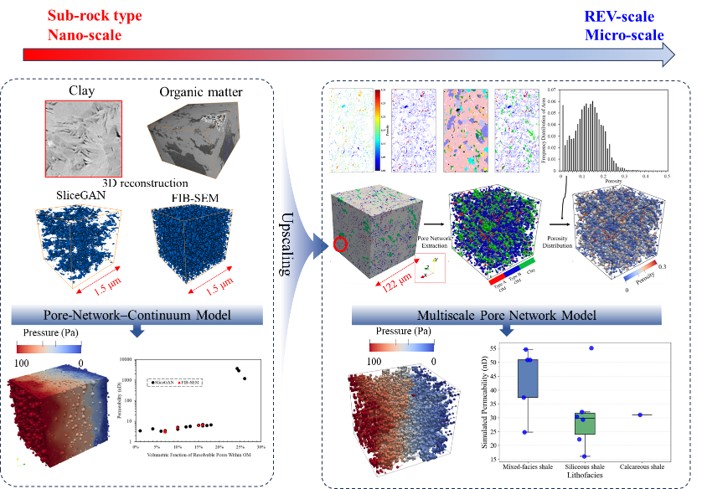
During waterflooding in reservoirs, complex pore structures and heterogeneous pore-throat distributions lead to the formation of substantial amounts of residual oil at the microscopic scale. Accurately predicting its spatial distribution remains a critical challenge for understanding pore-scale displacement mechanisms and improving oil recovery. Although conventional physical experiments and numerical simulations provide valuable insights into pore-scale processes, they are commonly limited by high experimental costs, intensive computational requirements, and insufficient adaptability to complex three-dimensional pore networks. Recent advances in digital core technology, together with high-resolution CT imaging, enable realistic representation of pore structures and create new opportunities for data-driven approaches. Here, we investigate the application of deep learning to the prediction of microscopic residual oil distribution during digital core-based waterflooding. Three-dimensional CT data are first used to construct digital core models that explicitly capture pore connectivity and pore-throat structural characteristics. Multiple three-dimensional deep learning architectures are then trained to predict the spatial distribution of residual oil under waterflooding conditions. The predictive accuracy, stability, and generalization performance of different models are systematically evaluated in reservoirs with complex pore structures. By quantitatively assessing the ability of deep learning models to characterize the relationships between pore structure and fluid distribution, this study elucidates their applicability and limitations in microscopic residual oil prediction. These results provide insights into the potential and constraints of deep learning-based approaches for investigating pore-scale displacement mechanisms and optimizing enhanced oil recovery strategies.
Fractures dominate water migration and strongly affect thermal evolution and ice formation in porous media exposed to freeze-thaw cycles. These cycles create complex thermo-hydraulic interactions between fractures and their surrounding matrix, reshaping flow dynamics and phase transitions. Yet, coupled processes governing fracture-matrix exchange in complex fractured porous media remains poorly understood. Thus, this study aims to develop a robust computational framework for simulating coupled thermo-hydraulic processes with phase change in fractured porous media. In our model, fractures are represented as interior boundary elements, enabling interfacial heat transfer and fluid exchange under local thermal non-equilibrium assumption. Latent heat effects are incorporated through temperature-dependent relations for saturation, and permeability. Simulation results reveal a fracture aperture-dependent temperature evolution process. Small apertures have minimal impact on temperature distribution, whereas larger apertures reshape thermal patterns via convective flow. We also report that outlet blockage during freezing modifies connectivity and triggers transitions between convective and conductive regimes of heat transfer. As thaw progresses, reconnected pathways restore convective transport and accelerate melting. This dynamic interplay highlights how fracture connectivity and flow structure control thermal evolution and phase change behavior. Our results have important implications for understanding and predicting freeze-thaw dynamics in cold regions.
Key words: thermo-hydraulic coupling, phase change, freeze-thaw dynamics, local thermal non-equilibrium
Abstract:
The freezing of water in saturated porous media depends on characteristics such as pore size, grain distribution, and boundary conditions. In this constribution, we present mathematical models of the freeze/thaw process of a saturated soil sample at the laboratory scale and at the pore scale. These models are based on balance laws for mass, momentum, and enthalpy in porous structures and on tracking the phase interface between ice and water. We investigate the dependence of these models on initial conditions, material properties, and boundary conditions. This improves our understanding of freeze/thaw processes observed under laboratory conditions.
Keywords: freezing, thawing, finite-element method, porous media, Stefan problem
References:
M. Sobotková, A. Žák, M. Beneš, M. Sněhota: Experimental and numerical investigation of water freezing and thawing in fully saturated sand, J. Hydrol. Hydromech., Vol. 72, No. 3, 2024, p. 336-348, DOI: 10.2478/johh-2024-0018.
M. Jex M., M. Beneš, M. Sněhota, M. Sobotková and J. Jeřábek: Numerical Simulation of Freeze/Thaw Front Propagation in a Sample of Porous Media, In ALGORITMY 2024, 22th Conference on Scientific Computing, High Tatra Mountains, Slovakia, March 15-20, 2024, Proceedings of contributed papers, Editors: P. Frolkovič, K. Mikula and D. Ševčovič. Published by Jednota slovenských matematikov a fyzikov, Bratislava, 2024, ISBN: 978-80-89829-33-0, pp. 139–148.
A. Žák, M. Beneš, and T.H. Illangasekare: Pore-scale model of freezing inception in a porous medium , Comput. Methods Appl. Mech. Engrg., Volume 414, 1 September 2023, 116166, DOI: 10.1016/j.cma.2023.116166.
The displacement of a wetting fluid by a non-wetting fluid in porous media is an ubiquitous process in multi-phase flow and typically gives rise to a transient propagating interface referred to as the drainage front. Such fronts occur in transient settings, including the injection of supercritical CO2 into brine-saturated geological formations and rapid drying of water-saturated clayey materials. Under certain regimes, these drainage fronts may become unstable and develop finger-like patterns [1], whose morphology depend on the prevailing flow regime. The stability of a drainage front is generally agreed [1, 2, 3, 4] to be controlled by the interplay among capillary, viscous, and gravitational forces.
In this study, we focus on the interplay between capillary and viscous effects in a regime of practical interest where the invading phase is much less viscous and less dense than the displaced phase, while staying within a continuum-scale modeling framework. In classical poromechanics, the capillary pressure difference between immiscible pore fluids is represented as a local, bijective function of the wetting-phase saturation, $P_c(S_w)$. To improve upon the coarse up-scaling inherent in this description, two extended models have been proposed in the literature ([5] and [6]). While the application of either of these formulations has demonstrated the ability to reproduce macroscopic fingering-like flow instabilities, it has been largely limited to imbibition scenarios ([7, 8]) under the strong simplifying assumption of neglecting the non-wetting phase pressure; an assumption appropriate only for specific contexts such as soil hydrology. Their applicability and relative performance in drainage processes remain unexplored.
Bearing in mind the current context, in this study we first restore the non-wetting phase pressure as an independent variable and derive the dimensionless formulations of both extended models. Using one-dimensional numerical simulations, we then demonstrate the formation of self-similar traveling-wave solutions (TWs) during drainage under different parameter regimes. Subsequently, we perform linear stability analysis (LSA) of these solutions with respect to transverse perturbations, thus assessing their tendency towards long-term amplification or decay. This allows us to identify conditions under which the enriched capillary models can reproduce physically meaningful fingering instabilities. Further we demonstrate using LSA against longitudinal perturbations ability of the Cahn-Hilliard like model, presented in [6], to reproduce pinch-off effects. Overall, this work advances the stability analysis of drainage fronts towards more realistic scenarios involving compressible multi-phase flow.
We developed a Multiscale Embedded Discrete Karst Method (MsEDKM), a three-scale framework designed to quantify complex mass-exchange mechanisms between karst conduits and the surrounding porous matrix in carbonate formations. At the microscale, fluid flow is modeled in a porous matrix intersected by karst conduits with highly irregular geometry, characterized by shell waviness and pronounced local variations in cross-sectional area. This microscopic formulation constitutes the high-fidelity reference model for subsequent upscaling steps. The micro-meso upscaling stage consists in homogenizing the complex conduit geometry within each coarse cell, replacing it by an Equivalent Elliptical Cylinder (EEC) derived by a moment-of-inertia-based strategy. At the meso-macro level, conduit–matrix exchange is quantified through a flow-based upscaling procedure. High-fidelity finite-element simulations of transient diffusion problems are performed on representative mesoscopic matrix/conduit configurations to compute non-neighboring exchange transmissibilities under quasi-stationary conditions. The resulting dataset is then employed to train a surrogate model that predicts transmissibilities from a reduced set of geometric and hydraulic descriptors at significantly reduced computational cost. At the macroscopic scale, the predicted transmissibilities are incorporated as non-neighboring connections (NNC) into finite-volume reservoir simulations, providing an accurate embedded representation of conduit–matrix interactions. Geomechanical effects are encompassed through a formulation under small-deformation assumptions, whereby mechanical fields update hydraulic and geometric properties, leading to stress-dependent exchange transmissibilities. The proposed framework combines geometric homogenization, data-driven surrogate modeling trainned via flow-based numerical upscaling, and hydro-mechanical effects into a unified approach. To reduce computational cost, we rely on analytical computation for geomechanics, based on edometric stress path. Numerical results demonstrate the physical consistency of the methodology supporting its applicability to simulations of karstified carbonate reservoirs.
Pore-Network Models (PNM) provide a computationally efficient framework for simulating flow in porous media. However, many economically significant carbonate reservoirs exhibit multiscale porosity: a term identifying a pore space with sizes spanning multiple orders of magnitude. When using PNM approaches, two main challenges arise: imaging resolution and computational complexity. Resolution constraints stem from the micro-CT imaging trade-off between field of view and voxel resolution; achieving a Representative Elementary Volume (REV) for larger pores often results in a resolution too coarse to resolve the finer porosity. Regarding complexity, representing every individual pore across all scales within an REV can lead to a total pore count that renders flow simulations unfeasible. To address these issues, we implemented a multiscale PNM approach based on the micro-link model proposed by Bultreys (2016).
The adopted approach utilizes a hybrid combination of pores: resolved porosity is extracted into pores and throats and solved using the methods of Valvatne (2004), while unresolved porosity is addressed via an implicit model based on structural assumptions. We diverge from the original micro-link model by employing a bundle-of-tubes assumption for the unresolved porosity structure, and also by characterizing the microporosity as Darcy-types pores and throats, instead of the distinct structure of the micro-links. These modifications allows for the integration of experimental Mercury Injection Capillary Pressure (MICP) data and utilizes the OpenPNM (Gostick, 2016) library for fluid flow simulation.
The current work applies this multiscale multiflow relative permeability method to a suite of 20 carbonate rock samples. The primary objective is to verify the validity of two-phase flow simulations as a characterization tool for samples with limited experimental information. A significant challenge in this context is the accurate characterization of complex wettability behavior. To overcome this, a sensitivity analysis was performed by applying multiple wettability scenarios to the same network. The rock's specific characteristics are then inferred by identifying the parameters that yield a relative permeability curve most closely matching experimental results.
Experimental results highlight the necessity of an accurate wettability definition for high-fidelity simulations. Furthermore, the findings demonstrate distinct flow behaviors between pore spaces that percolate through resolved versus unresolved porosity. Finally, the study underscores the importance of High-Performance Computing (HPC) for the practical application of large-scale sensitivity testing in digital rock physics.
Microfluidic experiments in transparent, engineered micromodels that replicate porous media enable direct visualization of pore-scale processes and their connection to macroscopic behavior (Wu et al., 2020). Pore-scale simulations, in particular dynamic pore-network modeling, complement these experiments by including pore-scale interactions that are typically averaged out in continuum-scale descriptions and are therefore difficult to capture with macroscale models (Weishaupt & Helmig, 2021).
However, the coupled evolution of liquid films, interfacial curvature, and evaporation kinetics in porous structures remains a challenge for predictive modeling. This work addresses this gap by combining high-resolution microfluidic experiments with dynamic pore-network simulations in a geometrically controlled two-dimensional porous network. The experiments provide time-resolved measurements of water morphology, saturation, and curvature evolution, while the simulations elucidate the pore-scale mechanisms that control the evaporation process.
Within this integrated framework, a comprehensive quantitative comparison between experimental observations and model predictions is conducted to both validate key modeling assumptions and identify systematic discrepancies. These discrepancies, in turn, highlight pore-scale mechanisms such as corner flow and vapor shielding effect and thereby guide future model refinements as well as the design of targeted microfluidic experiments. Our analysis further shows that inherent uncertainties in microfluidic experiments can significantly influence the outcome and interpretation of model validation, underscoring the challenges of benchmarking pore-scale models against experimental data. An initial mismatch between simulated and experimental results, therefore, does not, by itself, invalidate a model or imply a flawed experiment. Instead, a systematic diagnosis of the underlying processes and error sources is essential for assessing model validity and improving both pore-scale models and experimental design.
References:
Weishaupt, K. & Helmig, R. (2021). A Dynamic and Fully Implicit Non‐Isothermal, Two‐Phase, Two‐Component Pore‐Network Model Coupled to Single‐Phase Free Flow for the Pore‐Scale Description of Evaporation Processes. Water Resources Research, 57(4). https://doi.org/10.1029/2020wr028772
Wu, R., Zhang, T., Ye, C., Zhao, C. Y., Tsotsas, E. & Kharaghani, A. (2020). Pore network model of evaporation in porous media with continuous and discontinuous corner films. Physical Review Fluids, 5(1). https://doi.org/10.1103/physrevfluids.5.014307
Understanding immiscible two-phase flow in rough-walled fractures is essential for predicting subsurface fluid migration in fractured media, with direct relevance to applications such as CO$_2$ sequestration in depleted fractured reservoirs, where storage reliability must be ensured, and contaminant remediation in fractured aquifers, where safe and efficient injection, containment, and recovery are critical. Predicting such flows is complicated by fracture network-scale topological complexity, fracture-scale geometric heterogeneity spanning multiple length scales, and the coupled influence of viscous, capillary, and gravitational forces, further affected by wetting films, contact-line motion, and wettability variations. Developing computationally tractable models that still capture the essential flow physics, therefore, remains a key challenge.
At the fracture scale, existing approaches either rely on fully resolved three-dimensional (3-D) direct numerical simulations (DNS) of the Navier–Stokes equations, which capture interfacial dynamics with high fidelity but are computationally demanding [1], or on continuum-scale models that neglect aperture-scale hydrodynamic instabilities [2]. To bridge this gap, we recently developed a two-dimensional (2-D) depth-integrated model for immiscible two-phase flow [3], which reduces the governing equations to the fracture mean plane while retaining the key effects of wall friction and out-of-plane capillary pressure. Although validated against Hele-Shaw experiments and 3-D simulations, its predictive performance against laboratory experiments in rough-walled fracture analogs has not yet been assessed.
Here, we address this gap by comparing model predictions against controlled drainage experiments conducted in transparent fracture analogs. The fracture geometry was numerically generated with self-affine rough walls (Hurst exponent $H = 0.8$), mean aperture $a_\mathrm{m} = 0.4$ mm, and correlation length $l_c = L/8$, over a $145$ mm $\times$ $80$ mm domain. The resulting aperture field exhibits strong variability, characterized by a relative closure $\delta = \sigma_\mathrm{a}/a_\mathrm{m} = 0.57$. The rough topographies were engraved into polymethylmethacrylate (PMMA) plates by precision milling [4], and the experimental fracture geometry was subsequently reconstructed using X-ray tomography and employed directly in the numerical simulations. Experiments were performed with three immiscible fluid pairs spanning viscosity ratios $M = 1/200$, $1/100$, and $70$, and capillary numbers $\log Ca$ between $-3.4$ and $-6.4$, covering viscous-, capillary-dominated, and stable displacement regimes. Corresponding 2-D simulations were conducted under identical flow conditions, enabling direct comparison with experimental observations. The analysis focuses on quantitative descriptors of invasion dynamics, including phase morphology, finger width, interfacial length evolution, breakthrough saturation, longitudinal saturation profiles, and trapped cluster size distributions.
Preliminary results indicate that the depth-integrated formulation reproduces the key displacement characteristics observed experimentally at a fraction of the computational cost of fully resolved 3-D DNS. These findings highlight its potential as a practical framework for exploring a broader range of flow and geometric conditions than would be computationally feasible with high-resolution simulations alone. More broadly, this study demonstrates that reduced-order models, when rigorously verified and supported by targeted experimental validation, can provide a physically sound and computationally efficient approach for simulating immiscible two-phase flow in fractured systems.
Designing efficient chemical reactors requires bridging the gap between laboratory-scale experiments and industrial applications; a task often challenged by the complex interplay between reaction kinetics and transport phenomena. Miniaturization of experimental setups can reduce material costs but also amplifies these transport effects, especially in packed beds where geometric constraints strongly influence flow behavior.
In this work, we employ a fully open-source framework, starting from pore scale computational fluid dynamics (CFD) to explore how catalyst geometry influences reactive transport within packed-bed reactors. Digital reconstructions of real catalyst particles of arbitrary morphology were created using Blender, and used to simulate fluid flow and species dispersion in realistic packed-bed reactors, capturing key hydrodynamic features such as bypass zones and stagnant regions using the mean age theory. This steady state analysis is used as a diagnostic tool to quantify local residence time distributions and identify transport heterogeneities inside complex geometry.
To connect numerical modeling with real world reaction kinetics, we applied this general framework to a specific heterogeneous catalysis application, that of Aqueous Phase Reforming, which generates hydrogen from crude glycerol in wastewater. For this case, a kinetic model was derived from batch reactor experiments (where mass transfer limitations are absent,) and adapted to the CFD framework in OpenFOAM where we can investigate accurately the interplay between transport and reactions phenomena by easily reproducing different kinds of catalyst geometries and operating condition.
In particular, reactive pore scale CFD is used to evaluate the performance of a packed-bed reactor by means of its conversion and yield. The reactions were implemented as a boundary condition on the catalytic external surface, and fluid flow is considered only outside the catalyst. This methodology was then also compared to a more accurate model that resolves also the species transport inside the catalyst, increasing the accuracy of the simulation, at the cost of increasing computational expense and numerical instability.
Lastly, multiphase interactions are incorporated through a pore scale mixture-transport formulation capable of describing liquid–gas–solid systems with algebraic closure relations for slip velocity. This model was developed to simulate the reacting flow and of two fluid phases in a solid porous media taking simplification to allow either phase to act as the dispersed without raise to prohibitive computation cost.
This methodology provides a versatile and computationally efficient tool to investigate multiphase catalytic processes beyond a specific reaction system, offering insights relevant to a wide range of reactor technologies.
Acknowledgments: PNRR M4C2, Investimento 1.4 - Avviso n. 3138 del 16/12/2021 - CN00000013 National Centre for HPC, Big Data and Quantum Computing (HPC) - CUP E13C22000990001
Understanding and improving mass and ionic transport mechanisms within the nano-porous membrane used in polymer electrolyte membrane (PEM) water splitting electrolyzers is vital for achieving improved efficiencies that would enable the use of water electrolysis in sustainable energy infrastructures. To achieve this goal, microfluidics electrolyzers can serve as flexible platforms for operando PEM characterization. For example, Krause et al. [1,2] developed a microfluidic PEM electrolyzer with a Nafion membrane capped on top of the channels to probe operando the water content in PEM. The measurements of the PEM water content can then be carried out using imaging methods such as the IR transmittance.
This work aims to improve characterization methods for measuring PEM hydration to get a better understanding of the transport mechanisms in those nano-porous material used in electrochemical applications. An operating microfluidic PEM electrolysis chip is used for operando infrared (IR) spectroscopy [3]. The IR imaging is coupled with electrochemical impedance spectroscopy (EIS) and distribution of relaxation times (DRT) to elucidate the relationship between membrane hydration and ohmic, kinetic, and mass transport losses. IR imaging unveils water diffusion gradients across the PEM of the microfluidic water electrolyzer. Varied H2SO4 anolyte concentrations directly correlated with water diffusion through the PEM, where the highest anolyte concentrations accompanied the strongest water diffusion gradients. We show that tuning the anolyte concentration for visualizing water diffusion across the PEM came with a tradeoff, as the electrochemical performance of the electrolyzer became increasingly unstable. These findings showcase the potential of IR imaging when coupled with a microfluidic PEM electrolyzer and electrochemical characterization techniques, and the influence of anolyte concentration for manipulating the PEM water gradient .
References
[1] K. Krause, M. Garcia, D. Michau, G. Clisson, B. Billinghurst, J. Battaglia, S. Chevalier, Probing membrane hydration in microfluidic polymer electrolyte membrane electrolyzers via operando synchrotron Fourier-transform infrared spectroscopy, Lab Chip. 23 (2023) 4002–4009.
[2] K. Krause, A. Crête-Laurence, D. Michau, G. Clisson, J.-L. Battaglia, S. Chevalier, Water gradient manipulation through the polymer electrolyte membrane of an operating microfluidic water electrolyzer, J Power Sources. 623 (2024) 235297.
[3] S. Chevalier, J.-N. Tourvieille, A. Sommier, C. Pradère, Infrared thermospectroscopic imaging of heat and mass transfers in laminar microfluidic reactive flows, Chemical Engineering Journal Advances. 8 (2021) 100166.
Open-cell metallic foams offer a combination of high permeability and a large accessible surface area, as well as good thermal and electrical conductivity. This makes them a versatile substrate for functional porous-media devices. Their three-dimensional strut network enables efficient heat and mass transport at low pressure drop. However, practical performance depends heavily on how surface functionality is introduced without compromising pore accessibility.
This contribution discusses the use of coated metallic foams as general materials and design concept for engineered porous media. We highlight the main challenges associated with coating open-cell foams, such as generating a uniform, conformal layer across the three-dimensional strut network and achieving sufficient adhesion and long-term stability during operation. Another challenge is maintaining the foam’s effective porosity to ensure that its transport benefits are not lost.
To illustrate these ideas, we refer to two ongoing thematics in our group that employ coated foams in different operating regimes. The first theme focuses on electrochemically functionalised foam electrodes for hydrogen electrolysis, demonstrating how conductive porous architectures can be transformed into highly active interfaces without sacrificing favourable mass transport. The second thematic examines photoactive coatings on foams for use in flow-through water treatment, showing how light-responsive surface functionality can be integrated into a permeable backbone. Together, these examples offer a practical basis for discussing transferable coating strategies across electrochemical and photocatalytic porous media technologies.
Overall, coated metallic foams emerge as a robust, porous platform for technologies relevant to energy and the environment, as well as being a useful case study of how the interplay between microstructural design, transport and surface reactivity determines the macroscopic performance of porous materials.
The production of renewable energy is gradually increasing as part of the global efforts to mitigate the global warming. However, the inherent intermittency of renewable energy sources creates a growing need for reliable large-scale energy storage devices. Flow batteries (FBs) are considered a promising candidate for large scale stationary energy storage, but their energy efficiency is limited by various losses, like mass transport, kinetic, ohmic, and pressure losses all of which are strongly influenced by the electrode material and porous structure [1], [2]. Carbon electrodes are currently the most promising electrode materials for FBs due to their chemical stability, high surface area, good electrical conductivity and their ability to suppress parasitic reactions such as the hydrogen evolution reaction [3]. Nevertheless, the range of available porous electrode designs remains narrow, with most studies relying on traditional architectures such as carbon felts, papers, and cloths.
In this work, we developed a novel method to fabricate porous 3D-structured carbon electrodes, using PAN as the primary precursor material, typically used in commercial felt, paper and cloth based electrodes. This new fabrication approach enables the creation of custom-designed 3D architectures, allowing precise control over the electrode structure. As a result, new possibilities emerge for enhancing mass-transfer characteristics and reducing pressure drop, ultimately lowering the pumping energy required during operation [4], [5]. This work focusses on the production method of these 3D structured carbon electrodes. For the fabrication, we combined the non-solvent induced phase separation (NIPS) method with dissolvable mold materials to create 3D PAN structures. These structures are subsequently carbonized under inert conditions, yielding 3D structured carbon electrodes. The effect of different mold designs, PAN:PVP:DMF ratio’s and oxidation temperatures were studied electrochemically and physically. The electrochemical testing was performed in a custom made flow battery system and compared with traditional felt electrodes. Being able to cycle the flow battery equipped with these 3D structured electrodes in the range of 100 mA/cm² without optimizing the structure, shows the promising nature of this method. Moreover, this method makes it possible to design various carbon electrodes, like Triple periodic minimal surface (TPMS) structures, static mixer and carbon meshes.
Gas Channels are essential components of proton exchange membrane (PEM) fuel cells and must be carefully designed to ensure efficient water removal and gas transport. While computational fluid dynamics (CFD) simulations can be used to study the PEM fuel cell with high accuracy, they are computationally expensive and impractical for rapid design evaluation. To address this challenge, a discrete particle model (DPM) is employed in this study as a computationally efficient alternative to screen and optimise gas channel designs prior to expensive fabrication and experimental testing. The DPM approach is first validated against lattice Boltzmann method (LBM) results, showing good agreement. The model is then applied to investigate the effects of key parameters, including air Reynolds number, gas diffusion layer (GDL) hydrophobicity, pore size, pore density, stoichiometry ratio and current density, on water saturation, GDL water coverage ratio (WCR), and air pressure drop in short and long channels. The model is capable of analysing both temporal and spatial two-phase behaviour in the channel. The results highlight that higher air Re number or stoichiometry ratio enhances water removal, while larger pore size or pore density increases water accumulation. Increased GDL hydrophobicity significantly reduces WCR, maintaining a clear GDL for better gas transport to other porous layers, but has negligible impact on overall water saturation.
Understanding the reaction-transport mechanisms of fracture-matrix systems is critical for ensuring safe and permanent geological CO₂ sequestration. While prior studies mainly focused on the dissolution and precipitation patterns in advection-dominated flow paths, it remains unclear how reaction kinetics govern the spatial topology and co-evolution of the dissolution front, silicon-rich leached layer, and the precipitation front within diffusion-dominated dead-end pores.
To address this, we simulated diffusion-limited mass transfer within dead-end pores by developing a high-temperature and high-pressure microfluidic platform featuring a ‘main channel with lateral cavities’ design. Natural minerals (calcite, chlorite, and plagioclase) are immobilised within the cavities to investigate the impact of mineral heterogeneity and interfacial reaction differences on the coupling mechanisms between silicate dissolution and carbonate precipitation in diffusive regimes. The local Damköhler number (Da) is tuned by varying temperature and mineralogy, while maintaining constant geometry and flow conditions.
The dynamic evolution of mineral dissolution, growth of the silicon-rich leached layer, and secondary carbonate precipitation is quantified using in-situ optical microscopy and SEM-EDS to characterize the morphological evolution of reaction interfaces and identify the chemical composition of the secondary phases.
The results reveal two distinct evolutionary modes at different Da values. At low Da, the dissolution and precipitation fronts are strongly decoupled. A thick, silicon-rich leached layer forms on the mineral surface, acting as a diffusive barrier that retards cation release. Consequently, carbonate nucleation and growth away from the reactive surface as a pore-filling precipitation pattern that preserves the mineral reactivity. Conversely, at high Da, the dissolution and precipitation fronts transition to a coupled mode. Dissolved cations become supersaturated instantaneously at the mineral-solution interface, resulting in the precipitation front converging onto the dissolution front surface. This inhibits leached layer growth and forms a dense carbonate shell (‘armoring effect’), leading to premature passivation and blocking the reaction.
This study link Da to the topological transition of the ‘mineral-leached layer-precipitation’ structure. It elucidates the critical role of the leached layer in regulating reactive transport and precipitation distribution. Our findings suggest that manipulating reaction kinetics to induce precipitation migration into deeper pore spaces can mitigate the ‘armoring effect’, thereby enhancing the effective reaction volume and long-term stability of mineral carbonation for CO₂ storage.
Underground hydrogen storage (UHS) in geological formations is a promising method for storing hydrogen, with cycles of hydrogen injection and withdrawal typically anticipated for long-term development. However, the impact of local capillary trapping on the amount of hydrogen that can be stored and recovered over the entire period remains unclear. Furthermore, the selection of a suitable reservoir for UHS is still a subject of debate. To address these issues, we develop a coupled level-set interface tracking and pore network model to assess potential factors influencing UHS efficiency. Digital rock models of various rock types are obtained using CT imaging. We then simulate two cycles of UHS in water-saturated rocks (injection-withdrawal-injection-withdrawal) based on these digital rocks. Pearson correlation is used to quantify the relationships between hydrogen storage volume ratio, storage efficiency, and dimensionless pore structure parameters. Our results show that the trapped hydrogen volume ratio is primarily correlated with pore connectivity parameters, with little relation to connected porosity. Based on this correlation, a fitting equation for hydrogen storage efficiency is derived, which can be easily integrated with well-logging data to help select the most favorable formation for UHS. A comparison of UHS efficiency across different rock types reveals that the efficiency is often overestimated, as the maximum hydrogen storage efficiency in our study is less than 0.8. Finally, we conclude that sandstone reservoirs are more suitable for UHS than carbonate or shale reservoirs.
Wettability, quantified by the contact angle, is a key property of porous media influencing the capillary pressures, the fluid–solid interfacial area, and eventually reaction and mass transfer processes. Recent advances in imaging enable the direct extraction of contact angles from 3D image data. However, available extraction methods often produce non-physical extreme angles that obscure the true statistics. We suspect that the implementation of physical constrains can filter out the errors accompanied by voxelization and image noise.
We propose a novel geometrical to physical compliance extraction based on the X-ray imaging (CT) experiments. This model is validated against an ideal geometrical model and compared with reported methods on the same specimens under distinct wettability conditions.
We have demonstrated that our algorithm yields a more physically meaningful and robust measurement of the distribution of contact angles. Each extracted angle matches the ideal geometrical model with a pointwise deviation of ≤ 2°. In real porous systems, our physics-constrained procedure preserves the expected wettability ordering across different conditions while markedly suppressing spurious extreme tails and yielding a tighter central peak, thereby indicating effective removal of non-physical artifacts induced by voxelization and segmentation. We further visualize spatially resolved contact angle fields, revealing the 3D wettability heterogeneity. Moreover, size-invariance tests across multiple subvolume scales demonstrate stable statistics within certainty bounds, supporting seamless upscaling to continuum descriptions and providing robust inputs and potential value for modeling capillarity-driven transport, interfacial area evolution, and interface-controlled mass transfer and reactions in engineered porous systems.
Understanding multiphase flow at the pore scale is critical for addressing energy and environmental challenges such as enhanced oil recovery (EOR) and CO₂ geological sequestration. However, capturing the dynamic evolution of multiphase flows of real rock samples at the micro-scale remains a significant challenge due to the limitations of conventional imaging techniques, particularly in terms of temporal and spatial resolution. To address this, a high-resolution 4D micro CT imaging system integrated with an in-situ core flooding apparatus was employed, combined with a voxel-level grayscale differencing algorithm to dynamically visualize the displacement behavior within porous sandstone. The experimental results reveal that: Based on the variation in injected oil volume, the displacement process clearly exhibits a three-stage evolution: initiation, rapid displacement, and terminal seepage stage. During the initiation stage, oil saturation increases slowly as the oil phase preferentially invades larger pores under capillary dominance. Subsequently, the rapid displacement stage is characterized by a sharp rise in oil saturation and the attainment of peak displacement efficiency, resulting from the oil phase forming capillary fingers along low-resistance channels. Finally, in the terminal seepage stage, displacement efficiency declines and saturation stabilizes, as the oil phase primarily penetrates smaller pore throats and poorly connected regions, marking the process's conclusion. Pore-scale dynamic analysis reveals transient events such as capillary fingering, Haines jumps, backflow, and non-wetting phase disconnection, indicating the oil phase’s sensitive response to pore-scale heterogeneity and pressure fluctuations. The mechanism of interfacial reconstruction driven by capillary forces determines fluid connectivity, thereby controlling macroscopic displacement efficiency. Such mechanistic understanding is critical for optimizing EOR strategies and for improving the reliability of long-term CO2 geological storage in porous geological formations.
Urban heat stress is becoming one of the most pressing challenges facing cities worldwide, particularly during increasingly frequent and intense heatwaves. This keynote demonstrates how porous materials can play an essential role in cooling urban environments and reducing heat exposure for pedestrians. Both natural and engineered porous systems are considered, including trees that provide shading and cool the air through transpiration, porous pavements that are artificially wetted to promote evaporative cooling, textile shading sails that enable transpirative cooling through wicking, and vegetated systems such as green walls and green roofs.
Pedestrian heat exposure is analysed across contrasting climatic contexts—arid, continental, and tropical—using the Universal Thermal Climate Index (UTCI) as the comfort and heat-exposure metric. This enables a consistent assessment of thermal stress and the comparison of different mitigation strategies. In addition, a cooling efficiency indicator is developed and applied as a key metric for evaluating the efficacy of heat mitigation measures.
At the urban scale, simulations are performed using the urban microclimate model urbanMicroclimateFoam, developed by the Chair of Building Physics headed by the speaker. This suite of models is implemented in the OpenFOAM environment and solves for coupled air flow, heat and moisture transport in the urban air domain, heat and moisture storage, transport and evaporative cooling in porous urban materials. The model further accounts for shading and wind blocking, transpiration and transpirative cooling by trees and grass, shortwave radiation shading, and longwave radiative exchange between urban surfaces, vegetation, and the sky.
At the pore scale, evaporative cooling is investigated using Lattice Boltzmann modelling, enabling detailed analysis of drying rate, drying capacity, and cooling capacity under different environmental conditions. By linking pore-scale processes to urban-scale performance in a two-scale approach, the cooling efficiency of different porous solutions is compared, and both local and non-local effects—arising from heat and moisture transport by wind and buoyancy—are discussed.
The results show that porous materials offer strong potential for urban cooling, while also highlighting that additional solutions must be designed, optimized, and implemented to effectively address future heat challenges. The keynote concludes by reflecting on design and implementation pathways for urban heat mitigation, comparing scenario-based approaches, urban climate storylines, living labs, and design-by-clustering strategies as complementary methods for developing resilient and climate-adaptive cities.
Methane Cracking in Metal Porous Media via Electromagnetic Induction Monolithic Heating
Zhuoran Wei, Qinwen Deng, Yong Shuai, Ruming Pan
School of Energy Science and Engineering, Harbin Institute of Technology, Harbin, 150001, China
Corresponding author: ruming.pan@hit.edu.cn
Methane cracking is a promising route for low-carbon hydrogen production, as it avoids direct CO2 emissions associated with conventional steam reforming. However, its practical implementation is constrained by inefficient heat transfer and high pressure drop in high-temperature reactors. Metal porous media combined with electromagnetic induction heating offer a potential solution by enabling volumetric, contactless heating and enhanced heat transfer. This work presents methane cracking in metal porous media under electromagnetic induction monolithic heating, with an emphasis on coupled heat transfer and flow behavior.
An equivalent porous-medium modeling framework is developed to describe the multiphysical interactions in induction-heated metal foams. Figure 1 shows that electromagnetic induction heating provides a more uniform temperature distribution compared to conventional boundary heating. This work provides a general tool for induction-heated porous reactors applied to methane cracking and related high-temperature chemical vapor deposition processes.
Ground ice strongly controls how permafrost responds to warming, influencing thaw settlement, thermokarst development and drainage changes. For predicting thaw settlement and designing resilient infrastructure to expected climate conditions, ice content estimates must be accurate and comparable across cores and sites. X-ray Computed Tomography (CT) is a practical non-destructive tool for measuring ice distribution, but the standard practice of segmenting ice using fixed Hounsfield Unit (HU) thresholds often fails in heterogeneous permafrost because sediment, organic matter, and ice can overlap in apparent density and mixed voxels are common. These effects can bias inferred ice volumes and, in turn, assessments of thaw vulnerability.
We evaluate how segmentation choices affect ice quantification using a 164 cm long permafrost core from a Yedoma upland in north-eastern Siberia spanning variable cryostructures and sediment compositions. We compare (i) conventional HU thresholding, (ii) automated thresholding methods (including Otsu and adaptive histogram-based approaches), and (iii) machine-learning models (random forests and convolutional neural networks) that incorporate texture and morphological context in addition to intensity. CT-derived ice content and bulk density estimates are validated against independent laboratory measurements to quantify bias and uncertainty across core intervals rather than relying on visual agreement alone.
Results show that no single method is robust for all materials. Threshold-based workflows can perform adequately in simpler intervals but become unstable where partial-volume effects and phase overlap are strong. Automated and learning-based approaches reduce some of these errors, but their performance depends on parameter choices, training data, and transferability between contrasting textures. We summarize strengths and limitations across cryostructures and provide guidance for selecting segmentation workflows when the end use is climate- and hazard-relevant ice quantification. The study supports standardized, non-destructive CT-derived datasets needed for comparing permafrost cores and improving projections of thaw impacts in rapidly changing Arctic regions.
Understanding time-dependent petrophysical and geophysical responses during carbon capture and storage (CCS) is critical for reliable monitoring and long-term storage assessment. This study investigates the evolution of in-situ electrical resistivity and associated pore-scale alterations in carbonate core samples from the Permian Basin under CO₂ storage–relevant conditions. Four core samples, two (S06465, S06468) obtained from the Bureau of Economic Geology (BEG) and two (H3, H4) from Department of Energy (DOE) repositories, were analyzed to quantify changes in porosity, permeability, and pore structure resulting from CO₂–brine–rock interactions.
The experimental workflow was applied to four core samples: H3, H4, S06465, and S06468. Sample H3 was collected from depths of 10,673.5–10,674 ft, H4 from 10,721–10,721.5 ft, S06465 from 9,742 ft, and S06468 from 9,652 ft. Initial petrophysical characterization included helium porosity, Archimedes porosity, gas permeability, and liquid permeability measurements. A 20 wt% NaCl brine was used to represent formation salinity. Nuclear magnetic resonance (NMR) measurements, including quick porosity, T₂, and T₁ analyses, were conducted before CO₂ exposure.
Pore combination modeling was performed using PLS400 equipment to characterize pore structure before and after exposure to supercritical CO₂ (scCO₂). In-situ resistivity measurements were conducted under both 100% brine saturation and partial saturation conditions, where approximately 30% brine saturation and 70% scCO₂ saturation were maintained. Measurements were performed at an elevated temperature (120 °C) to simulate reservoir conditions. Resistivity was continuously monitored for 10 days at 3,500 psia. Following the resistivity experiments, pore-combination modeling was developed using the experimental data to quantify pore-scale changes. Additional characterization techniques, including thin-section analysis, micro-CT imaging, and advanced image segmentation, were employed to evaluate changes in pore structure, including vuggy and matrix porosity, as well as permeability evolution.
Results indicate clear time-dependent petrophysical changes, with an initial increase in porosity observed after 10 days of scCO₂ exposure. However, liquid permeability decreased, likely due to the dissolution and alteration of connected pore pathways. One of the studied samples exhibits low permeability, with values of approximately 0.04 mD. These findings provide one of the first laboratory-scale observations of short-term porosity and permeability evolution in Permian Basin carbonate samples under CCS-relevant conditions.
In-situ resistivity monitoring proved to be an effective tool for developing scalable models applicable to CCUS, CO₂-enhanced oil recovery (CO₂-EOR), and Foam CO₂ huff-and-puff processes. The results support improved oil recovery strategies and contribute to economic feasibility under U.S. Section 45Q tax incentives for CCUS technologies. This integrated and novel workflow enhances pore-scale understanding of mineralization, precipitation, and dissolution mechanisms, providing valuable insights into pore-scale processes that control both hydrocarbon recovery and long-term CO₂ storage capacity. Ongoing experiments extend exposure durations to three months to compare short- and long-term storage behavior relevant to CCS and CO₂-EOR applications, which will be further investigated through detailed pore-scale geochemical modeling using PetraSim/TOUGHREACT.
Aquifer thermal energy storage (ATES) system is a sustainable energy storage technology for long-term recovery of stored heat and has the potential of reducing global carbon emissions. Across the globe, many low-temperature aquifer thermal energy storage (LT-ATES) systems with injected water temperatures of less than 60°C have been engineered for direct applications in building heating during adverse thermal conditions [1]. However, due to their low-temperature delivery, LT-ATES are often coupled with ground-source heat pumps (GSHPs) to mitigate their deficiencies. High-temperature aquifer thermal energy storage (HT-ATES) is an advancement on the low-temperature storage, where hot water with temperatures exceeding 60°C is injected into aquifers to store seasonal thermal energy and recover it later. Across literature, they have been reported to potentially deliver high thermal energy recovery during extraction and can be directly deployed at industrial scales, in addition to building heating applications. However, only a few pilot projects exist alongside theoretical studies, which report that free thermal convection is one of the major impediments to harnessing the potential of HT-ATES [2]. Injected hot water, being less dense than the native aquifer fluid, flows farther distances due to buoyant convection, which is further enhanced in the case of HT-ATES, leading to a drastic loss in the recovery efficiency. To reduce thermal energy losses, van Lopik et al. (2016) suggest adding salinity to eliminate the density disparity between the injected and native fluids, thereby reducing buoyant convection [3]. In their numerical analysis, they demonstrate a more vertical fluid-fluid interface that preserves the injected fluid near the injection well, while also reducing diffusive losses between the injected and native fluids, as well as between the injected fluid and the surrounding rocks. They report a recovery efficiency of 69%, which is a significant increase from the non-salinity counterparts of the efficiency of about 45% [2, 3].
While the distinct diffusive behaviours of salt and heat lead to a transient change in the density of the injected fluid, they also lead to the onset of double-diffusive instabilities. Based on the injection conditions and the relative concentration of the two species, flow is influenced by either fingering instability or layered convection (see Figure 1) [4]. A common metric used to define this type of convection is the Stability ratio N=βΔC/αΔT, which dictates layered convection for N > 1 and fingered convection for N < 1. Such double-diffusive effects may alter the energy dynamics of an ATES system, thereby demonstrating efficiencies different from those reported in the literature. In our study, we investigate the double-diffusive convection in both LT-ATES and HT-ATES to assess its potential impact on thermal energy recovery. We approach the problem by simulating a small-scale injection-storage-recovery model, which enables us to understand the dynamics of flow and energy resulting from the varying thermohydraulic properties of the aquifers and the injection-recovery methods. We decompose the total injected energy into kinetic and potential components and include additional loss terms, scaled to quantify their relative influence on the thermal recovery efficiency [5].
Enhanced oil recovery (EOR) technologies are essential for maximizing hydrocarbon production from mature and depleted reservoirs. Within porous media systems, inefficient displacement during conventional waterflooding leaves a substantial fraction of oil trapped in complex pore networks, requiring advanced flow-control technologies to enhance energy efficiency and minimize environmental impact. Polymer flooding is a widely adopted chemical EOR technique; however, the long-term sustainability and reservoir compatibility of conventional synthetic polymers remain significant challenges. This study reports the development of a novel, chemo-selectively engineered biopolymer blend composed of acetylated guar gum (aGG) and guar gum (GG), designed to enhance multiphase flow behaviour within porous media. Among the investigated compositions, the GG:aGG (4:1) polymer blend exhibited the lowest crystalline nature and highest thermodynamic stability, as supported by electrode potential measurements and Gibbs free energy analysis. Fourier transform infrared spectroscopy (FTIR) confirmed successful esterification and polymer integration through characteristic ester (1733 cm-1) and hydroxyl (3467-3600 cm-1) absorption bands. Rheological investigations demonstrated synergistic pseudoplastic and viscoelastic behaviour of the polymer blend, which are critical for effective mobility control and sweep efficiency in porous media. The optimized polymer blend showed enhanced sweep efficiency, reduced interfacial tension (27.0 dyne/cm), and acceptable injection pressure (2700 Pa). Wettability alteration studies indicated a significant shift toward water-wet conditions, reducing the contact angle to 61.1°, thereby facilitating improved oil displacement through pore constrictions. Emulsification studies further revealed the formation of small, densely packed oil-water droplets, indicative of enhanced transport through heterogeneous pore networks. Oil Reservoir Simulating Bioreactor (ORSB) experiments confirmed the effectiveness of the polymer blend under reservoir-simulated conditions, resulting in a significant improvement in oil recovery and demonstrating strong potential to achieve the targeted incremental recovery exceeding 10% of the original oil in place.
Keywords: Polymer Flooding, Porous Media Flow, Enhanced Oil Recovery, Wettability Alteration, Interfacial Tension
“Chemo-Selective Biopolymer Blending for Stable and Efficient Oil Displacement”
Fractures play a fundamental role in controlling the hydraulic and mechanical response of geological formations, with direct implications for subsurface energy applications such as hydrocarbon production, CO₂ sequestration, geothermal systems, and underground hydrogen storage (UHS). In particular, UHS operations involve repeated injection and withdrawal cycles that induce successive loading and unloading of the stress field, making hysteresis in fracture aperture evolution a key mechanism governing long-term permeability changes and system performance.
In this work, we propose a fracture aperture model that explicitly accounts for hysteresis under cyclic loading and unloading conditions, with a particular focus on rock joints. The model is based on the Barton–Bandis joint closure law and is designed to reproduce the hysteretic behavior commonly observed in laboratory experiments on jointed rock samples. Two bounding curves describe aperture evolution during monotonic loading and unloading. A general stress–aperture path within the hysteresis loop is then defined by interpolating key parameters such as initial normal stiffness and maximum mechanical closure. When stress decreases after a loading phase, fracture closure follows an intermediate unloading trajectory that depends on the stress history.
The proposed model is especially relevant for hydro-mechanical coupling and fractured-media upscaling, as it introduces a history-dependent relationship between effective stress and macroscopic petrophysical properties. This feature is crucial for applications involving cyclic operations, where neglecting hysteresis may lead to inaccurate permeability predictions and biased reservoir performance assessments.
Laboratory data from cyclic loading–unloading tests with increasing stress levels are used to calibrate the model and to evaluate its ability to predict intermediate closure paths. An analysis of the evolution of model parameters across multiple cycles is also performed, providing insights into model limitations and possible improvements.
Geological carbon sequestration has been widely recognized as a promising strategy for mitigating CO₂ emissions by storing carbon dioxide in subsurface geological formations, such as saline aquifers. While recent studies have largely focused on optimizing CO₂ trapping mechanisms to improve storage efficiency, the flow dynamics of CO₂ plume migration—particularly the development of viscous and density-driven fingering instabilities arising from the strong contrasts between CO₂ and brine—remain insufficiently understood. Moreover, despite significant advances in computational resources and smart field technologies, the implementation of model-based operational and control strategies is still limited by the high computational cost, complexity, and limited accessibility of conventional high-fidelity simulations. Developing efficient and affordable modeling approaches is therefore essential, not only for improving the physical understanding of CO₂ plume dynamics in porous media, but also for enabling cost-effective deployment of control and decision-making strategies in geological carbon storage[1].
In this study, we propose a deep learning–based framework employing physics-informed neural networks (PINNs) to simulate flow dynamic instabilities in immiscible compressible multiphase flow systems relevant to CO₂ sequestration. The central idea of the PINN approach is to embed the governing physical laws, expressed as nonlinear partial differential equations (PDEs), directly into the neural network training process as physics-based constraints[2]. The governing equations are formulated based on conservation principles, and a deep neural network is constructed to approximate the solution fields, with spatial–temporal coordinates as inputs and the relevant flow variables as outputs. Using automatic differentiation, the PDE residuals are evaluated and incorporated into a composite loss function together with the initial and boundary conditions, enabling the network to satisfy the underlying physics without relying on traditional mesh-based discretization.
The proposed PINN framework is applied to solve the strongly nonlinear PDE system associated with flow instabilities during CO₂ plume migration. Its accuracy and robustness are assessed through systematic comparisons with high-fidelity numerical solutions obtained using the ICFERST framework, which is based on a control volume finite element method (CVFEM)[3]. The results demonstrate that PINNs can effectively capture key features of multiphase flow dynamics and instability evolution, highlighting their potential as a computationally efficient alternative for modeling and control-oriented simulations in geological carbon sequestration.
Understanding the reactive dissolution of carbonate rocks in CO2-rich brine environments is critical for optimizing carbon capture and storage (CCS). This study integrates flow experiments with high-resolution micro-CT imaging and pore-scale simulation to analyze the interplay between physical and chemical heterogeneity during reactive transport. By examining two carbonate samples comprised principally of dolomite and calcite with anhydrite also present, we quantify how the initial distribution of minerals and permeability variations influence flow patterns, dissolution dynamics, and the increase in permeability. The results show that reaction rates decrease with increasing flow heterogeneity due to enhanced mass transfer limitations. Furthermore, the proximity of minerals to fast-flow channels impacts their effective reaction rates, highlighting the interplay between transport processes, mineral spatial distribution and mineral dissolution. Both samples displayed dissolution patterns with localized channel widening and formation. The study provides key insights into mineral-specific reaction behaviours and flow-dependent dissolution patterns, further evaluating a detailed framework for improving predictive models of subsurface CO2 storage.
Fractures in rock masses promote discrete, preferential flow paths rather than the diffuse wetting of porous media. This channeling behavior reduces fracture-matrix contact, weakens capillary imbibition, and suppresses the coupling between the two domains, thereby challenging the applicability of traditional retention models such as van Genuchten and Brooks-Corey at larger scales. Here, we present a suite of numerical and analytical models to describe unsaturated flow in complex fractured media. Unsaturated flow is modeled by solving Richards’ equation in combination with a Brooks-Corey retention model. A set of 3D discrete fracture networks (DFNs) with varying fracture densities and length exponents are considered, with fractures represented as lower-dimensional surfaces embedded in a 3D matrix. Both the upscaled relative permeability and capillary pressure exhibit a pronounced two-branch behavior, reflecting the contrasting roles of the matrix and fracture domains across the saturation range. Specifically, with the increase of saturation, the system response exhibits a transition from matrix-dominated to fracture-dominated regimes, with the shift occurring as a critical saturation, S_c. This bifurcating retention behavior and the associated S_c are observed consistently across all DFN realizations spanning a wide range of fracture density and power law length exponents. We then introduced a modified Brooks-Corey formulation that explicitly captures the transition between matrix- and fracture-dominated regimes. We further developed a phase diagram that delineates matrix- and fracture-dominated regimes based on two dimensionless parameters: the percolation parameter and the ratio of fracture to matrix hydraulic capacity. Our results have important implications for understanding and predicting unsaturated flow in fractured porous media.
Carbon mineralization is considered the most stable method for long-term carbon storage. Carbon mineralization is favored in mafic/ultramafic rocks due to their high content of reactive minerals which efficiently react with CO2 to form solid carbonates. We have spent the past few years exploring how NMR can be used to quantify changes in pore size distributions and pore surface relaxivity as a function of alteration, particularly carbon mineralization, in these rocks.
We have pursued experiments along two fronts. Firstly, NMR measurements on pre- and post-reacted samples are utilized to observe changes in T2-derived pore size distribution within plugs subjected to thermal fracturing and reactive CO2 transport core flood experiments. Secondly, the T2 distributions of a large suite of Newberry Volcano basalt samples from various depths have been recorded and integrated with other petrophysical data. In addition to the T2 data, SEM- and BET-based partial pore size distributions were also recorded on these samples. This data allowed the T2 relaxation time to be calibrated to pore size and the surface relaxivity of each sample derived. Correlating this surface relaxivity to alteration of the pores has given important insight into how carbon mineralization can effect pore surface chemistry.
In the first series of experiments, a highly reactive ultramafic dunite sample was exposed to CO2-laden brine. The sample was then saturated with inert fluid and the resulting T2 distribution was recorded. This distribution was then compared with that of a twin sample that had not undergone exposure to CO2. The pore volume of the sample which had undergone CO2 brine flow was reduced by nearly twenty percent as compared to its twin. This reduction in pore volume can be attributed to carbon mineralization.
In the second set of experiments, the T2 distribution of two different basalt core samples, one fresh sample and one altered by exposure to gases and in situ water were measured. In addition to the T2 distributions, partial SEM pore size distributions were also recorded. These distributions were employed to calibrate the T2 relaxation time with pore radius and derive a surface relaxivity constant for each basalt sample. The results showed that there is clearly a correlation between surface relaxivity with fresh vs altered samples.
The results display that NMR core analysis can be a valuable tool in assessing the feasibility of wells for carbon sequestration and storage.
Evaporation-driven drying of earthen construction materials is a two-phase (air–water) displacement problem in a heterogeneous porous medium, where capillary forces, evolving connectivity, and (for swelling clays) matrix deformation jointly control the Darcy-scale effective properties. A central missing input for predictive multiphase models is the relative permeability function k_r(S), especially at low saturations where standard hydraulic measurements typically lose sensitivity. This contribution presents an imaging-based upscaling route that links transient saturation fields to Darcy-scale transport parameters.
We determine k_r(S) in earthen mortars using a method derived from Darcy’s law, requiring (i) local liquid flux and (ii) local hydraulic gradient. The liquid flux is obtained non-invasively from time-resolved 1D MRI saturation profiles during controlled convective drying. Cylindrical specimens (diameter 7 cm; height 2–5 cm) are dried under an imposed air flow, while MRI slices (1.25 mm resolution) are acquired every 6 minutes, enabling quantitative water-content fields. In parallel, the capillary pressure–saturation relation is measured over the full saturation domain by combining a tensiometer at intermediate saturations and a dew-point potentiometer at low saturations, yielding a continuous mapping from MRI-derived saturation to matric potential.
By pairing the transient MRI saturation fields with the capillary curve, we compute local pressure gradients and reconstruct k_r(S) throughout drying. This framework captures two regimes typical of evaporation from porous media: a constant-rate period with nearly homogeneous saturation profiles, followed by a falling-rate period characterized by increasing saturation heterogeneity and the emergence of moisture-gradient structures. The resulting k_r(S) curves contain hundreds of datapoints across the full saturation range, including low-water-content stages that are difficult to access with tensiometers alone, thereby bridging a key experimental gap for multiphase constitutive laws.
We further probe the impact of matrix deformability and pore-structure evolution by adding swelling clay (montmorillonite, 5–10%). Drying kinetics remain qualitatively similar, but the inferred relative permeability decreases across the saturation range, consistent with swelling-induced constriction and altered hydraulic connectivity in the partially saturated network.
Beyond earthen materials, the methodology provides a general pathway to infer effective multiphase properties from imaged saturation dynamics, supporting model development where transport transitions, heterogeneity, and evolving microstructure dominate Darcy-scale behavior.
For years, our group has been developing innovative experimental methodologies [1] to monitor liquid transfer in porous media and complex fluids using dynamic NMR relaxometry. Combined with MRI, this non-invasive, multiscale, and time-resolved approach enables the individual tracking of all out-of-equilibrium protonic liquid phases during processes such as drying, imbibition, or internal water redistribution in model nanoporous media [2], for various applications involving geo-based (clay, granular systems) or bio-based materials (wood, paper, plant fibers Fig. 1) and gels [4]. Here we show how in this context original quantitative information can be extracted from the detailed analysis of the evolution of the NMR relaxation time distributions over time during such transfers, revealing phenomena such as wetting and dewetting, chemical instabilities of the solid matrix, or the progressive loss of moisture homogeneity inside non-transparent materials — information that is highly valuable for improving predictive physical models of liquid transport for a large range of scale corresponding to all liquid states. Several examples will be presented to illustrate the versatility and robustness of this approach.
Over the last decades, the continuous increase in atmospheric CO₂ concentrations has intensified the search for effective mitigation strategies capable of reducing greenhouse gas emissions while supporting global energy demand. Among the available solutions, carbon capture and storage (CCS) has emerged as an important approach, with geological carbon storage (GCS) in saline aquifers standing out due to its large storage capacity and global availability. However, the long-term security of CO₂ storage strongly depends on the mechanisms that immobilize the injected gas within the porous medium, particularly capillary trapping.
Capillary trapping efficiency is governed by a complex interplay between rock properties, fluid characteristics, and flow conditions. Among these factors, rock permeability and flow orientation play a fundamental role in controlling CO₂ displacement, residual saturation, and storage performance. In this study, core flooding experiments were conducted to systematically evaluate how variations in plug permeability and flow direction influence CO₂ trapping efficiency under conditions representative of deep saline aquifers.
To investigate permeability effects, core flooding tests were conducted using carbonate plugs with different permeability levels under identical pressure, temperature, and fluid conditions. The results show that permeability controls fluid displacement during both drainage and imbibition. Lower-permeability plugs required higher injection pressures and promoted greater brine displacement during CO₂ injection, while medium-permeability plugs favored the development of continuous water pathways during imbibition, enhancing CO₂ immobilization. Consequently, storage efficiency was governed by the combined fluid redistribution throughout the injection sequence rather than by residual gas saturation at a single stage.
The influence of flow orientation was evaluated by comparing horizontal and vertical injection configurations using plugs with similar permeability and pore size distributions. Although differences in gas distribution were observed, the overall impact on trapping efficiency was limited. Under the studied conditions, characterized by small density contrasts between CO₂ and brine and short core lengths, gravitational effects were secondary, resulting in only minor differences between the two flow orientations.
Overall, this study demonstrates that CO₂ storage efficiency in saline aquifers emerges from the coupled effects of permeability, pore structure, flow configuration, and fluid properties, rather than from a single controlling parameter. The results highlight how multiphase displacement dynamics during drainage and imbibition govern phase connectivity and residual trapping at the core scale. By elucidating the roles of permeability and flow orientation in capillary trapping, this work provides experimental insight into the physical mechanisms controlling CO₂ immobilization in multiphase flow through porous media.
Wettability is a primary factor controlling how fluids flow in porous media during multiphase flow and yet we still know relatively little about how wettability affects the two-phase relative permeability (kr) of both the wetting and nonwetting phases. An integrated experimental methodology was used to measure how wettability (ranging from hydrophilic to hydrophobic behavior of the porous medium) controls water relative permeability (krw) and air relative permeability (kra) of two well characterized quartz sands over a wide range of water saturation (Sw) levels. For this research, two experimental devices were manufactured to provide precise, steady-state measurements of both krw and kra during controlled main drainage and imbibition cycles. The vertical column setup (ID=3 cm, L=20 cm) used for krw measurements includes a TRIME PICO TDR probe for localized water-content measurements and dual pressure transducers to monitor hydraulic gradients in real time. It allows accurate quantification of water relative permeability and in situ water retention curves (Pc–Sw). Moreover, it offers a significant advantage over the typical steady-state method of measuring krw, which assumes a constant unit hydraulic gradient. The air relative permeability (kra) was measured using a dedicated horizontal column (ID=3 cm, L=15 cm) containing hydrophobic porous membranes that prevented water from breaking through the membranes and thus ensured that air was allowed to flow only through the porous medium. The use of suction-controlled boundary conditions during drainage and imbibition cycles enabled continuous air-flow monitoring and allowed for precise determination of kra values in partially water saturated porous media.
Experiments were conducted on two well-sorted sands (fine sand P100 and coarse sand P2040) conditioned to hydrophilic and hydrophobic states and their mixtures, allowing a systematic assessment of wettability effects of both the wetting and non-wetting phases. The results indicate that wettability affects both the shape and magnitude of the hysteresis of the kr-Sw relationships. For water-wet sands, the krw curve exhibits minimal hysteresis, and the predicted Mualem-van Genuchten model accurately reproduces the krw curve based on independent values of α and n obtained from water retention measurements. In contrast, the kra curve is strongly dependent on wettability. Oil-wet and mixed-wet sands contain a larger amount of non-wetting connectivity, particularly in the studied coarse sand (P2040), where long gas pathways develop during the imbibition process and result in large kra plateaus followed by steep declines upon reaching high water saturation. Fine sand (P100) exhibits a more gradual transition from high to low kra values due to both better continuity of wetting films and lack of significant non-wetting connectivity and shows a lower degree of hysteresis. The characteristics of pore size and grain wettability determine how phases are interconnected, water and air saturations are distributed, and how film flow interacts with percolation pathways.
Finally, numerical two-phase flow modeling at the pore level using OpenFOAM in combination with X-ray microtomography images enabled us to scale up the two-phase pressure and flow fields computed at the pore level to resulting relative permeabilities at the macroscopic level and compare them with our experimental results.
The inherent heterogeneity of the subsurface strongly affects the heat transport behaviour and remains a critical challenge in geoscience and related industrial applications. Capturing this behaviour requires resolving the interplay between advection, conduction, and the structural complexity of porous media. In this study, we investigate pore-scale thermal dynamics through laboratory experiments relevant to applications such as geothermal energy production, aquifer thermal energy storage, and heat tracing hydrogeology. Conventional heat tracer laboratory setups face practical limitations: thermocouples provide high temporal resolution but only point-based information. Alternatively, infrared thermography offers spatial coverage but cannot reliably measure absolute fluid temperature due to strong infrared absorption by water. To overcome these constraints and achieve both high spatial and temporal resolution, we present a novel application of luminescence thermometry as a non-invasive method for resolving temperature fields in analog porous media.
The method relies on the temperature-sensitive emission of luminescent nanoparticles, whose characteristic emission decay time decreases with increasing temperature. Here, we employ a zirconium(IV) complex, Zr(mesIPDPt-BuPh)2, exhibiting bright, photostable emission and a strong temperature-lifetime sensitivity of approximately 2.5%/K. The approach is based on resolving in 2D the luminescence decay curve following pulsed LED using a high-speed camera. Decay time constants are extracted from the recorded decay curves and converted into temperature values using an experimentally established calibration function. Heat transport experiments are conducted in an optically transparent flow cell housing a synthetic quasi-2D porous medium (15 × 6 cm) with a porosity of 0.36 and a minimum pore size of approximately 0.5 mm and equipped with Type-T thermocouples at the inlet and outlet to provide reference temperature measurements for validation. The solid matrix is made of a material with a thermal conductivity comparable to that of natural aquifers. The flow cell is initially saturated with a batch of the nanoparticles dispersed in water at room temperature, followed by the injection of a heated batch at 50 °C under controlled flow conditions. During injection, emission decays are captured and processed to yield pixel-wise lifetime measurements across the pore space, which are subsequently transformed into temperature fields.
The achieved temperature measurement precision is approximately ±0.1 K, with spatial and temporal resolutions of 0.25 mm and 130 ms, respectively. By varying the flow rate, the Péclet number is tuned across ranges representative of natural aquifer conditions. The resulting temperature fields reveal clearly visible thermal mixing and the progression of a thermal front, demonstrating the high precision afforded by this method. These fields show non-uniform thermal front propagation and spatially variable temperature gradients, indicating regimes of Local Thermal Non-Equilibrium (LTNE), where fluid and solid phases maintain distinct temperatures. These features, which cannot be captured by point-wise measurements alone, highlight luminescence thermometry as a robust tool for quantitatively resolving localized heat exchange and coupled flow and heat transport in heterogeneous porous media. Experimental results are compared with numerical simulations that replicate porosity, grain size, and Darcy flux. Ongoing work aims to extend this approach to other geological structures and flow regimes relevant to a broad range of hydrogeological settings.
We investigate the role of the fluid properties on convective mixing in confined porous media. We consider two miscible fluid layers in which the density of the fluid is controlled by the presence of a solute, quantified by its value of concentration. When these fluids combine, the density of the resulting mixture increases, originating hydrodynamic convective instabilities that further enhance mixing. The relative importance of driving (i.e., convective) and dissipative (i.e., diffusive) mechanisms is quantified by the Rayleigh-Darcy number. We perform numerical simulations to analyse the behaviour of different fluids, in which the density is a (non-)monotonic function of the solute concentration, and we focus on high Rayleigh-Darcy numbers. We analyse the impact of the density-concentration law by looking at two effects: (i) the density contrast between the mixture and the starting fluids, and (ii) the position of the concentration value that maximizes the density, relative to the concentration of the starting fluids. We show that in all the cases considered, the mixing process is controlled by the mean scalar dissipation, and we derive simple physical models to explain this behaviour. We also explore the role of different boundary conditions and analyse the mixing rate to identify optimal conditions for mixing. Finally, we investigate the effects of the dimensionality of the system, and we draw possible implications for geophysical flows. Funded by the European Union (ERC, MORPHOS, 101163625). Views and opinions expressed are however those of the author(s) only and do not necessarily reflect those of the European Union or the European Research Council. Neither the European Union nor the granting authority can be held responsible for them.
In-situ CO2 storage through carbonate mineralization in offshore mafic rocks offers a promising pathway for long-term anthropogenic carbon sequestration. Although the chemical viability of basalt carbonation is well-established, there has not yet been a single experiment that fully integrates CO2-rich seawater transport, mineral dissolution, and secondary carbonate precipitation at temperatures below 120°C without adding alkaline base. To characterize the kinetics of reaction at such conditions, we used a dual experimental approach: static batch reactors and dynamic flow-through slim-tubes.
Initial batch experiments were conducted at 70 and 120°C using Mg-Fe-rich crystalline basalt powder (80 – 150 µm), and synthetic normal/desulfated seawater under a PCO2 of 50 bar. Results showed the formation of Fe-Mg-carbonates after four months, where the temperature is the main driver of the mineralization kinetics. Desulfated seawater experiments display similar results as the normal seawater ones.
A dynamic multi-stage slim-tube apparatus was developed to incorporate potential transport limitations into the assessment of chemical processes. The system consists of six titanium tubes (10 cm length 3.85 mm ID) connected in series to form the equivalent of a 60 cm porous medium. The tubes were packed with the same crystalline basalt powder as used in the batch experiments, resulting in an average porosity of ~ 28% and an initial permeability of ~50 mD. Synthetic desulfated seawater was injected at a controlled flow rate of 1.5 μm /min at 100 bar total pressure (PCO2 = 50 bar).
A 41 days cumulative flow experiment at 120°C revealed significant spatial heterogeneity in mineralogical alterations. SEM-EDS analysis showed intense dissolution of olivine crystals, often resulting in “skeletonized” mineral morphologies, while pyroxenes and plagioclase remained relatively stable. Secondary Fe-Mg(-Ca) carbonates (10 - 28 μm diameter) were identified within the primary porosity. Unlike the batch experiments, these carbonates exhibited distinct chemical zonation, with cores slightly enriched in calcium compared to the rims. Precipitation occurred mainly in the primary pore space, not in secondary porosity from olivine dissolution, indicating that pore-scale transport and local saturation control nucleation sites.
These dynamic experiment results demonstrate that even under flow conditions, basaltic carbonation is viable at 120°C, though the presence of calcium in the precipitates suggests a more complex ion exchange in porous networks that predicted by static models . On-going experiments at 45°C will further elucidate the temperature dependence of these transport-limited reactions.
This work provides critical data for optimizing numerical models at the laboratory scale, serving as a prerequisite for future pilot-scale offshore CO2 sequestration.
Hydraulic fracturing introduces large volumes of water-based fluids into shale, creating fracture networks and opportunities for fluid–rock interactions. This study investigates mineralogical alterations arising from the interaction of acidic stimulation fluids with shale, with emphasis on secondary ferric (hydr)oxide [Fe(OH)₃] precipitation. Two experimental conditions were considered: a brine-only case and a brine-plus-stimulation (B + S) case, where stimulation fluid was introduced midway. FIB-SEM and SEM imaging revealed two Fe(OH)₃ phases: one replacing framboidal pyrite and another forming loose aggregates in secondary pores created by ankerite dissolution, both confined to nanoscale domains. A reactive transport model, calibrated against these observations, indicated similar solubilities for both Fe(OH)₃ phases, slower kinetics for pyrite-replacing Fe(OH)₃, and a strong influence of experimental design on Fe(OH)₃ distribution. The results improve understanding of the implications of these phenomena on transport processes in shale.
Heterogeneous porous media are found in many engineering and natural processes, either by design to improve the efficiency of the system, or as a consequence of the process itself. Here, we focus on dispersive transport in porous media displaying spatiall evolving heterogeneities, characterized by continuous spatial variations of their properties.
Using upscaling, we derive the macroscopic transport equations for momentum and species dispersion and identify additional terms implying spatial derivatives of the porosity. While these terms do not influence the definition of the effective diffusion-dispersion tensor, we find that they remain in the closure problems for momentum transport and lead to the definition of two new effective permeability tensors. Length-scale considerations show that the closure problems for momentum transport can be simplified to facilitate their solving.
To assess the validity of the derived model, we solve the macroscopic transport equations in a stationary dispersive mixing process: a Y-junction mixing chamber filled with porous media with spatially evolving heterogeneities. The consequences of distribution and strength of the porosity gradients on fluid velocity and concentration field are systematically compared to direct numerical simulations for various Péclet numbers, showing excellent agreement even in disordered porous media. Notably, we show that Péclet-dependent non-symmetric mixing layers can be produced using porous media with controlled porosity gradients.
Our results highlight the potential for the development of novel industrial processes utilizing porous media with spatially evolving heterogeneities such as continuous flow chemistry.
A thorough understanding of how food matrices influence liquid permeation is essential for the optimization of filling and coating processes in food manufacturing. To this end, in this study, on the one hand, bread—widely consumed and commonly used as a carrier for sauces—is selected as a representative food matrix. On the other hand, power-law fluids—which can capture the rheological behaviors typical of many food sauces—are used as the penetration fluids. In this study, we combine an enhanced GPU-accelerated lattice Boltzmann method (LBM) with X-ray micro-computed tomography (micro-CT) to simulate pore-scale fluid flow of various liquids within the actual microstructure of bread. Based on that, we can elucidate how variations in fluid properties and microstructural features lead to distinct flow behaviors and penetration capacities. Specifically, regarding fluid properties, the influences of the flow behavior index n, and consistency coefficient k are examined, which characterize the non-Newtonian rheology of the fluid. Regarding microstructural features, porosity, connectivity, pore-size distribution, and tortuosity are analyzed. Finally, Spearman correlation analysis is employed to integrate these factors and identify the key rheological and microstructural parameters governing penetration in this cereal-based foam structure.
A volumetric lattice Boltzmann method implemented on a GPU-accelerated algorithm is employed to simulate conjugate heat transfer coupled with single-phase flow in porous media. By systematically varying the injection velocity, thermal diffusivity, and structural heterogeneity, the proposed model explicitly resolves local thermal non-equilibrium between the fluid and solid phases induced by convection and thermal dispersion. This framework enables a quantitative assessment of the effects of hydraulic, thermal, and structural factors on conjugate heat-transfer behaviour. Numerical results indicate that the injection velocity, solid thermal diffusivity, and the correlation length of the porous structure significantly influence both the spatial distribution of temperature and its temporal evolution. The corresponding upscaled parameters, namely the effective thermal dispersion coefficient and the effective heat-transfer velocity, are evaluated for each case. The results demonstrate that these parameters vary with flow, thermal, and structural conditions and therefore should be treated as variable rather than constant quantities in large-scale simulations. A heat-transfer regime diagram is constructed, identifying diffusion-dominated, transitional, and advection-dominated regimes under different injection velocities and correlation lengths. This study provides pore-scale insights into the prediction of thermal breakthrough curves in porous media and the determination of upscaled thermal transport parameters, and bridges pore-scale conjugate heat-transfer mechanisms and field-scale thermal transport models, with implications for subsurface energy-engineering applications such as geothermal development and thermal energy storage.
Nanoporous thin materials are of central importance for membrane-based applications ranging from hydrogen fuel cells and desalination to CO2 separation and biomedical devices.[1,2] State-of-the-art micrometer-thick polymer membranes exhibit suboptimal performance due to low ionic conductivity, reactant crossover, and high production costs.[3,4] Because ionic conductivity scales inversely with membrane thickness, atomically thin two-dimensional (2D) membranes with nanometer-sized pores offer ultra-high permeability while maintaining strong selectivity, making them promising candidates for energy conversion and separation technologies. Conventional top-down approaches to introduce nanopores into 2D materials, such as electron-beam irradiation, plasma etching, or ion bombardment, offer limited control over pore chemistry, and the scalability of the process remains elusive.[5]
Bottom-up strategies rooted in reticular chemistry, including covalent organic frameworks (COFs) and non-covalent analogues such as supramolecular and hydrogen-bonded frameworks, enable precise tuning of pore size, functionality, and material composition.[6–9]
Within this field, molecular self-assembly via Langmuir–Blodgett techniques provides a versatile route to engineer atomically thin porous membranes through rational design of molecular building blocks.
Over the last five years, we combined computational and experimental approaches to elucidate the formation of free-standing, molecularly thin nanoporous membranes and films from PAH- and borazine-based molecular building blocks composed of abundant elements (H, B, C, N). These materials exhibit thicknesses spanning 0.35–2.50 nm, pore diameters from 0.35 to 3.5 nm, and functionalities tailored for separation and power density generation.[10–13] Our multiscale computational framework integrates density functional theory (DFT) and classical all-atom molecular dynamics (MD) to capture the principal factors guiding molecular self-assembly and pore architecture design: (i) intermolecular non-covalent forces (e.g., π–π stacking, hydrogen bonding), (ii) molecular orientation at the water–air interface, (iii) size of the conjugated core aromatic system, and (iv) steric effects of peripheral groups.
Overall, this series of works demonstrates the effectiveness of a dual theoretical–experimental approach for guiding Langmuir–Blodgett self-assembly of 2D porous materials. By combining rational selection of molecular building blocks with controlled fabrication, it enables versatile, tunable structures with high potential for energy, separation, and electronic applications, and paves the way for descriptor-based, machine-learning–guided design.
Three-phase flow in porous media is encountered in several recovery and storage operations in subsurface reservoirs, including water-alternate-gas injections for improved oil recovery as well as permanent CO2 storage and seasonal gas storage in reservoirs containing residual oil. Such fluid injections are often slug-wise or cyclic, leading to multiple irreversible drainage and imbibition processes in the reservoir that must be described by three-phase capillary pressure and relative permeability as functions of saturations with hysteresis. Reservoir simulations typically describe these flow functions using correlations and hysteresis loop logic. However, this approach could be inaccurate, as three-phase correlations are often constructed based on more readily available two-phase data and saturation-weighted interpolation, and it is also a challenge to describe accurately higher-order scanning curves and trapped saturations in three-phase systems. Typically, measuring enough hysteresis-loop data from three-phase core-scale experiments is not feasible, and pore-scale simulation of these relations directly on micro-CT images is computationally demanding.
The discrete-domain model (DDM) represents an efficient, physics-based, method to describe hysteresis in three-phase systems [1]. DDM divides the porous rock into a set of compartments where, for each compartment and fluid phase, an evolution equation relates the Helmholtz energy contribution to the local phase saturation and pressure. By imposing certain saturation constraints and corresponding Lagrange multipliers that couple the equations together, DDM simulates three-phase capillary displacements with hysteresis controlled by either pressure, saturation or given saturation trajectories. The hysteresis occurs due to irreversible saturation jumps across energy barriers separating the local energy minima. The inclusion of saturation constraints leads to three-phase displacements with fluid redistribution among compartments (cooperative behavior), as well as pressure and saturation jumps.
Thus far, the three-phase DDM has only employed simple phenomenological energy functions. The objective of this work is to explore the applicability of the DDM on realistic three-phase data from rock samples. For this purpose, we use a multiphase level set (MLS) model [2, 3] to simulate three-phase capillary-controlled displacement for gas-water invasion cycles in Castlegate sandstone after a two-phase saturation history. The three-phase MLS simulations explore pressure- and saturation-controlled displacement modes with and without global preservation of the oil saturation. The generated data from saturation-controlled MLS simulations is used to calculate energy functions in the saturation space for different compartment architectures in the DDM. From the data we also explore differences in the energy functions between drainage and imbibition.
The DDM reproduces the capillary pressure curves from MLS simulations using the energy functions from the saturation-controlled case, including the pressure- and saturation-jump features. A finer compartment division of the rock sample leads to more energy minima and smoother results in the DDM. Using the same energy landscape for either drainage or imbibition on all processes (including scanning curves) leads to a slight deviation from the MLS results, whereas the case with consistent energy landscapes for drainage and imbibition shows excellent agreement. Hence, the DDM emerges as a suitable pore-to-core upscaling approach for hysteresis as its compartmental description is based on extensive properties.
Fine-grained soils exhibit highly complex hydro-mechanical behaviour, largely controlled by their pore structure and its evolution under environmental loading. Chemical alteration and wetting–drying cycles are key processes that affect the microstructure of clay and silt, influencing permeability, compressibility, strength, and hydraulic hysteresis. Previous studies have demonstrated that chemical interactions can induce particle aggregation or dispersion, alter diffuse double-layer thickness, and modify pore throat geometry (Delage et al., 2006). When combined with cyclic wetting–drying, these mechanisms may lead to irreversible microstructural rearrangements, which are not adequately captured by traditional void ratio-based descriptions (Romero & Simms, 2008).
Despite extensive research, conventional constitutive models generally describe these effects through empirical parameters, without explicitly representing the pore-scale mechanisms that govern soil response(Alonso et al., 1990). Advances in high-resolution pore-scale characterization, including image-based analysis and pore network modelling, have enabled quantitative assessment of pore size distribution, coordination number, throat constriction, tortuosity, and connectivity metrics (Blunt et al., 2013). Wetting–drying cycles are increasingly recognized as path-dependent phenomena, where pore evolution is influenced by both the current moisture state and the chemical and hydraulic history of the soil. Studies have systematically identified mechanisms such as irreversible pore collapse, snap-off-induced fluid trapping, chemically induced swelling or dispersion, and progressive connectivity degradation (Or & Tuller, 1999; Wildenschild & Sheppard, 2013).
This study aims to investigate the evolution of pore structure in fine-grained soils under chemical alteration and cyclic wetting–drying. It examines how pore fluid chemistry and moisture fluctuations influence pore topology, connectivity, and flow pathways. SEM images of soils with varying water content and ethyl alcohol provide initial insights into pore stabilization and changes in stiffness. The findings will support the development of pore-structure-informed constitutive models that capture hysteresis, path dependency, and environmental loading effects in geotechnical and geo-environmental applications.
Thermochemical energy storage (TCES), where thermal energy is stored in a reversible chemical reaction in a porous powder bed, is a promising technology for large-scale and long-term thermal energy storage. Extensive research has been conducted on the subject for potential applications, including the capture of excess heat from industrial processes and the storage of energy in concentrated solar power plants. This study investigates TCES in the SrBr2 system, which offers a high energy capacity and near-perfect reversibility for medium temperature applications.
However, the scaling up of these reactors is hindered by the limited heat transfer from the heat source, such as reactor walls, to the powder bed. To address this challenge, heat conducting structures, such as fins, are incorporated into the bed to enhance thermal contact and shorten transport paths. Moreover, the powder agglomerates to a porous solid medium which expands and contracts during water uptake and release, respectively. This deformation of the bed may result in its detachment from the heat conducting surfaces, as illustrated in Figure 1, further inhibiting heat transport.
In a previous presentation [1], we presented the use of machine learning techniques to enhance heat transfer within the reactor with a non-deforming bed, which is achieved through the design of optimized heat-conducting structures. Due to the prohibitive time requirements of direct simulations, an artificial neural network surrogate model was constructed. The method entails the training of a neural network utilizing simulated data, which was generated with randomly generated fin structures. Subsequently, the trained network is used to predict the progression of the reaction over time. In this presentation, we will present the most recent findings on the use of neural networks for surrogate modeling, employing architectures based on the SinGAN [2]. Furthermore, the methodology for extending the surrogate model by a mechanical model for the deformation of the porous powder bed will be demonstrated. This enables the estimation of the powder bed/wall detachment, the resultant transport resistance, and the consequent impediment to reactor performance (see Fig. 2).
However, the primary emphasis of the presentation will be on topology optimization. The presentation will show the methodology employed to couple the surrogate model with topology optimization algorithms, which are based on the brute force, level-set (for an illustration see Fig. 3), and stochastic optimization methods [3]. These methods are employed to calculate optimal geometries for heat-conducting structures minimizing an objective function, which encodes the desired reactor performance characteristics. Finally, we will demonstrate how different objective functions give rise to different optimal geometries.
The need to increase experimental throughput and support time-resolved imaging of dynamic laboratory experiments motivates the reduction of acquisition time in X-ray microtomography. However, faster acquisitions inevitably lead to lower signal-to-noise ratios, since fewer photons contribute to each projection, resulting in reconstructions with increased noise levels and degraded structural definition. This limitation can be mitigated using deep learning methods trained on paired acquisitions of the same sample obtained under different exposure times.
In the acquisition protocol adopted here, scans of 2 minutes and 35 seconds (fast) and 60 minutes (long) were performed sequentially on each rock plug without removing or repositioning the sample in the scanner, ensuring spatial alignment between acquisitions. In this setting, the fast scan provides a noisy representation of the sample, while the long scan serves as the target image, forming well-defined input–target pairs for supervised learning in which fast acquisitions encode acquisition-related noise and artifacts and long acquisitions define the desired reconstruction quality. Microtomography data for both exposure times were acquired using a VTomex M system (Baker Hughes). The fast acquisition employed timing = 50, average = 1, and skip = 0, whereas the long reference acquisition applied timing = 100, average = 40, and skip = 1. In both time configurations, the number of two-dimensional projections was kept constant to enable paired datasets. Because the number of projections is a key factor for reconstructed volume quality, higher values are desirable. To achieve a fixed total of 801 projections under the fast setting, the acquisition parameters were adjusted. The fast acquisition employed timing = 50, average = 1, and skip = 0, whereas the long reference acquisition applied timing = 100, average = 40, and skip = 1. The X-ray source operated with energies between 140–150 keV and tube currents in the range of 220–250 μA.
Based on these paired datasets, a supervised machine learning approach was applied to a set of 12 Brazilian carbonate plug samples. The model was trained to map the two-dimensional projections from the fast acquisition to the corresponding projections from the long acquisition. Operating directly in the projection domain is advantageous since it avoid compounding artifacts introduced in the reconstruction step, as our goal is to reduce acquisition noise. To assess generalization, a leave-one-out validation strategy was adopted. In each iteration, projections slices from 11 samples were used for training, while no slice from the remaining sample was included in the training set. The held-out sample, unseen during training, was reserved exclusively for evaluation. This process was repeated until all samples had been used once as test cases.
Model performance was evaluated on the reconstructed volume obtained from the network-generated projections. Reconstruction used the same acquisition parameters as the fast scans. The leave-one-out validation strategy captured variability across samples, reflecting the heterogeneity of carbonate rocks. Quantitative signal-to-noise metrics showed consistent improvements over fast acquisitions, with reconstructed volumes closer to the long-exposure reference and exhibiting a more concentrated grayscale range, although some smoothing and blurring were observed.
High-fidelity pore-scale flow simulations are indispensable for characterizing transport phenomena in complex porous media. Techniques like the Lattice Boltzmann Method (LBM) and direct Stokes solvers explicitly resolve three-dimensional pore-space flow fields, capturing essential effects of pore connectivity, multiscale heterogeneity, and intricate boundary conditions. However, their prohibitive computational cost restricts application to large domains, high resolutions, or multiple flow scenarios. This limitation has spurred interest in surrogate models that can replicate pore-scale solutions at a dramatically reduced computational cost while preserving physical accuracy.
This work introduces the Shearlet Neural Operator (SNO), a novel neural operator based on shearlet representations, as an efficient surrogate for pore-scale flow solvers. In contrast to conventional Fourier-based neural operators—which rely on global sinusoidal bases and struggle with localized, anisotropic, or non-smooth features—the SNO harnesses the multiscale and directional properties of shearlets. This allows it to efficiently represent localized flow structures, sharp gradients, and anisotropic patterns, making it particularly well-suited for problems involving multiscale geometries and non-smooth solutions, including regimes with shocks or sharp transitions.
Formulated to learn mappings between function spaces, the SNO directly approximates the solution operator that maps pore geometry and boundary conditions to velocity fields. By operating in a multiscale shearlet domain, it naturally accommodates varying resolutions and captures both global flow behavior and fine-scale local features. This design overcomes key limitations of Fourier-based neural operators, whose globally supported basis functions hinder their ability to represent localized phenomena and scale-dependent structures effectively.
The methodology is first validated on a series of controlled benchmark problems designed to test its capability in representing multiscale features, anisotropy, and sharp spatial variations. These benchmarks highlight the SNO's robustness and expressiveness in regimes where Fourier-based operators exhibit degraded accuracy. Subsequently, the approach is applied to a physically relevant pore-scale flow problem: predicting three-dimensional velocity fields. Trained on simulation data, the resulting surrogate mode estimates the velocity fields while achieving orders-of-magnitude acceleration in computational speed.
The Shearlet Neural Operator offers a scalable, resolution-aware, and physically expressive surrogate. By integrating multiscale directional representations with operator learning, this framework provides a promising pathway toward fast, accurate simulation of flow in complex porous media, with potential extensions to broader classes of multiscale and non-smooth physical systems.
Porous monolith reactors are attractive supports for heterogeneous catalysis due to their high surface-to-volume ratios and intricate pore networks, which promote efficient contact between reactants and catalyst. However, performance indicators such as productivity, pressure drop, selectivity, and operational safety depend strongly on the underlying pore geometry and are often tightly coupled. These competing objectives, together with the complex mechanisms by which geometry influences transport and reaction phenomena, make the physics-based design of porous monolithic reactors challenging.
One major barrier to the broader adoption of engineered porous structures for heterogeneous catalysis is the efficient identification of reaction-dependent optimal geometries. On the one hand, a wide range of geometry generation methods enable exploration of a high-dimensional design space, including triply periodic minimal surface (TPMS) formulations, stochastic methods, and data-driven generators. On the other hand, advances in fabrication techniques such as additive manufacturing and high-precision etching increasingly enable the fabrication of complex monolith geometries, making performance evaluation prior to manufacture a critical bottleneck. High-fidelity approaches such as pore-resolved computational fluid dynamics (PRCFD) provide detailed access to flow, transport, and reaction mechanisms at the pore scale, but remain prohibitively expensive for use in iterative geometry optimisation or large-scale design space exploration.
In this work, we leverage machine learning (ML) models, specifically convolutional neural networks (CNNs) and multiscale extensions inspired by the MSNet architecture [1,2], to construct surrogate models capable of predicting pressure, velocity, and concentration fields in porous monoliths. By predicting physically meaningful fields rather than only scalar performance values, the surrogate models retain sensitivity to geometry-induced transport mechanisms that are known to play a central role in porous media. The models are trained on PRCFD-generated datasets and used to rapidly evaluate candidate geometries. We investigate trends associated with dataset size and geometric variability, and their influence on surrogate accuracy. We further examine how these factors affect the Pareto-optimal solutions obtained when the models are embedded within a surrogate-assisted geometry optimisation framework.
To generate the high-fidelity datasets required for surrogate training, we rely on PRCFD simulations performed using Lethe [3]. Lethe is an open-source multiphysics PRCFD software based on the finite-element library deal.II [4], which solves the Navier–Stokes, mass conservation, and advection-diffusion-reaction equations in complex porous geometries using a sharp immersed-boundary method [5]. This approach eliminates the need for body-fitted meshing and enables efficient simulation of digitally generated structures across a range of geometries and operating conditions.
Rather than focusing on finalized optimal designs, we provide a proof of concept and a modular, extensible framework for ML-assisted, multi-objective geometry optimisation of monolithic reactors. The proposed approach explicitly targets trade-offs between conflicting objectives such as pressure drop and conversion, and illustrates how PRCFD-trained ML surrogates can shift pore-scale simulation from a purely diagnostic role toward a design-oriented tool in porous media. While additive manufacturing is not addressed directly, the workflow is compatible with AM-ready geometry generators and provides a pathway for translating pore-scale physics into application-specific reactor design strategies.
Abstact:
The gas diffusion layer (GDL) of high-temperature proton exchange membrane fuel cells plays a critical role in regulating the coupled transport of species, heat, and charge. The simulation accuracy of these transport phenomena directly affects the predictive reliability of fuel cell performance. However, conventional computational fluid dynamics (CFD) simulations suffer from prohibitively high computational costs, while standard physics-informed neural networks (Pure PINNs) struggle to capture the complex field gradients within the GDL due to gradient vanishing in deep architectures. To address these challenges, this study proposes a residual physics-informed neural network (Res-PINN) framework for accurately modelling the multiphysics coupling processes within the hydrogen-side GDL. The proposed model embeds the governing equations of momentum, mass, and charge conservation directly into the loss function, thereby ensuring strict adherence to physical laws. To overcome the training limitations of deep Pure PINNs, a residual architecture with skip connections is introduced. By constructing identity-mapping pathways, this design effectively mitigates gradient vanishing during backpropagation and significantly enhances the network's ability to capture strong nonlinear gradient variations in porous media. The results indicate that the Res-PINN consistently outperforms the Pure PINN, achieving substantial improvements in predictive accuracy, with overall error levels reduced by 95% to 212% across different physical fields. In particular, the pressure field predictions exhibit near-perfect agreement with the reference solutions. In terms of computational efficiency, the proposed model achieves a 374-fold speedup compared with conventional CFD methods, reducing the inference time per evaluation from 1.0 s to 2.7 ms, whilst maintaining excellent generalization performance under previously unseen operating conditions. Overall, these findings demonstrate the superior capability of the Res-PINN architecture in handling complex multiphysics coupling problems. By preserving strong physical consistency while alleviating the training bottlenecks of deep PINNs, the proposed approach provides an efficient and reliable digital modeling tool for real-time simulation and engineering optimization of next-generation hydrogen-powered aircraft propulsion systems.
Keyword: Residual Physics-Informed Neural Network (Res-PINN), Gas Diffusion Layer (GDL), Multiphysics Coupling, Porous Media Simulation, Gradient Vanishing Mitigation
The decline of mature oil fields has intensified the development of enhanced oil recovery (EOR) methods capable of improving sweep efficiency under harsh reservoir conditions. Polymer flooding is widely applied to control the mobility ratio between injected water and oil; however, conventional polyacrylamide-based polymers often exhibit limited performance in high-temperature and high-salinity reservoirs due to chemical and mechanical degradation.
This work presents a comparative experimental study of the flow behavior of thermoresponsive associative polymers (TRP) and conventional partially hydrolyzed polyacrylamide (FLOPAAM class) under conditions representative of Brazilian pre-salt reservoirs (80 °C and 104,000ppm TDS). The analysis combines bulk rheological characterization with single-phase coreflooding experiments conducted in Bentheimer sandstone cores, allowing direct assessment of polymer transport and flow resistance in porous media.
Polymer solutions were prepared under oxygen-free conditions to minimize oxidative degradation. Coreflooding tests were performed at different flow rates, and the resulting differential pressure responses were used to calculate, in steady state, the resistance factor (RF) and residual resistance factor (RRF). Rheological data were correlated with porous media responses to elucidate the relationship between solution behavior and in situ apparent viscosity.
The FLOPAAM solutions exhibited typical shear-thinning behavior, with average RF and RRF consistent with conventional polymer flooding performance under high-salinity conditions observed in the literature. The flow behavior was well described by the Power Law model combined with the Cannella correlation. In contrast, the thermoresponsive associative polymer (TRPs) showed a markedly different response, with significantly higher RF and RRF, indicating apparent viscosity 100 times higher than bulk values obtained from rotational rheological measurements. A complete extensional rheology characterization is being conducted in order to properly identify the mechanisms responsible for the great difference between shear and core-flooding apparent viscosity values.
Core-flooding experiments already demonstrated the superior ability of TRP systems to modify flow resistance in porous media under extreme reservoir conditions, highlighting their potential as advanced mobility-control agents for EOR applications. The pursuit of detailed descriptions of mechanisms that dominate this flow constitute a first step toward the development of predictive models for TRP transport in porous media.
Ongoing work includes two-phase coreflooding experiments to evaluate oil recovery factors and establish correlations between polymer rheology, relative permeability alteration, and displacement efficiency.
The study of argillaceous rocks is experiencing increased interest due to its potential as host rock for nuclear waste disposal facilities. Low permeability and self-sealing capabilities mitigate the risk of radioactive materials transport to the biosphere. Nevertheless, damage phenomena to the host rock need to be assessed, not only during the excavation, waste deposition, and repository sealing phases but also during the following operation, as thermal and chemical processes may affect the integrity of the repositories.
Assessing the safety and integrity of the geological seal during this thermal phase requires a deep understanding of the evolution of the permeability under thermal and mechanical solicitations. Moreover, the damage and crack propagation must be studied at scales much smaller than the repository scale. At these scales, clay rocks exhibit a complex and heterogeneous microstructure, significantly affecting macroscopic behaviour.
As a result, a multiscale approach is preferred as it considers a micromechanical description of the material with multi-physical couplings at this scale and captures the main features of clay rock macroscopic behaviour. The double-scale framework relies on replacing the material constitutive equations with the results of numerical simulations on a Representative Elementary Volume (REV), considering the microstructure heterogeneities and the constitutive behaviour of the materials at that scale.
The present work proposes a thermo-hydro-mechanical model for argillaceous rocks based on a computational homogenisation FE2 scheme. The implementation in Finite Element code Lagamine [1] is a continuation of the works from Frey [2] and van den Eijnden [3] on hydro-mechanical double-scale models for argillaceous rocks, where the thermal processes and the resulting couplings are introduced. The thermo-mechanical homogenisation is based on the work proposed by Ozdemir [4], although thermally-induced damage was not considered there.
In order to have a microstructure that is representative of porous material behaviour, not only an accurate representation of the solid components (i.e., clay matrix and mineral inclusions) but also a representation of the pore space is needed. Two pore size distributions are observed from the experimental work of Menaceur [5]. Pores in the clay matrix (smaller than 0.01μm), and pores along the mineral inclusions (median of 12μm). After calibration of the microstructure to the behaviour of COx, the model is validated with simulations at the laboratory sample scale.
The model shows that it is capable of modelling the failure process due to thermally induced over-pressurization, as well as the evolution of the microstructure under such solicitations.
Matrix acidizing is a well stimulation technique, consisting of injecting a reactive fluid, usually an acid, into the porous medium to dissolve minerals and remove near-wellbore damage. In carbonate formations, this process leads to the development of highly conductive channels known as wormholes, which provide preferential flow paths and significantly increase formation permeability. The effectiveness of matrix acidizing treatments is commonly quantified using the Pore Volume to Breakthrough (PVBT), defined as the injected pore volume required for the acid to create a dominant conductive channel that spans the sample. Although PVBT is a key performance indicator, its experimental determination through laboratory coreflooding tests is time-consuming and costly. Consequently, numerical simulation has become an important and efficient alternative to investigate acid–rock interactions, dissolution patterns, and wormhole propagation. Among the governing parameters of the acidizing process, temperature plays a critical role because it directly controls the reaction kinetics between the acid and the carbonate rock. In this work, we numerically investigate the effect of temperature on PVBT and on the dynamics of wormhole formation in carbonate porous media. A multiscale modeling framework is adopted, in which the fluid flow is described by the Darcy–Brinkman–Stokes equations, while the acid–rock reaction is modeled through a kinetic law whose reaction rate constant is temperature dependent according to the Arrhenius equation. All simulations were implemented in the OpenFOAM environment. The numerical results successfully reproduce the classical V-shaped behavior of PVBT as a function of injection velocity for all investigated temperature conditions. Distinct dissolution regimes were clearly identified: face dissolution at low injection rates, dominant wormhole formation at the optimal condition, and ramified or branched wormhole patterns at high injection rates. Furthermore, the results demonstrate that increasing temperature leads to higher PVBT values and shifts the optimal injection velocity toward larger magnitudes. This behavior is associated with the enhancement of reaction rates at elevated temperatures, which intensifies near-inlet acid consumption and demands higher injection velocities to achieve efficient wormhole penetration. These findings indicate that, in high-temperature reservoir scenarios, the use of retarded acid systems becomes essential to control the reaction rate, promote deeper wormhole propagation, and maximize stimulation efficiency.
Starch is a semi-crystalline polysaccharide organized into granules composed of amylose and amylopectin, whose hierarchical structure governs its physicochemical behavior. It is a widely available, renewable biopolymer used in numerous applications ranging from food processing to bio-based materials. Once transformed, starch forms a 3D solid network, the mechanical and transport properties of which are influenced by its interaction with water. A key feature of hydrated starch is that water does not exist as a single homogeneous phase. Instead, it is distributed between water with high mobility, which we call free water, and water strongly confined within the polymer network at the nanometric scale, which we call bound water. While starch–water interactions have been extensively studied during hydration and gelatinization [1–3], the reverse process, i.e., drying, has received little attention from a physical perspective. Drying is a key step in almost all starch-based processes. water transport during starch drying is investigated using low-field ¹H NMR relaxometry and MRI, which provide non-invasive, time-resolved measurements and have been successfully applied to controlled nanoporous materials [4] as well as bio-based hygroscopic media [5-6]. The experiments revealed that drying dynamics are strongly dependent on both the initial state of starch (i.e., native or transformed) and the imposed drying conditions. These parameters control not only the overall drying kinetics but also the dominant transport mechanisms and associated microstructural evolution. The results revealed two successive drying regimes: an initial constant-rate period dominated by the drying of free water and associated with the homogeneous shrinkage of the material. This regime is followed by a falling-rate period associated with heterogeneous shrinkage. A spatially resolved analysis revealed that starch drying can be described within a two-region diffusion framework separated by a moving interface. After the initial stage (i.e., constant rate drying), a drying front appears and progressively propagates inward. This interface marks the local disappearance of free water and separates an outer region containing only bound water, where transport proceeds via diffusion toward the surface. In both regions, moisture transport is governed by diffusion of bound water through the solid matrix. Drying therefore evolves toward a falling-rate regime controlled by confined water, as observed in other hygroscopic porous materials such as wood [5], despite the deformable nature of starch.
Carbon mineralization in porous basalt rocks offers promising long-term solutions for CO2 sequestration [1]. Current approaches involve the injection of a CO2-enriched acidic brine into the subsurface. The reactivity of the host rock is thereby leveraged as cations get progressively dissolved and subsequently precipitate as carbonate minerals further along the flow pathway, permanently trapping CO2 in solid form. Mineralization is thus triggered by the evolving brine composition resulting from rock dissolution and mixing with resident alkaline pore water [2]. While fluid mixing is well characterized in idealized systems such as homogeneous or two-dimensional porous media, natural rocks exhibit strong structural heterogeneities that fundamentally alter the flow. Under relevant injection conditions, subsurface transport is often advection-dominated. Pore-scale fluid mixing dynamics can thus generate sharp concentration gradients and may promote pore clogging and flow rerouting [3]. Yet, most reactive transport models rely on continuum approximations assuming well-mixed conditions, and therefore do not capture the feedback between localized reaction zones and evolving flow pathways at the pore scale. In addition, natural porous systems rarely satisfy ideal saturation conditions, and the presence of trapped or mobile secondary phases may further perturb flow and mixing dynamics. Direct observation of fluid mixing under realistic conditions is therefore key to better constrain these processes and improve reactive transport models [4].
In this work, we investigate mixing-driven mineralization in porous vesicular basalt samples using combined neutron and X-ray tomography. While neutron imaging enables time-resolved 3D tracking of the fluid distribution, X-ray tomography captures both the reference porous structure and its evolution due to mineral precipitation. Using co-injection of aqueous calcium and carbonate solutions, we perform flow-through experiments under fast reaction and advection-dominated conditions representative of natural subsurface systems. To account for both heterogeneity and saturation conditions, we consider two distinct regimes: (i) fluid mixing in an initially fully saturated sample, and (ii) flow perturbations induced by a mobile air phase. We show that the structure governs the evolution of the mixing front, which propagates along preferential pathways within the porous network. Additionally, the development of a dynamic secondary phase, whether solid or fluid, reroutes flow pathways through evolving pore-scale changes. This results in spatially heterogeneous mineralization patterns and a progressive reduction of porosity. Our observations provide experimental evidence of the feedback between mixing-induced reactions and flow redistribution in heterogeneous porous media, complementing ongoing pore-scale simulations.
We use theory and experiment to elucidate how acoustic and ultrasonic waves drive fluid flow and mass advection in porous media. This work provides insight into acoustically induced transport relevant to subsurface fluid motion during seismic events and establishes a framework for integrating acoustic actuation into point-of-care diagnostic platforms.
Experimentally, we demonstrate acoustic-driven transport in porous nitrocellulose paper used for lateral flow immunoassays by employing a floating electrode unidirectional transducer to generate a directional Rayleigh wave in a lithium niobate substrate. The Rayleigh wave couples into the porous medium by leaking an ultrasonic field, which generates a steady flow that significantly accelerates the propagation of a colorimetric reaction front in a model chemical system compared with passive capillary transport. Systematic variation of excitation and substrate parameters identifies operating regimes that enhance transport while maintaining minimal thermal effects, which is essential for sensitive biochemical assays.
We desing our experiments such that the ultrasonic wavelength is large compared with the pore size, which is appropriate for many fibrous and paper-based materials. In this limit, the induced transport appears as a net drift of fluid mass along the direction of acoustic propagation. To interpret these observations, we develop a theoretical description of acoustically driven flow in porous media based on an ensemble of cylindrical pores with randomly distributed orientations. By computing the streaming-induced flow within individual pores and averaging over orientations, we obtain an effective Darcy-type description of the net transport that incorporates both pore geometry and acoustic forcing.
By linking experimental observations with a physically grounded theoretical model, this work identifies the mechanisms governing acoustic streaming in porous substrates and demonstrates the feasibility of using Rayleigh-wave-based actuation to actively control fluid and chemical transport in porous media. These results open new opportunities for acoustically enhanced porous microfluidics and rapid, tunable transport in diagnostic and analytical systems.
This study extends the Algebraic Dynamic Multilevel (ADM) method for simulating contaminant transport in vadose zones. Building upon a fully implicit scheme that couples variably saturated flow and contaminant transport, the developed ADM framework effectively predicts contaminant plume migration across both unsaturated and saturated media under heterogeneous conditions. During the simulation, ADM dynamically adjusts grid resolution based on the spatial gradients of primary variables, applying fine-scale grids in regions with steep gradients and coarsening the mesh where fields remain smooth. These dynamic adjustments are achieved through prolongation and restriction operators that transfer solutions across multilevel grid systems. As both water content and contaminant concentration evolve spatiotemporally, dual coarsening criteria are introduced to simultaneously capture flow and transport dynamics. Results show that the developed model reproduces the contaminant migration obtained from the fully resolved solution using substantially fewer grids. Moreover, it offers the flexibility to trade off numerical accuracy against computational cost by selecting an appropriate coarsening criterion.
Carbon capture and storage involves injecting CO$_2$ underground while keeping the reservoir pressure within a safe limit. In large, connected aquifers pressure changes can move far from an injection well, so separate injection sites can influence each other through regional pressure buildup. At the same time, each site is controlled by local details such as near-well pressure gradients and detailed geological features. Operators therefore use independent site models for local details and a separate coarse model for regional pressure communication. This leads the main question of this work: how can the regional and site models be coupled to capture pressure interference?
In this work, we investigate a coupling strategy between a coarse regional model and a locally refined site model. Focusing on capturing pressure dynamics, we consider single-phase incompressible Darcy flow with rate-controlled injection wells. The computational domain is split into a coarse regional subdomain and a locally refined site subdomain. The coupling is performed by an two-way iterative scheme. Each iteration proceeds as follows: (i) solve the regional problem on the coarse grid, (ii) prolong the coarse correction to the site grid and form a predicted site state, (iii) map regional interface (face) pressures to prescribed site boundary pressures, (iv) solve the site problem on the fine grid, and (v) restrict the fine correction to the overlapping coarse cells to update the regional pressure.
We evaluate the method with numerical experiments where a fine site model at a fixed resolution is embedded in a coarse regional model. We run experiments in both homogeneous and heterogeneous 2D domains and vary the regional grid size to study how coarse resolution affects the coupled pressure response. We observe that iterating improves agreement with a full monolithic fine-grid reference, with most improvement occurring within the first iterations. As the iterations improves the solution, the remaining mismatch is mainly dominated by the regional grid resolution.
Groundwater is a critical resource for agricultural irrigation and domestic water supply in the densely populated Halda watershed of southeastern Bangladesh. Increasing demand and potential climate variability necessitate a comprehensive assessment of this vital resource. This study aims to assess the temporal dynamics of groundwater storage and spatially delineate recharge potential zones within the Halda watershed. An integrated approach was employed, combining satellite remote sensing, in-situ data, and Geographic Information System (GIS) based modelling. Temporal variations in Groundwater Storage (GWS) from 2004 to 2014 were quantified using data from the Gravity Recovery and Climate Experiment (GRACE) mission, which tracks changes in terrestrial water storage, and were refined with soil moisture data from the Global Land Data Assimilation System (GLDAS). These satellite-derived results were validated against historical well data from the Bangladesh Water Development Board (BWDB) and contemporary field surveys. Furthermore, a Groundwater Recharge Potential Zone (GWRPI) map was developed using a GIS-based Multi-Criteria Decision Analysis (MCDA) that integrated six thematic layers: geology, soil, slope, rainfall, drainage density, and land use/land cover. The results revealed a strong inverse correlation between satellite-derived GWS anomalies and in-situ well depths, with a consistent two-month lag time between precipitation and aquifer response, a phenomenon common in the region's monsoonal hydrological systems.
Linear regression analysis of the GWS time-series indicated a declining trend across the study area, with depletion rates ranging from -0.11 to -0.14 cm/year during the study period. The recharge potential map revealed that zones with 'Good' to 'Very Good' potential are primarily confined to the alluvial deposits of the central river valley (the syncline), while the surrounding hilly structures (anticlines), composed of older sedimentary rocks, exhibit 'Poor' to 'Moderate' potential. In conclusion, the Halda watershed's groundwater resources experienced a net decline during the study period, and their natural recharge capacity is spatially limited to the floodplain areas. The findings highlight the vulnerability of the aquifer to sustained pressure and provide a scientifically grounded tool (the GWRPI map) for policymakers to target conservation efforts and implement managed aquifer recharge strategies, thereby promoting sustainable water resource management in this vital region.
Electrochemical reduction of CO2 (CO2RR) offers a sustainable approach to simultaneously lower atmospheric CO2 levels and convert it into useful chemicals. While noble metals are currently the most effective catalysts for this process, their expense limits large-scale use, driving the search for more affordable alternatives. Transition-metal sites incorporated within metal-organic frameworks (MOFs) show great catalytic promise; however, the inherently poor conductivity of MOFs remains a significant obstacle. The porous structure of activated carbon provides a high surface area for efficient electron transport and CO₂ adsorption, while the encapsulated MOF imparts catalytic sites with tuneable electronic properties and molecular selectivity. The synergistic interaction between the MOF and AC enhances the availability of active sites, conductivity, improves charge transfer kinetics, and suppresses competing hydrogen evolution. In this work, Cu-Ziolitic Imidazole Framework (Cu-ZIF) nanoparticles were grown directly within a hierarchically porous activated carbon matrix, rather than physically blended with conductive additives. This encapsulation strategy resulted in composites with enhanced conductivity, maintained Cu-ZIF crystallinity, and strong electronic coupling between the components. When applied to Electrochemical CO2RR, the Cu-ZIF@AC composite achieved low overpotential of −0.56V (vs. RHE) at 10mA/cm2 current density, surpassing the performance of usually reported MOF-based systems. Moreover, the catalyst selectively produced acetic acid (71.5% Faradaic Efficiency) at −0.3V (vs. RHE) onset potential demonstrating excellent potential for efficient and scalable CO2 electroreduction.
Naturally occurring, geologically sourced hydrogen has recently emerged as a promising low-carbon energy resource, prompting growing exploration and evaluation efforts across regions including North America, Australia and European Union. Despite this momentum, current cost and greenhouse gas (GHG) assessment approaches rely heavily on retrospective field data, limiting their applicability for early-stage project screening, system design, and policy alignment.
In this study, we present a simulation-informed, system-level analysis framework that explicitly couples subsurface reservoir behavior with surface production and processing configurations. By integrating techno-economic analysis (TEA) and life cycle assessment (LCA) within a unified modeling platform, we simultaneously quantify the levelized cost of hydrogen (LCOH) and associated GHG emission intensity (GHG EI) for both naturally accumulated hydrogen resources and engineered stimulation-based production pathways.
Results indicate that hydrogen production from natural accumulations can achieve an LCOH of approximately US$0.95 per kilogram with a corresponding GHG EI of ~0.34 kg CO2e per kilogram when accounting for incentives such as the U.S. 45V hydrogen production tax credit. In contrast, stimulation-driven pathways exhibit substantially higher costs and emissions, driven primarily by increased energy and material demands required to induce serpentinization reactions.
Overall, this work addresses a critical gap in early-stage geological hydrogen evaluation and provides a decision-oriented analytical framework to support technology developers, policymakers, and investors in assessing the viability and climate performance of geological hydrogen within the evolving hydrogen economy.
In response to the urgent need for efficient carbon dioxide (CO₂) capture techniques from industrial processes, membrane-based gas separation has emerged as a promising approach due to its cost-effectiveness, safety, environmental benefits, and energy efficiency. Among the various materials employed, polymeric membranes have attracted considerable attention because of their suitability for large-scale deployment. However, despite the successful commercialization of polymeric membranes, they suffer from an inherent permeability–selectivity trade-off.
A promising strategy to overcome this limitation involves the use of mixed matrix membranes (MMMs), which integrate porous fillers within a polymer matrix. MMMs combine the processability of polymers with the superior selectivity and permeability of porous materials. The development of efficient MMMs depends on several critical factors, including membrane morphology, polymer type, filler particle characteristics, particle dispersion, plasticization, and physical aging. Performance enhancements can also be achieved through modifications such as optimizing filler size, shape, and loading, adding additives, and implementing surface modifications on fillers.
In this presentation, I will share our recent findings on how geometrically optimized fillers can significantly improve the efficiency of MMMs designed for gas separation. In the first part of the presentation, I will discuss how Platonic-shaped fillers influence the design criteria for optimal membranes using a computational approach. The evaluation considers both single- and binary-gas transport to assess permeability and selectivity. The second part of the presentation focuses on the design of MMMs by identifying the sources of incompatibility that prevent achieving ideal membrane performance and on developing effective strategies to overcome these challenges.
The CO2-solute dispersion dynamics in multi-scale porous media is critical for various chemical and environmental applications. The fundamental insight into CO2-solute dispersion at pore-scale is in urgent need. To address this gap, we presented a visualization method based on micromodels. We fabricated micromodels that closely match the hydraulic pore diameter distribution, permeability and connectivity with rock sample. The visualization of CO2-solute dispersion during CO2 drainage revealed that the reduced connectivity of porous media causes CO2 sub-dispersion, while high CO2 injection rates promote super-dispersion. Furthermore, three-stage CO2 dispersion process was detected in fractured porous media. Our study reveals the synergistic effects of microscope heterogeneity of porous media, as well as the injection rate and fracture-matrix crossflow on reaction, flow, and solute dispersion of CO2, with important implications on CO2 geological sequestration and subsurface contaminant transport.
The development of medium to low maturity shale oil resources plays a critical role in alleviating China’s energy supply constraints. In-situ thermal conversion is one of the most promising recovery technologies, in which the design and optimization of heating schemes strongly depend on the thermal conductivity of shale. However, shale exhibits complex pore structures characterized by pronounced heterogeneity and anisotropy, which may further evolve during heating, making the accurate determination of effective thermal conductivity (ETC) highly challenging. Establishing quantitative relationships between pore structure characteristics and ETC of shale is important for understanding and regulating heat transfer during in-situ conversion processes. In this study, three physically meaningful pore structure parameters are introduced to characterize shale pore morphology: pore shape anisotropy (SA), pore distribution heterogeneity (H), and pore distribution anisotropy (DA). Together with porosity (ε), these parameters constitute a parametric description framework for shale pore structures. Based on the quartet structure generation set (QSGS) combined with the lattice Boltzmann method (LBM), the effects of pore structure parameters on the ETC of shale parallel and perpendicular to bedding were systematically investigated over a porosity range of 0.05–0.2, corresponding to the porosity evolution range of shale. The results indicate that all three pore structure parameters correlate significantly with the anisotropic effective thermal conductivity (AETC) of shale. With increasing SA and DA, the thermal conductivity parallel to bedding (kx) increases, whereas the conductivity perpendicular to bedding (ky) decreases, leading to an enhanced thermal anisotropy ratio (TA = kx / ky). As H increases, the fluctuation ranges of kx and ky become broader, and the maximum TA is further amplified. At ε = 0.2, increasing SA from 1 to 2 causes kx to increase from 1.26 to 1.61 W·(m·K)-1, while ky decreases from 1.26 to 0.86 W·(m·K)-1, resulting in an increase of TA from 1 to approximately 1.9. Increasing DA from 0.4 to 1.6 leads to an increase of kx from 1.05 to 1.72 W·(m·K)-1 and a decrease of ky from 1.86 to 1.11 W·(m·K)-1. Moreover, increasing H from 0.2 to 1.6 expands the fluctuation ranges of kx and ky from 1.10–1.42 to 0.80–1.86 W·(m·K)-1, with the maximum TA increasing from 1.2 to 1.8. The results further reveal a pronounced coupling effect between porosity and pore structure parameters on shale AETC. Finally, three machine learning models are developed using ε, SA, DA, and H as input features to predict shale AETC. All models achieve high predictive accuracy (R2 > 0.93), with the random forest model performing best (R2 > 0.95). SHAP-based interpretability analysis indicates that when ε is lower than 0.1, the AETC of shale is primarily governed by porosity, while the combined influence of pore structure parameters accounts for approximately 50% of the effect of ε. In contrast, within ε = 0.15–0.2, adjusting SA, DA, and H can achieve comparable or even greater modulation of shale thermal conductivity than changing porosity alone. These findings provide theoretical support for the design and optimization of heating strategies in shale in-situ conversion processes.
Anthropogenic CO2 emissions are the primary driver of climate change and ocean acidification, necessitating scalable and secure carbon capture and sequestration (CCS) approaches. CO₂ sequestration in marine sediments in the form of gas hydrates represents a promising long-term storage option due to high volumetric capacity and enhanced stability under deep-sea pressure and temperature conditions. In deep-sea Sediments, hydrate formation can immobilise CO2 and reduce leakage risks relative to dissolved or free CO₂ phases, leveraging natural hydrate stability zones in marine sediments. However, most laboratory studies have focused on idealised systems using deionised water or synthetic saline and model sands, leaving critical gaps in understanding hydrate formation kinetics in natural seawater and clay-rich subsea sediments. In this work, CO₂ hydrate formation kinetics were investigated in natural Krishna–Godavari Basin (KGB) sediments and seawater using pure CO2 gas at pressures of 3.0–7.0 MPa and ∼274.5 K, with and without biocompatible kinetic promoters (amino acids). Bentonite clay suspensions (0–7 wt.%) were used to approximate clay-dominated marine sediment environments.
Results demonstrate a strong dependence of hydrate formation on both clay content and the presence of promoters. Gas-to-hydrate (G-H) and water-to-hydrate (W-H) conversions increased with bentonite & KGB sediments concentration up to an optimum of 3 wt.%, rising from baseline seawater values of 20.21% to 52.82% and 14.64% to 27.88%, respectively. Beyond this concentration, conversion efficiencies declined, likely due to mass-transfer limitations and pore blockage. Combined KGB sediments-bentonite-amino acid systems also showed significant enhancements, with gas uptake increases up to 220% relative to bulk seawater.
This study provides the first comprehensive kinetic analysis of CO₂ hydrate formation in seawater containing natural clay minerals and environmentally benign promoters, offering insights into the sustainable deployment of hydrate-based CCS in clay-rich marine sediments.
Keywords: CO2 hydrate, Biodegradable promoters, Marine sediments, Sequestration, CCS
Water-Alternating-Gas (WAG) injection is a critical technique for Enhanced Oil Recovery (EOR) and Carbon Capture, Utilization, and Storage (CCUS). However, accurate prediction of gas mobility remains a significant challenge due to the complex hysteresis and cycle-dependent nature of the gas relative permeability krg in three-phase flow systems. Conventional empirical models often fail to capture the reduction in gas mobility observed in mixed-wet or oil-wet carbonate reservoirs in the presence of mobile water, leading to significant errors in injectivity and recovery forecasts. This study integrates high-quality steady-state coreflooding data with a novel, physics-based modification of existing hysteresis models to address these limitations.
We conducted a series of steady-state WAG experiments on mixed-wet carbonate samples under reservoir conditions. Unlike unsteady-state methods, the steady-state approach provided discrete, high-resolution krg data points across multiple drainage and imbibition cycles, revealing distinct irreversible hysteresis loops. Experimental results confirmed two primary mechanisms governing gas flow: (1) a non-monotonic trapping behavior that deviates from the classical Land relation, characteristic of non-water-wet systems, and (2) a cycle-dependent reduction in gas mobility driven by the redistribution of fluid phases and pore-throat occupancy.
To model these phenomena, we evaluated several industry-standard models, including Stone, Baker, and Jerauld, but found them insufficient for capturing the observed hysteresis. Consequently, we propose an improved hybrid modeling framework based on the Larsen and Skauge (L&S) model. While the original L&S model introduces a reduction factor to account for hysteresis, it treats this factor as a static constant and relies on Land’s trapping theory, which proved inadequate for our mixed-wet samples.
Our innovation lies in a two-fold modification: First, we replaced the static Land trapping function with a quadratic trapping model (inspired by Spiteri et al.) to accurately match the experimental residual gas saturation (Sgr) endpoints in mixed-wet media. Second, we developed a dynamic mobility reduction function. Instead of a constant exponent, we formulated the L&S reduction factor (α) as a dynamic function of the capillary number (Nc) and cycle number (N). This modification explicitly links the macroscopic decay of krg to the microscopic competition between viscous and capillary forces.
The proposed dynamic model demonstrates a superior match with experimental data compared to the original L&S and WAG-HW models, particularly in predicting the sharp decline in gas injectivity during later WAG cycles. By decoupling the trapping mechanism from mobility reduction, this framework provides a robust tool for reservoir simulators, offering improved accuracy for designing WAG and CO2 storage projects in complex wettability systems.
Thermally induced Marangoni stresses play a crucial role in transport phenomena at fluid interfaces in confined microfluidic environments, yet their interplay with evaporation, geometry, and interfacial dynamics remains incompletely understood. In this work, we present an experimental investigation of the thermal Marangoni effect in microcapillaries of varying characteristic sizes fabricated via soft lithography in polydimethylsiloxane (PDMS) micromodels. Evaporation-driven flows are studied for both volatile and non-volatile liquid mixtures, allowing systematic control of concentration gradients and associated surface tension variations.
The influence of capillary size on the onset and intensity of Marangoni convection is quantified, revealing distinct flow regimes as confinement is varied. In addition, the role of ambient relative humidity at the evaporating front is examined, highlighting its impact on evaporation rates, temperature gradients, and resulting interfacial stresses. Particular attention is devoted to the dynamics of the liquid–gas interface, including interface deformation and unsteady motion, and their consequences for particle transport and accumulation.
Using particle tracking and optical visualization, we analyze the fate of suspended particles near the evaporating interface and identify conditions leading to enhanced trapping or removal. These results provide new insights into the coupled effects of thermal gradients, evaporation, and confinement on interfacial transport, with implications for microfluidic design, coating processes, and particle manipulation at small scales.
Future lunar exploration missions are increasingly targeting the lunar poles, where water ice is believed to exist within permanently shadowed regions. Understanding the mechanical properties of icy lunar regolith under in-situ conditions is critical for the design of rovers, drilling mechanisms, and in-situ resource utilization (ISRU) systems. However, the unique combination of low gravity, high vacuum, and ultra-low temperatures poses significant challenges to geotechnical engineering and ground testing. This paper presents a systematic study focusing on these three typical in-situ environments. It details the development of a specialized lunar extreme environment simulation facility and reports on static cone penetration tests (CPT) conducted on icy lunar soil simulants.
First, to accurately replicate the physical and mechanical characteristics of anorthositic lunar regolith found in the polar regions, a new simulant named CUMT-i was developed. Referencing the physical properties of samples returned by Apollo 16, the dry simulant was prepared using a melt-sintering and crushing method. To mimic the icy regolith, an ice-soil mixture was created through a controlled water-mixing and freezing process. Morphological analysis and characterization demonstrated that by optimizing process parameters, the granular morphological features of the CUMT-i simulant highly reproduce those of the Apollo 16 lunar soil, ensuring the validity of subsequent mechanical tests.
Second, a sophisticated ground simulation facility for extreme lunar environments was developed. Building upon an existing superconducting magnetic levitation device used for gravity compensation, the system was upgraded with integrated high-vacuum and extreme temperature simulation modules. This advanced system achieved long-duration, continuous simulation of a 1/6 g gravity field, an ultimate vacuum of 10−6Pa, and a wide temperature range of -180°C to 180°C within a Φ500×500 mm experimental space. This platform effectively recreates the in-situ occurrence characteristics of the icy lunar soil layer, laying a solid foundation for conducting CPT under realistic environmental conditions.
Third, static cone penetration tests were conducted on the icy CUMT-i simulant under these simulated in-situ environments. The study quantitatively revealed the influence of ice content, dry density, penetration rate, and cone tip angle on penetration resistance. The results indicate that: (1) Penetration resistance increases with ice content, although the rate of increase gradually diminishes as the ice content rises. (2) Both penetration resistance and normalized penetration resistance increase with higher dry density, faster penetration rates, and larger cone tip angles. (3) An increase in penetration rate leads to a significant rise in peak penetration resistance and the corresponding penetration depth. (4) Conversely, increasing the cone tip angle results in a significant reduction in the penetration depth corresponding to the peak resistance, as well as a decrease in the critical normalized penetration depth.
This research provides crucial experimental data and theoretical insights into the interaction between probing devices and icy regolith in extreme lunar environments.
In this poster, we present FracLab, a robust and powerful 3D discrete fracture network (DFN) generator designed for conditional simulation of fracture networks and numerical simulation of coupled processes. Currently, FracLab has served as the foundational geometric modeling tool for the research team focusing on various coupled processes in 3D fractured rocks.
FracLab incorporates optimized geometry trimming and enhanced rejection criteria to generate high-quality 3D DFNs, enabling robust mesh generation for both fractures and rock matrices; it also regulates minimum element size, reduces mesh element count, and improves mesh quality via full-domain geometry optimization, thereby enabling efficient 3D multiphysics simulations that can capture nonlinear geomechanical deformations, local stress variations, fracture-matrix interactions, and stress-dependent fluid flow and solute transport in densely fractured media.
We are currently developing and refining the conditional simulation module in FracLab, which aims to extrapolate the 3D spatial distribution of fractures based on observed fracture trace data in nuclear waste repositories. Preliminary tests indicate that our conditional simulation framework can accurately reproduce observed traces while simultaneously preserving both global and local fracture statistical properties. Results further demonstrate that the progressive data availability during repository construction contributes to the reduction of uncertainties in fracture spatial prediction.
FracLab facilitates the refined characterization of fracture systems and the understanding of coupled processes in fractured media, showing a broad engineering application value.
In the context of energy- and climate-related challenges involving porous materials, understanding water dynamics across different states of porous matter, from reactive mineral solutions to consolidated colloidal gels, is essential for describing transport, aging, and stability in silicate-based and bio-inspired systems. However, capturing these processes under non-equilibrium conditions and across relevant length and time scales remains experimentally challenging. In this work, we develop and apply a dynamic low-field NMR relaxometry framework to investigate water dynamics and structural evolution in silicate systems, spanning the transition from alkaline silicate solutions to deformable porous gels.
We first investigate aqueous alkali silicate solutions using NMR relaxometry to quantify changes in water mobility and interfacial interactions as a function of hydroxide concentration and alkali nature. Transverse relaxation measurements reveal marked and systematic variations in relaxation behavior, reflecting modifications of solution speciation and mesoscale organization prior to gelation. These results demonstrate that NMR relaxometry provides a sensitive, non-destructive probe of structural evolution in reactive silicate solutions [1].
The approach is then extended to the drying of colloidal and aluminosilicate gels, where water transport is intrinsically coupled to deformation, gradient formation, and particle-network reconfiguration. Using a dynamic relaxometry methodology that follows transverse relaxation times (T₂) as a function of saturation rather than time, and combining global measurements with one-dimensional spatial water profiles, we identify robust power-law relationships linking relaxation efficiency to desaturation. These relationships reveal distinct drying regimes and allow a clear discrimination between ideal homogeneous drying and non-ideal scenarios governed by physical instabilities such as gradients and incomplete network reorganization [2].
To rationalize these observations, a minimal numerical framework is introduced, enabling the separation of the respective contributions of hydric gradients, macroscopic contraction, and particle-network reconfiguration. Additional relaxometry measurements performed at different magnetic fields further support the interpretation of relaxation mechanisms and interfacial water dynamics.
Overall, this work establishes dynamic NMR relaxometry as a unifying and quantitative methodology to continuously follow water dynamics from reactive solutions to porous gels, providing physically grounded descriptors relevant for transport, aging, and stability in porous materials, with direct implications for the understanding and control of water-related processes in energy-efficient and climate-resilient porous systems.
Keywords: Low-field NMR, NMR relaxometry, variable-field relaxometry, water dynamics, silicate solutions, colloidal gels, drying, porous media, non-equilibrium processes
References :
[1] Poulesquen, A.; Sidi-Boulenouar, R. et al. submitted — Comprehensive structural and dynamical study of alkali silicate solutions, Journal of Colloid And Interface Science, 2025.
[2] Maillet, B.; Sidi-Boulenouar, R.; Coussot, P. Dynamic NMR Relaxometry as a Simple Tool for Measuring Liquid Transfers and Characterizing Surface and Structure Evolution in Porous Media. Langmuir 2022, 38 (49), 15009–15025. https://doi.org/10.1021/acs.langmuir.2c01918.
Digital rock physics (DRP) is widely used to predict petrophysical properties from pore-scale images, yet its application to low-porosity crystalline rocks remains limited. In granites, low connected porosity, complex mineral intergrowth, fine inclusions, and alteration textures challenge conventional grayscale-based phase identification (segmentation), reducing the reliability of predicted effective elastic and transport properties. Property estimates are known to be sensitive to subtle microstructural features, and thus these difficulties in phase identification are particularly relevant for property prediction based on cores from crystalline geothermal reservoirs and crystalline-hosted mineral deposits.
We developed a geology-driven DRP workflow constrained by independent geological and laboratory observations for a granitoid sample from the Frontier Observatory for Research in Geothermal Energy (FORGE), Utah, USA. High-resolution X-ray computed tomography (XRCT) was used to acquire three-dimensional images of the rock microstructure at a resolution of 6.9 µm/voxel. Multiphase segmentation combines grayscale normalization, histogram-based thresholding, targeted morphological operations (isolated voxel removal, boundary smoothing), and watershed algorithms. These steps were guided by thin-section petrography, scanning electron microscopy (SEM) observations, and laboratory measurements, including bulk density, connected porosity for grayscale calibration, and phase volume validation.
The resulting segmented volumes distinguish quartz, feldspar, ferromagnesian minerals, including amphiboles, accessory phases, and pore space. Finite-difference simulations of elastic wave propagation were performed on segmented subvolumes with an edge length of 400 voxels (0.00276 m $\times$ 0.00276 m $\times$ 0.00276), with phase-specific elastic properties assigned to each mineral and dry pore phase, based on literature values for 100% intact crystals. Computed P- and S-wave velocities show good overall agreement with laboratory ultrasonic measurements but systematically predict higher effective stiffness than experimental data (ultrasonic measurements at 1 MHz on 0.04 m diameter samples). This discrepancy of approximately 20-30% indicates that unresolved microporosity, insufficient grain-to-grain contact stiffness modeling, and limited representative elementary volume (REV) size remain critical sources of uncertainty in pore-scale elastic modeling.
Our results emphasize the need to extend this segmentation workflow to multiscale imaging and upscaling strategies (XRCT + FIB-SEM) that better capture grain contacts and sub-resolution porosity, as well as pressure-dependent measurements to account for in-situ stress effects. The presented approach contributes to the construction of geologically consistent digital twins of crystalline Enhanced Geothermal Systems (EGS) and provides pore-scale insights relevant for geothermal reservoir characterization and mineral exploration beyond sedimentary systems.
Objectives/Scope: This study aims to provide a comprehensive evaluation of geothermal energy as a reliable and sustainable energy resource. It examines geothermal sources, utilization pathways, and technological developments, while assessing technical, environmental, and regional considerations to support sustainable geothermal deployment worldwide.
Methods, Procedures, Process: A systematic review-based methodology was employed, integrating published literature, technical reports, and global case studies related to geothermal energy systems. The study evaluates geothermal resource types, exploration and investigation techniques, and drilling practices, with a particular focus on wellbore stability, circulation losses, and high-temperature cementation. Comparative analyses of direct and indirect geothermal applications were conducted, including electricity generation technologies such as binary cycle, dry steam, and flash steam power plants. Case studies from China, Turkey, and Indonesia were analyzed to assess technical feasibility, environmental impacts, and modeling approaches.
Results, Observations, Conclusions: The findings indicate that geothermal energy offers significant potential as a low-emission, baseload renewable energy source capable of contributing meaningfully to global energy security. Direct-use applications, such as space heating, aquaculture, and greenhouse heating, were found to be technologically mature and economically attractive, particularly in regions with moderate geothermal gradients. Indirect applications through electricity generation demonstrated strong performance when matched with appropriate reservoir characteristics and power cycle selection. Drilling and well construction challenges, including circulation loss, wellbore instability, and cement degradation at elevated temperatures, remain critical barriers. However, advances in drilling fluids, lost circulation materials, and high-temperature cement systems have substantially improved operational reliability. With appropriate policy frameworks, targeted exploration, and technology transfer, geothermal energy could play a strategic role in diversifying world's energy mix. Overall, the study concludes that geothermal energy can substantially support climate mitigation goals, reduce dependence on fossil fuels, and contribute to multiple United Nations Sustainable Development Goals (SDGs). By linking technological advancements with environmental objectives and SDGs, it provides a holistic framework for sustainable geothermal energy development.
Packed beds are widely employed in chemical and process engineering applications, including separation columns and catalytic reactors, where hydrodynamic behavior and heat transfer performance are often critical design considerations. Traditional random packings offer simplicity and
robustness but typically incur relatively high pressure drops, while structured packings can reduce hydraulic resistance at the cost of increased manufacturing and installation complexity. Recently, a
novel radially layered packing concept has been proposed, aiming to combine the low pressure drop characteristics of structured packings with the practical advantages of random packings.
In this contribution, a comprehensive computational study of radially layered packed beds is presented using Computational Fluid Dynamics (CFD) simulations performed with OpenFOAM.
The performance of the radially layered configuration is systematically compared against that of conventional random packings to assess its impact on flow and thermal behavior. Two representative packing geometries are considered: spherical particles and cylindrical particles, allowing the influence of particle shape to be explicitly evaluated.
The simulations resolve the detailed flow field within the packed beds, capturing velocity distributions, local flow heterogeneities, and the development of preferential flow paths induced by the radial layering. In addition, conjugate heat transfer simulations are conducted to quantify the resulting temperature fields under representative operating conditions. Particular attention is given to radial and axial temperature profiles, which are of central importance for reactor performance
and thermal management in packed bed systems.
The results demonstrate that the radially layered arrangement significantly modifies the internal flow structure compared to random packings, leading to more organized flow patterns and reduced
flow maldistribution. These hydrodynamic changes are reflected in the thermal behavior of the system, with observable differences in temperature gradients and heat transfer characteristics for both spherical and cylindrical packings. The findings indicate that radially layered packings have the potential to improve thermal performance while maintaining favorable hydraulic properties.
Overall, this study provides detailed insight into the coupled flow and heat transfer mechanisms in radially layered packed beds and establishes CFD as a valuable tool for their systematic evaluation.
The results support the potential of this packing concept as a promising alternative for heat-transfer-limited packed bed applications.
Deep enhanced geothermal systems (EGS) in crystalline rock frequently exhibit induced seismicity during hydraulic stimulation, yet post stimulation tests might show reversible permeability enhancement and inadequate connectivity for sustainable circulation, as reported for the 6 km–deep St1 Deep Heat project in Espoo, Finland. This contrast between strong seismic response and poor long term hydraulic performance raises a fundamental question: under what hydromechanical (HM) conditions can fluid injection trigger numerous earthquakes without producing sustained permeability enhancement at reservoir scale?
To explore this question, a fully coupled HM model in conjunction with the discrete fracture network (DFN) approach is developed to represent a high stress crystalline reservoir with low matrix permeability and pre existing fractures. The framework links pressure driven flow with stress dependent fracture normal deformation, shear slip, and elastic closure, allowing investigation of reversible versus persistent permeability enhancement under idealized injection–shut in protocols.
By systematically varying key parameters such as fracture orientation relative to the stress field, effective normal stiffness, shear induced dilation, and network connectivity, the study aims to identify regimes in which seismic slip primarily activates isolated or poorly connected fractures that close once pressure declines. The resulting insights are intended to improve our understanding to clarify the conditions leading to “seismicity without sustained permeability enhancement”.
Engineered nanoparticles (ENPs), defined by their nanoscale size (<100 nm) and high specific surface area, exhibit unique physicochemical properties that enable widespread applications in fields such as biomedicine, catalysis, electronics, energy, and environmental technologies (Nowack & Bucheli, 2007). However, their increasing release into the environment raises concerns regarding their potential risks to ecosystems and groundwater systems. Understanding the transport of ENPs in porous media is therefore essential for predicting their environmental fate. While previous studies have investigated nanoparticle transport in the presence of dissolved organic matter (Fazeli Sangani et al., 2018), only a limited number of studies have considered model porous media with immobilized organic coatings, such as humic acid (HA)–coated sand (Wang et al., 2022), resulting in significant knowledge gaps regarding nanoparticle behavior in more realistic soil systems. In this study, nanoparticle interactions with modified porous media will be investigated with a focus on particle–scale processes. Surface-functionalized gold nanoparticles (AuNPs) with contrasting surface charges will be employed to examine the role of particle–surface interactions. Single-particle inductively coupled plasma mass spectrometry (sp-ICP-MS) will be applied as a key analytical tool, enabling the determination of particle number concentrations and size distributions.
Porous media were modified through HA–coating to represent surface–bound organic matter in natural systems (Wang et al., 2022; Yin et al., 2019; Zhuang & Jin, 2003). The coated media were characterized using scanning electron microscopy and an energy dispersive spectrometer (SEM–EDS) to confirm the presence of organic layers on sand surfaces. The amount of coating and its stability were evaluated using total organic carbon (TOC) measurements in solid and liquid phases, respectively. Batch experiments are being conducted to investigate nanoparticle interactions with coated media, with sp-ICP-MS enabling size–resolved analysis of particle number concentrations and distributions.
First results confirm the successful formation of HA–coatings on sand surfaces, as evidenced by SEM–EDS analysis. The amount of organic coating was quantified at approximately 1 g C/kg of dry material. Stability tests indicate that the HA–coating is largely stable under aqueous conditions, with less than 10% release of loosely bound organic matter. Transport experiments will allow us to assess size-dependent nanoparticle mobility and evaluate how particle properties, including size and surface charge, influence transport behavior in model porous media.
These findings demonstrate that HA–coated porous media can be reliably prepared and remain largely stable under aqueous conditions, providing a suitable model system for investigating nanoparticle interactions. Additional surface modifications, including mineral and organo–mineral coatings, are being explored to assess the role of surface heterogeneity. The integration of sp-ICP-MS will enable a size-resolved characterization of nanoparticle populations, offering new opportunities to investigate size-dependent transport behavior. Future work will further examine the role of nanoparticle surface charge in controlling particle–surface interactions and transport dynamics. This work should establish a foundation for size-resolved studies of nanoparticle transport in model porous media with controlled conditions.
Fractured geomaterials exhibit strongly anisotropic mechanical behaviour and complicated hydro-mechanical (HM) interactions driven by the activation of pre-existing structures such as weakness planes, faults, and fractures in clay-rich materials and the associated permeability evolution. The potential of fault activation in low-permeable clay shales is a major concern for a wide range of geo-energy applications, including ensuring integrity of geologic sequestration sites, understanding and optimising hydraulic stimulation and production in shale gas reservoirs, and the safety assessment of nuclear waste disposal. A critical issue arises in the disposal of nuclear waste when the permeable flow paths through the initially impermeable host rock barrier are developed.
In this contribution, we present an implementation of a multi-surface plasticity model with a non-orthogonal ubiquitous joint formulation based on the Coulomb yield criterion. The model is applied to investigate the potential creation of permeable flow paths through an initially impermeable or low-permeability host rock barrier in the presence of arbitrarily-oriented weakness planes. The HM behaviour of clay rock is addressed using an embedded fracture permeability model, which represents the hydraulic effects of fractures or faults within a continuum porous medium without explicitly meshing them as discrete lower-dimensional elements. This permeability model is derived from cubic-law flow in finite-thickness elements and is formulated as a function of fracture aperture and shear strain induced by the onset of plastic deformation. The model formulates an anisotropic permeability tensor to account for preferential flow aligned with fractures orientations.
The multi-surface plasticity constitutive model, incorporating a tension cut-off formulation within a transversely-isotropic elasticity framework, is implemented in MFront, a code-generation tool dedicated to material modelling, and its coupling with the HM process through an embedded fracture permeability model is performed using the OpenGeoSys solver. The multi-surface approach comprises the Mohr-Coulomb yield criterion, representing plastic behaviour of the host rock matrix, and the Coulomb yield criterion, describing plastic behaviour along fractures formed by three intersecting sets of joints, with at least one set oriented at an oblique angle within the host rock.
The tension cut-off formulation is implemented through the plastic model based on the hyperbolic approximation to the physically distinct yield criteria.
The implemented coupled model is applicable to a variety of real-world geo-engineering and geo-energy applications including fault reactivation analysis induced by fluid injection, assessment of caprock integrity for CO$_2$ and geological hydrogen storage, nuclear waste disposal and environmental safety, slope stability, stability of underground excavations, and tunnel constructions.
Model verification is performed through a series of representative numerical examples and comparisons with available analytical solutions from the literature. The model is subsequently applied to fault reactivation and underground excavation problems.
Small-scale infiltration dynamics can dictate larger-scale solute transport behavior in variably saturated porous media. Laboratory flow cell experiments show that short-term infiltration events (centimeter–hour scales) strongly influence transport over larger spatial and temporal scales (decimeter–day scales). In this case, lower influx rates lead to earlier breakthrough and sharper concentration peaks, as the tracer penetrates deeper into faster-flowing regions, whereas higher influx rates result in delayed, more dispersed breakthrough due to confinement of the plume to near-surface, lower-velocity zones.
Conventional Richards-based advection–dispersion modeling reproduces the higher discharge case but fails under lower discharge, indicating a misrepresentation of initial plume conditions. By decoupling infiltration from system-scale transport and imposing bounding initial plume configurations within a particle tracking framework, we successfully capture both regimes.
These findings highlight the dominant role of local infiltration dynamics in shaping large-scale transport behavior.
Deep glutenite reservoirs are characterized by strong heterogeneity, complex rock mechanical properties, and high uncertainty in natural fracture development. The conventional equal-spacing cluster placement strategy fails to accommodate reservoir heterogeneity, often leading to imbalanced fracture network propagation and substantially limiting the effectiveness of volume fracturing. To address these challenges, this study proposes a Double sweet spot index (DSI) construction method and a dynamic clustering optimization workflow based on the geology–engineering integration concept. A sweet spot evaluation index system incorporating both geological and engineering parameters was established. An entropy–grey relational combined weighting model was introduced to quantify and define the DSI. On this basis, the Elbow method was applied to determine the optimal number of sweet spot categories, and Fisher’s optimal partitioning algorithm was used to perform homogeneity-based dynamic segmentation of the DSI curve, enabling precise characterization of the spatial distribution of Class I, II, and III sweet spots. A targeted interactive perforation cluster optimization strategy was then proposed based on sweet spot classification. Taking the X-1 well (with poorly developed natural fractures) and the K-1 well (with well-developed natural fractures) as study cases, an integrated geology–mechanics–sweet spot coupled model was established for each well to quantify the changes in fracture length and uniformity before and after optimization. The results show that after optimization, the total fracture length increased by an average of approximately 58%, while the uniformity of fracture length among clusters improved by 38%. This study validates the applicability of the proposed dynamic optimization method in highly heterogeneous glutenite reservoirs and provides a theoretical basis for precision fracturing and efficient productivity enhancement in deep complex lithologic reservoirs.
Digital rock physics has become an essential tool for predicting petrophysical properties in complex reservoir rocks where laboratory measurements are difficult, expensive, or scale-limited. Carbonates, tight sandstones, and other heterogeneous formations pose a particular challenge due to pore systems spanning multiple length scales that cannot be fully resolved by a single imaging modality. This paper synthesizes and integrates three complementary studies into a unified framework for multiscale digital rock analysis using DigitalROCK technology. The combined workflow couples micro-CT–resolved pore-scale simulations with effective porous-media representations of under-resolved regions, enabling robust prediction of absolute permeability, capillary pressure, and relative permeability. By integrating pore typing, constitutive relationship upscaling, and multiscale lattice Boltzmann simulations, the unified approach by DigitalROCK achieves accuracy comparable to fully resolved models at a fraction of the computational cost.
Coupled free-flow and porous-media flow phenomena are ubiquitous in nature. While research on single-phase coupling has reached a mature stage, studies on two-phase coupling remain insufficient, and the underlying coupling mechanisms are not yet well clarified. To elucidate the coupling mechanism between two-phase porous-media flow and free flow, this paper starts from the microscopic pore scale and derives interface conditions for two-phase Darcy–free-flow coupling in the transition region using a nonlocal volume-averaging approach. The results indicate that, at the coupling interface, the normal velocity and the normal stress are continuous, whereas the tangential stress exhibits a jump, which can also be manifested as tangential velocity slip. Subsequently, pore-scale numerical simulations are conducted to investigate the distributions of velocity and pressure within the transition region and to provide a preliminary validation of the proposed interface conditions. Finally, macroscopic-scale numerical simulations are performed based on the derived interface conditions: the free-flow region is described by the Navier–Stokes equations, and the porous-medium region is modeled using the classical two-phase Darcy formulation. Interface tracking is achieved via the volume-of-fluid method coupled with piecewise linear interface construction. Comparisons with available experimental data and pore-scale Navier–Stokes solutions confirm the validity of the proposed macroscopic numerical approach.
Abstract
Foam-injection has been a highly effective Enhanced Oil Recovery (EOR) method for decades (Rossen, 1996; Lake et al., 2014). In addition to its applications in conventional oil and gas industry, injecting foam in porous media also greatly benefits various environmental applications such as soil remediation, ground water cleaning, and CO2 sequestration (Rossen et al., 2022) etc. Success of foam injection project usually requires generation and deep penetration of foam into the formation layers. Theories of foam generation and propagation (Rossen and Gauglitz, 1990; Gauglitz et al., 2002; Ashoori et al., 2011; 2012) demonstrate two important properties of foam: 1) foam generation, propagation and collapse require achieving a critical superficial velocity; 2) the efficiency of foam propagation decays rapidly with decreasing superficial velocity. The experiments of Yu et al. (2019; 2020) verify the critical superficial velocities predicted by theories (Rossen and Gauglitz, 1990; Ashoori et al., 2012) and reveal the significant effects of surfactant concentration and foam quality on foam properties. Their results (Yu et al., 2020) also imply that there is a trade-off between injecting foam at high and low foam qualities (and surfactant concentrations). The intricate balance between surfactant concentration and foam quality is critical for the efficiency and safety of foam injection.
The goal of this study is to investigate the effects of foam injection condition, aka. surfactant concentration and foam quality, on the efficiency of foam propagation. We begin the study by fitting the updated version of Kam’s Population-Balance (PPB) model (Kam, 2008) to the experimental data of Yu et al. (2020). The effects of surfactant concentration and foam quality on the kinetic of lamella coalescence is included in the model. We use the Local-Equilibrium (LE) version of this model to predict the critical superficial velocities for foam generation utgen and foam collapse utcol at various surfactant concentrations and foam qualities. Then we deploy numerical simulation in MATLAB (he MathWorks Inc., 2022) to predict the critical velocity for foam propagation utprop at the same injection conditions. Finally, we embark on a preliminary analysis for the optimization of foam injection strategy based on simulation results. The efficiency of foam injection is evaluated with respect to both cost and safety, namely, total time of injection, total PVI (and cost) of surfactants and gas, and near wellbore pressure etc. at the end of foam injection.
Our analysis shows that the LE version of the revised PPB model of Kam (2008) yields fairly accurate predictions of the critical superficial velocities for foam generation (Yu et al., 2019), foam propagation and foam collapse (Yu et al., 2020). In addition, simulation results reveal an important correlation between injection condition and the efficiency of long-distance foam propagation. We find that there is an optimum range of injection conditions for N2-foam at foam quality between 82% and 98% and surfactant concentration between 0.05 wt% and 0.5 wt%. Lastly, we briefly discuss the challenging aspects of simulation experiments on the generation and propagation of foam.
In this study, we conducted a series of microfluidic experiments using Stereolithography (SLA) 3D-printed chips designed to replicate the pore geometry of vesicular basalts and investigate a scaled version of in-situ supercritical CO₂ (scCO₂)/water/basalt multiphase flow dynamics under room conditions and a large parameter space. Multiple field-scale pilot projects, such as those conducted at Wallula and CarbFix, underscore the viability of sequestering scCO₂ in basaltic formations, specifically in the highly permeable flow-top vesicular zones. These zones are characterized by millimeter-sized vesicles connected through microfractures across basalt matrix and nanopores in clay, forming a dual-porosity system with a large aspect ratio that differs substantially from conventional sedimentary reservoirs. The transport of scCO₂ under in-situ conditions in basalt dual-porosity networks remains poorly understood, hindering accurate predictions of CO₂ migration and mineralization inside basaltic formations. To approximate these pore morphologies, each microfluidic chip features an interconnected channel network that mirrors the high-aspect-ratio pore structure and dual-porosity characteristics of vesicular flow-top basalts.
Based on a comprehensive screening of potential working fluids, we selected fluorinated hydrocarbons as the nonwetting phase and mixed silicone oil as the wetting phase, effectively preserving the high viscosity ratio and wettability conditions of in-situ scCO₂/water/basalt systems under room conditions. Wetting and non-wetting fluids are co-injected by a syringe pump at various controlled rates and volume ratios to represent a range of reservoir conditions (i.e., flow rate and saturation state) from near-wellbore to far-field region. Bubbles of non-wetting fluid are generated through a T-junction at the inlet with a uniform size distribution controlled by channel width and flow rate. The dynamic evolution of bubbles within the interconnected channel system, including snap-off and coalescence events, is traced in the acquired video. Pulses of wetting fluid loaded with different dyes and tracer particles are injected at intervals to visualize steady-state velocity field and preferential flow pathway of wetting phase. A pressure sensor is integrated at the inlet and outlet ports to measure the pressure differential across the chip, enabling the calculation of relative permeability of each phase under different flow regimes. These combined flow visualization and pressure measurements yielded critical insights into: (1) the feedback loop among CO₂ bubble size distribution, occurrence of snap-off/coalescence events, and relative permeability, (2) steady-state partial water saturation within both mobile and immobile fluids, and (3) the preferential flow pathways in dual-porosity pore systems analogous to vesicular basalts.
We posit that the presented microfluidic diagnostics will enable scalable insights into in-situ scCO₂ migration and phase distributions and, ultimately, mineralization behaviors within basaltic formations. Preliminary results suggest that flow rate and channel size distribution strongly influence local partial saturation, relative permeability, and preferential flow pathway of both fluids. Going forward, corresponding fluid dynamic simulations (e.g., LBM and PNM) will be established and benchmarked against the experiment results. This expanded approach aims to elucidate the interplay between fluid transport and dual-porosity nature from a scalable aspect, ultimately optimizing injection schemes for efficient and secure in-situ carbon mineralization in basaltic formations.
Condensate blockage in gas reservoirs restricts the ultimate recovery factor, and the microscopic phase behavior of condensate gas represents a fundamental scientific challenge for preventing and mitigating condensate blockage damage. Currently, the molecular-scale mechanisms governing condensate gas depletion phase transitions and CO2 injection for enhanced oil recovery (EOR) remain poorly understood. In this study, molecular simulation methods were employed to construct a binary ethane/n-octane condensate gas system and develop a simulation method for condensate gas phase transitions. The evolution of condensate gas phase behavior and molecular mechanisms during depletion and CO2 injection processes were investigated. The results indicate that during depletion, n-octane exhibits a "dispersion-aggregation-evaporation" behavior, with its diffusion coefficient significantly reduced in the aggregated state. In contrast, ethane maintains a dispersed gas-phase state while its diffusion capability continuously increases. CO2 molecules enhance the diffusion coefficient of n-octane, reduce the system viscosity, and increase the system pressure, which results in a shift of n-octane density distribution from a single-peak aggregated state to a multi-peak dispersed state, thereby significantly inhibiting condensate accumulation. The greater the CO2 injection, the more pronounced the inhibition of n-octane aggregation, leading to enhanced homogenization within the condensate gas system. This study provides molecular-level insights into the complex phase behavior and enhanced recovery mechanisms in condensate gas reservoirs during depletion and CO2 injection processes, thereby providing theoretical guidance for the design and optimization of condensate gas reservoir exploitation strategies.
Miscible viscous fingering is a hydrodynamic instability that occurs when a less viscous fluid displaces a more viscous, fully miscible fluid, giving rise to complex interfacial patterns that strongly influence mixing and transport in confined flows and porous media. Laboratory experiments are performed in a Hele–Shaw cell under controlled conditions, where a low-viscosity fluid (water) displaces a more viscous resident fluid (glycerol). The experiments are conducted at high Peclet numbers to ensure advection-dominated transport, allowing clear visualization of finger initiation, linear growth, and subsequent nonlinear interactions. Time-resolved concentration images capture the evolution of fingering patterns from onset to the fully nonlinear regime, including finger splitting, shielding, and merging.
Despite extensive experimental and numerical studies, achieving a rigorous quantitative comparison between simulations and experiments remains challenging due to the diffuse nature of miscible interfaces and the multiscale evolution of finger structures. In this work, miscible viscous fingering is investigated through a combined experimental and numerical approach, with validation conducted using Fast Fourier Transform (FFT)–based spectral analysis of the mode. The mathematical model is based on solving the coupled Darcy flow and species transport equation, considering a concentration dependent viscosity affecting the relative mobility of the two phases. The simulations reproduce the principal qualitative features of the experimental fingering dynamics, including the formation, elongation, and interaction of fingers.
For quantitative comparison, discrete FFT analysis is applied to both experimental and the computational output. Fourier transforms of transverse concentration profiles are used to compute amplitude and power spectra at successive time instants. The spectral analysis identifies the dominant mode and corresponding amplitude, providing a quantitative measure of characteristic finger spacing and growth. The experimentally measured dominant mode and amplitude show close agreement with numerical predictions, indicating that the numerical framework accurately capture the primary instability mechanisms and mode selection processes.
The mode analysis further reveal spectral broadening and a gradual shift toward lower modes at later times, reflecting nonlinear finger interactions and merging. The combined experimental, numerical, and spectral approach offers deeper insight into instability dynamics, mode selection, and nonlinear evolution, and provides a methodology that can be extended to other miscible displacement and transport problems in confined and porous flow systems related to CO2 geo-sequestration and CO2 enhanced oil recovery applications.
During underground hydrogen storage in aquifers and depleted gas fields, hydrogen commonly coexists with methane used as a cushion gas. In this context, it is important to understand how the distribution of the gas phase composition evolves over time in the reservoir, as this affects the recovery efficiency of the stored hydrogen. In these systems, the methane and hydrogen trapped in the system may still redistribute over time, due to gradual dissolution and diffusion of the gas components in the aqueous phase. This process, known as Ostwald ripening, alters the connectivity of the trapped gas phase, and typically leads to the dissolution of smaller gas bubbles and the growth of larger ones. Previous studies have extensively examined the Ostwald ripening of single-component gases in porous media; however, the behavior of multicomponent gas systems remains poorly understood [1], [2].
In this study, we investigate multicomponent gas ripening at the pore scale, by imaging the long-term redistribution of a trapped gas mixture in sandstone samples using time-lapse X-ray micro-CT imaging. Since characterizing the behavior of a methane-hydrogen gas mixtures in opaque porous media is challenging due to their limited contrast in X-ray imaging, we employ krypton and helium as proxy gases for which the composition can be quantified with X-ray micro-CT. At the start of the experiments, a 50–50% mixture of krypton and helium is prepared based on partial pressures and equilibrated with 25% KI brine in a reactor at pressure-temperature conditions which represent hydrogen storage in shallow aquifers (4 MPa, 25-35°C). The gas mixture then is trapped within the porous medium through sequential drainage and imbibition cycles using the prepared gas mixture and brine, after which the sample is shut in and allowed to equilibrate. This experimental approach enables direct visualization of gas-phase composition evolution within the pore space under supercritical conditions and allows analysis of redistribution kinetics using helium as a proxy gas with diffusive properties similar to hydrogen.
Preliminary results confirm the suitability of helium as a representative for hydrogen and indicate a gradual, capillary-driven mass transfer process in which smaller gas bubbles dissolve and diffuse toward larger gas ganglia, ultimately leading to an equilibrium state. These findings provide new insights into long-term dynamics of gas-mixture following entrapment in porous media. The results are particularly relevant for natural gas reservoirs repurposed for hydrogen storage, and contribute to a better understanding of gas distribution, transport properties, and recovery efficiency in such systems.
Keywords: Multiphase porous bio-composite, green housing, thermo-mechanical properties, X-ray tomography, FEM
Bio-based porous materials are gaining importance in construction sector owing to their ecological benefits, sustainability, energy performance and availability. The lightness and internal macro-porosity of biobased concretes – around 20% – offer them optimum thermo-mechanical properties for insulation applications.
However, this particularity remains poorly understood by the buildings professionals who deal with those multiphase – fibres, binder and pores – porous bio-composite.
The originality of this work is to run numerical simulations and predict the thermo-mechanical behaviour of biobased porous concretes to provide green housing buildings professionals with a decision support tool. This innovative numerical approach considers the actual geometrical characteristics and thermo-mechanical properties of each phase – fibres, binder and pores.
First, two biobased porous concretes were studied: lime-hemp concretes formulated with Tradical Thermo® (lime) and Technichanvre C020® (hemp shiv), and typha-clay composites, raw materials imported from Senegal (as part of partnership with the enterprises BioBuild Concept and BioBuild Africa). Both of the bio-based porous concretes were manufactured with identical mass proportions Binder/Fibres = 2.15 - Water/Binder = 0.85, a controlled compacting pressure and microporosity and macro-porosity are known.
After manufacturing, the thermal conductivities of our biobased porous concretes were evaluated using the hot wire and heat flow meter methods to highlight their insulating potential. We show up low thermal conductivity around 0.1 W.m-1.K-1, confirming the insulating properties of our biomaterials.
Then, a compression test coupled with digital image correlation (DIC) was conducted on our samples to determine their stiffnesses and Poisson's ratios, and to analyse the strain fields to target areas of potential failure of bio-based porous concretes. Experimental results indicate Young’s moduli around 30 MPa and a Poisson’s ratios near 0.2.
The numerical model tends to simulate the thermo-mechanical behaviour of the biobased porous concrete using the finite element method (FEM). The element types chosen were C3D4 for mechanical simulations and DC3D4 for thermal simulations.
To effectively execute the numerical study, X-ray tomography on a sample was performed to obtain the bio-based concretes’ three-dimensional structure considering the real macro-porosity of both lime hemp concrete and typha-clay concrete.
Thus, each main phase - fibres, binder and pores induced by the manufacturing process - is represented with its thermo-mechanical properties and actual geometrical features.
Finally, the three-dimensional multiphase porous bio-composite was meshed, and a FEM was conducted using Abaqus® software to simulate and predict its thermo-mechanical response under compression and heat flux.
The developed numerical model was fed with thermo-mechanical characteristics data of each constituent – fibres, binder and pores. Thermal and mechanical behaviour of the bio composite obtained from the numerical model were compared with experimental results.
The obtained results will enable the advancement of green housing by the development of a reliable decision support tool for the buildings professionals who use the multiphase porous bio-composite.
This seminar deals with two so far independent topics:
A nested Newton solver for multiphase multicomponent flow in porous media, and the generation of highly anisotropic grids for fracture representation.
In order to study the efficiency of the various forms of trapping including mineral
trapping scenarios for CO2 storage behavior in deep layers of porous media, highly
nonlinear coupled diffusion-advection-reaction partial differential equations (PDEs)
including kinetic and equilibrium reactions modeling the miscible multiphase
multicomponent flow have to be solved. We apply the globally fully implicit PDE
reduction method (PRM) developed by Kräutle and Knabner (Water Resour. Res.
43(3), 2007) which was extended to the case of one gas in the study of Brunner and
Knabner (Computational Geosciences 23:127-148, 2019). We extend the method to
the case of an arbitrary number of gases in gaseous phase, because CO2 is not the
only gas that threats the climate, and usually is accompanied by other climate killing gases. The application of the PRM leads to an equation system consisting of PDEs, ordinary differential equations, and algebraic equations. The Finite Element discretized / Finite Volume stabilized equations are separated into a local and a global system but nevertheless coupled by the resolution function and evaluated with the aid of a nested Newton solver, so our solver is fully global implicit. Published simulation results are presented.
Concerning the second topic:
Often, the fractures have a major role within the transport of components within porous media. However, due to their complex geometric structure requiring anisotropic meshes, numerical computations are quite demanding when it comes to the interplay of the rock matrix and the mostly comparably very thin fractures. Within former studies of some of ours, effective scenarios were considered where the aperture of the fracture was negligible compared to the surrounding matrix, for being averaged along the width within the PDE model of the transport equations. Still, this simplification cannot be applied in many cases, as there might be effects which cannot be resolved by means of a low dimensional approach. A major bottleneck to allow for full dimensional computations of the transport phenomena in the fractures is the expansion of the fractures into the fully 3D space, namely in the context of unstructured grids. This study presents the implementation of the ARTE algorithm to allow for highly unstructured grid generation with fractures. The application of the ARTE algorithm allows for an exact and valid expansion of the fractures into the 3D space. Work in progress is the computation of ground water flow upon such highly aniotropic fractured realistic networks of porous media.
Literature:
M. M. Knodel, S. Kräutle, and P. Knabner. “Global implicit solver for multiphase multicomponent flow in porous media with multiple gas components and general reactions.” Computational Geosciences 26.3 (2022), pp. 697–724. DOI: 10. 1007/s10596-022-10140-y.
M. M. Knodel, A. Nägel, D. Logashenko, H. Zhao, A. Gehrke, A. Schneider, and G. Wittum. “Expansion of finite sized fractures in grids for porous media with the ARTE algorithm.” In preparation (2026)
Unintentional industrial releases of light non-aqueous phase liquids (LNAPLs) have led to contamination of soils and aquifers, posing serious risks to ecological sustainability and public health. Conventional remediation techniques, such as pump-and-treat systems, are commonly applied to address this problem. However, they often exhibit limited efficiency, as substantial fractions of residual hydrocarbons remain trapped within the pore space due to capillary forces and subsurface heterogeneity. These limitations highlight the need for alternative remediation strategies to improve LNAPL displacement efficiency in porous media. In this context, the use of viscous, shear-thinning fluids during in situ remediation has emerged as a promising approach, as their non-Newtonian behavior enables improved mobility control, a more uniform sweep, and enhanced hydrocarbon mobilization.
This study investigates the potential of unconventional in-situ flushing using complex shear-thinning fluids, with a particular focus on colloidal gas aphrons (CGA), to enhance LNAPL recovery. CGA fluids are gas-in-liquid dispersions stabilized by a polymer–surfactant system and exhibit non-Newtonian shear-thinning rheology, characterized by elevated apparent viscosity at low shear rates. In this work, the CGA formulation was prepared using biopolymer xanthan gum (XG) as the viscosifying agent and sodium dodecyl sulfate (SDS) as the surfactant, yielding a stable fluid with favorable rheological properties for controlled injection and transport in porous media. The performance of CGA-based flushing was investigated through laboratory-scale one-dimensional (1D) sand-packed column experiments, supported by numerical modeling.
1D column experiments demonstrated high diesel recovery using CGA injection, reaching approximately 98%. The CGA formulation exhibited stable flow behavior, characterized by piston-like displacement throughout the injection period. A numerical model was developed using Computer Modelling Group (CMG) STARS and calibrated against experimental observations, including sand-pack geometry, porosity, permeability, fluid properties, and injection conditions, with explicit incorporation of the shear-thinning behavior of the CGA.
The results demonstrate that the numerical model successfully reproduces the experimentally observed stable displacement front and LNAPL recovery, with predicted recovery deviating from experimental values by less than 1%. These discrepancies are mainly associated with simplified assumptions regarding pore-scale heterogeneity and CGA rheology. Based on this validation, the model was extended to two-dimensional (2D) simulations to investigate the influence of flow geometry on the local apparent viscosity of the shear-thinning CGA. These simulations revealed spatial variations in apparent viscosity and flow structure that cannot be captured by one-dimensional models. Overall, the combined experimental–numerical framework provides a robust basis for evaluating CGA-based flushing strategies. Future work will extend this approach to three-dimensional (3D) heterogeneous systems and near-field conditions, with particular emphasis on optimizing injection strategies, CGA slug design, and breakthrough control for sustainable LNAPL remediation.
Pore-scale transport analysis relies on high-resolution three-dimensional X-ray micro-computed tomography (micro-CT) images that accurately resolve pore geometry and connectivity. In practice, voxel resolutions sufficient for pore-scale characterization are typically achievable only for millimeter-scale subcores with a limited field of view (FOV), whereas imaging centimeter-scale samples required to capture a representative elemental volume (REV) necessitates substantially coarser spatial resolution to maintain a sufficiently large FOV. Deep-learning-based super-resolution methods offer a pathway to mitigate this resolution–FOV trade-off by enhancing low-resolution micro-CT images beyond physical acquisition limits. However, a critical challenge remains in establishing physically grounded validation frameworks to determine whether super-resolved images preserve pore geometry and flow-relevant properties, particularly for large resolution enhancements. In this study, we evaluate the physical consistency of super-resolved micro-CT images generated using a patch-based super-resolution generative adversarial network (Patch/SRGAN). High-resolution three-dimensional volumes (256³, ~2.197 µm/voxel) are reconstructed from low-resolution inputs (32³, ~17.576 µm/voxel), corresponding to an 8× resolution enhancement. Two reconstruction strategies are examined: direct volumetric 3D super-resolution and a computationally efficient pseudo-3D approach based on stacking independently super-resolved 2D slices. Reconstruction accuracy is assessed using pore-scale geometric and transport metrics, including total and connected porosity, two-point correlation functions, pore sphericity, the Euler characteristic, specific surface area, directional tortuosity, and absolute permeability from pore-scale flow simulations. We find that reconstructions with similar visual quality can preserve flow-relevant pore structure to greatly different levels. These results underscore the necessity of physics-informed validation beyond image-based metrics alone.
Liquefaction of sands is a strongly multi-scale phenomenon governed by complex interactions between grain rearrangement, pore fluid flow, and phase transitions between solid-like and fluid-like states. Capturing these processes in a unified and thermodynamically consistent framework remains a major challenge for predictive modeling. In this contribution, we present two complementary phase-field models designed for the multi-scale simulation of liquefiable sands, addressing both the continuum and grain scales.
At the continuum scale, we introduce a phase-field formulation that distinguishes between sediment and suspension states. The sediment phase is modeled as a porous solid skeleton saturated with fluid, whereas the suspension phase exhibits fluid-mechanical behavior with negligible effective stress. The phase-field provides a smooth transition between these regimes, allowing the governing equations to remain well posed even in regions where the material locally loses shear strength and transitions from solid-like to fluid-like behavior. Within this framework, the balance laws of mass and momentum are formulated consistently across the sediment–suspension interface. The model is expressed in an Eulerian reference frame and implemented using the open-source finite element framework FEniCSx, enabling efficient and flexible numerical experimentation. Validation is carried out against laboratory experiments conducted at the German Federal Waterways Engineering and Research Institute (BAW), demonstrating that the model can reproduce key features of liquefaction and sediment mobilization observed in controlled hydraulic loading scenarios.
At the grain scale, we propose a second phase-field model that explicitly resolves the interaction between deformable solid grains and pore fluids under multiphase conditions. Here, the phase-field is used to distinguish between solid, liquid, and gas phases within a frictional granular assembly. This formulation allows the simulation of drainage and imbibition processes in partially saturated sands, including the evolution of complex fluid–fluid and fluid–solid interfaces. Surface tension effects are naturally incorporated and can induce grain displacements, leading to reconfiguration of the intergranular pore space. As a result, the model captures hydraulic–mechanical coupling during multiphase flow, including feedback mechanisms between capillarity, grain motion, and permeability evolution.
Together, the two models provide a coherent multi-scale perspective on wet granular media. The grain-scale simulations enable an enriched assessment of retention behavior and Bishop’s effective stress functions, accounting for micro-mechanically induced changes in saturation and stress transmission. These insights can be systematically upscaled and incorporated into the continuum-scale phase-field model, thereby improving its predictive capability for large-scale soil mechanics problems involving complex phenomena such as wetting collapse. The proposed framework opens new avenues for physically grounded modeling of liquefaction processes across scales, with potential applications in geotechnical, hydraulic, and coastal engineering.
Physics-informed neural networks (PINNs) is a new approach designed to reduce the dependence of neural network models on data. This technique shows strong potential for groundwater applications, where data are often scarce. PINNs can be used for forward modeling, surrogate modeling, uncertainty quantification, and inverse modeling. For this reason, the groundwater-related applications of PINNs are significantly growing. However, PINNs remain a recent technique, and their transition into operational tools for groundwater management requires substantial effort, particularly to address associated challenges and to adapt the approach to diverse groundwater problems. To the best of our knowledge, PINNs have not yet been applied to seawater intrusion (SWI) in coastal aquifers. This represents a challenging application due to the presence of coupled, nonlinear, multi-physical processes. This study aims to fill this gap by applying PINNs to the well-known SWI benchmark, the Henry problem. Using this benchmark provides insights into the applicability of PINNs for SWI and demonstrates how PINNs can enhance the reliability of neural network models for simulating SWI under limited data conditions.
Foam transport in porous media is encountered in Enhanced Oil Recovery and, increasingly, for soil and groundwater remediation, where foam is used for the displacement of pollutants, efficient delivery of reactants, and diversion of groundwater flow to protect water resources. In these applications, foam behavior is strongly influenced by the interplay between gas trapping and foam texture evolution, motivating the use of modelling approaches that explicitly represent these mechanisms
Population balance models (PBMs) provide a mechanistic framework for describing foam transport by accounting for foam generation and coalescence processes [1]. Both transient and steady-state formulations have been proposed, with local equilibrium (steady-state) assumptions being widely applied when experimental conditions indicate stabilized foam texture and pressure response. A key closure relationship in such models is the flowing foam fraction, which quantifies the partitioning of gas between flowing and trapped states. However, most existing expressions for the flowing foam fraction rely on empirical fitting or introduce non-physical proportionality constants [2], limiting physical interpretability and predictive capability.
In this work, we incorporate a fully physics-based expression for the flowing foam fraction into a local-equilibrium population balance framework. The proposed expression is derived from flooding experiments conducted in unconsolidated sandpacks representative of highly permeable alluvial aquifers relevant to soil remediation applications. Without additional empirical calibration, the formulation successfully reproduces pressure and foam texture trends reported in independent experimental studies performed in unconsolidated, high-permeability porous media. Application of the same expression to experiments conducted in low-permeability consolidated cores reveals systematic deviations, suggesting that the underlying physical assumptions may not be transferable across all porous media types and that the proposed formulation defines a domain of validity to pore-scale structure and permeability.
Overall, this physics-based treatment of the flowing foam fraction reduces the parametrization requirements of population balance modelling while improving physical transparency. The results highlight the importance of media-specific closure relationships and provide a more predictive framework for modelling foam transport in unconsolidated porous media relevant to environmental remediation.
During geological carbon sequestration, the interaction between CO2-enriched brine and carbonate formations leads to calcite dissolution, driven by the coupled processes of fluid transport, geochemical reactions, and evolving pore structures. Clarifying how these processes influence the transition of dissolution patterns is important for understanding reactive flow behaviour in subsurface environments. This study introduces a pore-scale computational framework that combines the volumetric lattice Boltzmann method with GPU-CUDA parallelization to efficiently simulate reactive transport in both fracture-free and fracture-matrix systems, allowing detailed investigation of how the preferential flow path influences dissolution dynamics. Results indicate that increased injection velocities tend to promote preferential pathways and more spatially uniform dissolution, whereas slower flow encourages more heterogeneous dissolution behaviour. Temperature mainly affects the irregularity of the advancing dissolution front but does not substantially modify the dominant reaction patterns. Three different regimes are identified: uniform dissolution, channel widening, and face dissolution, representing dissolution pattern transitions arising from the interaction between pore morphology and pore-scale reactive transport.
Wormhole formation in salt deposits threatens containment integrity in geological disposal facilities (GDF) by creating preferential pathways for radionuclide migration. While continuum models predict invasion patterns, they fail to capture formation timescales due to inadequate representation of pore-scale heterogeneity and pre-existing fractures. Pore-scale reactive transport modelling can address these limitations by explicitly resolving dissolution dynamics at the pore level. We performed simulations using GeoChemFoam, an open-source OpenFOAM-based employing a micro-continuum approach. Flow is governed by the Darcy-Brinkman-Stokes equations, with local permeability following a Kozeny-Carman relationship, while advection-diffusion equations describe reactive transport of dissolved species. Dissolution kinetics at solid-fluid interfaces were handled using the improved Volume of Solid (iVoS) approach with a fully implicit reaction solver. Simulations were conducted on micro-CT imaged fractured halite samples. Results reveal two dissolution regimes: uniform face dissolution at the inlet and localized wormhole formation at fracture intersections. Fractures concentrate flow, establishing a positive feedback cycle - increased reactant delivery accelerates dissolution, increasing permeability and further concentrating flow. Multi-fold porosity increases near the inlet propagate along wormholes, creating localized mechanical weakness. Observed dissolution patterns demonstrate the necessity of pore-scale reactive flow-based upscaling approaches.
Subsurface porous media, specifically porous rocks, are important for groundwater remediation and underground storage of CO₂ and H₂. Fluid displacement, mixing, and transport are controlled by pore-scale features such as pore connectivity and heterogeneity, yet remain challenging to characterize at field-relevant scales [1]. Pore-scale simulations can resolve these processes, but they are computationally prohibitive at larger scales, whereas continuum approaches relying on averaged parameters struggle to capture the full complexity of heterogeneous media or complex flows. Furthermore, experimental approaches have typically focused on either the pore- (µm-mm) or continuum-scale (cm-dm), leaving an important gap in bridging these two scales.
To address this, we performed dynamic X-ray micro-CT imaging on 2.5 cm by 5 cm core samples of sintered glass and Bentheimer sandstone to resolve tracer transport across the full core sample at pore-scale resolution, thereby characterizing the spatial heterogeneity in the flow field. For both samples, the dynamic scans were accomplished at 100 seconds per 3D scan with a voxel size of 20 microns. Sintered glass was chosen as an initial medium due to its high permeability and homogeneous pore structure, before extending the approach to a Bentheimer sandstone sample. To enable an advection-dominated regime and enhance sensitivity to permeability contrasts, a 65 wt% glycerol–tracer mixture was employed to achieve Péclet numbers in the range of 50–80. Dynamic scans were conducted at two flowrates to support future inversion model validation. A dissolved KI solution was injected as a contrast agent to visualize the propagation of the tracer through the sample. Next, calibration experiments at four KI concentrations (5–25 wt%) established a calibration curve between CT grey value and tracer concentration, enabling a quantitative reconstruction of the concentration field through time. Preliminary data show distinct transport behavior between the two samples: a flat uniform front in the sintered glass reflecting its uniform structure, whereas finger-like structures were observed in the Bentheimer sample driven by small-scale permeability contrasts. Finally, the resulting concentration fields are analyzed using pore network models (PNM) and continuum simulations to bridge pore-scale transport behavior and continuum-scale flow parameters.
Future work will include applying the workflow to more complex porous media such as Estaillades/Ketton as well as to viscoelastic and shear-thinning flows. This approach enables more accurate prediction of flow and transport in heterogeneous reservoirs, enabling better remediation, hydrogen and carbon capture strategies.
References
[1] "Mixing, spreading and reaction in heterogeneous media: A brief review," Journal of Contaminant Hydrology, Vols. 120-121, pp. 1-17, 2011.
Accurate prediction of gas production under fluctuating operating conditions remains a key challenge.
In this work, a physically inspired Capacitance–Resistance Model (CRM) was improved by integrating a pseudo-pressure term to better reflect pressure-driven dynamics.
The coupled framework retains the smooth and interpretable structure of conventional CRM while introducing a pressure-based correction that enhances its transient response.
After moderate smoothing to avoid artificial oscillations, the fused model shows a closer agreement with observed production trends, particularly during shut-in and restart periods.
This approach provides a balanced representation between physical interpretability and dynamic adaptability, offering a practical method for forecasting gas well performance under variable reservoir pressures.
The process of subsurface carbon mineralization creates enduring storage for carbon dioxide (CO₂) which serves as a fundamental element of carbon capture utilization and storage (CCUS) systems. The research evaluates current physical and mathematical models which describe carbon mineralization processes that occur in porous and fractured media through a review of laboratory results and field data and numerical simulation findings.
The review presents all documented processes which control CO₂ movement through rocks and its dissolution and chemical interactions with mineral components of the host rock while focusing on the scale-dependent relationships between multiphase flow and reactive transport processes. Research studies at the pore scale have observed how surface contact area, surface properties and small-scale structural variations impact the speed of dissolution and the processes of precipitation. The study examines the current models which describe mineral reactions, surface-controlled kinetics and transport-limited regimes through their application to pore-scale and continuum-scale models.
The review investigates how Darcy-scale reactive transport models depict mineral trapping through their implementation of effective reaction rates together with their use of averaged transport parameters at different size levels. The literature presents an evaluation of scale transition obstacles which involve determining representative elementary volume (REV) variables and the process of upscaling pore-scale reaction dynamics. It reviews the feedback systems which link mineralization events to their effects on porosity evolution and permeability transformations. The study assesses existing models through their ability to model these linked processes.
The study evaluates scientific evidence about carbon mineralization reactions which happen in fractured systems through an analysis of how fracture-matrix interfaces and fluid movement patterns and residence times in different zones influence reaction progression. The literature presents documented evidence of geochemical and geomechanical effects which include mineral precipitation and dissolution causing stress changes in the system.
The review presents a summary of current knowledge about subsurface carbon mineralization by defining its current state and its remaining unknowns and persistent multiscale obstacles which affect storage performance and prediction accuracy.
This study investigates Laponite® suspensions as injectable, self-organizing flow barriers for subsurface hydrogen storage by linking rheology to pore-scale containment performance. Guided by the phase diagram, 2–3 wt% suspensions were prepared and rheologically characterized, revealing low initial viscosity followed by time-dependent increases in viscosity and elasticity; 3 wt% suspensions aged (gelled) too rapidly for practical injection, whereas 2–2.5 wt% formulations provided a workable sol–gel transition window. Injectability and sealing performance were evaluated in rock-patterned microfluidic devices emulating Berea sandstone, where 2 and 2.5 wt% suspensions were injected, aged at 20, 45, and 75 °C for prescribed periods, and then subjected to pressurized hydrogen in a custom high-pressure setup until breakthrough. Breakthrough pressures across 38.38 mm of porous media reached 105 psi for 2 wt% and 346 psi for 2.5 wt% suspensions after 18 days at 75 °C, demonstrating that appropriately aged 2.5 wt% suspensions form a robust, pressure-bearing in situ geobarrier. These results establish a direct link between aging rheology and containment performance and highlight the potential of Laponite® suspensions as engineered thixotropic geobarriers for subsurface containment and energy storage applications.
The increasing demand for construction materials places growing pressure on natural resources, prompting the search for sustainable alternatives such as dredged sediments [1, 2]. However, the reuse of these materials is strongly constrained by their organic matter (OM) content, which significantly affects their mechanical behaviour and long-term stability [3, 4, 5]. In this context, understanding and predicting OM degradation is essential for the safe and efficient reuse of sediments in engineering applications.
This study presents a Thermo–Hydro–Mechano–Biological (THMB) model to simulate OM degradation and microbial respiration in sediment stockpiles under varying climatic conditions. The model integrates environmental forcing derived from open-access meteorological data and captures the coupled processes of heat transfer, variably saturated water flow, gas diffusion, and microbially-mediated OM degradation. A comparative case study is conducted to investigate the influence of climate (temperate vs Mediterranean) and sediment granulometric composition on OM degradation kinetics. In addition, several scenarios aimed at accelerating degradation are explored.
The results highlight the strong impact of climatic conditions and material properties on degradation rates, demonstrating the relevance of multiphysics modelling for predicting the long-term evolution of the material. The proposed framework provides a useful tool for optimising sediment management and supporting their sustainable reuse in civil engineering applications.
In this communication, we report experimental measurements of conservative solute transport beneath the water–air interface in porous media, with applications to modeling nutrient and contaminant transport in the vadose zone. Using an index-matched porous bed subjected to periodic water table variations, we quantify the transverse spreading of a fluorescent dye and determine the dispersivity both near and far from the water table. We find that transverse dispersivity can be largely enhanced compared to saturated flow, depending on the Péclet and Capillary numbers considered. We attribute this enhancement to the irreversibility arising from intermittent and inertial capillary displacements of the interface, which acts in addition to laminar chaotic advection at the pore scale.
Understanding of wettability effects on multiphase displacement in porous media is very helpful for design and optimization of engineering applications. Microfluidic experiments on chips provide a powerful visible test platform to reveal mechanisms of such effects, however some laboratory tests have reported inconsistent wettability effects on displacement with the previous field or core tests. Therefore it is very important to revisit the designs of pore geometries and flow conditions and to perform the experiments carefully under consistent parameters with field tests, whose quantitative observations may help to reveal the mechanisms.
This work will report our unique geometrical design of porous microstructures, step by step approaching the real rock materials. The strategy of “reservoir chip” will be introduced based on stochastics-statistics. By performing the microfluidic experiments carefully under consistent Capillary numbers as the field tests, the non-monotonic wettability effects will be presented on displacement efficiency in heterogeneous porous structures, in contrast to the monotonic ones in the homogeneous porous structures. Experiments on designed microfluidic chips show that there exists a critical wettability to attain the highest efficiency of displacement in the porous matrix structure combined with a preferential flow pathway, while a stronger wettability of displacing fluid leads to a higher displacement efficiency on the same matrix structure only. Pore-scale mechanisms are identified to elucidate the formation of this non-monotonic wettability rule: balance between sweeping ability and carrying ability of the displacing fluid. A multi-etching fabrication technology is then designed to manufacture variable-depth microfluidic chips to study the 3D effects of pores. The experimental results, together with pore-scale numerical simulations, show that the interfacial instability enhanced by 3D geometries may sometimes dominate the invading process. A diagram is therefore obtained to illustrate such a process. The pore-scale findings may provide unique insights into the joint effects of both wettability and flow heterogeneity on fluid displacement in porous media.
Meso-structured, porous materials exhibit favorable charge, heat, and mass transport properties and are used as absorbers, heat exchangers, insulators, reaction sites, electrodes and/or reactants in a wide variety of applications ranging from chemical processing, (photo)electrochemistry, combustion, filtering, to concentrated solar reactor technology. The transport properties of these materials largely depend on the meso-structure of the material and significantly affect its combined transport and ultimately the performance of the device. For example, electrochemical reactors for CO2 reduction show significant variation in activity and selectrivity dependent on the (anistropic) mesostructure of the gas diffusion electrode or porous thermal storage devices made of phase change material show significant variation in capacity and discharge time dependent on the mesostructure. In-depth understanding of the structure-property relation followed by pore-engineering of the materials used in the applications is therefore of fundamental importance to further improvements in performance. I will discuss decoupled and coupled pore-level numerical approaches for transport characterization and estimation of the local heterogeneity, discuss the use of neural networks for rapid performance assessment and optimization, and inverse experimental-numerical approaches for the characterization of the transport in porous media in extreme conditions.
