









Participation in the conference courses is in-person only (online participation is not possible.) Registration for conference courses can be made in conjunction with your conference registration. If you would like to register for a conference course, but will not be attending InterPore2026, please contact margaret.dieter@interpore.org to obtain a registration form.
CONFERENCE COURSE #1: Digital Rock Physics in Subsurface Systems Workshop: From CT Scanning to Pore-Scale Modeling - Instructor: Saeid Sadeghnejad | Monday, 18 May | Time: 9:00 - 12:00
CONFERENCE COURSE #2: The Physics of Drying - Instructor: Philippe Coussot | Monday, 18 May | Time: 14:00 - 17:00
CONFERENCE COURSE #3: Advancing Your Research Career: Sharing 50 Years of Experience on Best Practices in Experimental Studies, Modeling, Writing, and Professional Development - Instructor: S. Majid Hassanizadeh | Monday, 18 May | Time: 9:00 - 12:00
CONFERENCE COURSE #4: Multiscale Pore Network Simulation with Geoslicer - Instructor: Rafael Guntzel Arenhart | Monday, 18 May | Time: 14:00 - 17:00
CONFERENCE COURSE #1
Digital Rock Physics in Subsurface Systems Workshop: From CT Scanning to Pore-Scale Modeling
Instructor:
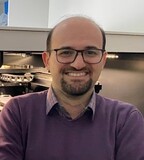 |
Saeid Sadeghnejad Friedrich Schiller University Jena Institute for Geosciences |
Event Date: Monday, 18 May 2026
Time: 9:00 - 12:00
Duration: Half-day
Location: La Cité Nantes Congress Centre (Room GH)
Registration Fee: €85 (For InterPore2026 Participants) / €130 (Conference Course only)
Details: Participants should bring their laptops
Description:
This course provides a foundational understanding of Digital Rock Physics (DRP) workflow with a focus on subsurface geological formations and their applications. By the end of the course, students will have knowledge of DRP workflows and AI-based segmentation techniques for geological and energy-related applications (hydrogen storage, carbon capture and storage, and oil and gas).
The syllabus is designed to provide participants with a comprehensive understanding of DRP starting with core analysis and imaging techniques such as micro-CT. Participants will gain practical skills in image processing, including artifact correction, segmentation, and advanced AI-driven techniques. The course also explores pore-scale modeling, covering direct numerical simulation (DNS) and pore network modeling (PNM), with real-world case studies in subsurface energy storage and contamination modeling. No prior technical expertise in AI or image processing is required, and the course ensures accessibility for beginners while offering advanced learning opportunities for experienced professionals.
The course is divided into two sections. First, the theory of the pore scale imaging and DRP is taught. In the second part of the course (i.e., workshop), participants learn how to work with micro-CT scan of rocks in ImageJ and how to segment it by machine learning techniques in ilastik software.
CONFERENCE COURSE #2
The Physics of Drying
Instructor:
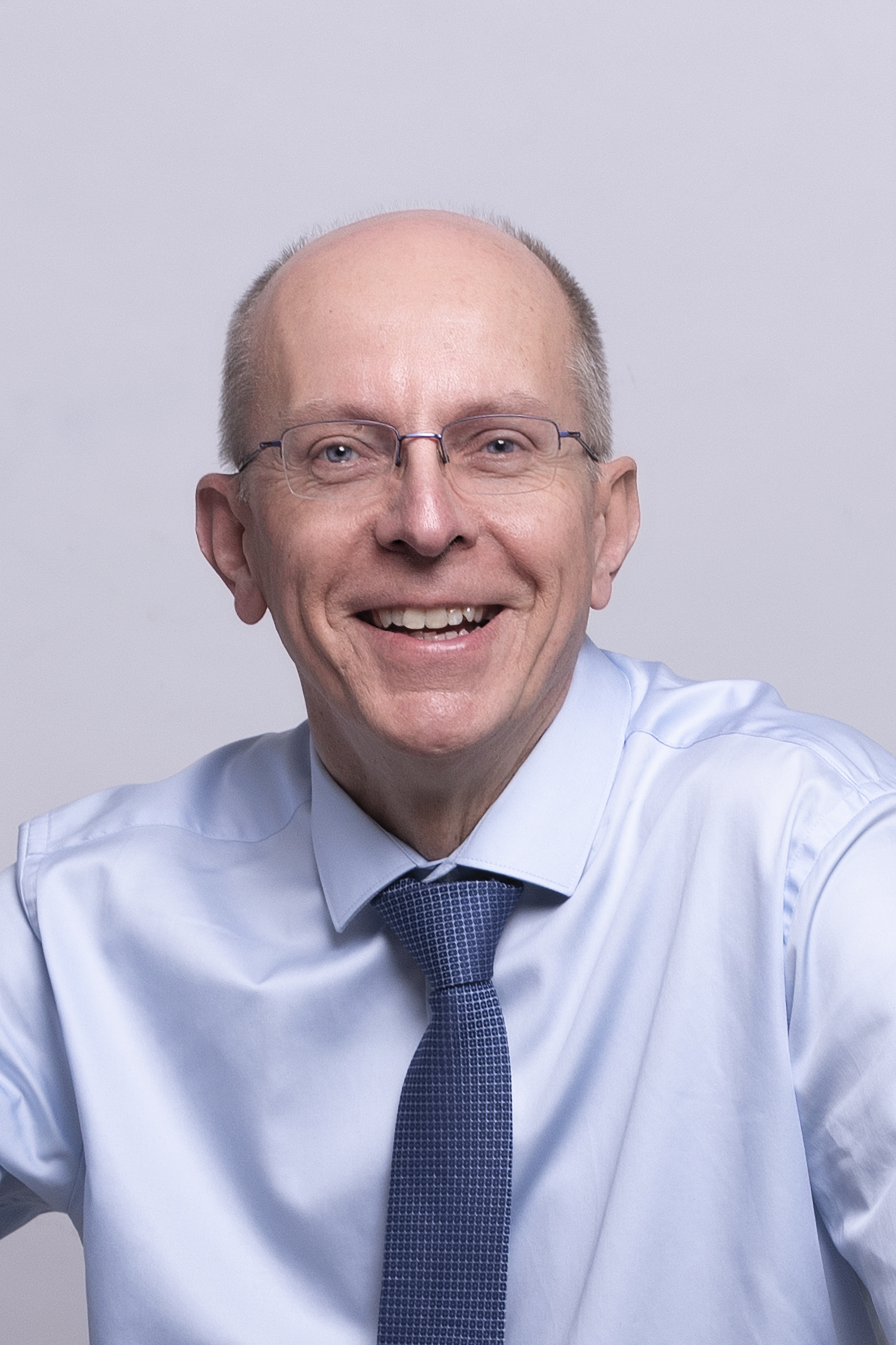 |
Philippe Coussot Université Gustave Eiffel |
Event Date: Monday, 18 May 2026
Time: 14:00 - 17:00
Duration: Half-day
Location: La Cité Nantes Congress Centre (Room GH)
Registration Fee: €85 (For InterPore2026 Participants) / €130 (Conference Course only)
Details: Participants should bring paper and pen
Description:
Drying is the process by which a liquid initially contained in a porous permeable material evaporates from this material. In industry many products need to be dried at some step of fabrication to end as solid materials easier to conserve or use. This is the case in paper or textile industry, food industry, agriculture, chemical industry or civil engineering. The whole question of drying is how this liquid water extraction occurs. Addressing this question implies to control the dynamics of the process, the spatial evolution of the water distribution in the medium over time, the transport and/or accumulation of suspended elements (ions, particles), the potential shrinkage of the medium, etc.
Due to the potential transports and phase transitions of the different water phases inside the porous medium, drying processes are generally considered as so complex that they must be described by fully empirical approaches or, conversely, complex 3D modelling developments. An alternative consists to realize that drying is fundamentally governed by the coupling between the boundary conditions (i.e., vapor diffusion around the material) and the internal diffusion and its variations as a function of the local water characteristics over time. By identifying the dominant physical effects for each material type, the main regimes of drying and their dynamics can be determined. This approach can take advantage of recent multiple observations (in particular by MRI and NMR relaxometry) of the different water phases in complex porous media during drying and their spatial evolutions. This course will present the basic tools and knowledge of such a physical approach of convective drying.
- Physical properties of liquid water, vapor, bound water: flow, diffusion, wetting, adsorption
- Boundary conditions: boundary layer, similarity approach, characterization
- Basic regimes of drying for simple diffusion process
- Simple porous media (“large pores”)
- Nanoporous materials
- Biobased systems: wood, plants, paper, natural textiles
- Shrinking materials (mineral pastes, gels, fruits-vegetables)
CONFERENCE COURSE #3
Advancing Your Research Career: Sharing 50 Years of Experience on Best Practices in Experimental Studies, Modeling, Writing, and Professional Development
Instructor:
 |
S. Majid Hassanizadeh Center for Simulation Science (SIMTECH), Stuttgart University, Germany, and Emeritus Professor of Hydrogeology at the Faculty of Geosciences of Utrecht University |
Event Date: Monday, 18 May 2026
Time: 9:00 - 12:00
Duration: Half-day
Location: La Cité Nantes Congress Centre (Room I)
Registration Fee: €85 (For InterPore2026 Participants) / €130 (Conference Course only)
Description: This short course integrates three complementary themes essential for the professional success of early-career researchers: best practices in experimental and modeling research, effective scientific writing, and scientific career development. Together, they provide a comprehensive framework for building both the quality of one’s research and the visibility of one’s scholarly profile.
The course begins by sharing my 50 years of experience on best practices in scientific research, with an emphasis on experimental and modeling approaches in porous media. Core topics include: i) planning your research (experiments and modeling), conducting a rigorous literature review, and defining clear scientific objectives; ii) best practices in experimental research, principles of designing robust experiments, and identifying systematic errors, random errors, and experimental artifacts; iii) good practices for using commercial software or developing computational codes, model validation and sensitivity analysis, and uncertainty quantification. The aim is to equip researchers with practical tools to enhance the credibility, rigor, and impact of their scientific work.
The second module focuses on best practices in writing scientific papers—an essential skill for disseminating research effectively. Topics include structuring papers using standard formats, ensuring logical cohesion and clarity, writing compelling abstracts and titles, and presenting data through well-designed figures and tables. Ethical aspects of authorship, transparency, and the appropriate use of AI tools will also be discussed. Guidance will be provided on navigating peer review, improving manuscript readability, and enhancing the likelihood of publication.
In the final module, we address how MSc and PhD students as well as postdoctoral researchers can strategically develop their academic and professional identity. The guidelines are divided into three themes: i) effectively presenting yourself via crafting a compelling CV and cultivating a strong online presence, ii) making connection by strategies for expanding your professional network, and iii) building a solid reputation through dependability, professional conduct, and meaningful engagement with the research communities.
Overall, this integrated course offers early-career researchers a holistic set of skills—spanning career development, scientific rigor, and scholarly communication—aimed at supporting them in becoming effective, credible, and visible contributors to the scientific community.
CONFERENCE COURSE #4
Multiscale Pore Network Simulation with Geoslicer
Instructor:
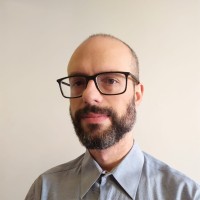 |
Rafael Guntzel Arenhart LTrace Geosciences |
Event Date: Monday, 18 May 2026
Time: 14:00 - 17:00
Duration: Half-day
Location: La Cité Nantes Congress Centre (Room I)
Registration Fee: €85 (For InterPore2026 Participants) / €130 (Conference Course only)
Description: In this workshop it will be provided a introduction to Pore Network Modelling with GeoSlicer, an open-source platform designed for advanced geoscience analysis. Participants will learn the workflow for reading processing micro-tomography data from porous rock samples, beginning with image visualization and pre-processing. The course covers the technical process of extracting multiscale pore networks from the tomographic images. Finally, attendees will be taught how to run single-phase and two-phase fluid flow simulations on the extracted networks.
Details: Participants should bring a laptop with Geoslicer installed. The latest version can be downloaded at https://github.com/petrobras/geoslicer/releases
