
(MS01) Porous Media for a Green World: Energy & Climate
Lead Organizer: Sahar Bakhshian - Rice University, USA
- Sojwal Manoorkar - University of Ghent, Belgium
- Benzhong (Robin) Zhao - McMaster University, Canada
- Sophie Roman - University of Orléans, France
- Charlotte Garing - University of Georgia, USA
- Mozhdeh Sajjadi - University of Tehran, Iran
Porous media science and engineering have played a historical role in the development of the current global energy system through the production of oil, natural gas, and coal. The combustion of the produced fuels has significantly contributed to today’s climate crisis through rising carbon emissions, necessitating an urgent transition toward a low-carbon future. While renewables such as wind and solar are essential pillars of the energy transition, they alone are not sufficient to achieve the net-zero emission targets. A broad portfolio of low-carbon technologies, including those leveraging natural and engineered porous media, is critical for a viable energy transition.
This minisymposium invites contributions at the intersection of porous media science, energy systems, and advancing low-carbon technologies. Topics of interest include, but are not limited to:
- Carbon capture, utilization, and storage (CCUS)
- Subsurface carbon mineralization
- Geothermal energy
- Hydrogen energy storage in porous formations
We especially encourage submissions on advanced experimental methods, numerical modeling, machine learning, and upscaling techniques for predicting complex subsurface flow behavior.
Solicited Speakers:
- Branko Bijeljic - Imperial College London, UK
Reactive Transport in Underground Gas Storage: Dissolution Patterns and Effective Reaction Rates in Single-Mineral, Multi-Mineral and Multiphase Media - Anna-Maria Eckel - GFZ Helmholtz Centre for Geosciences, Germany
Geomechanical Response to Cyclic Hydrogen Storage in a Fault-Bounded Saline Aquifer
(MS02) Environmental Porous Media: Water, Agriculture, and Remediation
Lead Organizer: Amir A. Pahlavan - Yale University, USA
- Linda Luquot - Geosciences Montpellier, France
- Joaquin Jimenez-Martinez - Eawag, and ETH Zurich, Switzerland
- Bo Guo - University of Arizona, USA
- Roseanne Ford - University of Virginia, USA
- Mamta Jotkar - University of Barcelona, Spain
- Veronica Morales - University of California Davis, USA
This session will explore the transport, mixing, and fate of water, colloids, microorganisms, and mineral particles in environmental porous media, spanning scales from microfluidic and pore-scale experiments and modeling to field-scale applications. We welcome contributions that combine modeling and experiments to understand the physicochemical hydrodynamics of contaminant spreading, nutrient transport, resource recovery, and water management in soils and subsurface environments. Topics of interest include the transport of colloids, microplastics, and bacteria, biofilm formation, microbial and fungal networks in the rhizosphere, strategies for guiding colloids or mineral particles using phoretic forces or electrokinetic flows, and applications ranging from contaminant remediation to the extraction of valuable elements such as rare earth minerals. By highlighting the interplay of physical, chemical, and biological processes, this session aims to advance understanding of environmental transport phenomena with relevance to agriculture, water resources, sustainable mining, and subsurface resource management.
Solicited Speakers:
- Pietro de Anna - Universite de Lausanne, Switzerland
Spatial organization of biomass controls intrinsic permeability of porous systems - Diogo Bolster - University of Notre Dame, USA
The interception history paradigm: a different way of looking at colloid transport - Chris MacMinn - Oxford University, UK
Permeation of semi-dilute polymer solutions into water-saturated soils
(MS03) Flow, transport and mechanics in fractured porous media
Lead Organizer: Gege Wen - Imperial College London, UK
- Lluís Saló-Salgado -Harvard University, USA
- Alessandro Lenci - Università di Bologna, Italy
- Hui Wu - Peking University, China
Fractured porous media play a critical role in a wide range of natural and engineered systems for a sustainable world. Accurately modeling the behavior of these systems remains a scientific challenge due to the inherent complexity, uncertainty, and heterogeneity of fracture systems. This mini-symposium aims to bring together researchers working on geoscience, engineering, and computational modeling to share recent advances in understanding flow, transport, and mechanics in fractured porous media. We welcome contributions on both numerical and machine learning-based approaches, including but not limited to: discrete and hybrid fracture models, multiscale methods, data assimilation, uncertainty quantification, and data-driven and physics-informed machine learning. Special emphasis will be placed on applications in the energy transition, such as carbon storage, underground thermal energy storage, enhanced geothermal energy, etc.
Solicited Speakers:
- Peter Kang - University of Minnesota, USA
Role of Fluid Inertia in Fractured Porous Media Flows: A Critical Driver of Mixing and Reaction - Iman Kivi - Imperial College London, UK
Does bleed-off work? Hydromechanical controls on injection-induced seismicity in enhanced geothermal systems - Chris Zahasky - University of Wisconsin-Madison, USA
Optimization and experimental validation of graph-based modeling of complex transport processes in fractured porous media
(MS04) Biological Processes in Porous Media
Lead Organizer: Na Liu - University of Bergen, Norway
- Chaojie Cheng – Karlsruhe Institute of Technology (KIT), Germany
- David Landa Marban – NORCE, Norway
- Eike Marie Thaysen - CSIC (Consejo Superior de Investigaciones Científicas), Spain
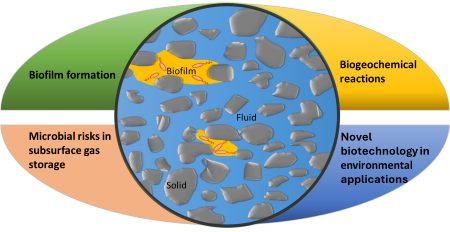
Microbial processes are integral to the form and function of numerous natural and engineered porous media, including soils, reservoirs, and water treatment technologies. To gain a deeper understanding of how microbes interact with porous media, it is essential to enhance our representation of key microbial processes, including biofilm formation, microbial motility, and metabolism.
This section aims to showcase the latest developments and challenges in understanding microbial processes in both the shallow and deep subsurface environments. We invite contributions from diverse disciplines to advance our understanding of microbial processes in water and porous media. Key areas of interest include: 1) Biofilm formation: Explore the dynamics, structure, and function of biofilms, their role in shaping the properties of porous media, and their role in improving water quality, groundwater systems, geological gas storage, and wastewater treatment; 2) Biogeochemical reactions: Investigate how microbially-mediated reactions affect the fate and transport of nutrients and contaminants; 3) Microbial risks in subsurface gas storage: Examine microbial processes associated with the storage of gases like carbon dioxide and hydrogen in subsurface porous media, including microbial-induced gas loss, bioclogging, and corrosion; 4) Novel biotechnology in environmental applications: Discuss how insights into microbial and biogeochemical processes can drive advancements in water treatment, biofiltration, and the remediation of contaminated groundwater and soils.
Solicited Speakers:
- Anja Dohrmann - Federal Institute for Geosciences and Natural Resources, Germany
How laboratory experiments can help to understand the dependencies of microbial activity during hydrogen storage on the various environmental aspects of porous rock formations - Birger Hagemann - Clausthal University of Technology, Germany
Model calibration and prediction of biogeochemical processes in porous hydrogen storage
(MS05) Physics of multiphase flow in diverse porous media
Lead Organizer: Chao-Zhong Qin - Chongqing University, China
- Saman Aryana - University of Wyoming, USA
- Ying Gao - Shell, The Netherlands
- Hossein Hejazi - University of Calgary, Canada
- Yu Jing - University of New South Wales, Australia
- Hassan Mahani - Sharif University of Technology, Iran
- Olivier Pitois - CNRS, Université Gustave Eiffel, France
- Masa Prodanovic - The University of Texas at Austin, USA
- Ke Xu - Peking University, China
- Tao Zhang - Southwest Petroleum University, China
- Tongke Zhou - University of Manchester, UK
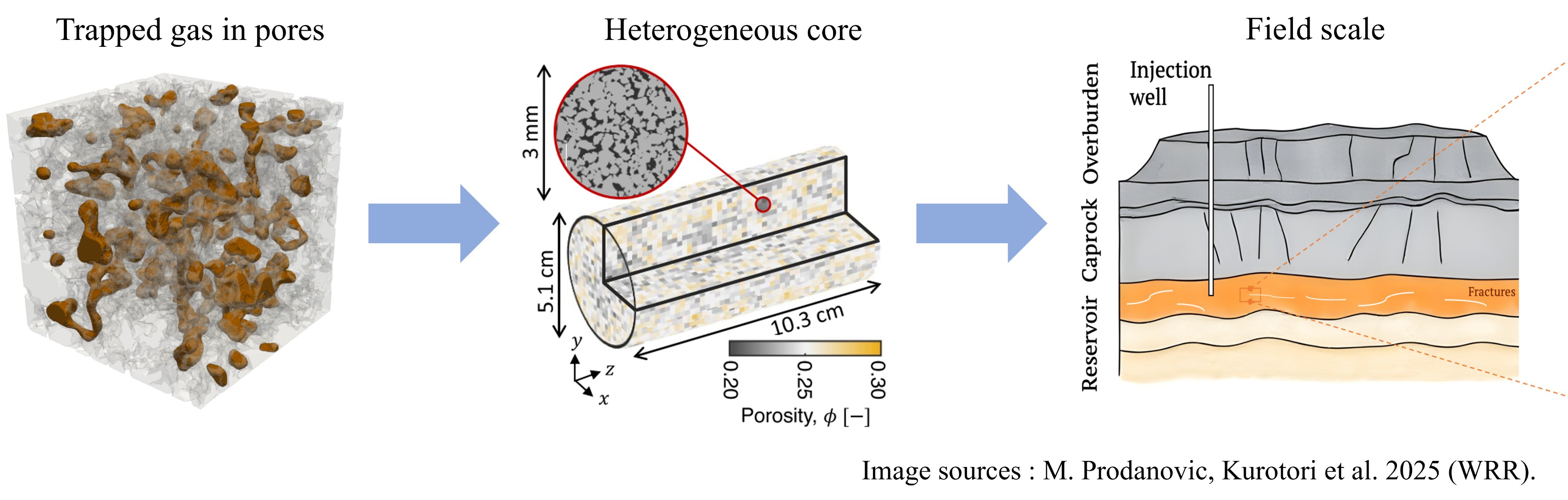
Multiphase flow in porous media is significant to many applications ranging from subsurface and near-surface flow processes, including petroleum engineering, carbon storage and utilization, remediation of soil contamination, soil physics and hydrogeology, to applications in material science, such as membranes and fuel cells. In all these applications, it is often desirable to establish relationships between microstructural and surface properties of the media, fluid properties, and Darcy-scale effective properties. Most previous research has focused on describing multiphase flow behaviors at the Darcy scale, with purely phenomenological links to microscopic system properties. Translating the various physics that dominate transport at each scale across the range of scales remains a significant challenge.
Recent advances in imaging and numerical modeling have greatly expanded our understanding of pore- and meso-scale transport physics. The purpose of this minisymposium is to provide a forum to share and explore recent insights into multiphase displacement physics through experiments, modeling and theory development. Examples of potential topics of interest include the following:
- Characterization of flow and transport across length and time scales, ranging from pore to Darcy scale. Applications include remediation of contaminated soils and aquifers, unconventional oil / gas recovery, and geological storage of CO2 as part of carbon capture utilization and storage (CCUS) operations.
- Identification of REV variables needed for thermodynamic integration across scales.
- Development of upscaling frameworks (nano- to pore-scale, pore- to Darcy-scale), including reactive transport, geomechanics, and multiphase multicomponent flows.
- Studies of flexible materials, complex / non-Newtonian fluids, and heterogeneous wettability conditions.
- Investigation of pore-scale physics and upscaling of dynamic capillary effects.
- Analysis of sub-pore and pore-scale heterogeneity and complex micro-structures that shape macro-scale, multiphase flows.
Solicited Speakers:
- Hiroshi Otomo - Dassault Systèmes/Tufts University, USA
Capturing sub-resolution physics in multiphase flow through multiscale porous media - Liang Lei - Westlake University, China
Pore-Scale Liquid-Gas Interactions: A Geometric and Free Energy View - Feifei Qin - Northwestern Polytechnical University, China
Pore-scale study of liquid-vapor phase change in porous media by hybrid lattice Boltzmann method - Yashar Mehmani - Pennsylvania State University, USA
Ostwald Ripening Kinetics in Porous Media
(MS06) Interfacial phenomena across scales
Lead Organizer: Ran Holtzman - Institute of Environmental Assessment and Water Research (IDAEA)-CSIC, Spain
- Catherine Noiriel - University of Toulouse, France
- Oshri Borgman - Migal Galilee Institute, Israel
- Mykyta Chubynsky - Coventry University, UK
- Paula Reis - Porelab, Oslo, Norway
- Rui Wu - Shanghai Jiao Tong University, China
- Sidian Chen - University of Arizona, USA
- Subhadeep Roy - Birla Institute of Technology & Science, India
- Wen Song - UT Austin, USA
- Zhibing Yang - Wuhan University, China
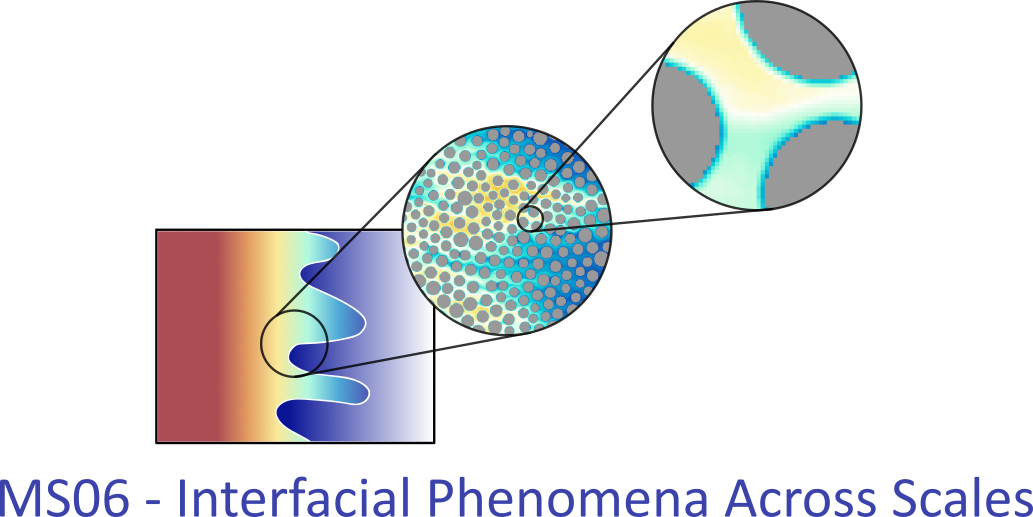
The existence of fluid-fluid and fluid-solid interfaces introduces a plethora of coupled physical, chemical, and biological phenomena that are key to multiphase flow in heterogeneous porous materials. While the interfaces are microscopic, they can control flows at much larger scales. The challenge of understanding the underlying rich physics and upscaling is essential in many applications in geosciences and engineering. Examples range from small-scale industrial processes such as filtering, separation, coating or curing to large-scale transport of water, nutrients and contaminants in soils and aquifers, extraction of hydrocarbons from and storage of carbon or energy in geological reservoirs, among others. In most cases, chemical and structural heterogeneity play an important role in controlling the coupled phenomena. We aim to bring together scientists across disciplines and with various expertise (numerical, experimental, and theoretical modeling) to share their state-of-the-art findings and challenges in this mini-symposium. Specific topics may include, but are not limited to, 1) fluid-fluid and fluid-solid reactions; 2) characterization of miscible and immiscible fluid-fluid interfaces; 3) mass transfer across interfaces; 4) the role of biological interfaces such as bacterial biofilms, plant roots, etc. and, 5) other processes induced by fluid interfaces that alter the medium’s transport properties such as capillary-induced mechanical deformation and phase changes.
Solicited Speakers:
- Bauyrzhan Primkulov - Yale University, USA
Beyond Tate’s law: geometric control of pendant-drop detachment - Benzhong (Robin) Zhao - McMaster University, Canada
Gravity fingering in porous media: bridging pore-scale physics with macroscopic observations - Bo Guo - University of Arizona, USA
Adsorption of ionic PFAS at the air-water interface at low concentrations
(MS07) Mathematical and numerical methods for multi-scale multi-physics, nonlinear coupled processes
Lead Organizer: Nadja Ray - Katholische Universität Eichstätt-Ingolstadt (KU), Germany
- Tuanny Cajuhi - Federal Institute for Geosciences and Natural Resources (BGR), Germany
- Mostafa Mollaali - Helmholtz Center for Environmental Research (UFZ), Germany
- Keita Yoshioka - Technical University of Leoben, Austria
Processes in porous media — including flow, transport, deformation, and reactions — are central to applications in energy, environment, and advanced materials. Experiments and field observations are often costly or infeasible, making mathematical modeling and simulation essential.
Challenges arise from strong heterogeneity, multiscale and multiphysics interactions, or phase transitions. This minisymposium invites contributions on:
- Advanced mathematical models and analyses of nonlinear coupled equations, sharp interface as well as phase field formulations
- Multiscale and model order reduction techniques (e.g., homogenization, upscaling)
- Novel discretization schemes and solvers to improve accuracy and computational efficiency
- Robust nonlinear and linear solution strategies
- Integration of experimental data and application of AI and machine learning tools
The minisymposium aims to foster exchange on methodologies and applications for porous media in the geosciences at both laboratory and field scales, as well as on bridging across scales.
Solicited Speaker:
- Marcio Murad - National Laboratory for Scientific Computation (LNCC), Brazil
Discontinuous Galerkin Method for Flow in Enlarged Fractured Carbonates - Son-Young Yi - The University of Texas at El Paso, USA
Physics-preserving enriched Galerkin method for a fully-coupled thermo-poroelasticity model
(MS08) Mixing, dispersion and reaction processes across scales in heterogeneous and fractured media
Lead Organizer: Veronica Morales - University of California Davis, USA
- Yves Méheust - Université de Rennes, France
- Ran Holtzman - IDAEA-CSIC, Spain
- Silvia De Simone - IDAEA-CSIC, Spain
- Branko Bijeljic - Imperial College London, UK
- Pietro de Anna - Université de Lausanne, Switzerland
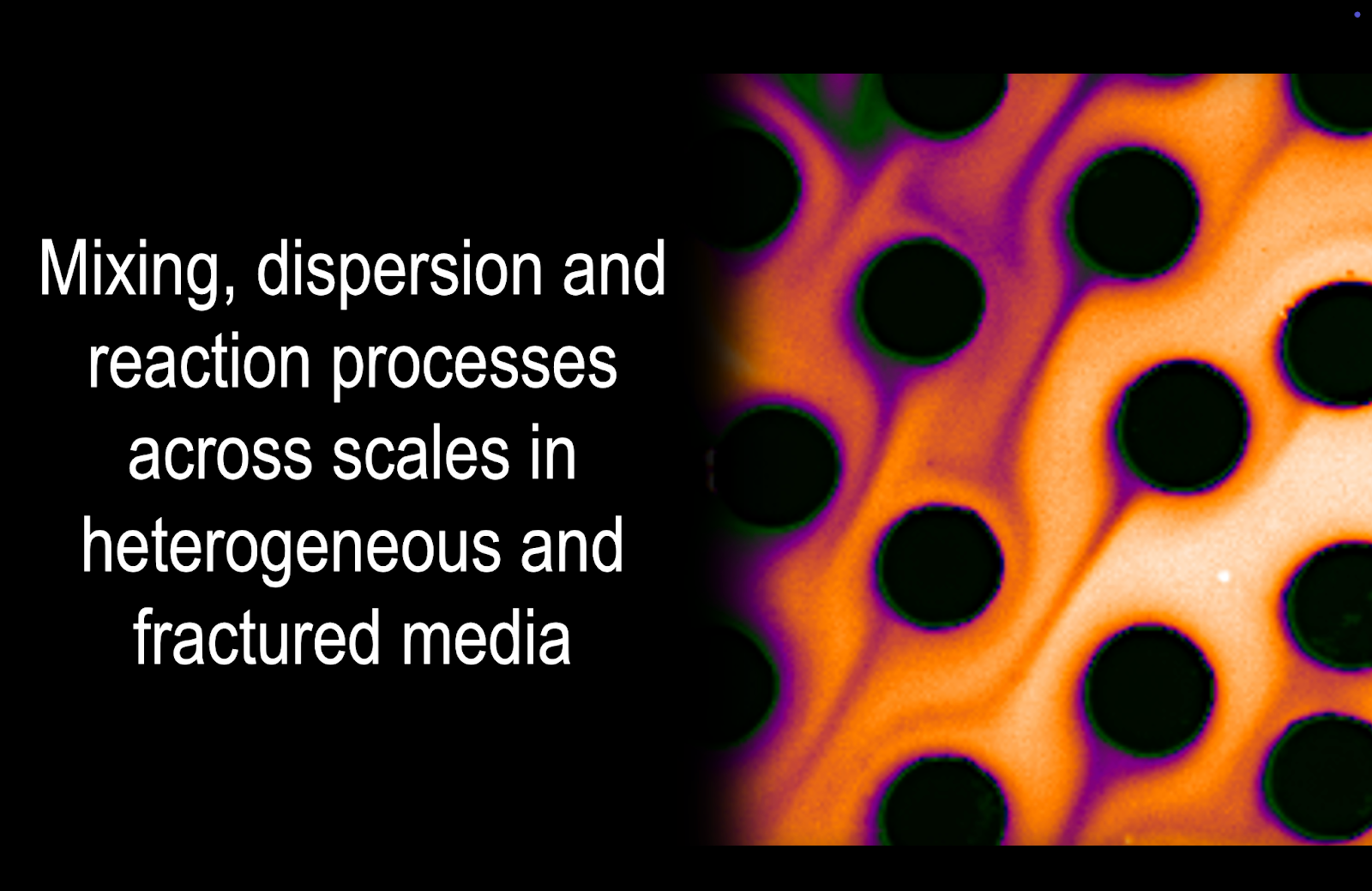
In-depth understanding of solute mixing and reactive transport is key in engineered and natural porous media, with applicative contexts ranging from porous reactors for water treatment to geothermal heat production to groundwater management/remediation. Spatial heterogeneity at the pore and Darcy scales leads to scale effects in system parameters (e.g., hydraulic conductivity, dispersion coefficients, chemical rate constants) and emerging large scale processes (e.g., anomalous diffusion, memory reactions, mechanical mixing). This behavior is due to the coupling between small scale processes, and to segregation and mass transfer across heterogeneity-induced interfaces (either solid-fluid or fluid-fluid). Recent advances in experimental and theoretical approaches have shed new light on the pore and Darcy scale mechanisms that govern these processes and on quantifying their large scale impact. This session invites submissions addressing Eulerian and Lagrangian flow properties, solute, heat and particle transport, as well as mixing and reaction phenomena in spatially-heterogeneous permeable media within fluids at rest or under single, multiphase and variable density flows. We aim to bring together experimental observations from the lab or in the field with theory and numerical simulations to advance our understanding of coupled heterogeneity-impacted flow, mixing, transport and chemical reaction dynamics over a broad range of spatial and temporal scales.
Solicited Speakers:
- Maartje Boon - University of Stuttgart, Germany
Exsolution and mixing during hydrogen storage with CO2 cushion-gas in heterogeneous porous media - Gaute Linga - University of Oslo, Norway
Chaotic mixing by multiphase flow in porous media - Linda Luquot - CNRS-Geosciences Montpellier, France
Reactive transport processes in porous rock sample: role of local heterogeneities
(MS09) Pore-Scale Physics and Modeling
Lead Organizer: Peter Kang - University of Minnesota, USA
- Ruby Fu - California Institute of Technology, USA
- Bo Guo - University of Arizona, USA
- Yashar Mehmani - Pennsylvania State University, USA
- Marco De Paoli - University of Twente, The Netherlands
- Cyprien Soulaine - Institute of Earth Sciences of Orléans, France
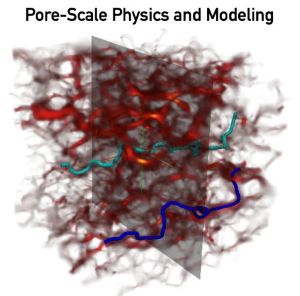
Modeling the physics of fluid flow, reactive transport, and mechanical deformation is essential to understand the complex, coupled processes that occur within porous materials. Over the past few decades, interest in porous media science has grown dramatically, with applications spanning energy and environmental engineering. Examples include groundwater remediation, geothermal energy, CO2 storage, critical mineral recovery, and fuel cells. Advancing the engineering of these systems requires microscale understanding to develop predictive capabilities—and pore-scale modeling is the key tool for this.
We invite contributions on all aspects of pore-scale modeling, with particular emphasis on:
• Validation of models against experiments
• New physical insights and theoretical analyses complemented by pore-scale modeling
• Novel algorithms and computational methods
• Upscaling pore-scale results into continuum-scale descriptions
Specific areas of interest include – but are not limited to – flow physics (Newtonian, non-Newtonian, single/multi-phase, inertia flows), passive/reactive transport (dissolution, precipitation, dispersion, mixing), mechanics (discrete element, failure, granular flow, plasticity), numerical methods (pore networks, lattice Boltzmann, direct numerical simulation, phase field, level set), discretization (finite volume, finite element, finite difference, particle-based), solvers and approximators (multiscale methods), hybrid computing (pore-to-Darcy coupling, addressing scale separation).
Solicited Speakers:
- Hannah Menke, Heriot-Watt University, UK
Pore-scale deep-learning surrogates for accelerated reactive transport and Darcy-scale upscaling - Amir Pahlavan, Yale University, USA
Diffusiophoretic transport of a colloidal blob in porous media - Marcel Moura, University of Oslo, Norway
Thin Film Flow: Fluid Transport via Thin Liquid Films in Slow Porous Media Flows
(MS10) Advances in imaging porous media: techniques, software and case studies
Lead Organizer: Maja Rücker - Eindhoven University of Technology, The Netherlands
- Tom Bultreys - Ghent University, Belgium
- Rukuan Chai - Imperial College London, UK
- Sidian Chen – Stanford University, USA
- Qinhong (Max) Hu - China University of Petroleum (East China), China
- Lin Ma - University of Manchester, UK
- Liwei Zhang - Chinese Academy of Sciences, China
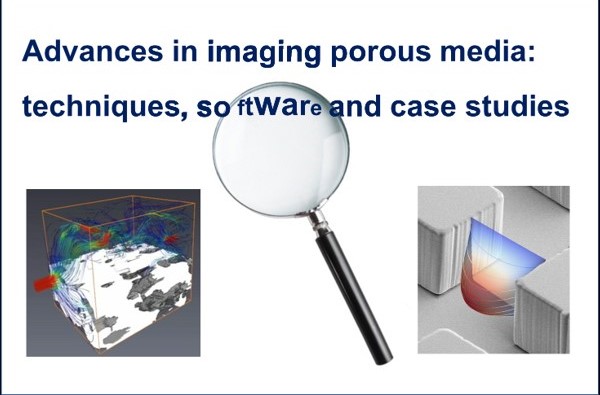
In the last decades, multi-scale analytical and 2D/3D/4D imaging techniques have developed rapidly and become increasingly applicable in porous material characterization. Many advanced imaging techniques, such as Laser Scanning Microscopy (LSM) and Scanning Transmission X-ray Microscopy (STXM); X-ray Computed Tomography (XCT), Electron Microscope Tomography (EMT), and Magnetic Resonance Imaging (MRI) have been developing at a high speed on both the hardware and the software side. Furthermore, the increasing utilisation and development of synchrotron and neutron sources have provided unique opportunities to advance the imaging techniques. Due to these developments and their added value, they are intensively used to study porous media for their characterisation and quantification ,as well as to study the various dynamic processes occurring inside porous media, providing unique perspectives in porous materials studies. For this mini-symposium, we invite contributions that focus on advancements in 2D, 3D, and 4D imaging techniques or imaging analysis software, as well as analytical tools and to study porous media and contributions that integrate these new developments in experiments and real case-studies.
Solicited Speaker:
- Catherine Spurin - Stanford University, USA
Micro-CT Insights into Relative Permeability and CO₂ Spreading in Reservoir Rocks from the Otway CCS Site - Veerle Cnudde - University of Ghent, Belgium
The EXCITE Network: European transnational access to advanced imaging for porous media in Earth and Environmental sciences
(MS11) Emulating cell motility in natural porous media: from health to environment
Lead Organizer: Nicolas Waisbord - Université of Aix Marseille, France
- Ankur Bordoloi - IRPHé, France
This session examines how microfluidic approaches are revolutionizing our understanding of cell motility in porous media by capturing essential environmental features. We explore the technological advances, experimental discoveries, and scaling methodologies that position microfluidics at the forefront of this interdisciplinary field, spanning both prokaryotic and eukaryotic cell systems.
Session Structure:
I. Technological Advances in biomimetic systems related to environment and health How have micromodel fabrication and design evolved to better replicate porous media, from soils to vascular networks? What technical breakthroughs now allow us to recreate critical features like realistic pore geometries, surface heterogeneity, chemical gradients, and flow patterns that govern cell motility in natural systems?
II. Experimental Frontiers and Unexpected Discoveries Where are experiments leading theory rather than simply validating models? What surprising cell behaviors, emergent phenomena, and unexpected motility strategies have been revealed through recent micromodels studies that challenge our theoretical understanding? How do confined geometries, heterogeneous surfaces, and complex flow fields generate behaviors not predicted by classical motility models?
III. More is Different: From Cells to Swarms, from Pores to Networks
"The behaviour of large and complex aggregates of elementary particles, it turns out, is not to be understood in terms of a simple extrapolation of properties of a few particles. Instead, at each level of complexity entirely new properties appear, and the understanding of the new behavior requires research as fundamental in its nature as any other." - P. W. Anderson, Science, 1972
How do individual cell behaviors observed in single pores scale up to collective phenomena in porous networks? What emergent properties arise when bacterial swarms or eukaryotic cell populations navigate interconnected pore structures? How do local cell-pore interactions give rise to macroscopic transport properties, and what new physics emerges at the network scale that cannot be predicted from single-cell or single-pore studies alone?
This session welcomes contributions across all three themes, emphasizing the unique role of microfluidics in advancing both fundamental understanding and environmental applications of cell motility.
(MS12) Coupled Flow-Deformation Processes in Porous Media
Lead Organizer: Yihuai Zhang - University of Glasgow, UK
- Muhammad Arif - Khalifa University, UAE
- Chaojie Cheng - KIT - Karlsruher Institut für Technologie, Germany
- Sridhar Ranganathan - Kimberly-Clark, USA
- Qazim Llabjani - EPFL, Switzerland
- Zhenjiang You - China University of Petroleum-Beijing at Karamay, China
The coupling between fluid flow and mechanical deformation in porous media underlies a wide range of natural phenomena and technological applications—from soil consolidation, swelling clays, and biological tissues to energy geotechnics, CO₂ sequestration, and soft materials. This minisymposium brings together the formerly separate themes of swelling/shrinking materials and poromechanical interactions to explore the latest advances in modelling, simulation, and experimental investigation of coupled flow-deformation processes. Contributions are welcome on both fundamental and applied aspects, including but not limited to: nonlinear poromechanics, multiphase and reactive transport, thermo-poroelasticity, fracture formation and propagation, and swelling effect. We particularly encourage work that bridges theory and experiment, such as direct visualisations of deformation and flow, in-situ imaging techniques (e.g., micro-CT, MRI), and validation of numerical models with laboratory results. Emphasis will also be placed on innovative numerical approaches—such as monolithic/iterative solvers, multiscale or mass-conservative discretisations, and efficient preconditioners—to simulate complex hydro-mechanical behaviour in heterogeneous and fractured media. Through interdisciplinary contributions, this session aims to foster deeper understanding and more predictive modelling of coupled processes in natural, engineered, and bio-inspired porous systems.
Solicited Speaker:
- Yun Yang - University of Wyoming, USA
High Pressure/high temperature CO2-brine relative permeability for ultra-deep carbon storage: core-flooding measurements in Berea sandstone
(MS13) Fluids in Nanoporous Media
Lead Organizer: Bin Pan - China University of Petroleum (Beijing), China
- Patrick Huber - Hamburg University of Technology, Germany
- Zhehui Jin - University of Alberta, Canada
- Hassan Mahani - Sharif University of Technology, Iran
- Yun Yang - University of Wyoming, USA
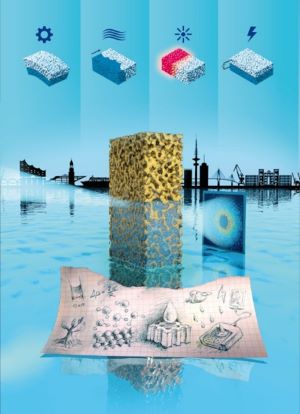
Many porous media have characteristic pore sizes in the nanometer range. These media include natural materials (clay, coal, shale, zeolite), as well as synthetic materials (Vycorm, carbon, MOF) used for separation, purification, and energy storage/conversion. In most natural or technological processes the pores in these materials contain fluids: water in clay and concrete, hydrocarbons in coal and shale, electrolyte/gas in electrodes, etc. In nanopore-confined space, solid-fluid interactions and external stimulus (e.g., pressure, thermal, electrical, chemicals, mechanical, acoustic, light, etc) may significantly alter the fluid’s physical properties, causing, for example, the molecular structuring of the fluid, shifts of the freezing or evaporation points and the appearance of the disjoining pressure and adsorption layer. These pore-scale effects necessarily lead to a change in the parameters of continuum models for fluid transport in nanoporous media and poromechanics; moreover, they often require introducing new physics in the governing equations and new techniques in the experimental measurements. The objective of this minisymposium is to provide a forum for the discussion of all possible aspects of fluid phases confined in nanoporous materials: fundamental and applied, theoretical and experimental.
Solicited Speakers:
- Olivier Vincent - CNRS, France
Humidity-driven crystallization and deliquescence of salt in nanopores - Benoit Coasne - CNRS/Univ Grenoble Alpes and Institut Laue Langevin, France
Adsorption and Thermal Conductivity in Nanoporous Materials: Underlying Molecular Mechanisms and the Rattle Effect - Moran Wang - Tsinghua University, China
Flow and Electrokinetic Transport in Nanoporous Media
(MS14) Advanced Flow Physics in Specialized Porous Systems: Non-linear dynamics and finite-size effects
Lead Organizer: Yves Méheust - Université de Rennes, France
- Diogo Bolster – University of Notre Dame, USA
- Richmond Cohen – Kimberley-Clark Corporation, USA
- Alberto Guadagnini – Politecnico di Milano, Italy
- Mohaddeseh Mousavi Nezhad – University of Liverpool, UK
- Chaozhong Qin – Chongqing University, China
- Nicoale Tomozeiu - Eindhoven University of Technology, The Netherlands
This mini-symposium seeks to address flow and transport processes in porous systems under conditions where nonlinearity in the flow or transport processes, and effects related to the small length of the medium, play a major role:
- Non-linear effects on fluid flow in porous media are critical across various disciplines and applications. They can arise from inertial effects or non-linear fluid rheologies. Inertial high velocity flows occur in highly permeable porous media such as river sediments, urban canyons, catalytic beds, and nuclear reactors, while non-linear stress-shear rate relationships play an important role in subsurface heterogeneity characterization, drilling mud applications, foam- polymer solution flows used for aquifer/soil remediation and enhanced oil recovery, or polymer composite fabrication.
- Non-linear effects in chemical transport/mixing arise at the macroscale from multi-scale heterogeneous porous structures (in particular in subsurface environments) and the complexity of coupled transport and chemical processes. They require improved upscaling techniques.
- The small length of thin porous media makes them susceptible to hydro-expansion and dimensional stability in the presence of moisture, or surface modification of their fiber- or granular structure, which impact liquid spreading, absorption and capillary suction, transport and evaporation, as well as clogging processes and nanoparticle transport.
We welcome contributions from theoretical/numerical studies, laboratory experiments, and field investigations across a broad range of scales and the aforementioned applicative contexts, as well as discussions on modern modeling strategies or on how to translate theoretical and experimental insights into practical applications.
Solicited Speaker:
- Laurent Talon - FAST Laboratory and Paris-Saclay University, France
The flow of yield stress fluids in porous media: statistical properties, universality classes and boundary conditions
(MS15) Machine Learning in Porous Media
Lead Organizer: Bailian Chen - Los Alamos National Laboratory, USA
- Ahmed ElSheikh - Heriot-Watt University, UK
- Serveh Kamrava - Colorado School of Mines, USA
- Saeid Sadeghnejad - Friedrich-Schiller-Universität Jena, Germany
- Hongkyu Yoon - Sandia National Laboratories, USA
- Marwan Fahs - University of Strasbourg, France
Recent advances in computational and data sciences have positioned machine learning (ML) techniques at the forefront of porous media research. This minisymposium aims to showcase how ML is transforming the way we address classical and emerging challenges in porous media systems, from subsurface flow to material design. We invite abstracts that highlight novel applications, methodological innovations, and integrative approaches involving ML. Topics of interest include but not limited to:
- Development of advanced ML algorithms tailored for porous media, including deep learning architectures, physics-informed ML, self-supervised or unsupervised learning, and methods emphasizing transferability and interpretability;
- Construction of computationally efficient surrogate models, such as reduced-order models, proxy models, or data-driven empirical models, to accelerate simulations and predictive tasks;
- Applications of ML in data-rich porous media problems, including multiscale modeling, upscaling, imaging and image analysis, digital rock physics, synthetic porous media generation, and coupled process simulations.
This session welcomes contributions that explore both theoretical and practical aspects of ML in porous media, and aims to foster discussion on emerging opportunities and cross-disciplinary innovations.
(MS16) Complex fluid and Fluid-Solid-Thermal coupled process in porous media: Modeling and Experiment
Lead Organizer: Yingfang Zhou - University of Aberdeen, UK
- Praveen Linga - National University of Singapore, Singapore
- Shimin Liu - Pennsylvania State University, USA
- Moran Wang - Tsinghua University, China
- Ruina Xu - Tsinghua University, China
- Pål Ø. Andersen – University of Stavanger, Norway
Fluid-solid-thermal coupled process in porous media play an important role in numerous applications, including unconventional energy resources extraction, energy storage, environments, industrial materials such as isolators, aerospace, and medical engineering. The scope of this mini-symposia covers all studies which deal primarily on complex fluids and fluid-solid-thermal aspects of porous media, fluid-solid interaction, thermal coupling, and property measurements in a multidisciplinary nature of analyses, modeling, experiment and field studies. We also include challenging fields such as geo-energy and geo-environment systems as well as insulation materials under extreme conditions.
(MS17) Electrochemical Processes in Porous Media
Lead Organizer: Maxime van der Heijden - University of Waterloo, Canada
- Jonas Hereijgers - University of Antwerp, Belgium
- Colm O'Dwyer - University College Cork, Ireland
- Noemí Aguiló-Aguayo - University of Innsbruck, Austria
- ChungHyuk Lee - Toronto Metropolitan University, Canada
Electrochemical technologies such as batteries, fuel cells, electrolyzers, and water treatment systems rely critically on porous media to facilitate mass transport, ion exchange, and reactive interfaces. The geometry, connectivity, and physicochemical properties of these porous structures directly influence performance, safety, and efficiency, but remain challenging to characterize, understand, optimize, and manufacture.
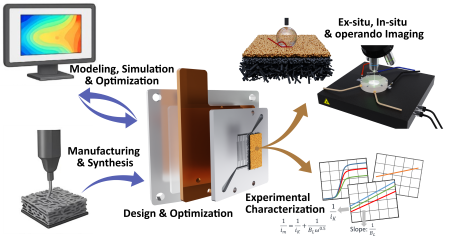
This minisymposium invites contributions that explore the interplay between electrochemical phenomena and porous media across a range of scales and disciplines. Topics of interest include:
• Modeling, simulation, and optimization of flow, transport, and electrochemical reactions in porous architectures.
• Design and optimization of porous components in electrochemical systems.
• Ex-situ, in-situ, and operando imaging of electrochemical processes in porous media using advanced techniques such as X-ray tomography, neutron imaging, and spectroscopy.
• Manufacturing and synthesis of porous components for electrochemical applications, such as electrospinning, additive manufacturing, and templating.
• Experimental protocols to characterize porous media in electrochemical devices, covering areas such as electrocatalysis, corrosion, mass transport mechanisms, and structure–function relationships.
This minisymposium aims to bring together researchers from electrochemistry, materials science, and fluid mechanics to foster innovation and deepen the understanding of porous media in electrochemical technologies. We welcome theoretical, experimental, and applied contributions that advance both fundamental knowledge and practical development in this field.
Solicited Speakers:
- Aimy Bazylak - University of Toronto, Canada
The role of porous media in durability and performance of fuel cells and electrolyzers - Stéphane Chevalier - I2M Bordeaux, France
Mass transport characterization in nanoporous polymer electrolyte membranes used in electrochemical systems
(MS18) High-temperature heat and mass transfer within porous materials for energy and space
Lead Organizer: Benoît Rousseau - University of Nantes, France
- Sophia Haussener - EPFL, Switzerland
- Francesco Panerai - University of Illinois Urbana-Champaign, USA
- Jaona Randrianalisoa- Université de Reims, France
- Dimosthenis Trimis - KIT, Germany
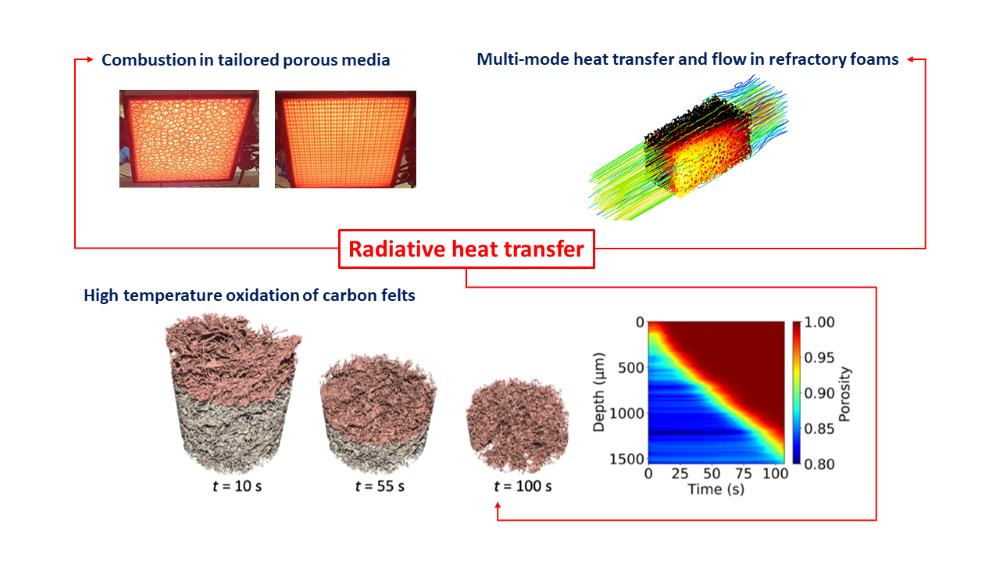
Refractory cellular materials (carbon felts, open-pored ceramic foams, structured ceramics, etc.) are at the heart of strategic development in key industrial sectors, whether for carbon-free energy production or reusable spacecraft. Their high specific surface area, high strength-to-weight ratio, good flow-mixing capacity, high thermal shock resistance, and high resistance to chemical corrosion enable the design of lightweight, compact, high-temperature heat conversion, transport, and storage systems. In order to optimise their overall performance, it is necessary to have a precise understanding of the spatial distribution of heat within their volume, which requires taking into account all modes of heat transport, including radiative transfers. In terms of radiation, cellular refractory materials are semi-transparent media in which the interaction between thermal radiation and matter is reflected by light scattering, absorption and emission. Mathematically, these physical phenomena are described by the integro-differential equation of radiative transfer. If, in addition, fluids, which are themselves semi-transparent, penetrate the cellular support materials, the problem becomes even more complex given the coupling and non-linearity. Modelling the transport of fluids (gas, plasma) through these materials, which may themselves be semi-transparent, adds an extra degree of complexity. This mini-symposium will provide an opportunity to review the experimental and numerical approaches that are currently the focus of attention: topological optimisation, whether AI-driven or not, performance of architectures obtained through additive manufacturing, management of thermal couplings at local or continuous scale, numerical methods for solving transport equations, and development of experimental set-up for characterising high-temperature effective thermophysical quantities and depicting the 3D architectures.
Solicited Speakers:
- Gérard Vignoles - University of Bordeaux, France
Random-Walk simulation methods for the modeling of ballistic/diffusive heat and mass transfer in evolving porous media - Antonio Avila-Marin - CIEMAT, Spain
Experimental Investigation of Periodic Porous Ceramic Solar Absorbers for Volumetric Receiver Applications - Bruno Dias - AMA at NASA Ames Research Center (ARC), USA
One-domain approach for simulating ablative porous materials in high- enthalpy flows
(MS19) Uncertainty-Aware Decision Support in Porous Media Applications
Lead Organizer: Sarah Perez - Heriot-Watt University, UK
- Daniel Tartakovsky - Stanford University, USA
- Valentina Ciriello - University of Bologna, Italy
- Alexandre Tartakovsky - University of Illinois at Urbana-Champaign, USA
- Monica Riva - Politecnico di Milano, Italy
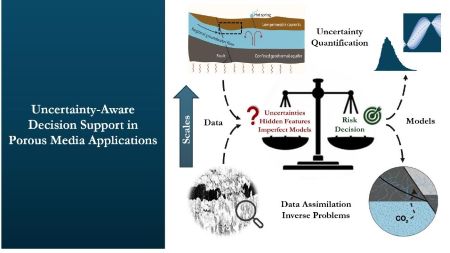
The reliability of computational analyses in porous media depends not only on model accuracy but also on how uncertainty, limited knowledge, and conceptual assumptions influence decision-making across diverse applications. From pore-scale imaging, manufactured porous media, and digital rock physics to larger scale forecasting of groundwater flow, reactive transport, geothermal energy, hydrogen or CO₂ storage, predictive outcomes are influenced by data availability, parameter variability, and fundamental modelling choices.
This minisymposium will explore uncertainty in its many forms: from epistemic challenges due to incomplete knowledge of material properties, pore structures, and limited observability of geological formations; to the aleatory variability inherent in natural systems and the risks introduced by simplified or imperfect models. We welcome contributions that address risk assessment, process optimisation, screening and decision-support tools designed to operate under imperfect information, as well as work that critically examines how modelling uncertainties shape predictions. The scope also encompasses complementary approaches that enhance robustness and decision relevance, including inverse modelling for parameter estimation, data assimilation to integrate models with experimental data, and model reduction to enable efficient uncertainty-aware analysis at larger scales.
By bringing together researchers at the interface of computational methods, experimental advances, and applied porous media sciences, this session aims to advance approaches for characterising and propagating uncertainty across scales. At the same time, it will provide a platform to reflect on how uncertainty quantification can serve not only as a corrective framework but also as a lens to interrogate modelling choices themselves, ultimately turning uncertainty into actionable insight for real-world porous media applications.
Solicted Speakers:
- Aronne Dell'Oca - Politecnico di Milano, Italy
Carbon sequestration in fractured formations: new insights thanks to sensitivity analysis - Per Pettersson - NORCE Norwegian Research Centre, Norway
Stochastic cooperative game models for CO2 storage with uncertain payoffs under pressure space competition
(MS20) Special Session in Honor of Jun Yao
Lead Organizer: Oleg Iliev - Fraunhofer Institute for Industrial Mathematics ITWM, Germany
- Yongfei Yang - China University of Petroleum (East China), China
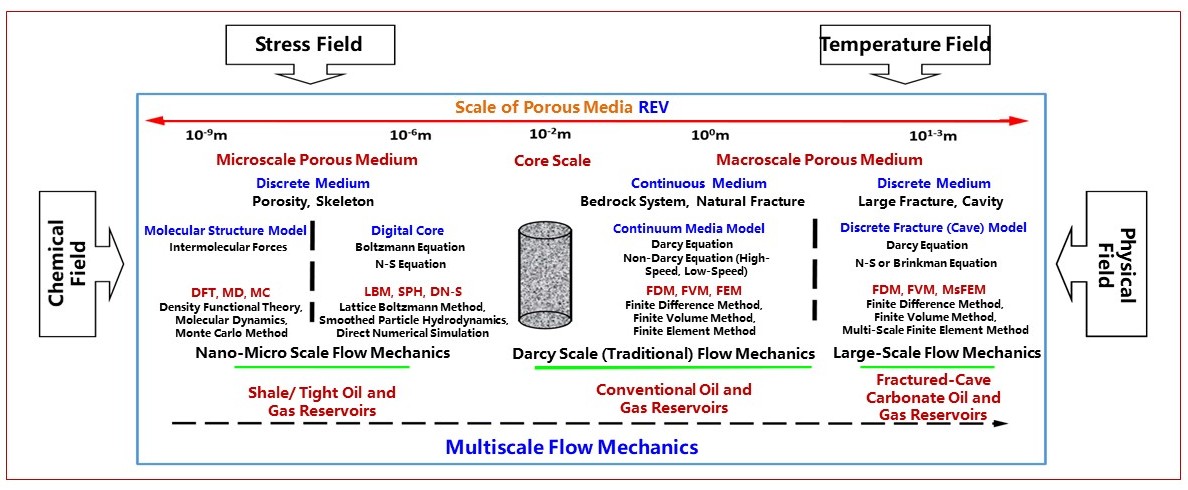
This session is dedicated to the critical role of flow physics in the entire lifecycle of subsurface energy projects, encompassing resource development (e.g., oil & gas, geothermal, gas hydrates, underground coal gasification) and storage applications (e.g., CCUS, hydrogen, and groundwater management). We invite contributions that address the complex multi-scale and multi-physics challenges inherent in these systems.
Key topics of interest include:
- Fundamental Flow Mechanisms: Micro-visualization experiments, pore-scale numerical simulation, and characterization of fluid phase behavior in porous media.
- Bridging Scales and Physics: Upscaling methodologies from micro to macro scales, and advanced multiphysics modeling of multiscale fractured and vuggy porous media, including coupled free and porous flow.
- AI-Driven Methodologies: The transformative application of Artificial Intelligence (AI) and Machine Learning (ML) for data analysis, model acceleration, and predictive insight in flow simulation.
- Emerging Challenges: Flow behavior under ultra-high temperature and stress, and reactive transport in processes like underground coal gasification.
Join this session to share and discuss cutting-edge research that enhances our predictive capabilities and ensures the efficiency and security of subsurface energy operations.