









Nantes is a vibrant city where history, art, and innovation meet. If you are planning to extend your stay before or after InterPore2026, there are many opportunities to explore the city’s cultural landmarks, artistic installations, and scenic waterways.
To help you plan your visit, the official Nantes tourism office has prepared a detailed guide to the city, including attractions, neighborhoods, restaurants, and day-trip ideas.
Nantes Visitor Guide
View the tourism guide here.
Below are a few highlights and easy ways to explore Nantes during your stay.
Pass Nantes (City Pass)
One of the easiest ways to discover Nantes is with the Pass Nantes, a city pass that provides access to many of the city’s top attractions and transportation. The pass is available for 24, 48, 72 hours, or 7 days and includes entry to museums, guided tours, cruises, and unlimited public transport.
The pass covers more than 50 attractions, including the Château des Ducs de Bretagne, Machines de l’Île, museums, and boat trips, while also allowing unlimited travel on trams, buses, and river shuttles.
Learn more:
https://www.levoyageanantes.fr/en/to-do/nantes-city-pass/
Walk the Green Line
The Green Line (Ligne Verte) is a unique way to explore Nantes on foot. A green line painted on the ground guides visitors through the city, connecting major monuments, artworks, historic sites, and hidden gems.
Following the line creates a self-guided walking tour that leads you to dozens of cultural stops across the city.
Explore the route:
https://www.levoyageanantes.fr/en/itineraries/walk-the-green-line/
Guided Tours
For those who prefer a structured experience, Nantes offers a variety of guided tours led by local experts. These tours provide deeper insight into the city’s history, architecture, and creative culture.
Options include:
- Walking tours of the historic centre
- Art and architecture tours
- Thematic tours focused on Nantes’ maritime and industrial heritage
Explore available tours:
https://www.levoyageanantes.fr/en/to-do/guided-tours/
Château des Ducs de Bretagne
Located in the heart of the city, the Château des Ducs de Bretagne is one of Nantes’ most important historic landmarks. The castle houses the Nantes History Museum, which presents the city’s history through interactive exhibitions and more than a thousand objects from its collections.
Learn more:
https://www.levoyageanantes.fr/en/places/castle-of-the-dukes-of-brittany/
Les Machines de l’Île
One of Nantes’ most famous attractions is Les Machines de l’Île, an imaginative artistic project combining mechanical engineering and fantasy inspired by Jules Verne and Leonardo da Vinci.
Visitors can explore the workshop-like Galerie des Machines, ride the famous Grand Elephant, or experience the ocean-themed Carrousel des Mondes Marins.
Discover more:
https://www.levoyageanantes.fr/en/to-do/machines-de-lile/
Boat Rides on the Loire and Erdre
Seeing Nantes from the water offers a completely different perspective on the city. Several boat tours operate along the Loire and Erdre rivers, offering relaxing cruises past historic sites, landscapes, and contemporary art installations along the riverbanks.
More information:
https://www.levoyageanantes.fr/en/to-do/the-journey-along-the-water/
✔ Tip: Many of these activities are included with the Pass Nantes, making it easy to explore several attractions during a short stay.
Sightseeing Hunt Article Archive
Musée Jules Verne
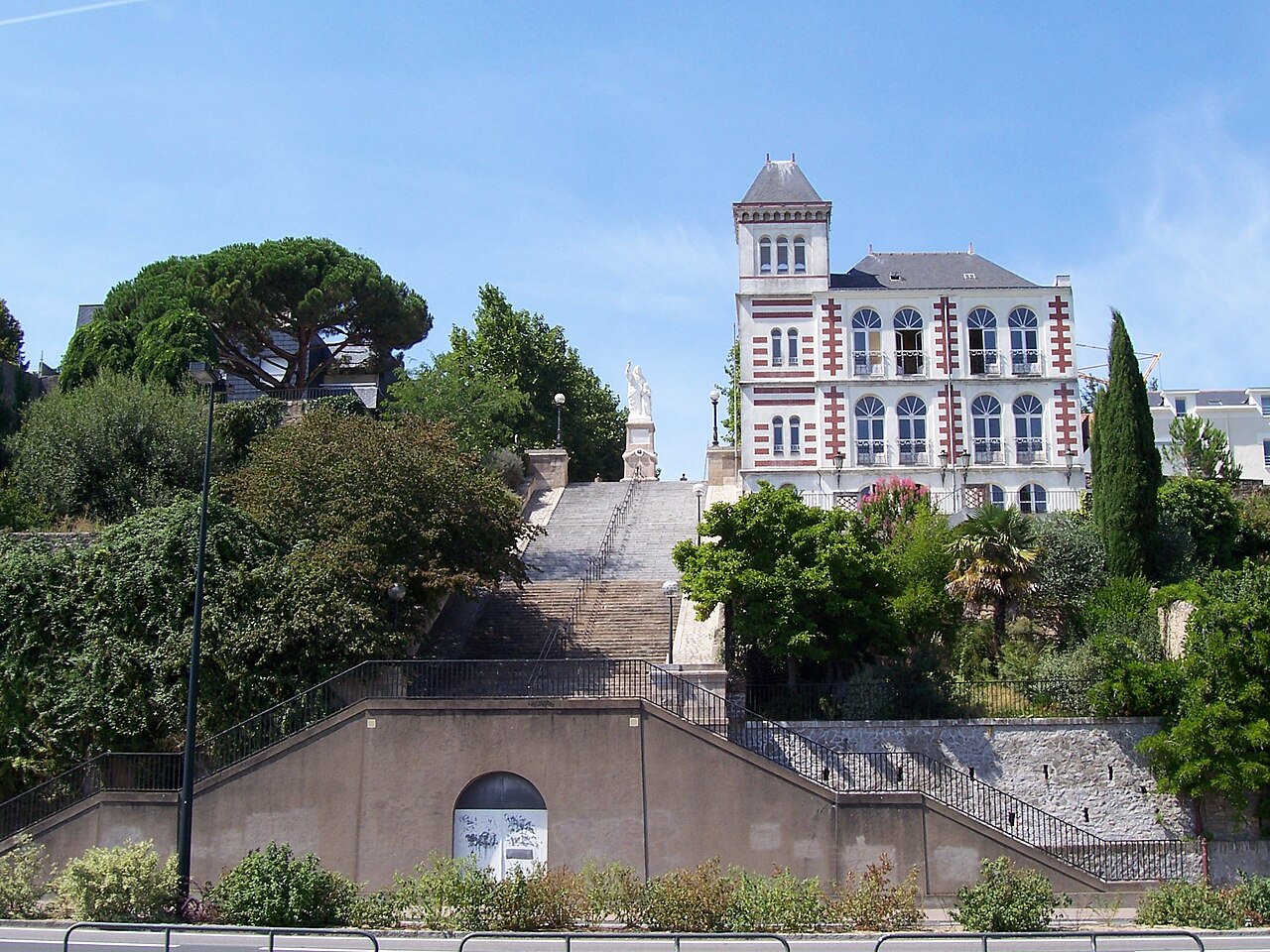 Nantes has a strong and proud connection to the famous novelist Jules Verne. He was born there in 1828, and the city celebrates him as one of its most famous figures. Jules Verne grew up near the Loire River, surrounded by ships and maritime activity. This environment had a deep influence on his imagination, and many of his stories involve travel, exploration and adventure. Novels such as Twenty Thousand Leagues Under the Sea and Around the World in Eighty Days echo that early fascination with journeys. The Musée Jules Verne is entirely dedicated to his life and work. Although modest in size, it is immersive and nicely designed, featuring manuscripts, illustrations and models of inventions and machines inspired by his stories.
Photo credit/license: Pepie34 / CC BY-SA 2.0
Loire Valley
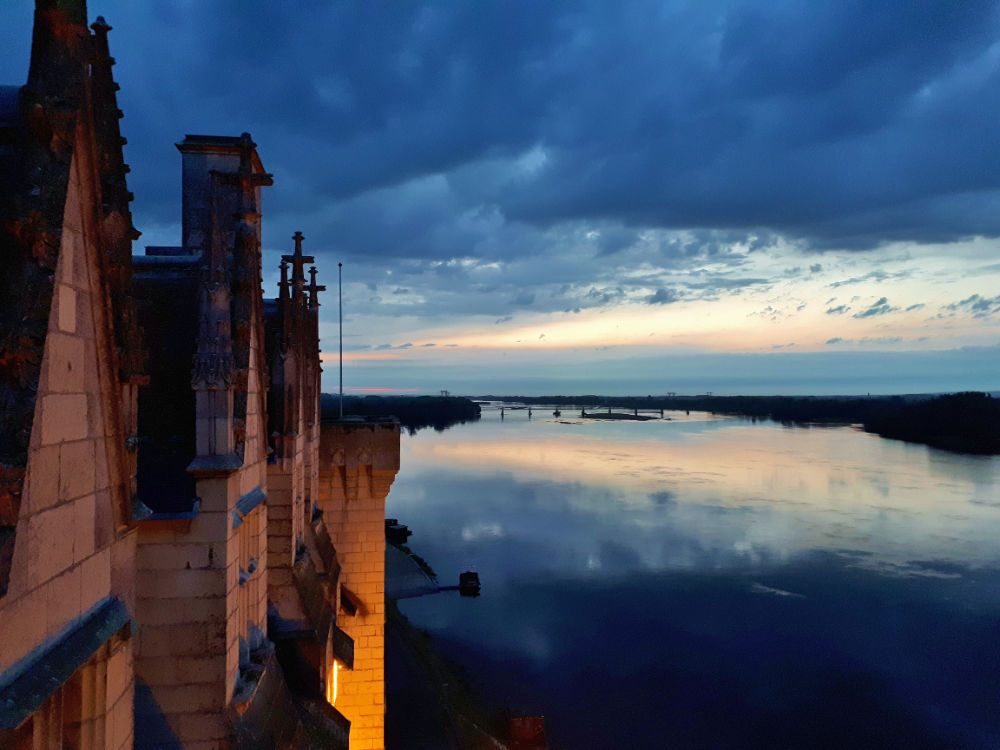
The Loire Valley, a UNESCO World Heritage site, is an outstanding cultural landscape of great beauty, with many historic towns and villages, great architectural monuments (the châteaux), 80 km east of Nantes. The political history of France during the Middle Ages and the Renaissance, is reflected in the region's world-famous castles (châteaux), such as Chambord, and Azay-le-Rideau.
Photo credit: Philippe49730 / CC BY-SA 4.0
Salt Marshes
Sel de Guérande (literally salt from Guérande) is a traditional, unrefined sea salt harvested by hand from the salt marshes of the Guérande peninsula, 80 km west of Nantes. The production of Guérande salt is an artisanal process. Well worth a visit!

Photo credit: Stéphane Gourichon / CC BY-SA 4.0
Guérande Peninsula
The Guérande Peninsula is an Atlantic destination located 80 km west of Nantes, between the estuary of the Loire River and the mouth of the Vilaine River. It is named after Guérande, a small scenic town which conjures up images of medieval towns and salt marshes. The most beautiful features are best enjoyed from a barge — a slender, flat-bottomed boat steered with a pole.
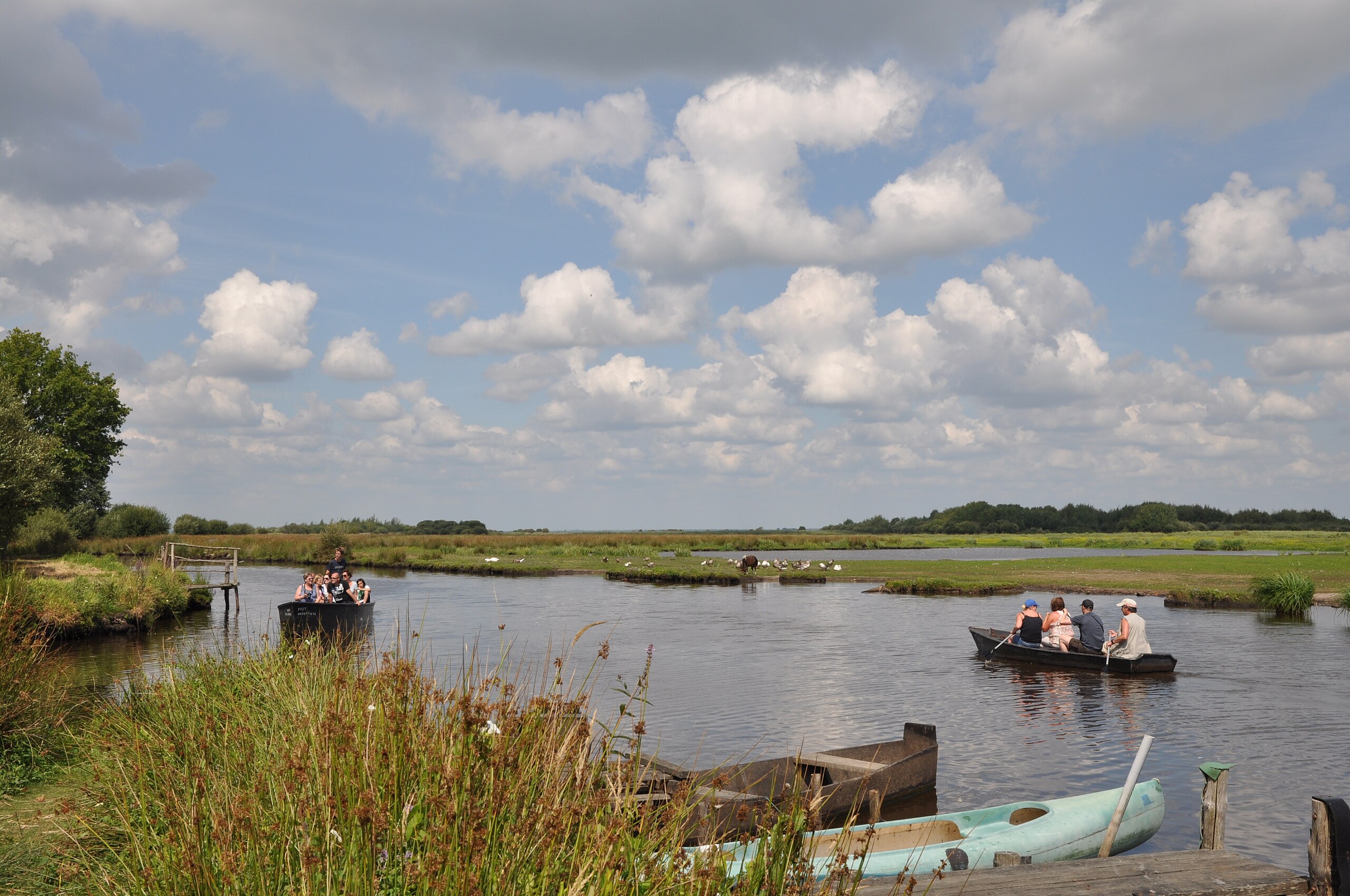
Photo credit: adapted from P. Couton / CC BY-SA 4.0
Royal de Luxe
Royal de Luxe is a renowned French street-theatre company. Since 1989, it has been based in Nantes, where the city provided large workshop spaces that allowed the group to create ambitious, large-scale productions. Known for its spectacular giant puppets and imaginative urban performances, the company has become a major cultural symbol of Nantes.

Photo credit: Fred Tanneau / Agence France Presse
Parc de Procé
Parc de Procé is a charming English-style landscape garden and one of the city’s most beloved parks. Parc de Procé is home to centuries-old trees, including Nantes’ oldest tulip tree, as well as cedars, sequoias, magnolias, and bald cypresses. From Parc de Procé, you can follow the green corridor along the Chézine River — on foot, by bike, or while jogging — upstream all the way to Parc de la Gournerie if you feel energetic!
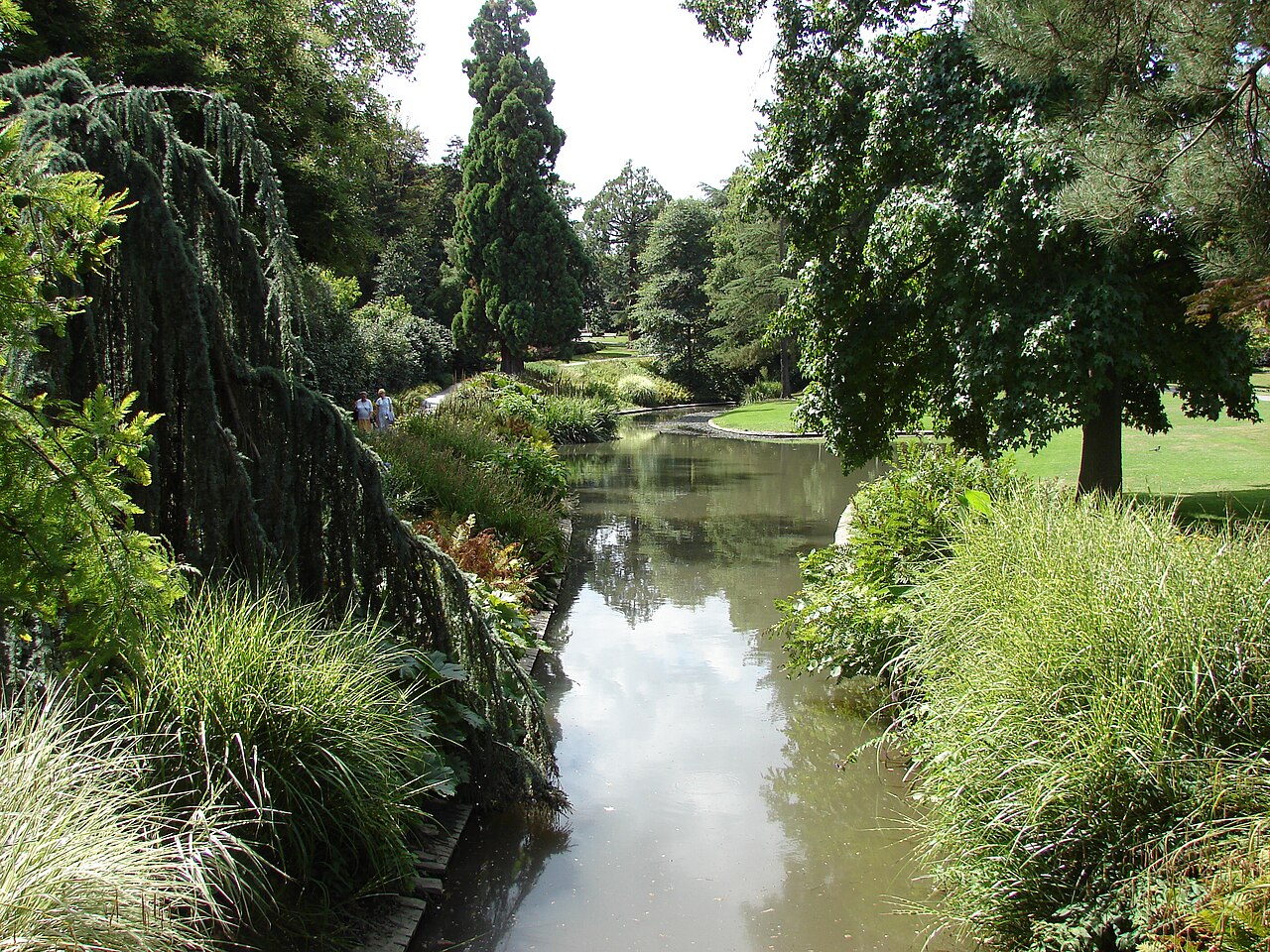
Photo credit: adapted from M. Strikis / CC BY-SA 3.0
Gâteau Nantais
The gâteau nantais is a classic French cake from Nantes. This rich, moist dessert, with its soft texture and exotic aromas, is characteristic of early-20th-century French pastry. Traditionally made with almond flour, butter, sugar, eggs, and rum from the West Indies, it is often finished with a thin white icing that adds shine and extra flavor. Historically, the gâteau nantais reflects Nantes’ role in maritime trade and the import of Caribbean rum. Its dense texture allows it to keep well, even improving after a day or two, making it both a practical and indulgent treat. The gâteau nantais is a quintessentially Nantes dessert — soft, aromatic, and steeped in both history and flavor.
%20(002).jpg?1763631011513)
Photo credit : Benoît Prieur
The Petit Beurre
The Petit Beurre is a famous type of shortbread from Nantes. It was invented in 1886 by Louis Lefèvre-Utile and was inspired by some English products of the time. A Petit Beurre is glazed with milk before baking to give it a homemade appearance. The biscuits produced by the Lefèvre-Utile (LU) company are the most commercially successful variety, although the name is not exclusive to the LU company. The Petit Beurre LU is decorated with 4 corners in the shape of ears, 14 teeth in length, 10 teeth in width, making 52 teeth in total. It has 24 indents on its surface. These numbers can be interpreted as the 4 seasons, the 52 weeks of the year, and the 24 hours in a day.

Photo credit: “Biscuits Petit Beurre de la société LU” by Plbcr, CC BY-SA 3.0
Earthen Construction Materials for Green Housing
The Research Institute for Mechanics and Civil Engineering (GeM) in Nantes is developing cutting-edge expertise in cob material as a sustainable building material. Through laboratory and pilot-scale experiments, GeM researchers are characterizing the hygrothermal properties of cob, a traditional earthen material, in collaboration with partners such as Gustave Eiffel University and the national research network on earthen materials.
Their work offers new insights into how rethinking building materials can help reduce the impact of climate change on everyday life — combining heritage techniques with modern porous media science.
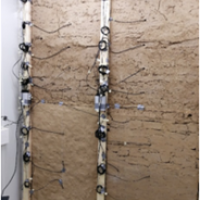
Photo credit: Junior Tchiotsop
Jardin Extraordinaire
The Jardin Extraordinaire (Extraordinary Garden) of Nantes, located at the foot of the Butte Sainte-Anne, is a remarkable place where nature and city blend seamlessly. Nestled within an old granite quarry, the garden benefits from a unique microclimate that allows lush, exotic vegetation to flourish: banana trees, tree ferns, lotus flowers, and bamboo surround a spectacular 25-metre waterfall cascading down the rock face. Definitely a great place for photography and for a different kind of city walk!

Photo credit: Stéphane Menoret
The Erdre River
Often described as one of France’s most beautiful rivers, the Erdre flows north of Nantes through tranquil, lake-like stretches bordered by parks and wooded banks before joining the Loire River.
Along its course, you’ll find charming châteaux such as Château de la Gascherie and Château de la Poterie — perfect for a scenic walk, a peaceful boat ride, or a relaxing cycle along the towpath. 🚴♀️🛶
💡Fun fact: The river is navigable from Nantes, and river cruises offer stunning views of its historic estates and natural landscapes.

Photo credit: “Nantes - Erdre” by Guillaume Piolle, CC BY 3.0
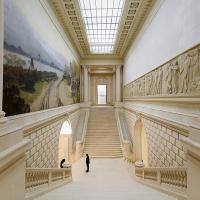
The Musée d'Arts de Nantes
The Musée d’Arts de Nantes (Nantes Museum of Fine Arts) is housed in a gorgeous 19th-century building, located less than one kilometer from the conference centre. Founded in 1801, the Musée d’Arts de Nantes is one of the few French museums to have consistently expanded its collection with works by living artists. Over time, this commitment has shaped a rich and dynamic journey through more than 900 paintings, sculptures, photographs, videos, and installations, showcasing masterpieces by artists including De la Tour, Courbet, Delacroix, Monet, Picasso, Kandinsky and Soulages.
Le Lieu Unique
Right next to the conference centre stands Le Lieu Unique (“The Unique Place”), a vibrant hub for contemporary culture housed in the former LU biscuit factory along the Canal Saint-Félix. Here you’ll find art exhibitions, concerts, literary gatherings, philosophical debates, and festivals. And don’t miss the chance to climb its 38-meter-high tower!
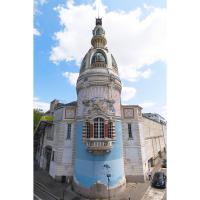
Photo credit: adapted from “Bretagne_20230721_DSC1842” by Maarten Heerlien, CC BY 2.0
Les Chantiers de l'Atlantique
Located 60 km west of Nantes at the mouth of the Loire River, Les Chantiers de l'Atlantique is one of the world's largest shipyards. It builds a wide variety of vessels, from naval ships to some of the biggest cruise liners ever constructed. Beyond shipbuilding, the company works on the development of offshore substations that connect wind farms to power grids.
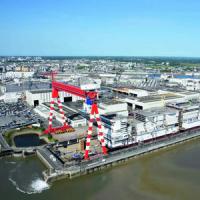
Photo credit: Bernard Biger
Passage Pommeraye
The Passage Pommeraye is a historic shopping arcade in the center of Nantes, named after its developer, Louis Pommeraye. It was inaugurated in 1843. Spanning three levels and connecting streets of differing heights with a monumental central staircase, its design is very elaborate and includes Renaissance-style sculptures. The passage, now a protected historical monument, is well known for both its commercial boutiques and its decorative details, making it a renowned architectural and cultural landmark.
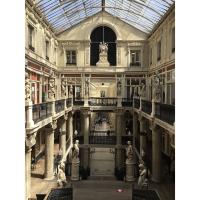
Photo license: CC BY-SA 4.0
Jardin des Plantes de Nantes
The Jardin des Plantes de Nantes is a 7-hectare botanical garden in central Nantes, located right next to the railway station. It features over 10,000 plant species within a web of ponds, waterways, and paths. A fine collection of statues, as well as fountains, cascades, pavilions and greenhouse are scattered in the garden. The Jardin des Plantes is well known for its peaceful landscaping, exotic plants, and whimsical art installations. It is free to enter and popular for strolls and botanical exploration.
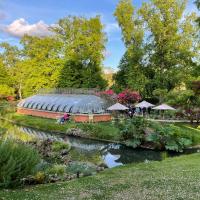
Photo credit: Make Me Smile
The Grand Elephant
The Grand Elephant, a 12-meter-tall mechanical elephant, is part of Les Machines de l’Île (The Machines of the Isle of Nantes) in Nantes, France. It can carry up to 50 passengers for a slow ride through the exhibition area, while interacting with its surroundings, especially by spraying water from its trunk. The entire venue is located in the former shipyards of Nantes and is inspired by the imaginary worlds of Jules Verne (a native of Nantes), Leonardo da Vinci, and industrial machinery.
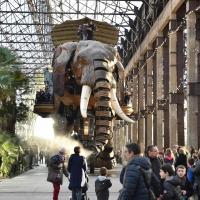
Photo credits and copyright: Jean-Dominique Billaud
Château des Ducs de Bretagne
Located in the historic heart of Nantes, this iconic fortress is a must-see. Originally built in the 15th century, with elements dating from the 14th to 18th centuries, the castle served as a ducal residence, a royal fortress after 1532, and later a state fortress following the Revolution. And the best part? It’s just an 11-minute walk from the InterPore2026 conference venue!
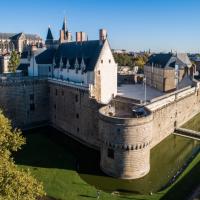
Photo credits and copyright: Valéry Joncheray
Le Puy du Fou
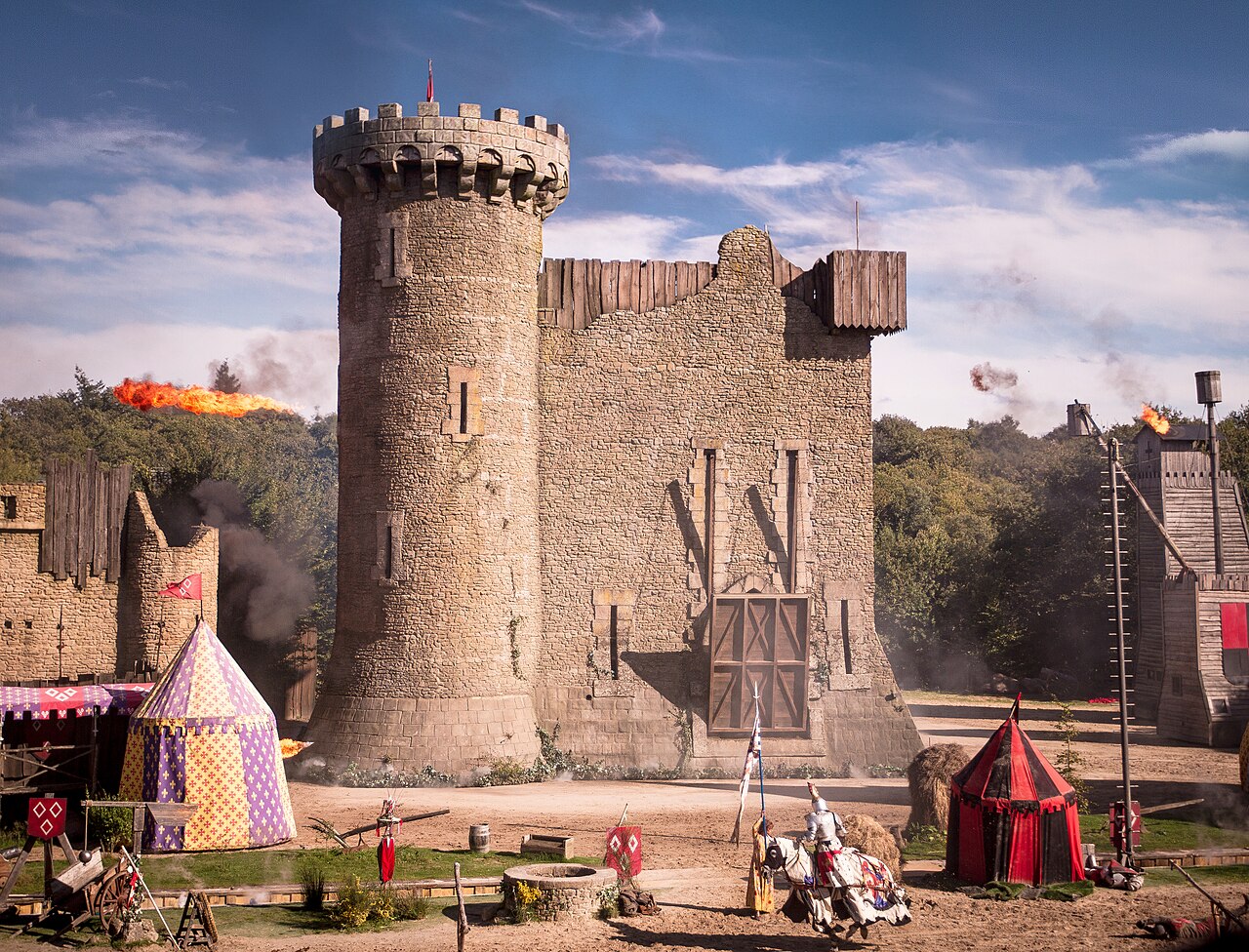
Le Puy du Fou is a world-renowned historical theme park located in Les Epesses, 60 km southeast of Nantes. Le Puy du Fou stands out for its original concept: rather than offering roller coasters, the park focuses on spectacular live shows. Visitors can enjoy grand productions featuring professional actors, elaborate costumes, impressive stage sets, choreographed battles, trained animals and advanced special effects.
Photo credit: Benoit Sanson / CC BY-SA 4.0
