
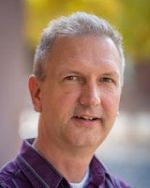
 | Timothy Scheibe |
Scaling microbial processes in porous media
Many porous media processes of interest involve microorganisms such as bacteria, fungi and viruses; examples include bioremediation, bioclogging, nutrient cycling, plant-microbe interactions, and critical mineral recovery. Consider the life of a bacterium in a porous medium. The size of its home is measured in micrometers – typical soil/sediment pores range in size from a few micrometers (e.g., shales or clays) to a few hundred micrometers (e.g. coarse sands). Like human homes, soil bacterial homes vary quite a lot in terms of who lives there (microbial community), how well they get along (competition or syntrophy), and what resources are available to the occupants (food, air, water). The microbially-mediated biogeochemical transformations that will occur, the types of microbes that will perform them, and the rates at which they occur, can dramatically differ between individual pores separated by very small differences. Importantly, microbes can actively respond to and modify their environment through regulation of their metabolism and other functions, so are often not well represented by standard chemical reaction models. On the other hand, the measurements we can make at field scales, and the models we use to represent field-scale biogeochemical transformations, are at the bulk scale. That is, we combine huge numbers of soil pores, grains, and microbes into a single sample (for measurement) or a single grid cell (in a numerical model) and we measure or simulate bulk properties (e.g., concentrations) and processes (e.g., reaction rates). But what a microorganism or microbial community actually senses and responds to is the environment in their individual pore home. Because natural porous media are highly heterogeneous, and the key reaction substrates (for example, oxygen, organic matter, nitrate, metals) are not uniformly distributed, the bulk characteristics are very different from the actual environment in any given individual pore. Furthermore, biogeochemical reaction processes are typically non-linear, so they don’t readily average up in the way we might expect. As a result, modeled reactions do not adequately represent the actual experiences and responses of microorganisms, creating a significant barrier to the application of biological advances to understanding and prediction of reactive transport in porous systems. This presentation will discuss these challenges in greater detail and present some novel approaches that may help us to address this scaling challenge based on emerging technologies and a creative combination of biological, physical, and computational sciences.
About Timothy Scheibe
Timothy D. (Tim) Scheibe is the Director of Program Development for Earth and Biological Sciences at Pacific Northwest National Laboratory (PNNL). He joined PNNL in 1992, has led several large research projects funded by the U.S. Department of Energy and other sponsors, and in 2016 was named a PNNL Laboratory Fellow. He is internationally known as an expert in the field of environmental hydrogeology, with an emphasis on multi-scale biogeochemical reactive transport modeling. Research areas include microbial transport in groundwater, subsurface bioremediation, coupling microbial metabolic models with groundwater reactive transport simulations, groundwater-surface water interactions, and multiscale simulation of coupled flow, transport and biogeochemical processes at cellular, pore and continuum scales. His projects have included both computational and field experimental elements. He holds a Ph.D. in Civil Engineering from Stanford University and has authored over 100 peer-reviewed scientific publications. In 2010, he served as the Henry Darcy Distinguished Lecturer and gave 65 invited lectures around the US and internationally.